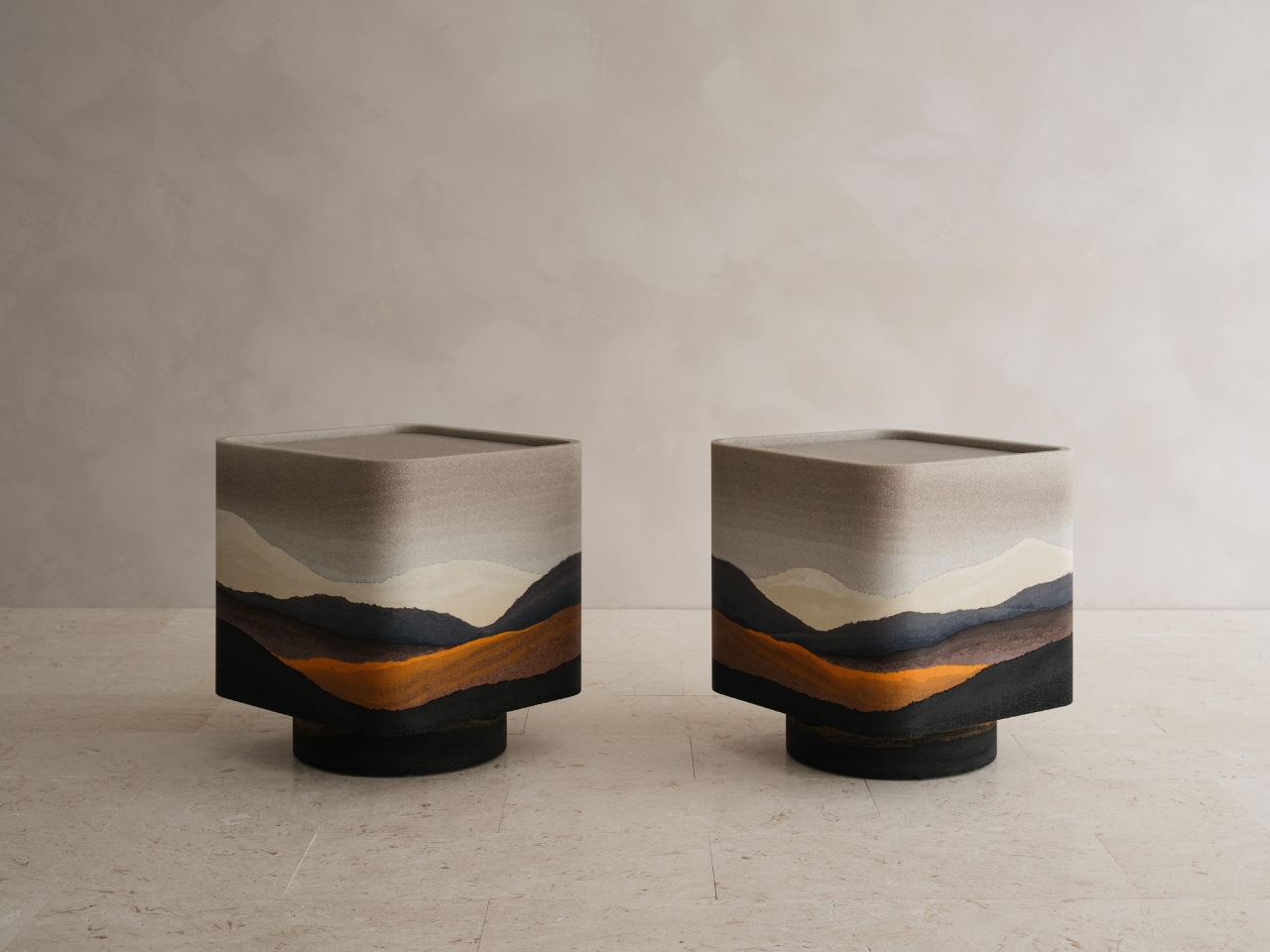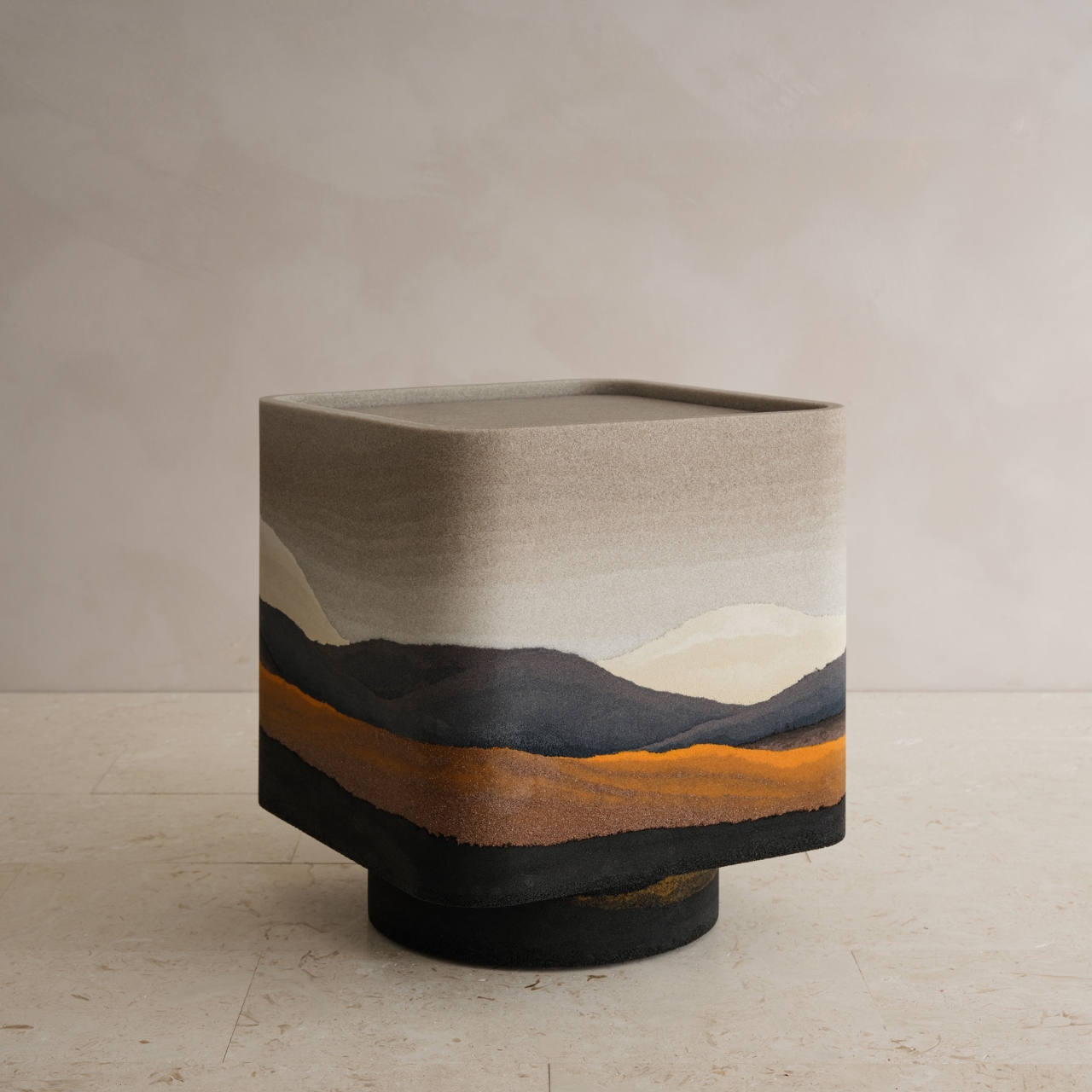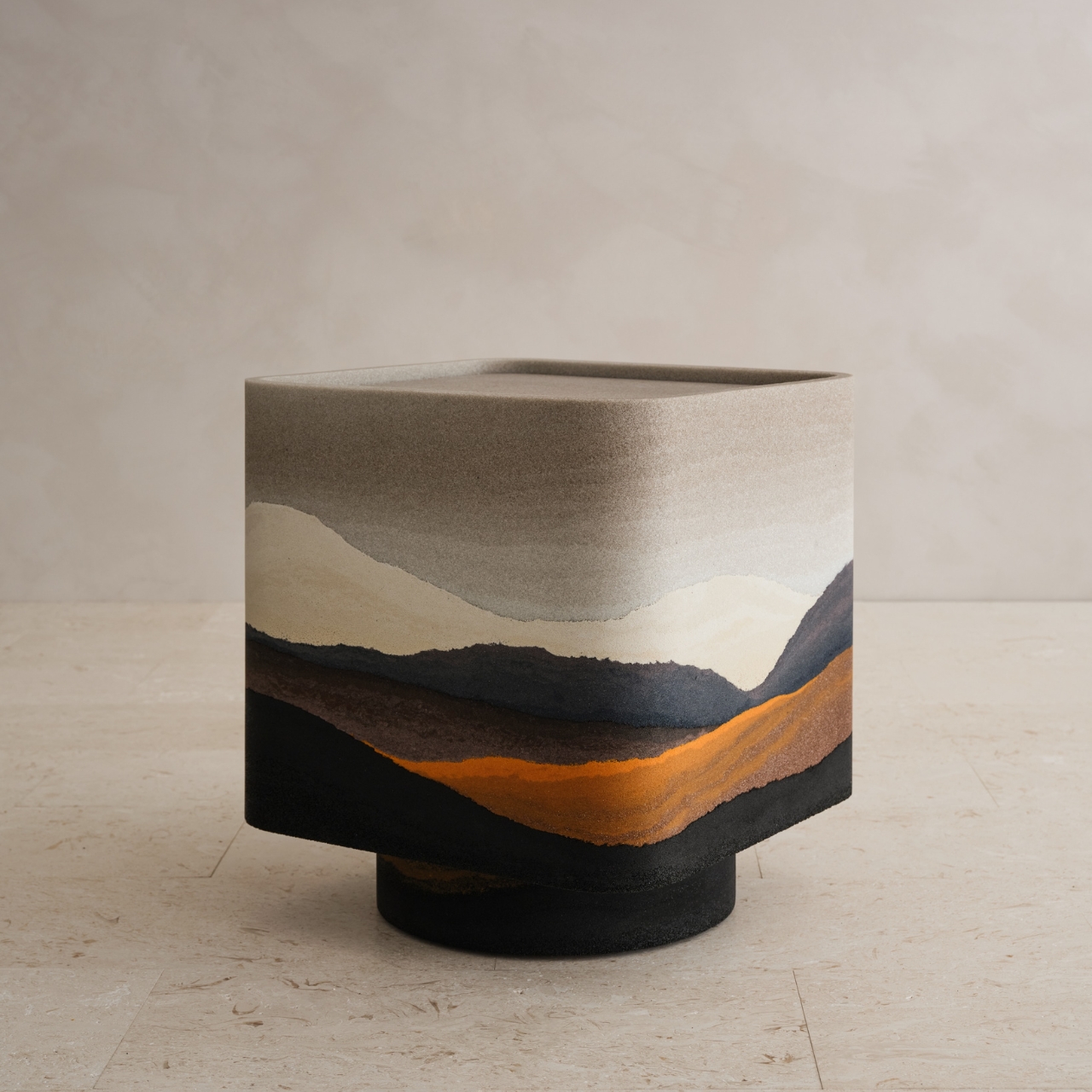
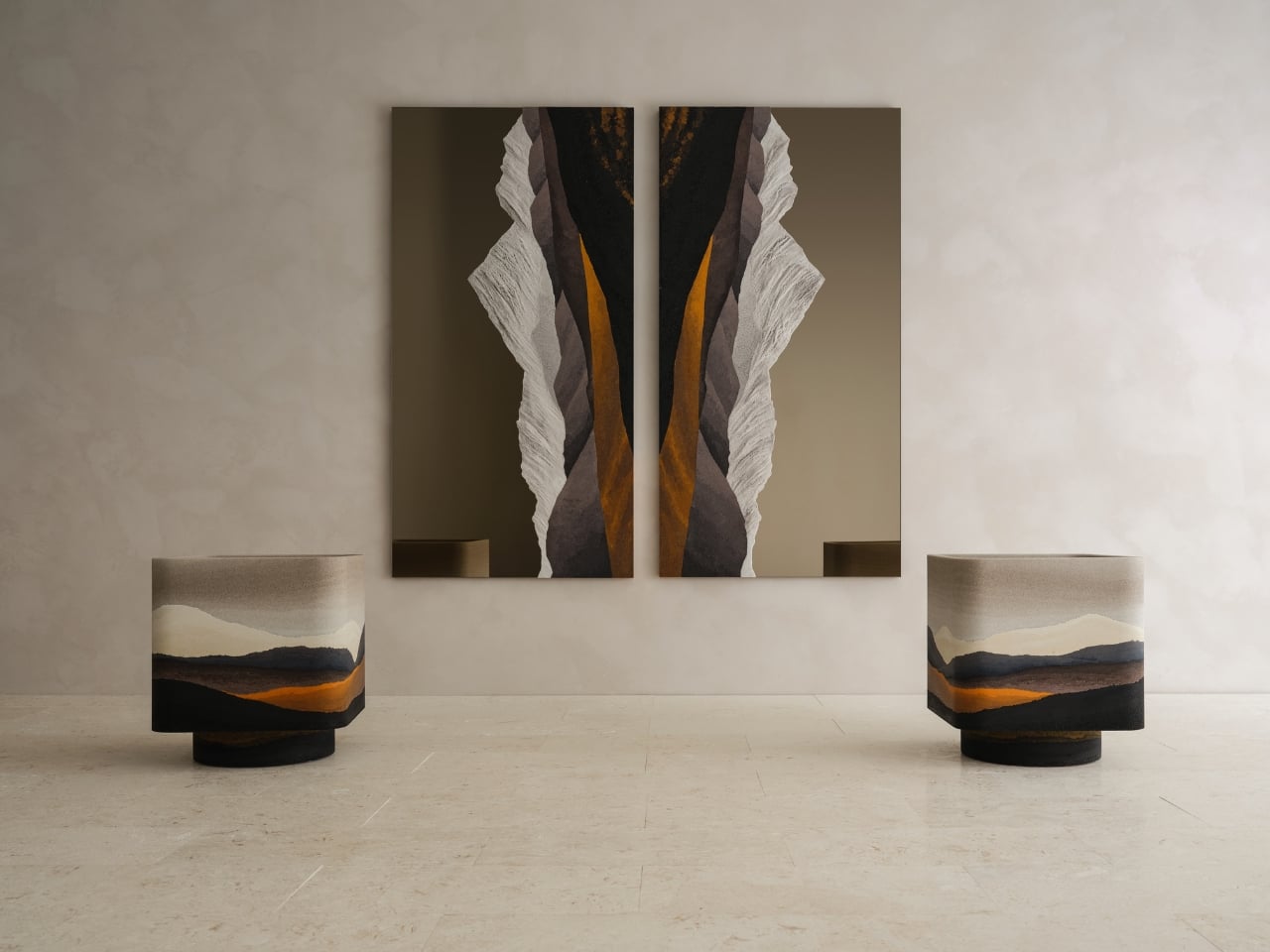
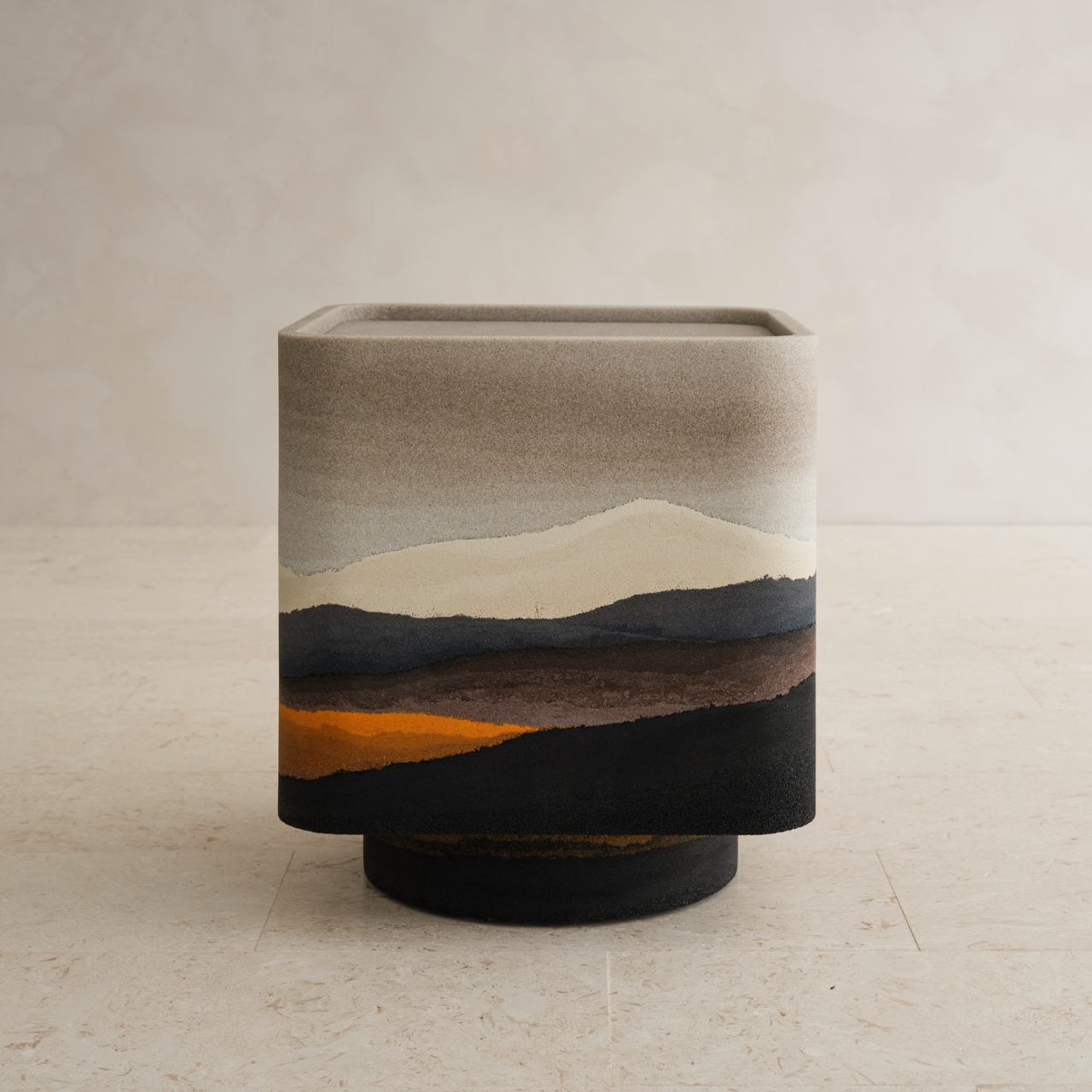
The orange stripe on Fernando Mastrangelo’s side table takes a dip just as it turns the corner. Above it, a cream-colored ridge rises against a gray sky. Look at the table straight on and you could almost mistake it for a landscape painting. Then you notice the shallow rim around the top. I like how neatly it answers a small decorating problem: you need somewhere to set your coffee, but that spot beside the sofa could use a little character of its own, especially if you’re short on wall space.
Mastrangelo calls the pair The Divide (01, 02). The two side tables are part of Territories, his 2026 exhibition at Cristina Grajales Gallery in New York, and the gallery lists them as available. Each measures 22 inches tall by 20 inches wide and deep. A short, round pedestal sits underneath the rounded square body, leaving a sliver of shadow where the sides overhang it. It’s a small step inward, but without it I think the tables would read more like blocks dropped onto the floor.
Designer: Fernando Mastrangelo
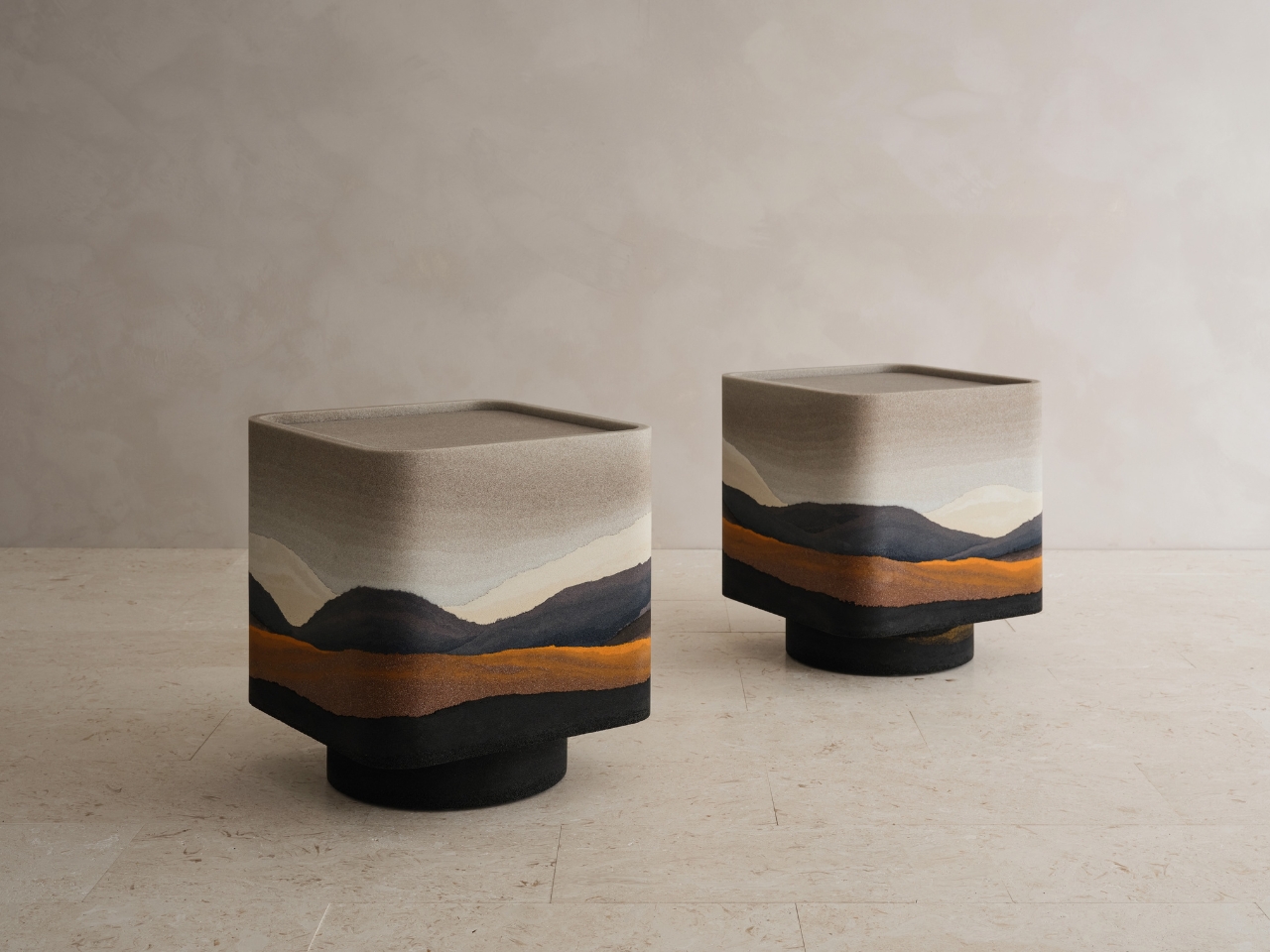
From above, the tables are surprisingly plain. The shallow inset gives each top the outline of a tray, and the muted taupe leaves a lamp or a stack of books with very little to compete against. The color is concentrated where you’d normally expect the least from a side table: the sides. I like that decision more than I would a spectacular tabletop. You can leave a book open or drop your keys when you get home without covering the bit you bought the table to look at.
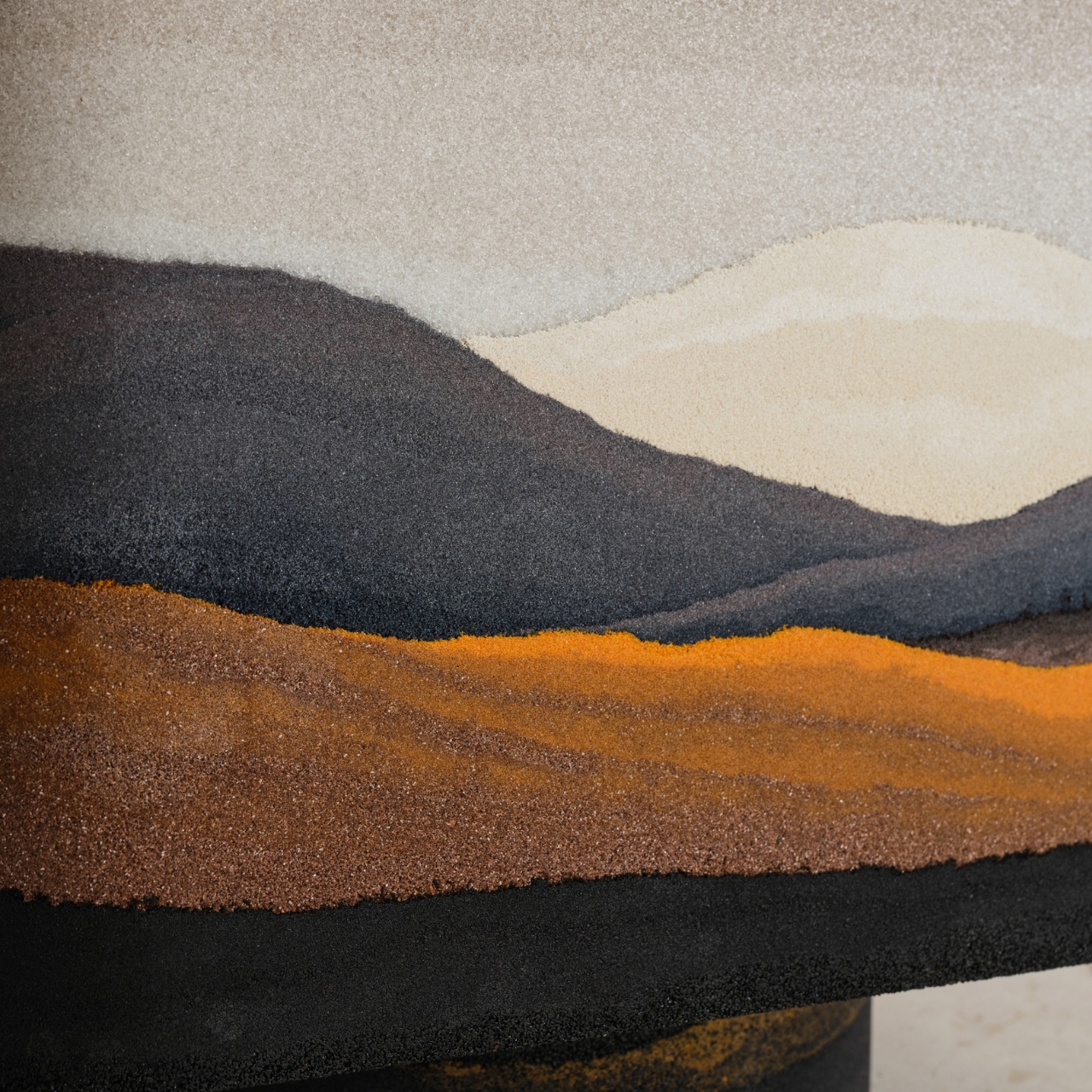
The landscape is cast from hand-dyed sand and powdered glass. Mastrangelo told Wallpaper that he feeds sand into a mold through a half-inch opening, then packs the material down with a stick. He works from a digital rendering, but he can’t see the image properly as he’s building it. The close-up photos make that process easier to picture. The colors are distinct enough that you can follow the ragged edge of a ridge, yet the gray above it changes so gradually that it’s hard to say where one shade gives way to the next.
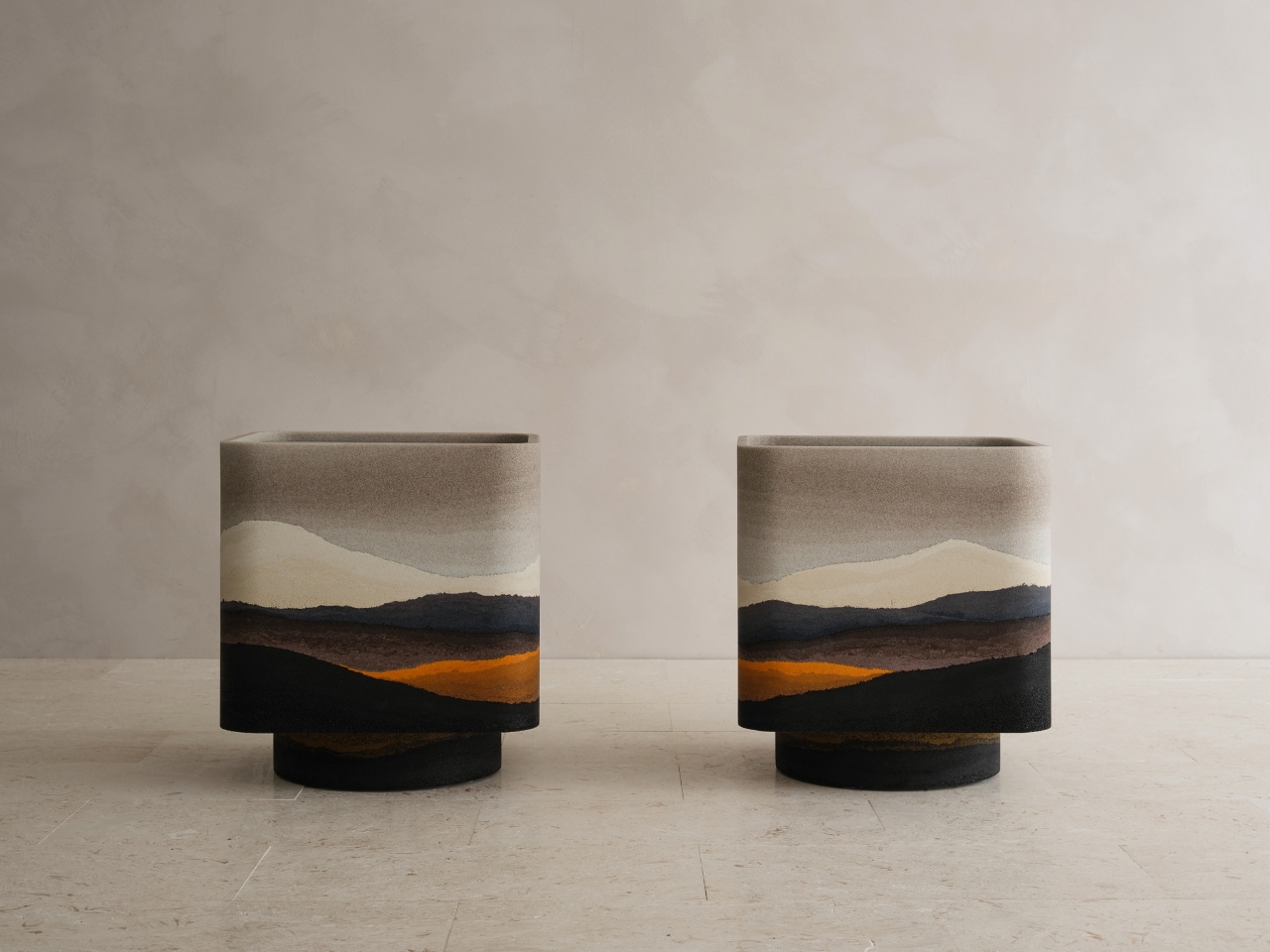
I’d usually rather have two different tables than an exact match at either end of a sofa. The Divide gives me a reason to reconsider. In the straight-on photograph of the pair, the cream ridges rise in opposite directions, while the orange gathers toward the space between them. My eye wants to join those bands across the gap, even though they don’t quite line up. Turn the tables at an angle and the effect loosens: now each has a bend in the landscape that’s worth following on its own.
That gap also suits the broader exhibition. Territories takes disputed regions as its starting point, but Mastrangelo uses similarities in the terrain to keep the work from reading as a literal record of any one place. I wouldn’t try to identify a specific mountain from these tables. The more interesting detail is how quickly I read the two landscapes as related, and how quickly the empty space between them starts to look like a boundary. The show’s premise gives that little visual trick more weight. It still works if all you see at first is a streak of orange.
A 20-inch square is worth measuring out before falling for the pair. The pedestal may make each table look lighter, but it doesn’t make the body any narrower where you walk past it. And if the only available spot is a tight corner between the sofa and the wall, I’d probably put one somewhere else rather than squeeze in two. I’d want to walk past it before deciding which way to turn it. The corner I’d usually tuck against the sofa might be exactly the one I’d want to see from the doorway.