Here’s my favorite music stat of 2026. Roughly half of Gen Z and millennial CD buyers don’t own a CD player. They buy the disc, admire the artwork, maybe sniff the booklet, and park it on a shelf like a trading card. Meanwhile, US CD revenue jumped 58.6 percent in the first half of the year. That’s a lot of shiny plastic circles with nothing to spin them on. Teenage Engineering spotted that gap and, being Teenage Engineering, decided the fix needed a numpad and a sync jack.
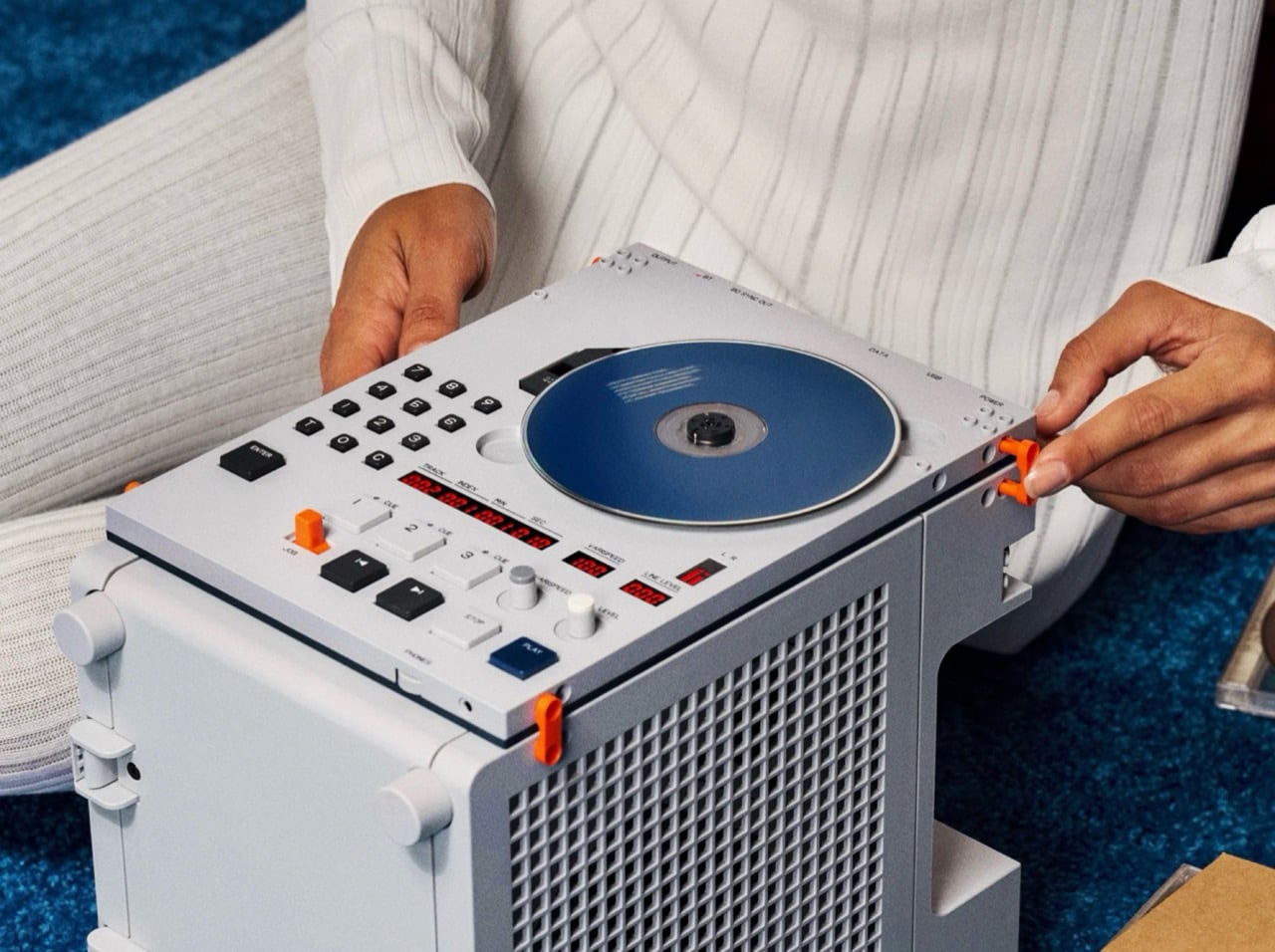
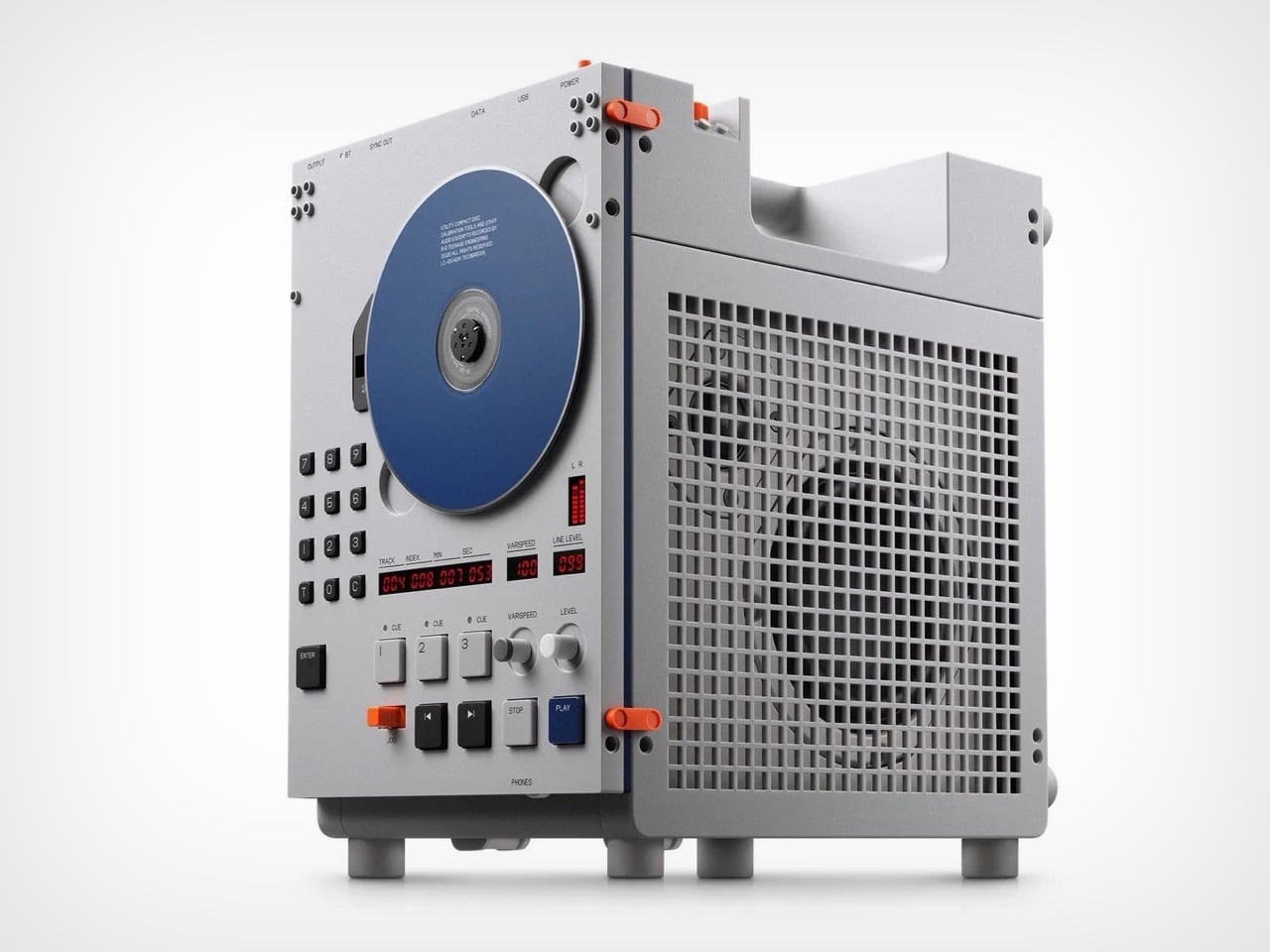
The EP/BC-1, TE’s first CD player, launched November 20 at $329 as the opening act of its new broadcast series. The disc spins in full view on top. When the album is the collectible, why hide it? There’s varispeed, three cue points, a jog stick, Bluetooth with Auracast, and a USB port for ripping discs to WAV files. It runs on a battery and snaps onto the EP-35 K.O.-AMP to make a boombox you can carry by the handle. Your CD binder just got a reason to leave the closet.
Designer: Teenage Engineering
Teenage Engineering turned 21 and kept building toys for grown-ups
Teenage Engineering technically stopped being a teenager a while ago (the Stockholm studio was founded in 2005, do the math), but nobody told the product team. Its gear has always felt like a toy chest for adults, from Pocket Operator synths on bare circuit boards to the EP-133 K.O. II, a $299 sampler dressed up as a 1980s calculator. The K.O. II set the template for a family of gray slabs with the same footprint and chunky keys. The EP/BC-1 measures 9.4 x 6.9 x 0.9 inches (240 x 176 x 23 mm) and weighs about 1.5 pounds (0.7 kg). Yes, it plays those shiny coasters that used to live in your dad’s car visor.
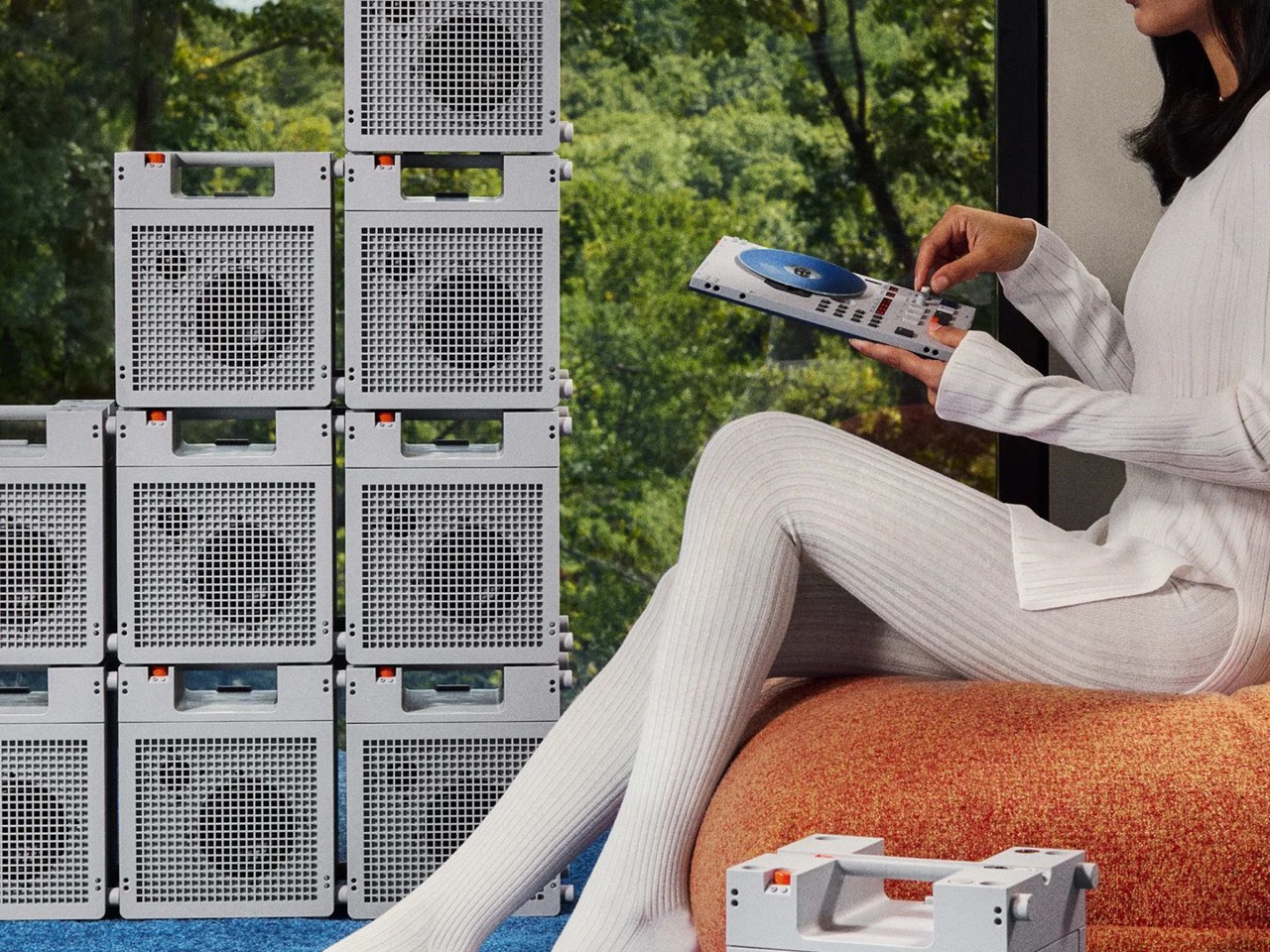
Those orange pegs poking out of the corners are EP-grid clips, and they turn TE’s EP gear into building blocks. A $15 dock kit bundles four clips with a short 3.5 mm cable. The player snaps onto the front of the K.O.-AMP and stands upright like the faceplate of a pint-sized hi-fi. Grab the amp’s handle and the whole rig goes with you. TE says Auracast lets one player stream to an unlimited number of K.O.-AMPs at once. The press shots show a wall of stacked gray speaker cubes in somebody’s living room. I’ve seen less ambitious sound systems at actual weddings.
A 90s radio booth deck, shrunk down and left wide open
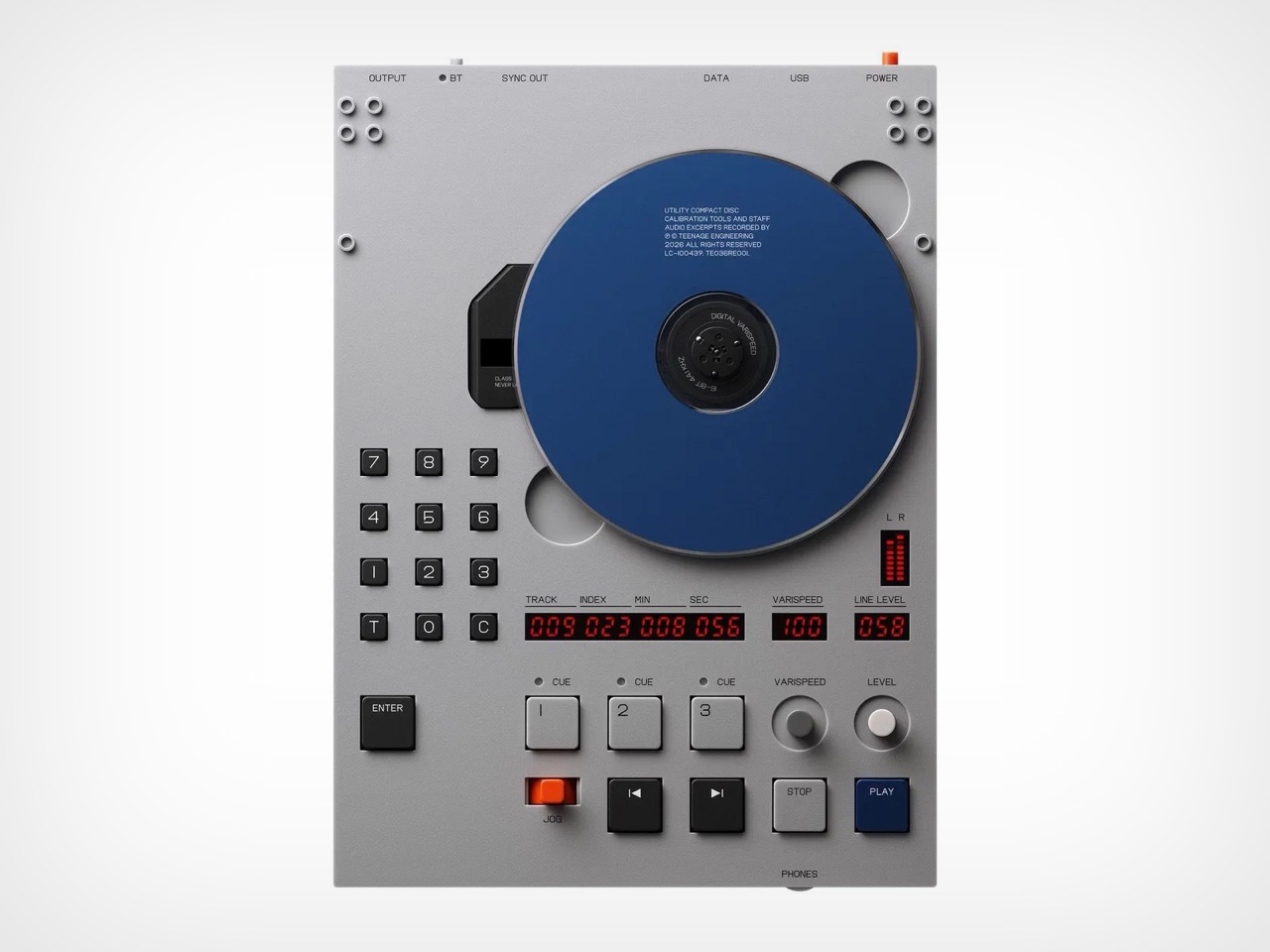
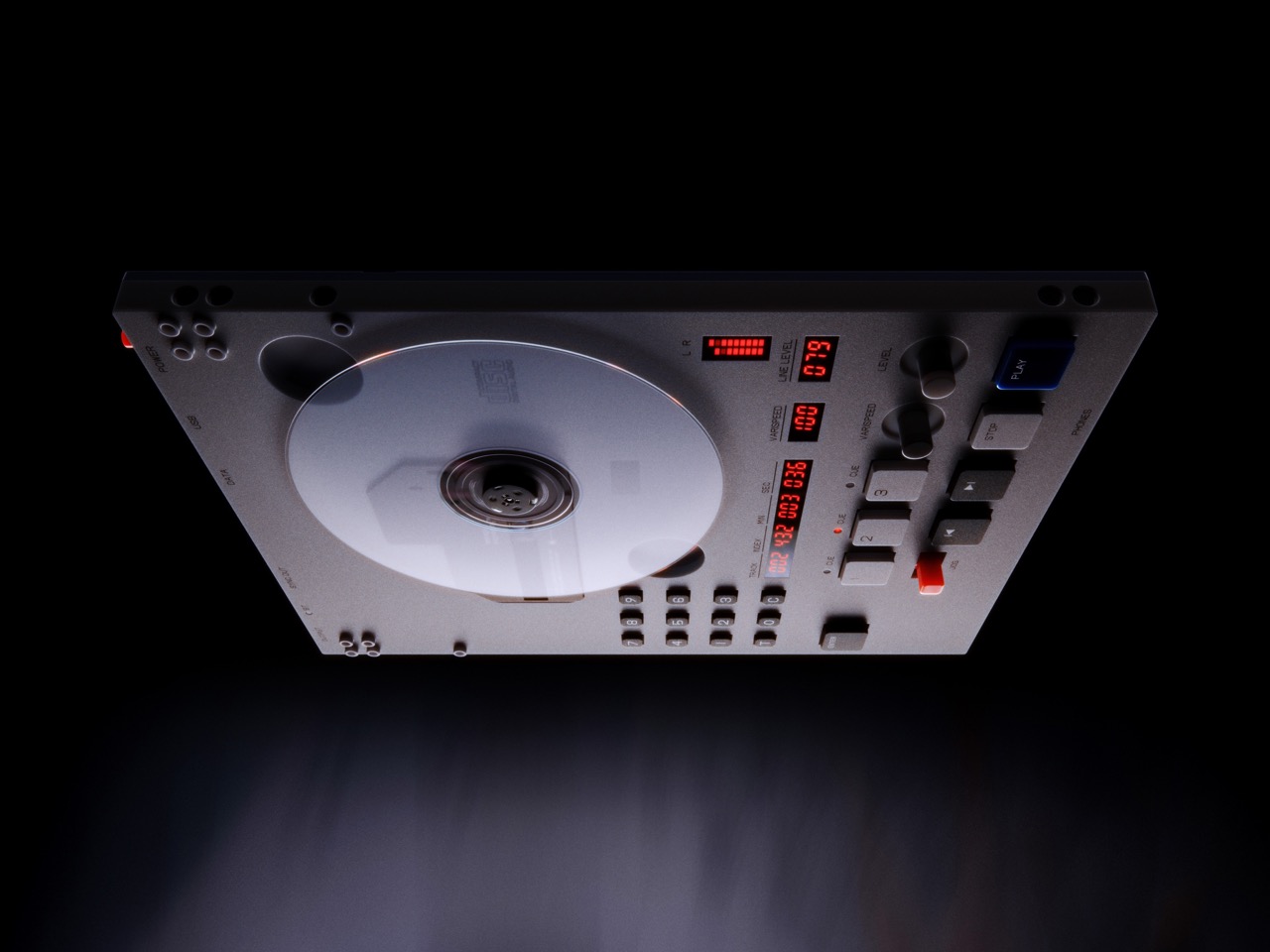
BC stands for broadcast, and the top panel looks like it came off a radio station deck from 1995. A numpad with digits 0 through 9 and T, C, and ENTER keys lets you punch in a track number. An 18-character red seven-segment display shows the track, index, minutes, and seconds. Two nine-bar LED meters bounce with the left and right channels, with separate readouts for varispeed and line level. The color coding is classic TE: orange for the bits you fiddle with, black and light gray for the workhorse keys, and one navy PLAY button that matches the blue utility CD in the box. Two circular finger cutouts let you lift the disc off the spindle, leaving the laser sled in plain view.
Varispeed runs from 50 to 150 percent. Three cue buttons let you mark spots on a disc, and the player remembers those cues for your last 40 CDs. The jog stick scrubs at 2x, 4x, or 8x. Built-in beat detection reads the tempo of whatever’s spinning and sends a sync clock through a 3.5 mm jack, so a K.O. II or Pocket Operator can jam along with your old Daft Punk CD. Technics chased a similar idea in 1986 with the SL-P1200, a pitch-adjustable CD deck built for broadcasters. TE’s own guide notes that cues take a moment to fire while the drive seeks. Treat it as a jam partner and a sampling source, and leave the club CDJ comparisons at the club.
$329 buys a CD player, a ripper, and a tiny radio station
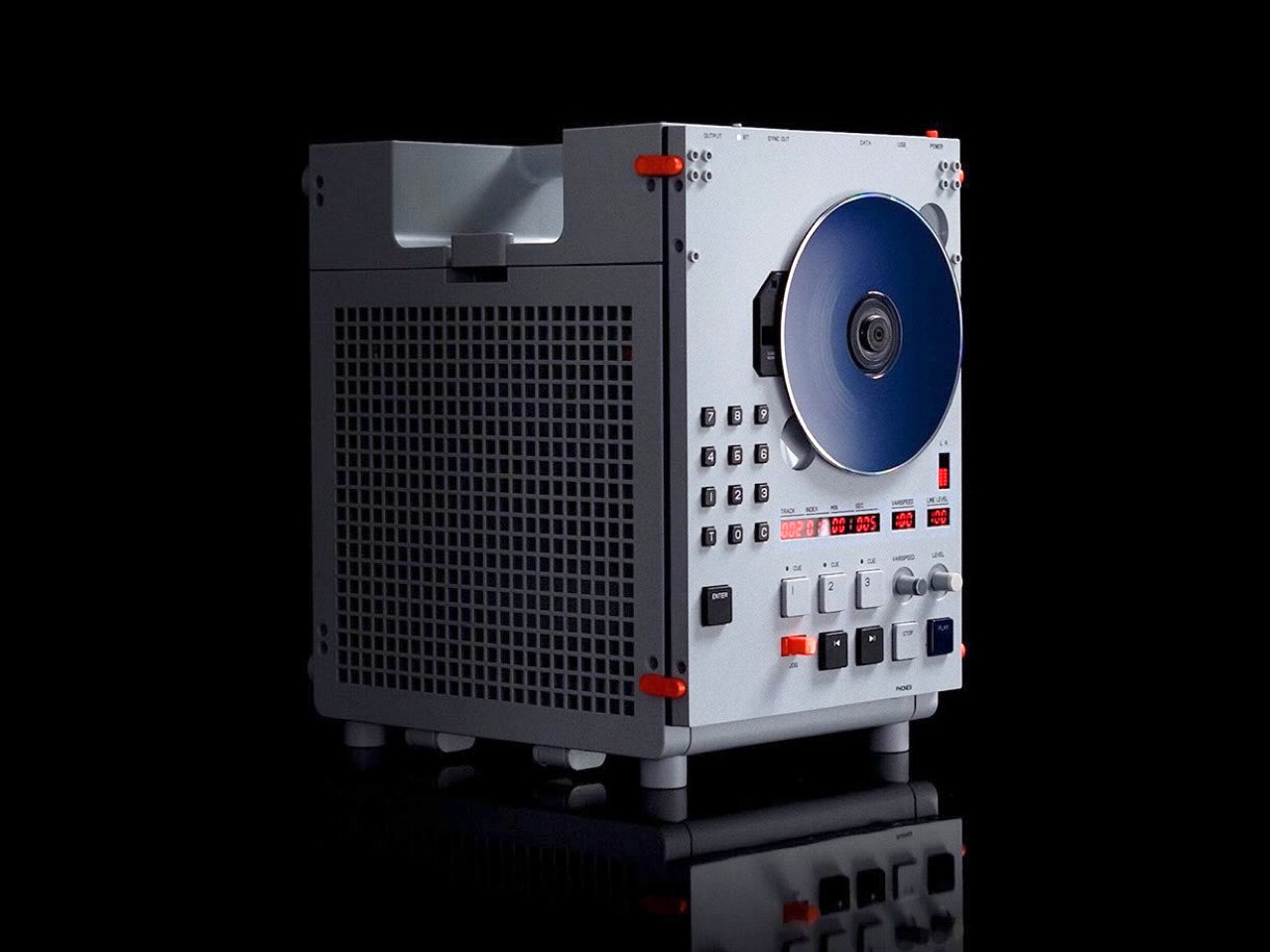
A second USB port rips tracks straight to a thumb drive as 44.1 kHz, 16-bit WAV files, matching the sample rate and bit depth of an audio CD. The USB-C port charges the 2,000 mAh battery, which TE rates for about six hours of playback, and doubles as a class-compliant audio and MIDI interface for your laptop. You get separate 3.5 mm line and headphone outputs, Bluetooth for your earbuds, and Auracast for broadcasting to compatible speakers. It plays MP3 data discs too, so that burned 2004 road-trip mix finally has somewhere to go.
At $329, the EP/BC-1 costs more than a basic Bluetooth Discman clone and a fraction of a Pioneer CDJ. Audiophile portables like the FiiO DM13 make their case with DAC chips and balanced outputs. TE gives you a jog stick and a way to make your sampler play along. Add the $399 K.O.-AMP and the $15 dock kit and you’re at $743 in the US if you buy everything separately. That’s real money for a format plenty of people tossed in 2010. Then again, my dusty shelf of old CDs suddenly looks a lot like a sample library.