Lindsey Austen of Richmond, Texas, ordered cat food, light bulbs, and shoe insoles, then watched a drone hover over her backyard, open its hatch, and drop everything into her pool and hot tub. She had not realized drone delivery was selected at checkout, which might be the most 2026 sentence ever written. Her video of the splash went around the internet, and Amazon called the whole thing rare. I bring it up because that was an Amazon Prime Air drone, and it has very little in common with the Wing aircraft headed for Denver and Seattle. Same sky, completely different philosophy about where a package should end up.
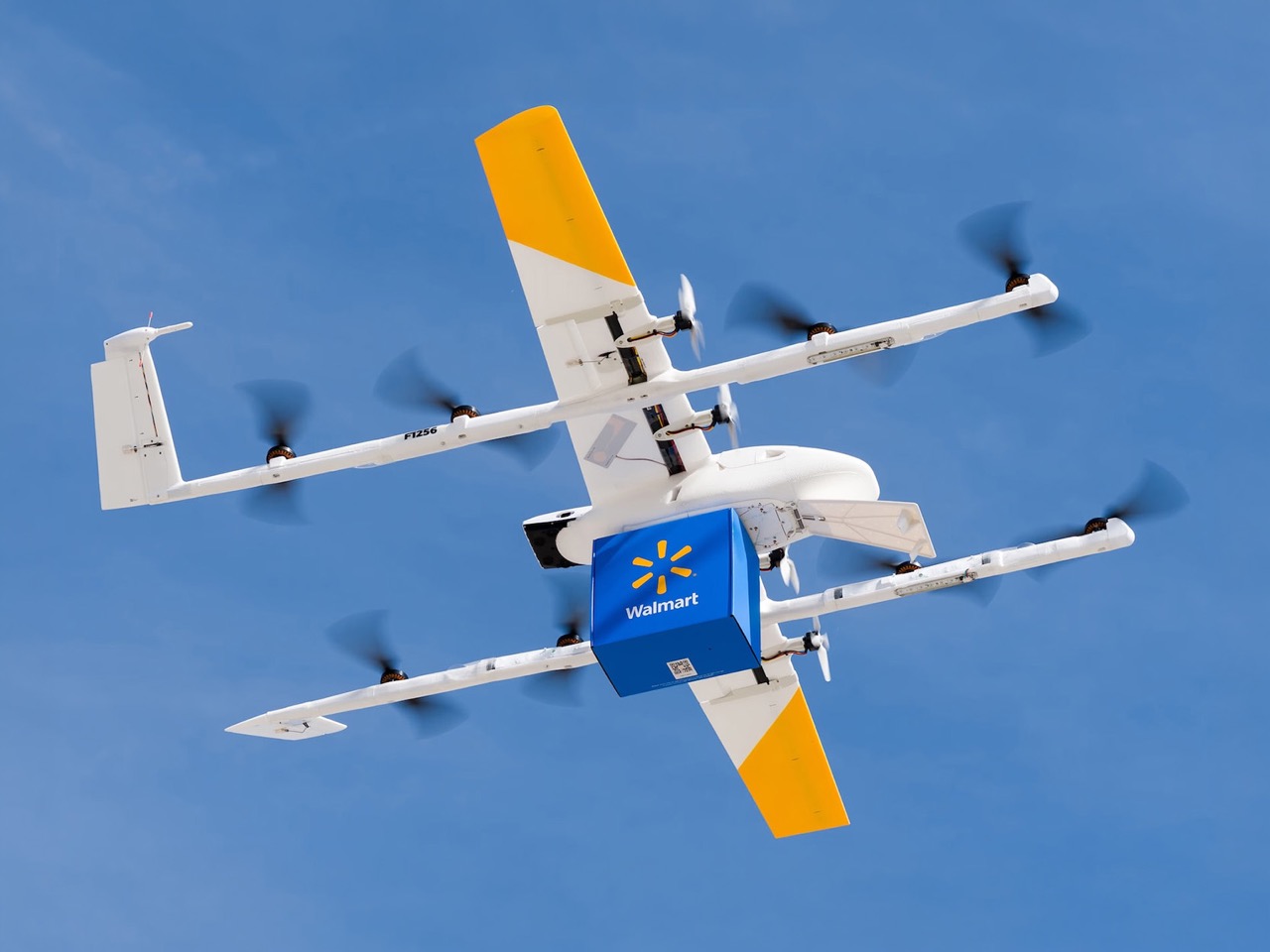
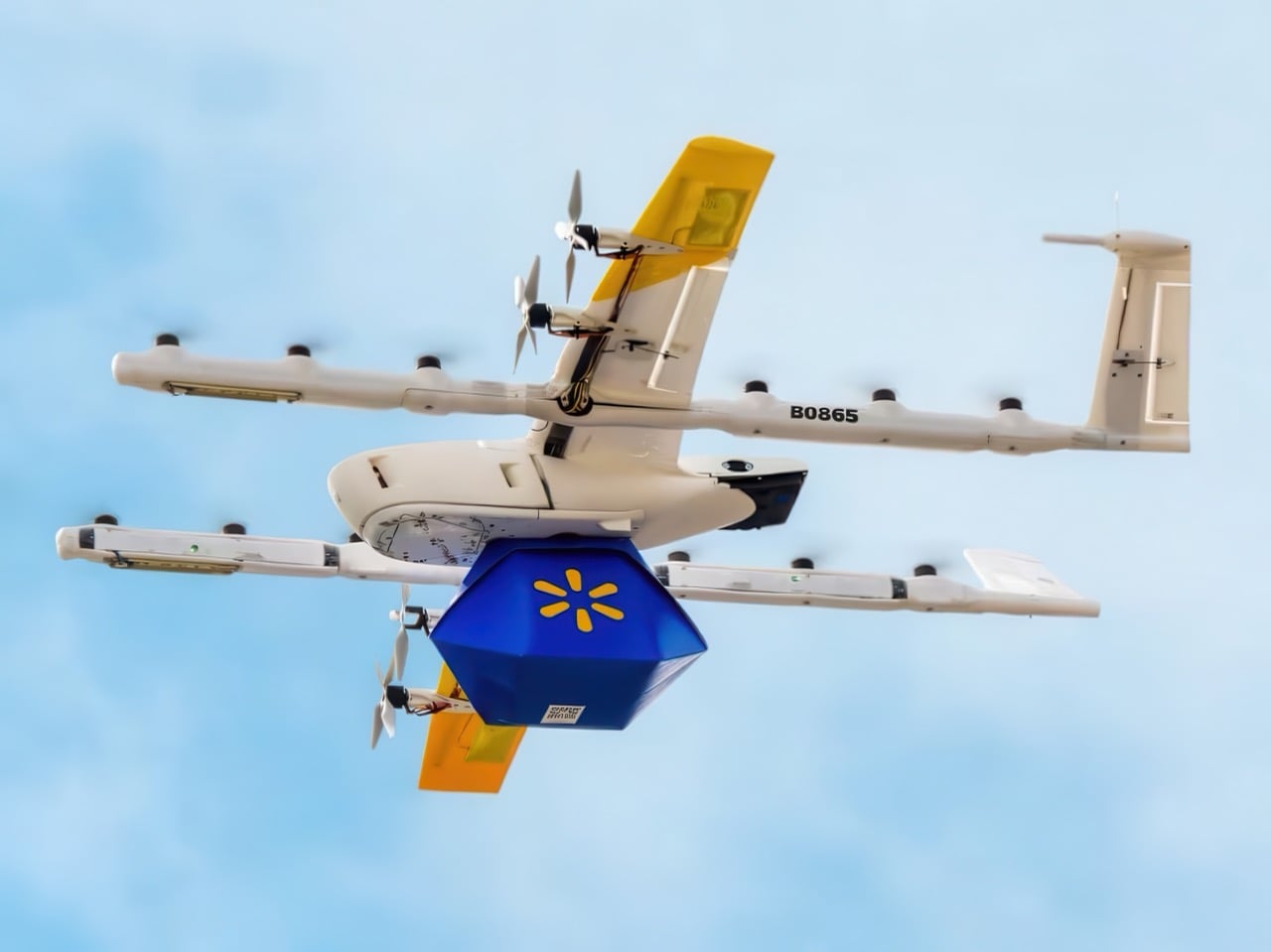
Wing and Walmart announced on October 5 that Denver and Seattle join their drone network in 2027, part of a plan covering 270-plus Walmart stores. Wing’s Hummingbird hovers around 23 feet up and lowers the box on a tether, so a pool is only in play if you tell it to aim there. It cruises at up to 60 mph, and the bigger version carries up to five pounds (Wing’s own numbers). Walmart sells the whole thing as groceries in as little as 30 minutes, with Wing claiming a 23 minute average. I wanted to know what that promise looks like over your street, and what it means for delivery drivers.
Designer: Wing for Walmart
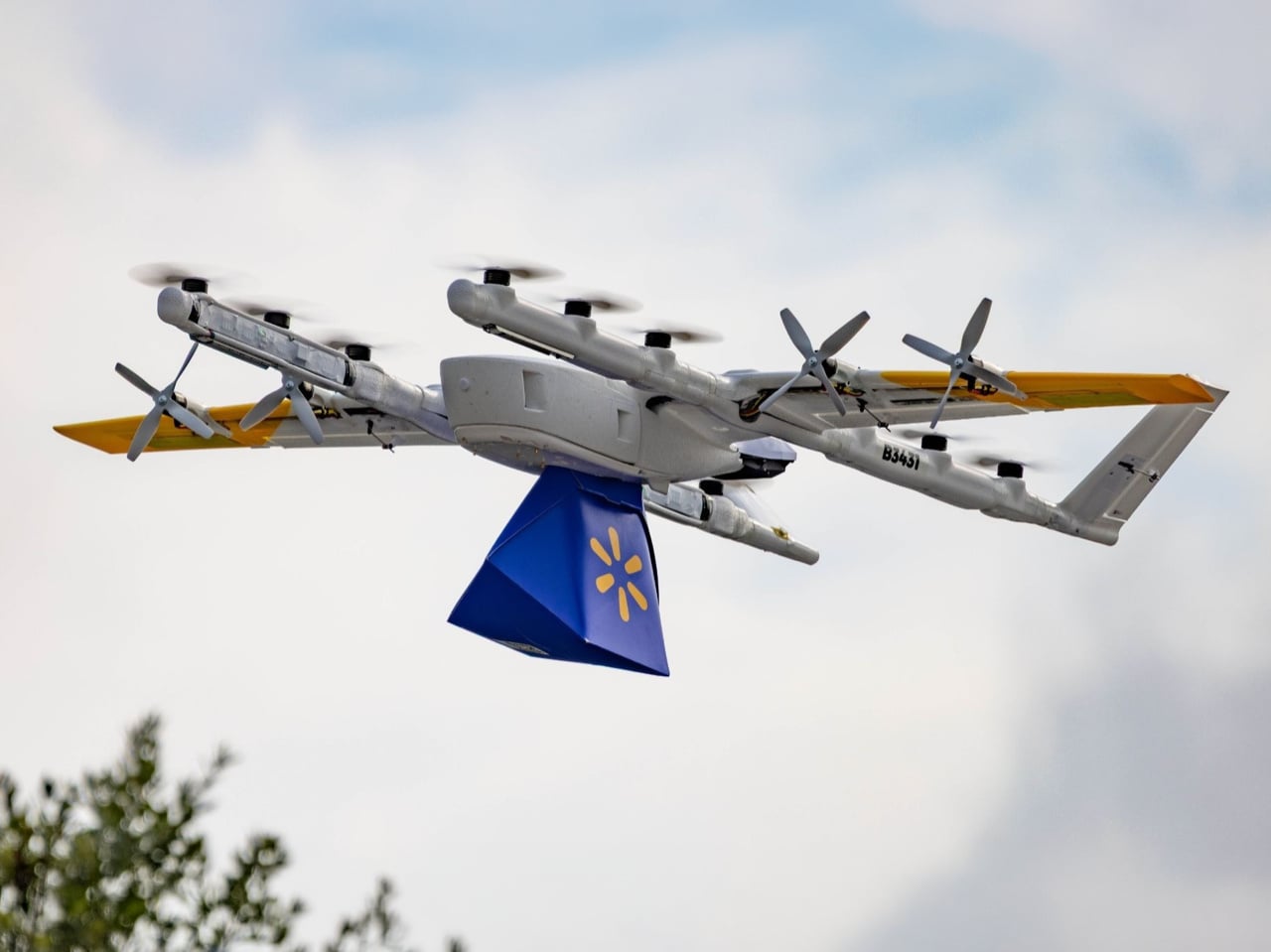
The Hummingbird is a hybrid, which means rotors for vertical lift and a fixed wing for cruising, so it launches like a drone and travels like a tiny airplane. Wing’s two versions weigh 14 and 24.3 pounds at max takeoff, per FAA filings, and the heavier one hauls up to roughly five pounds of payload. Both come out of Wing’s Aircraft Library, a parts-bin approach where shared components get remixed into different sizes. Wing built the bigger one after finding about 30 percent of deliveries needed multiple flights, according to The Register. Neither lands in your yard. They hover, lower the box on a tether, and release it at ground level.
Compare that with Amazon’s MK30, which weighs about 78 pounds empty (per DroneXL’s comparison table) and, according to Axios, comes down closest to the customer. Wing’s bet is the opposite: keep the heavy part high and put only a cardboard box within reach of your dog. It also skips a parachute, which Zipline’s 55 pound aircraft carries, so the safety case rests on being small and light. I love that as industrial design logic, because every ounce shaved is a risk shaved. Parachute research like the kirigami parachute concept chases safety by adding something, while Wing chases it by subtracting.
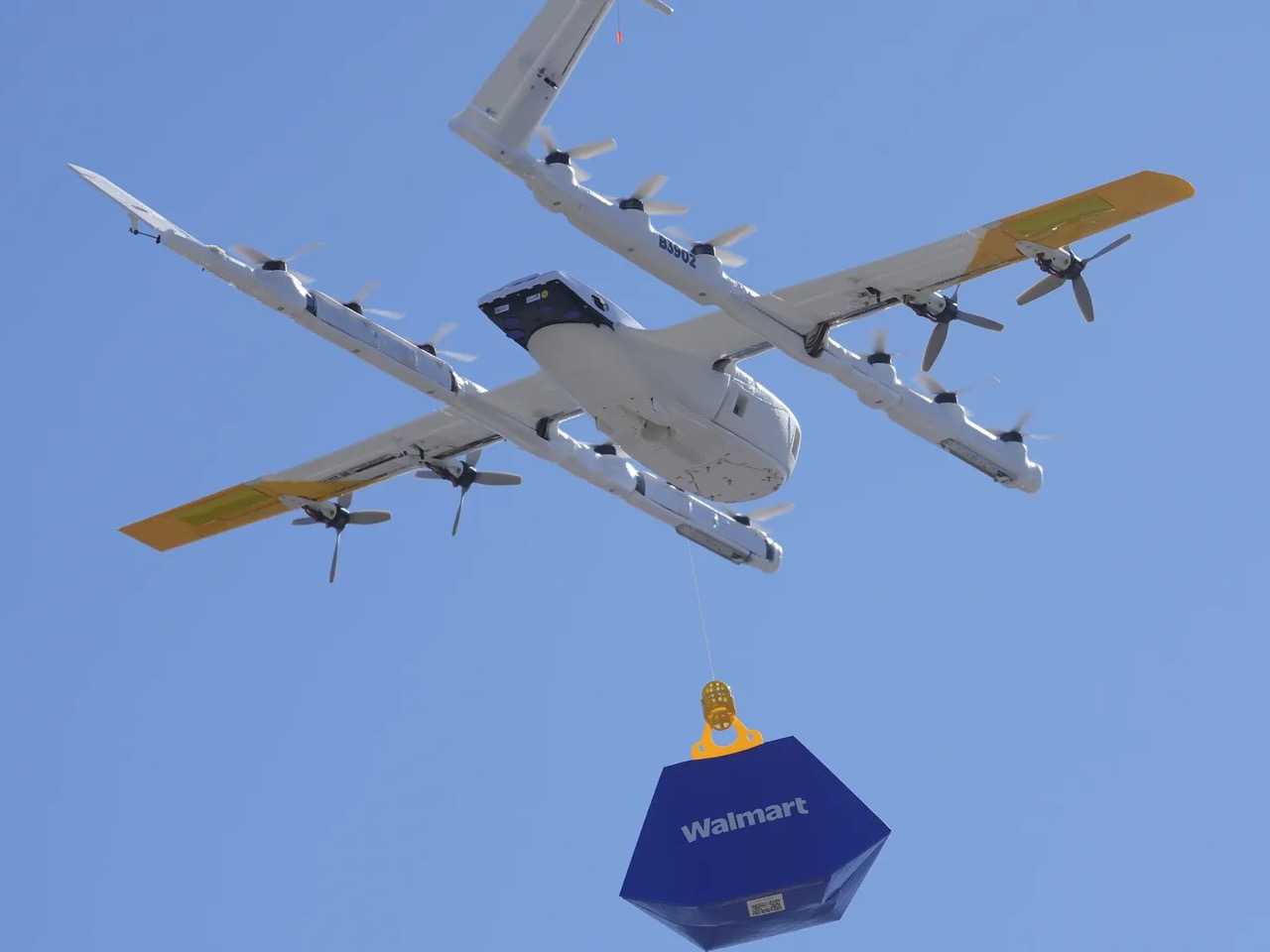
Wing’s own presentation puts average flight time at five minutes or less, which implies most of that 23 minutes happens on the ground. In the air, FAA filings authorize up to 400 flights per nest per day across 368 nests, which DroneXL tallies to 147,200 flights daily on paper. Wing has had a crash too: a drone on a return flight went down and caught fire in Kemah, Texas on March 1, with a power line suspected and nobody hurt. Part 108, the FAA’s routine beyond-line-of-sight rule, has sat at the White House since July 10. Meanwhile, Castle Rock and Parker froze hub permits, though towns control the parking lot and the FAA controls the sky.
Five pounds is a hard ceiling, so drones chase the small stuff first, and Walmart says customers use them for forgotten ingredients and cold medicine. DoorDash insists Dashers stay central as it launches its own drone service, while a Wing operations director has described drones as skipping recruiting, insurance, commissions, and no-shows. Concepts like the DJI Express UAV already imagine cargo hopping between cities without a dedicated driver, so the direction of travel is clear. I’d guess the first gigs to feel the squeeze are the quick, small, suburban runs. The Hummingbird’s whole trick is delivering small things gently, and Austen’s hot tub is a reminder that picking the drop spot is half the job.