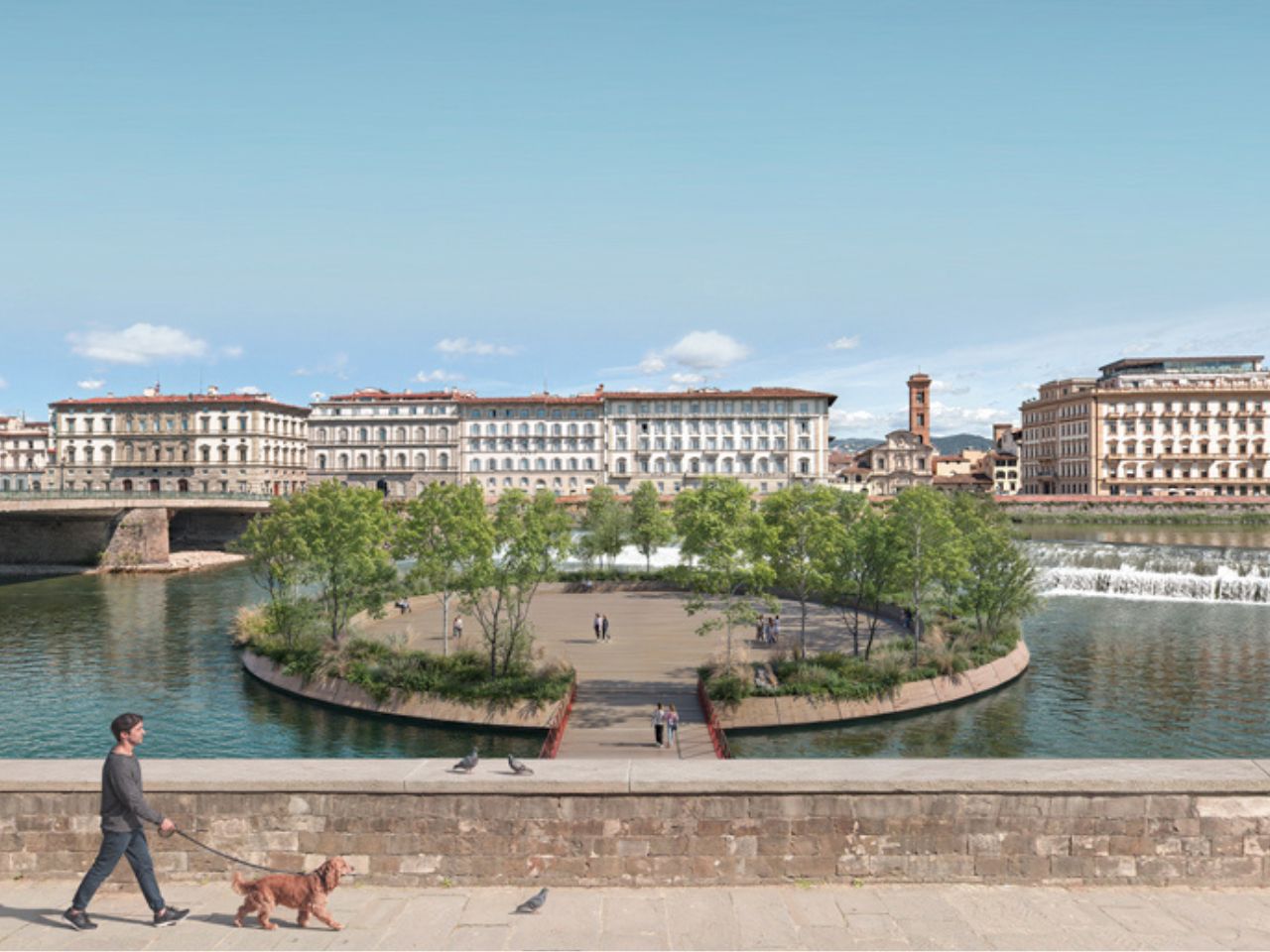
Florence is known for its Renaissance architecture, historic bridges, and centuries of artistic heritage, but its iconic Arno River could soon offer a different kind of public experience. Architect Angelo Renna, together with Renna Studio, has envisioned Firenze Little Island, a seasonal floating platform that would bring greenery, cultural activities, and communal spaces directly onto the water. Surrounded by 39 mature trees, the proposed installation would transform a portion of the river into an accessible outdoor destination while responding to its changing environmental conditions.
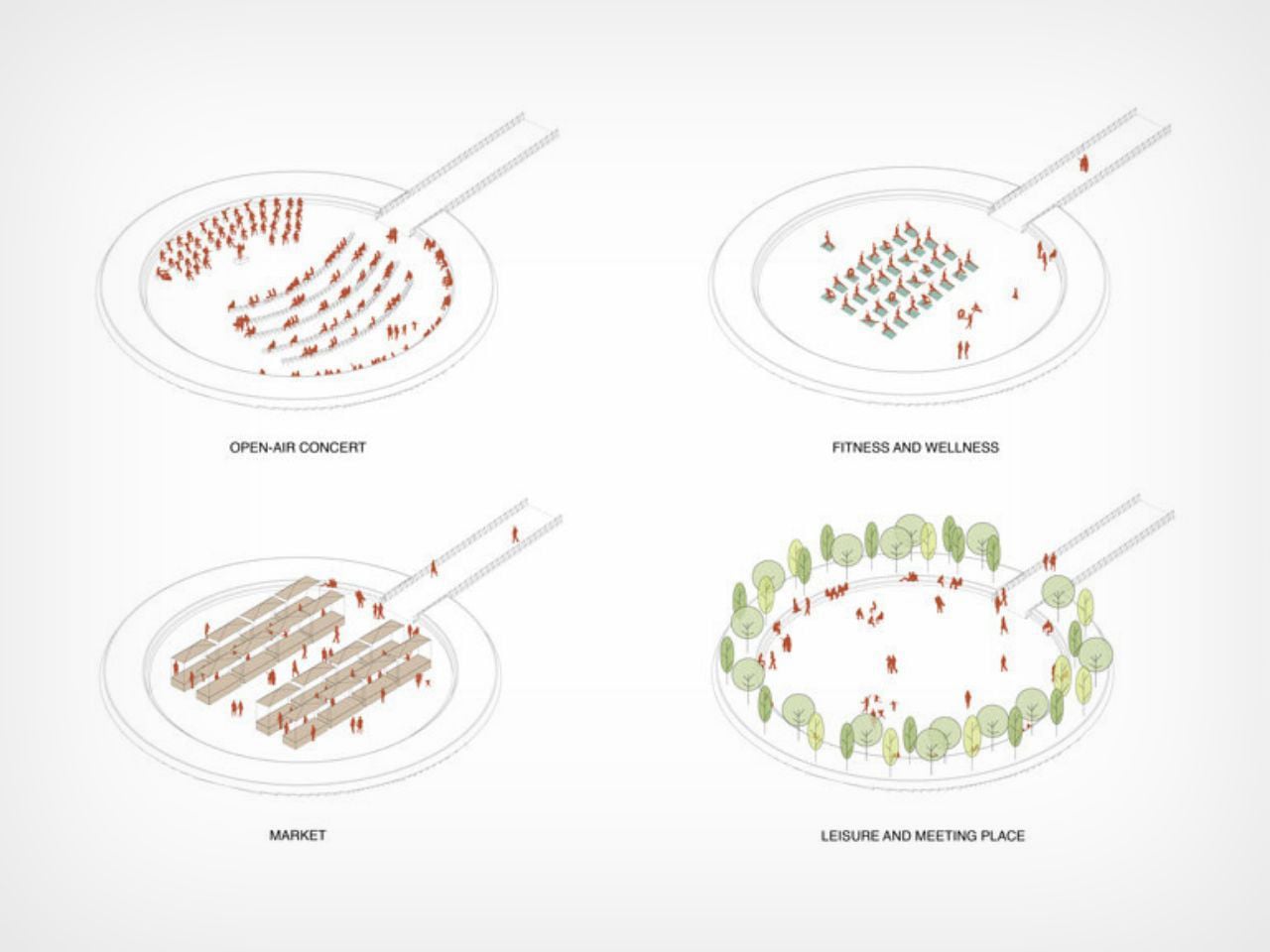
The island is proposed for the Pescaia area of the Arno River, where a weir regulates the current and creates a relatively sheltered stretch of water. This location provides a suitable setting for a temporary floating structure, allowing visitors to experience Florence from a perspective usually reserved for those crossing its bridges or walking along its embankments. The platform is intended to operate between May and September, when calmer river conditions make outdoor activities more feasible. From orchestral performances and open-air concerts to markets, fitness events, and informal gatherings, the space would accommodate a variety of public activities throughout the summer.
Designer: Renna Studio
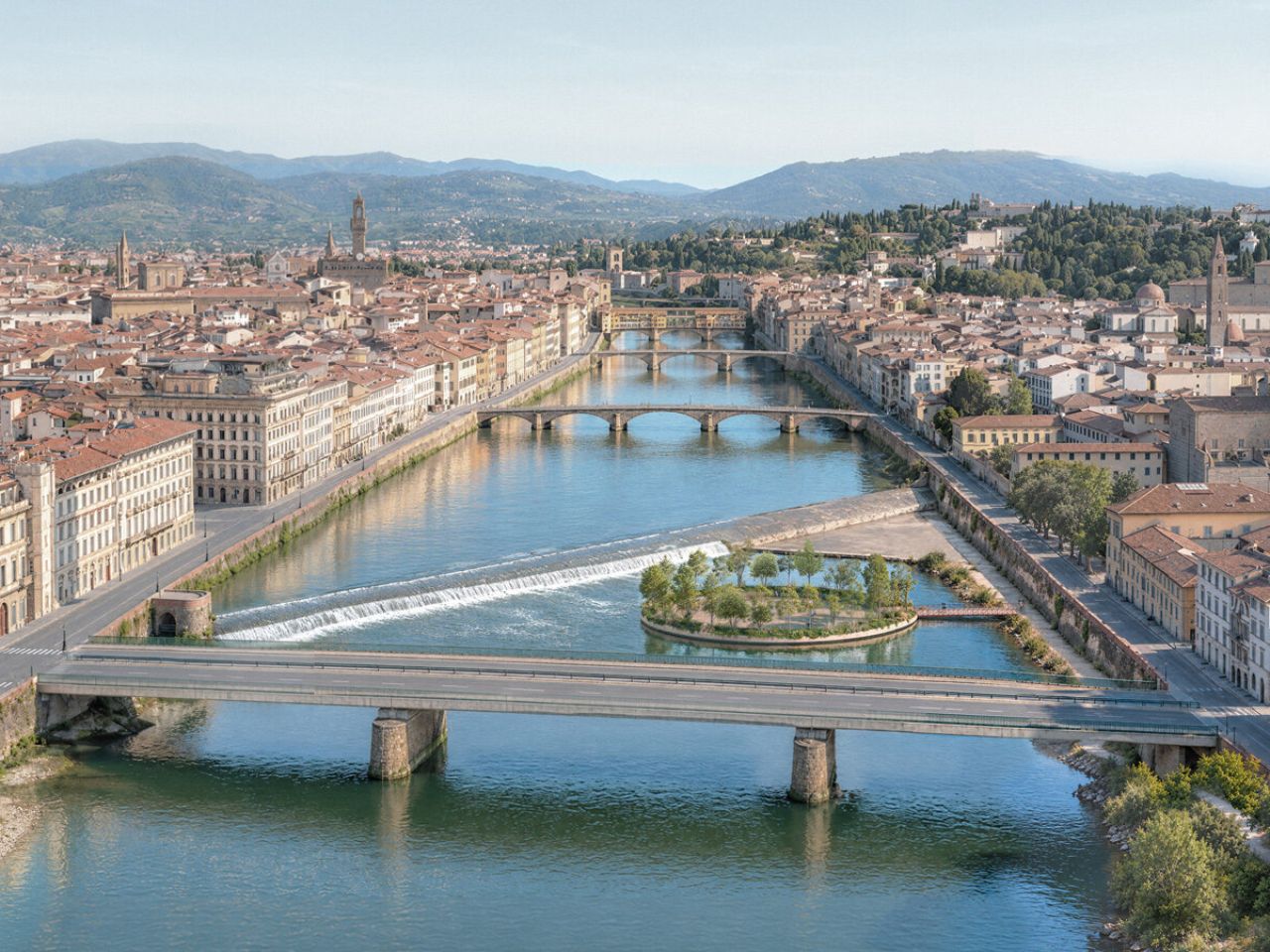
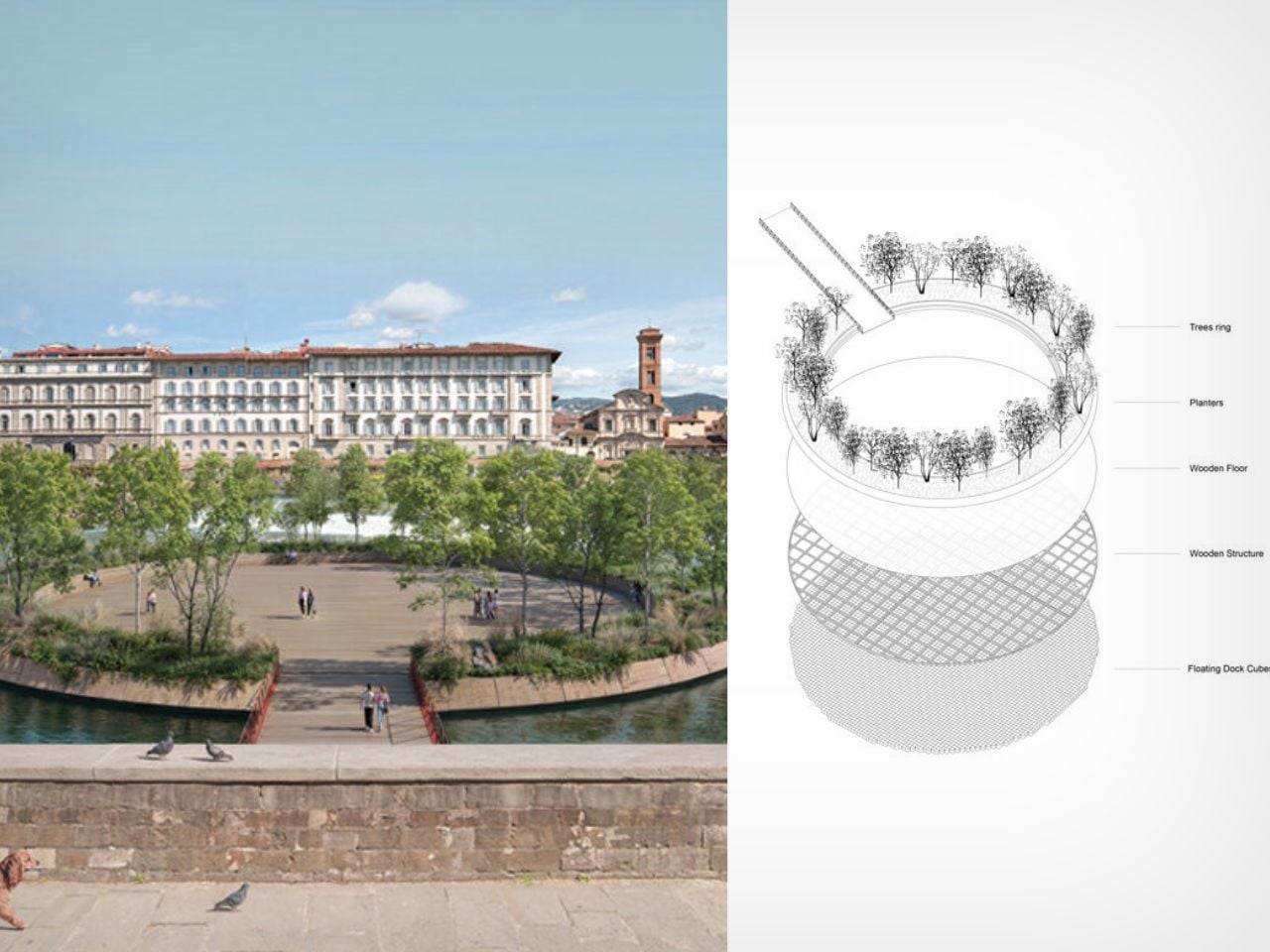
At the center of the proposal is a spacious timber deck enclosed by a circular arrangement of trees. Rather than introducing a conventional pavilion or permanent building, Renna Studio uses vegetation to define the island’s architectural character. A segmented planter ring, measuring approximately one meter (3.3 feet) in height, surrounds the central platform and accommodates 39 mature trees. The arrangement creates a recognizable green silhouette against Florence’s historic skyline while providing a degree of separation from the surrounding water. The trees would also contribute to the island’s microclimate, offering natural shade and encouraging air circulation during warmer months.
Beneath this planted landscape, the structure relies on a relatively straightforward modular construction system. Prefabricated floating pontoons, similar to those commonly used for jetties and floating platforms, form its buoyant foundation. A timber beam substructure supports the finished decking above, creating a stable surface for visitors and events. Underwater cables would anchor the installation to the riverbed, securing its position while allowing the platform to rise and fall with fluctuations in the river’s water level. This flexibility is particularly important for a structure intended to occupy a natural waterway rather than a controlled artificial basin.
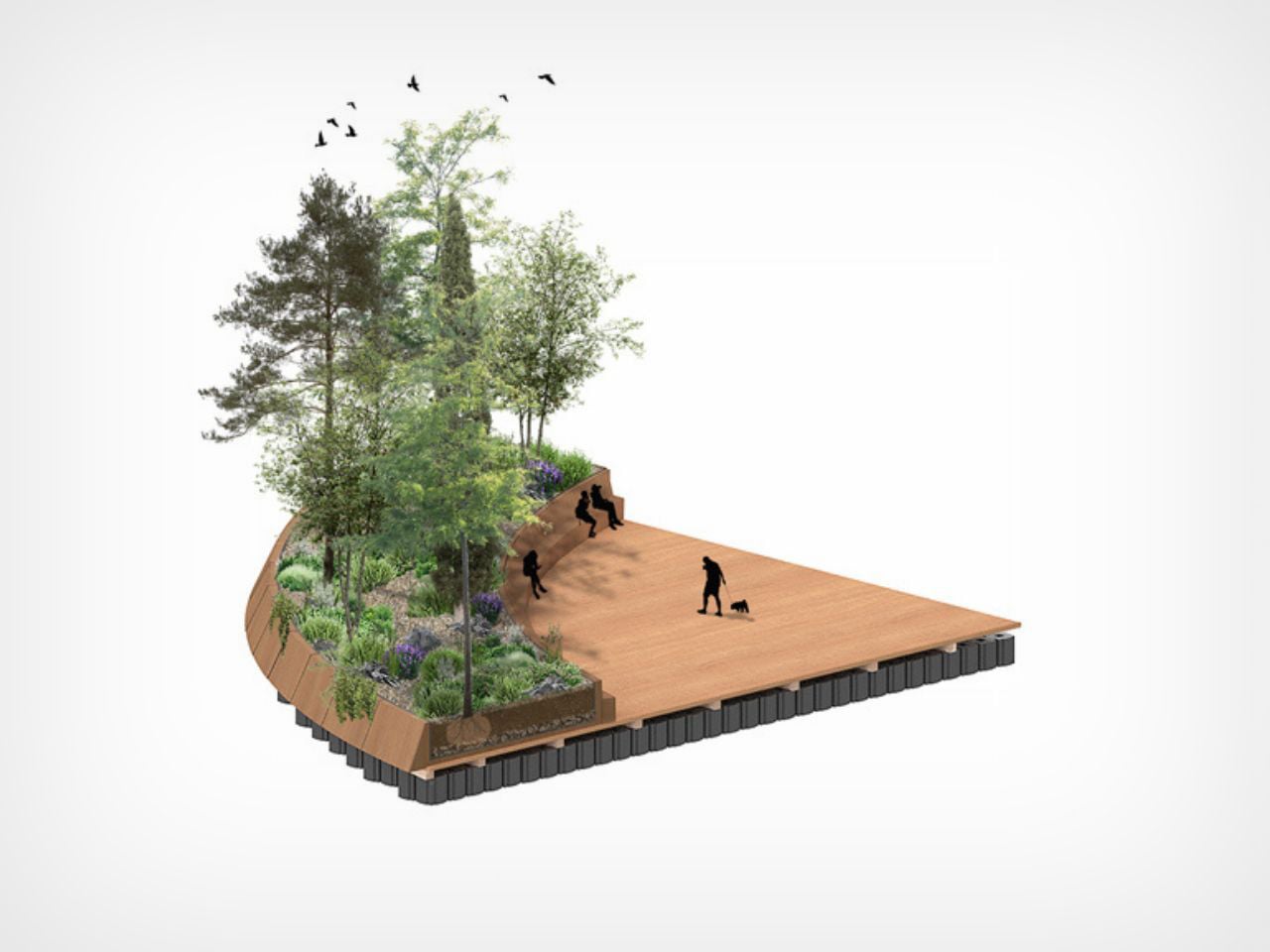
The island’s seasonal character extends into its construction and maintenance. Florence’s Arno River is susceptible to increased water levels and flooding during autumn and winter, making a permanent installation considerably more challenging. Renna Studio addresses this condition through a demountable design that can be dismantled before the arrival of unfavorable weather. The floating pontoons, timber decking, and segmented planters would be separated, transported, and stored until the following season. Meanwhile, the trees and their root systems would be maintained in municipal nurseries, allowing the vegetation to be preserved and returned when the platform is assembled again.
This approach gives the project a distinctive relationship with its environment. Rather than requiring the river to accommodate a fixed architectural intervention throughout the year, the installation would follow its seasonal rhythms. Its modular construction also supports a reversible strategy, allowing the public space to be removed without establishing a permanent built presence in the water. Renna Studio’s proposal draws visual inspiration from Florence’s long architectural history. One of its illustrations references Francesco Rosselli’s Pianta della Catena from 1471, a celebrated historical representation of the city. By placing the floating island within a composition of Florence’s recognizable monuments and landmarks, the drawing connects the contemporary intervention to the city’s historic urban identity. The circular arrangement of trees introduces a new element into this familiar landscape without attempting to replicate its surrounding architecture.
The idea of creating a floating public destination on the Arno has already entered Florence’s civic conversation. Initially proposed with municipal backing in 2024, the broader concept received support from Heritage Superintendent Antonella Ranaldi in early 2026. However, municipal plans have since been paused, and Firenze Little Island remains an architectural proposal rather than an approved installation.
For a city where public space is closely intertwined with cultural heritage, the proposal offers an opportunity to reconsider how the river could participate in everyday urban life. Firenze Little Island imagines the Arno as a place where people could gather, listen to music, explore temporary events, or simply spend an afternoon beneath the trees. Its most compelling quality lies in its adaptability, presenting a public space that appears with the summer, responds to the movement of the water, and disappears before the river’s more unpredictable seasons return.