
A phone mounted between the handlebars is a practical place for a map, right up until you need to read it. The route is down there; the intersection is up ahead. That split in attention is the problem Aegis Rider’s Vision helmet is designed to address, moving speed and navigation information into the rider’s forward view. It’s a sensible problem to tackle.
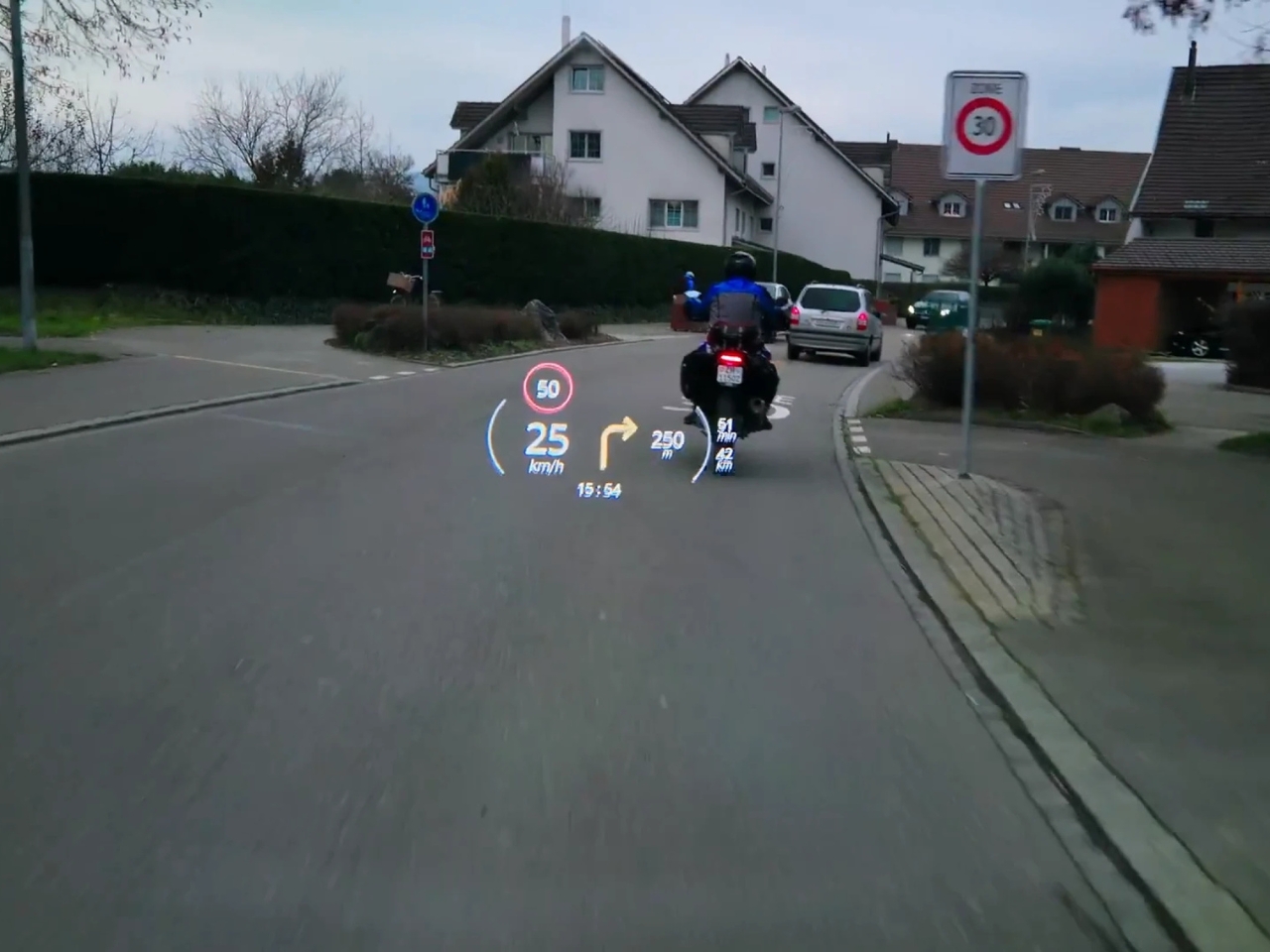
The Swiss company says consumer units began shipping in supported markets in 2026, so this has moved beyond the concept stage. Its central idea is more interesting than simply putting a screen inside a helmet: information can stay positioned relative to the motorcycle rather than following every turn of your head. Look away, and the display moves out of your view.
Designer: Aegis Rider
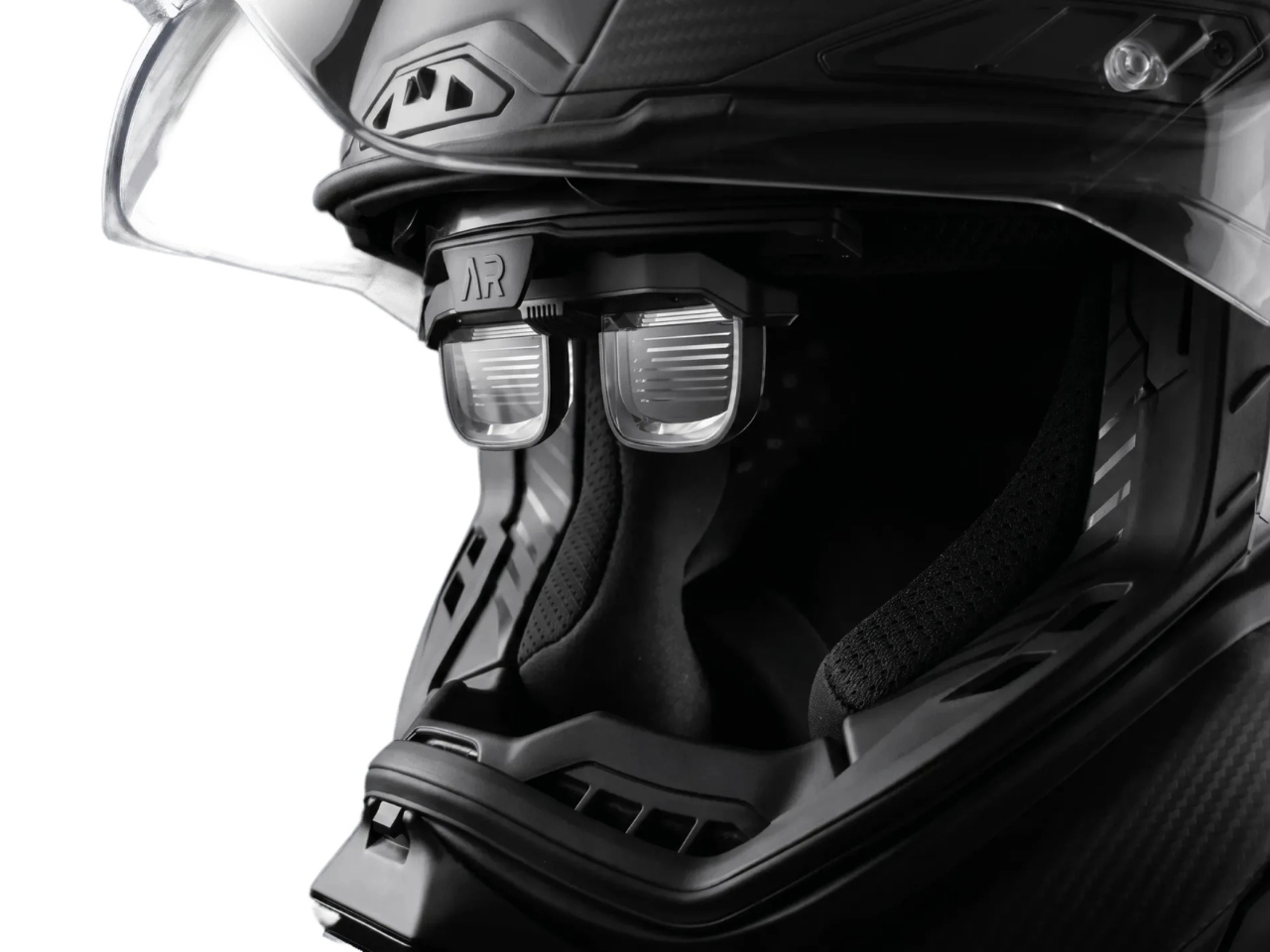
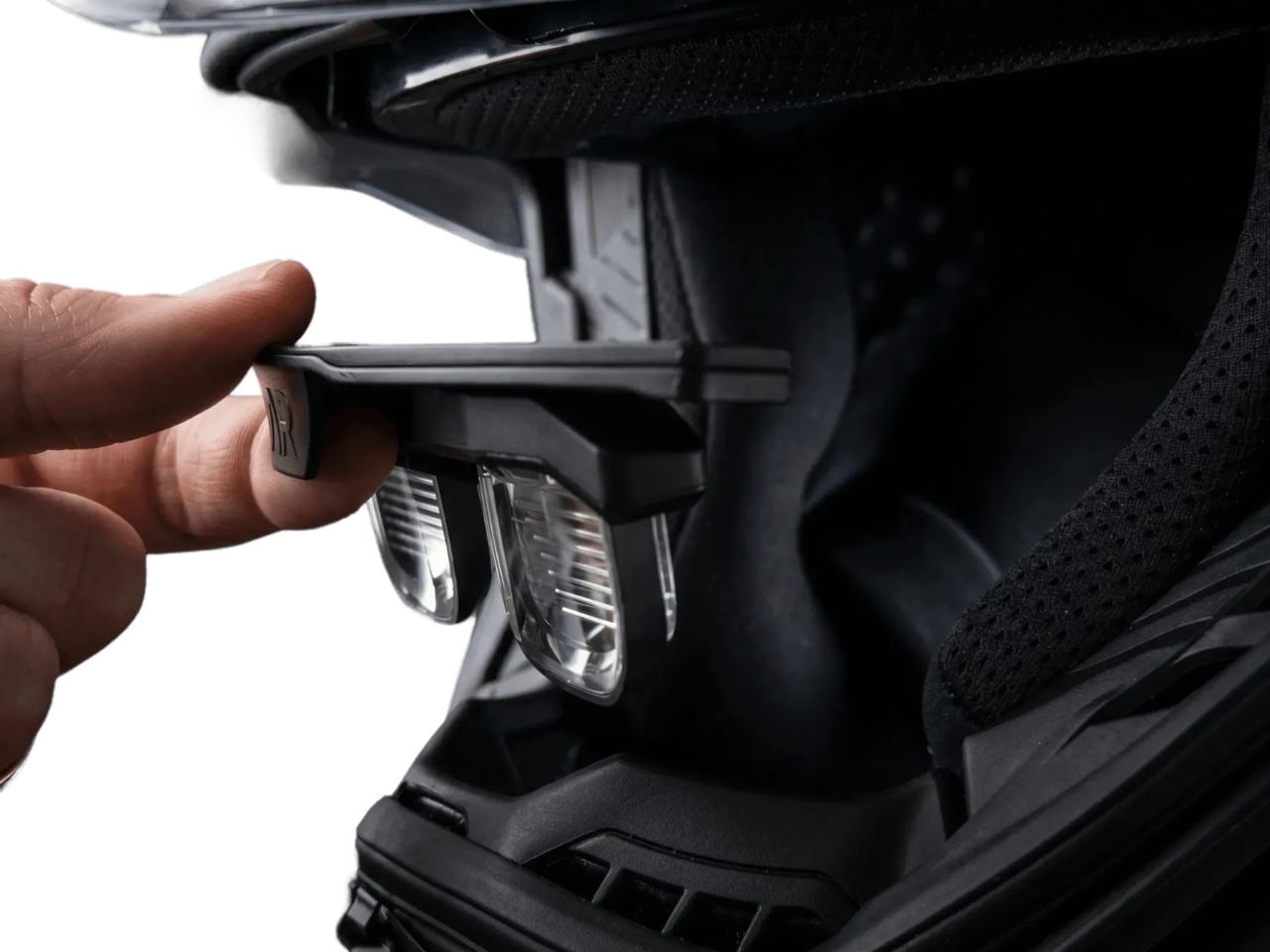
Physically, Vision uses the carbon-shell Nexx X.WST3 platform, with electronics installed at Nexx’s factory in Portugal. The display sits behind the visor in a glasses-like module called AR Optics. In the product images, it looks conspicuously like a second pair of spectacles. It attaches magnetically and delivers a see-through, 1080p image to each eye. Aegis says most prescription glasses fit underneath, although bulky frames can interfere.
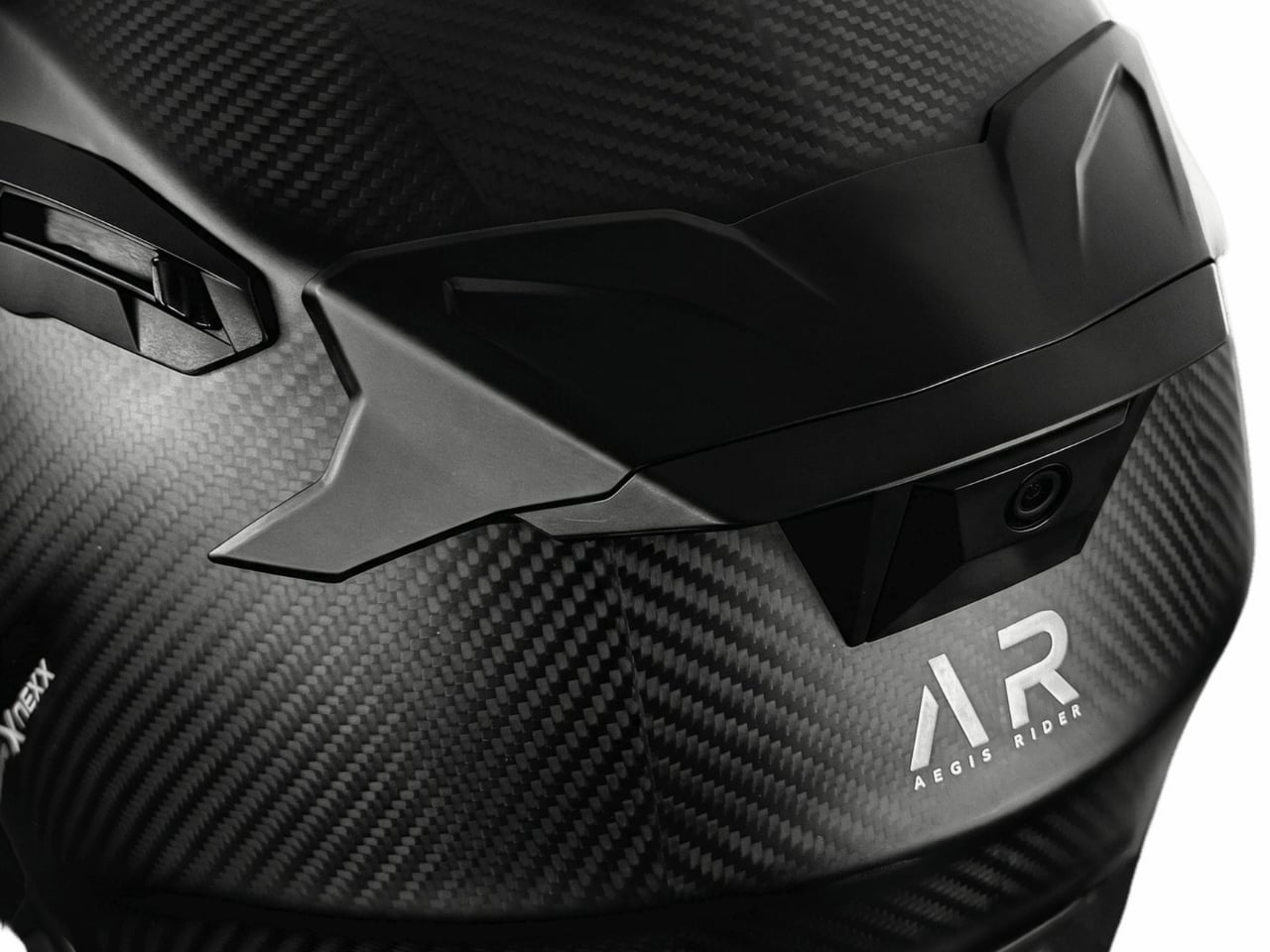
Making those graphics stay put requires more than GPS. A tracking camera in the chin area watches the motorcycle, while sensors measure the helmet’s movement. A rigidly mounted smartphone supplies the bike’s motion and position, or an optional Pro-Box module takes over that job. Together, those inputs let the system distinguish a rider turning their head from the whole motorcycle turning a corner.
That distinction is the design decision I like best. I’d rather see a useful direction at the relevant intersection than carry a dashboard everywhere I look. Aegis allows riders to adjust the information, size, position, and apparent distance of the display. My instinct would be to start with less. Caller information and media controls wouldn’t make my shortlist for the space ahead.
The setup also reveals how much work goes into that apparently simple effect. Each motorcycle needs a calibration ride of roughly 10 minutes, followed by processing that can take around two hours. More importantly, spatial anchoring depends on the camera seeing enough of the bike. In very low light, Aegis instructs riders to use Static Mode, which fixes the information in their view instead. The signature feature has a meaningful nighttime limitation.
Then there’s the hardware you actually have to wear. The complete assembly weighs about 4.4 pounds. I wouldn’t dismiss that number because the shell is carbon fiber; fit and weight would be central to any buying decision. Aegis estimates four to six hours of battery life with AR active, with USB-C charging available while riding. A long day therefore introduces another charging arrangement to consider.
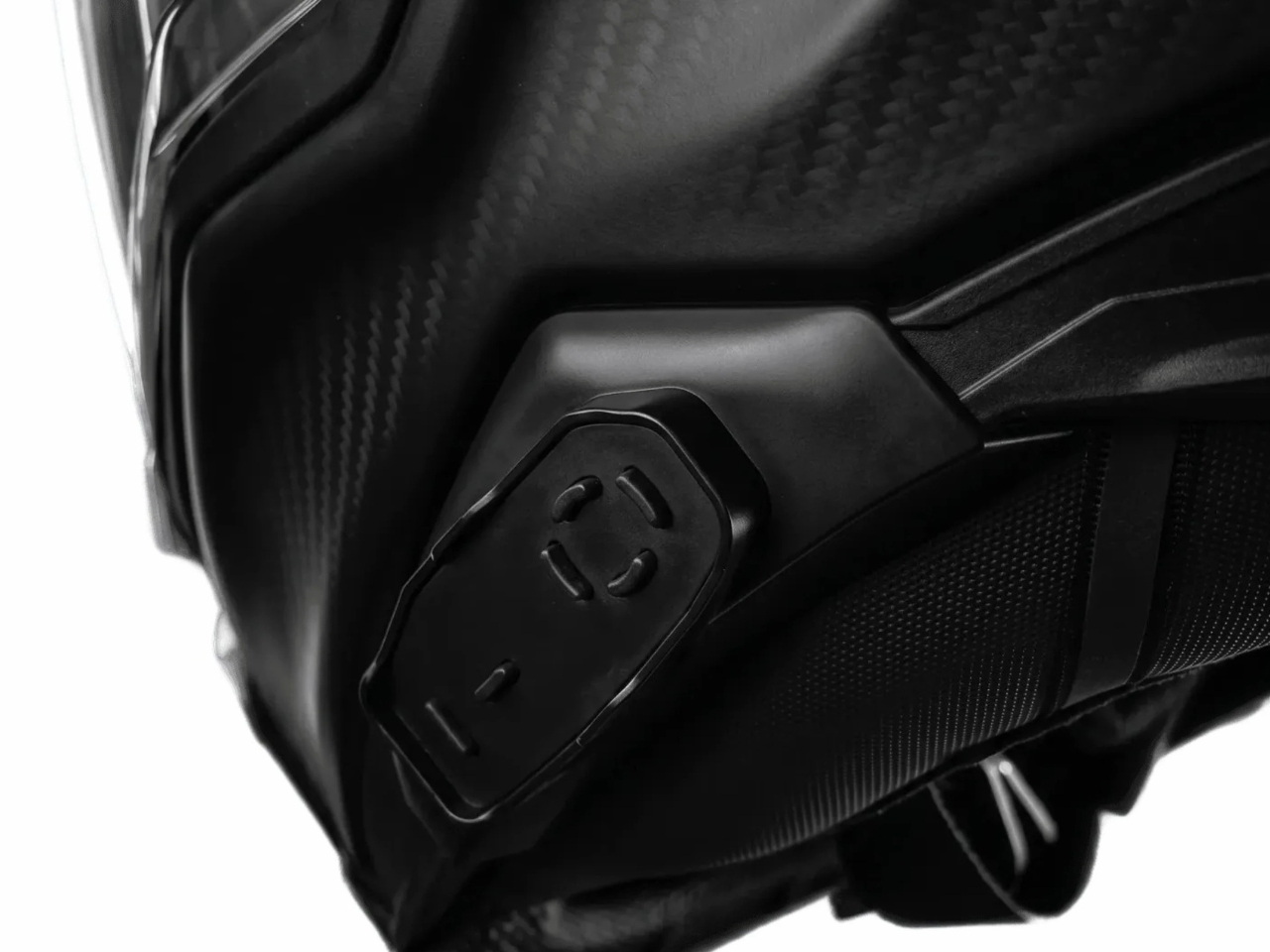
Vision also includes speakers, a microphone, and a front camera recording 1080p video at 30 frames per second. Its 128GB storage holds approximately 20 hours of footage, according to Aegis. A rear camera is built in, but blind-spot warnings remain in development. I’d assess the purchase on the functions available now, rather than treating that planned update as part of today’s value.
At the listed $1,999 for the helmet and AR Optics on the company’s US-facing website, the details matter. Its safety documentation says attaching AR Optics creates a configuration outside the helmet’s ECE 22.06 approval. That approval also doesn’t establish DOT compliance, which buyers should verify separately rather than assume.
I’m interested in Vision because its strongest idea is restraint: letting information leave your sight when you turn away. I’d still want convincing testing of visibility, tracking, and everyday comfort before calling it a better riding companion. A direction appearing at the right corner is appealing. Earning a place between your eyes and the road takes more than an appealing demonstration.