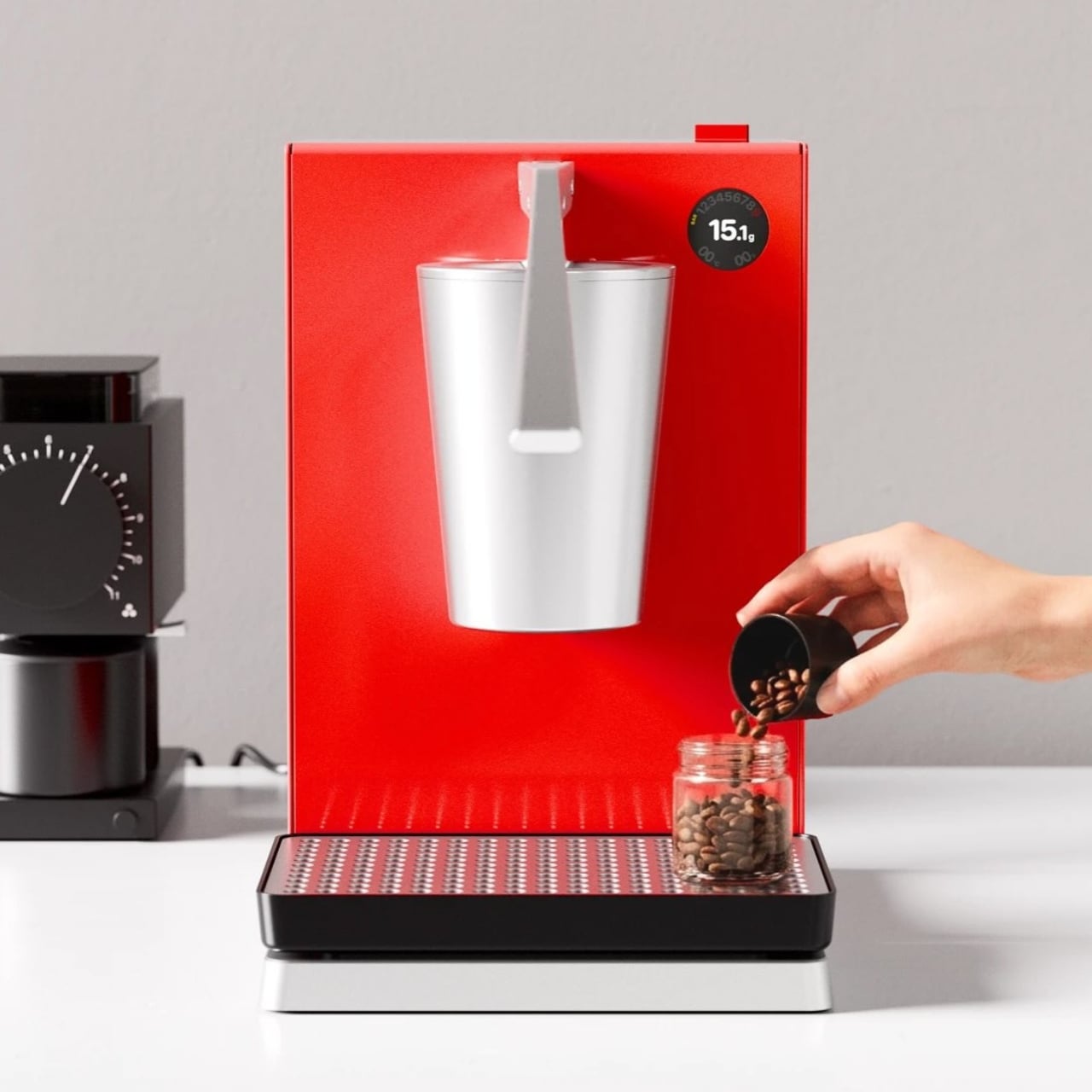
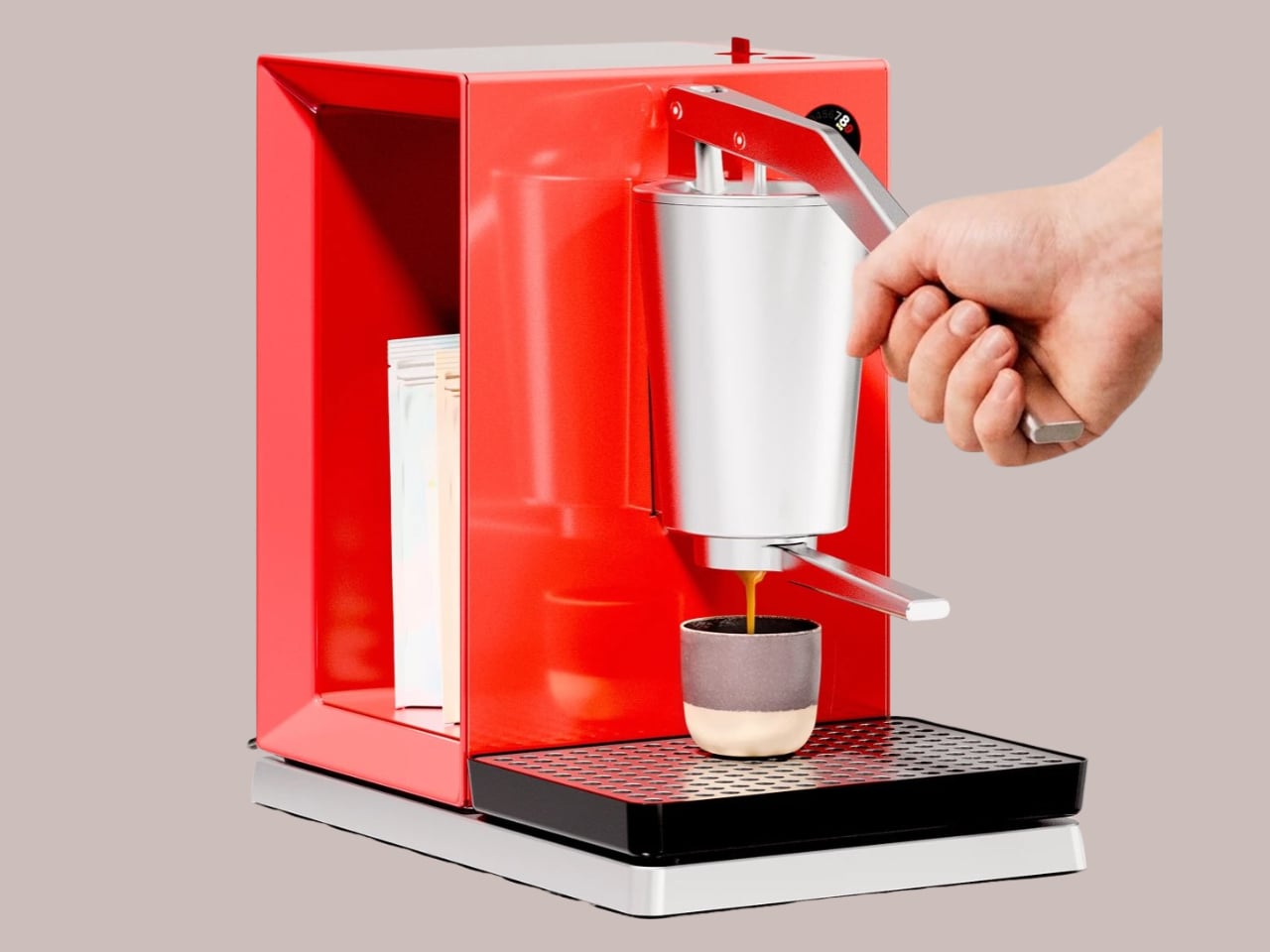
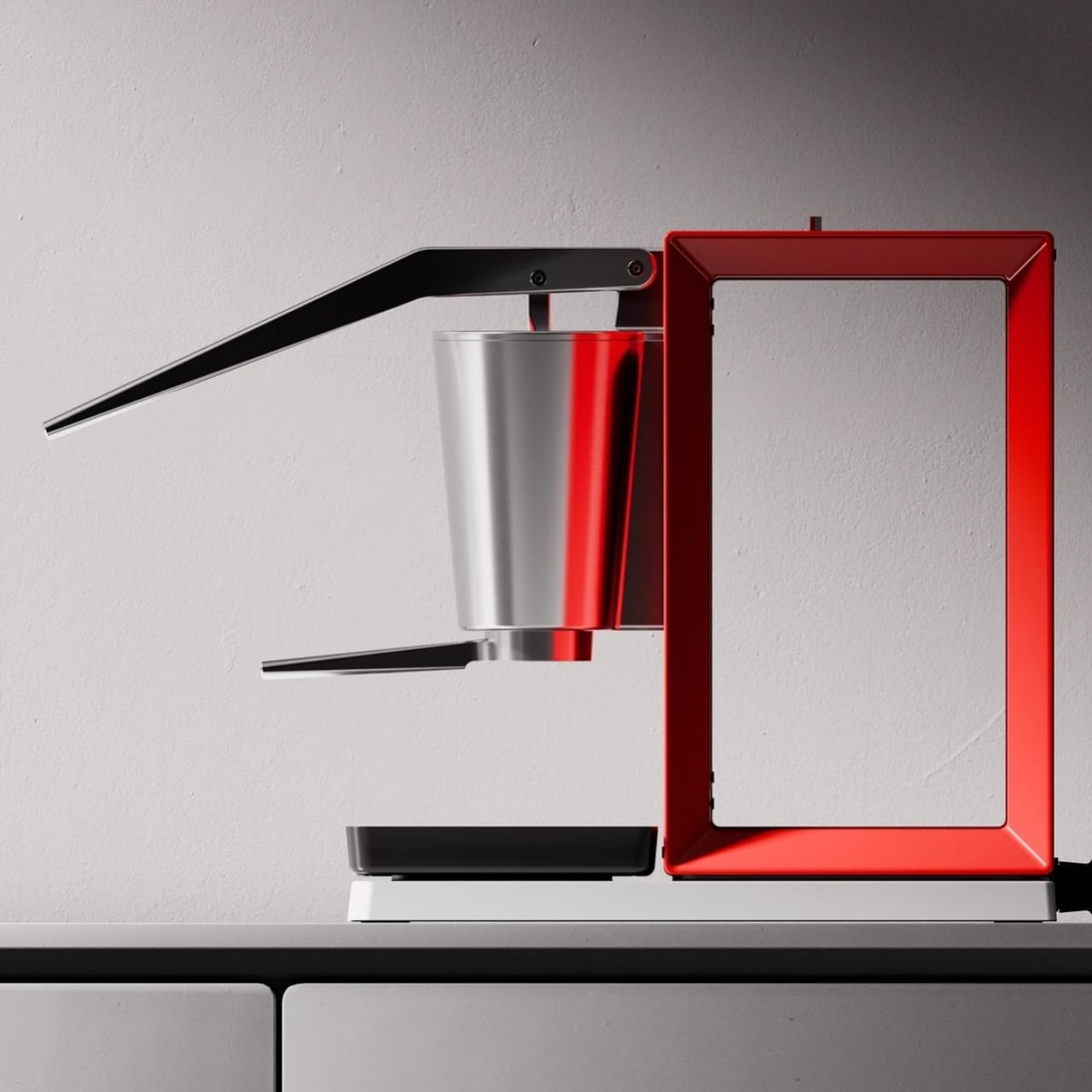
Atypica looks like a solid red box until you see it from the side. Then you realize you can see straight through it. The parts that make it recognizable as an espresso machine, from the long silver lever to the tapered brew head, hang off the front of an open rectangular frame. It’s a neat bit of misdirection from designer Andrea Tomaciello, considering that the act of making coffee is the one thing he wants out in the open.
Atypica is a lever espresso machine concept for people who want to know what happened between the dry grounds and the first sip. A preset makes sense when all you want is coffee. It’s less helpful when a shot runs too fast and you’re trying to figure out what to change, or when you’d rather experiment with pressure than let the machine decide. Tomaciello’s answer is to let you pull the shot yourself and put the measurements where you can see them as you work.
Designer: Andrea Tomaciello
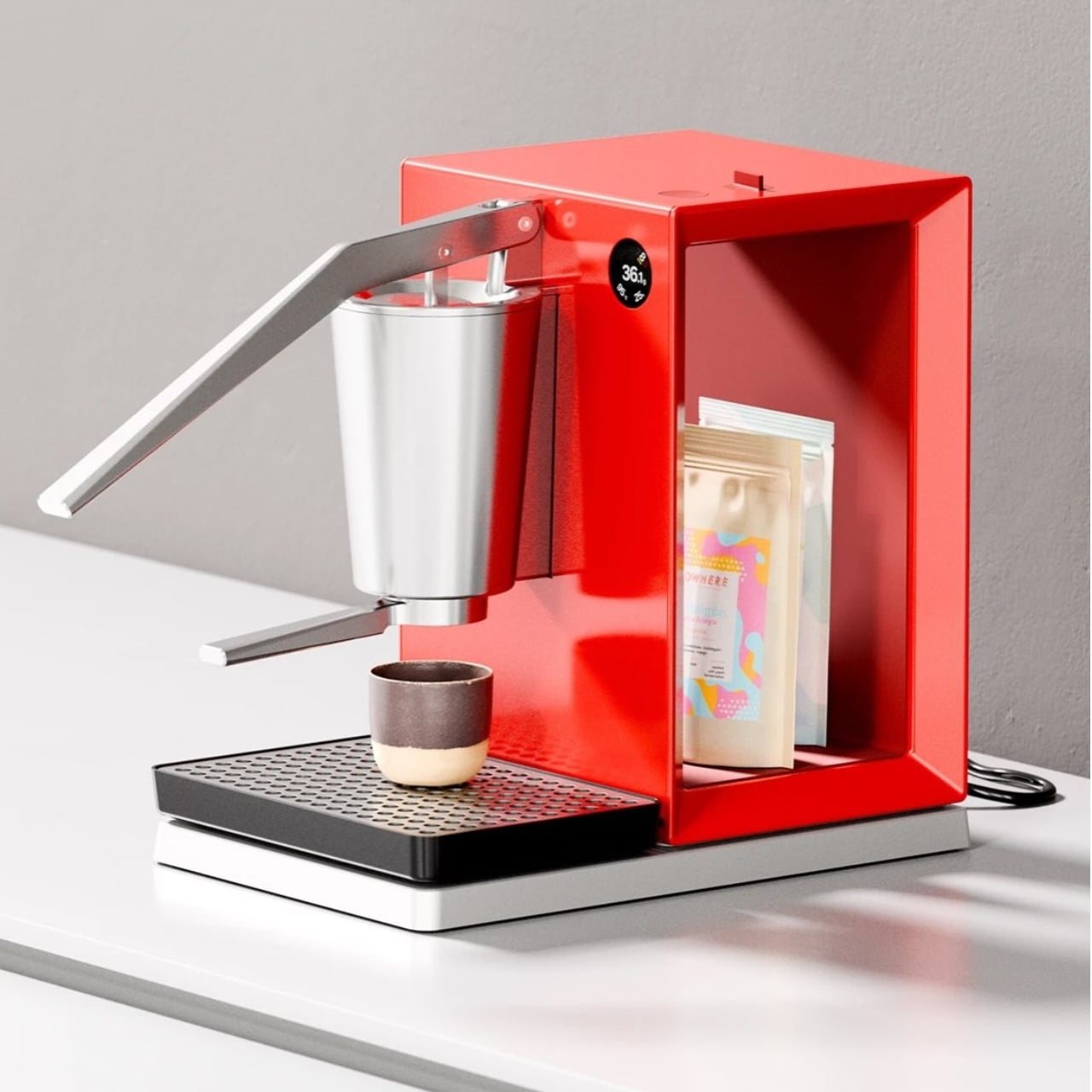
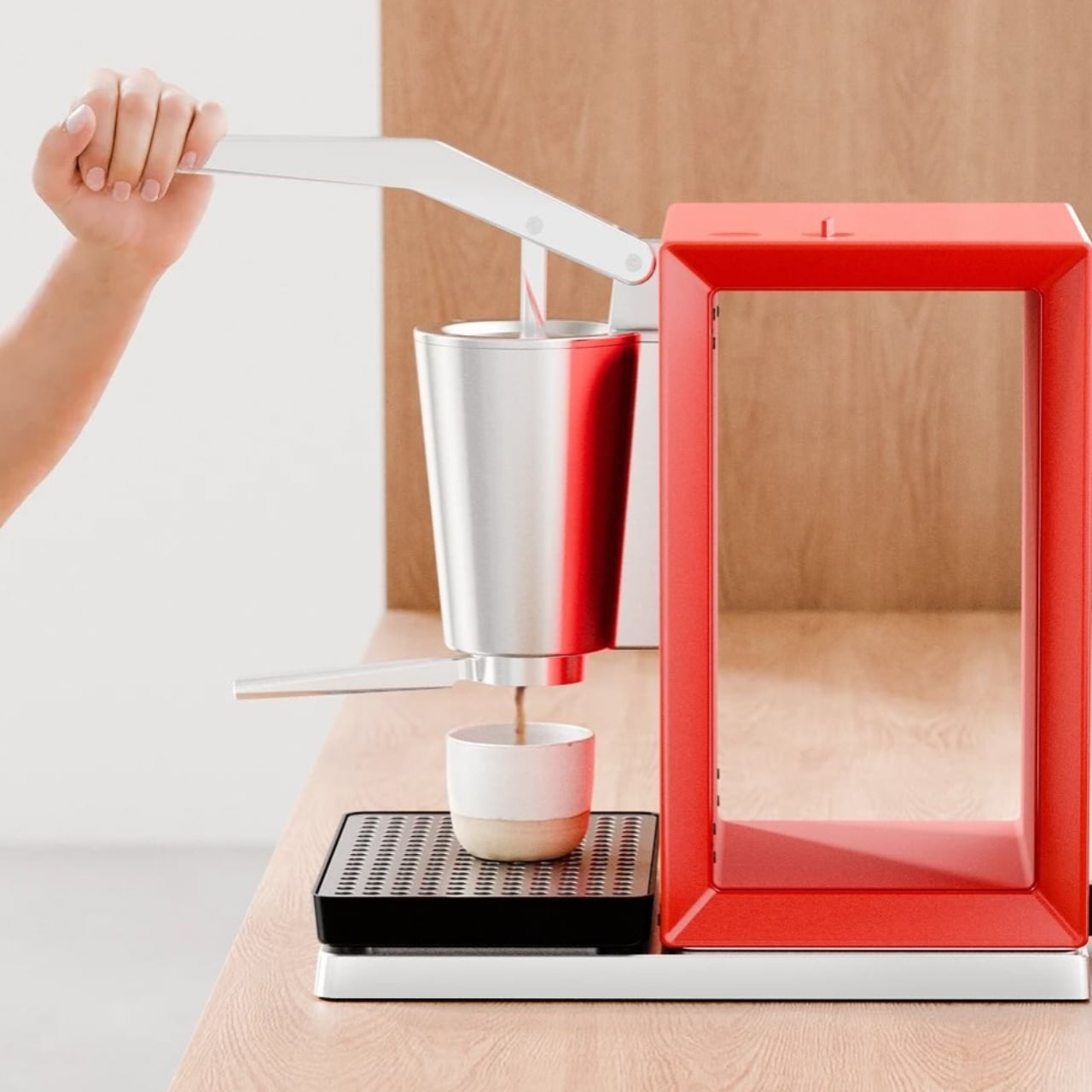
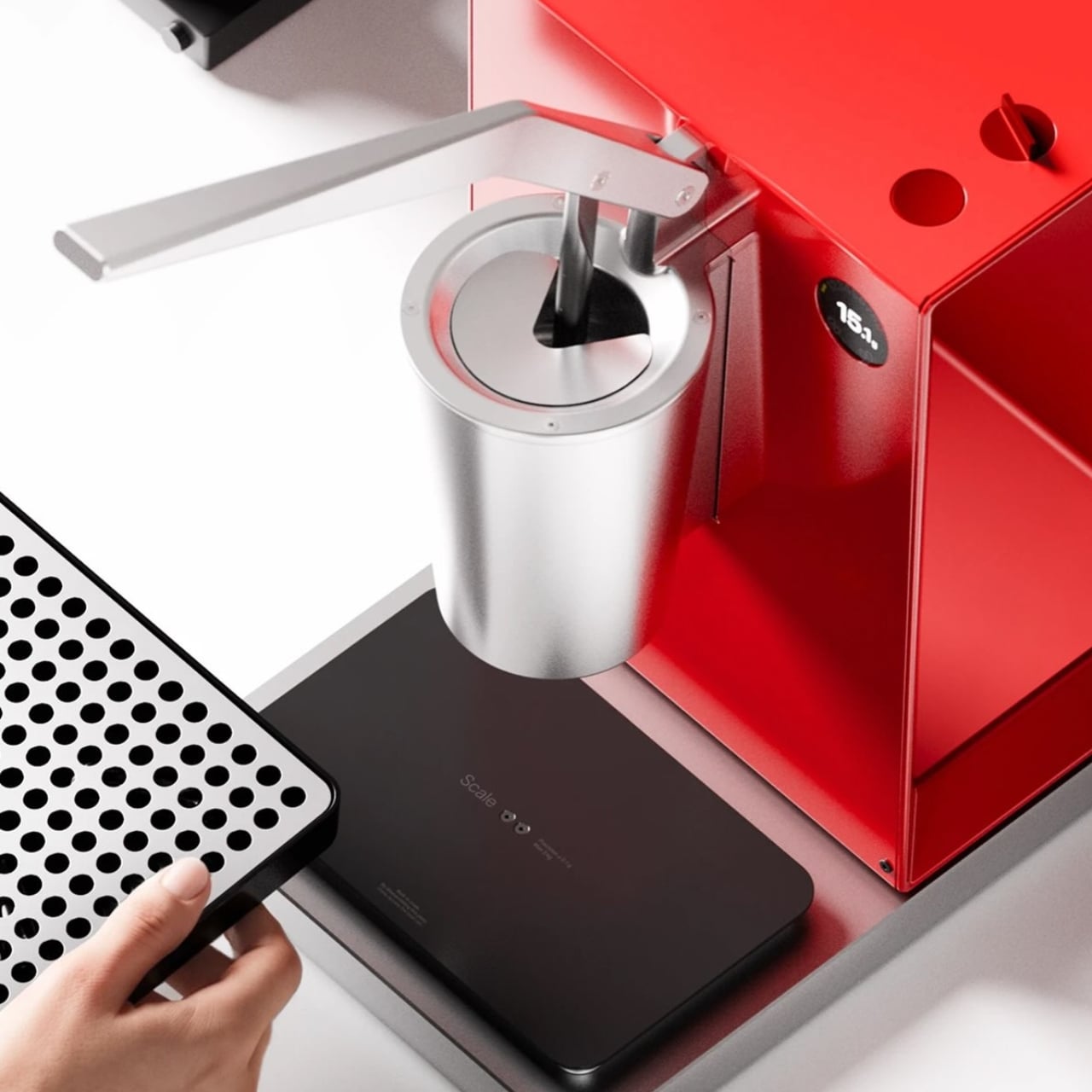
The open frame is possible because so much of the machine sits up front. Tomaciello’s thesis describes a brew head that houses the water reservoir, heater, and extraction chamber in that one silver cylinder. The design brief cites 1970s espresso machines as a visual reference, but the side profile reminds me more of a little piece of architecture. The beveled edges catch the light like the inside of a window frame. One image shows bags of coffee tucked into the opening. I’d be tempted to leave it empty.
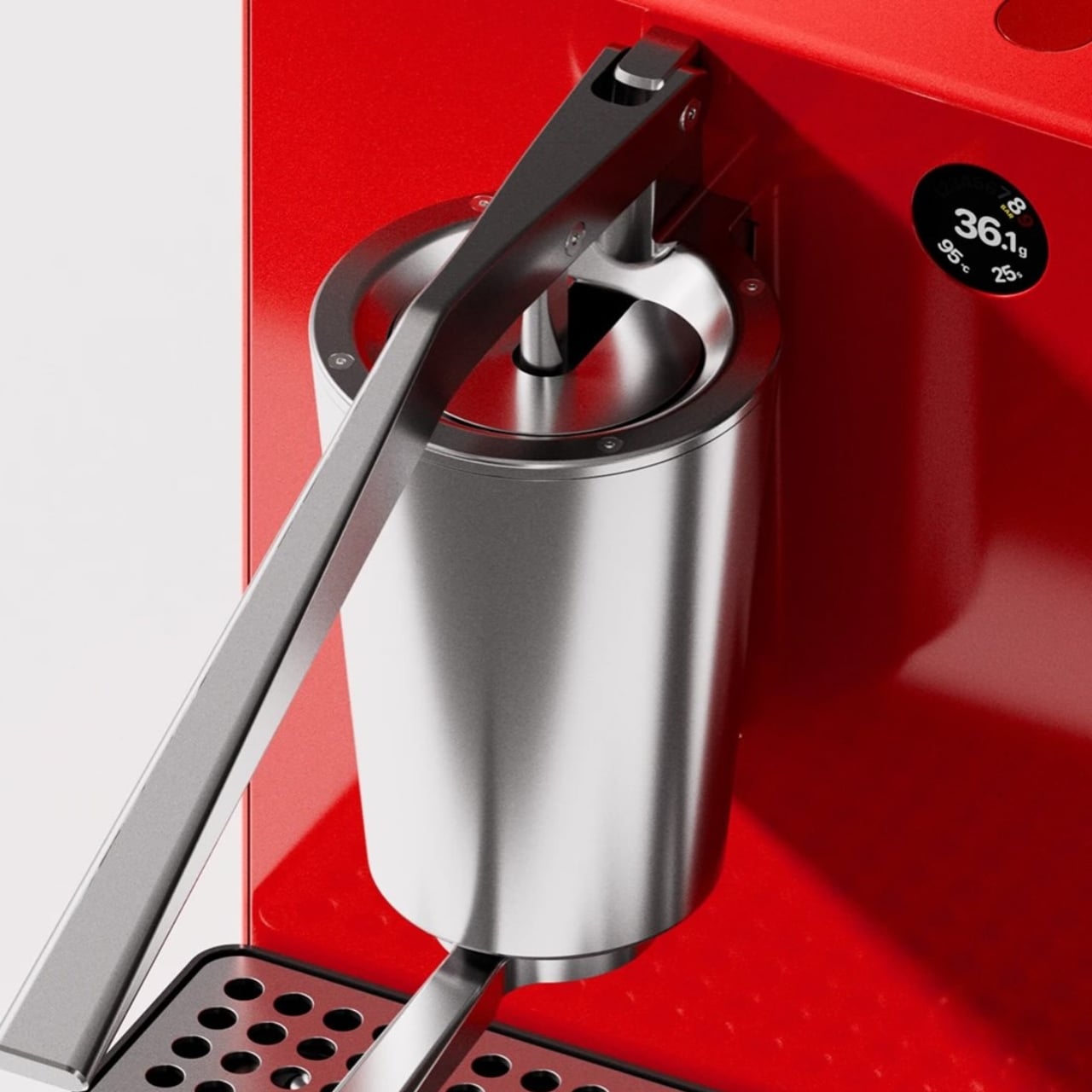
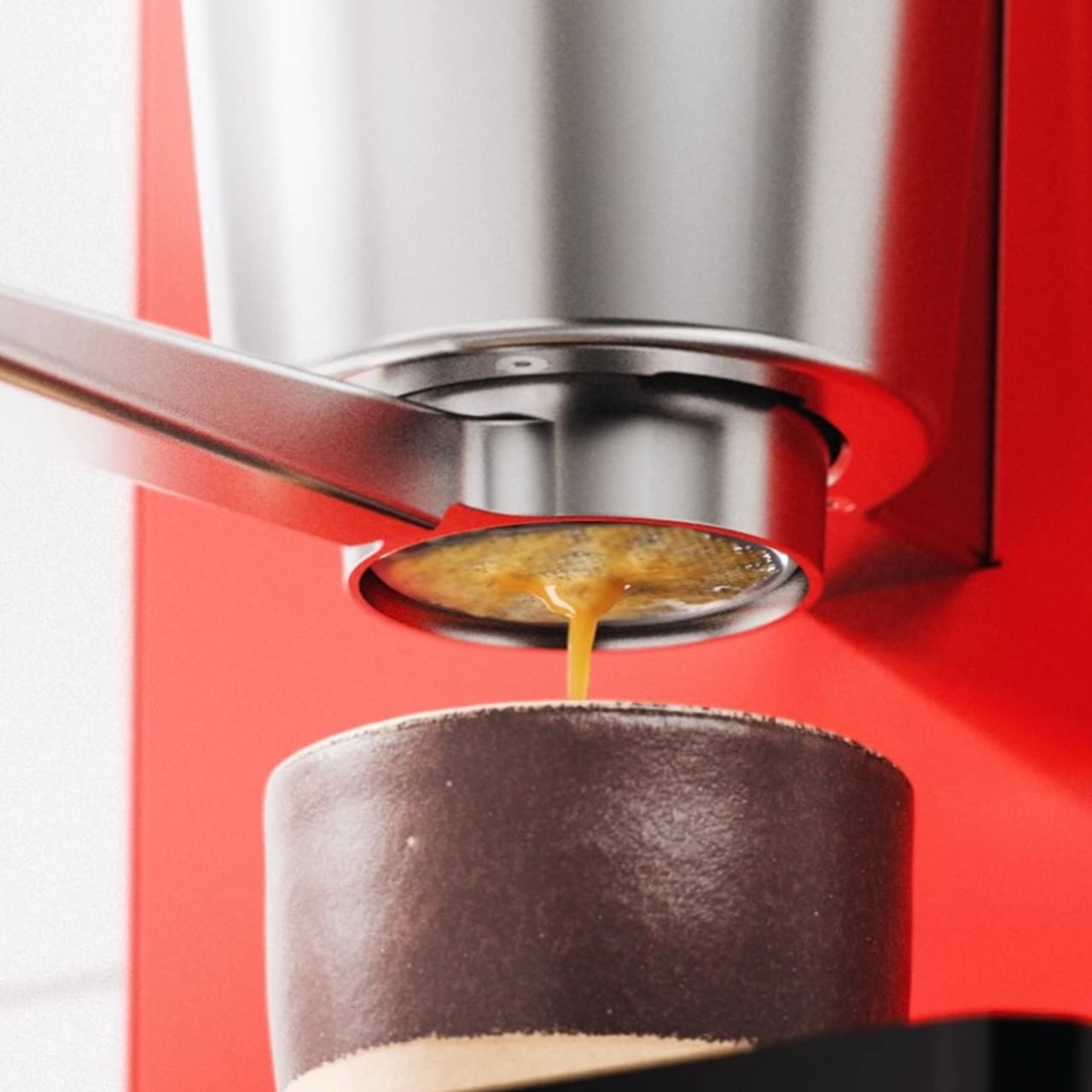
On a direct lever machine, the force you put into the handle drives a piston, pushing water through the packed grounds. You can start gently to wet the coffee before building pressure. That’s a useful kind of control, though it comes with a learning curve. The resistance you feel also depends on how finely you ground the beans and how much coffee you packed into the basket. The lever gives you a way to respond to those variables. It doesn’t make them go away.
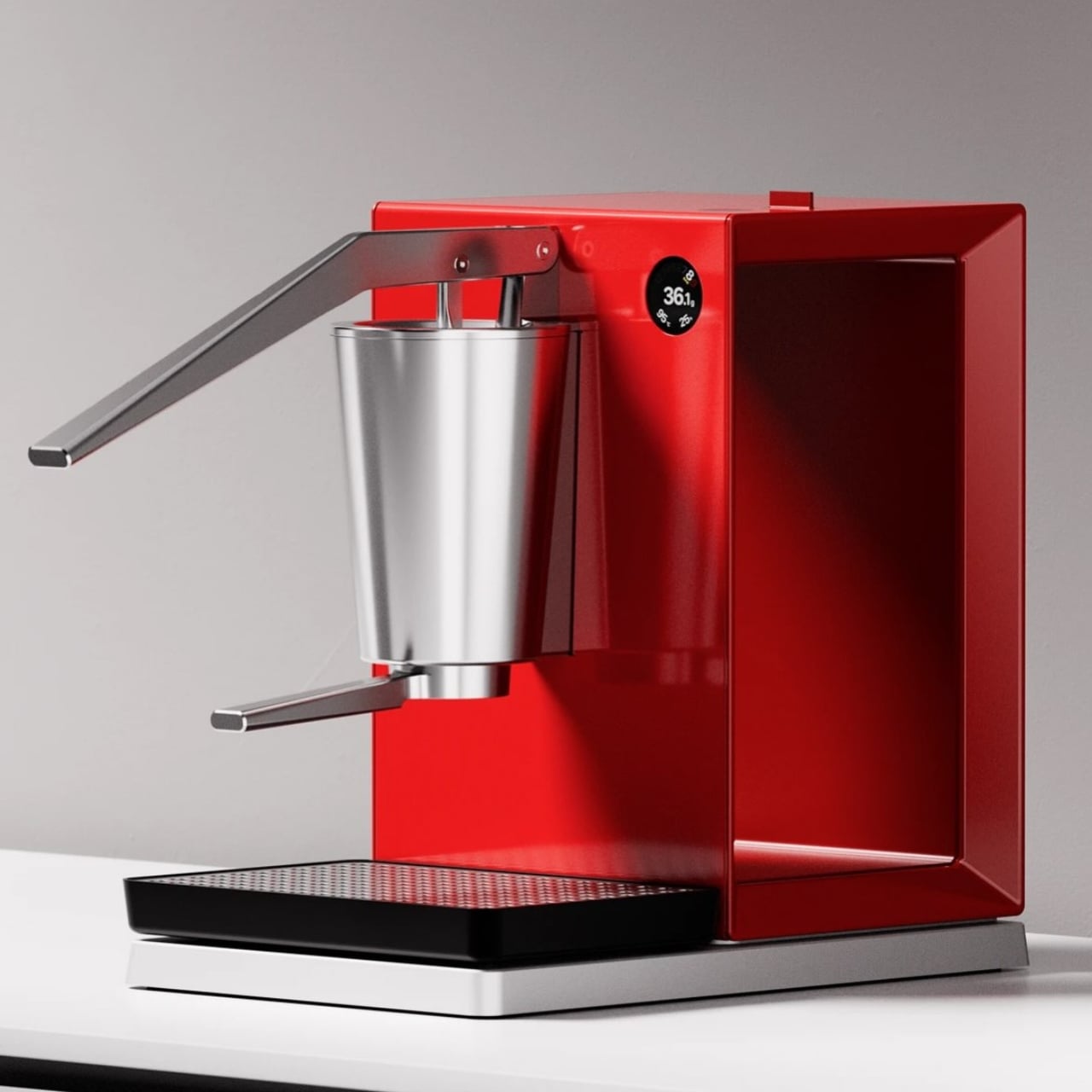
That’s where the little black circle on the front earns its place. The close-up shows pressure across the top, temperature and elapsed time below, and the weight in the cup in the biggest type on the screen. The design puts the scale in the base beneath the lift-off drip tray, so you could check how close you are to your target without looking down at a separate scale. That’s the kind of screen I want on a kitchen appliance: one I can glance at and get right back to what I’m doing.
Giving weight the biggest number makes sense if you’re curious about what a slightly longer shot tastes like. You could start with the same amount of ground coffee and collect 40 grams of espresso instead of 36. Now you’ve got a specific change to compare rather than a vague sense that the second shot ran long. If you like where you landed, you have a number to aim for next time.
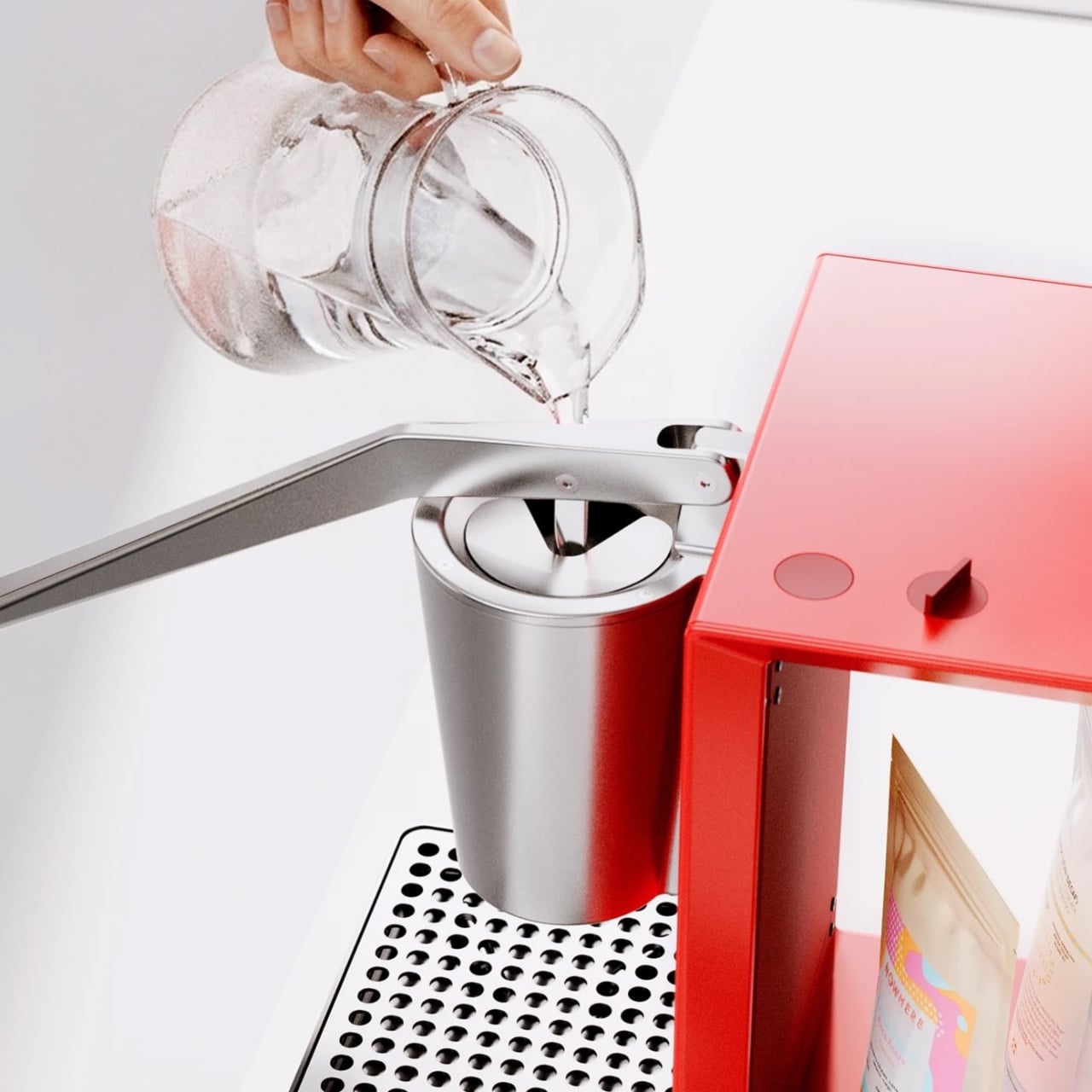
The open frame makes Atypica look airy, but I’d still want to see how that handle clears the cabinets on a real counter. The brief also lists repairability as a goal. I’d judge that by how easily you could reach a worn seal without taking half the machine apart, and whether you could buy a replacement when you needed one. The tidy exterior can’t tell you either of those things.
I wouldn’t want every kitchen appliance to ask this much of me. My toaster doesn’t need to turn breakfast into a skill I can work on. Espresso is one of the few things where I can imagine enjoying the extra responsibility, especially on a weekend. The red frame would get my attention first. The chance to taste what happens when I change one small thing would be enough to make me pull another shot.