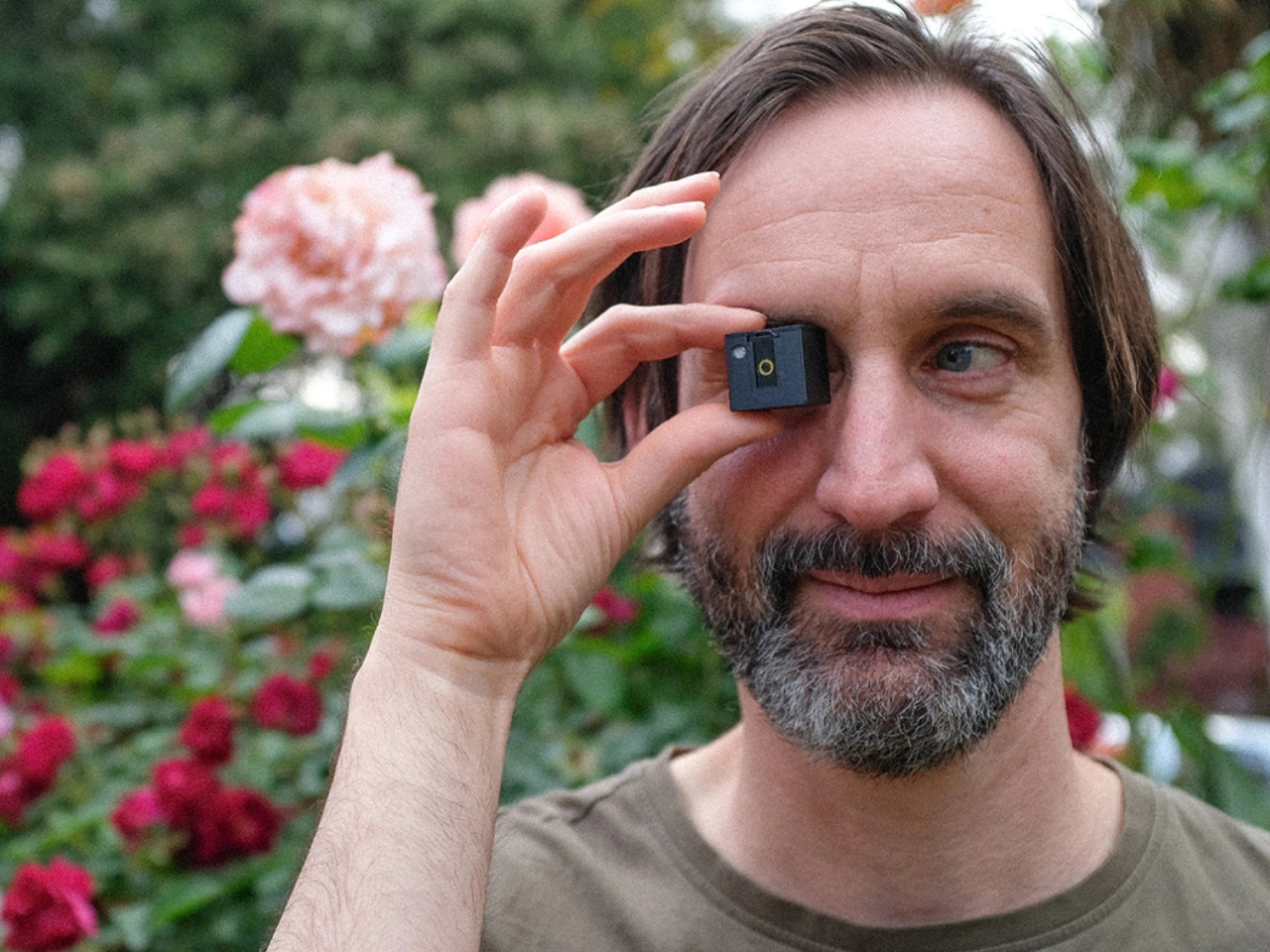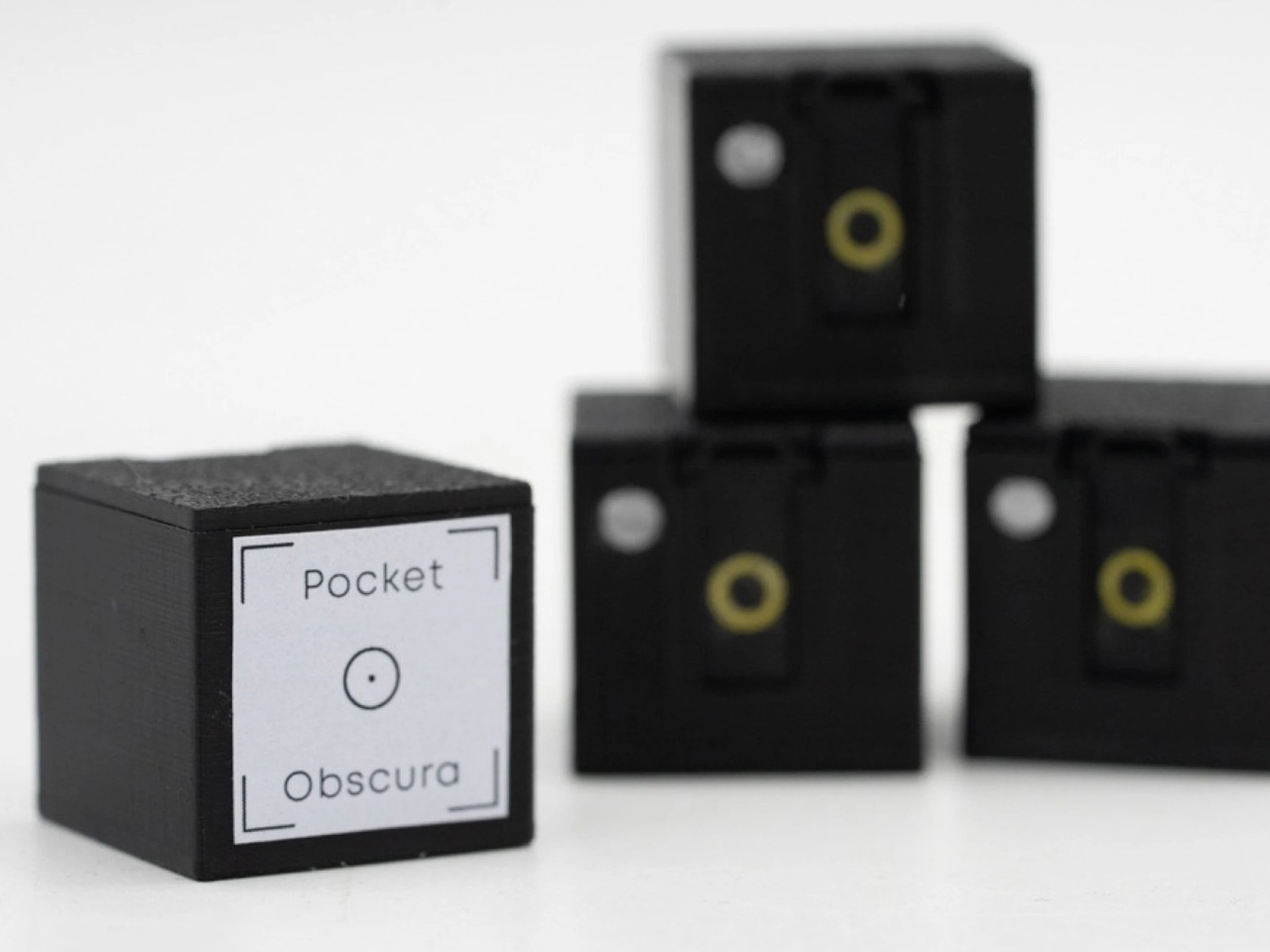
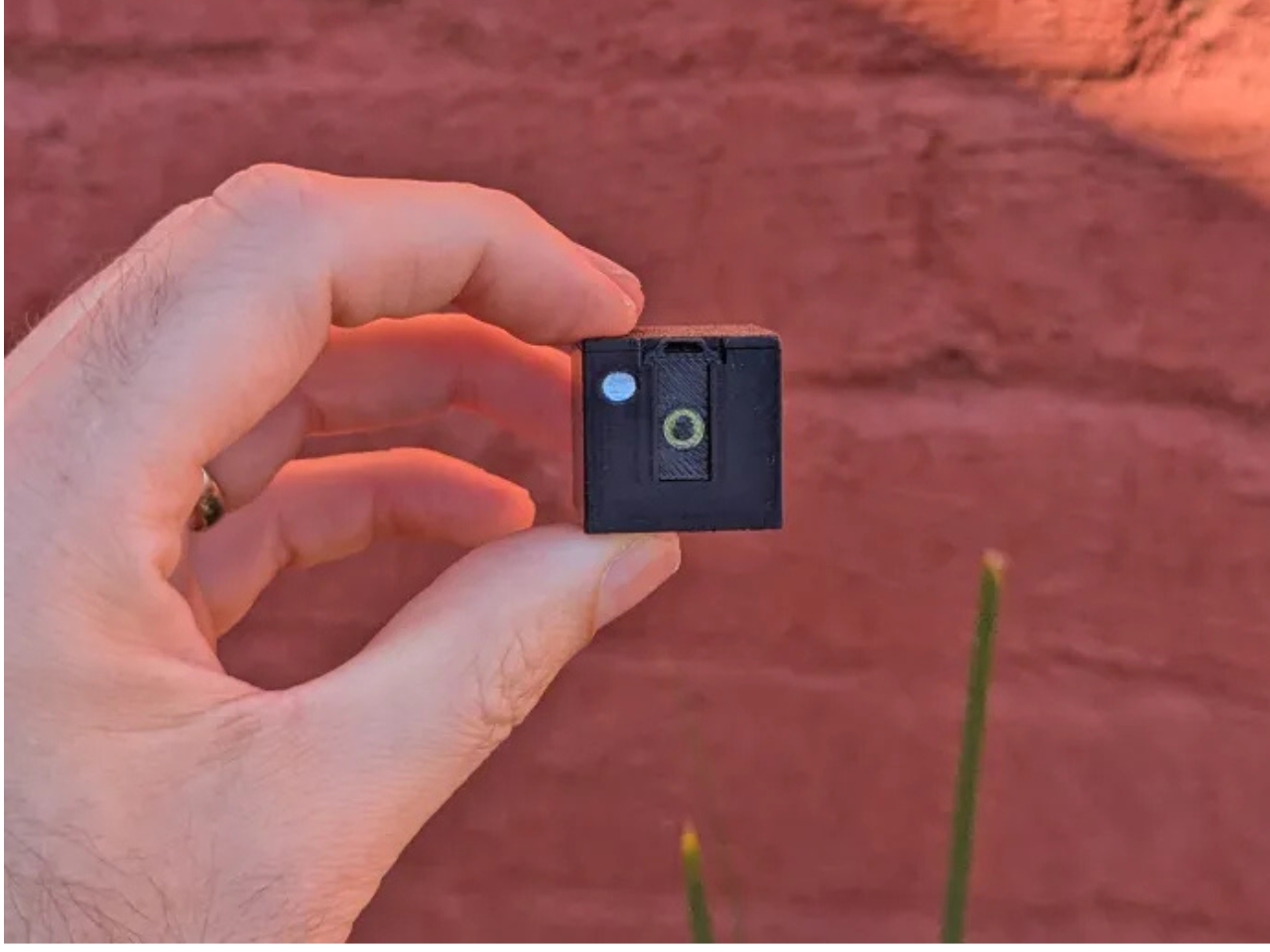
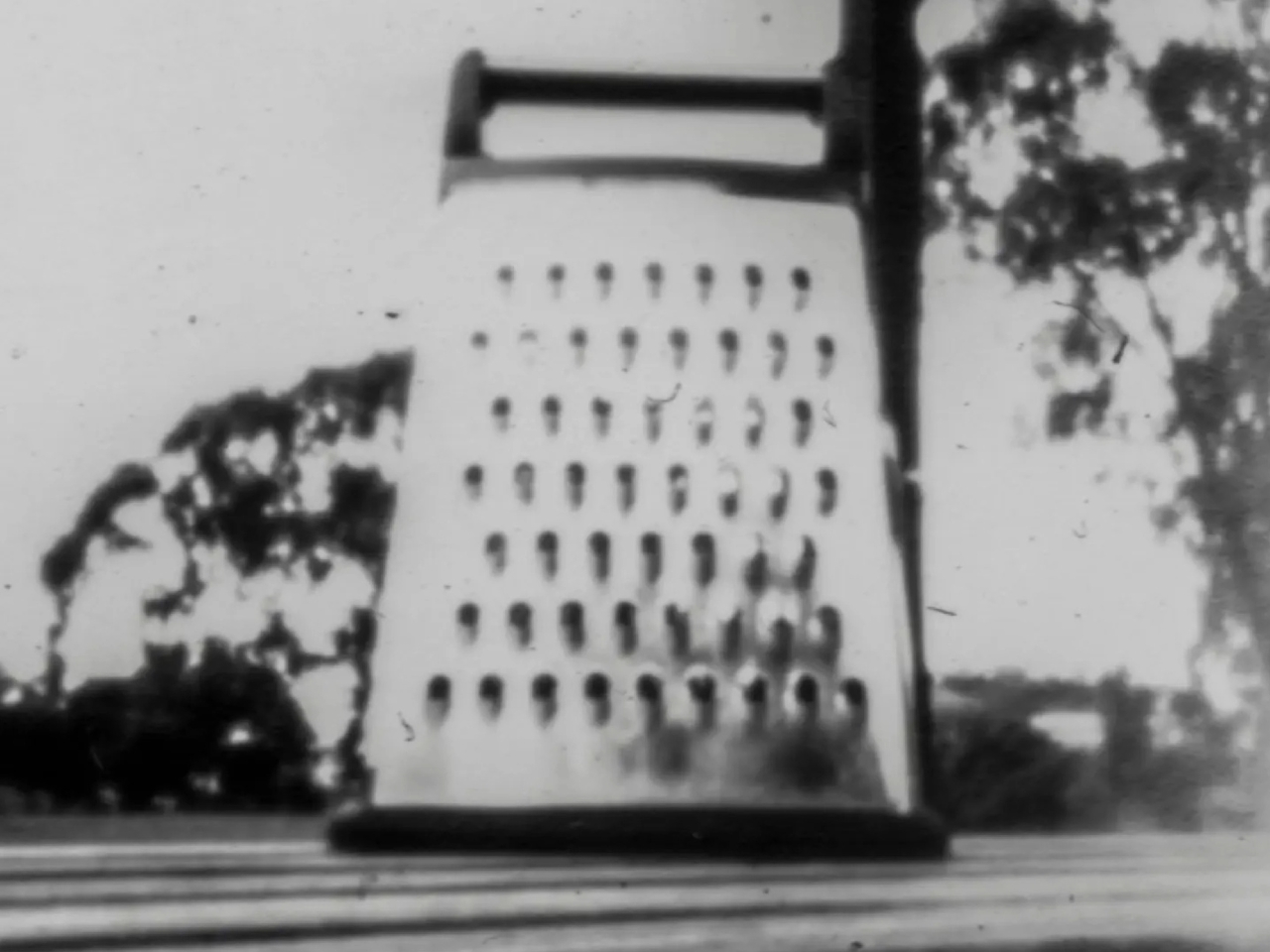
From low enough to the table, a cheese grater can look like a building. In one of Luke Fazekas’s photographs, the handle makes a dark rectangle against the sky, and the trees behind it are little more than smudges. The camera that took it, his 3D-printed Pocket Obscura, is about as wide as a quarter. At six grams, it weighs about as much as one, too.
Taking a picture is so easy now that you can do it every day without getting a good look at how a camera makes one. That’s the problem the Pocket Obscura solves. Fazekas, a photographer and art teacher in Melbourne, built a working camera you can explain by pointing to its parts. If you’re teaching or learning the basics of analog photography, it gives you a way to see what light and exposure do before getting into lenses or settings menus.
Designer: Luke Fazekas
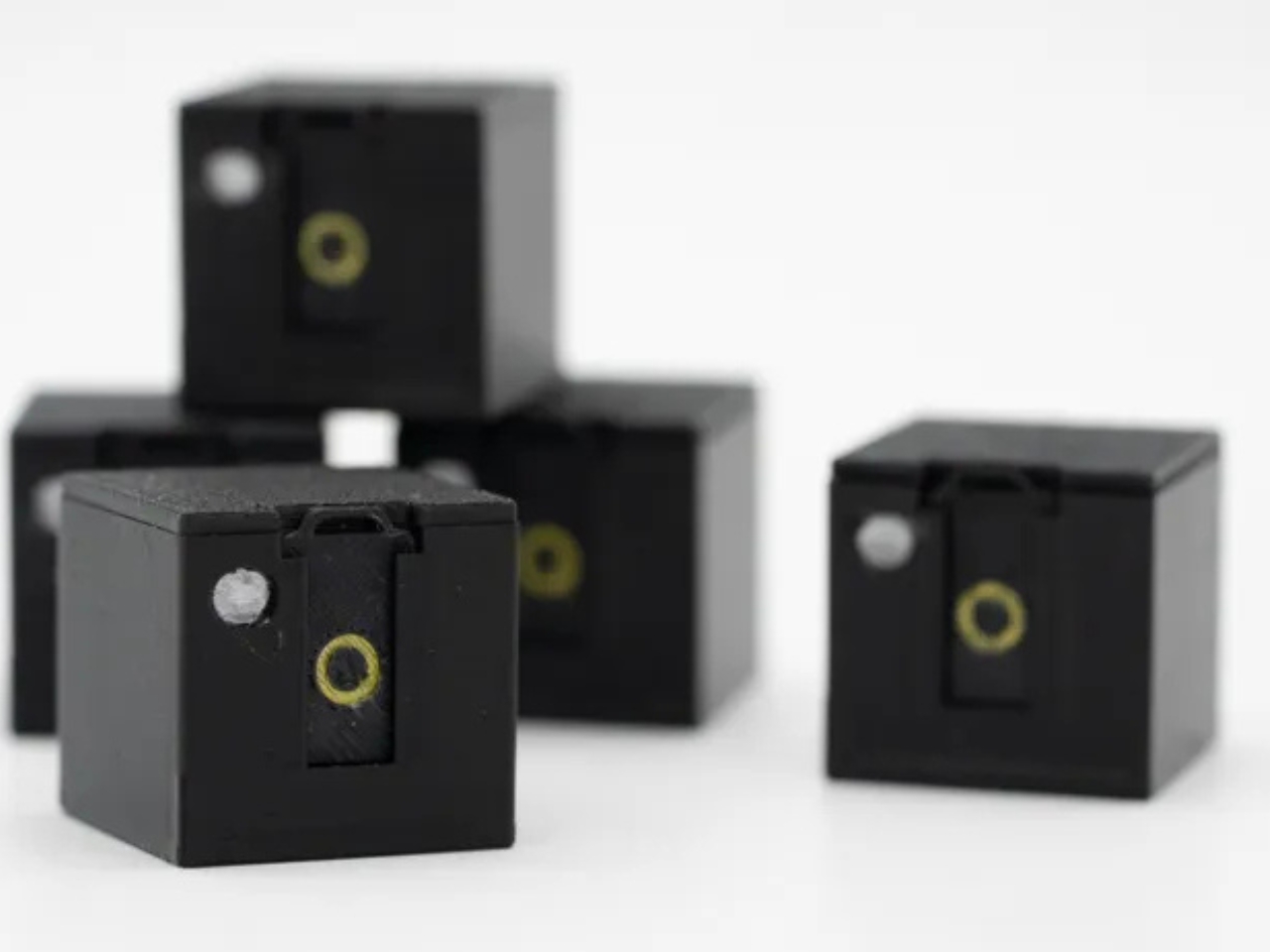
On the front of the black cube is a little tab you lift to uncover a pinhole. Light from the scene passes through that opening and projects an image onto the photographic paper inside. Lower the shutter and the exposure ends. I like how literal that control is. On my phone, the shutter is a circle on a screen. Here, it’s a piece of the camera you move out of the way so light can get in.
Fazekas took his cue from the Kodak Brownie’s boxy shape, but getting down to this size took more than shrinking a model on a screen. He told Kosmo Foto he went through about 40 versions, changing everything from the size of the pinhole to the dimensions inside the box. By around version 35, he had a working camera. Then he kept tinkering and produced a few more failures. I like that the hard part of designing something so stripped down was knowing when to leave it alone.
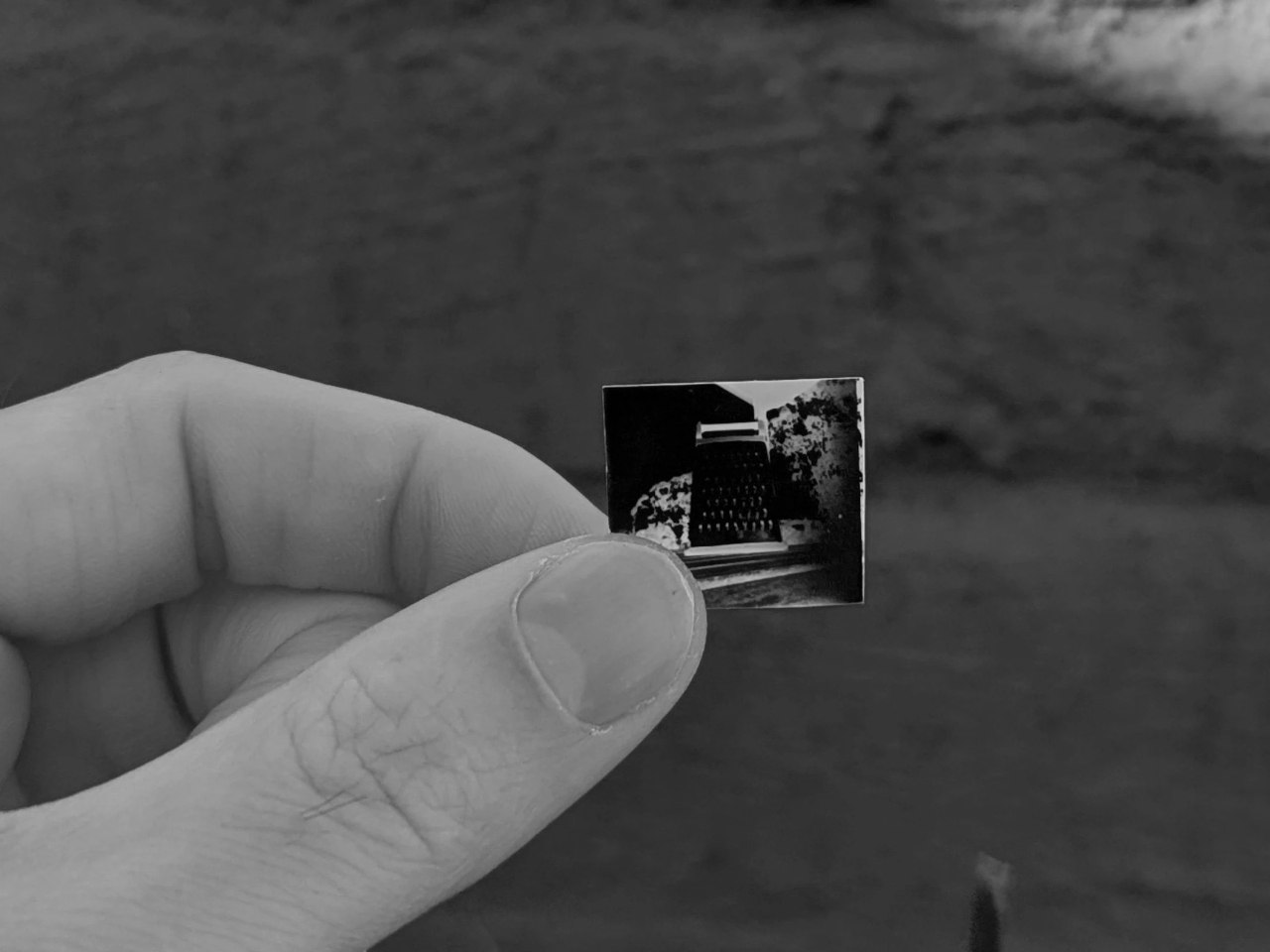
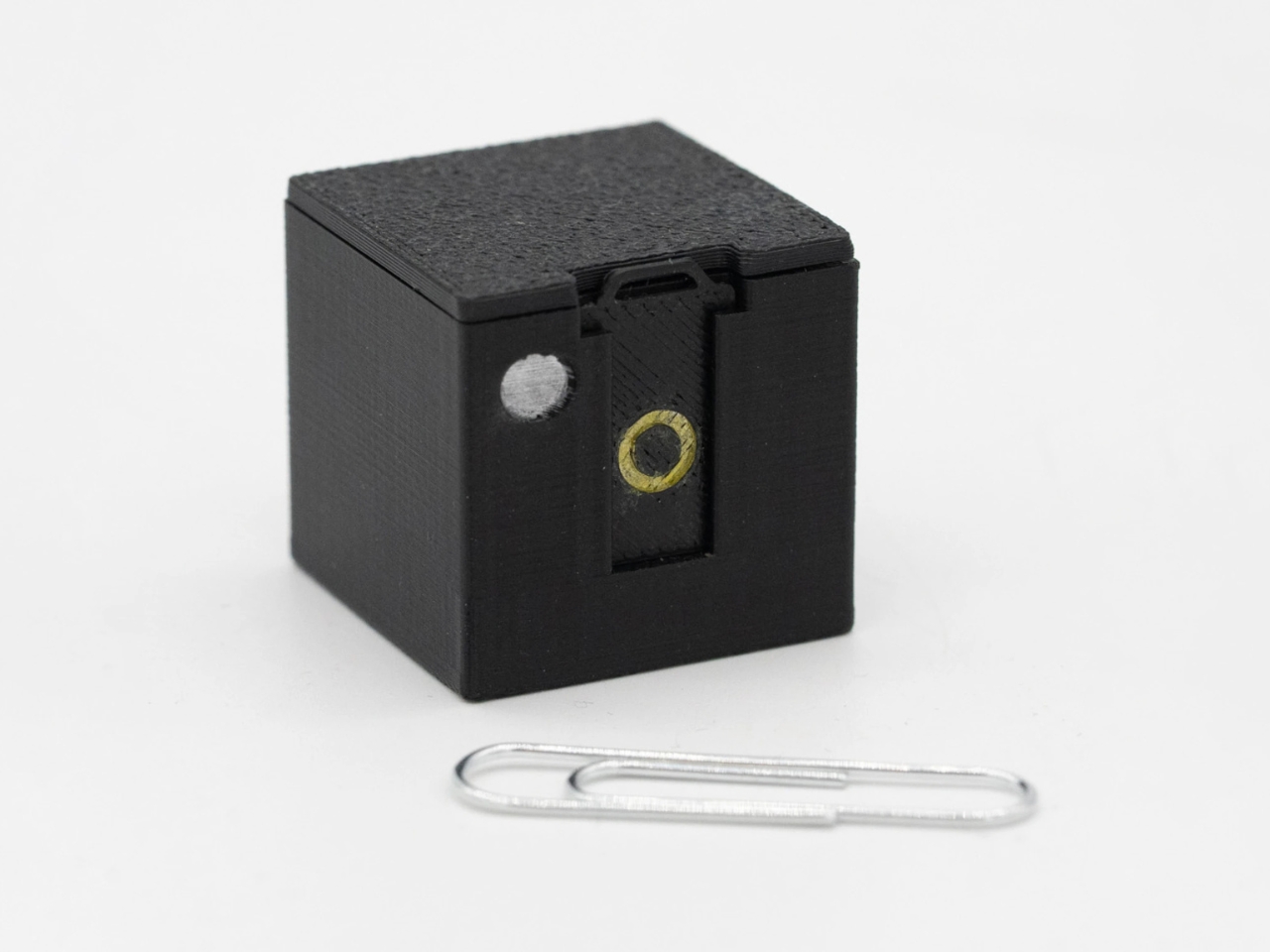
With no viewfinder, you aim the box and find out later what made it into the frame. Fazekas recommends bright outdoor light and subjects that stay put. So little light comes through the pinhole that the shutter needs to stay open longer than it would for a quick snapshot. A moving subject can blur or even disappear. That rules out most of the things I instinctively reach for my phone to capture. A cheese grater is happy to wait.
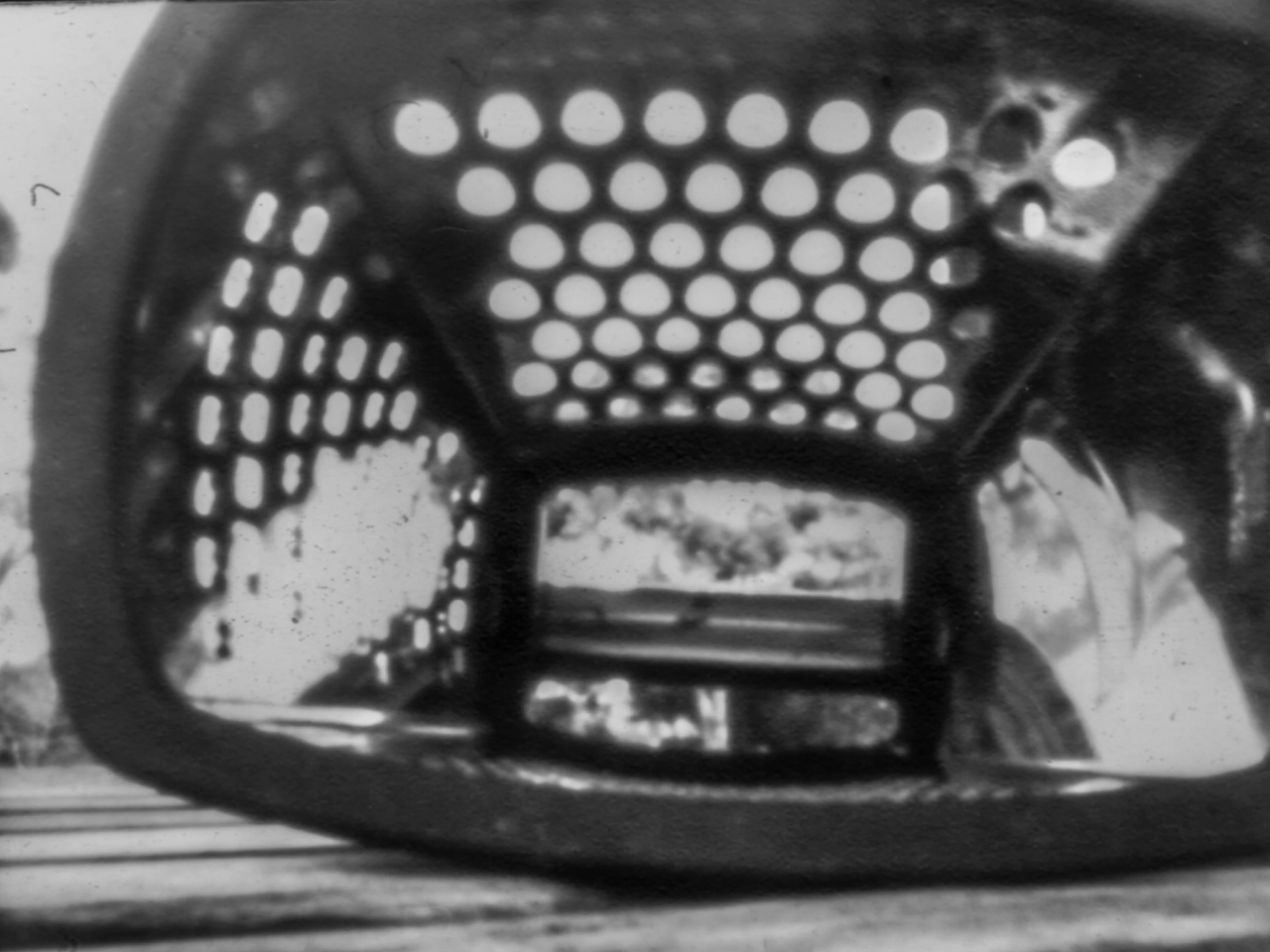
Fazekas made another picture from inside a grater. The rows of holes look like overhead lights, and for a second the photo could pass for a shot of an empty parking garage. That’s where the tiny body earns its keep for me. Being able to slip a camera into a coin pocket is nice. Being able to put it somewhere I’d never think to put my phone gives me a reason to take it out again.
The work before and after each shot is less portable. Fazekas cuts light-sensitive paper to fit and loads one piece at a time under a red safelight. After developing it in a darkroom, he scans the paper negative and reverses the tones digitally. The Guinness World Records certificate reproduced by PetaPixel dates the “smallest film camera” record to October 22, 2026, but there’s no roll of film in that workflow. Fazekas’s Doctor Darkroom shop lists the camera at A$45. It’s sold out, with a limited batch planned for December.
I wouldn’t bring it to a birthday party. I’d set it on a table on a sunny afternoon and try photographing the same object twice, giving the second shot a little longer. You’d have to reload between shots and wait until both negatives were developed to compare them. That sounds inefficient until you consider what you get to see: the difference a few extra seconds of light can make, because you held a little tab open with your fingers.