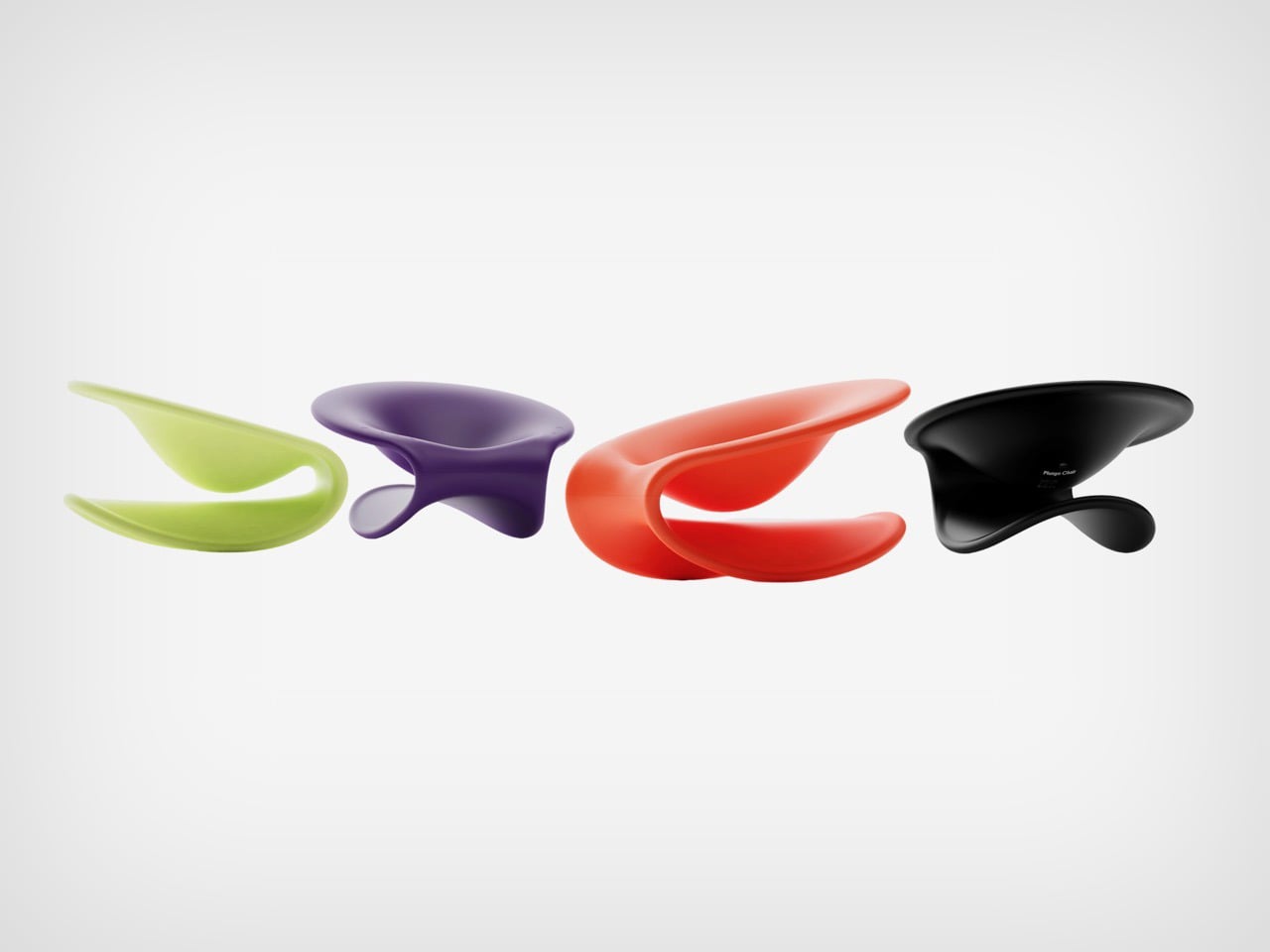
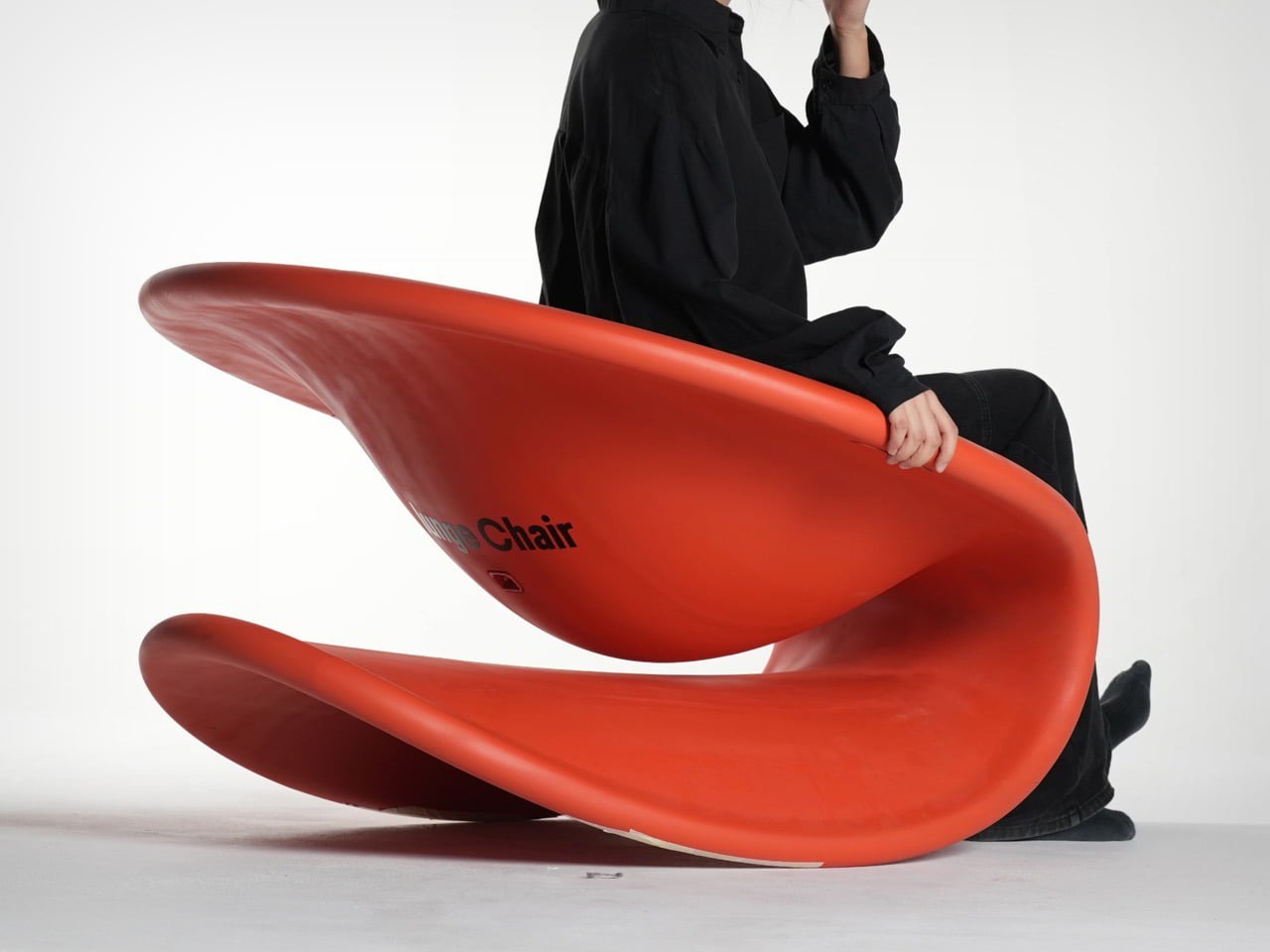
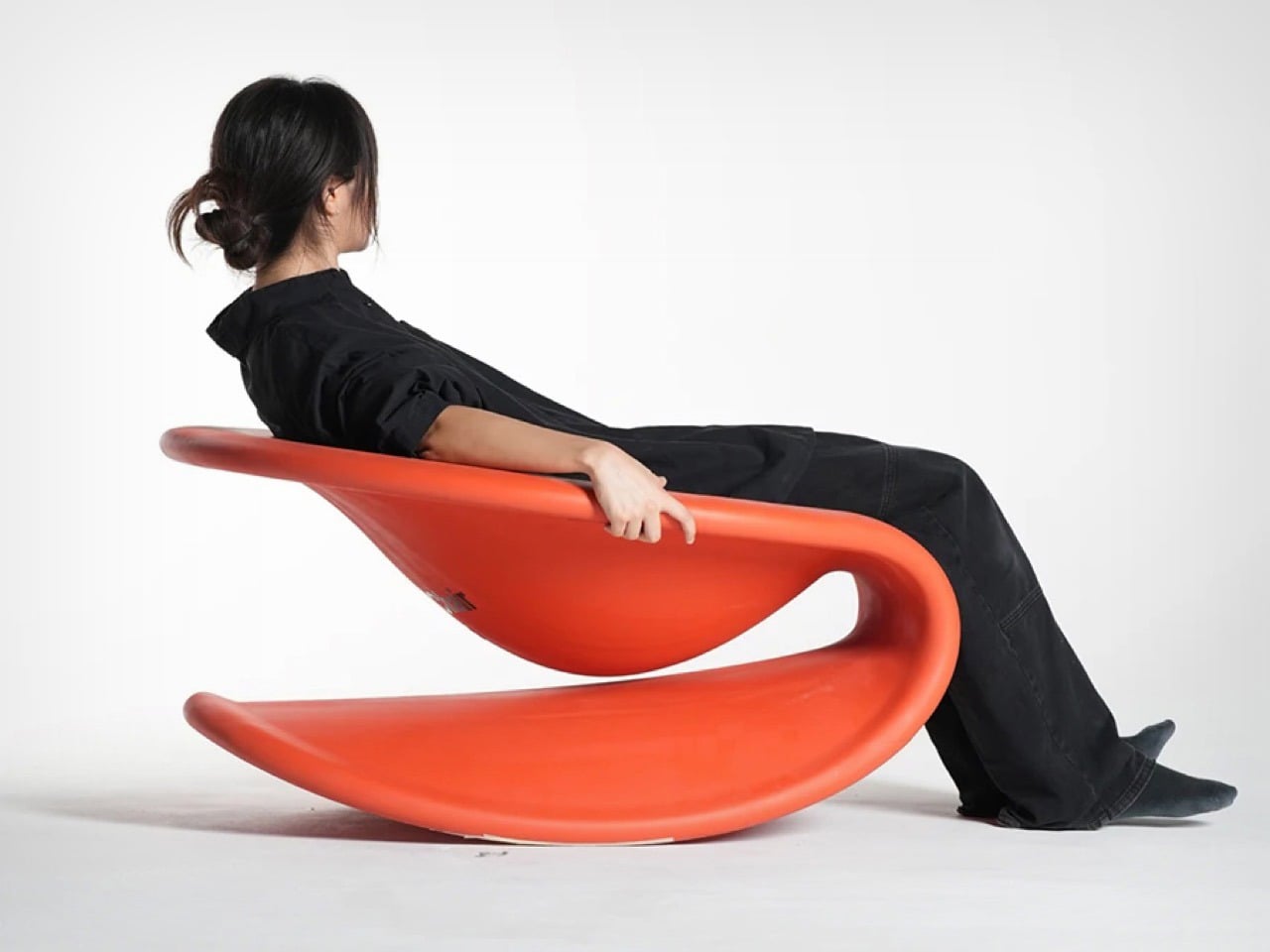
I listen to most of my music hunched over a laptop with earbuds jammed in, which is roughly the opposite of a concert. A live show hits your whole body. The kick drum lands in your sternum, the lights change when the chorus drops, and you sway without deciding to. Seoul-based designer Eunseo Yun wanted to put that feeling into furniture, and the result is the Plunge Chair, a rocking lounger designed to let you hear, feel, and see your music. It also looks like a Panton Chair that got folded in half during a very ambitious yoga session.
The Panton resemblance is hard to miss: one continuous, legless ribbon of shell in a single loud color, bent a whole lot further than Verner ever dared. The backrest drops into a wide dish of a seat, the S curve pinches into a hairpin loop, and the base stretches into a long rocker so you can sway along. Inside, a bass shaker and internal sound chambers are intended to turn the shell into a subwoofer you sit in. Lights would shift color to match the mood of the song, sunny for bangers and blue for breakups. The concept earned a prize at Korea’s GaGu Living Design Competition, which has been scouting young furniture designers since 2005.
Designer: Eunseo Yun
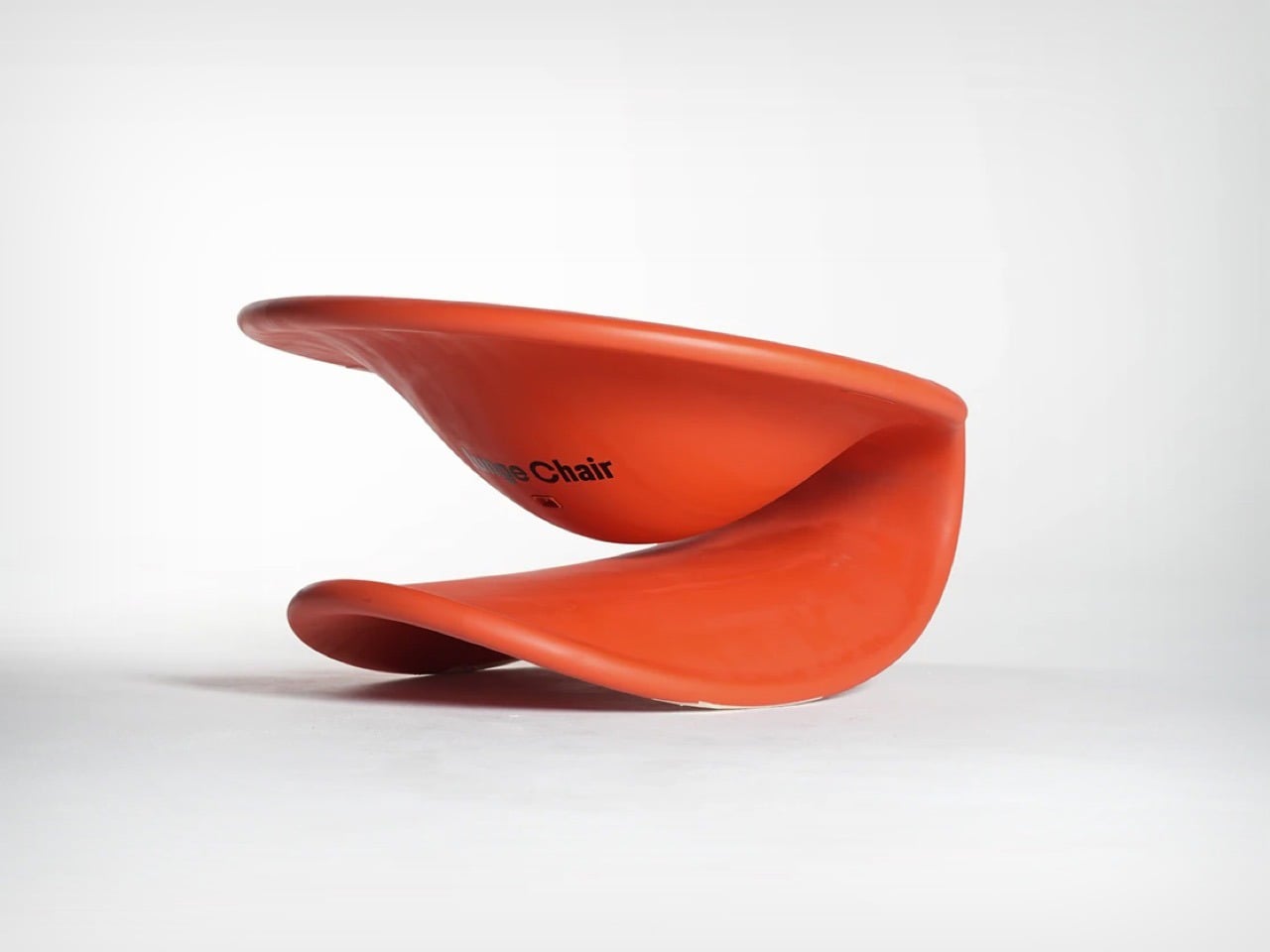
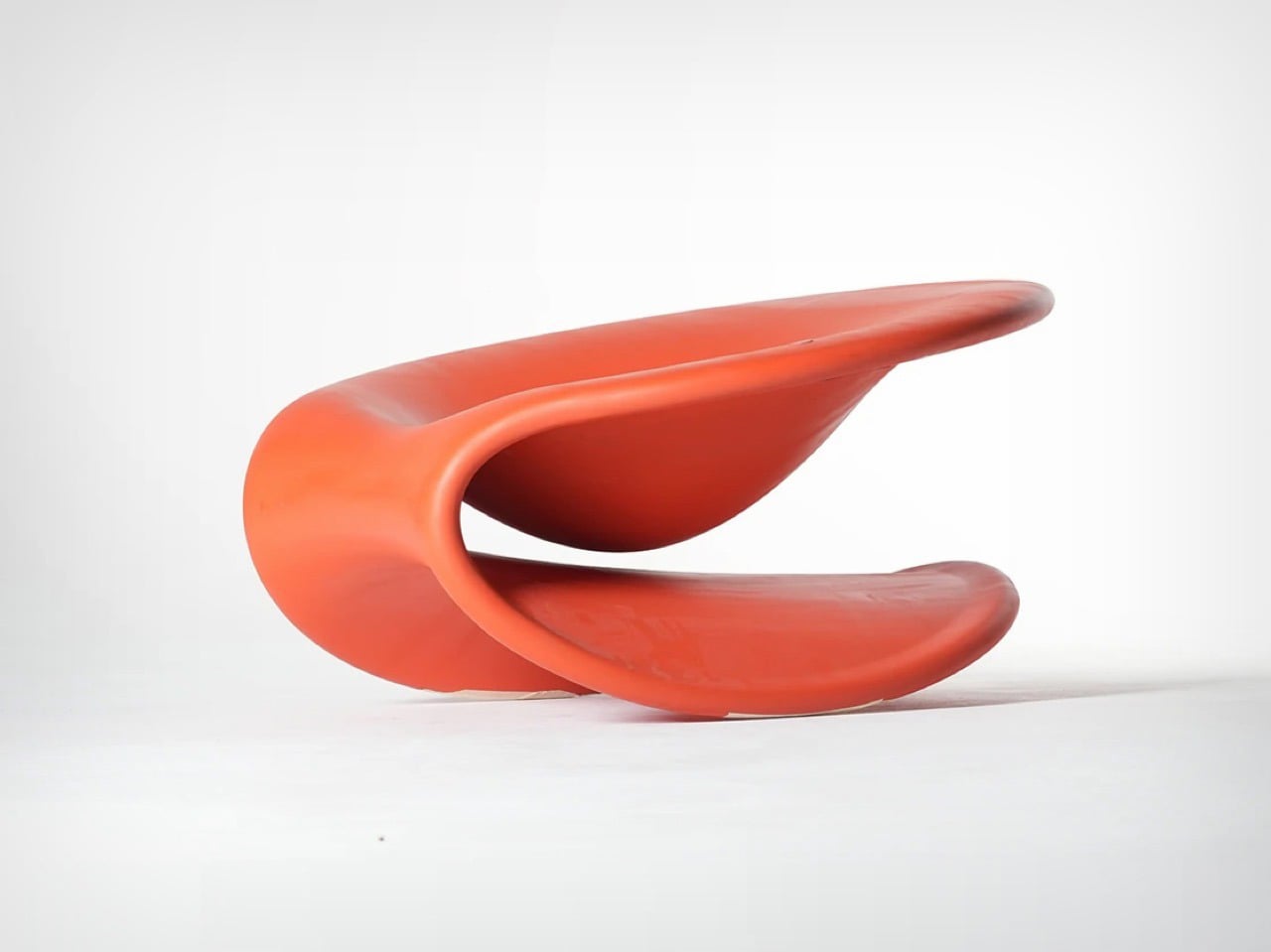
Panton spent the better part of a decade chasing a stackable cantilever chair made from one piece of plastic. Vitra finally launched it in 1967, starting with a pilot run of 150 in glass-fiber-reinforced polyester, and people nicknamed it the free swinger for the subtle flex in its seat. Plunge takes that flex and turns it into actual motion, since the old flared foot now unrolls into a full rocker. The posture changes too. A Panton keeps you upright at the dinner table, while Plunge drops you low and leans you back, which is exactly how you want to sit when a good album comes on.
Folding the S also gives Yun something Panton’s chair never had: a cavity. Curl the ribbon back on itself and you get an enclosed volume, which Yun proposes using as a speaker cabinet with sound chambers, the same instinct behind Trueba Studio’s VIBRYX collection and its speaker-stuffed sofa bases. The rocker could play a part here as well, though its narrow contact with the ground doesn’t establish how much vibration would reach you versus your downstairs neighbor’s ceiling. Even the deep recline has a job, bringing your back, seat, thighs, and arms into contact with the shell so there’s more of you to shake.
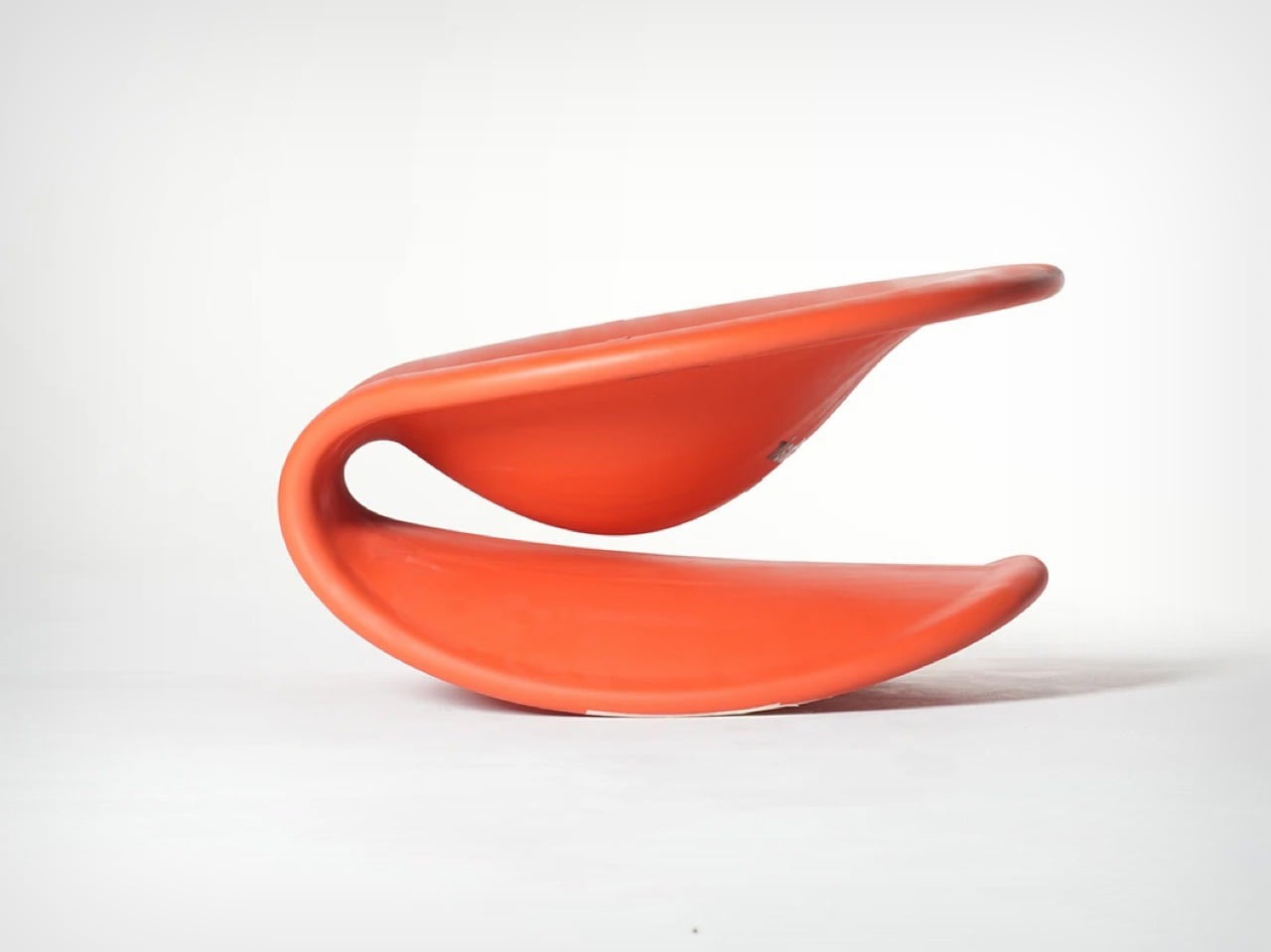
Much tactile audio gear focuses on low-frequency rumble. A Dayton bass shaker bolted under a couch or a SubPac strapped to a studio chair delivers bass you can feel, and Pinju Chen’s Speaker Chair parked a beefy speaker in its base. Yun’s plan is more surgical. Plunge would split a track into its instruments, like vocals, guitar, and bass, and route each one to a different part of your body so you could feel a song’s layers separately. The bass channel gets the most detail in the proposal, with bass, cello, and double bass routed through the shaker and the shell’s chambers toward your hips and legs.
A 2013 UC Berkeley study found that people pair fast, major-key music with lighter, brighter, yellower colors, and slow, minor-key music with darker, grayer blues. Plunge follows that logic, with an app intended to vary the color, brightness, and speed of its lighting for each track, serving up sunshine tones for one song and sea blues for another. Jaewon Choi’s speaker stool kept its visuals on your phone screen, while Plunge’s renders bathe the whole room in color. Panton’s 1970 Visiona 2 installation, built for Bayer aboard a riverboat at the Cologne Furniture Fair, gave every room its own sound and color atmosphere. Plunge proposes squeezing that whole idea into one seat, fitting for the year Panton would have turned 100.
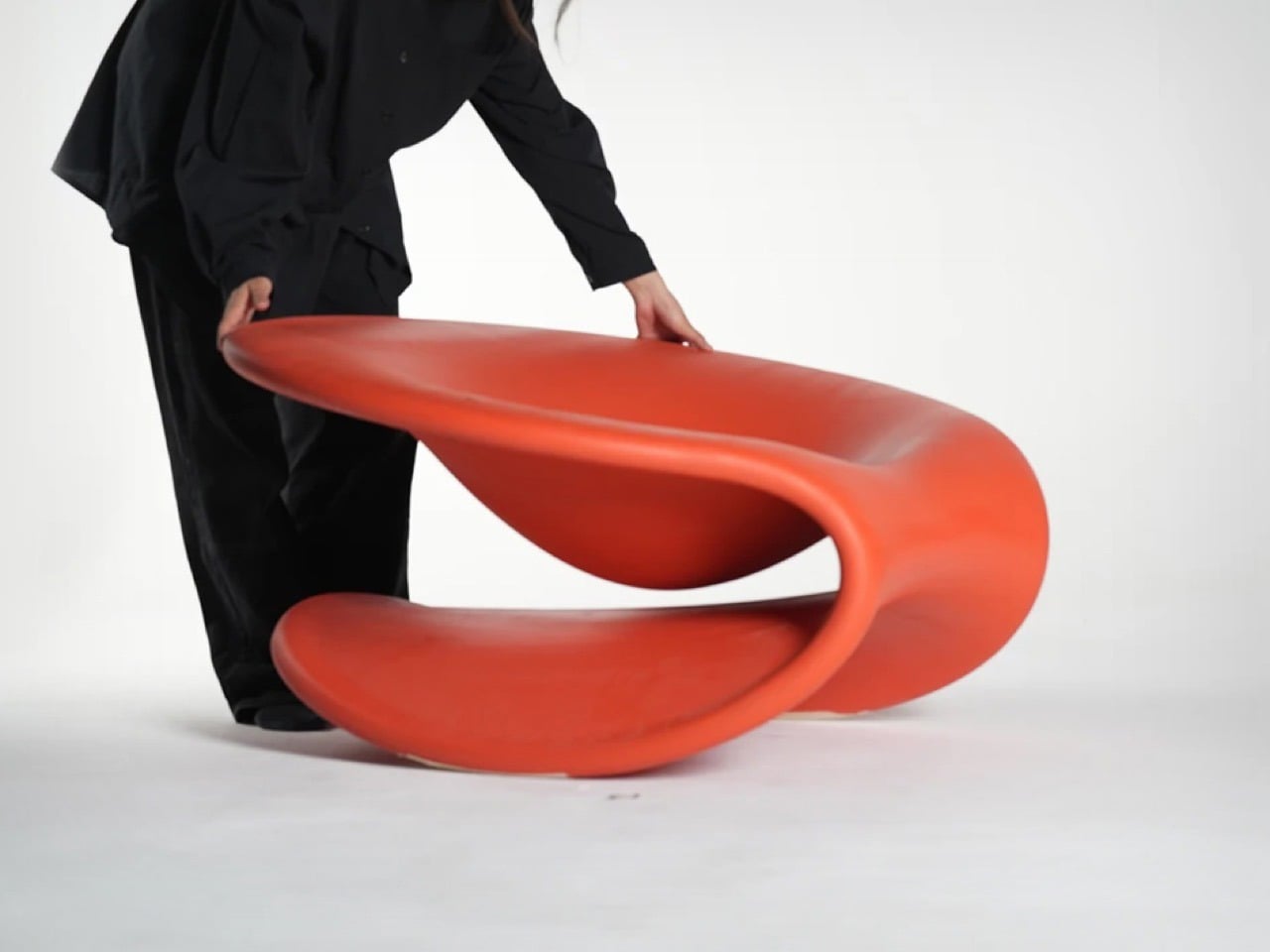
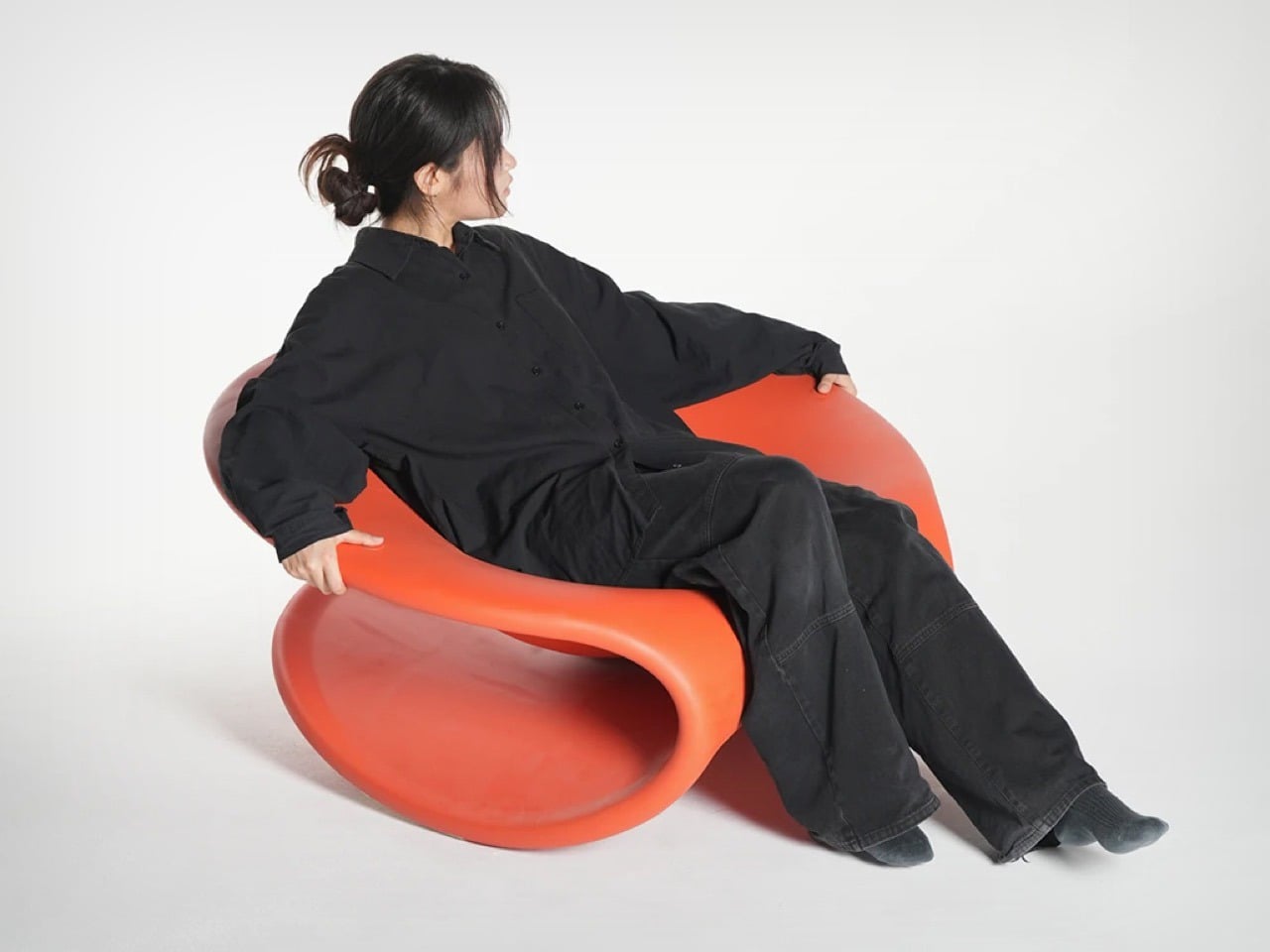
Yun worked out the pose on a row of hand-sized white models, each one testing how tightly the loop could curl and how far the seat could tilt. The full-size prototype was modeled in Rhino, rendered in KeyShot, and 3D printed in roughly 16 segments, which were pinned together with wooden dowels, filled at the seams, and sprayed in a paint booth. Panton built his first full-scale model back in 1958, and Eero Aarnio tested his rocking 1967 Pastil Chair with a polystyrene prototype, so Yun is in good company. The renders add chartreuse, purple, and black to the red-orange prototype. Three of those colors match the hearing, sight, and touch circles in Yun’s own branding.
Furniture that plays music through your body has existed for decades, including in therapy rooms. Norwegian educator Olav Skille built a vibroacoustic chair in the early 1980s, using low frequencies between 30 and 120 Hz, originally to help children with severe disabilities. Plunge takes that idea out of the clinic and puts it to work for pure enjoyment, volume up and lights going. For now it remains a personal project and a full-scale prototype, with no price or release plans, though the GaGu jury clearly agreed the idea has legs, which is funny for a chair with none. Panton’s icon stood still for sixty years, and all it needed was a good playlist and a stretch.