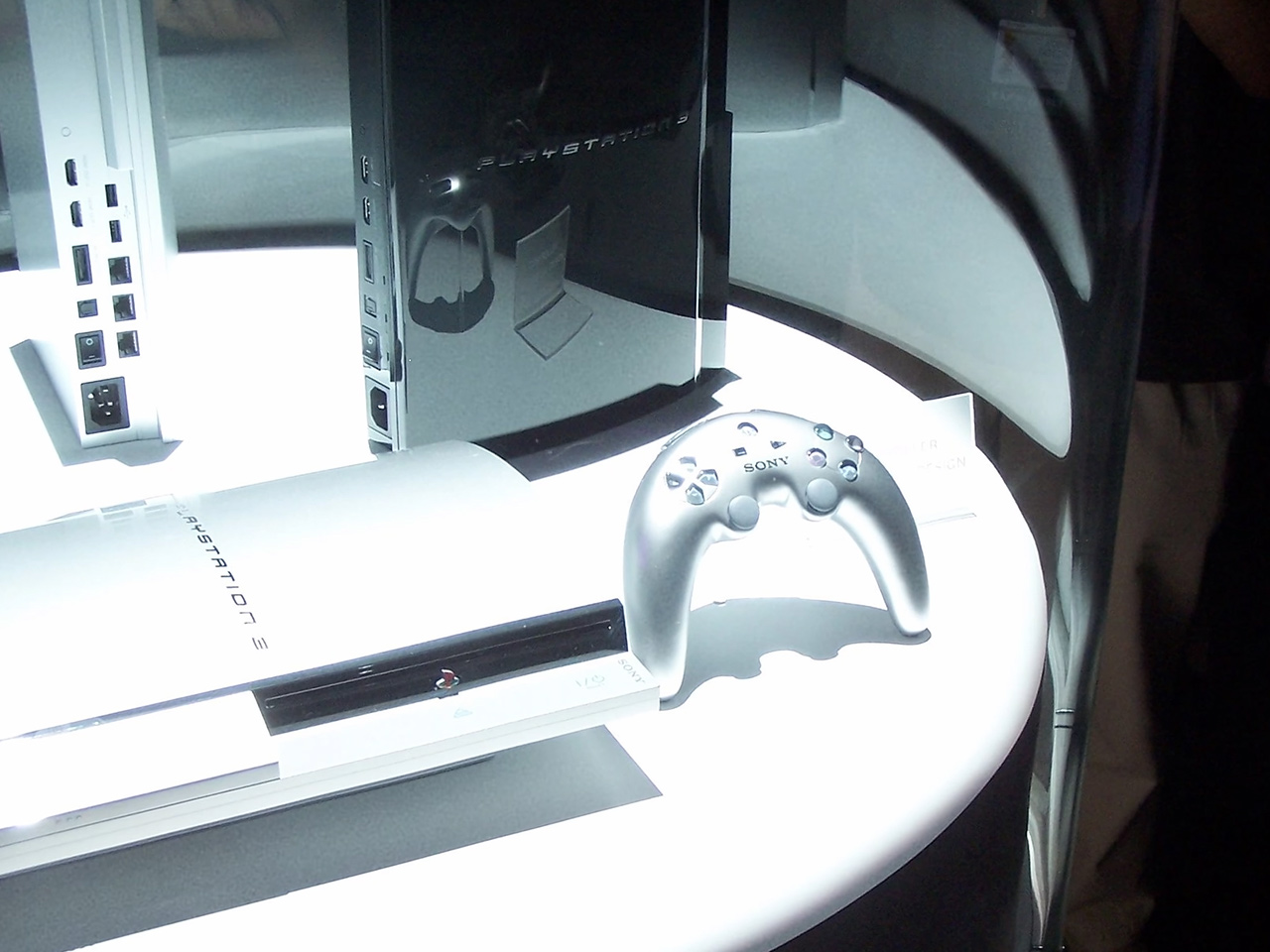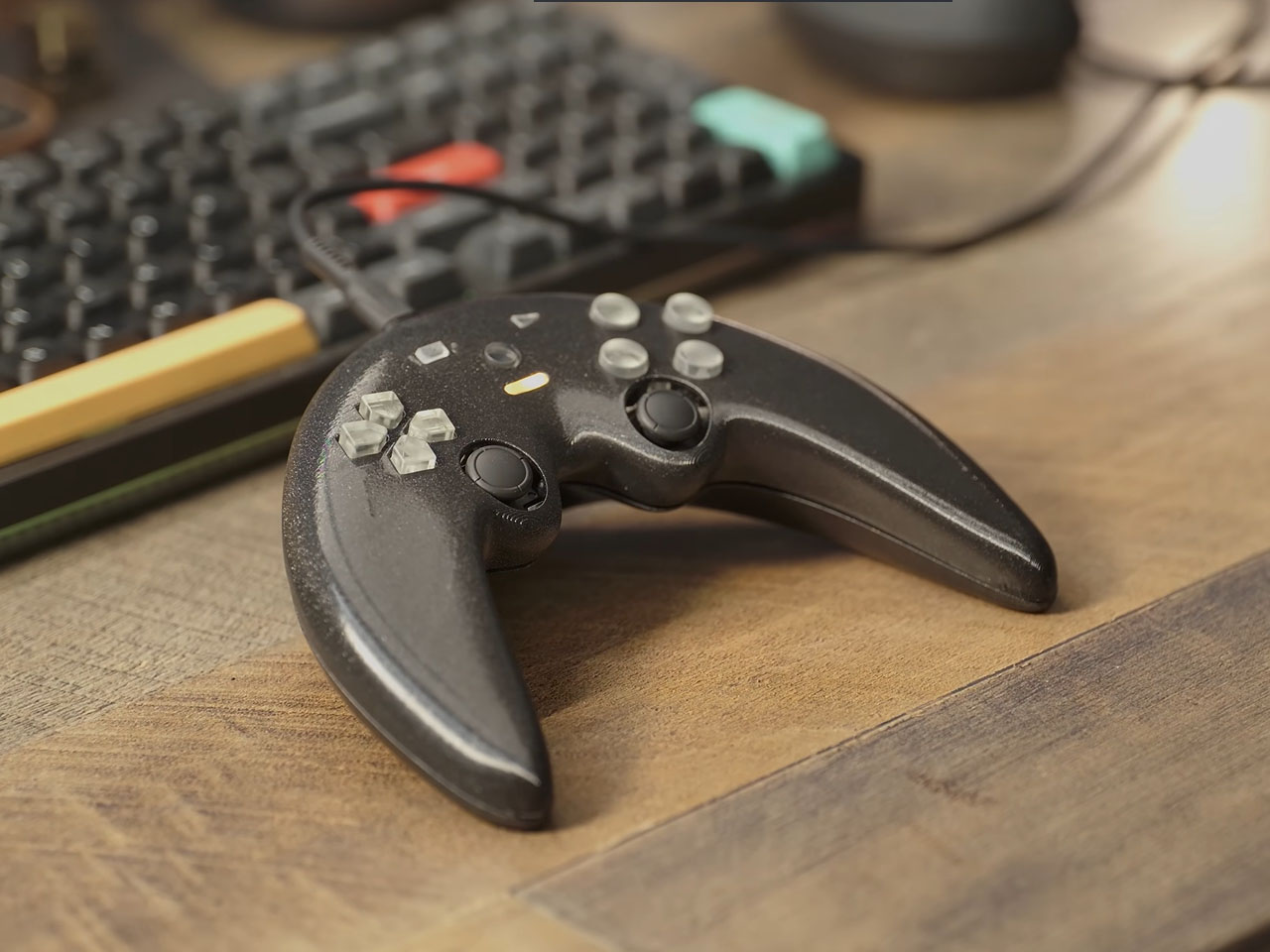
Sony unveiled a futuristic concept controller way back in 2005, but it never got past that stage. No one ever got to use the gamepad, and it eventually faded into oblivion. Now, a DIY enthusiast has resurrected Sony’s unusual gaming controller as a fully functional device. Recreating a design that existed only in photographs, sketches, and patent drawings, maker Polymatt has brought the long-forgotten PlayStation 3 Boomerang controller to life, complete with working buttons, analog sticks, and wireless connectivity.
First shown alongside the PlayStation 3 prototype at E3 2005, the controller featured an unconventional sweeping shape that looked more like a boomerang than a traditional gamepad. Its futuristic appearance quickly attracted attention, although not all of it was positive. The unusual silhouette became a subject of jokes and comparisons, while Sony eventually moved away from the concept in favor of a more familiar controller design. The company never intended the Boomerang to become a retail product, leaving it as an interesting footnote in PlayStation history.
Designer: Polymatt
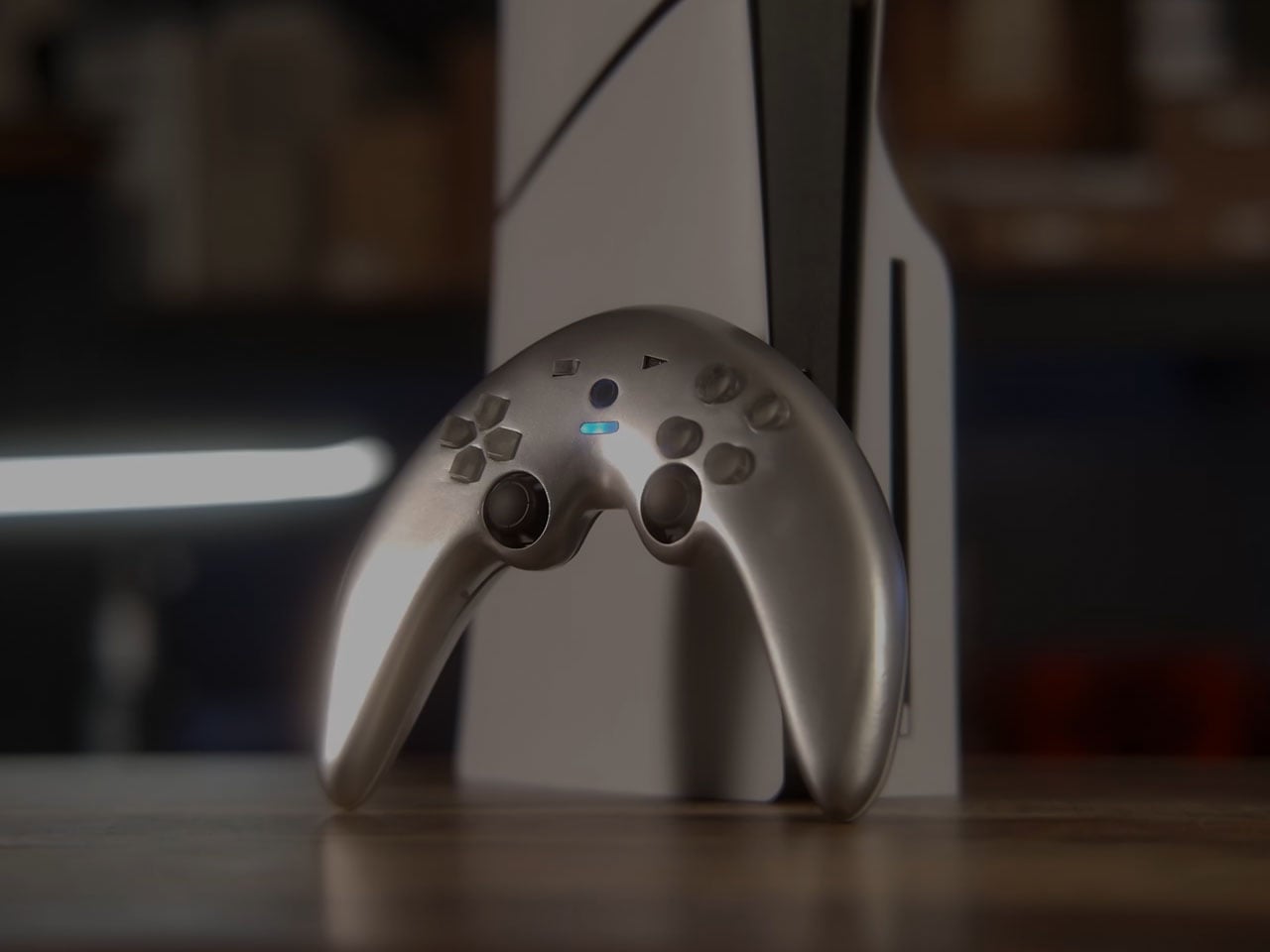
Polymatt’s recreation began with collecting photographs from the original 2005 unveiling and studying related patent drawings. He also used an original PlayStation 3 console as a reference to establish the controller’s proportions. The face buttons and directional pad were carefully measured against the available images to retain their original dimensions. Using Shapr3D, he developed the curved outer shell by tracing its contours from multiple angles, smoothing the geometry, and dividing the design into two mirrored halves.
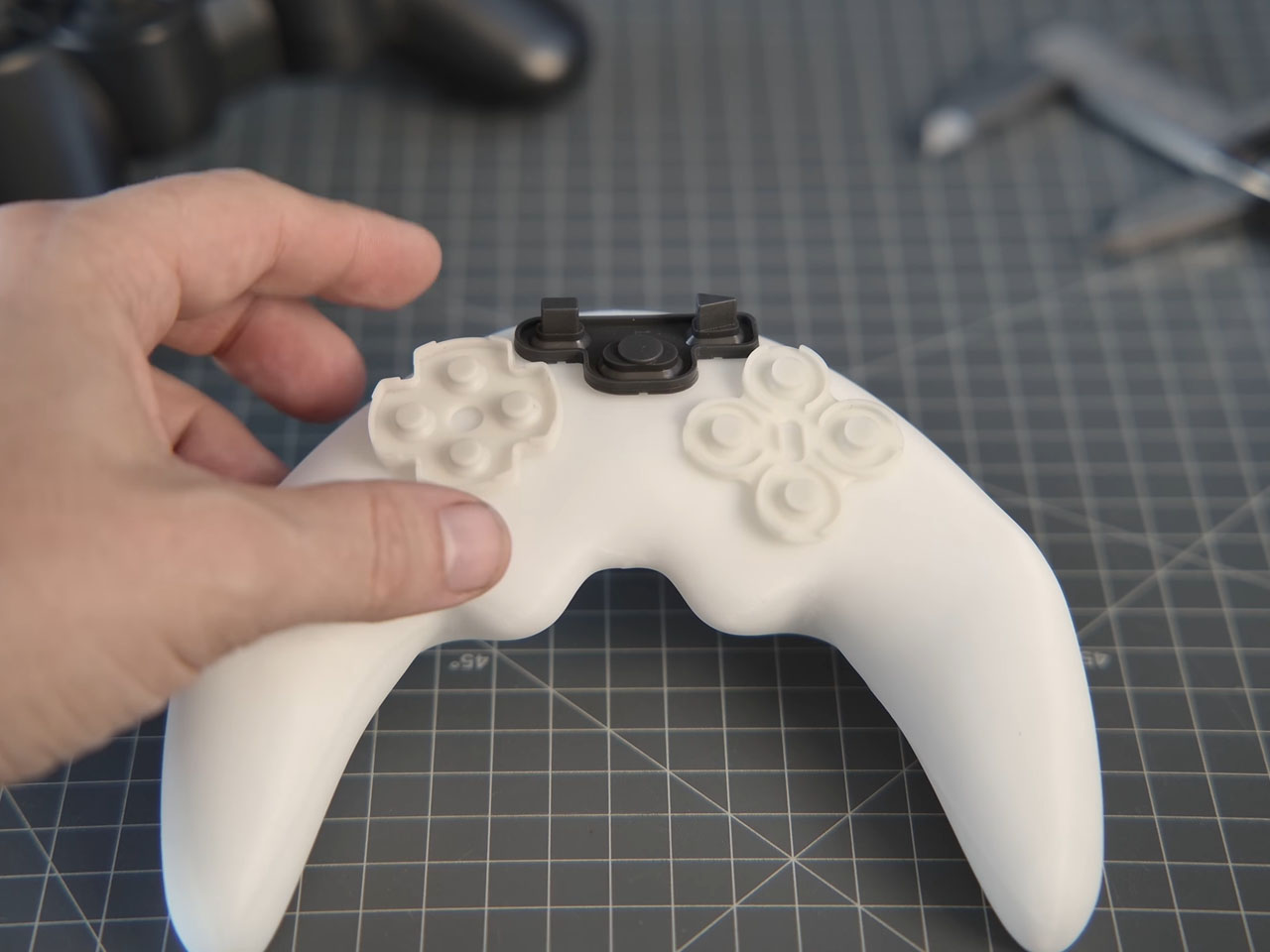
Getting the internal layout right proved just as challenging as recreating the distinctive exterior. The maker first printed thin templates and placed them over a DualShock controller to check the positioning and spacing of the controls. However, standard DualShock analog sticks proved too large for the compact body. He replaced them with smaller Joy-Con-style modules featuring TMR sensors, allowing them to fit within the available space.
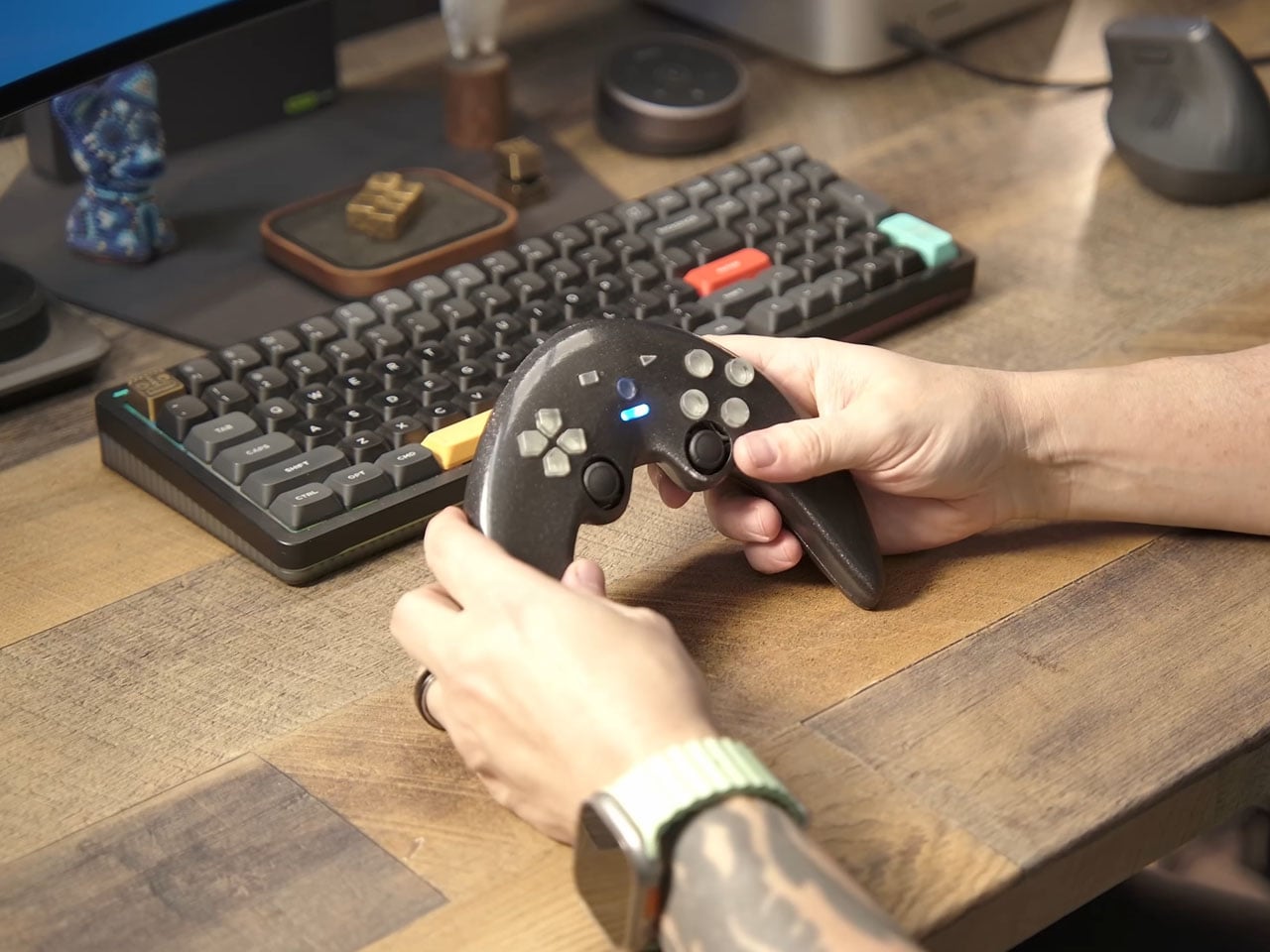
The controller uses custom-designed circuit boards created in KiCad, with dedicated connections for the analog sticks, shoulder switches, and individual buttons. Polymatt also incorporated DualShock 3 rubber contact pads and carbon-pill buttons to reproduce the familiar tactile input system. A Seeed XIAO ESP32-S3 handles the firmware, while a built-in 2,000mAh lithium-polymer battery provides approximately 40 hours of runtime. Charging and wired connectivity are handled through USB-C.
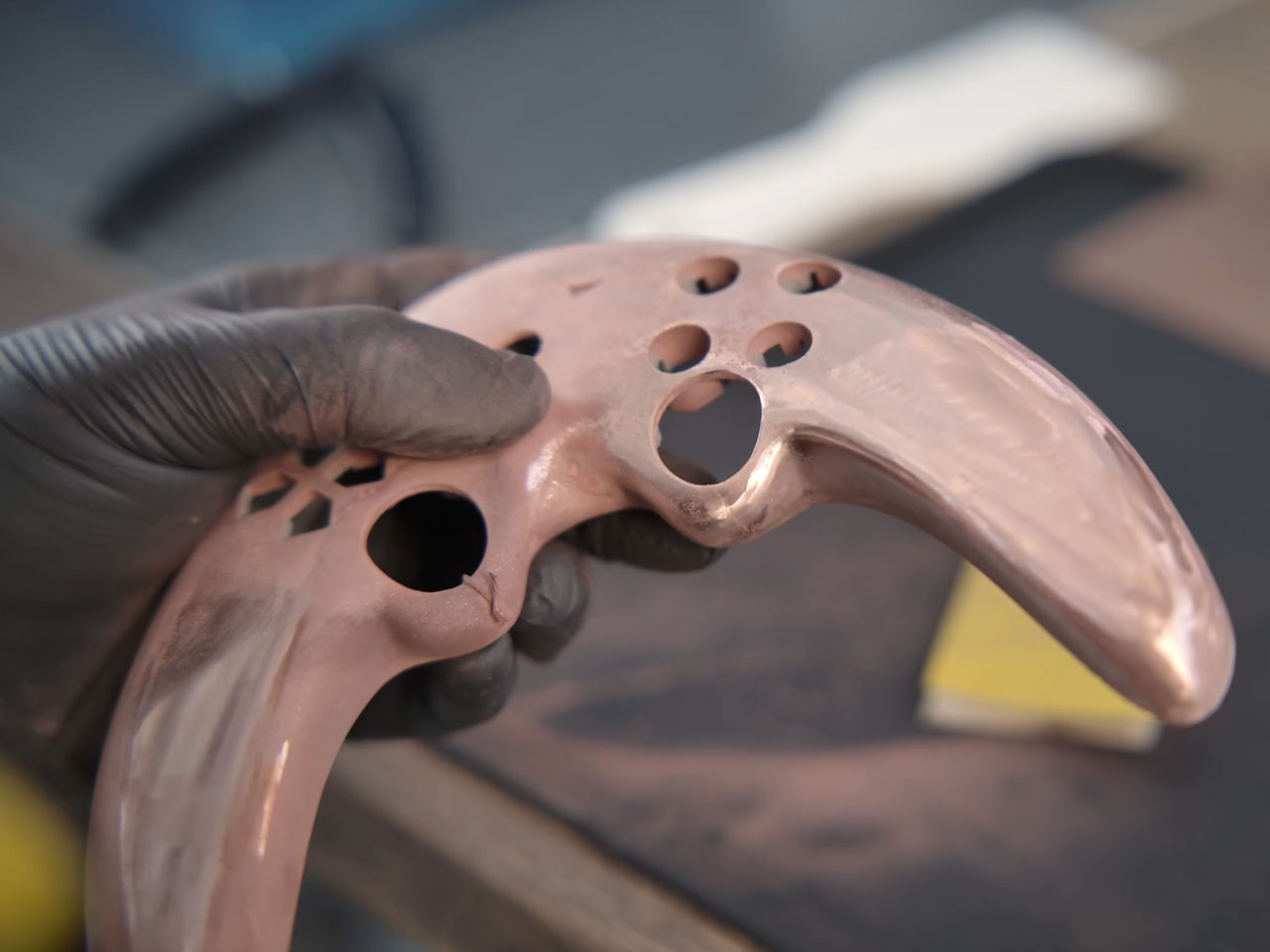
Finishing the exterior presented another unexpected challenge. Copper plating initially left uneven surfaces, while a continuous metallic coating interfered with wireless signals by effectively turning the shell into a Faraday cage. Liquid chrome paint eventually provided the desired silver finish without disrupting connectivity. Some adjustments were also needed around the ribbon cables and shoulder-button mechanisms before everything worked as intended.
The finished controller connects wirelessly to a PC or Steam Deck and can also work with an original PlayStation 3 when connected through USB. Testing confirmed that all the inputs registered correctly, although the shoulder buttons feel slightly firmer than those on a conventional DualShock controller.
Perhaps the most interesting part of the project is that Polymatt has made the recreation open source. The printable 3D models, circuit board designs, and firmware are available through Printables and GitHub, allowing other makers to build their own version of a controller that Sony never released.