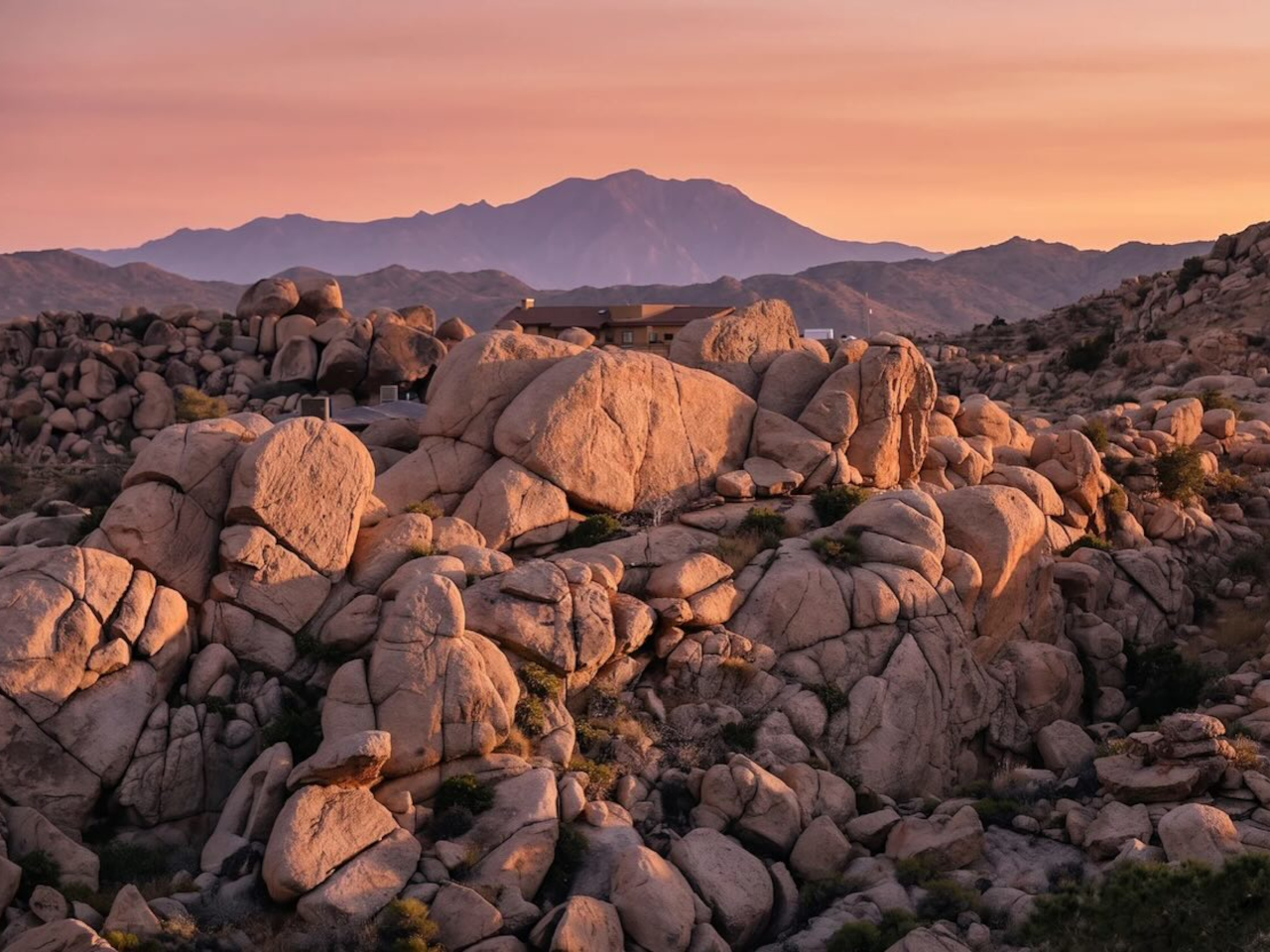
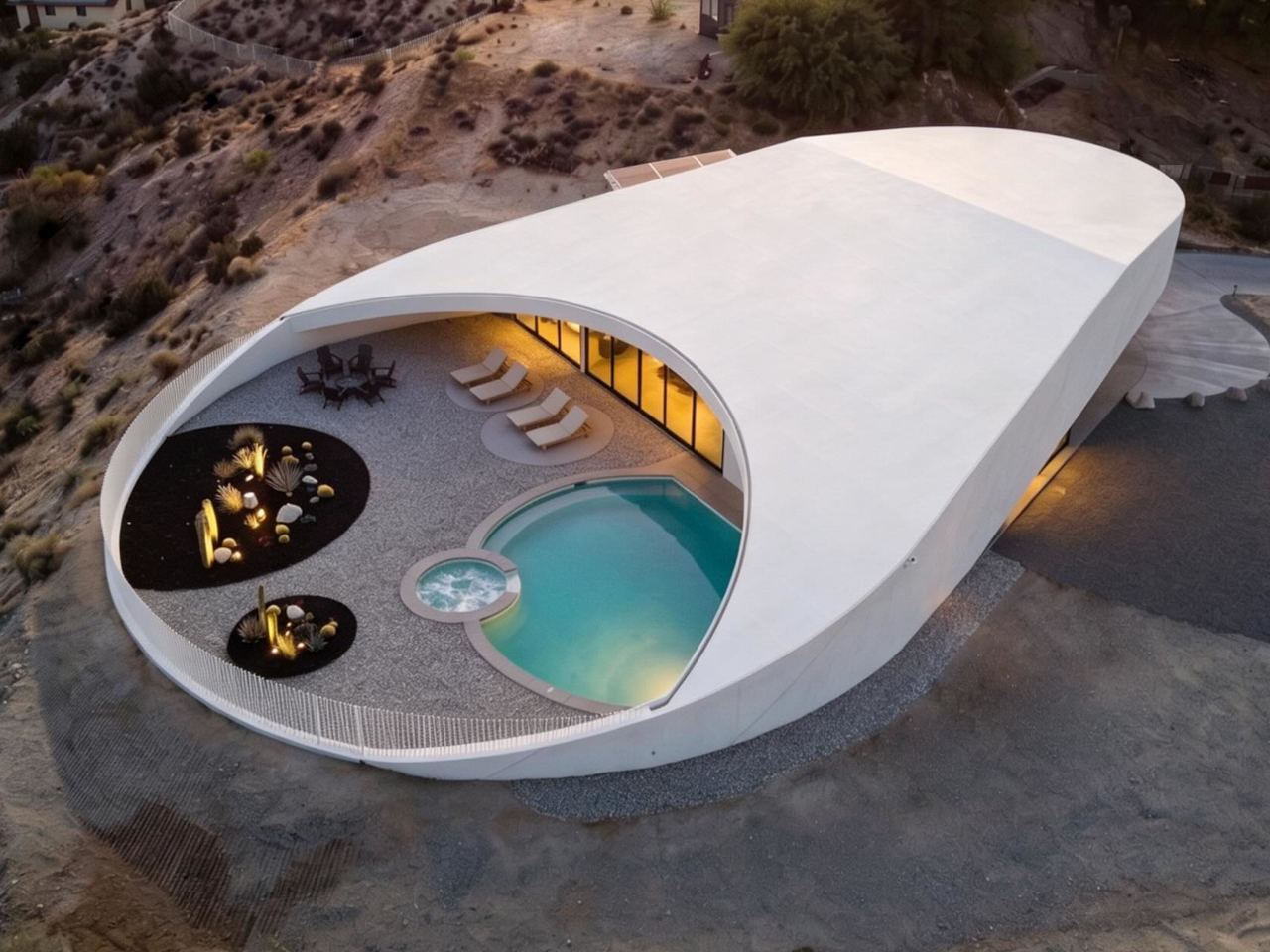
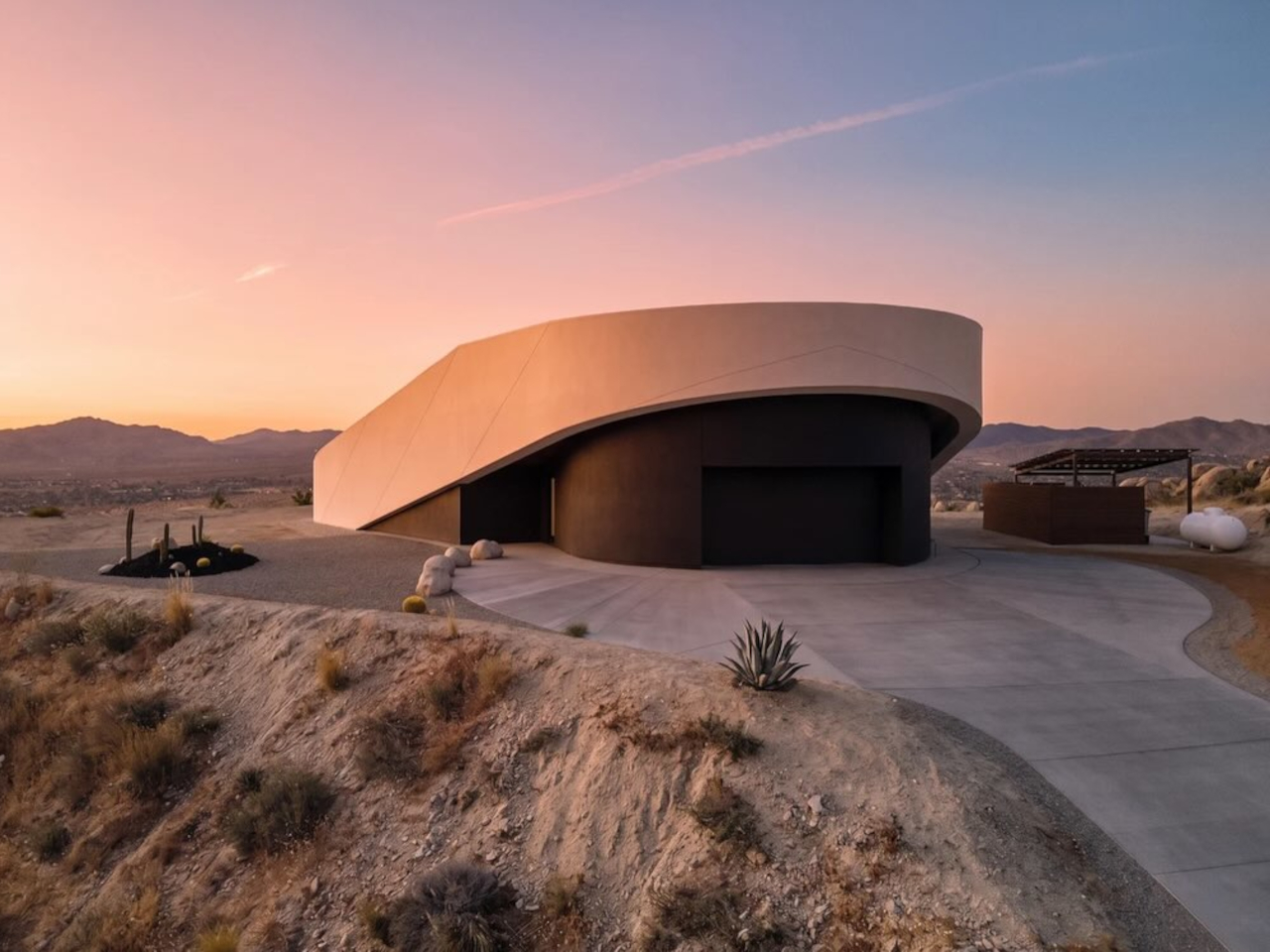
From the driveway, Avocado House keeps much of its glass out of sight. That’s a rather unexpected move for a house on a hill, where the view is usually the first thing anyone wants to show off. The desert retreat, now a rental, sits above California’s Yucca Valley and opens on the other side, where the white shell gives way to a courtyard.
Arshia Architects started with three circles to sort out the living space, the yard, and the ground in between. The resemblance to an avocado came later, which is probably for the best. A house designed to look like lunch would have a lot to explain. Here, the big cut in the shell puts the courtyard within the outline of the house.
Designer: Arshia Architects (via Fieldtrip)
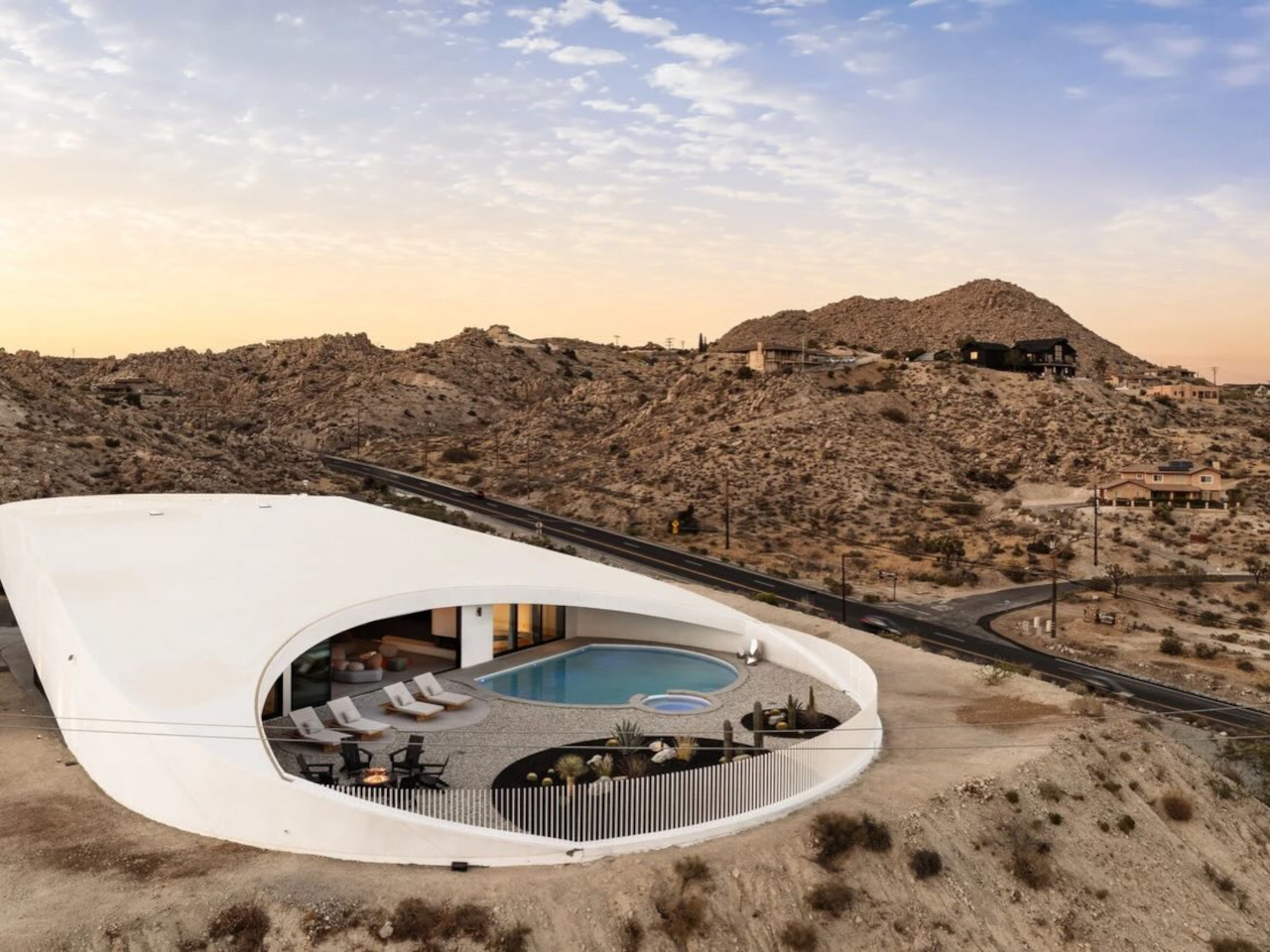
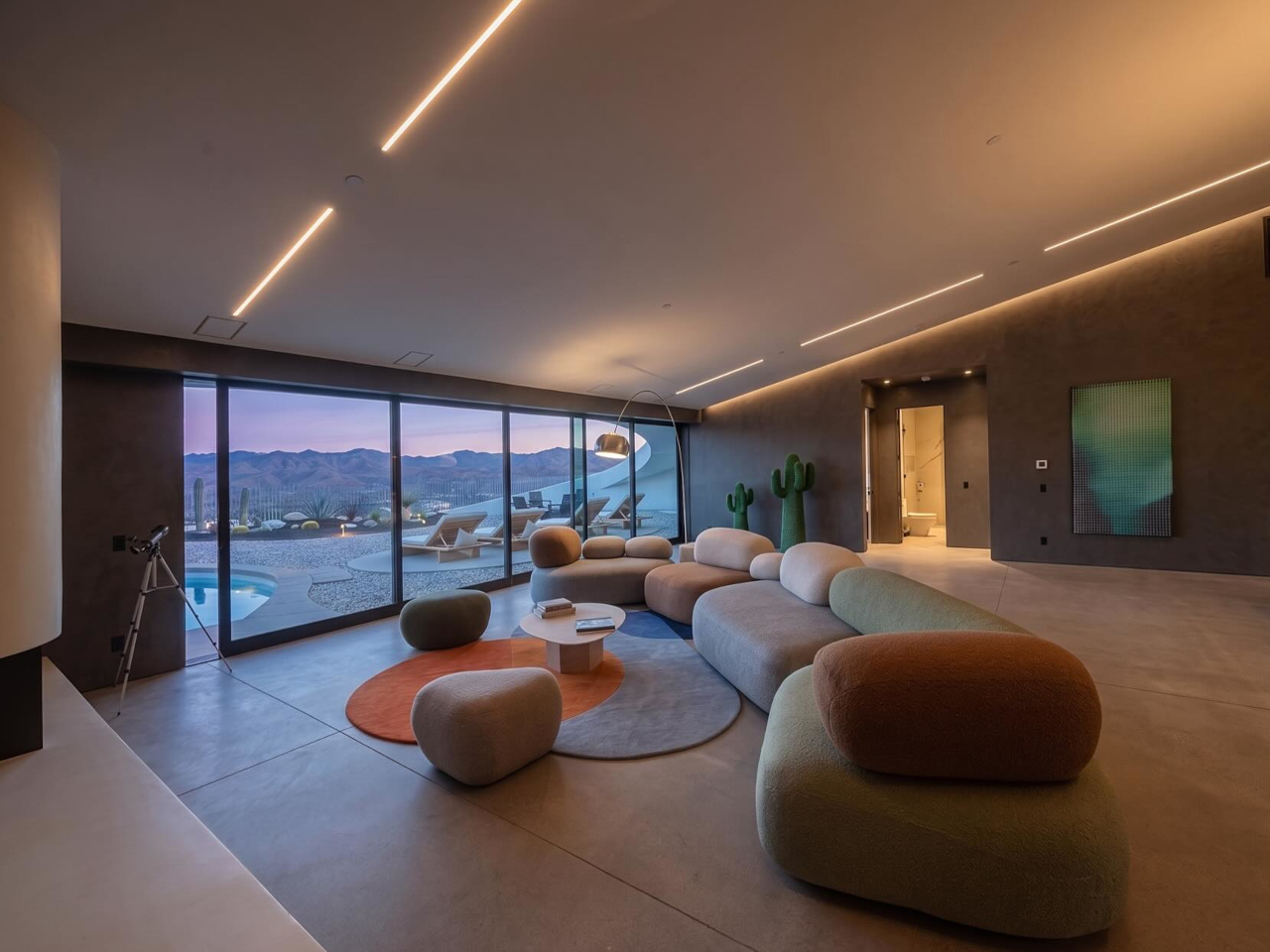
From the sofa, you look through the sliding glass doors, across the courtyard, and out toward the San Jacinto Mountains. The roof dips over one part of the yard and leaves the rest open to the sky. There’s a railing between the cactus beds and the drop, but you can still see the boulders on the slope through its slender bars.
That broad curve takes more work than the white surface lets on. The roof and canopy are framed in curved glulam, made by bonding layers of wood into structural members. The layers can be bent as they’re bonded, so the framing can follow the sweep of the shell. Getting those curves right was one of the harder parts of construction.
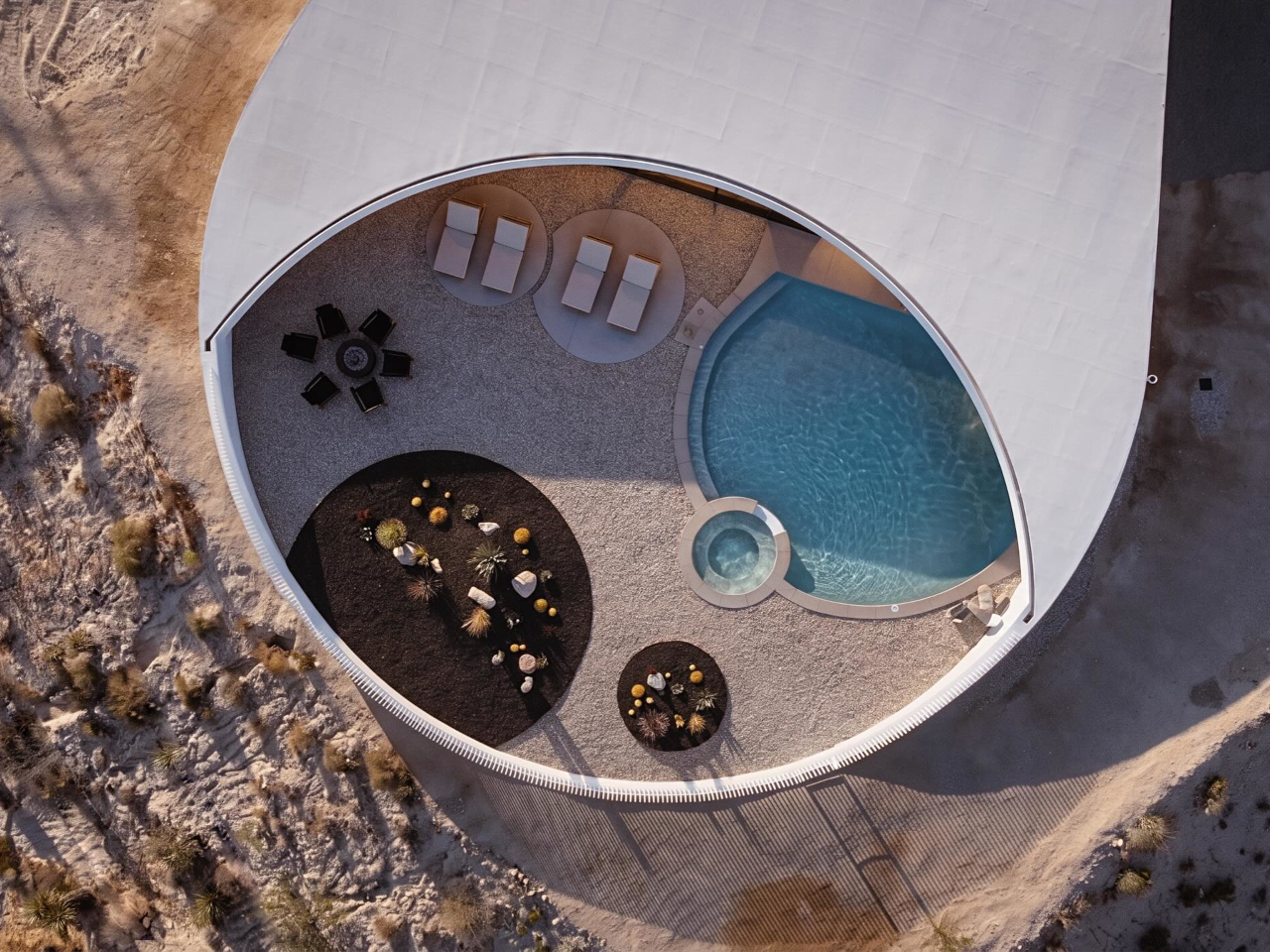
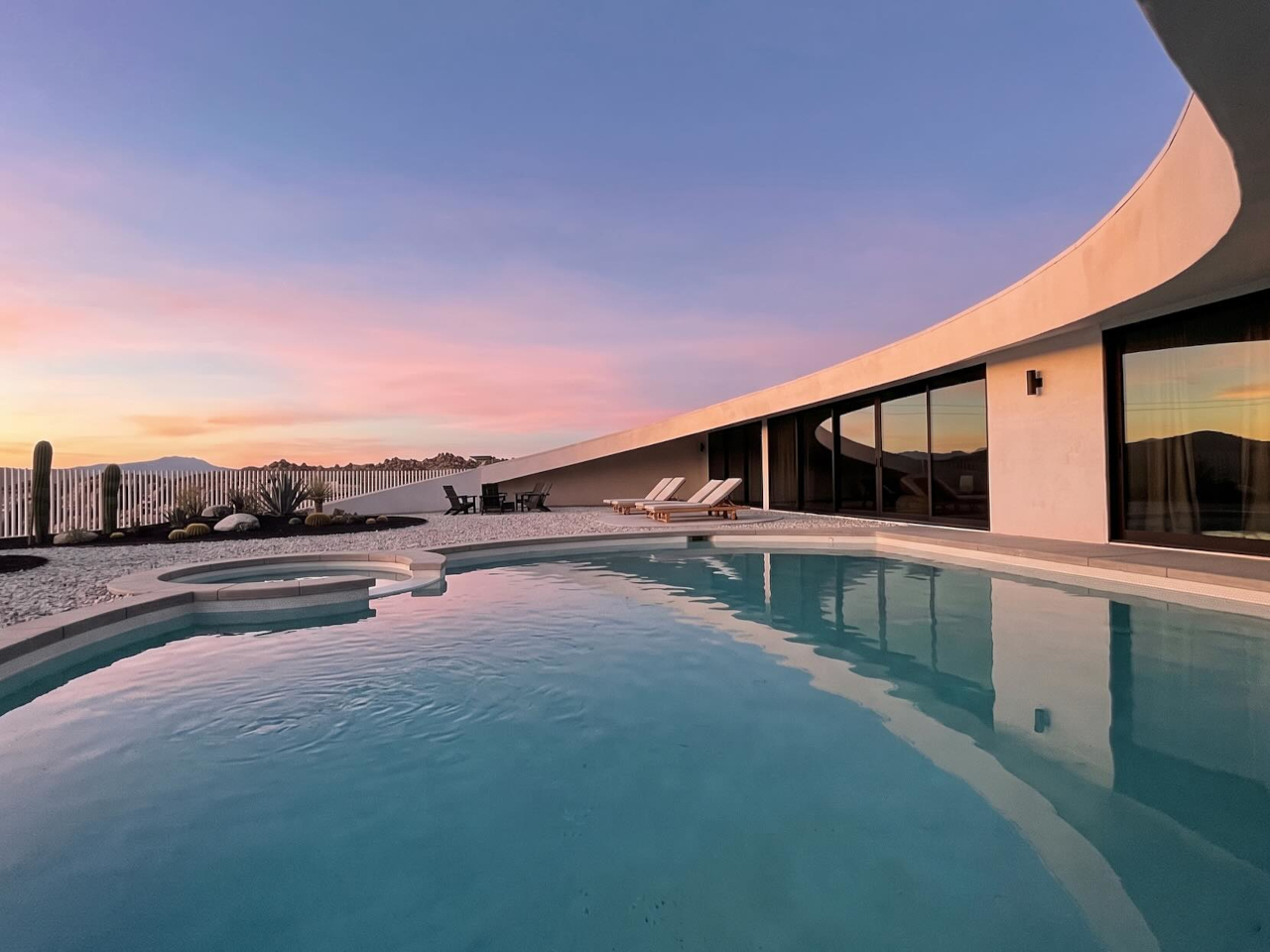
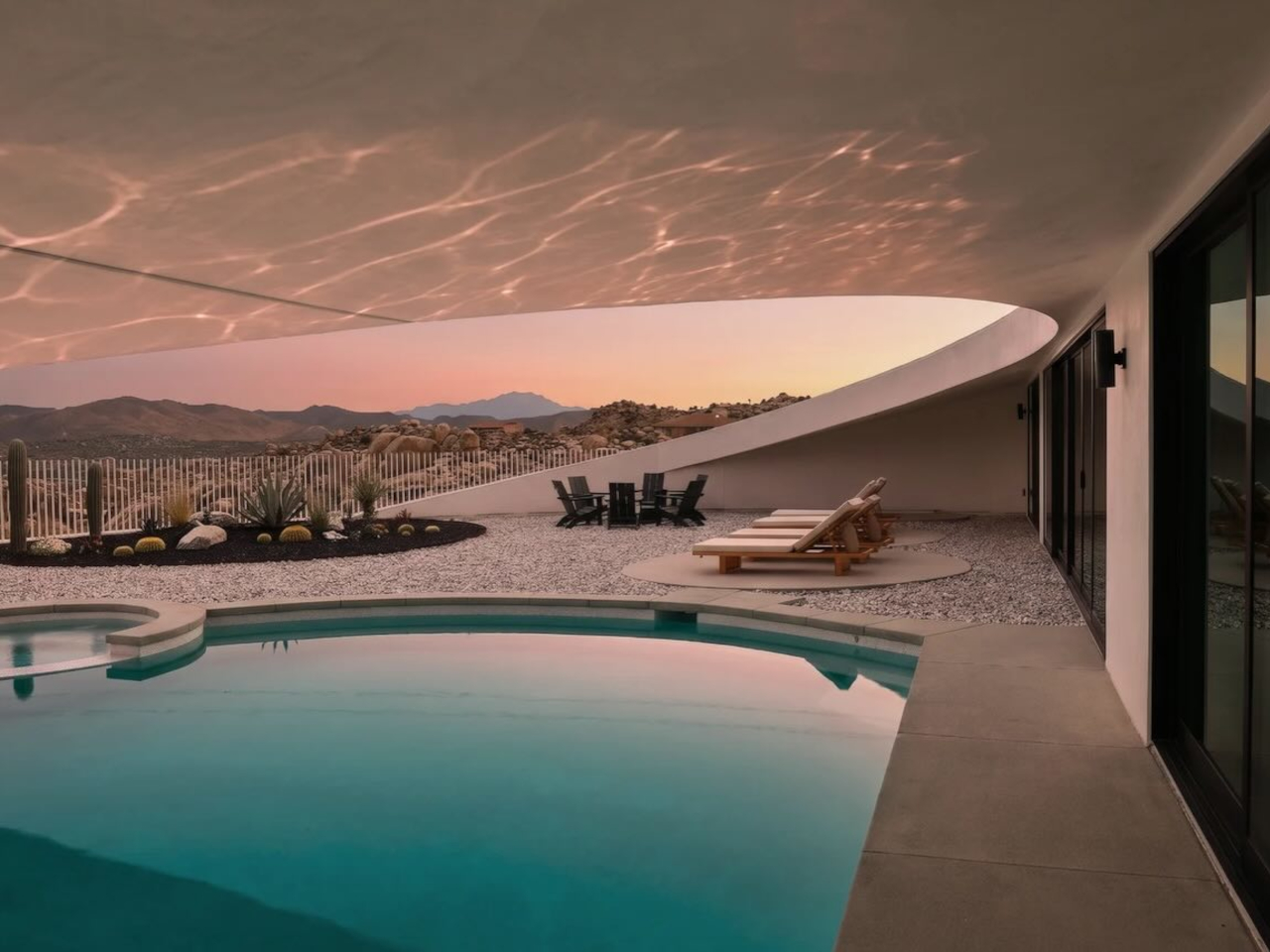
Two of the three bedrooms open straight onto the courtyard, so an early swim needn’t involve a detour through the kitchen. The pool and its round spa sit to one side, leaving the rest of the yard for loungers, cacti, and chairs around a fire pit. The chairs face one another rather than the horizon, which makes sense once the sun’s gone down.
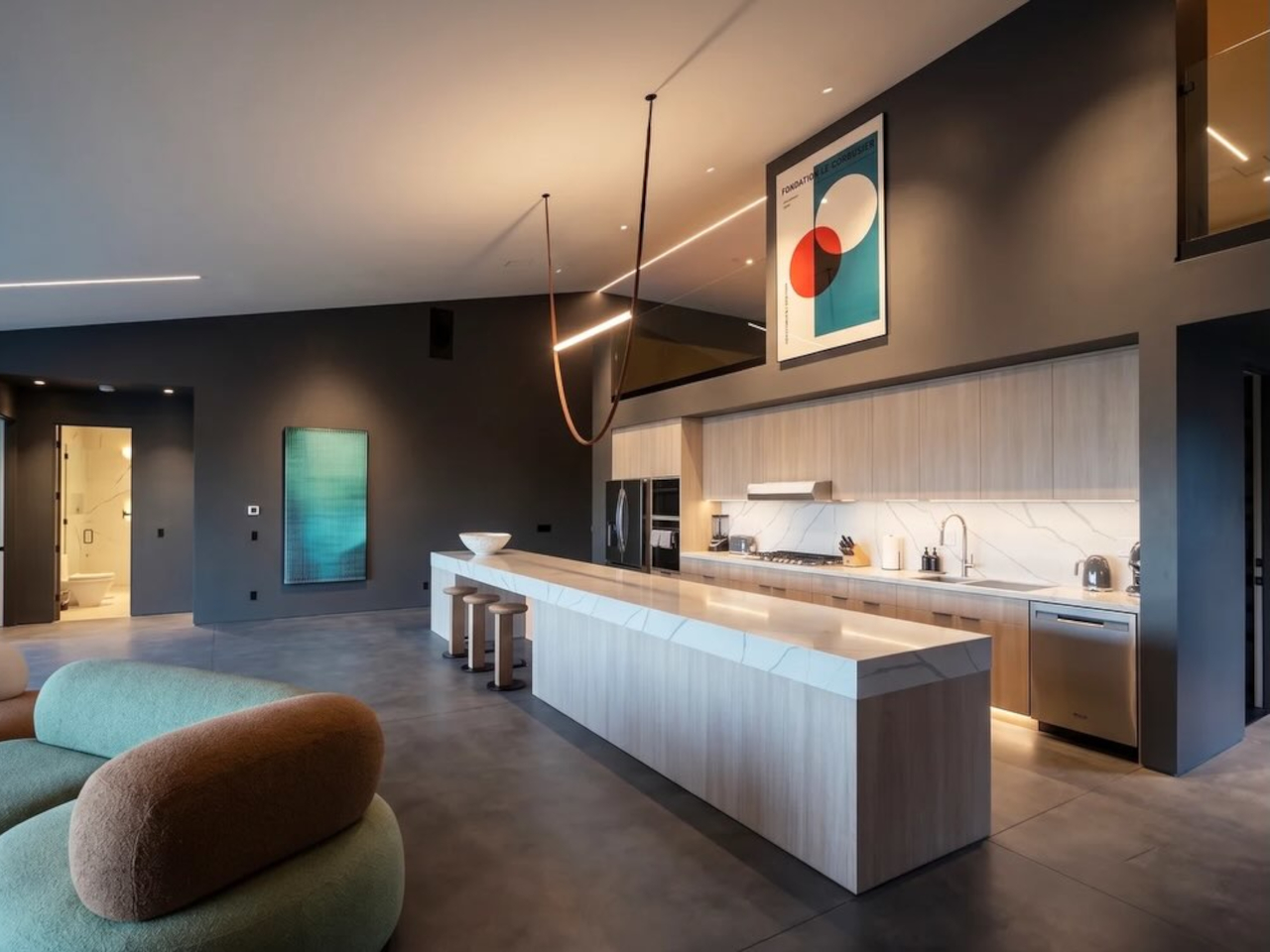
Inside, Xinlei Architecture and the owners gave the open living area a cluster of low sofas with backs like smooth stones. They hold the middle of the room without blocking the view from the kitchen island. There’s a glass pool table in the loft overlooking the seating area, so there’s somewhere to go if the conversation downstairs has taken over the sofa.
The roof has a less obvious job when it rains. Its drainage system directs runoff into two dry wells on the property, where the water can soak into the ground. There are solar panels to offset some of the house’s electricity use, too, though there’s no published figure for how much they supply. Fieldtrip charges separately to heat the pool for its overnight guests.
The fruit comparison is easiest to make from overhead, which isn’t where anyone spends a weekend. Down at the water, the more interesting shape is the gap between the roof and the edge of the yard. You can sit under the canopy and watch the last light move across the hills without getting up from your chair. The roof stops right where the good part starts.