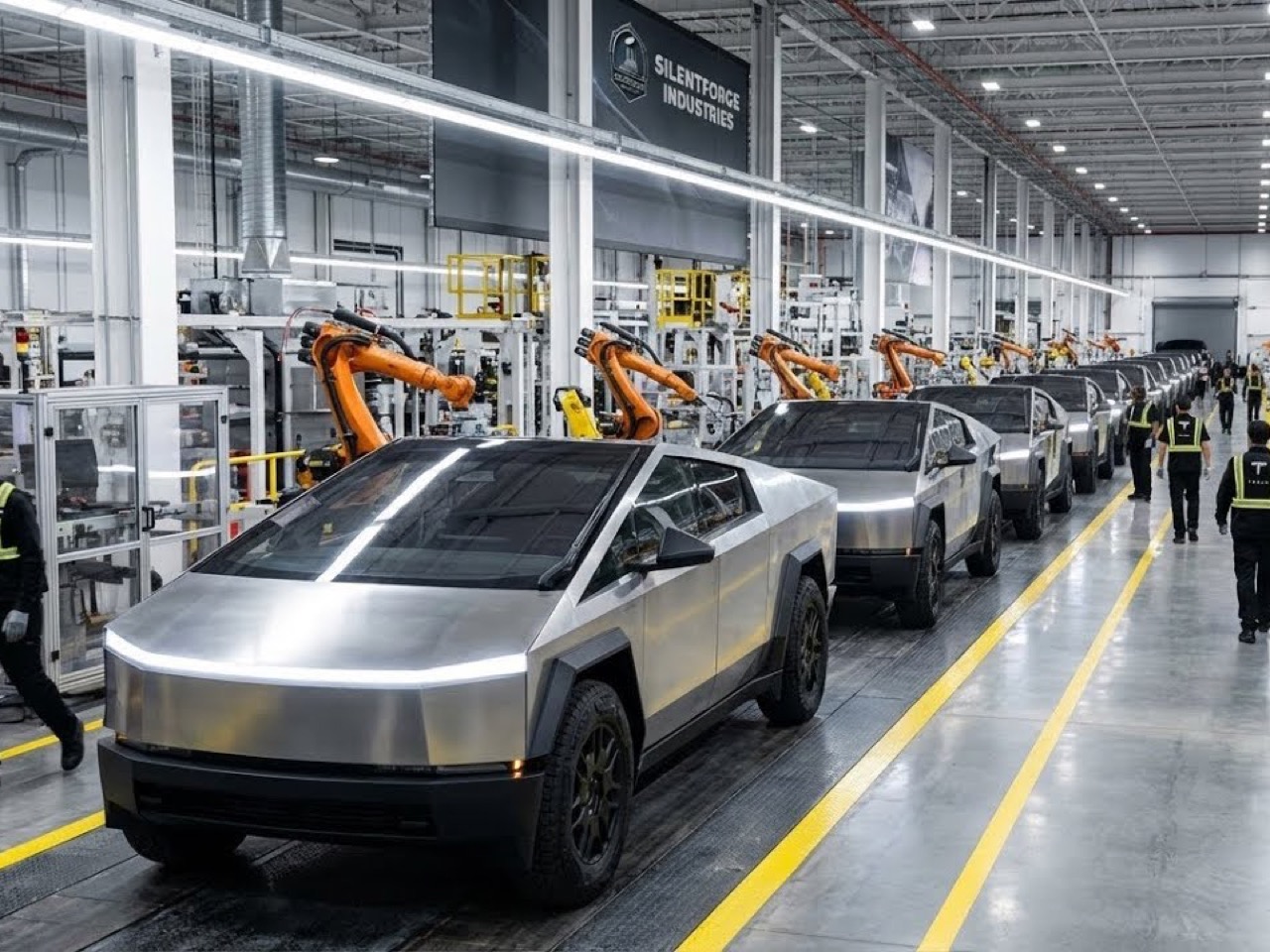
Tesla is pulling the plug on the Cybertruck, and the official reason involves real estate. Elon Musk posted on X on November 6 that production at Gigafactory Texas will wind down around the middle of 2027 to make room for more Cybercab production. That would be a reasonable explanation if Giga Texas were a studio apartment. The factory has more than 10 million square feet (roughly 929,000 square meters) of floor space, and the Cybertruck line has been running at a fraction of its installed capacity. Call it the most polite breakup text in automotive history.
The less polite version is that nobody’s buying it. Electrek estimates Tesla is moving around 30,000 Cybertrucks a year on a line built for 250,000, and Cox Automotive counts just 11,586 US sales through the first nine months of 2026. This is the same truck that debuted in 2019 with a promised $39,900 price tag and a pair of freshly shattered “Armor Glass” windows. Back then I called it a Toblerone on wheels, and being right seven years later brings me zero joy. Okay, maybe a little. The truck peaked on a stage in 2019, and nothing it did on the road ever topped that.
Price cuts, price hikes, and a convenient excuse
A cheaper rear-wheel-drive Cybertruck launched in 2025 and vanished within months, setting the tone for two years of Tesla trying one pricing strategy after another. A more affordable dual-motor trim reached customers this summer, then Tesla raised prices by $5,000 in August, putting that version at $74,990. Some of the most dependable demand came from inside the family, with S&P Global Mobility data showing SpaceX bought 1,279 Cybertrucks in the last quarter of 2025. Musk’s companies accounted for roughly 19% of US Cybertruck registrations that quarter. When your rocket company is one of your best customers, the truck has a demand problem.
Tesla used the same “make room” framing earlier this year, when it ended Model S and Model X production to free up its Fremont factory for Optimus humanoid robots. Retiring a product sounds a lot better when it’s framed as making space for the future. The Cybertruck’s exit also leaves plenty unanswered: no firm end date, no word on outstanding orders, and nothing yet on parts and service for existing owners. Tesla hadn’t responded to Gizmodo’s request for comment, either. The closest thing to an official goodbye came from lead engineer Wes Morrill, who posted that the truck “lives on through Cybercab.” Engineers write better eulogies than CEOs, apparently.
A mood board of movie cars met a real winter
The Cybertruck’s problems started on the mood board. A photo Walter Isaacson shared from Tesla’s design studio shows a wall of film and game vehicles, including James Bond’s submarine Lotus Esprit and the Back to the Future DeLorean, and Musk has openly credited Blade Runner as a major influence. Movie cars only have to look incredible for the length of a shot. Chief designer Franz von Holzhausen later conceded that most of the studio hated the final faceted shape, and Musk shot down every attempt to soften it, famously declaring he doesn’t do focus groups. One man’s taste beat an entire design team, and the market eventually sided with the team.
In early 2024, owners in rain-soaked California started posting photos of orange rust specks on their stainless panels after just a couple of days of driving. Morrill blamed surface contamination that cleans right off, which is technically reassuring and terrible marketing for a truck sold as indestructible. A year later, Tesla recalled 46,096 trucks because a stainless trim panel called the cant rail, bonded with structural adhesive, could delaminate and detach. Owners had reported failures in cold weather. In between, 3,878 trucks were recalled because an unapproved dab of soap during assembly let the accelerator pedal pad slip loose and get trapped in the trim. Armor, it turns out, still depends on glue.
The Cybertruck became a statement about its creator
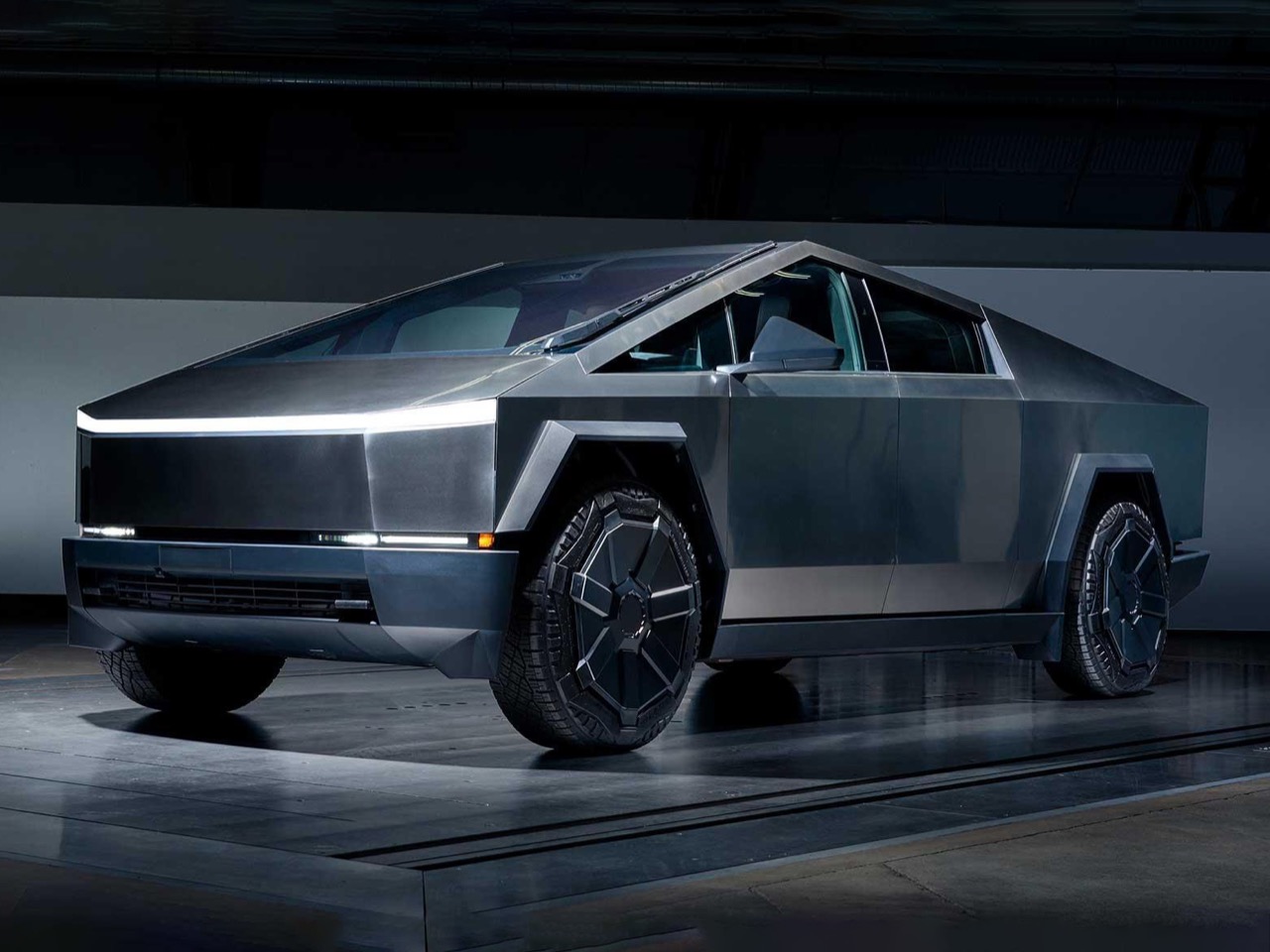
No other Tesla carried Elon Musk’s fingerprints like the Cybertruck. The Model 3 is a mainstream sedan, while the Cybertruck was one person’s vision, pushed through over his own design studio’s objections. That made it the most personal object Tesla ever sold, and its meaning shifted with its creator’s public image. As Musk became one of the most polarizing figures in American politics, buying a Cybertruck started reading as a political statement. One Yahoo Finance commentator put it bluntly, calling it a middle finger on four wheels. Tesla even tried controlling who owned one, briefly threatening early buyers with a $50,000 penalty for flipping their trucks.
A Yale study put a number on that effect, estimating Musk’s “polarizing and partisan actions” cost Tesla between 1 million and 1.26 million US sales from October 2022 to April 2025. Rival EV and hybrid makers saw their sales rise 17% to 22% over the same stretch. CleanTechnica argued the headline figure was far too high, while agreeing that the partisan effect was real. Federal Election Commission data also shows Musk as the 2026 midterm cycle’s biggest individual donor, at roughly $446 million to Republican-aligned groups. That money came from his own pocket, and the Cybertruck got its end date three days after Election Day. A car built as a personal statement eventually gets judged as one.
The engineering lives on in Cybercab, and so does the playbook
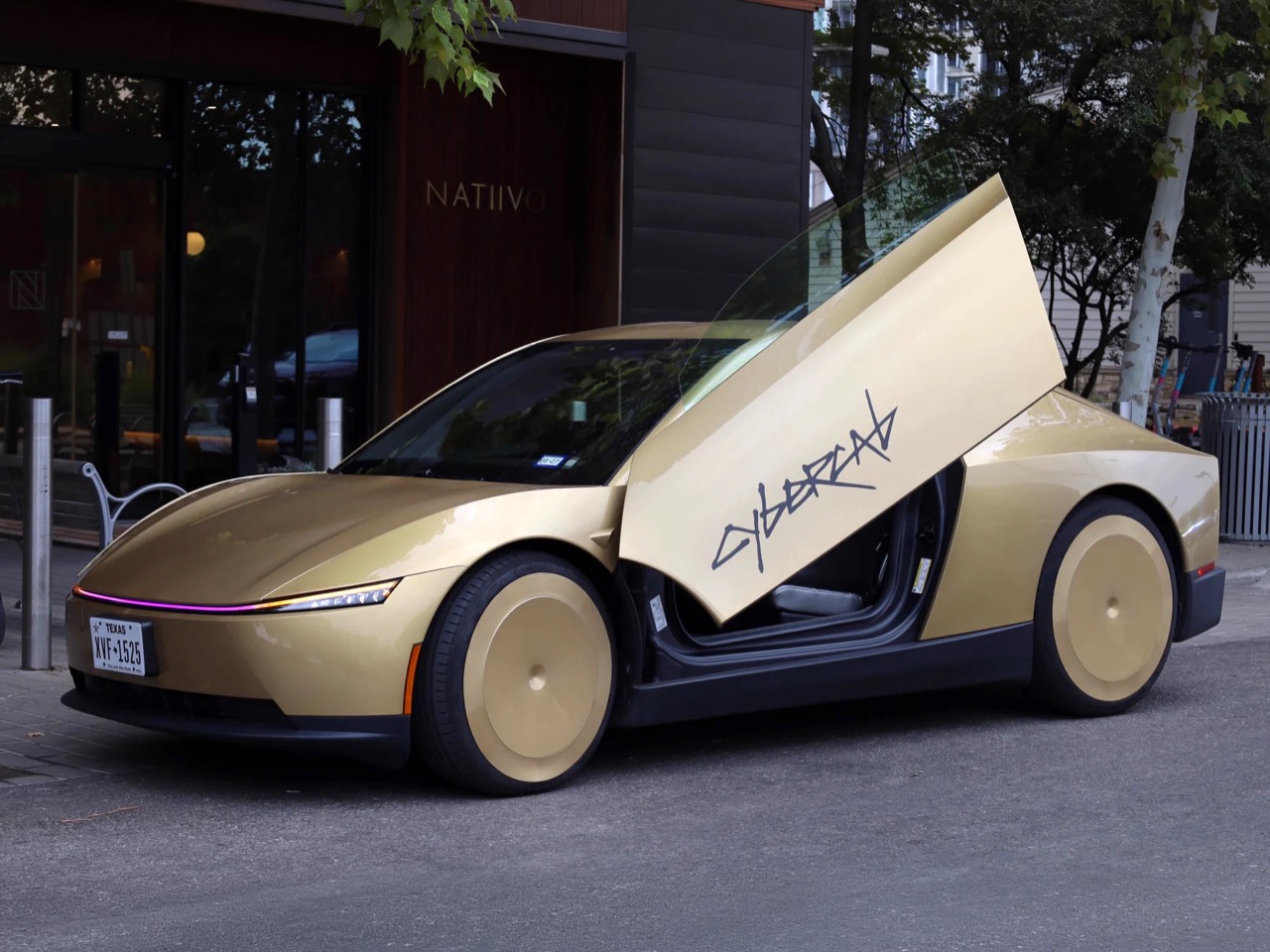
The Cybertruck did introduce some significant engineering changes for Tesla, starting with the company’s first 800-volt architecture. Higher voltage means less current for the same power, which can allow thinner cables and faster charging. It also swapped the industry-standard 12-volt low-voltage system for a 48-volt one, reducing wiring requirements. Its steer-by-wire setup eliminated the mechanical steering connection entirely, a first for a production car and something even the Infiniti Q50 retained as a backup. Morrill’s farewell points straight at the Cybercab, the gold two-seat robotaxi with no steering wheel, pedals, or mirrors that Tesla started building in April. The truck basically served as a very large, very shiny test bench.
Last month, Tesla unveiled a new Roadster with cold-gas thrusters, asking for $50,000 deposits for the Performance version and $250,000 for the Thrust version, under a reservation agreement that says Tesla can’t guarantee when, or if, the car will be delivered. That’s nine years after Tesla first took deposits on a next-gen Roadster that never shipped. The Semi, unveiled that same year with production promised for 2019, only reached volume production this September, and the Cybercab is already facing two NHTSA reviews. Back in 2019, I wrote that the only number that would matter for the Cybertruck was its sales. I’d like to think Elon’s announcement is the proof I was looking for.