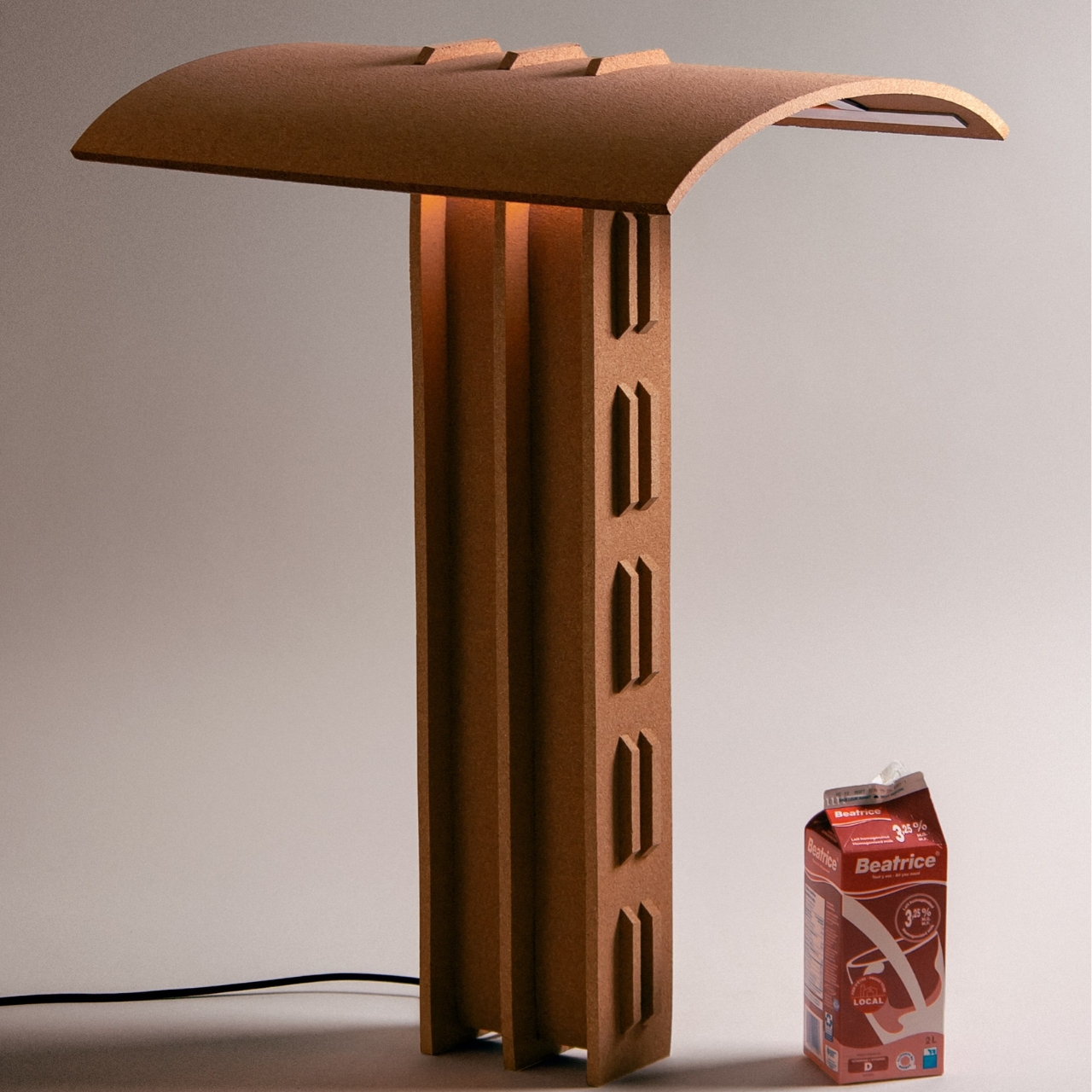
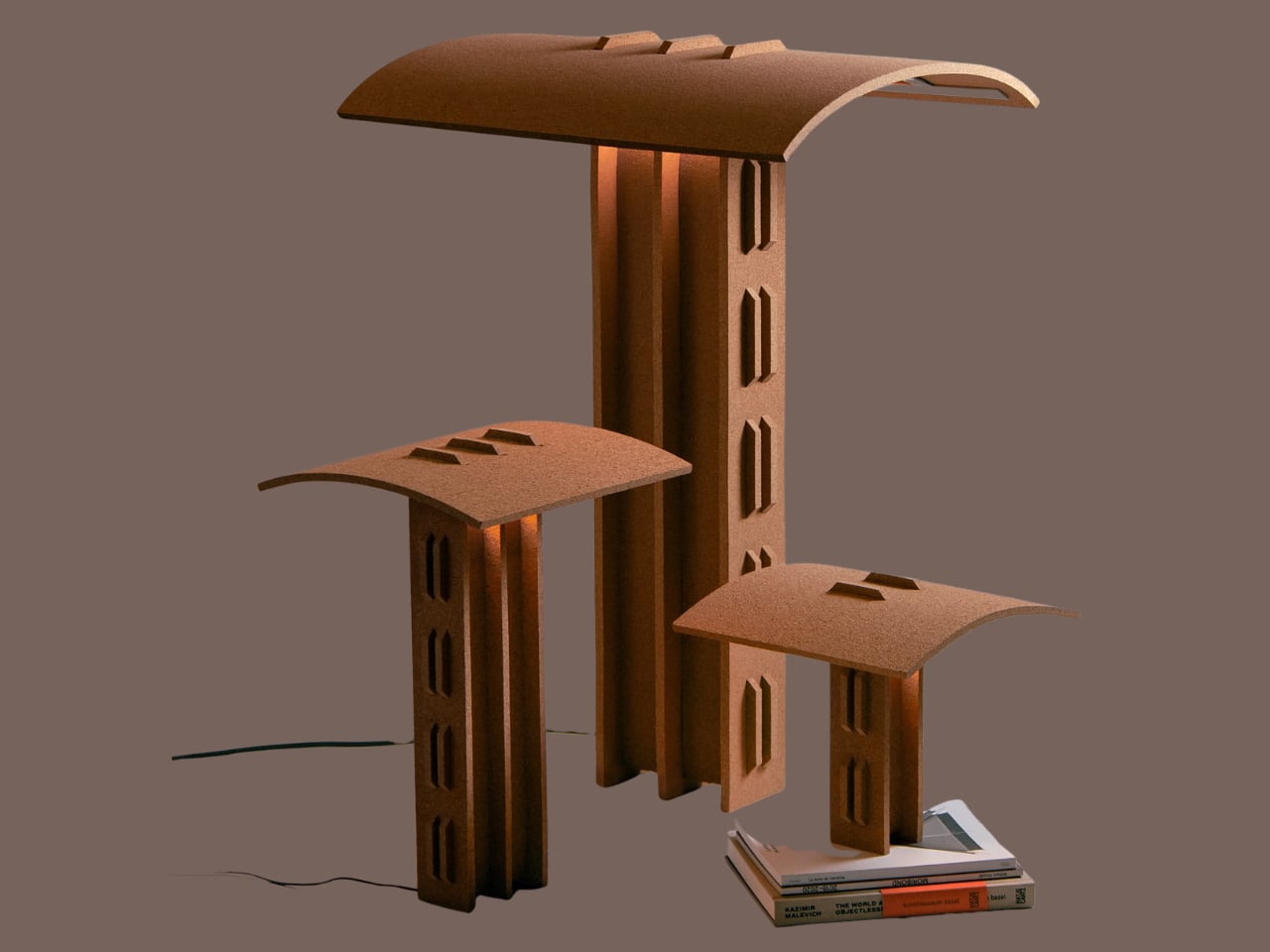
Three cork tabs poke through the top of a gently curved lampshade. They’re right where you might expect a designer to sand everything flush, and they’re the first thing I like about Étienne Vernier’s Puzzle Lamps – Cork. The Montreal industrial designer’s lighting project shows three variations on the same idea: upright cork panels hold up a broad shade, and the places where the pieces meet are left in view. The lamp gives you enough clues to work out why it’s called a puzzle.
A corner that feels flat under a ceiling fixture can be surprisingly hard to light. A bright lamp can make it feel like a workspace, and a small accent light can disappear into the furniture. Vernier’s design makes a case for a third option. The broad cork canopy keeps the light source tucked beneath it, and the glow in the project photos runs down the upright panels. You get a softly lit corner with an object worth looking at during the day, too.
Designer: Etienne Vernier
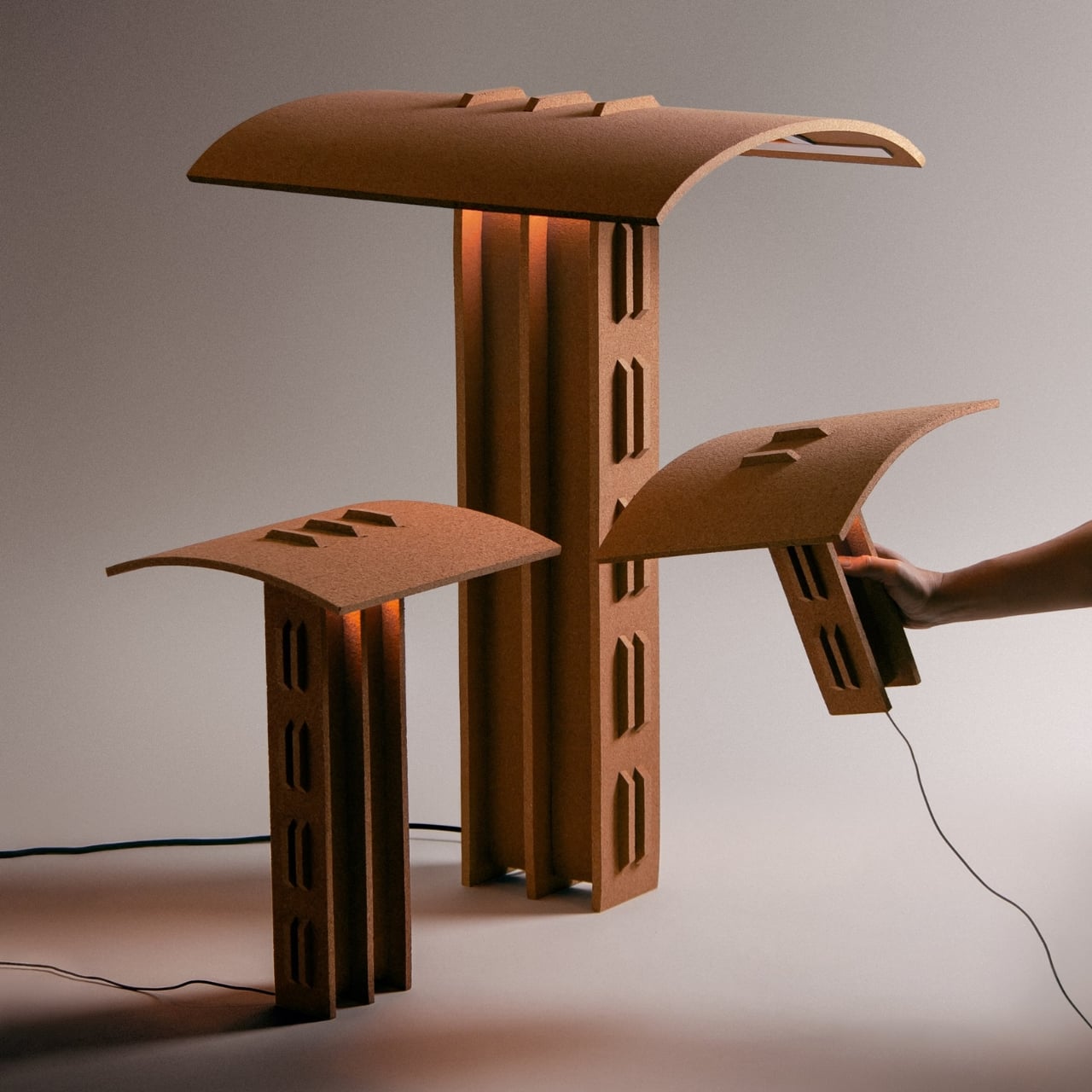
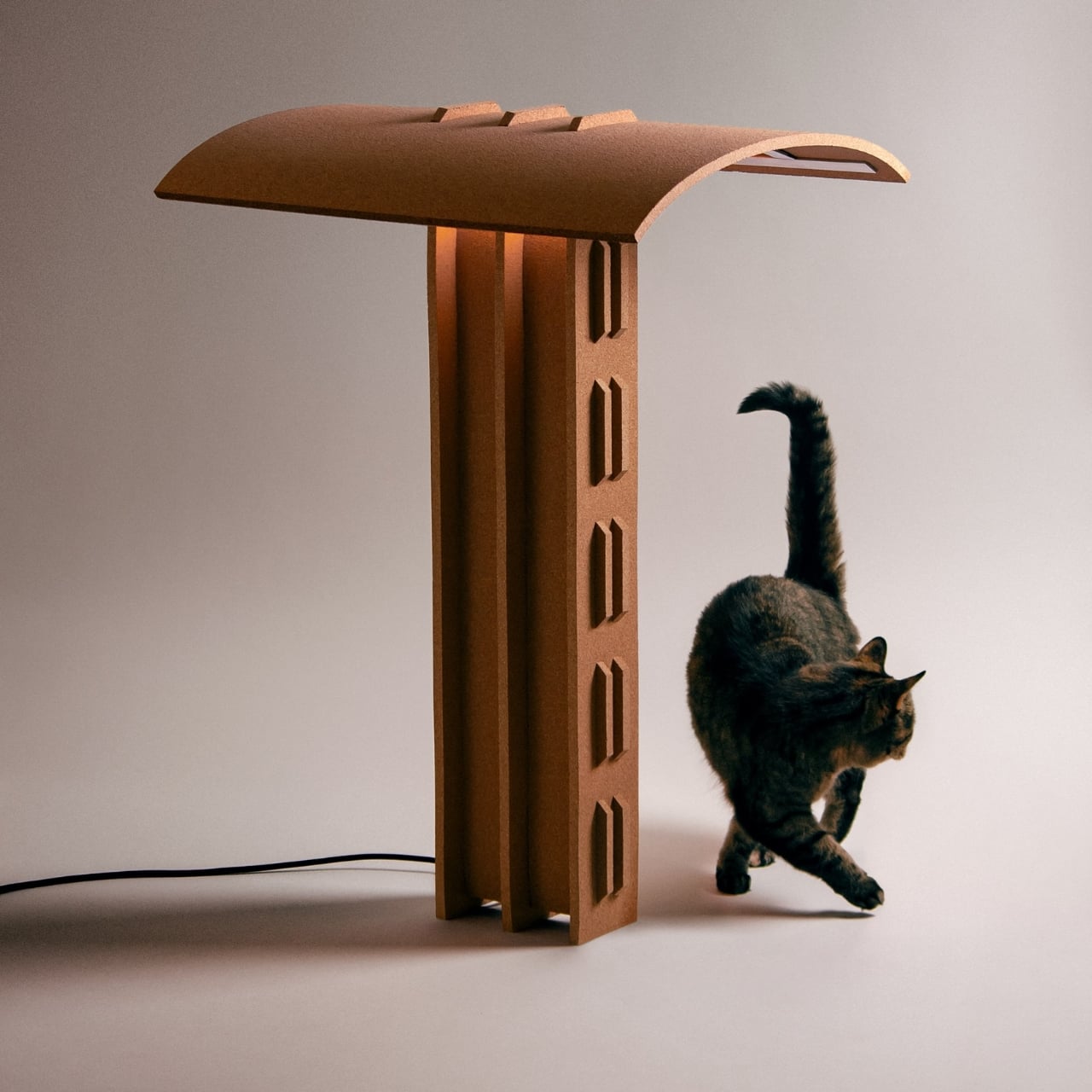
From across the room, the silhouette reads like a tiny bus shelter: a wide roof and a surprisingly slender support. Get closer and the sides have a rhythm of their own, with pairs of small projections repeating down the column. The front is deeper than it first appears, with gaps between the upright panels that recede into shadow. Those dark channels give the light somewhere to go visually. The glow is strongest just under the shade, picking out each rib before fading farther down.
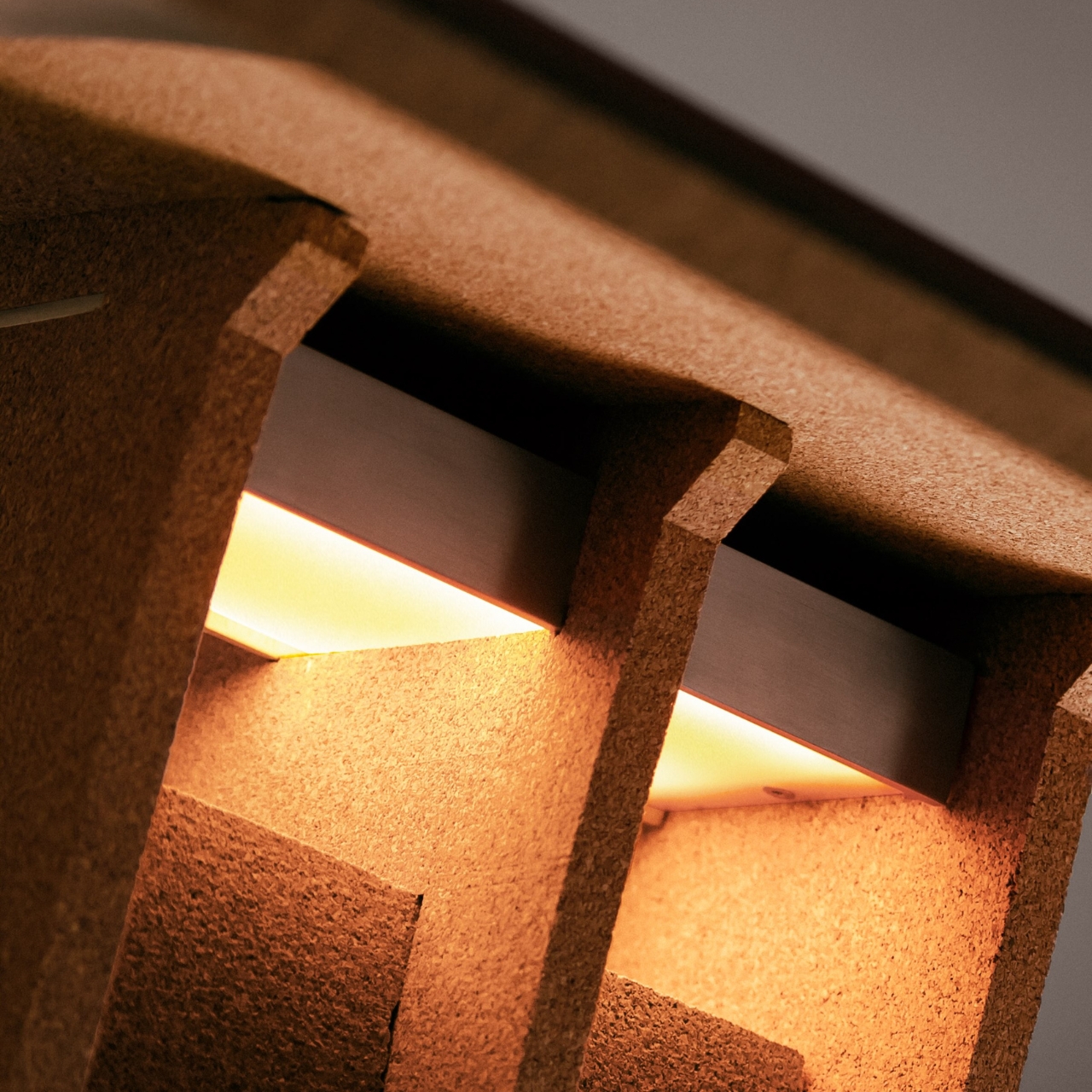
Cork is a big part of why that effect works for me. I associate it with pinboards and coasters, things that tend to sit flat and wait for something else to happen on top of them. Here, you see it edge-on, bent into a shallow arc and standing upright in panels. The close-up under the shade is especially good: the lit surface looks almost golden, while the cut edges stay dark enough to show the thickness of the material. A smoother finish would give up some of that contrast.
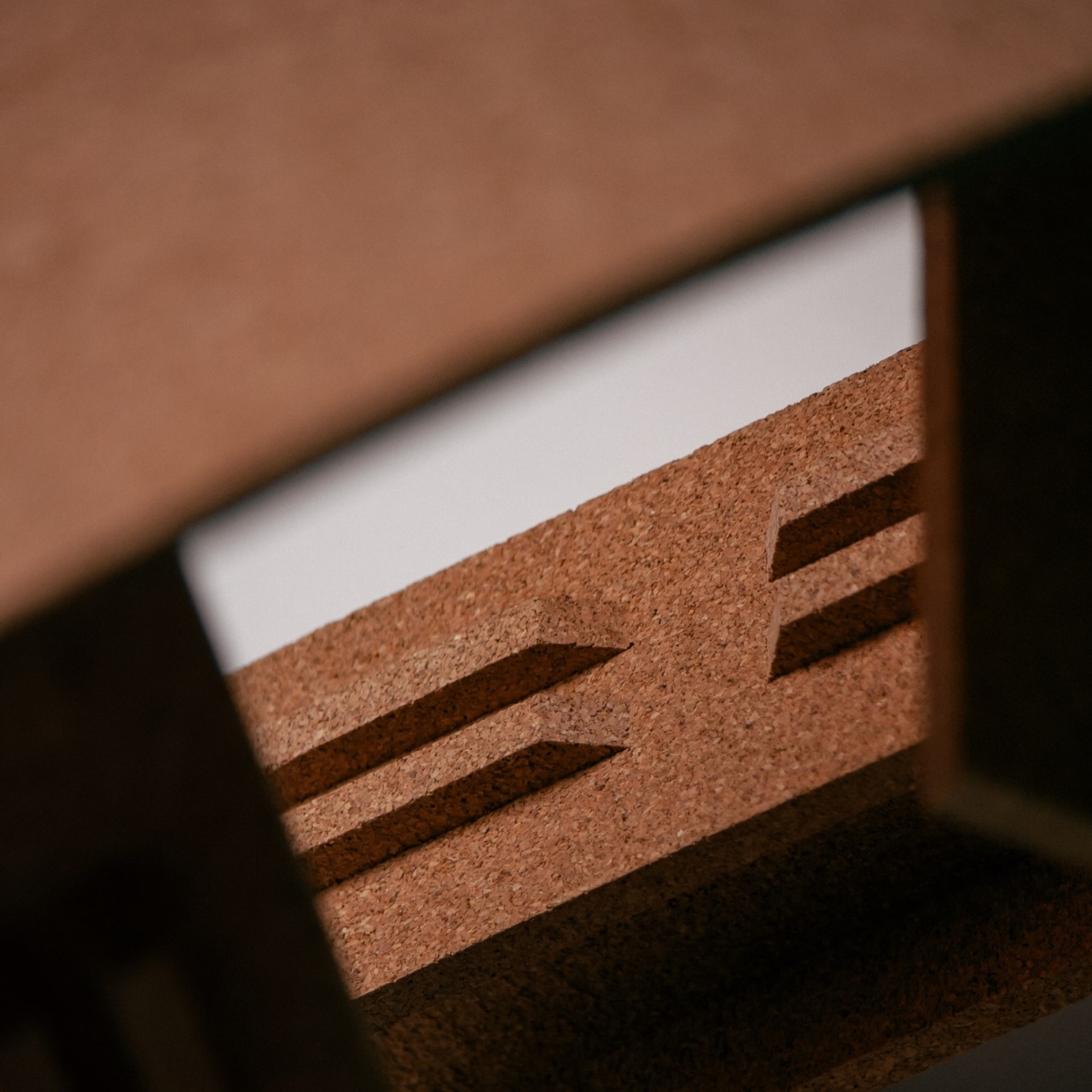
Vernier has played with this kind of assembly before. In its notes for the Vestiges exhibition, his design collective Double Entendre describes a separate set of lamps made from EVA foam, inspired by childhood foam puzzles and assembled using friction and pressure. The cork project photos don’t establish that these lamps go together in exactly the same way. What they do show is a similar sense of play. The tabs make more sense the longer you look at them, the way a piece of a puzzle does once you spot where it belongs.
Of the three, I’d make room for the smallest. It’s photographed on a stack of books, where the overhanging shade makes a little nook out of a surface that would otherwise just hold books. I can picture it on the end of a low bookcase, somewhere the curve has room to extend without hovering over a coffee mug. That wide shade is worth considering when you place it: even the smallest lamp asks for more clearance at the top than its narrow base might suggest.
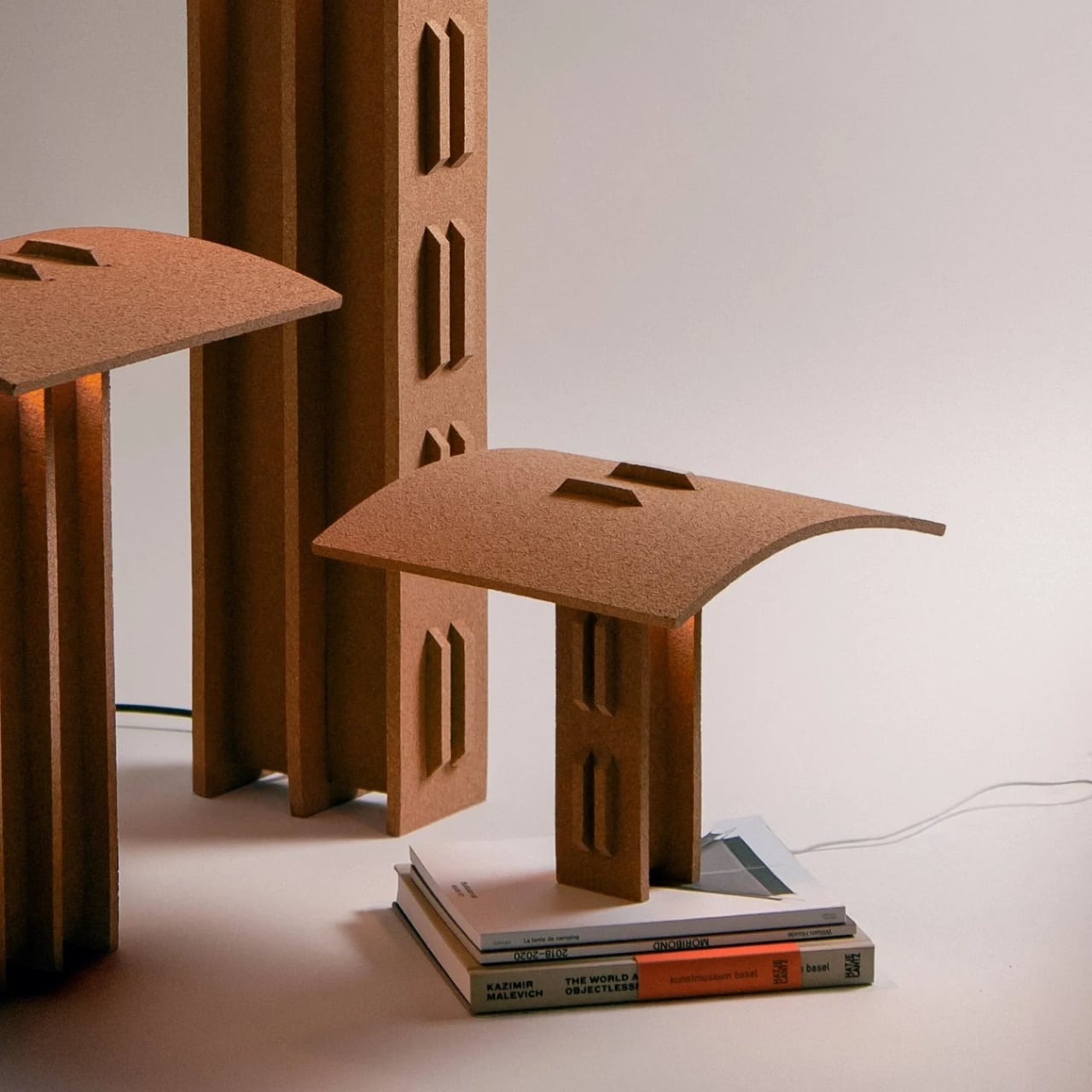
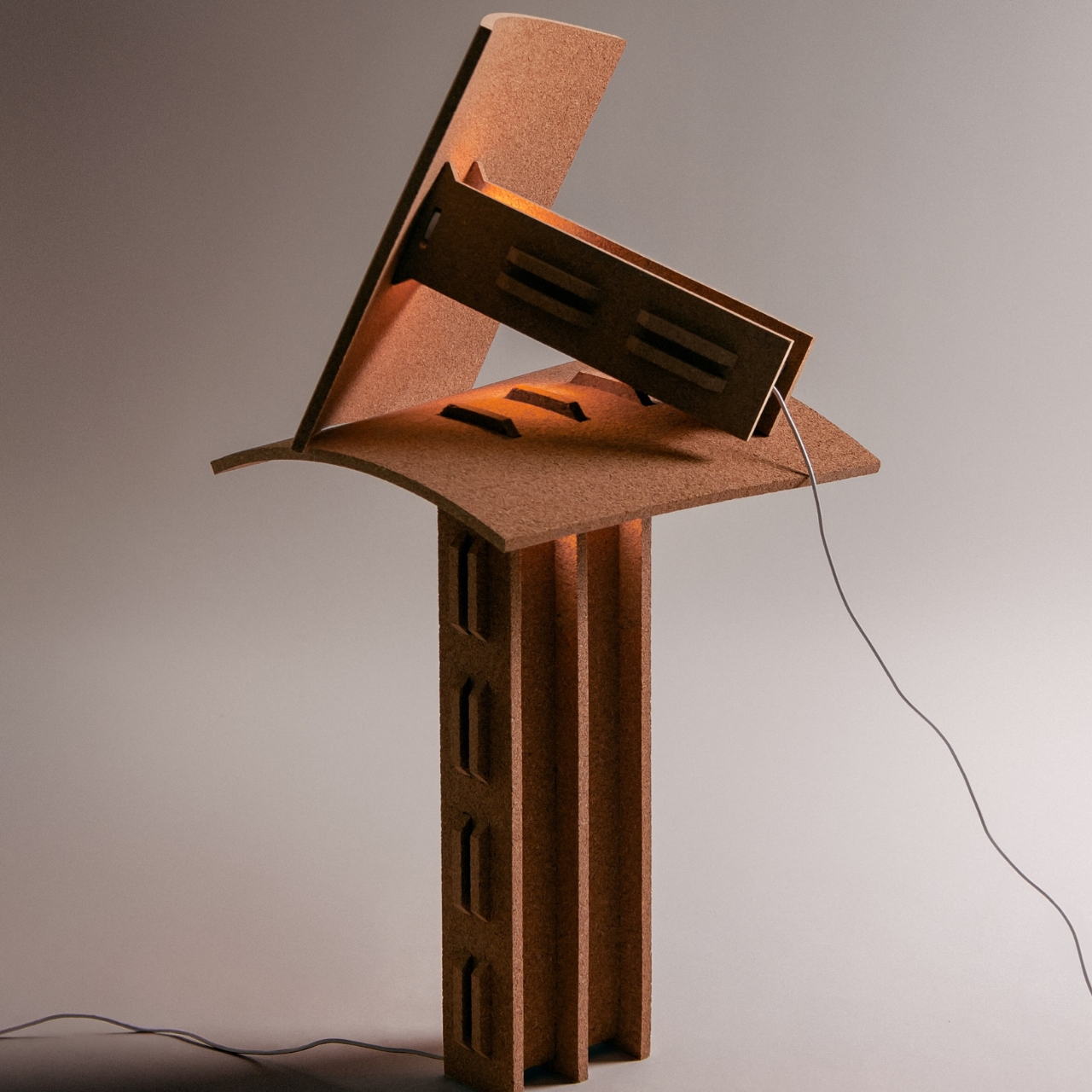
The taller lamps make the architectural resemblance harder to miss. In one photo, a cat walks past the largest, briefly looking like a pedestrian under a canopy. It’s funny, but it also shows how much character Vernier gets out of the proportions alone. The tall version stretches the same repeated details into a column, while the shortest almost tucks its support out of sight. Put them together and they look less like three sizes of one lamp than three different takes on a roof.
I’d think of these as lights to leave on while watching a movie or talking on the couch. The photos tell me less about how well they’d light the pages of a book. What sells me on the design is how little it needs to add to make that corner feel considered. Even when the lamp is off, those cork tabs sticking through the roof give your eye a place to land.