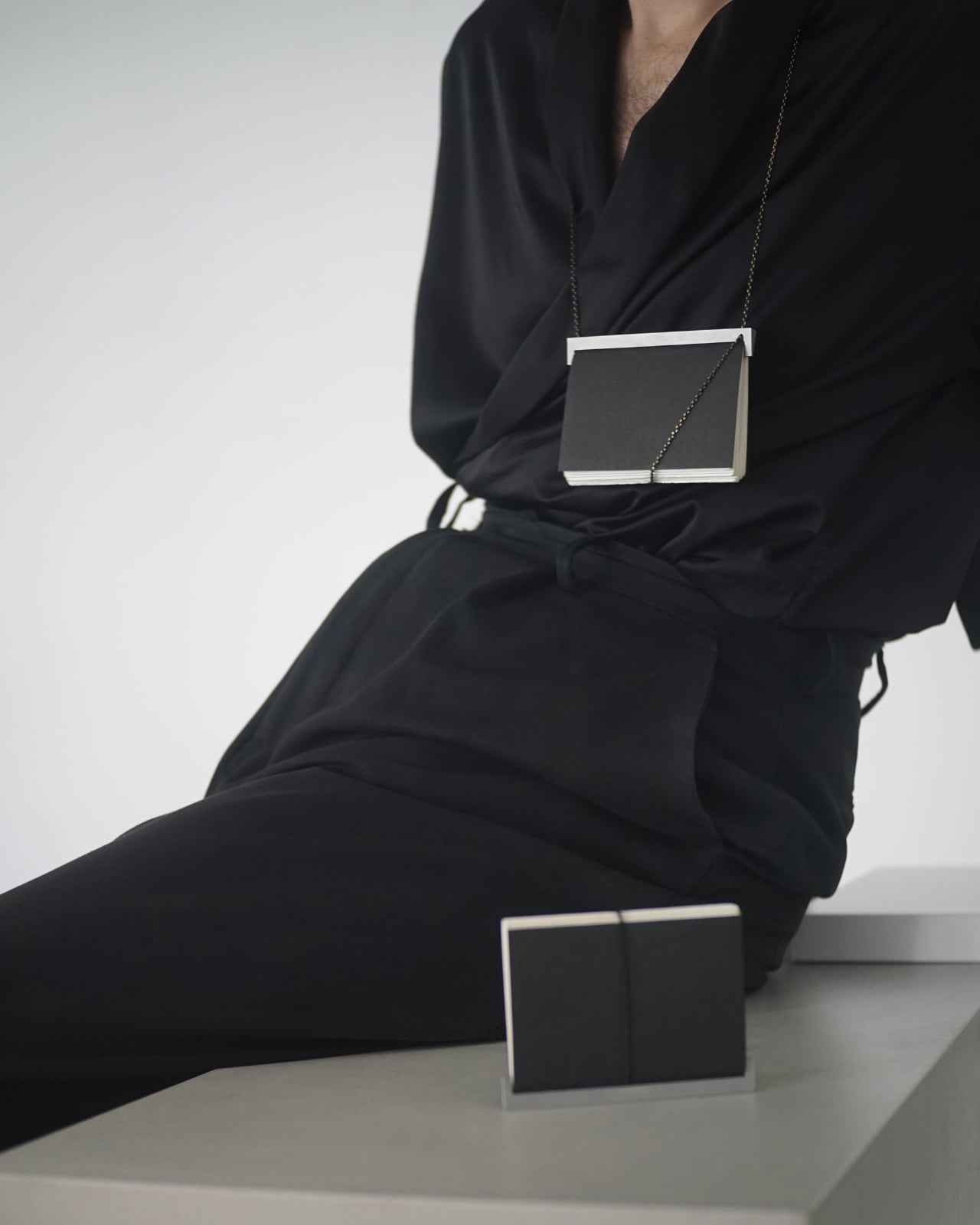
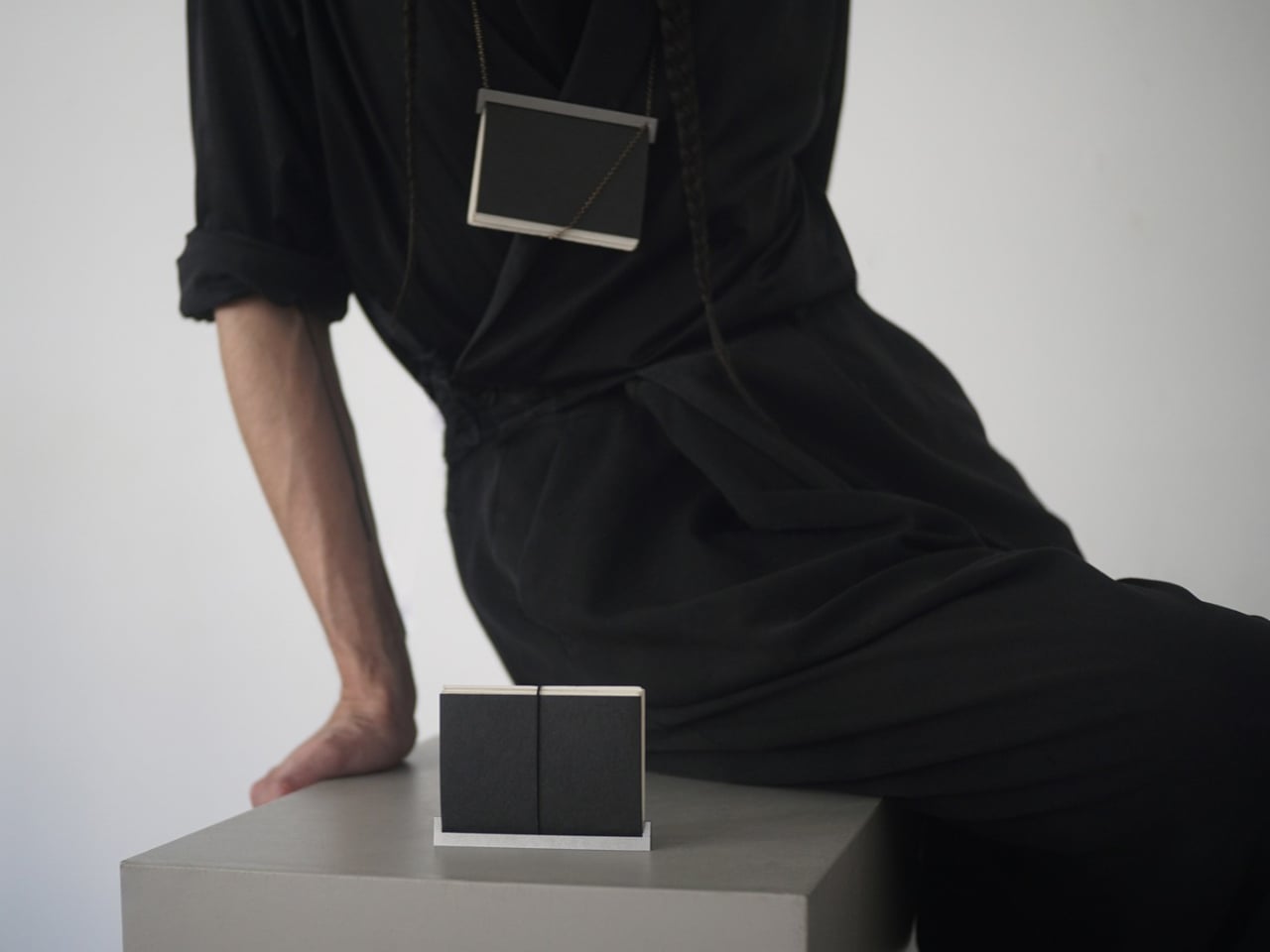
Hang a sketchbook from a chain and it starts looking less like office supplies and more like an accessory from an art-school wardrobe. FOLDBOOK, designed by Erlands, makes that idea surprisingly appealing. But the more useful detail is how it handles a familiar frustration: bound notebooks make you commit to a particular paper, page order, and format before you know where a project is going.
Loose sheets offer more freedom, right up until you need to carry them somewhere. FOLDBOOK occupies that middle ground with a reusable stainless-steel holder and pages you can remove, replace, or rearrange. Erlands traces the idea to 2016, when working across different creative disciplines exposed the limitations of conventional sketchbooks. It’s now offered for preorder, rather than being merely a styling exercise in the photographs.
Designer: Erlands
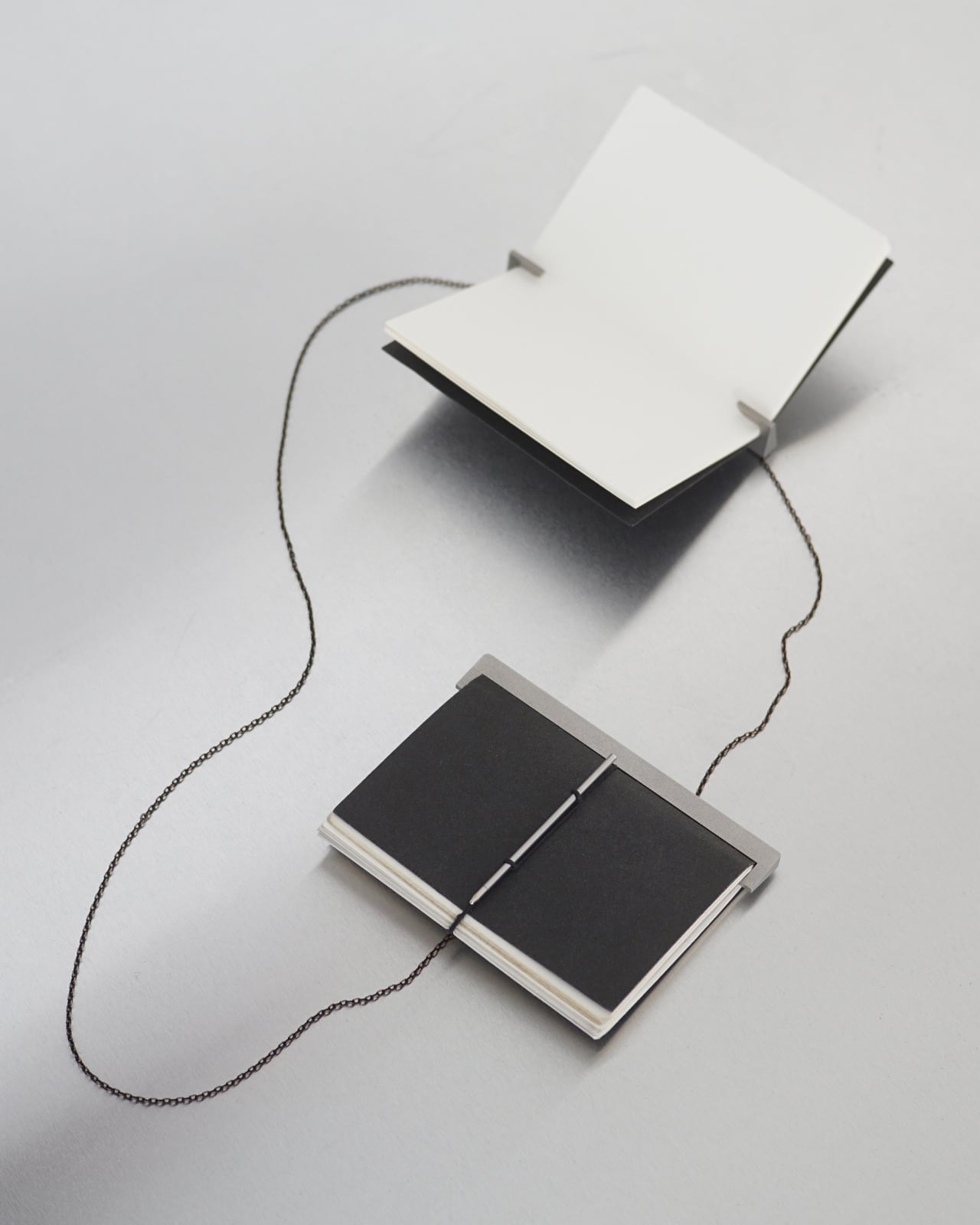
The holder is the detail worth examining. Made from a single piece of stainless steel, it avoids hinges and springs. You gently bend the paper to insert it, with the holder’s geometry keeping the sheets in place. Erlands specifies rounded, polished contact teeth intended to protect the paper during that process. No punched holes or permanent binding are required, so removing a page doesn’t mean tearing it out.
I like the permission that gives you. A drawing could leave the notebook, sit beside another drawing, then return in a different position. Notes for one project could move together instead of remaining scattered between grocery lists and an unrelated brainstorm. Those are ordinary activities, but they expose how much organizing a conventional notebook asks you to do in advance. Here, the sequence stays editable.
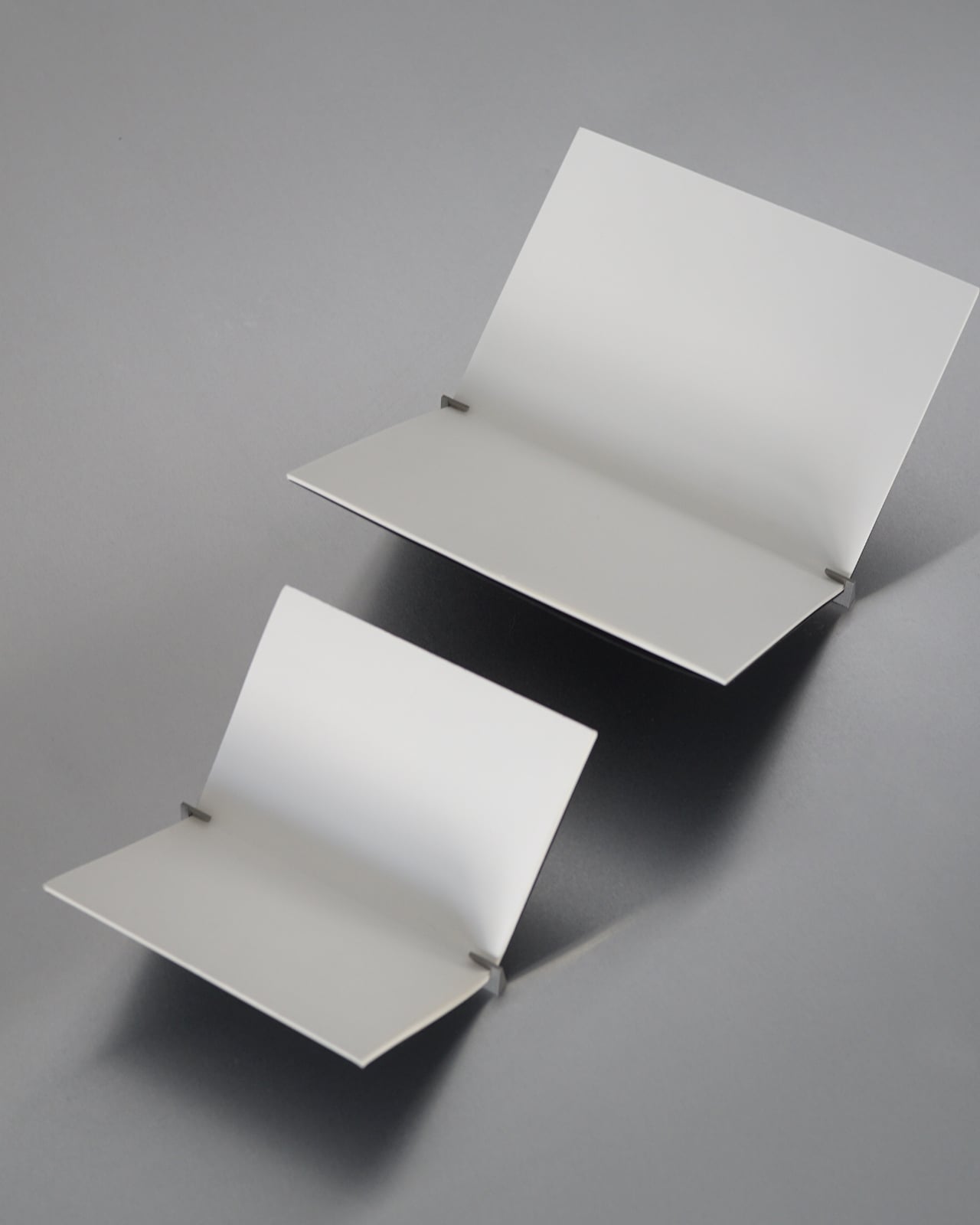
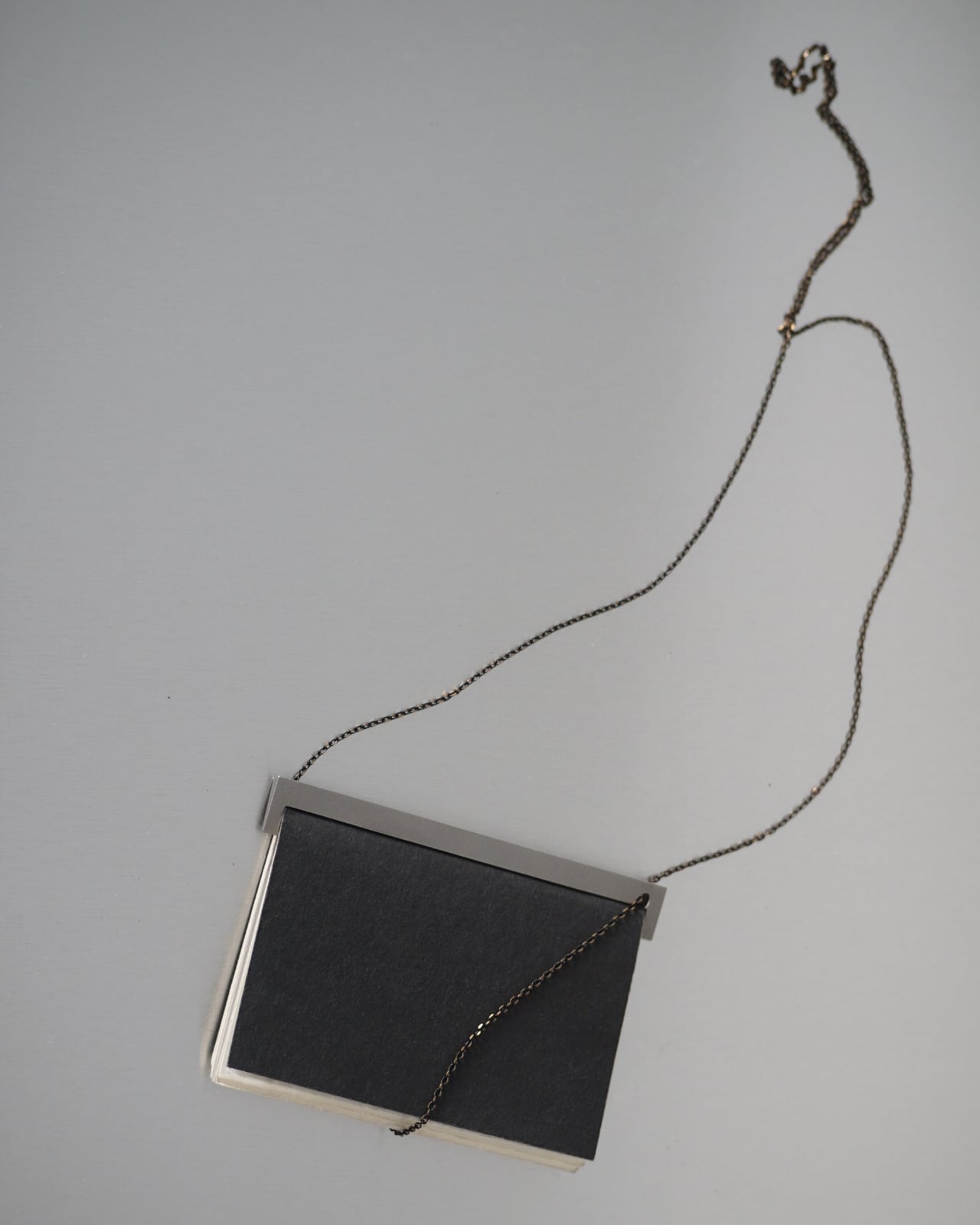
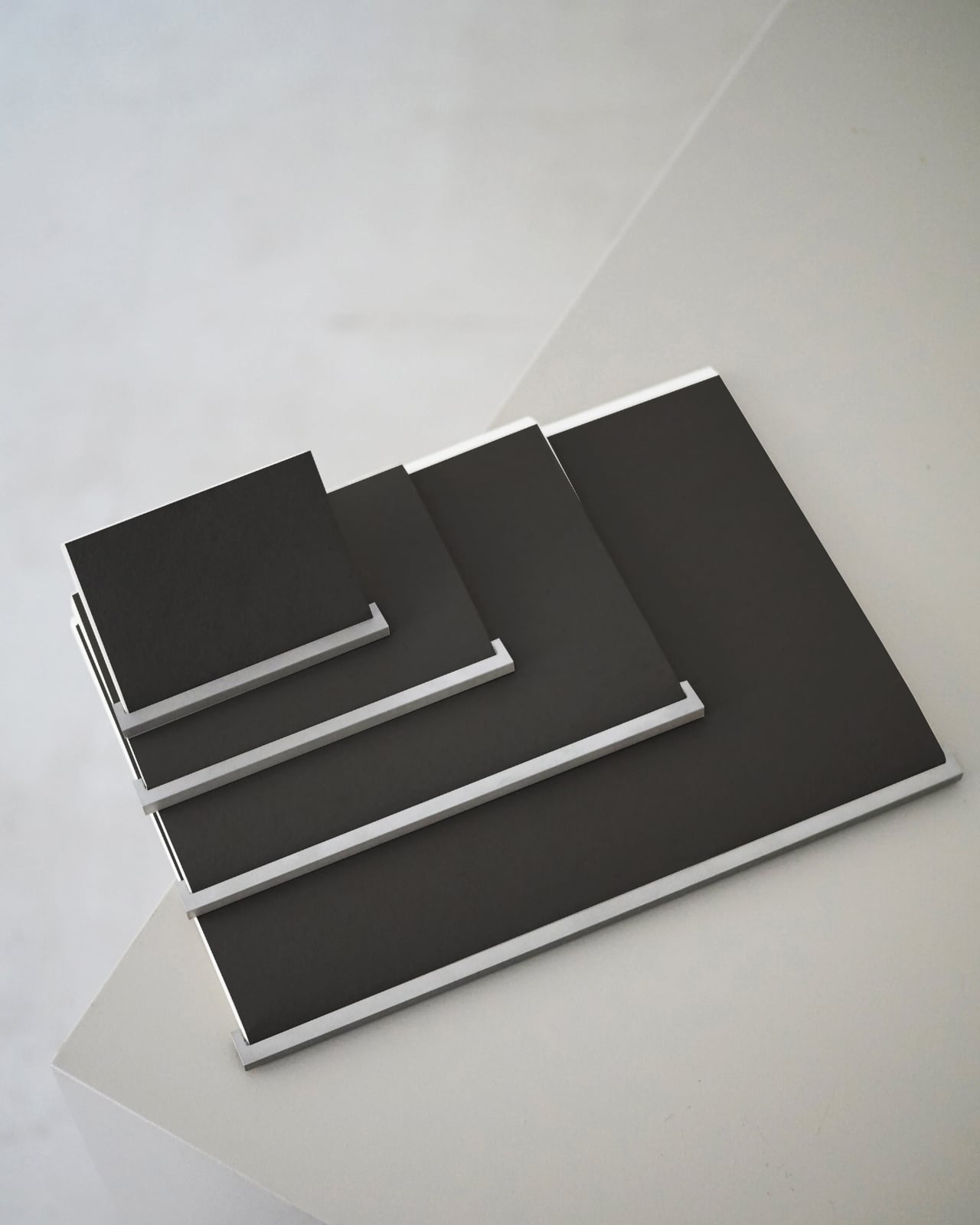
The paper choice matters just as much. FOLDBOOK doesn’t require proprietary refills, and the system spans A6 through A3 formats, with other papers adaptable by folding or sizing them appropriately. That doesn’t mean every sheet in your printer tray will fit without preparation. It does mean choosing the holder needn’t lock you into one brand’s paper, texture, or ruling for the rest of its useful life.
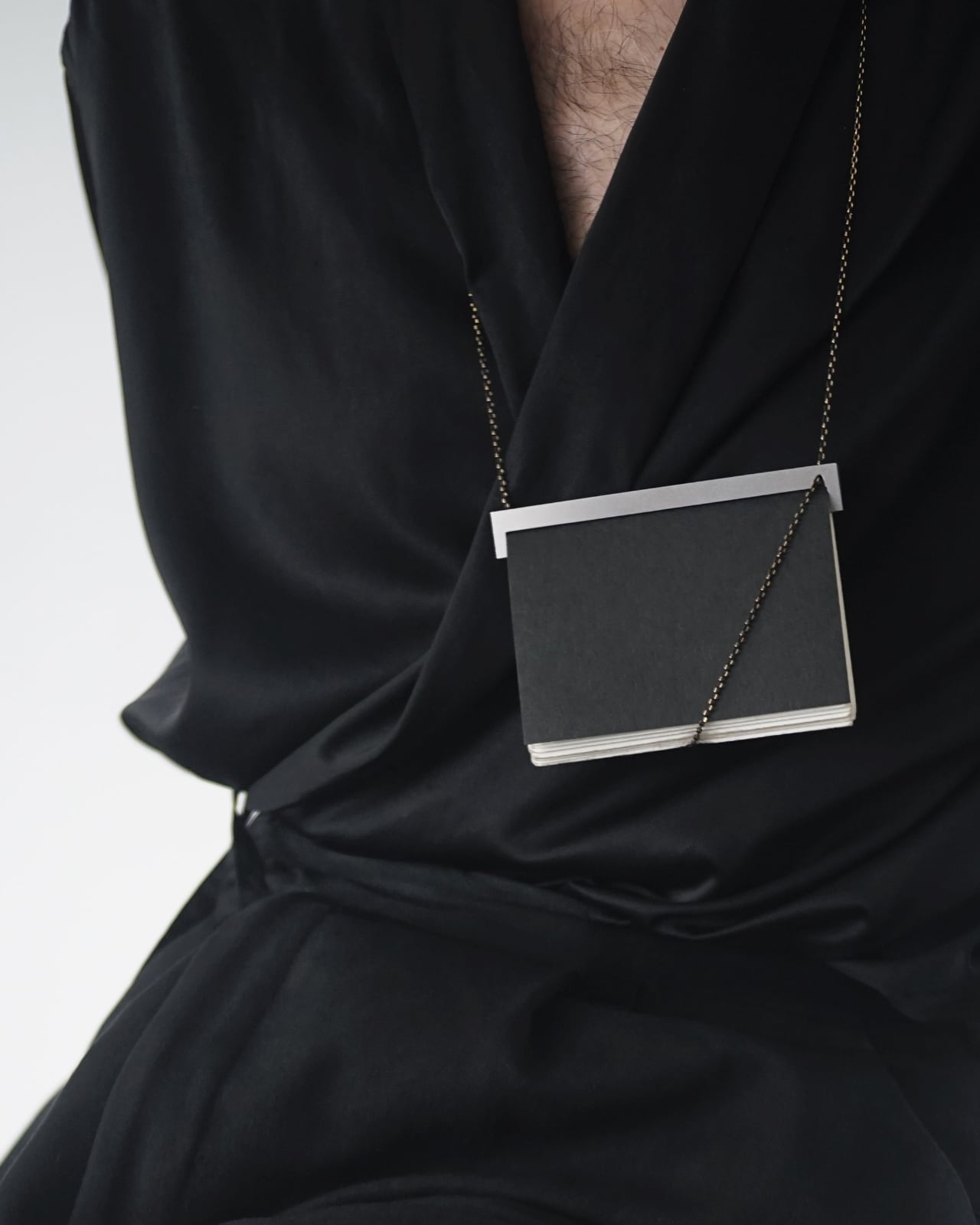
Visually, the photographed black covers and pale page edges do most of the work. A narrow silver-colored bar frames the book without turning it into a miniature briefcase. The A6 listing specifies recycled French paper covers and uncoated Swedish paper inside, with a folded format roughly six by four inches. It’s a restrained combination, and the exposed paper keeps the object recognizably stationery even when it’s worn.
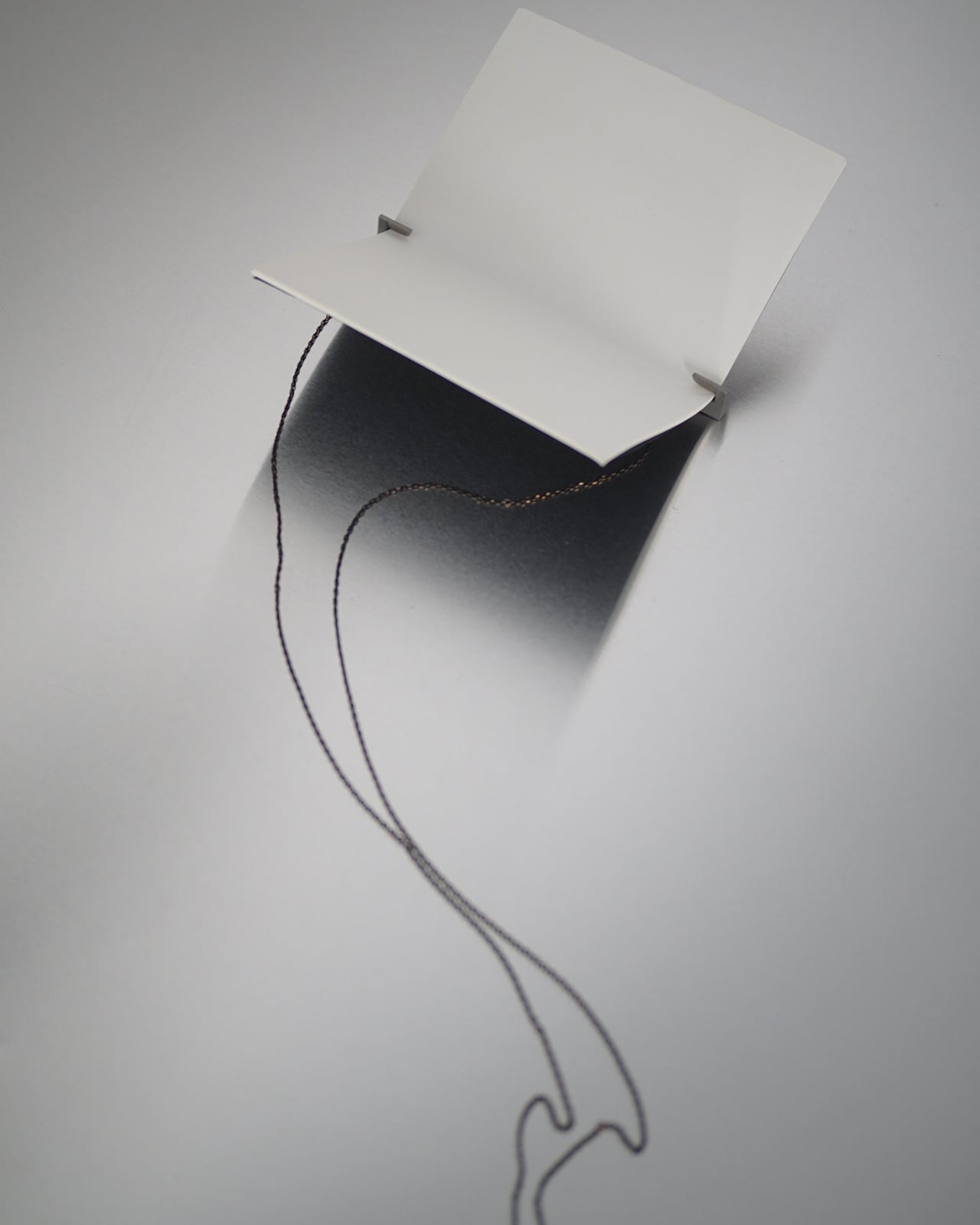
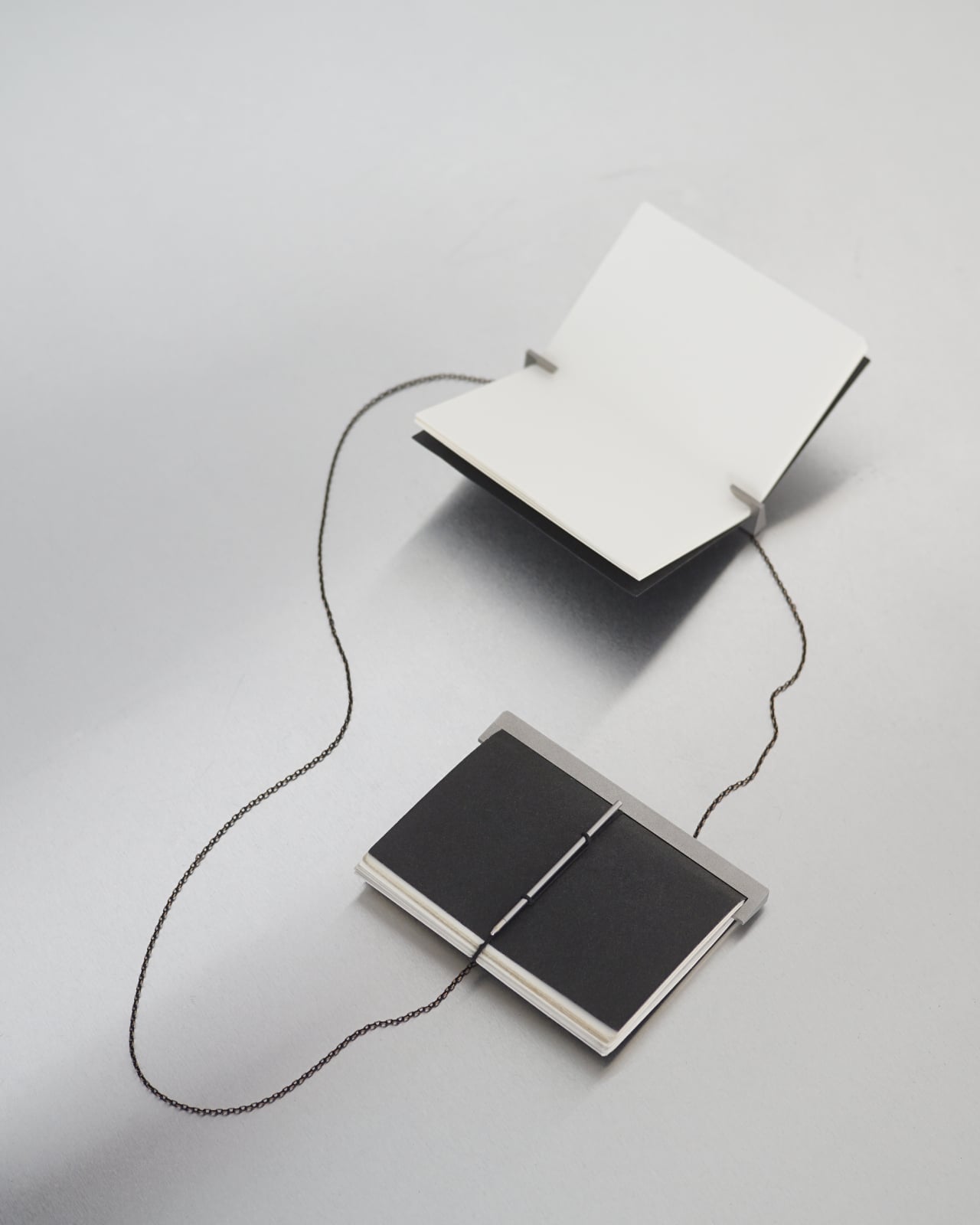
The chain is where my practical interest gives way to a little fashion appreciation. Against the loose black clothing in the supplied photographs, the notebook reads almost like an oversized pendant. I wouldn’t expect everyone to want stationery hanging from their neck, but it’s an intriguing alternative to hiding another useful object in a bag. Crucially, Erlands describes the chain as optional, not essential to holding the pages.
Capacity is a more meaningful limitation. Erlands puts it at approximately 10 to 15 sheets, including the cover, depending on thickness. Anyone hoping to carry a semester’s worth of notes should look elsewhere. I’d treat it as a working selection: the sketches, references, and reminders relevant right now. That approach requires some regular sorting, though. A removable-page system still needs someone willing to remove the pages.
It also sits firmly in design-object pricing. The A6 package with a chain and a three-set refill is listed at €155. The store accepts preorders and quotes preparation of up to a month before shipping, with potential duties or import fees outside Europe. That makes the purchase harder to justify on note-taking alone. The appeal has to include the reusable hardware, the appearance, and how you prefer to work.
For me, the strongest idea is keeping the holder while letting the contents change. The wearable presentation makes that arrangement memorable, but the editable pages give it purpose. You can enjoy a beautifully assembled notebook without treating its original arrangement as sacred. A useful creative tool should leave room for revisions, including revisions to the tool itself.