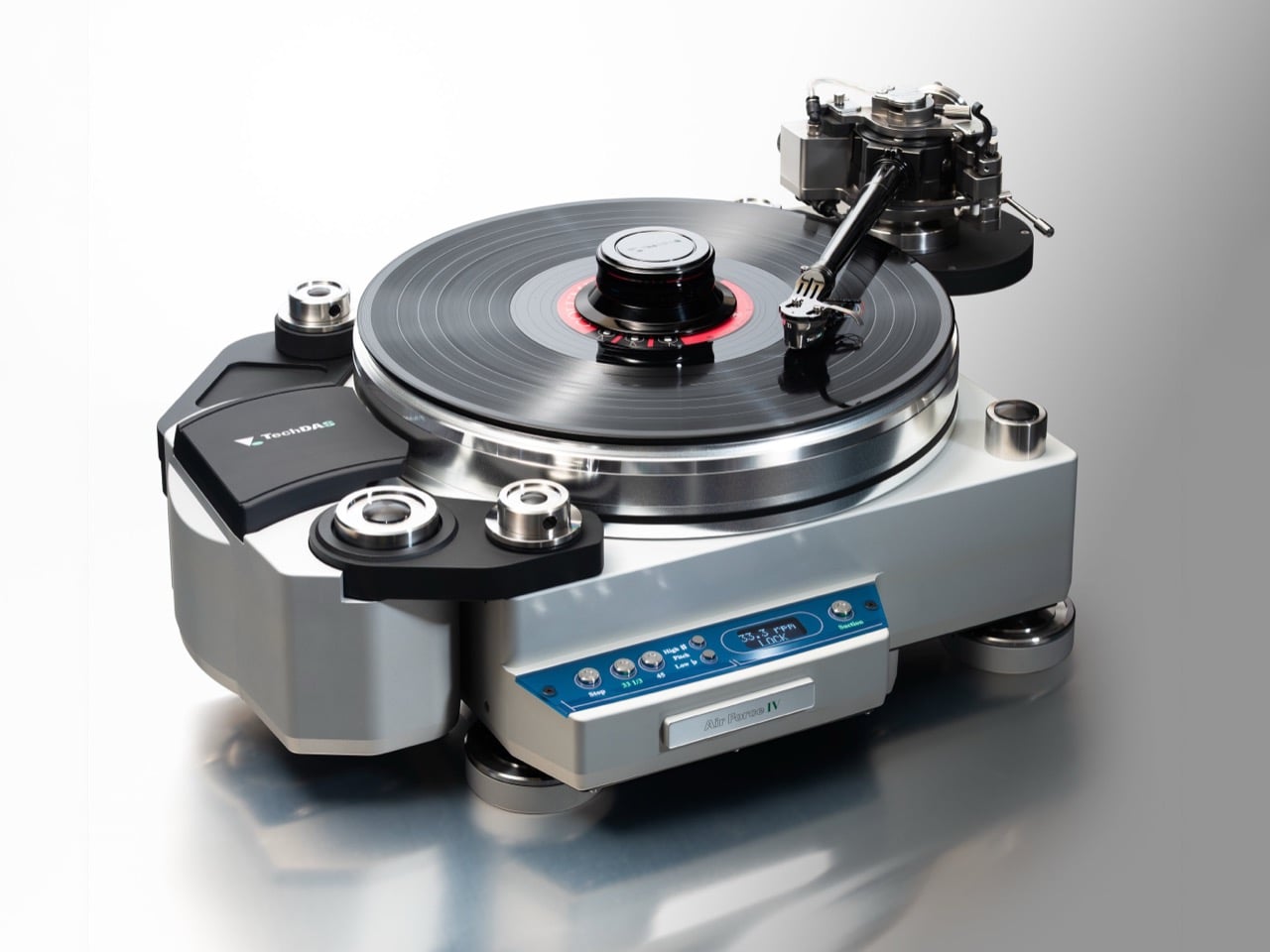
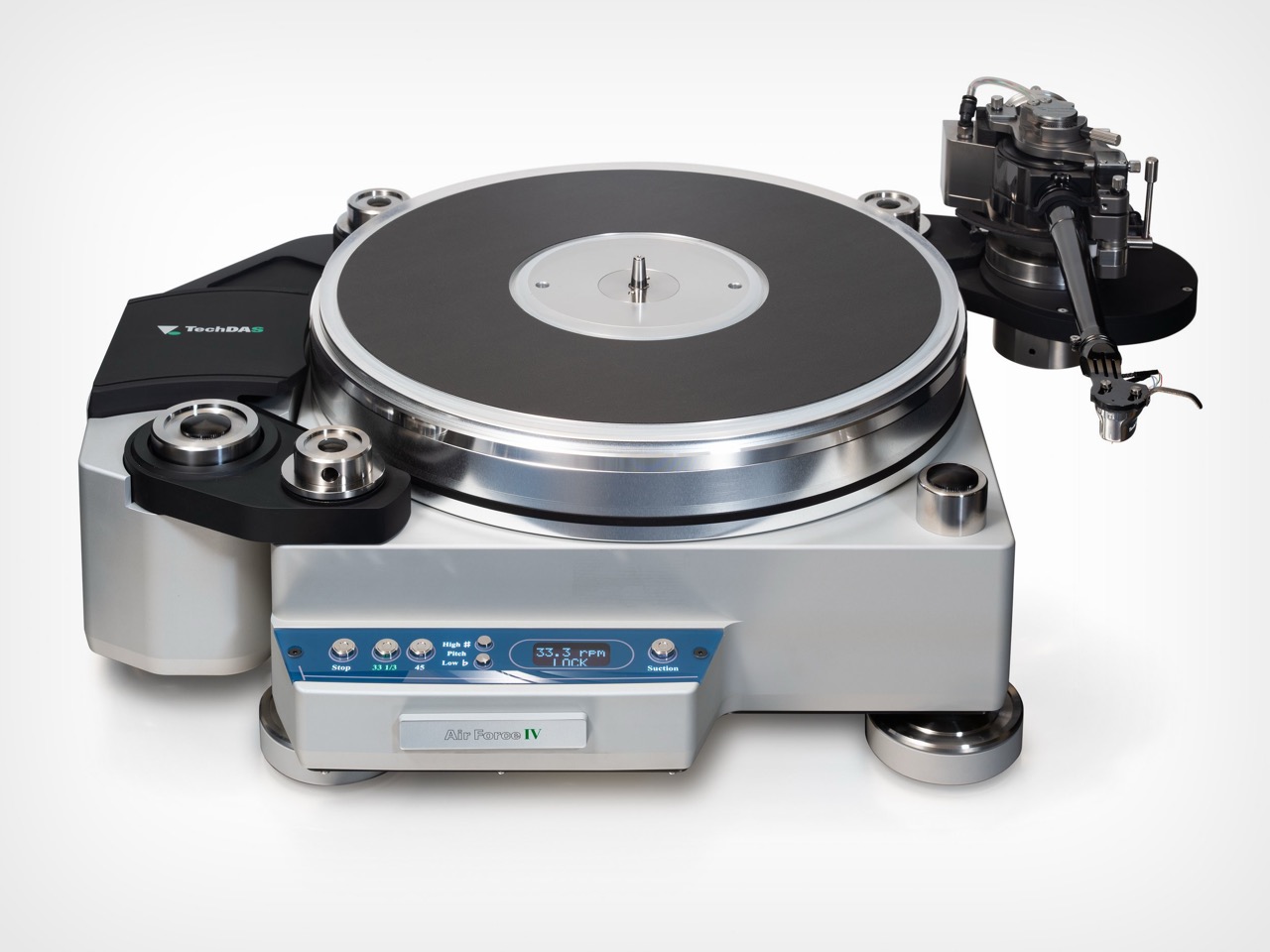
In Japan, the number four has a PR problem. Pronounced “shi,” it sounds just like the word for death, which is why some Japanese hospitals and hotels skip it in their room numbers and why gift sets of four are a classic faux pas. TechDAS took the superstition seriously enough that when it launched the Air Force V in 2017, it hopped right over IV like a crack in the sidewalk. Eight years later, the Tokyo turntable maker finally filled the gap with a 75-pound record player that floats its platter on a cushion of air.
At $37,500 in the US, the Air Force IV sits second from the bottom of the TechDAS lineup, which sounds wild until you learn the flagship Air Force Zero runs around $450,000. It keeps the two tricks every Air Force deck is known for: an air bearing that lets the 19-pound aluminum platter hover on pressurized air and a vacuum pump that sucks your record flat against it. It’s also the first new TechDAS turntable since founder Hideaki Nishikawa died in 2023, built by the younger team he mentored. Japan’s Stereo Sound magazine gave it a 2025 Grand Prix award. Not bad for the number nobody wanted.
Designer: TechDAS
Stealing the Record Lathe’s Best Trick
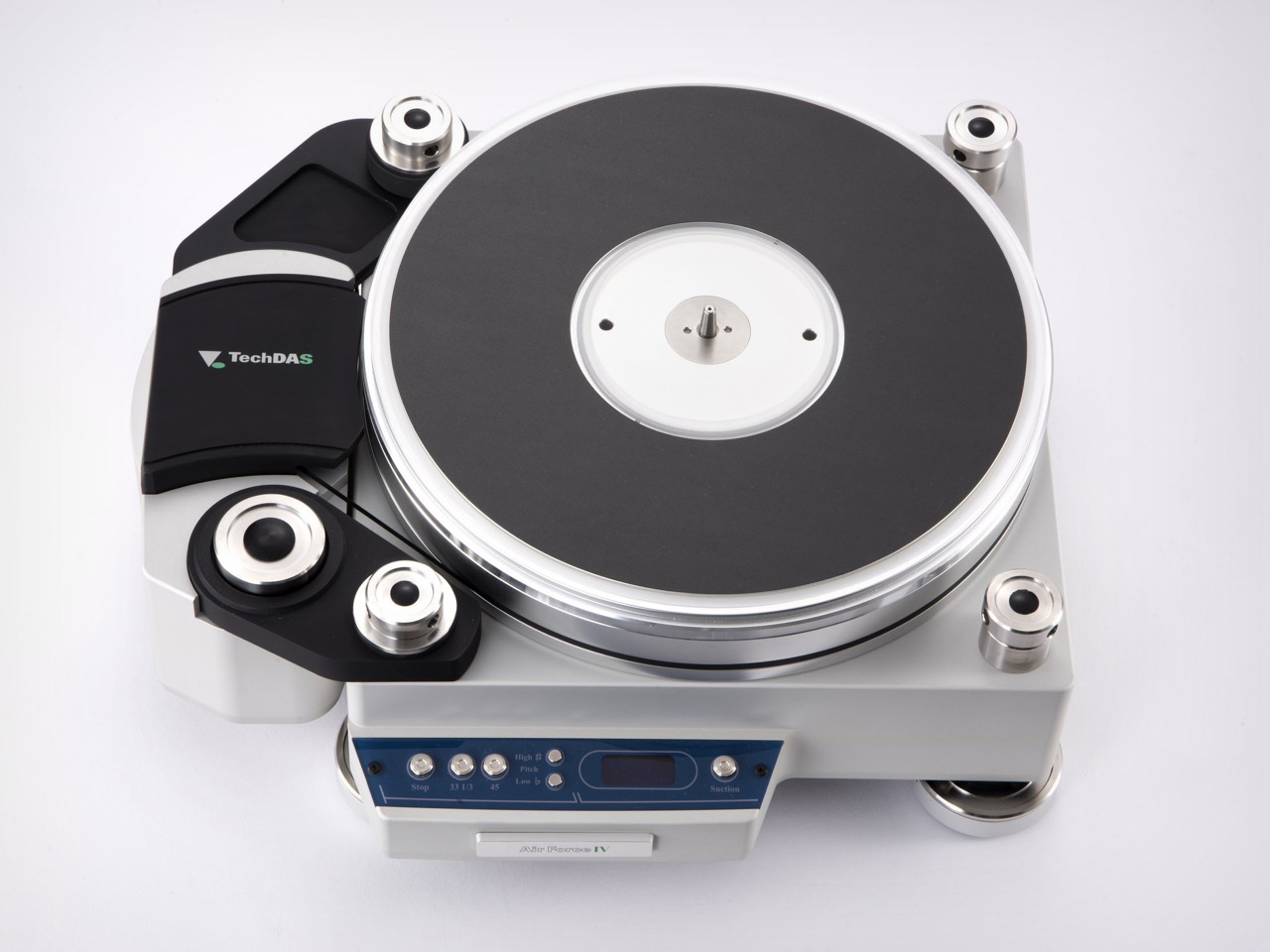
Record lathes use vacuum suction to hold lacquer masters flat while the groove is cut, because any flex in the disc gets baked into every copy pressed from it. Nishikawa figured playback deserved the same courtesy, and every Air Force turntable since the Air Force One in 2012 has followed that logic. On the Air Force IV, suction ports sit in a label-sized zone at the center of the platter. A silicone gasket seals that zone off from a foam-lined outer ring. Hit the suction button and the pump pulls your LP down until it’s practically part of the platter. The idea is to flatten warps and keep the vinyl from ringing like a tiny drumhead under the stylus.
The air bearing goes back to Nishikawa’s years at Micro Seiki, where he designed the SX-8000, a 1980s statement deck that floated its platter on air. The idea is simple enough to explain at a dinner party. A conventional platter rides on a metal spindle turning inside a bushing, and that contact can create rumble. Pressurized air lifts the Air Force IV’s platter on a thin film instead, so it doesn’t have to ride on metal. The same pump unit supplies air underneath and suction up top, which is some lovely double duty from one box.
A 75-Pound Deck Dressed Like a 1960s Camera
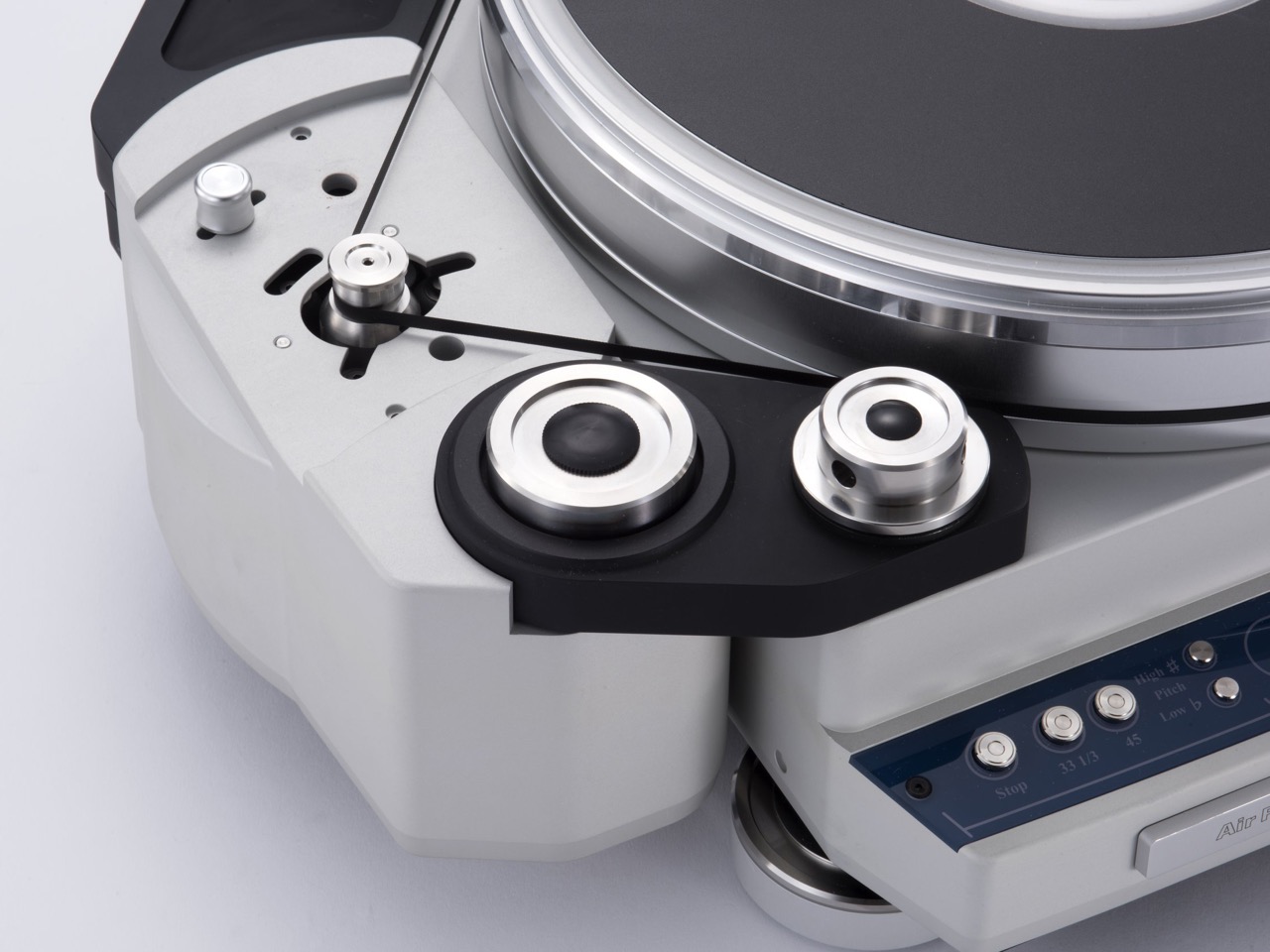
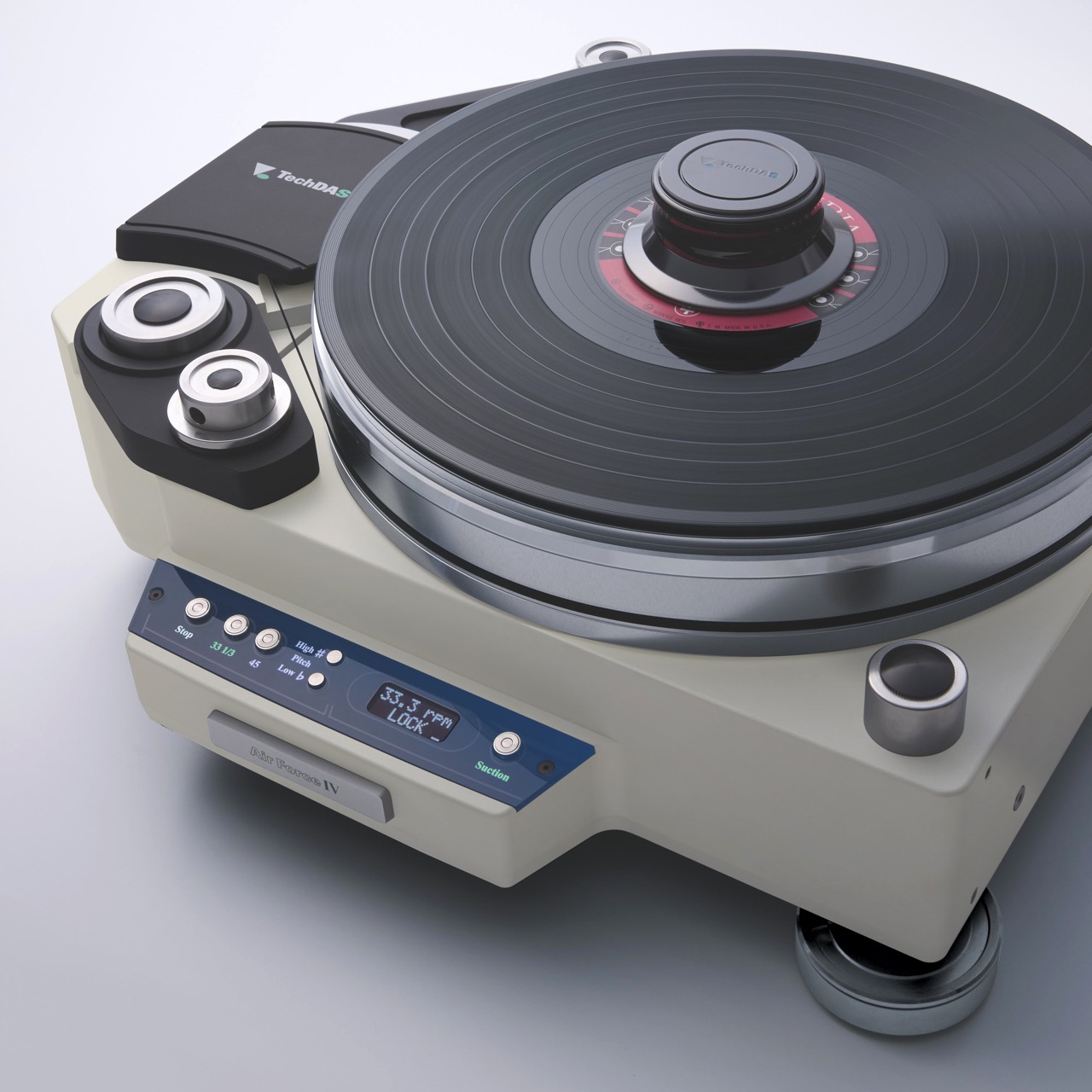
The plinth is machined from a single block of A5052 aluminum alloy and weighs 47.4 pounds (21.5 kg) by itself. The 19.2-pound (8.7 kg) platter is milled from a single billet of A5056, a stronger alloy with more magnesium. The cheaper Air Force V Premium uses a two-piece platter. The satin silver anodized finish is broken up by a black wedge over the motor and black pods beneath the turned chrome tonearm pillars. Robb Report says the finish recalls classic cameras, and now I can’t unsee a Nikon F, with those pillars standing in for knurled dials. The recessed blue control strip looks more like a lab instrument, right down to the round buttons and an LCD reading “33.3 RPM.”
The motor, a two-phase, four-pole AC synchronous unit, sits in its own 9-pound (4.1 kg) aluminum housing screwed to the base, an arrangement meant to isolate motor vibration from the platter. It turns the platter through a 4 mm polished polyester flat belt borrowed from TechDAS’s pricier decks. With digital speed control, TechDAS quotes wow and flutter below 0.03%. Four damped suspension feet, lifted from the Air Force III Premium S, are there to soak up whatever your floor is doing. The deck measures 16.6 x 6.6 x 14.5 inches (420.5 x 168 x 368 mm) yet takes up to three tonearms, so a mono cartridge and a stereo one can share the stage. The pump lives in a separate 19.8-pound (9 kg) box you’ll want to hide on a lower shelf.
The Cheap Seats in a Lineup That Tops Out Near Half a Million
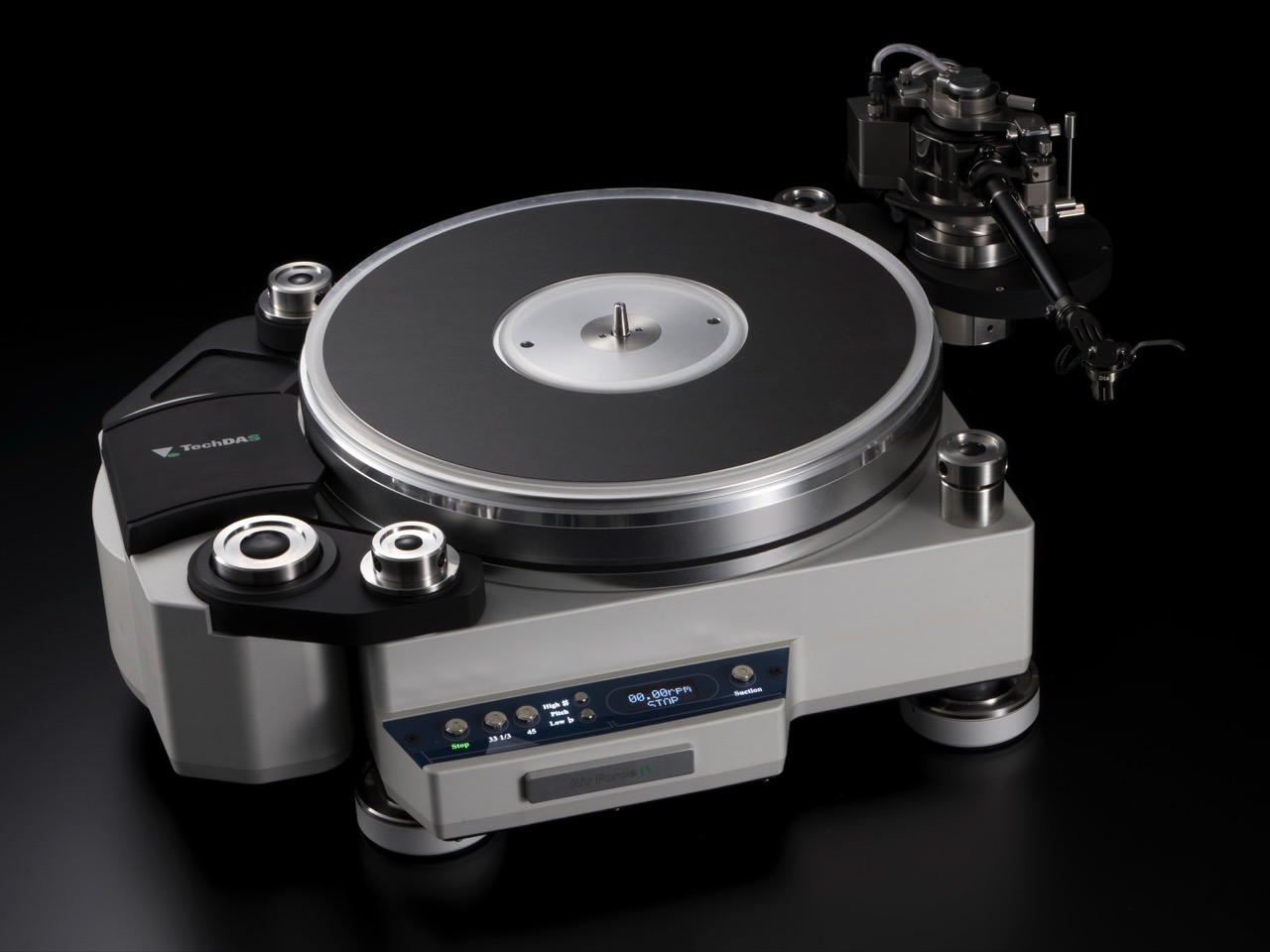
TechDAS numbers its decks backward: the lower the number, the higher up the lineup. That’s how the Air Force Zero became the flagship. It launched in Tokyo in 2019 at ¥45 million before tax, and Stereophile later listed it at $450,000 in basic form. In the US, Robb Report puts the Air Force IV at $37,500 without a tonearm, though that includes one arm board drilled for yours. Extra boards cost $2,500 each. The Audio Salon in Santa Monica is TechDAS’s exclusive US distributor. In the UK, the deck sells for £19,998, roughly $26,500 and about $11,000 less than the US price.
The Air Force IV’s closest philosophical rival is Technics’ SL-1000R, a Japanese flagship chasing the same silence with a coreless direct-drive motor instead of air. TechDAS’s approach is to remove contact wherever it can, and the IV is the least expensive deck in the family with both a one-piece platter and an external motor. Stereo Sound’s Grand Prix is an annual editors’ award for products sold in Japan, which makes winning one at home a pretty good punch line for a brand that once skipped the number. Four, it turns out, was just waiting for the right turntable.