LEGO has been making anime for about fifteen years now, it just never bothered to license any. Ninjago is a spiky-haired ensemble of teenage martial artists who power up through color-coded elemental forms and shout while they do it. Monkie Kid pulls straight from Journey to the West. Both shows are anime in everything except paperwork, built by a Danish company that clearly spent a lot of time watching after-school TV and taking notes. So there’s something very funny about LEGO finally going to an actual Japanese animation studio in 2026 and asking, politely, if it could borrow the real thing.
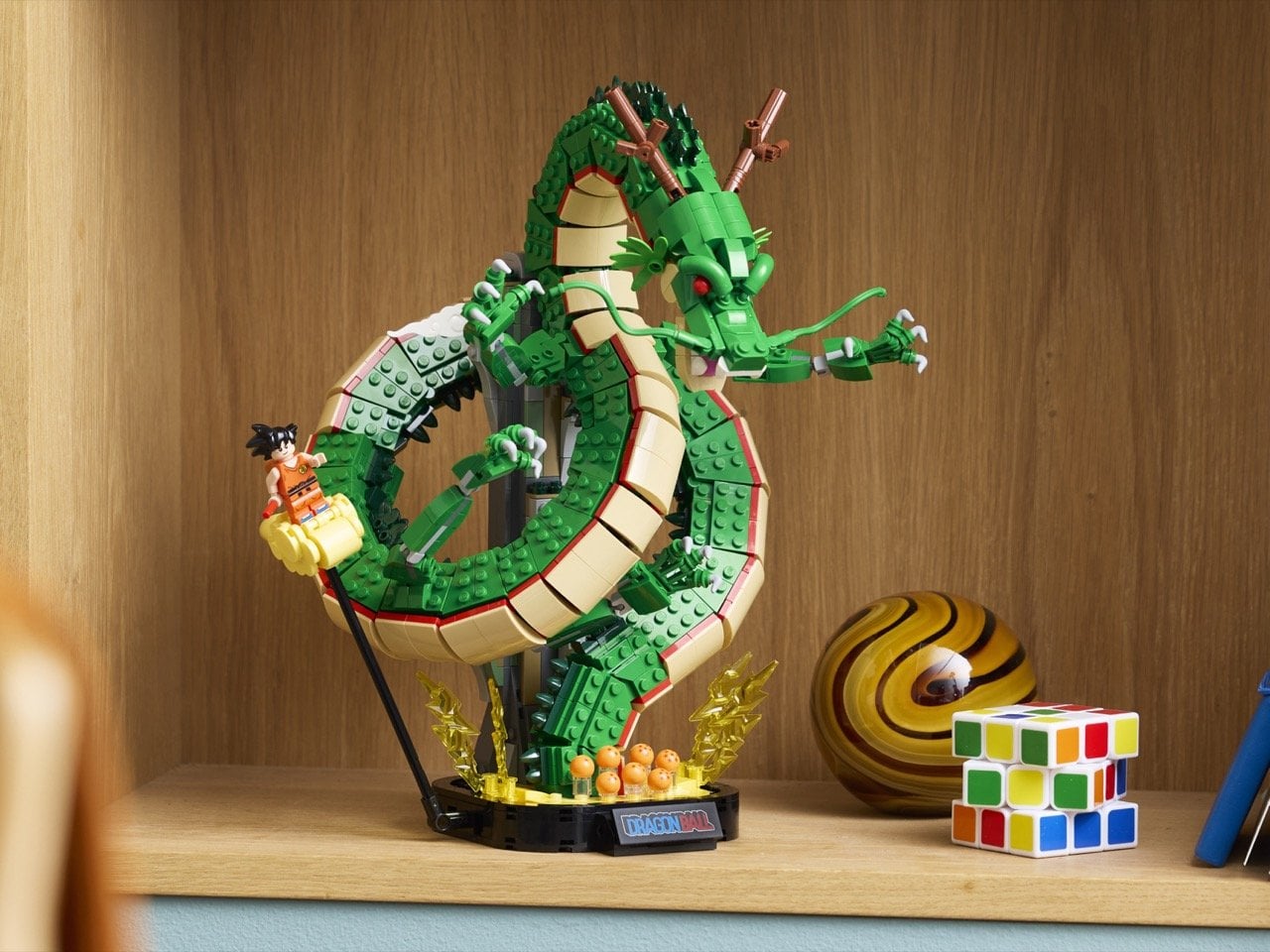
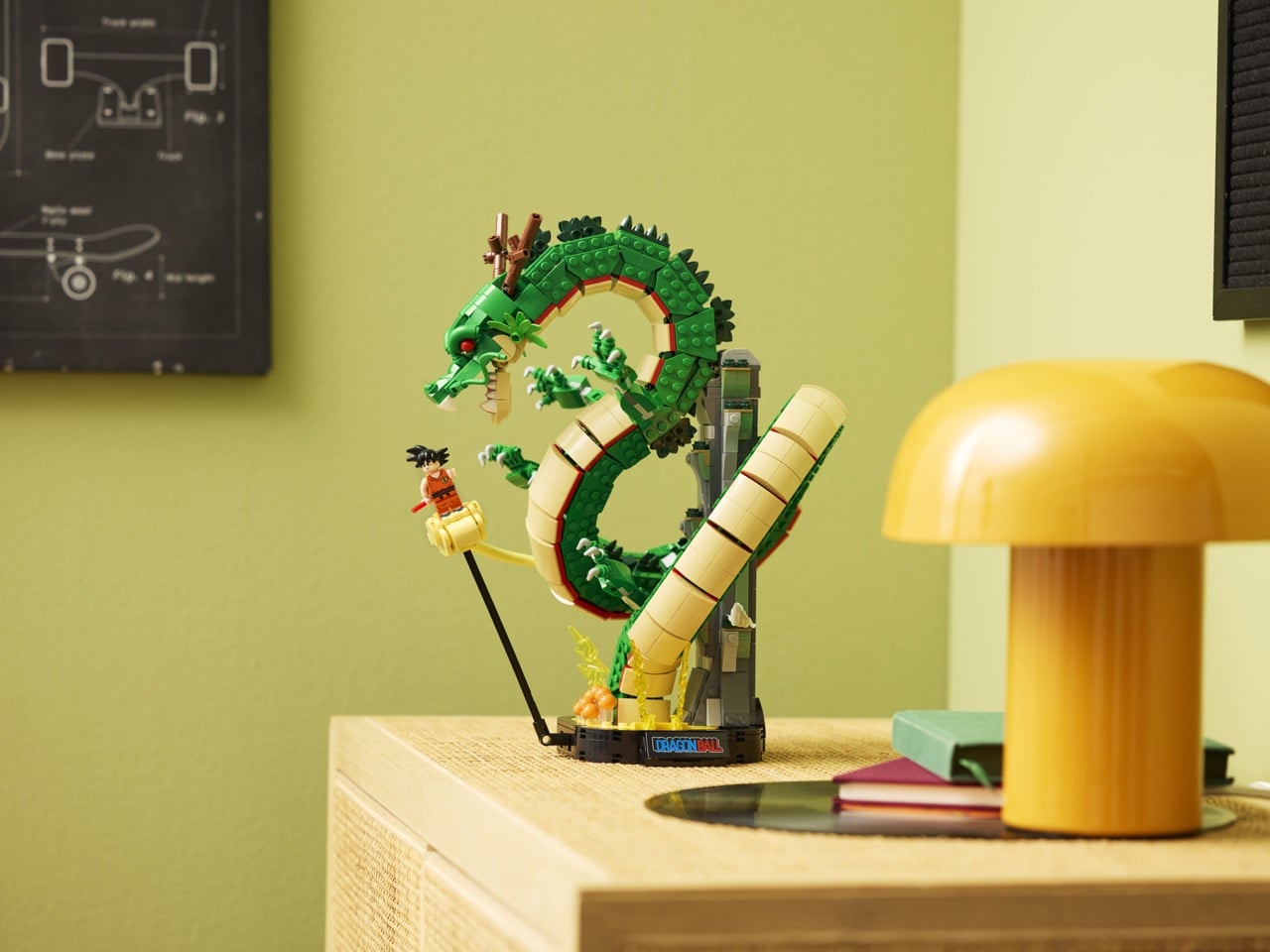
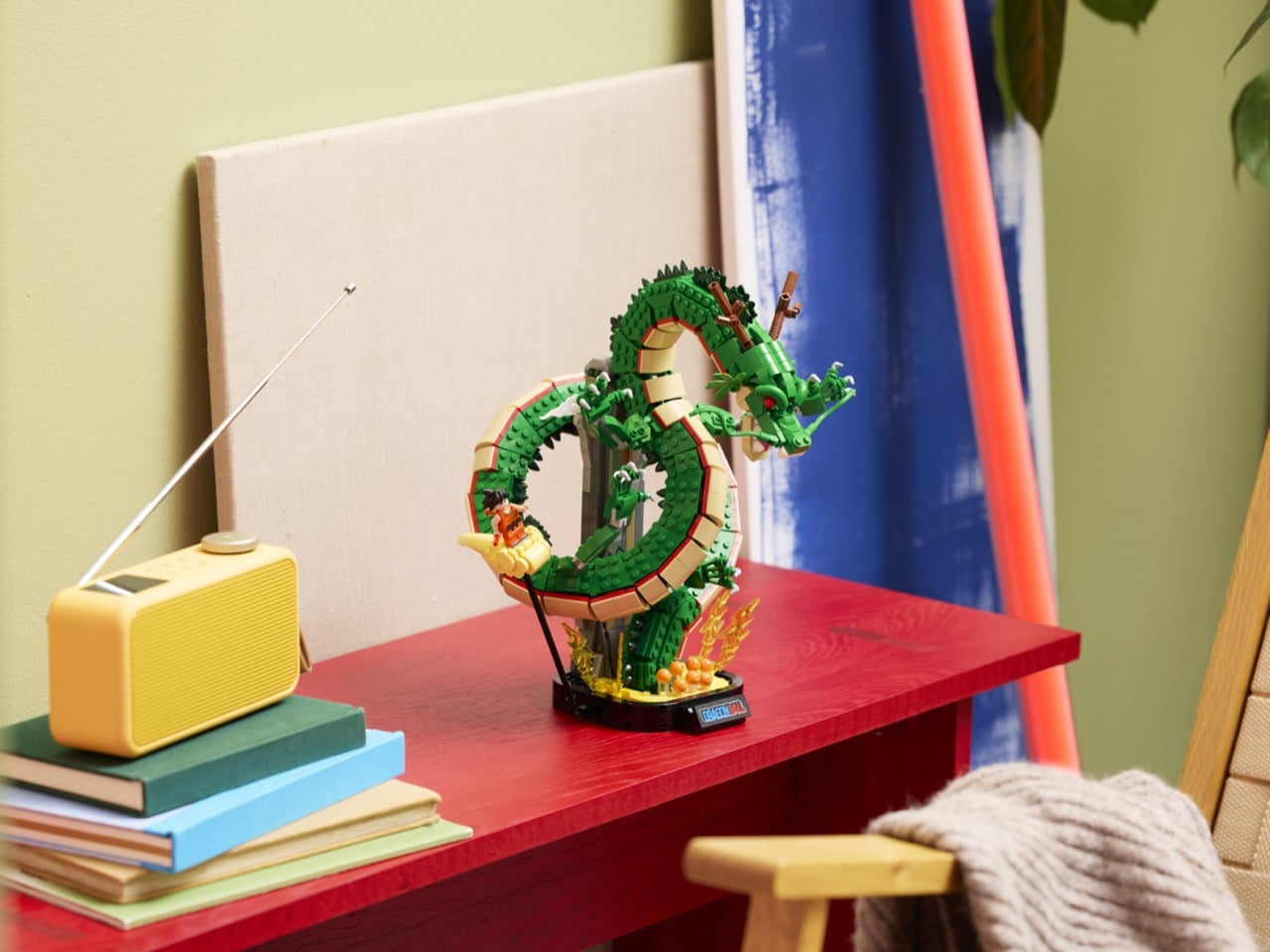
Toei said yes. The result is the LEGO Icons Dragon Ball: Shenron & Goku (11390), a 1,764-piece display model of the wish-granting dragon coiling up out of all seven Dragon Balls, with Kid Goku parked on his Kintoun off to one side. It’s the first LEGO and Toei Animation collaboration ever, the first Dragon Ball set LEGO has ever produced, and the first time Goku has existed as a minifigure. For a debut, going straight for the dragon is a confident move. Shenron is the hardest thing in the franchise to build out of rectangles.
Designers: Jae Won Lee & LEGO
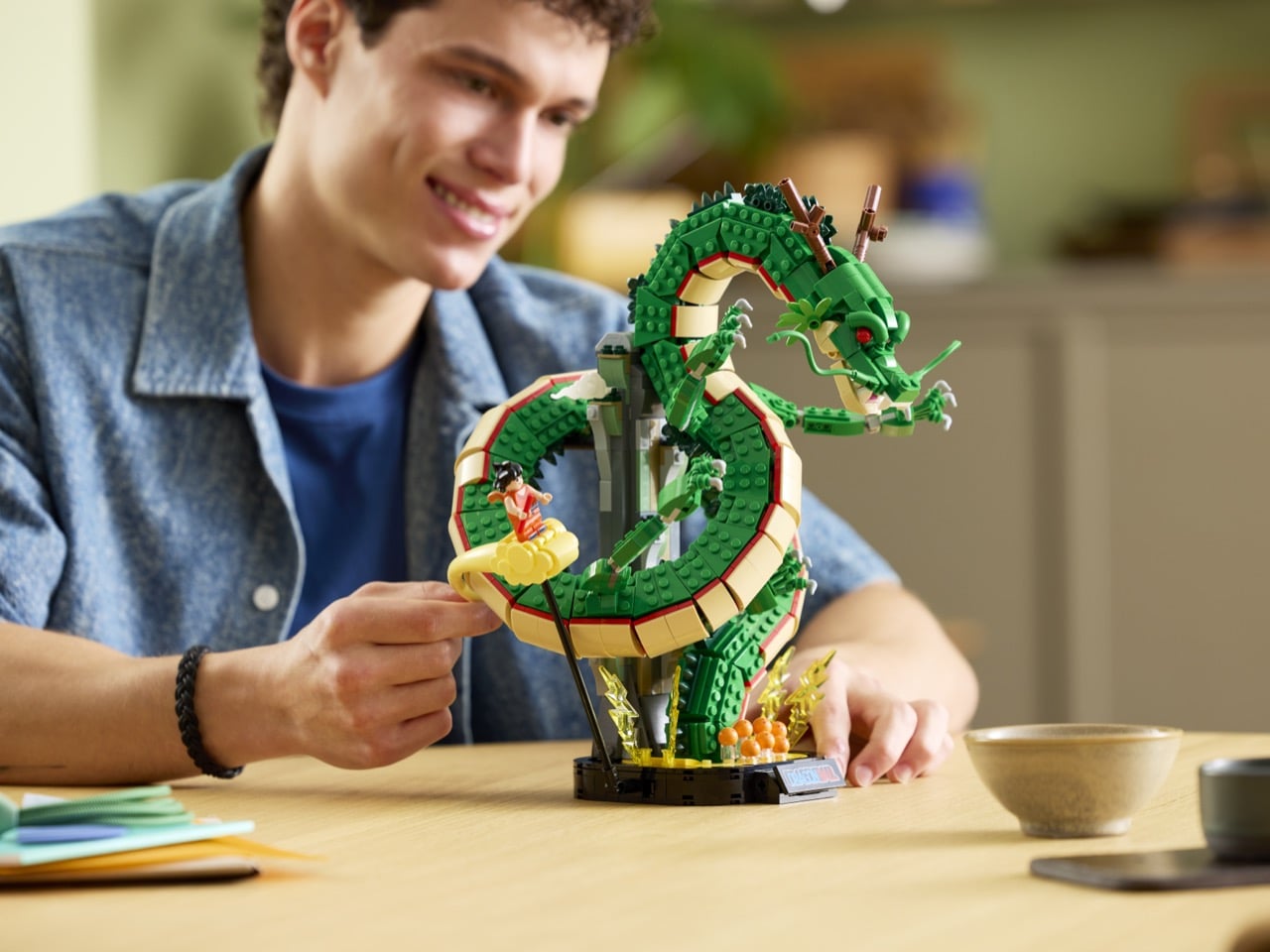
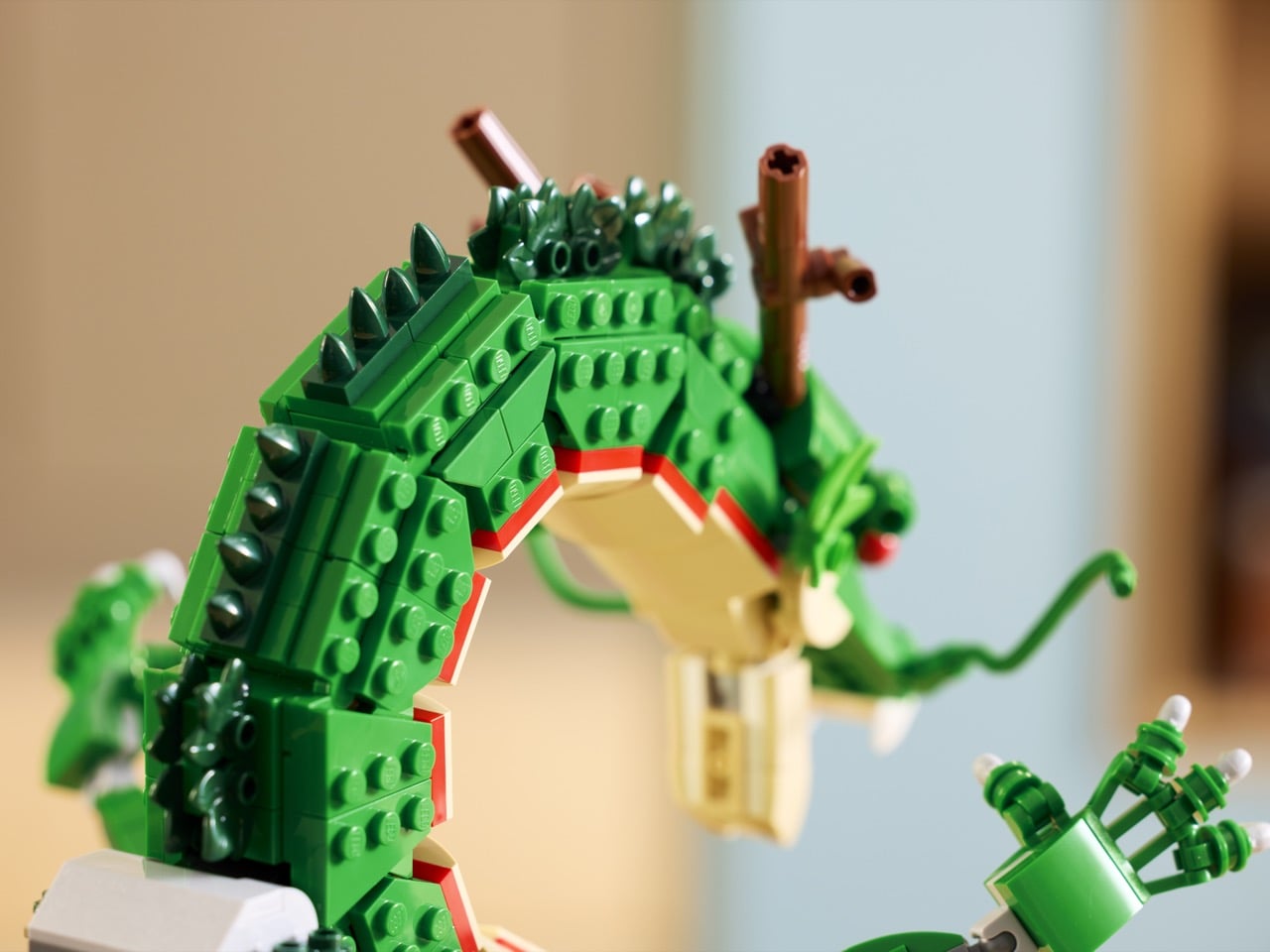
Bar-and-clip hinges hold Shenron’s body together internally while plate hinges do the work on the outside, and that combination is the entire reason this thing reads as a curve instead of a staircase. Jae Won Lee built the dragon in repeating segments, each angled a few degrees off the last, so the deviation accumulates into a loop rather than a series of visible steps. Brickset’s review called the process repetitive in stretches, which is true and also the price of admission. Anything smoother would need custom molded parts, and then it stops being LEGO. The finished body flows upward through 32 centimeters of height without a single moment where you can see the seams doing their job.
A grey rock pillar runs up the center of the model, and Shenron is permanently attached to it. Brickset confirmed the dragon cannot be built or displayed independently, which is the honest engineering tell here: 1,764 pieces of green plastic arranged into a loop have to hang off something, and physics does not negotiate. I respect that LEGO left the pillar visible rather than disguising it as scenery. Articulation is modest as a result, with a few degrees of head rotation, an opening jaw, and legs that pivot at several joints. This is a statue that lets you nudge it, and the marketing sensibly sells it that way.
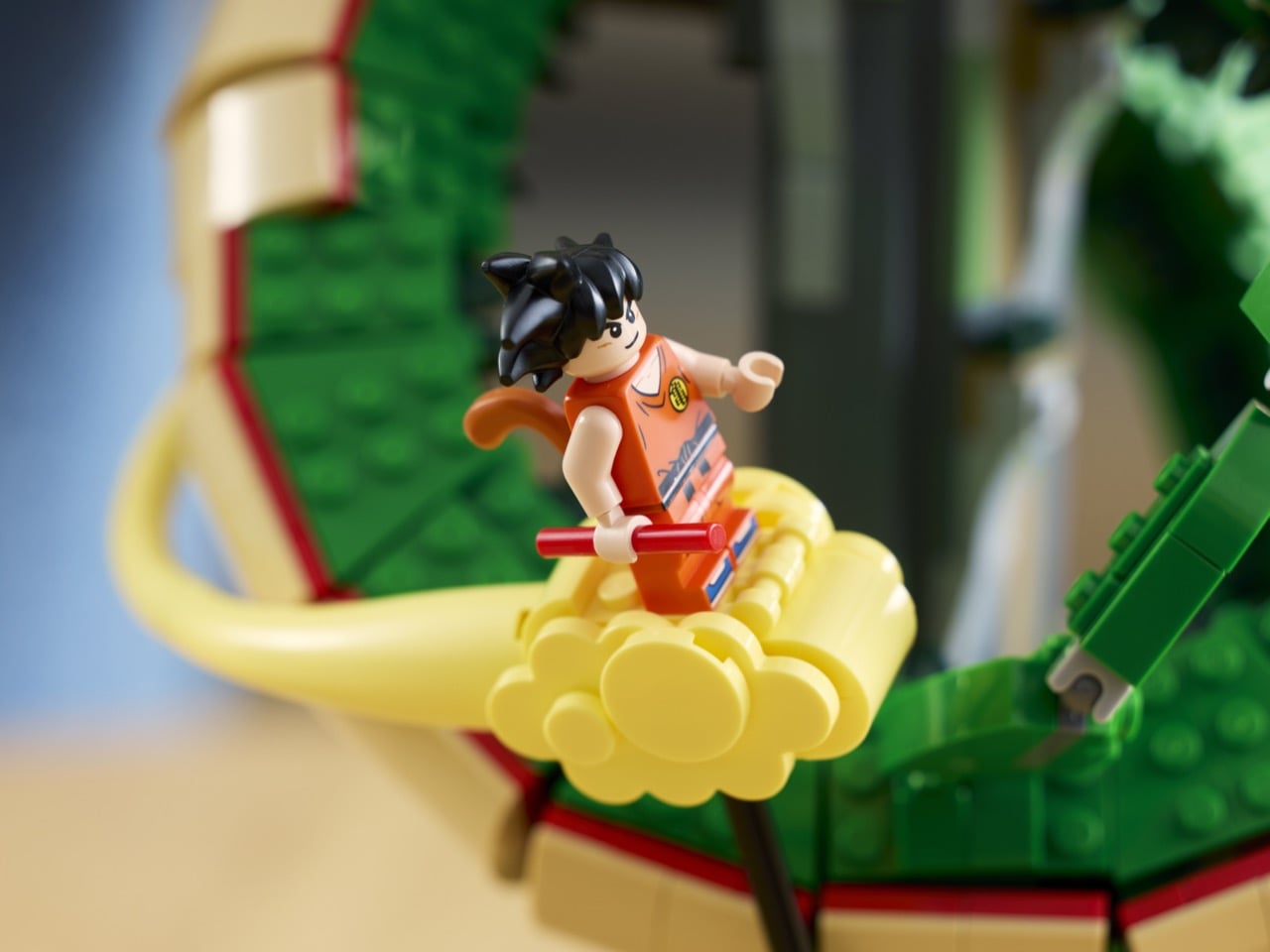
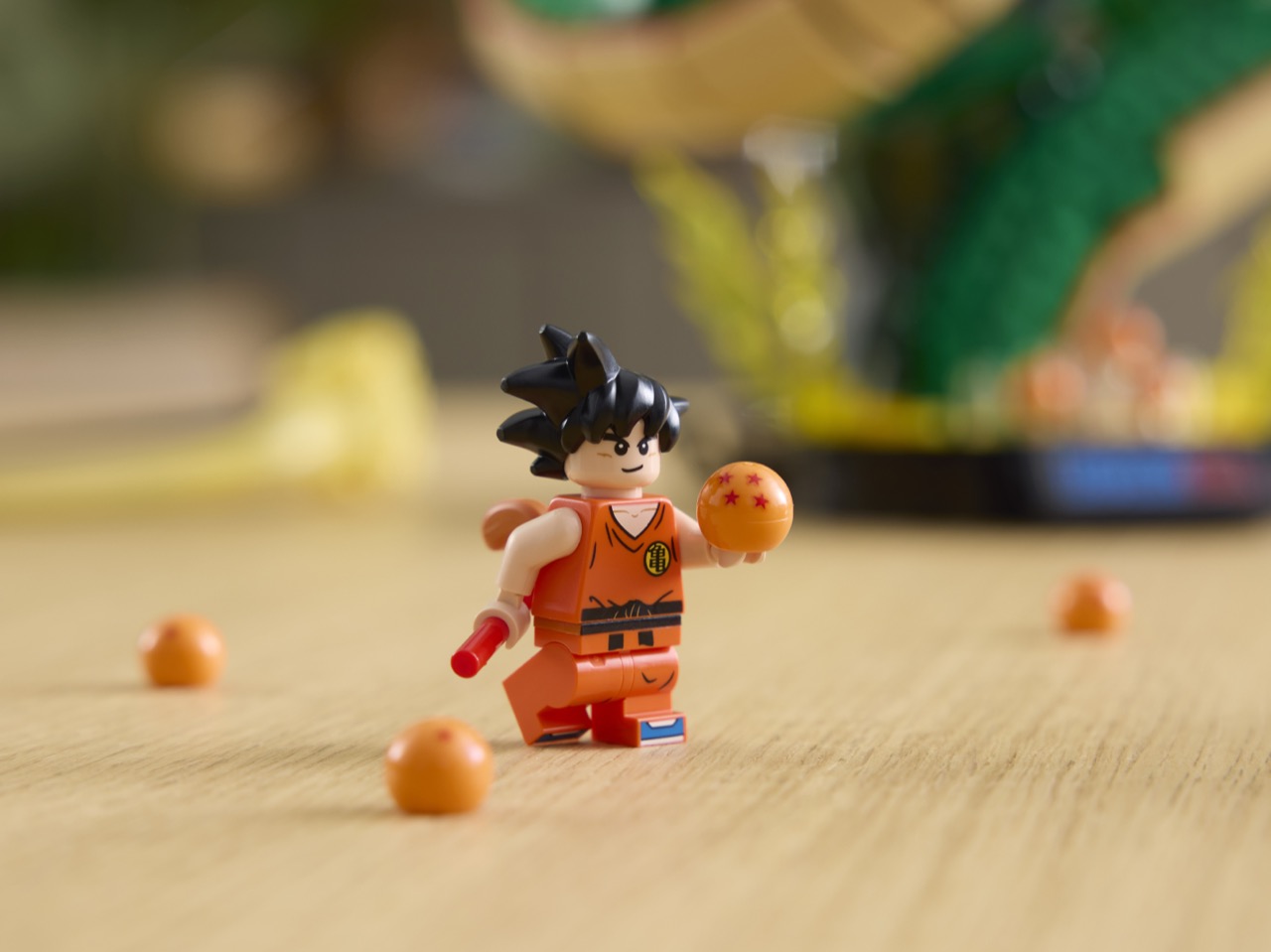
Goku arrives here as a minifigure for the first time in either company’s history, wearing the orange gi with Master Roshi’s Kame kanji printed on the chest. He carries the Power Pole, wears a printed Saiyan tail, and sits on the Kintoun, which matters more than it looks. At this point in the original series Goku cannot fly on his own ki yet, so the cloud is his actual transportation rather than a prop. Riding it also requires being pure of heart, a detail that becomes very funny once you learn he is an alien from a warrior race. The new spiky wig element is the best part of the figure.
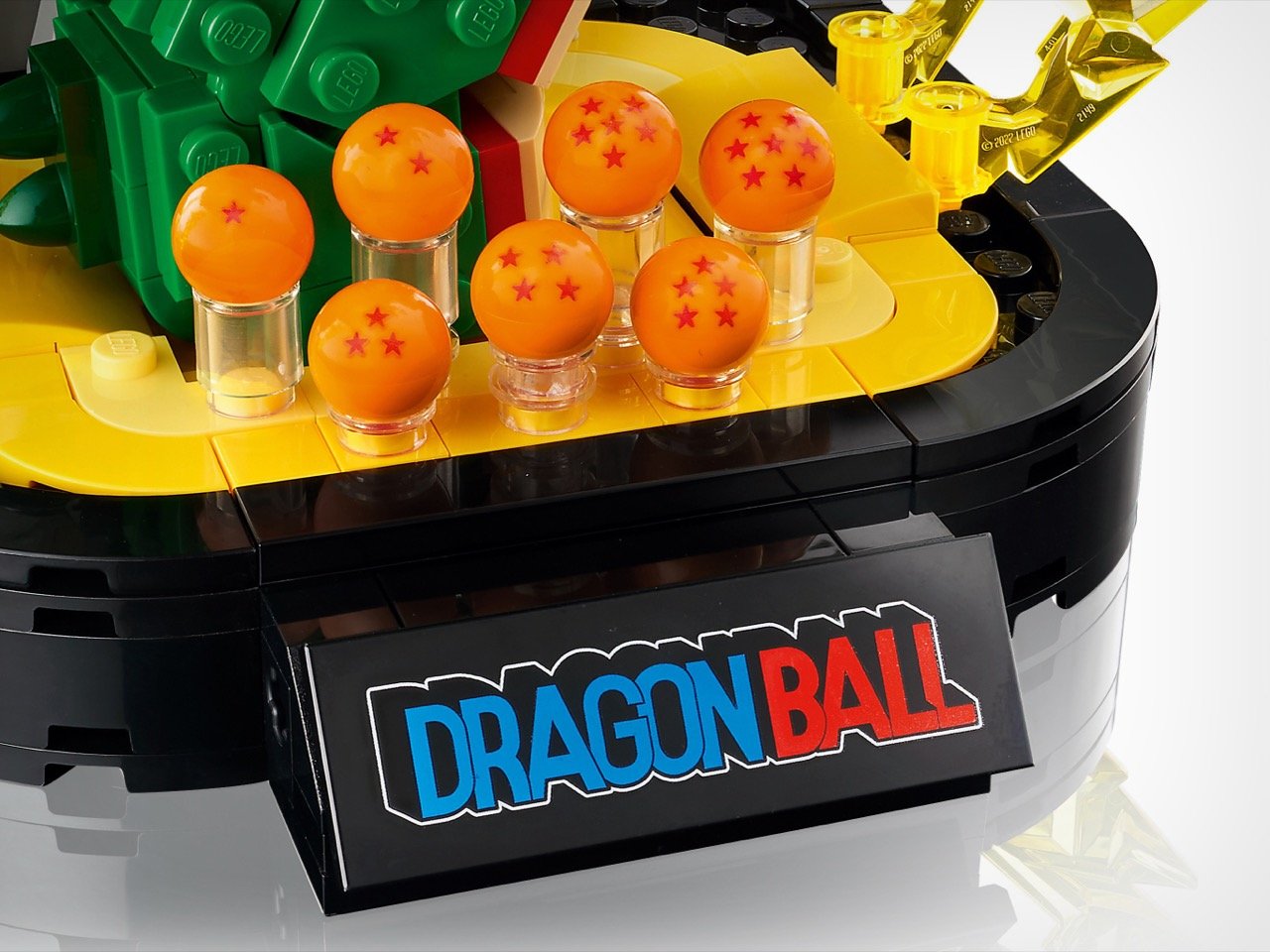
Seven Dragon Balls sit at the base on trans-clear studs, each individually printed with its correct star count, one through seven. Lightning bursts in translucent yellow where the dragon breaks through, and the front nameplate carries the original manga logo rather than anything from the Z era. LEGO also colored many of the internal structural pieces orange to match the Dragon Balls, including parts buried inside the base where nobody will ever see them. The instruction booklet highlights new pieces in orange instead of the usual red. Those two decisions cost money and win nothing measurable, which is exactly how you tell a licensing exercise apart from a set somebody cared about.
One minifigure for $179.99 is where this set loses me. Bulma invented the Dragon Radar and drove the entire original search, and her absence from a set celebrating that specific storyline is a genuine gap that Brick Fanatics and Stonewars both flagged. Brickset’s per-piece math lands at 10.2 cents in the US against fairer numbers in the UK and Eurozone, part of a wider 2026 exchange-rate drift on LEGO pricing. Bandai’s S.H.Figuarts Shenron sits around $130 fully painted and articulated. LEGO is charging a premium for the privilege of assembling yours.
Insiders get early access on November 1, with general release on November 4 through LEGO Stores and LEGO.com, and more Dragon Ball sets are already confirmed for 2027 and beyond. Put this beside the 681-piece Pokémon Rayquaza and the comparison stops being polite, which tells you something about how seriously LEGO treated its first swing here. Fifteen years of building its own anime gave the company an unusually good understanding of what this material needs. Toriyama died in March 2024 without seeing his dragon in brick form. The set that finally arrived is worthy of him, and I hope Bulma is in the next one.