The dome is no longer just an architectural curiosity. It has emerged as one of the most structurally efficient forms ever designed. Leading design firms now recognize that its natural strength and exceptional volume-to-surface ratio provide a powerful foundation for sustainable luxury and long-term performance.
Beyond structure, the dome reshapes how space is experienced. It feels both ancient and forward-looking. Contemporary design increasingly favors spatial sequencing that calms the mind, and curved interiors deliver exactly that. A domed space becomes a biophilic cocoon—capturing soft natural light, enhancing psychological comfort, and offering a strong return on investment through well-being, durability, and timeless appeal.
1. Lightness as Structure
Inflatable domes represent the most refined expression of ephemeral architecture. These pressurized forms enable rapid spatial creation that rigid structures simply cannot achieve. Their value lies in speed, adaptability, and impact—allowing designers to construct immersive, temporary pavilions with a minimal carbon footprint using advanced high-tensile, translucent membranes.
What truly sets inflatable domes apart is their sensory quality. The gentle movement of the pneumatic skin creates a space that feels alive, forming a biophilic cocoon of air and light. Contemporary polymer materials make it possible to sculpt illumination itself, transforming a lightweight structure into a resilient, rhythmic architectural experience that feels both delicate and powerful.
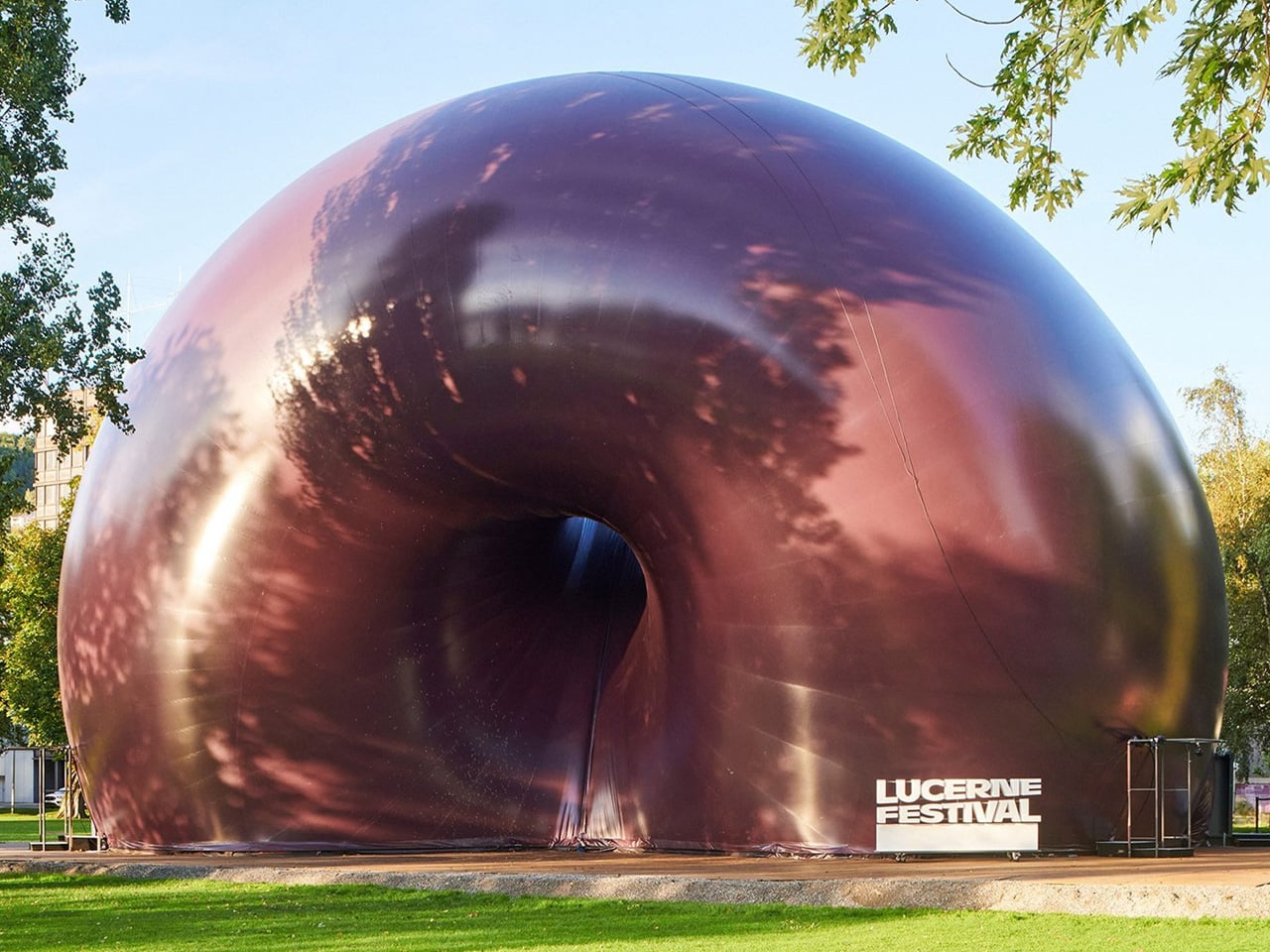
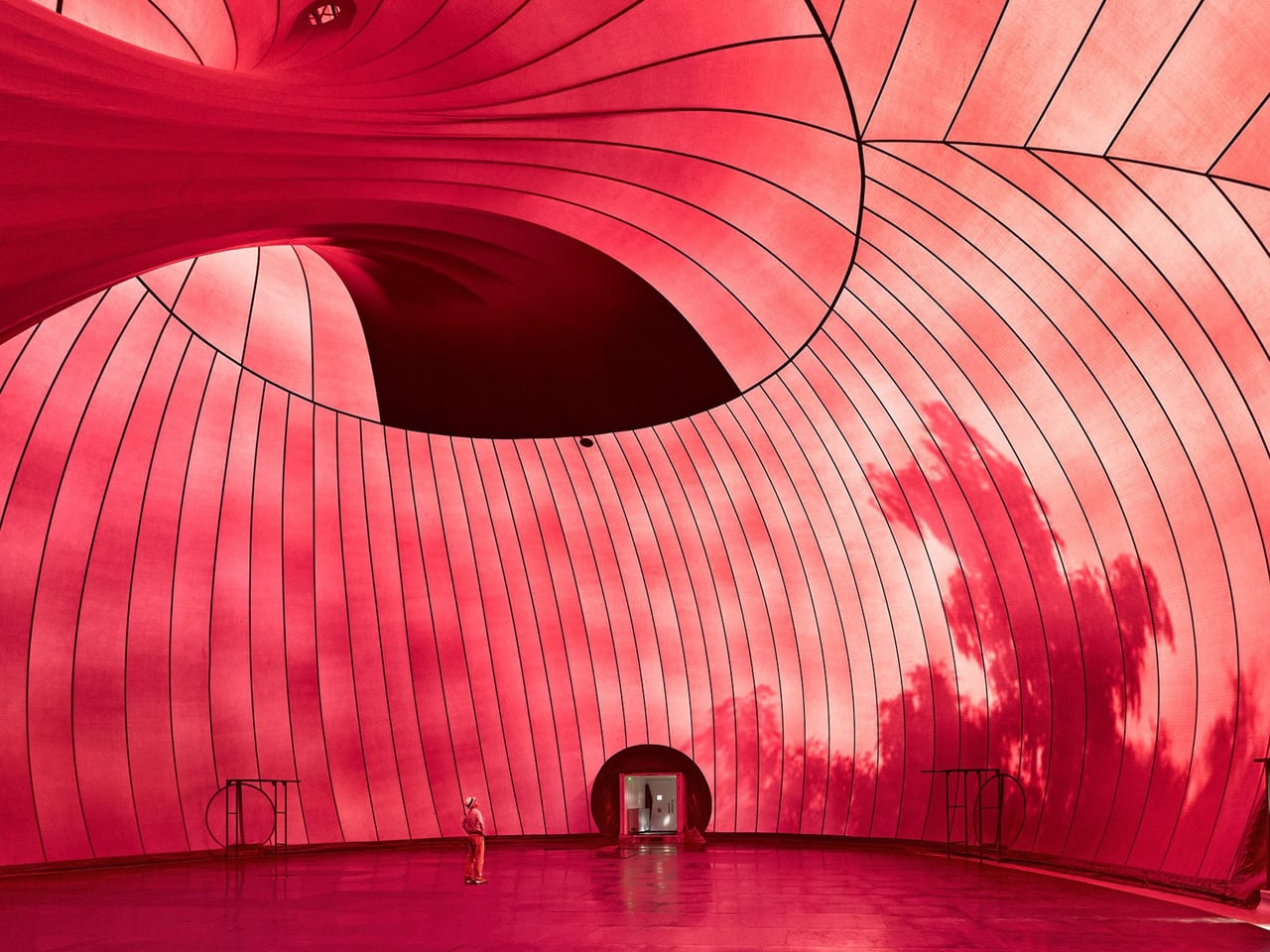
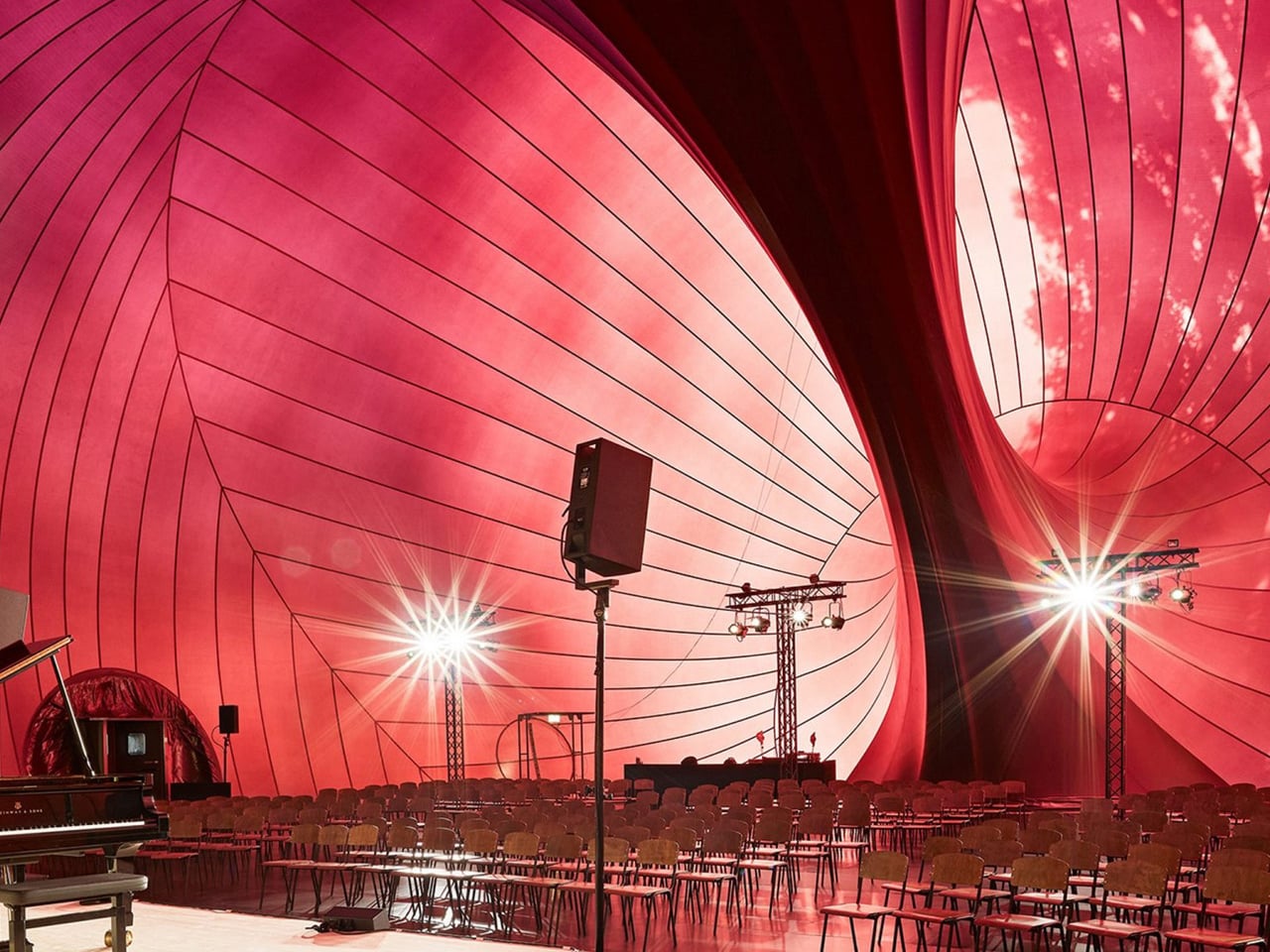
Ark Nova redefined the idea of a concert venue by replacing permanence and grandeur with mobility and sculptural expression. Created through a collaboration between British artist Sir Anish Kapoor and Japanese architect Arata Isozaki, the inflatable hall appeared as a monumental, purple, organic form that challenged traditional architectural expectations. Its soft, self-supporting membrane transformed air into structure, creating a space that felt both futuristic and welcoming. When it arrived in Europe for the first time at Switzerland’s Lucerne Festival, Ark Nova marked a new chapter in its evolving cultural journey.
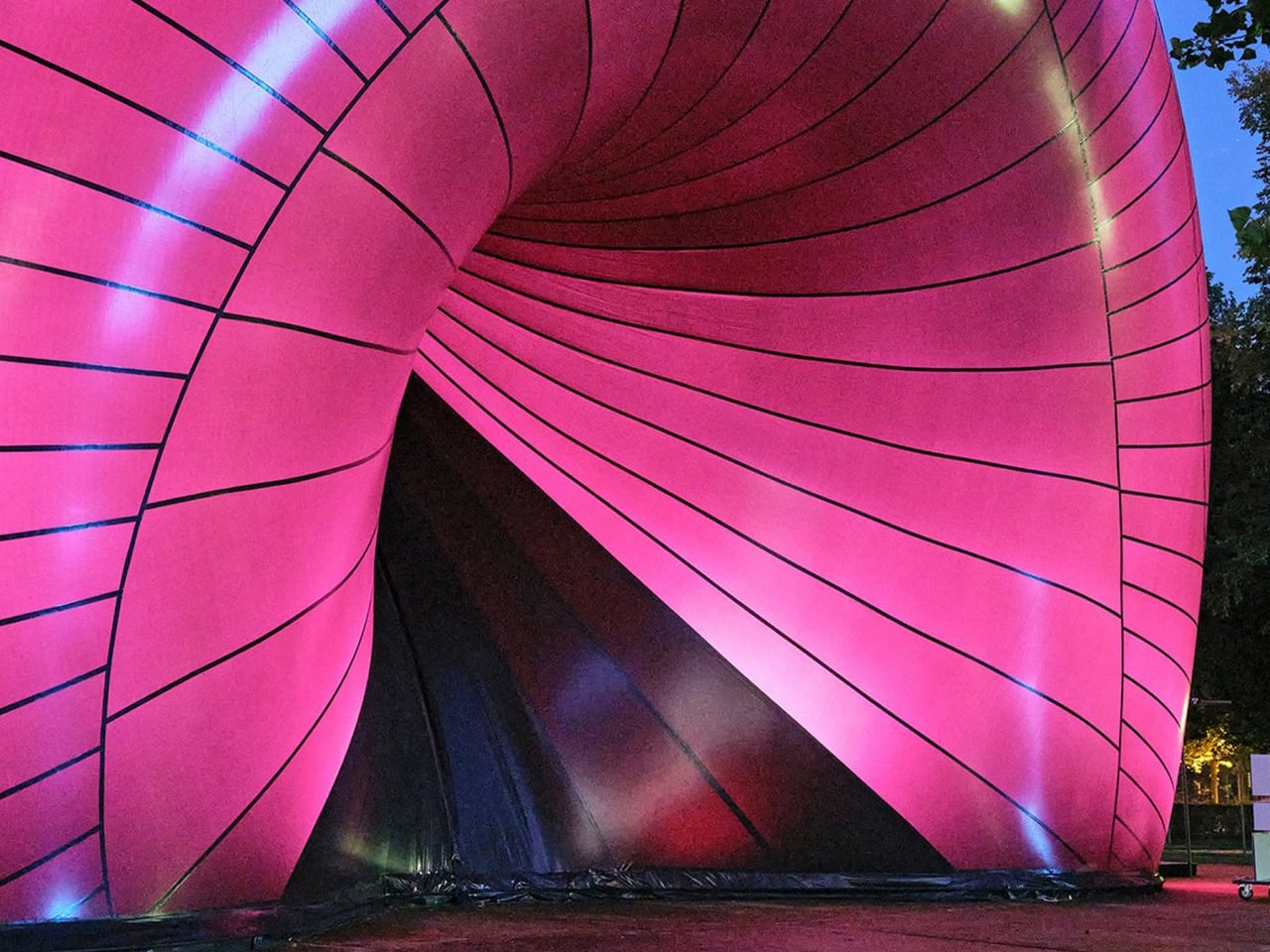
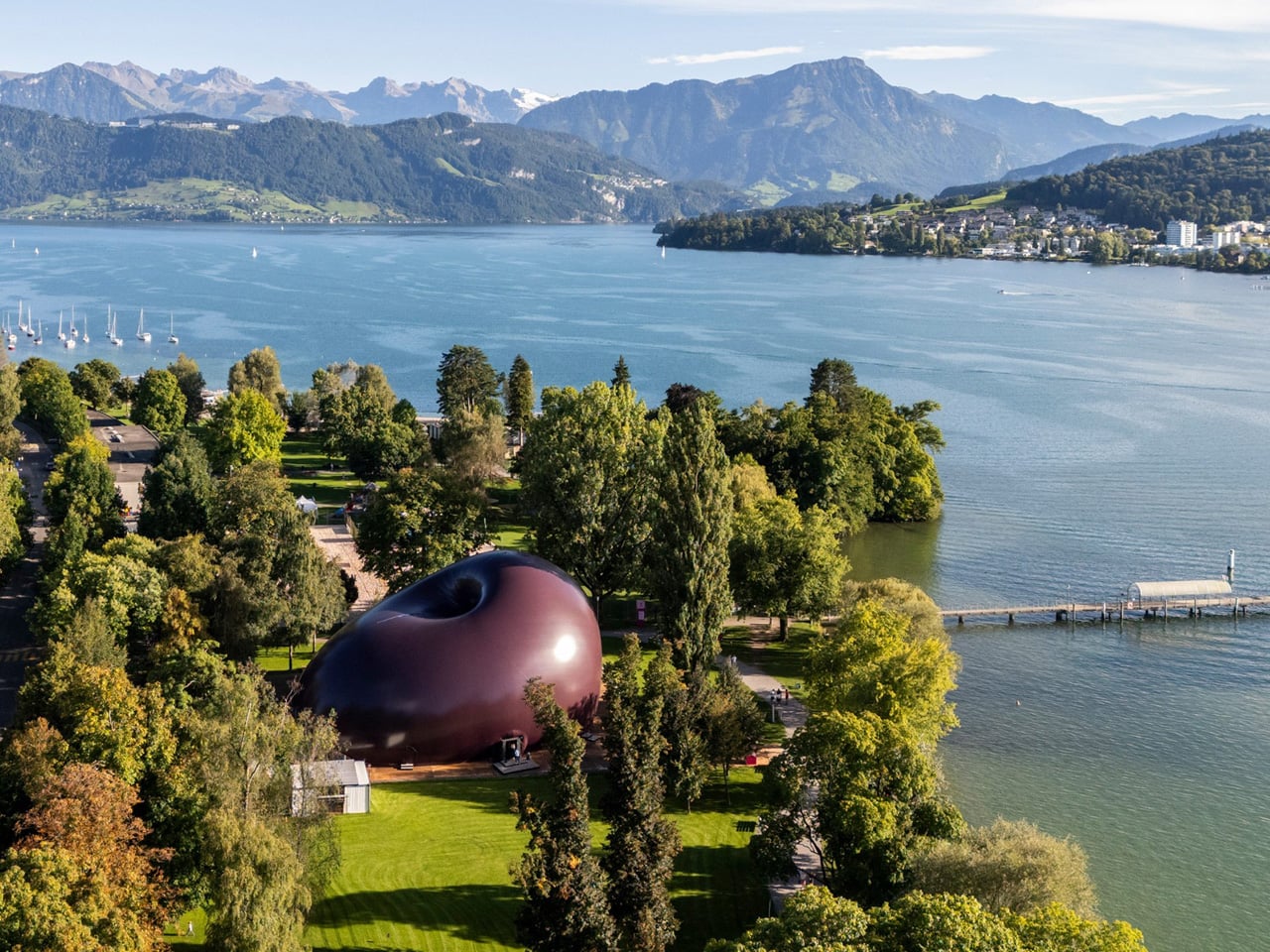
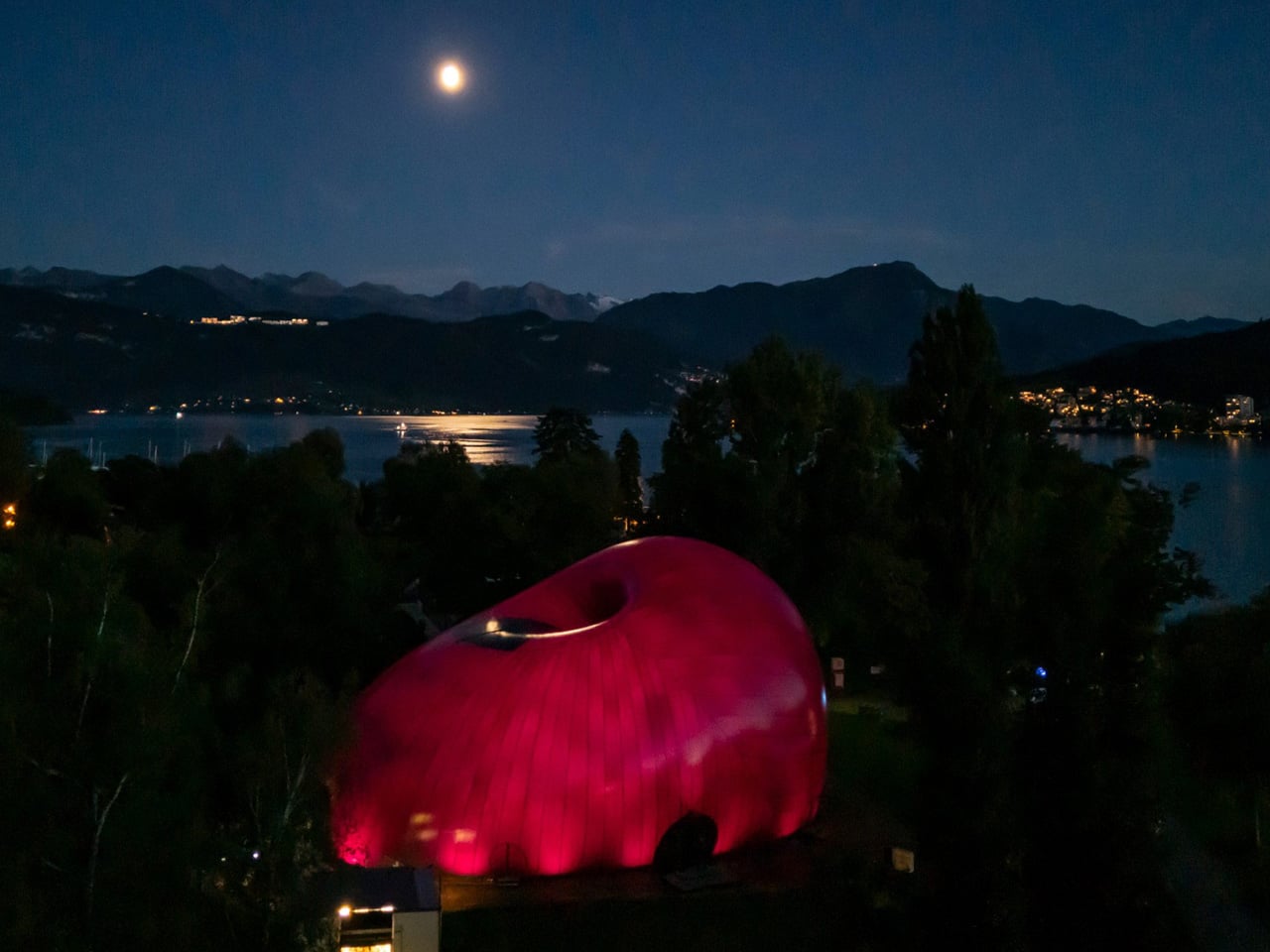
Originally conceived in 2013 as a response to the Fukushima earthquake and tsunami, Ark Nova was designed to bring music and collective healing to affected communities. Its pneumatic structure required no rigid framework, allowing it to be assembled quickly and adapt to different settings. Inside, light filtered gently through the membrane, shaping an intimate acoustic environment for diverse performances. More than a venue, Ark Nova stood as a symbol of resilience, accessibility, and the power of art to travel where it is needed most.
2. Curated Sculptural Domes
Within sculptural art, the dome becomes a powerful medium for exploring scale and perspective. It is no longer just a form, but a monumental tectonic presence that anchors and defines urban space. Artists are increasingly working with 3D-printed composites, crafting perforated shells that transform sunlight into a carefully choreographed play of shifting shadows.
This evolution lifts the dome from a utilitarian roof to an architectural poem. The cultural value it generates goes beyond aesthetics, creating a strong sense of place and collective memory. Bathed in diffused light, these spaces blur the boundary between art and architecture, merging both into a single, immersive experience.
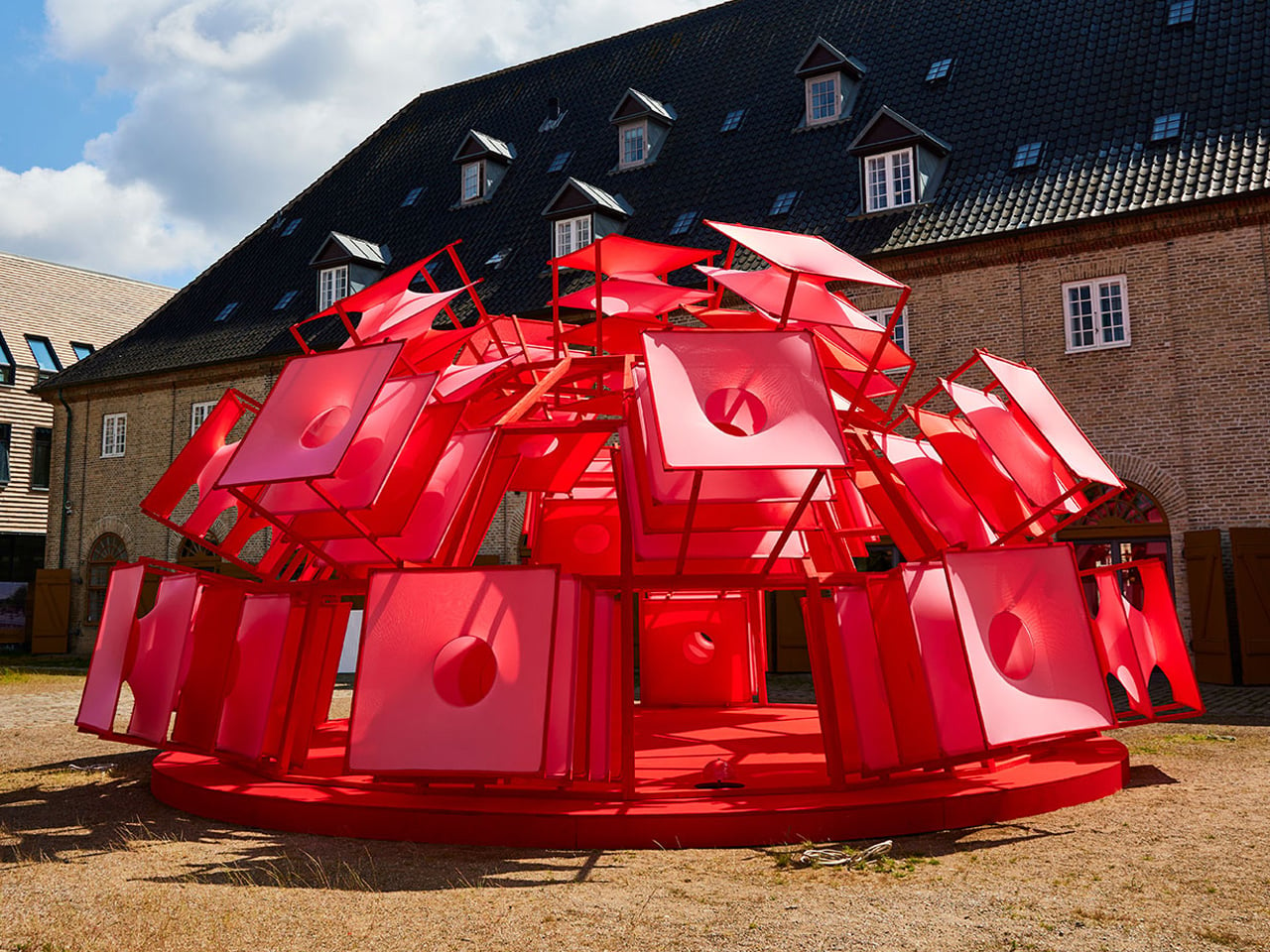
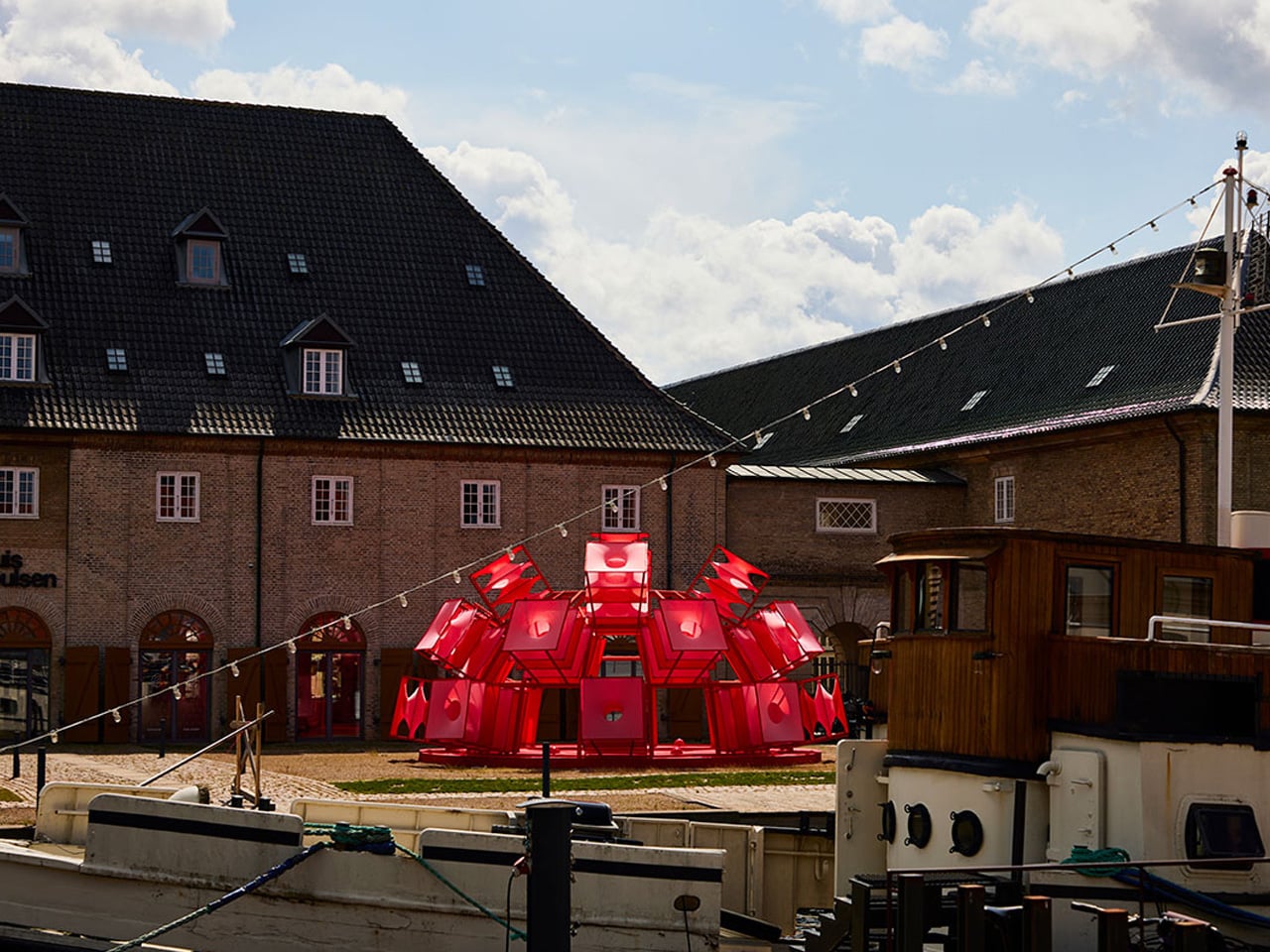
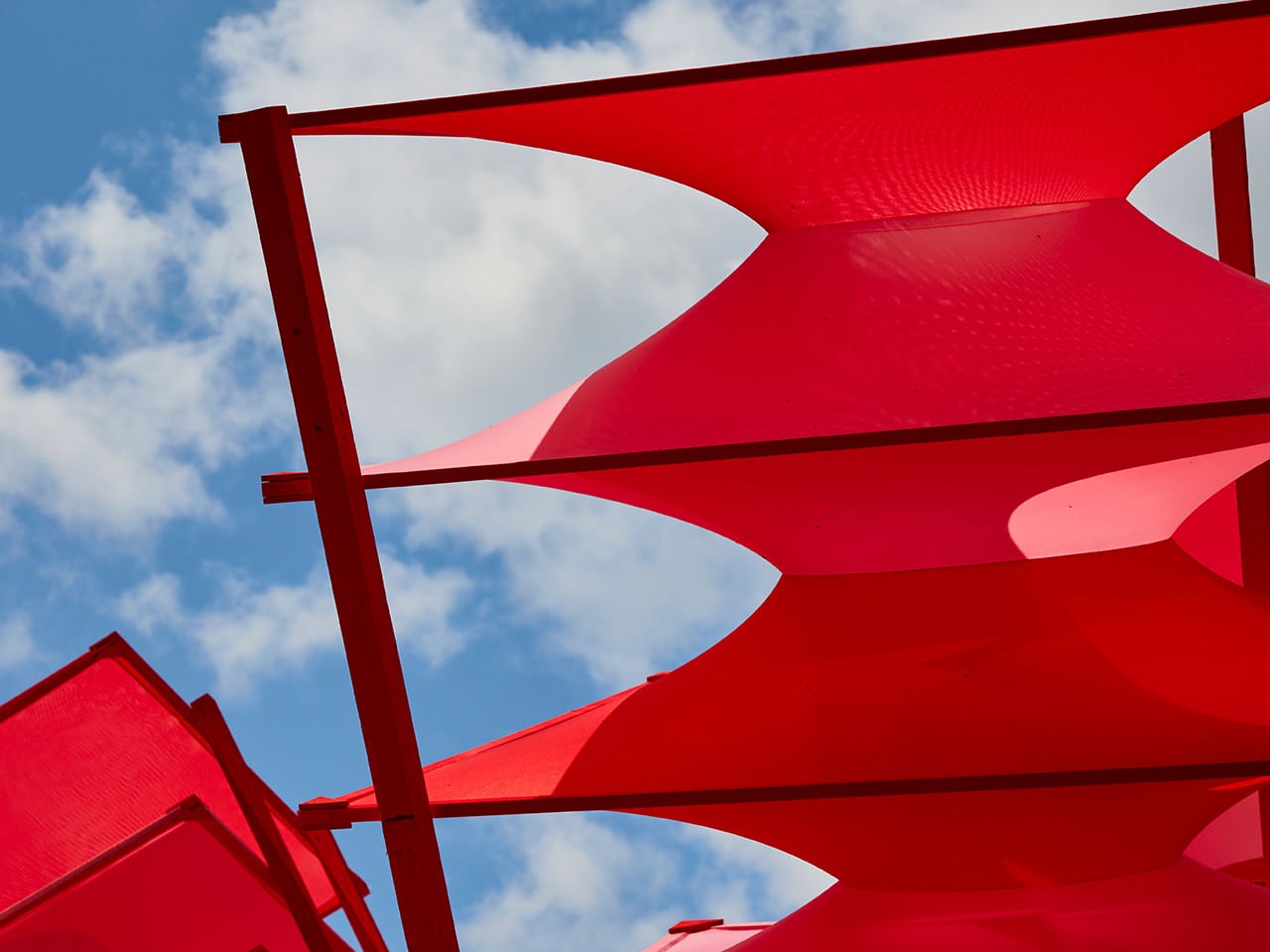
Circle Dome Square transformed the space outside Louis Poulsen’s Copenhagen showroom into a striking architectural moment. Designed by Henrik Vibskov, the dome appeared like a vivid red form caught mid-bloom, its fabric panels radiating outward from a central core. Referencing the curves and spirit of Verner Panton’s iconic Panthella lamp, the installation translated a lighting object into an immersive structure. From a distance, the dome commanded attention with its explosive geometry, while up close, its layered textile construction revealed depth, movement, and careful spatial composition.
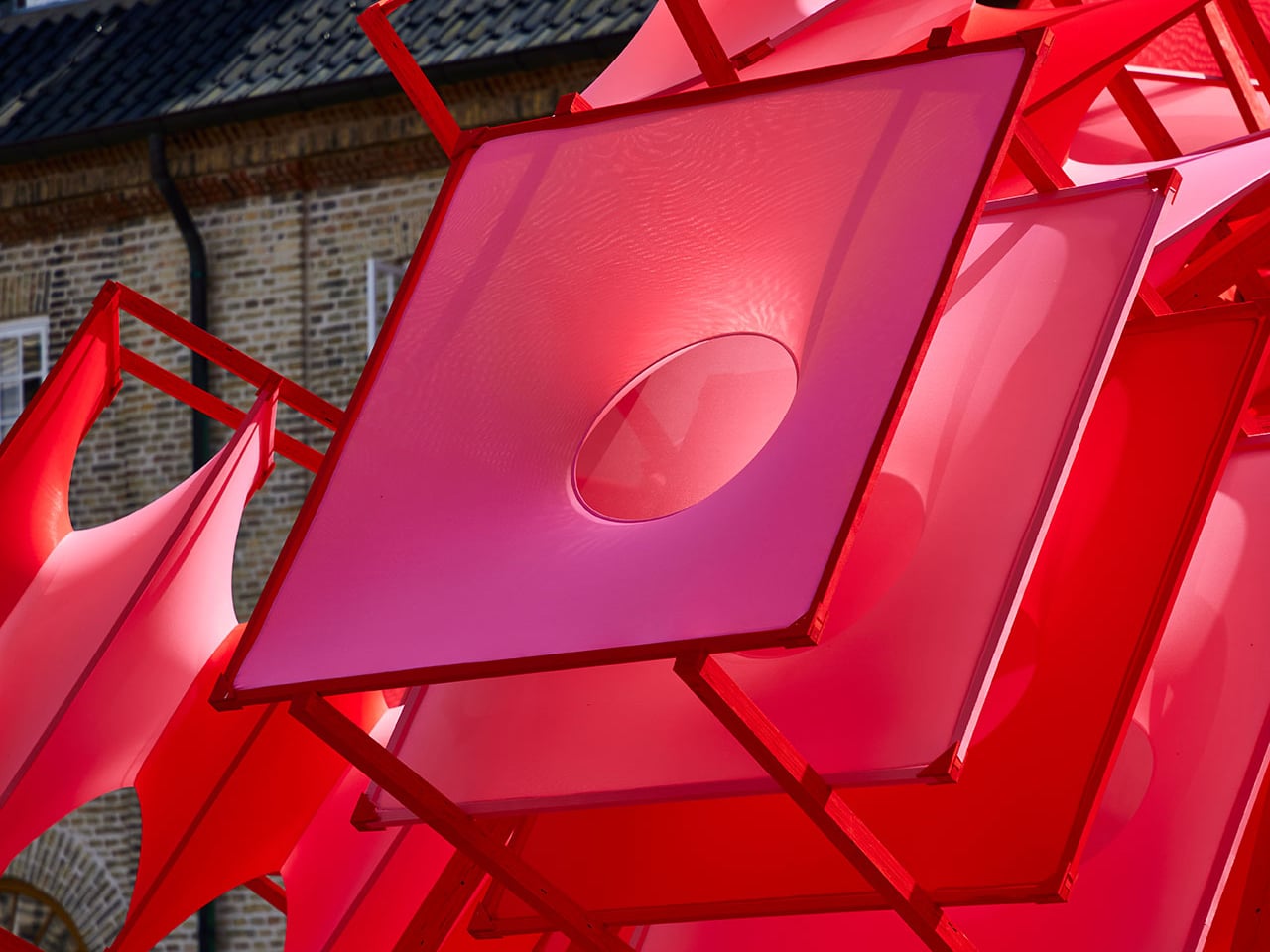
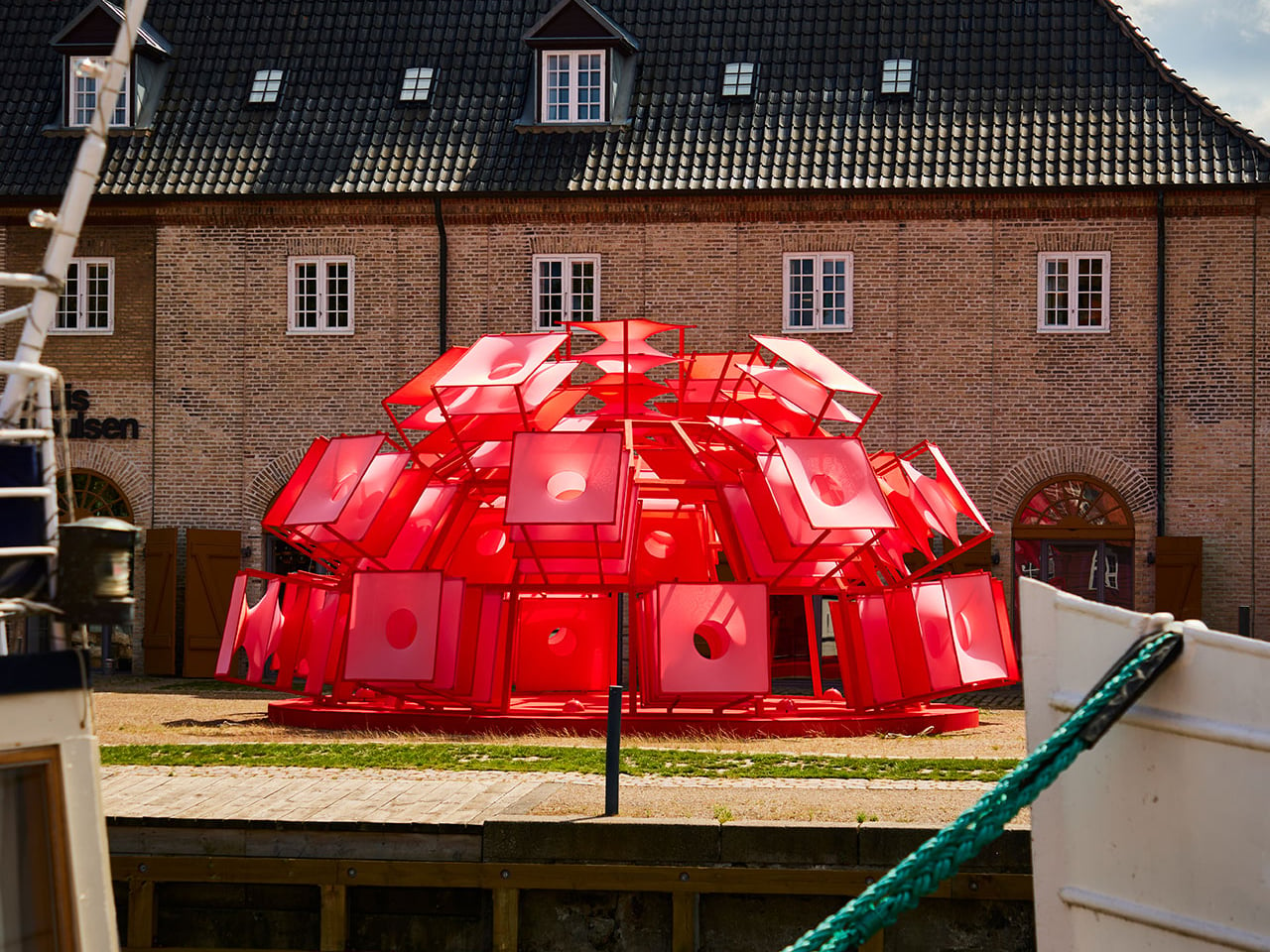
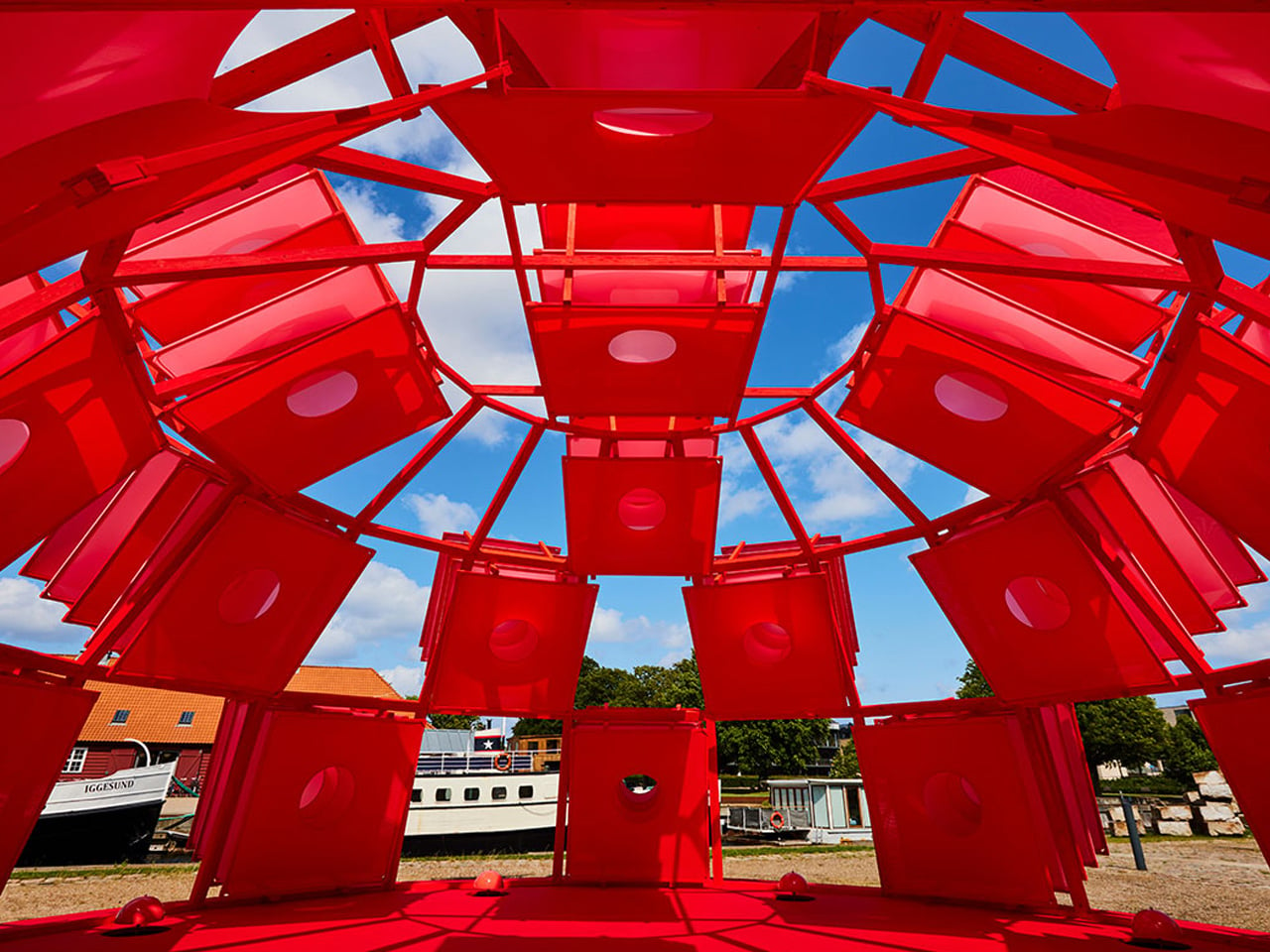
Inside the dome, the atmosphere shifted dramatically. The bold exterior gave way to a calm, enclosed environment where soft red light filtered through the fabric skin, creating a sense of warmth and stillness. The textile walls subtly shaped acoustics and scale, turning the dome into a temporary refuge within the urban setting. More than a visual statement, Circle Dome Square demonstrated how fabric, light, and form could work together to create an experiential space that invited pause, reflection, and quiet engagement.
3. Monolithic Living Domes
Dome housing has evolved from countercultural experimentation into a model of high-performance luxury living. Its inherent geometry delivers exceptional thermal efficiency, reducing air stagnation and heat loss while lowering long-term operational costs. The seamless, monolithic concrete shell reinforces material honesty, combining structural integrity with enduring performance.
Inside, the absence of corners allows space to flow naturally. Movement feels intuitive and unforced. The double-height apex draws the gaze upward, becoming a quiet focal point that connects the interior to the sky above. Living within a dome creates a biophilic cocoon—where light, acoustics, and form work together to produce a deep sense of calm, balance, and grounded serenity.
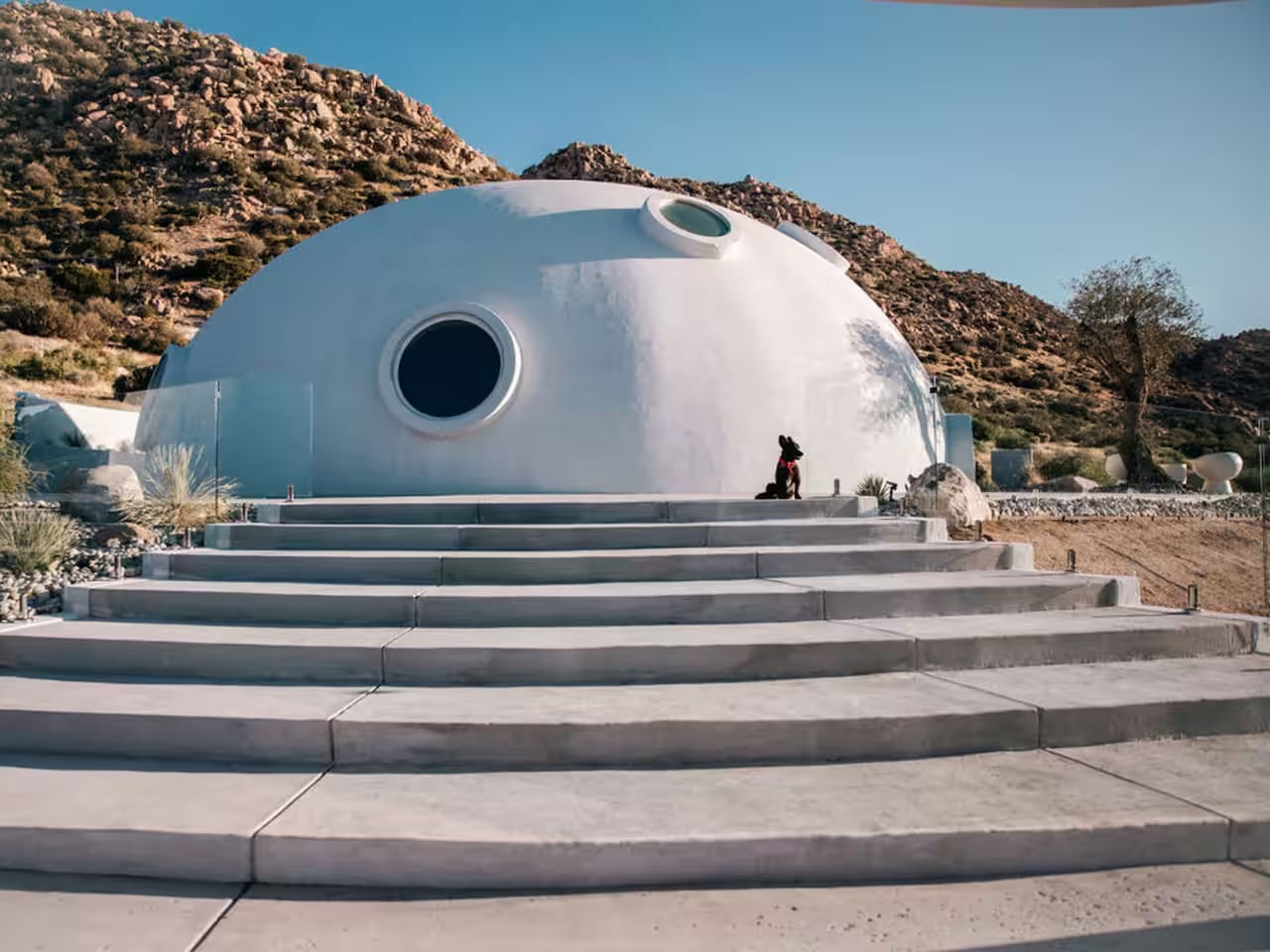
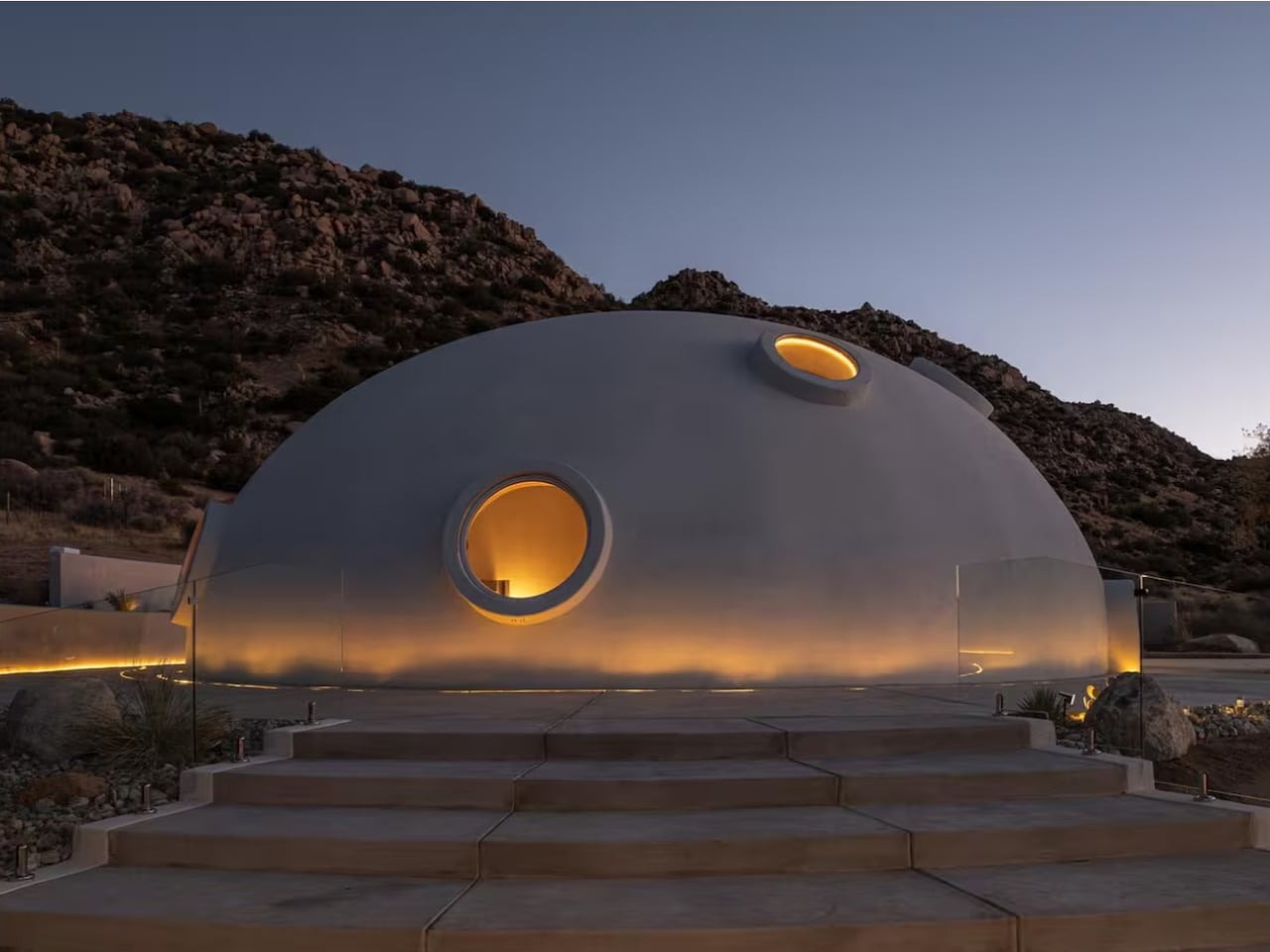
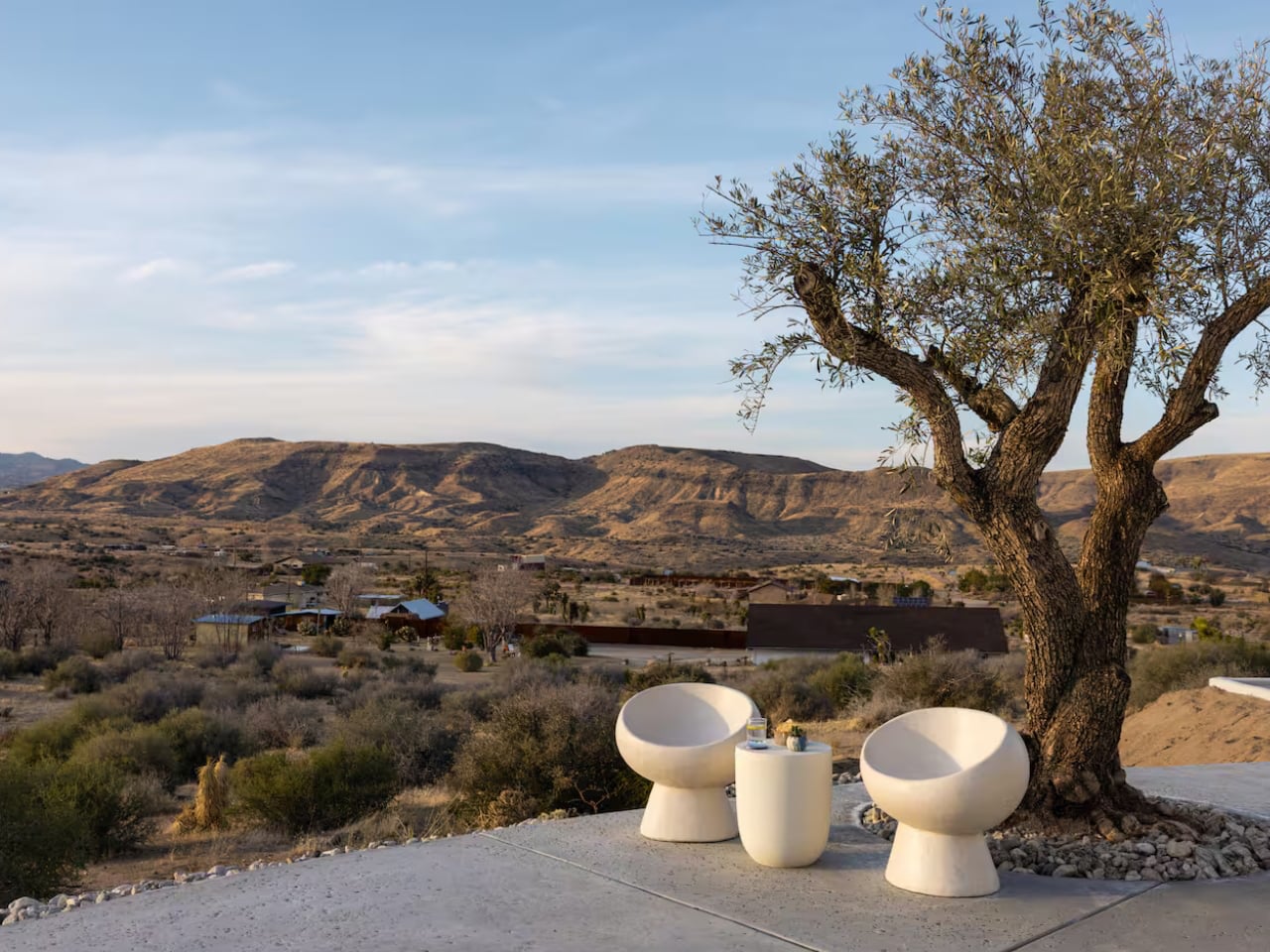
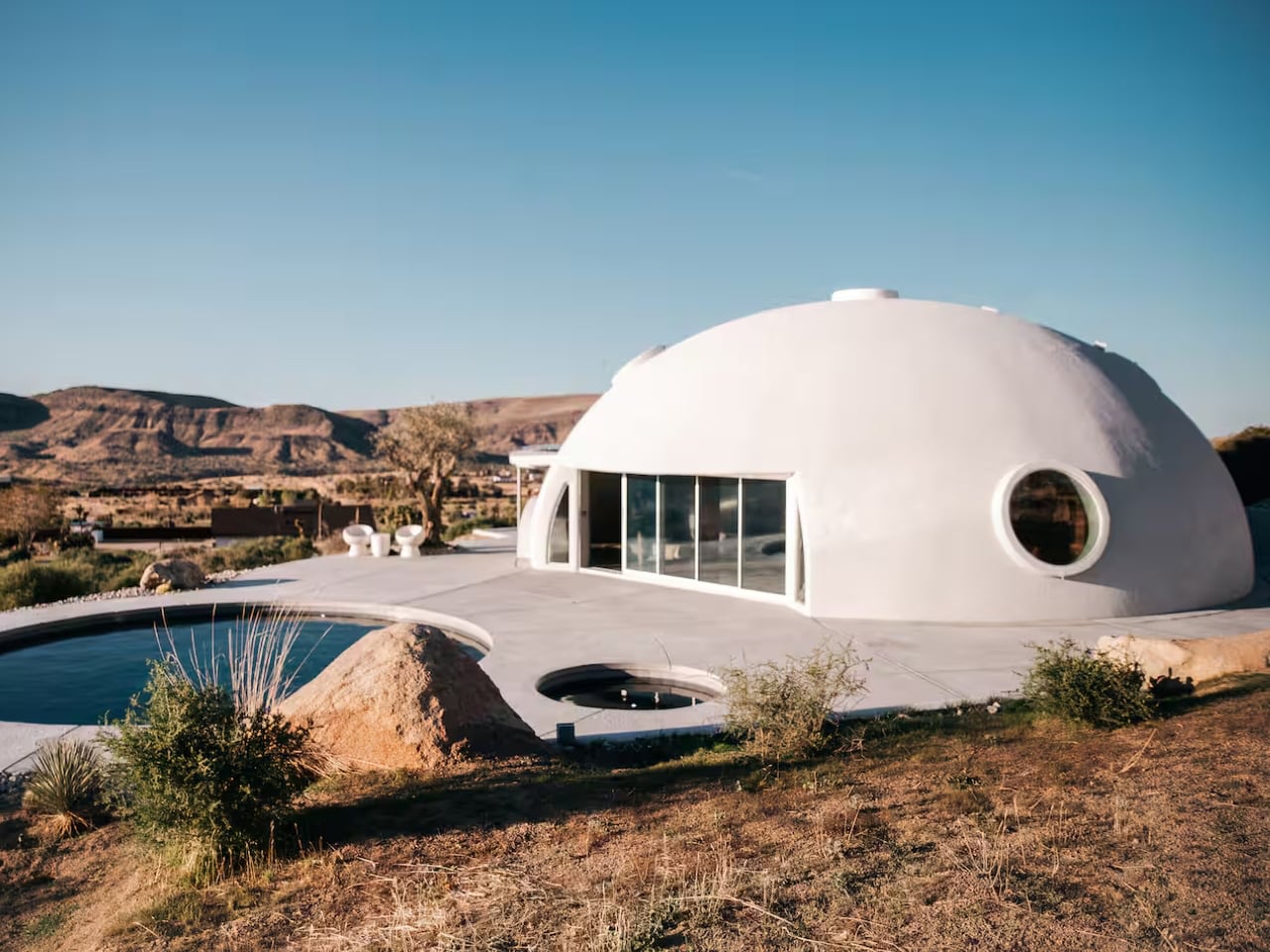
Rising unexpectedly from the desert landscape of Pioneertown, California, the HATA Dome looked like something straight out of a science-fiction film—but without any extraterrestrial mystery attached. Set against rugged terrain, the dome stood as a bold architectural presence, immediately capturing attention with its smooth, monolithic form. Rather than hinting at conspiracy, it offered something far more tangible: a place designed for human retreat and deep connection with the surrounding environment.
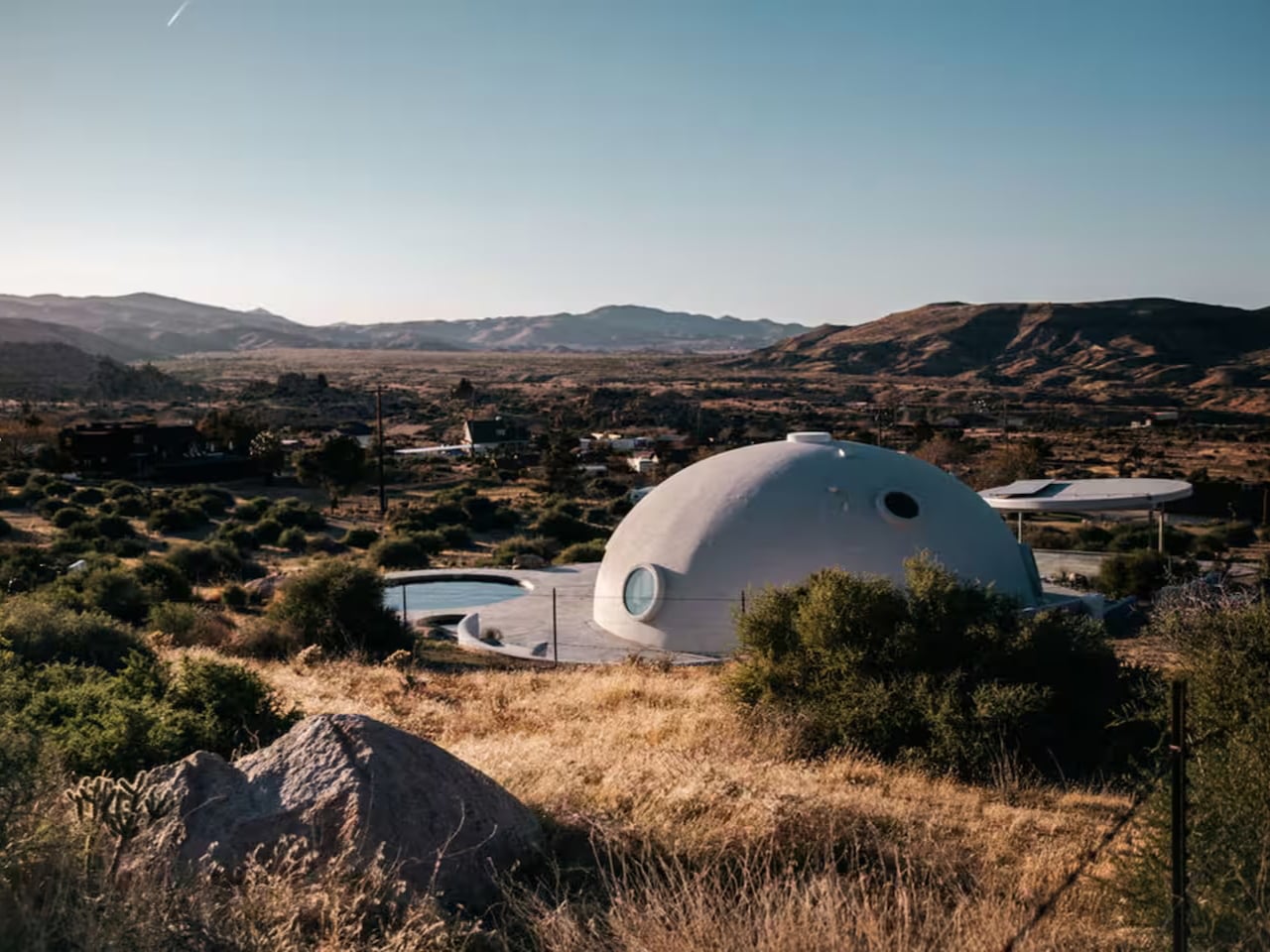
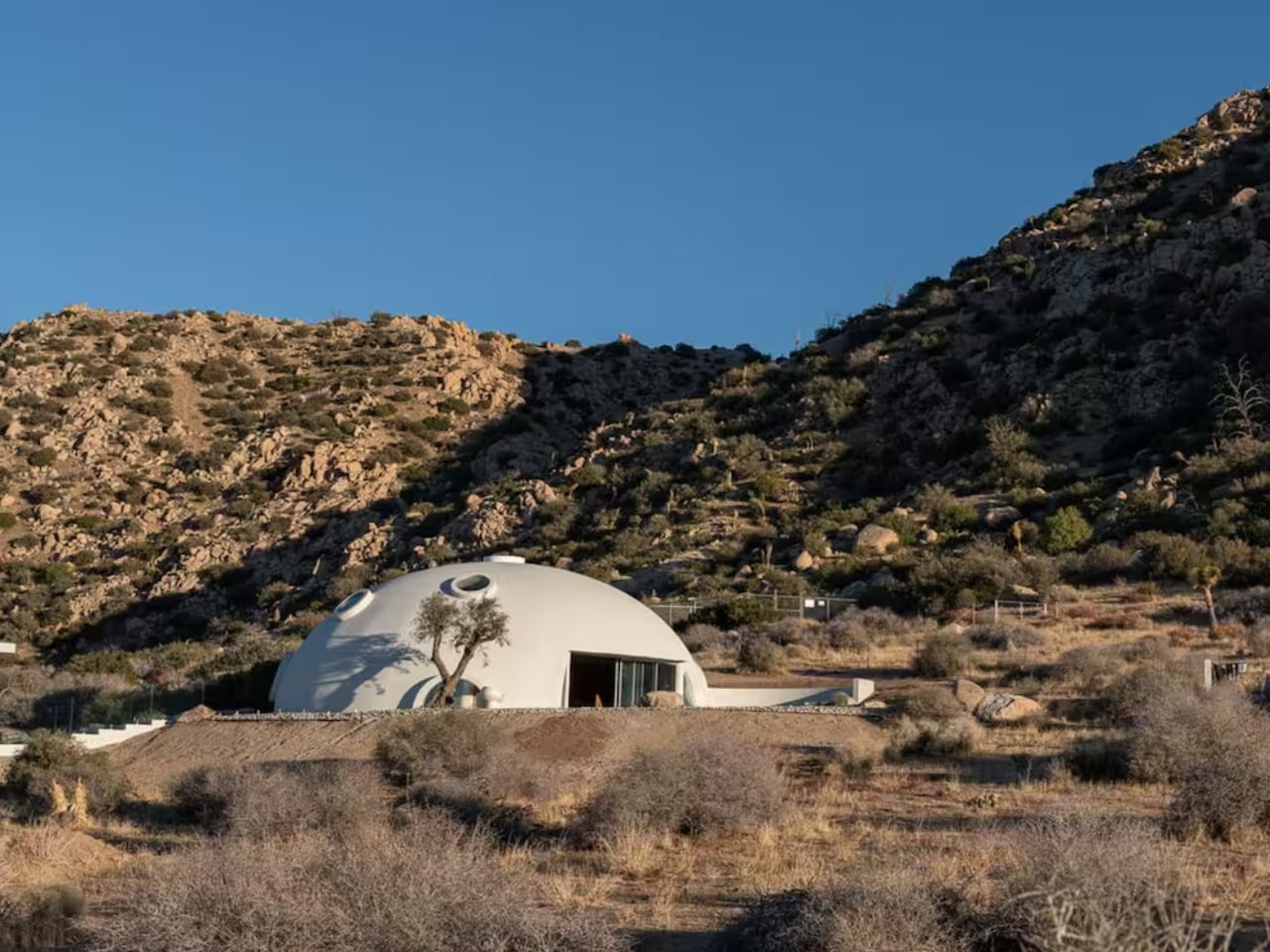
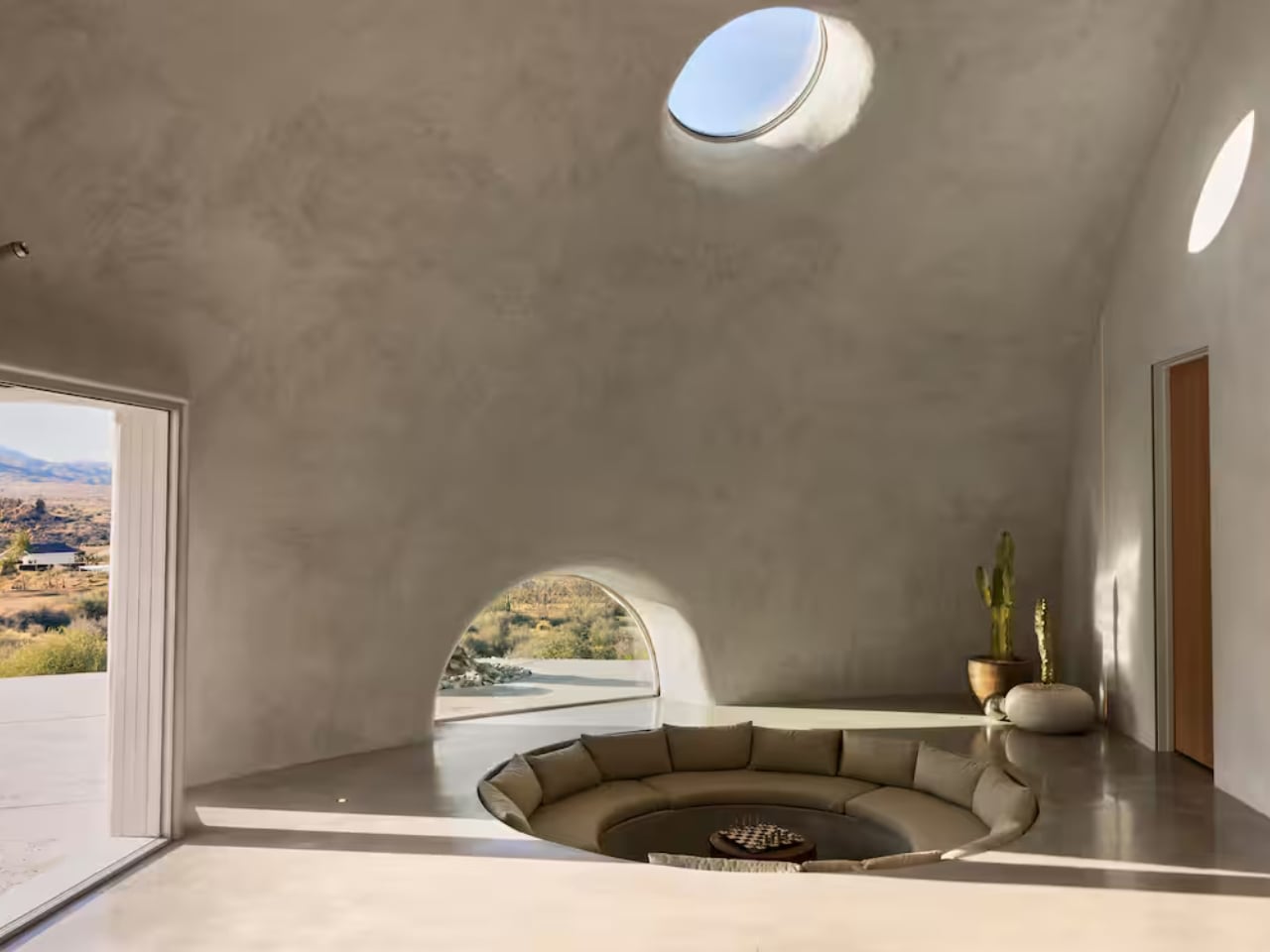
The HATA Dome was designed and built single-handedly by Anastasiya Dudik, guided by a “future primitive” philosophy that blended ancient building logic with contemporary thinking. Constructed using concrete, rebar, and shotcrete, the dome prioritised durability, fire resistance, and seismic safety while naturally regulating temperature through passive thermal mass. Inside, soaring ceilings, soft natural light, and sculpted interiors created a calm, immersive refuge. Both raw and refined, the dome functioned not just as an architectural statement but as a liveable, sustainable shelter or one that could be experienced firsthand as a desert escape.
4. Orchestrating the Ephemeral Glow
Lighting within a dome is less about fixtures and more about control. The curved surface naturally redistributes light, allowing illumination to be indirect, layered, and calm. By keeping sources discreet and concealed, light appears to emerge from the architecture itself rather than from visible hardware.
This method reinforces the purity of the form. Shadows soften, edges dissolve, and the space feels continuous rather than segmented. Light becomes a guiding force, shaping movement and mood without drawing attention to its origin. At night, the dome reads as a quiet, expansive enclosure—intimate, protective, and atmospherically balanced, where illumination supports presence rather than spectacle.
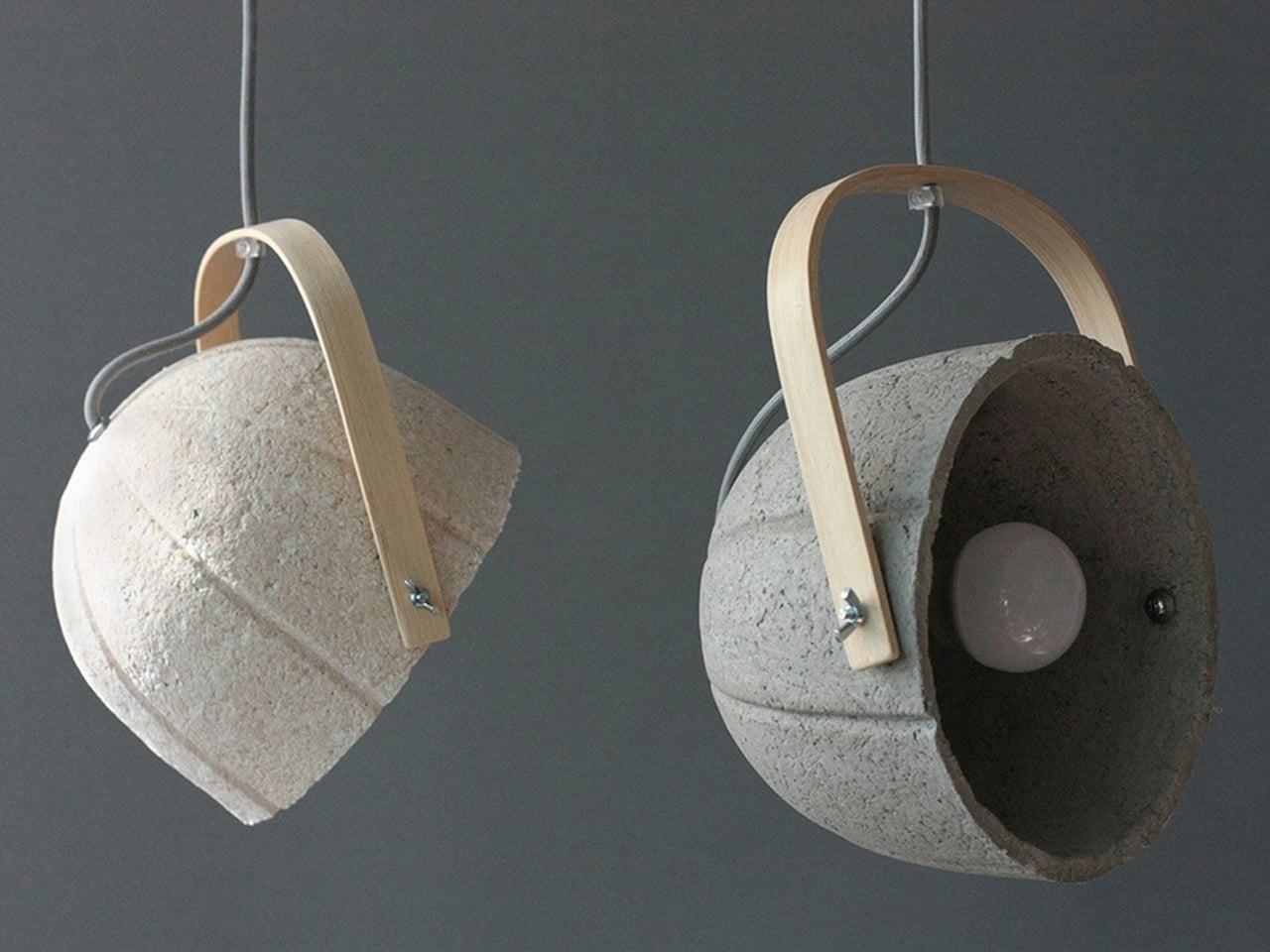
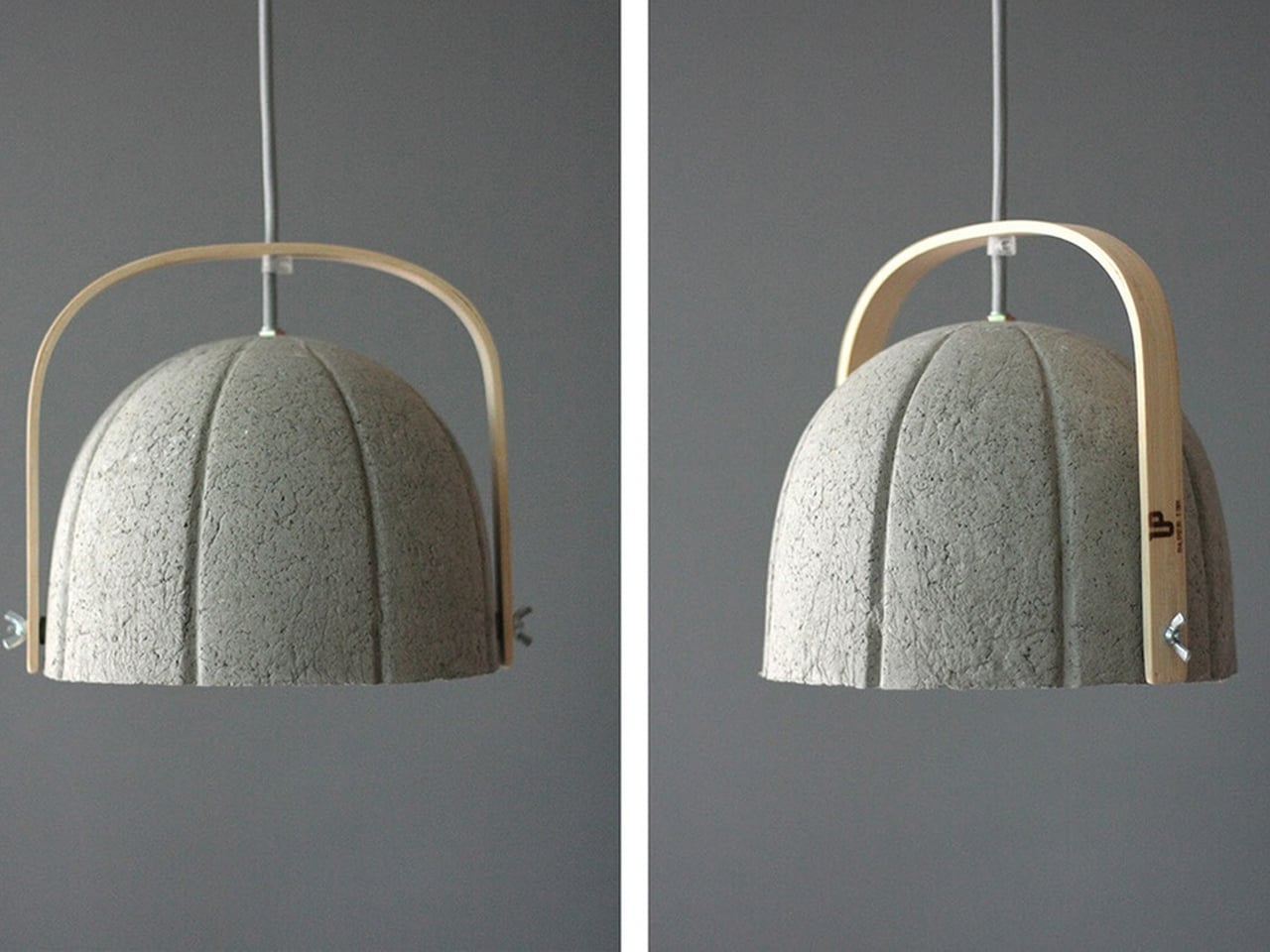
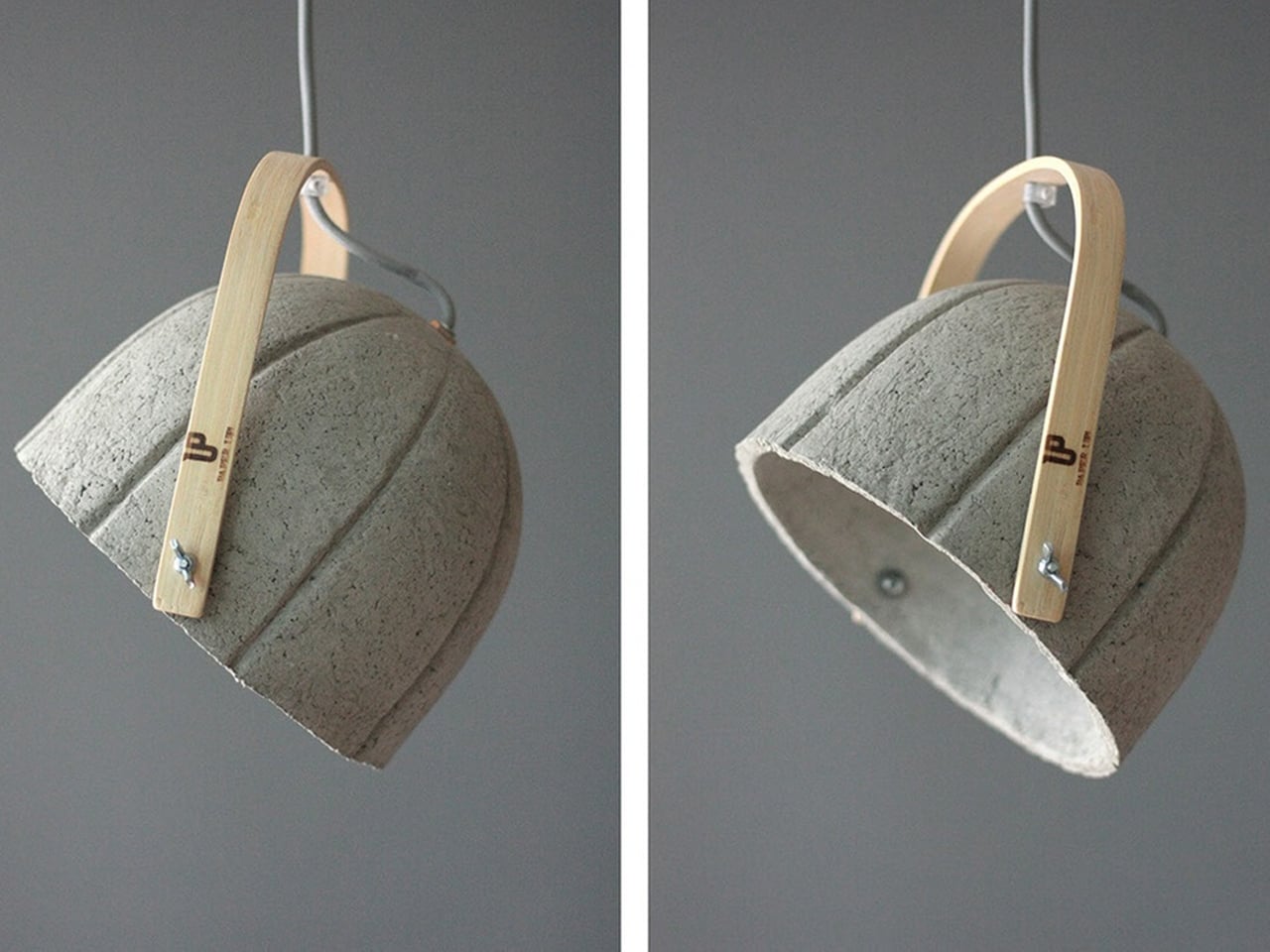
At first glance, the Dome lamp’s domical form draws you in with its quiet strength and sculptural presence. Shaped like a small architectural dome, the design feels grounded and balanced, transforming the lamp from a simple lighting object into a statement piece inspired by structural forms found in buildings.
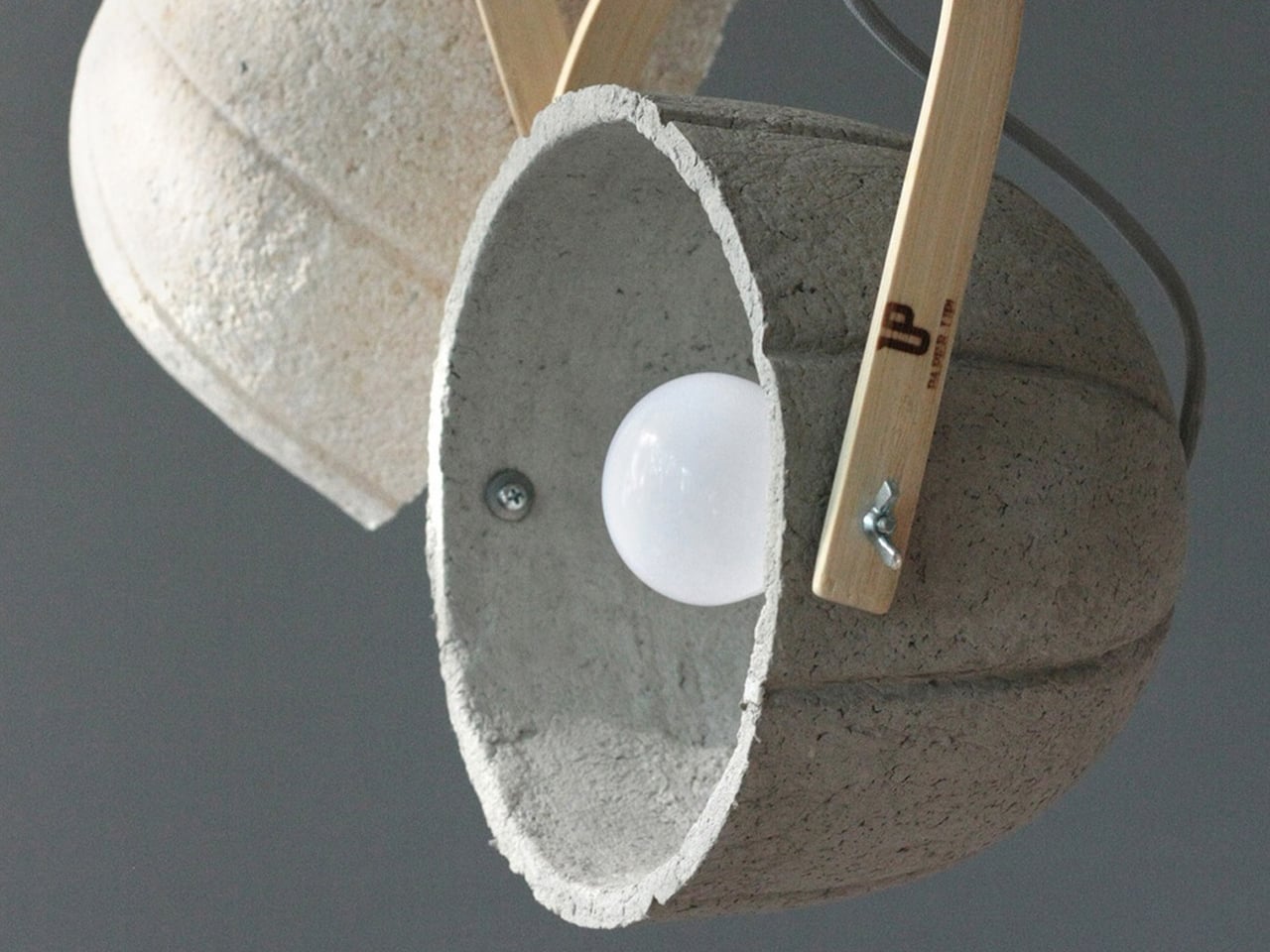
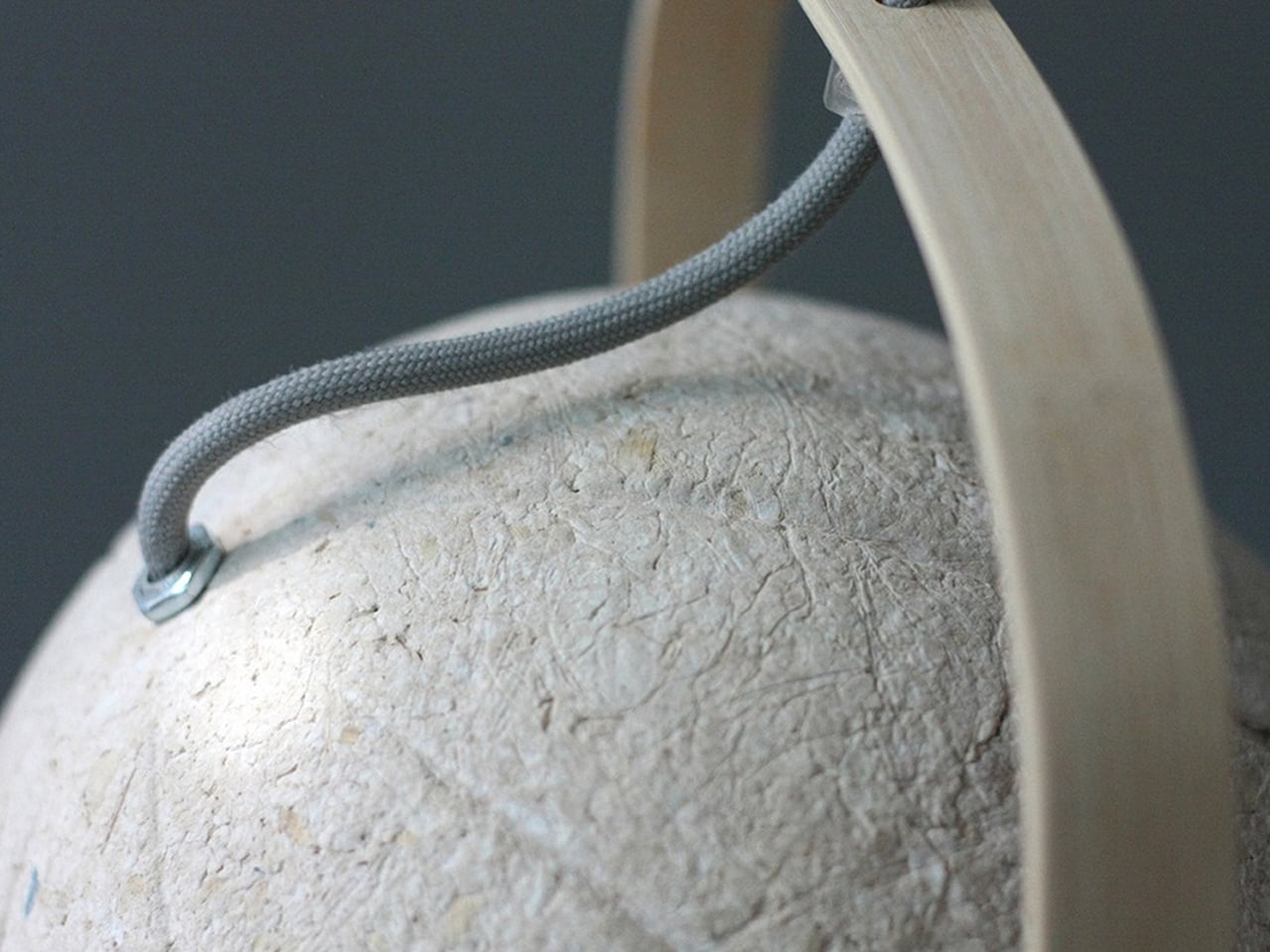
The curved silhouette is paired with a bent bamboo strap that visually echoes the dome’s softness while adding warmth and contrast. Together, the rounded shade and flowing strap create a harmonious composition, where even the wire follows the curve, reinforcing the lamp’s cohesive, domed design language.
5. Biospheric Urban Farming
Urban agriculture finds a powerful ally in dome design. As cities move toward localized food systems, these biospheric structures offer a highly efficient growing environment. Their inherent thermal performance supports year-round cultivation, while the height-to-width ratio naturally accommodates vertical farming maximizing yield per square meter and reducing the carbon footprint of food production.
Beyond productivity, these agricultural domes act as biophilic anchors within dense urban fabric. They reconnect built form with landscape, reintroducing nature into the city core. Lightweight ETFE panel systems ensure optimal light transmission and climate control, allowing the interior to function as a resilient ecosystem delivering long-term value through food security, education, and improved community health.
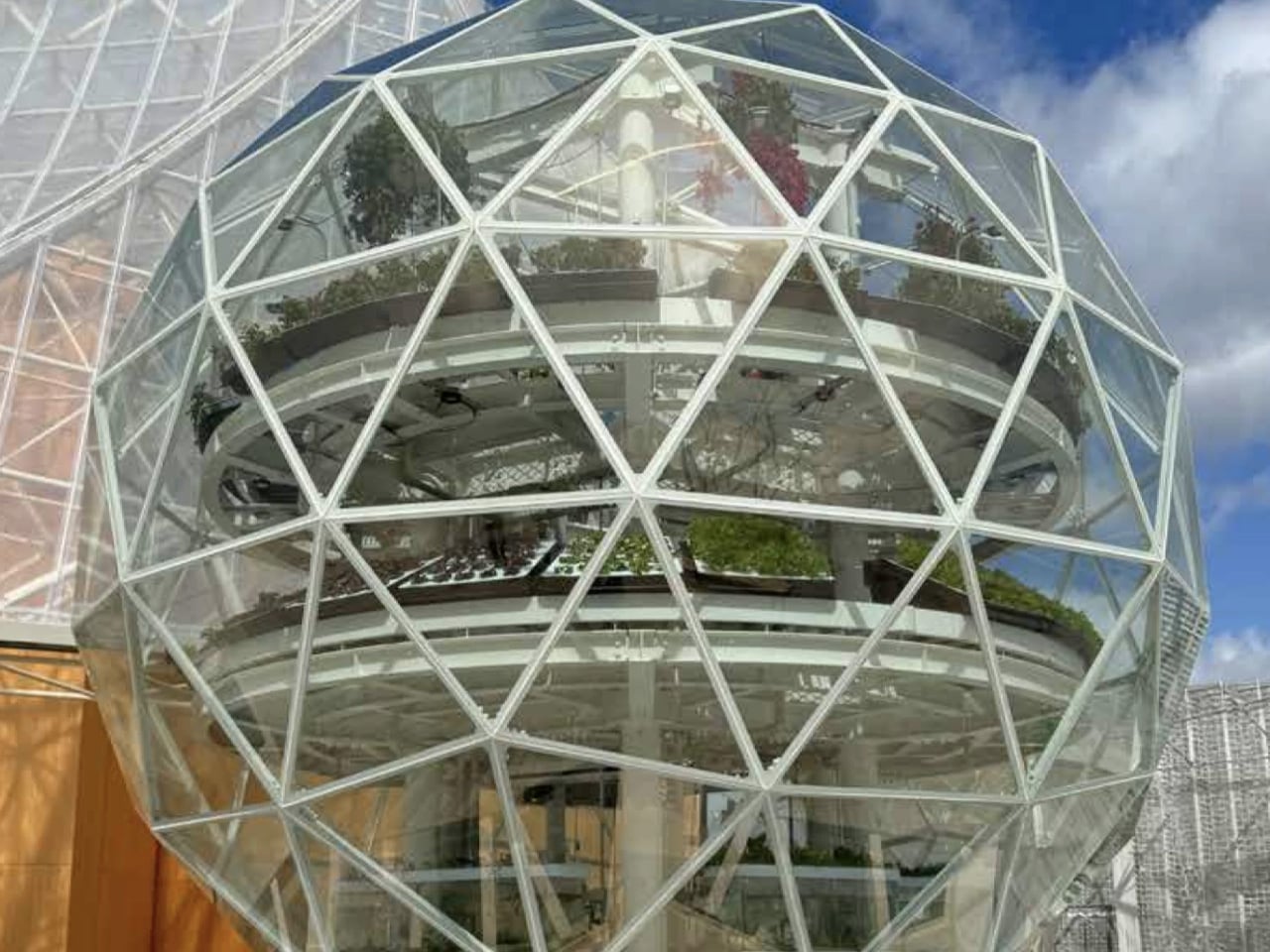
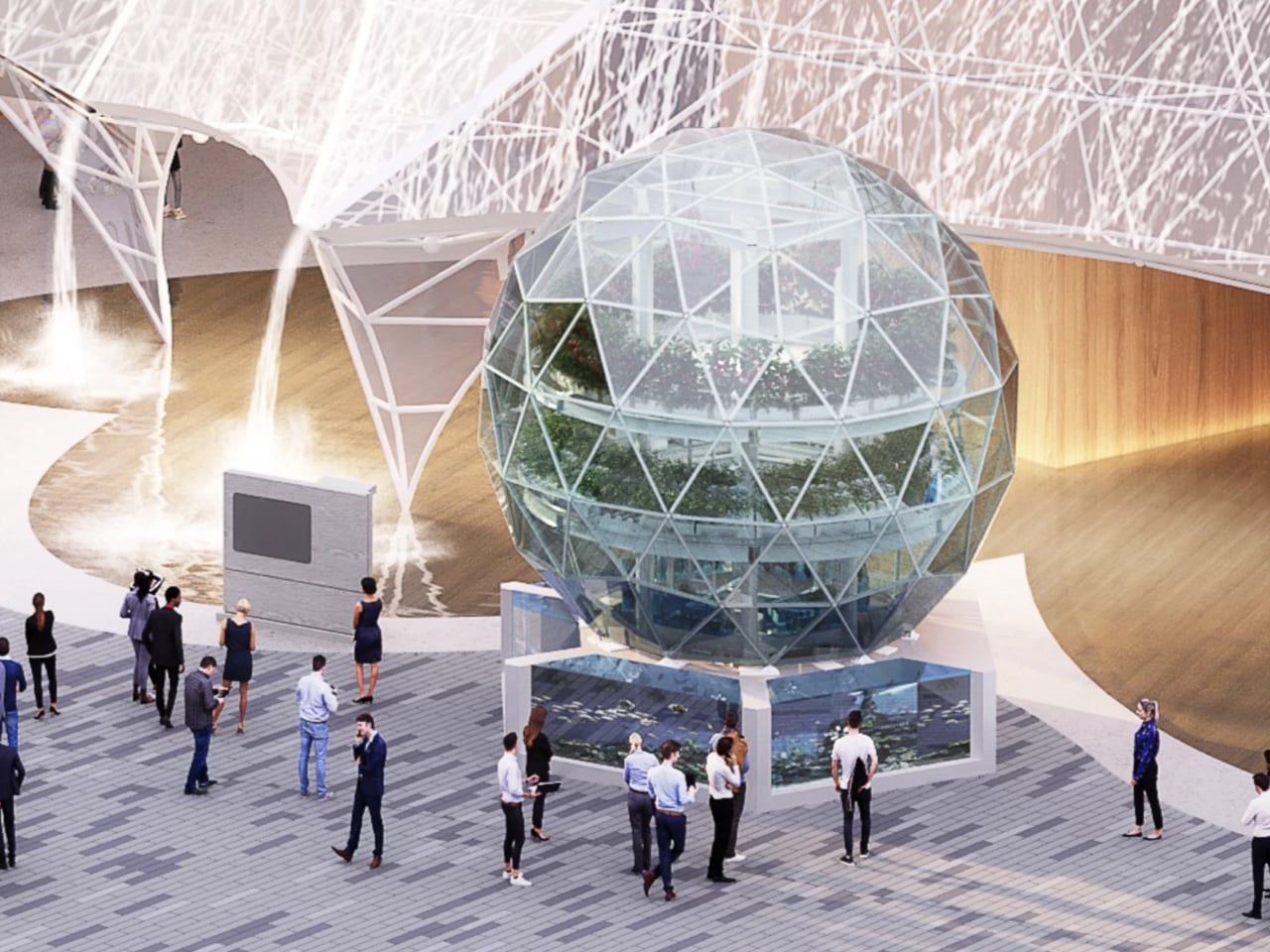
At Expo 2025, the Osaka Health Pavilion hosted Inochi no Izumi, or Source of Life, a translucent, 21-foot-high dome that reimagined urban food systems. Inside, aquatic life and plants coexisted in a vertically stacked ecosystem, with fish swimming below and crops growing above. Four water zones including seawater, brackish water, and two freshwater layers supported different species, each paired with hydroponic plants suited to its conditions, forming parallel ecosystems within a single compact structure.
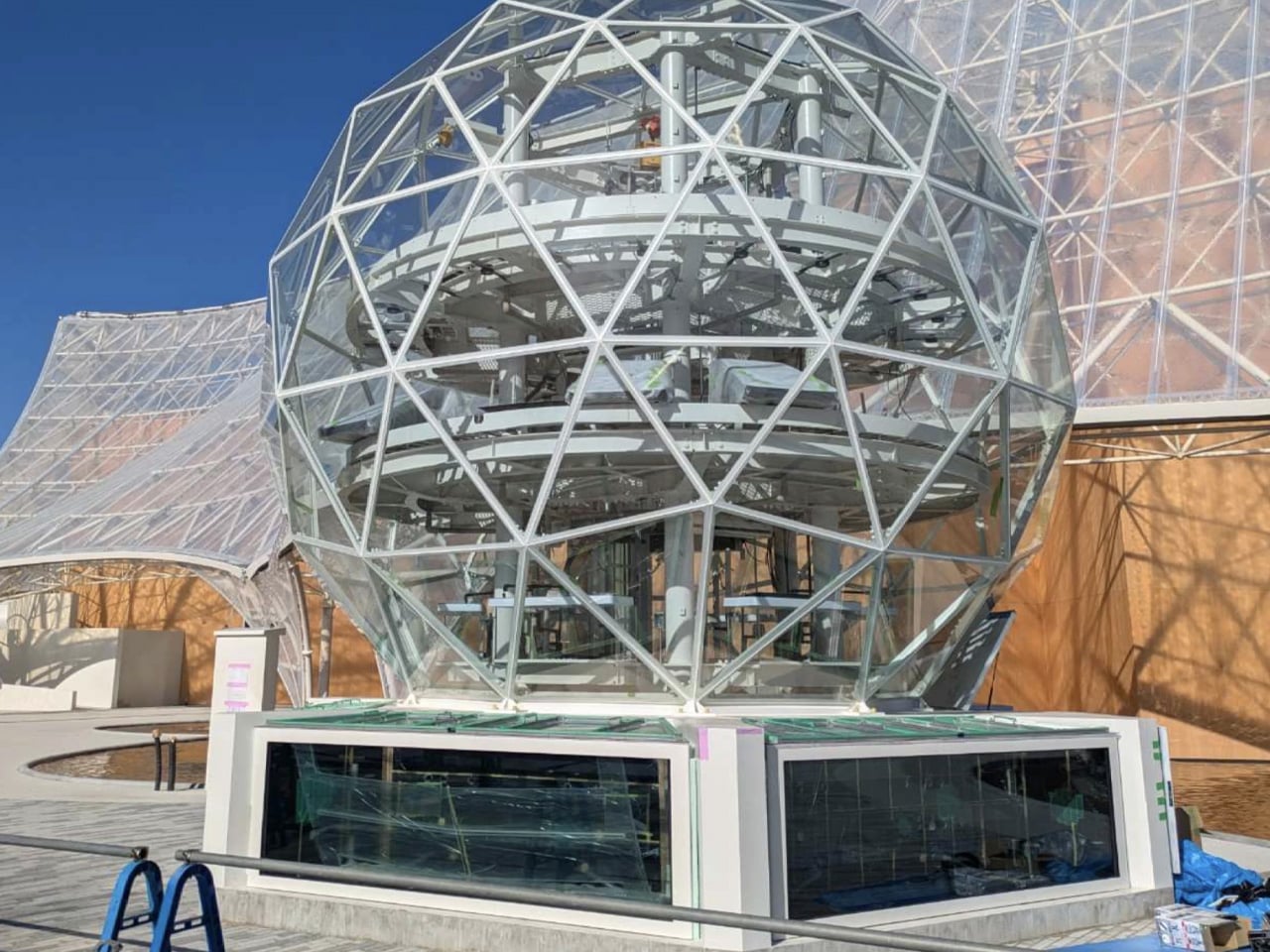
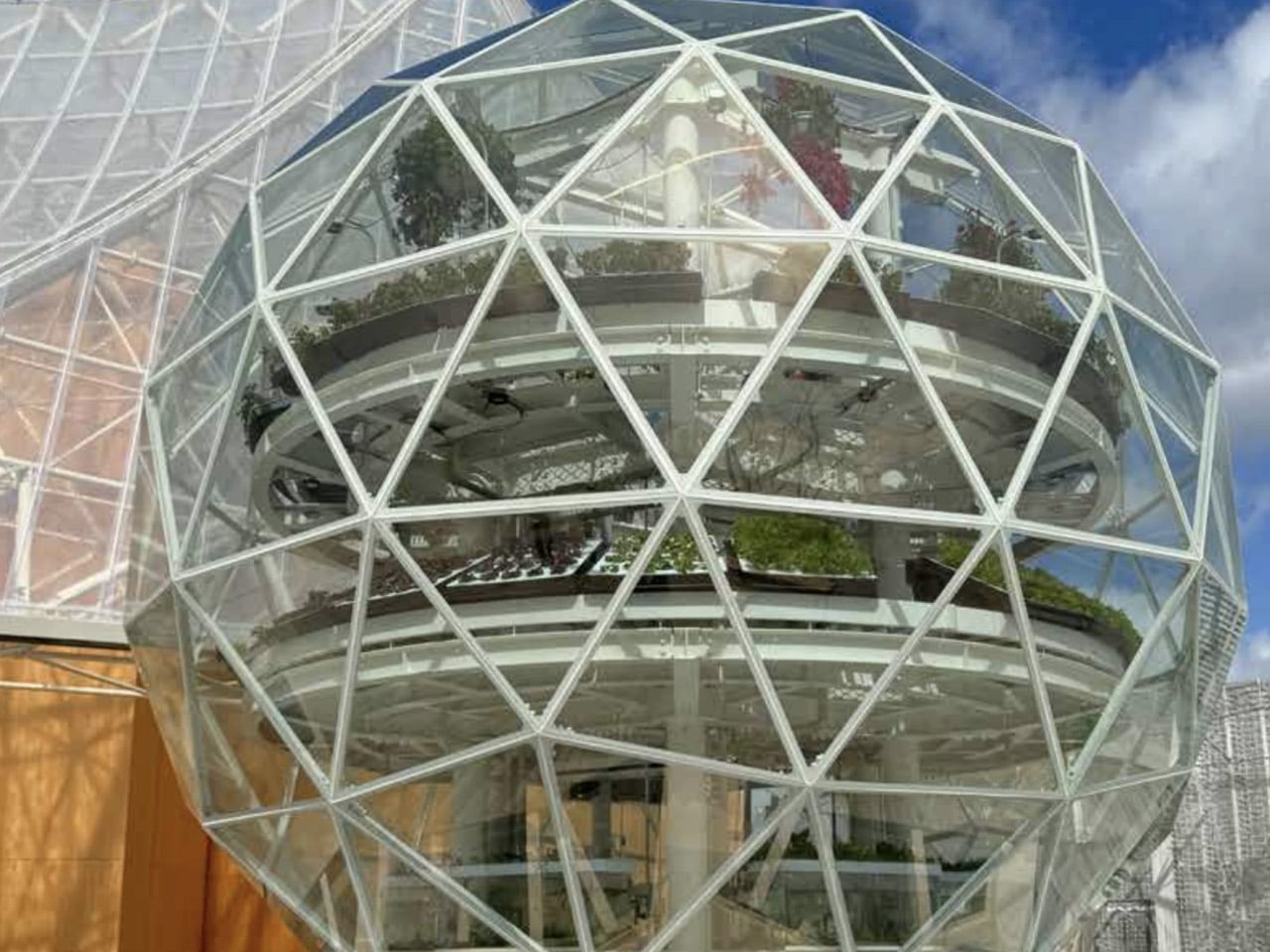
The system operated on a closed-loop aquaponic cycle. Fish waste was naturally converted into nutrients that fed the plants, which in turn returned purified water to the tanks below. Nothing was wasted and nothing left the dome. Enclosed within a lightweight geodesic shell designed to maximise sunlight and maintain a stable microclimate, the structure demonstrated how ecological intelligence and space-efficient design could work together.
Ultimately, the dome endures because it unites logic with feeling. Its geometry delivers resilience, efficiency, and longevity, while its form evokes calm and wonder.
SHARE