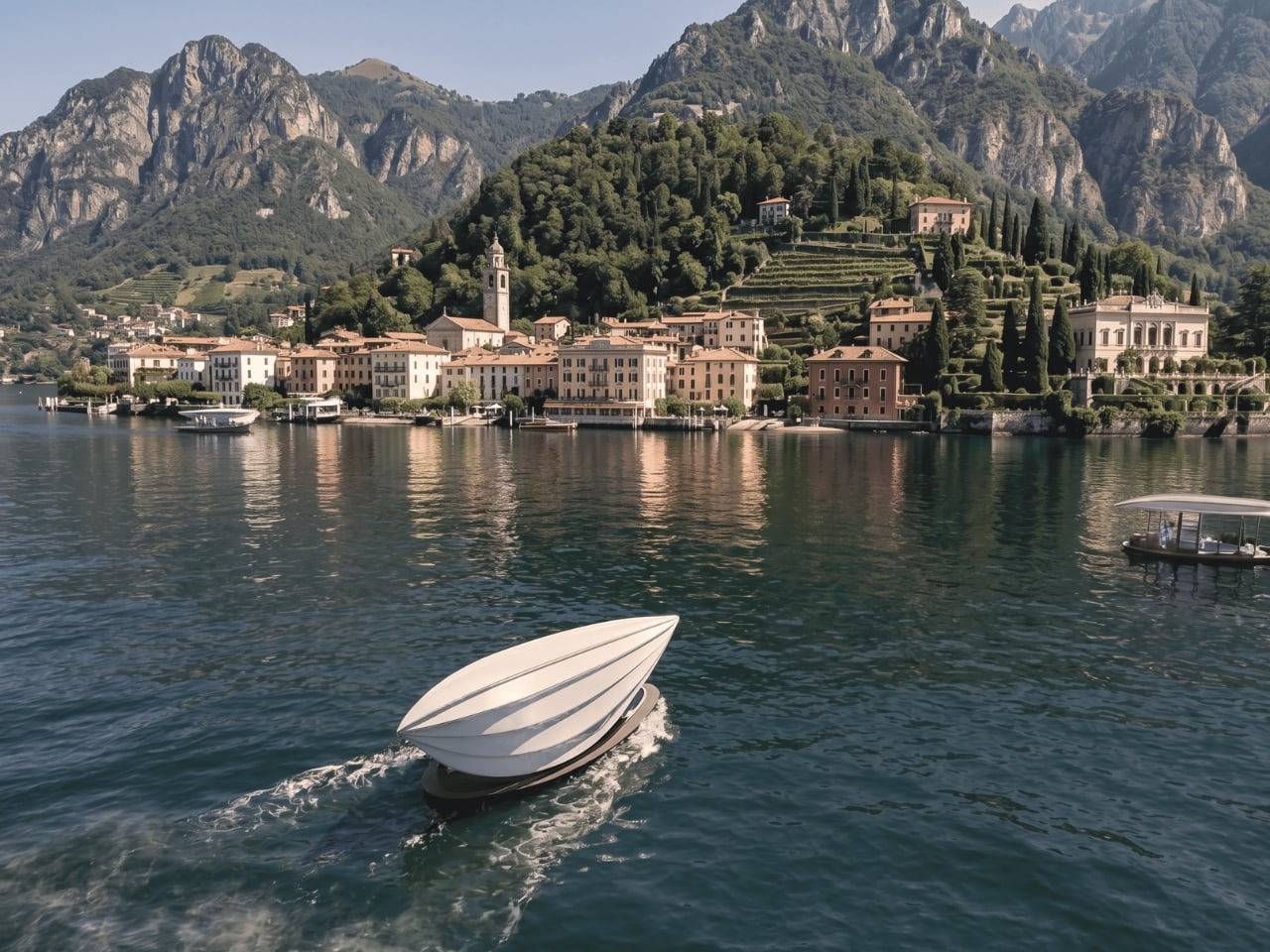
When I first saw images of Lucia floating across the glassy surface of Lake Como, I thought someone had photoshopped a Giorgio Armani showroom onto a boat. The structure is white, impossibly clean, and moves across the water like it belongs there. Which, technically, it does.
Lucia is the brainchild of uau studio, a concept micro-home designed to drift across one of Italy’s most storied lakes. The name, the setting, the whole premise feels almost too cinematic to be real. But the more you look at it, the more you realize this isn’t just a pretty render. It’s a genuine rethinking of what a home can be and where it can go, and it deserves a moment more than the usual scroll-and-double-tap.
Designer: uau studio
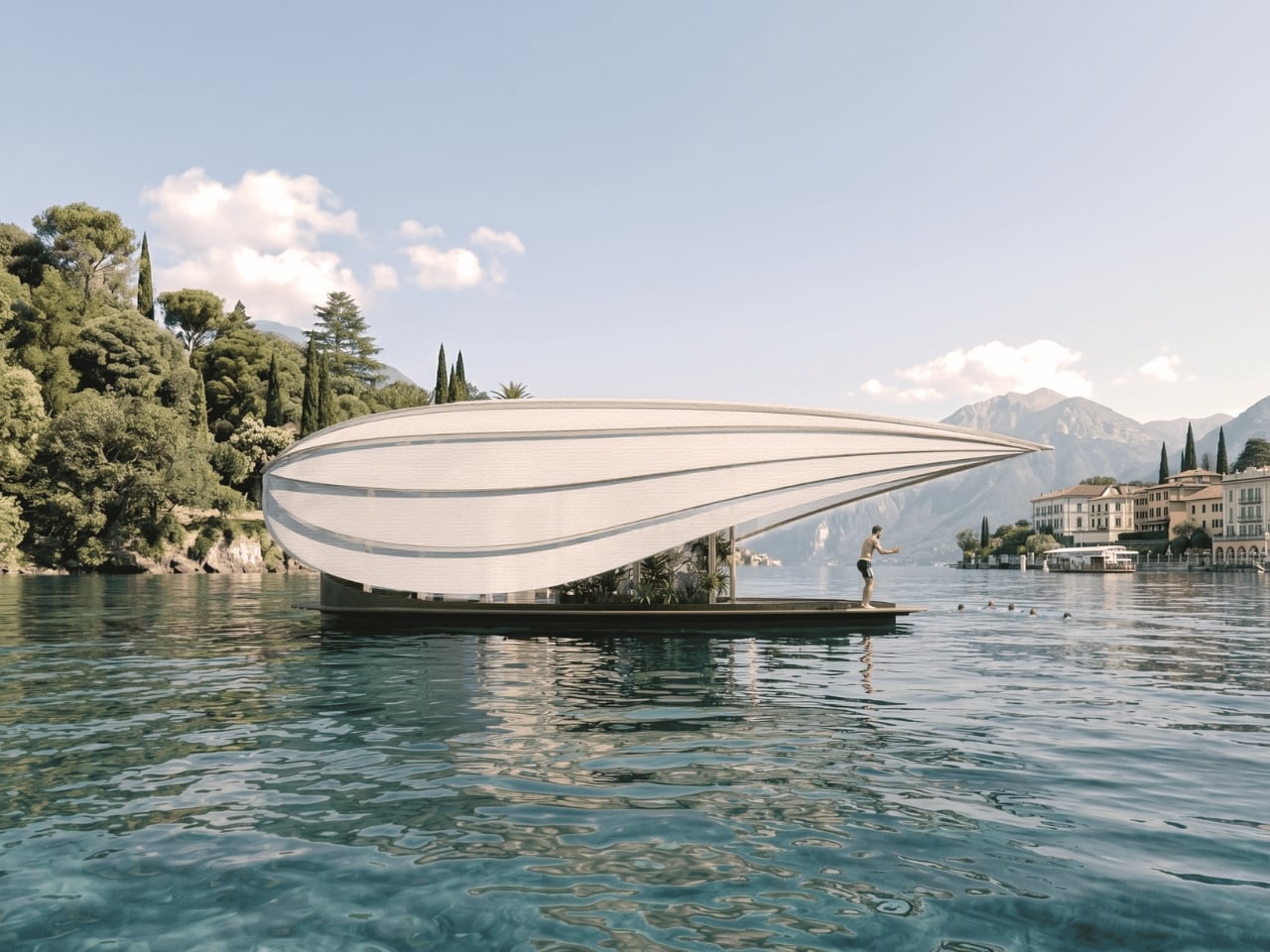
The design draws its soul from the batèl, a traditional flat-bottomed fishing vessel that appears in Alessandro Manzoni’s 19th-century novel The Betrothed. For anyone who didn’t have to read it in school, Manzoni’s book is essentially the Italian equivalent of a national literary treasure. That detail alone gives Lucia a kind of cultural weight that most micro-homes simply don’t carry. uau studio isn’t just designing a floating box. They’re threading it into a centuries-old relationship between the people of Lake Como and the water they live beside. That’s a different kind of ambition, and it shows.
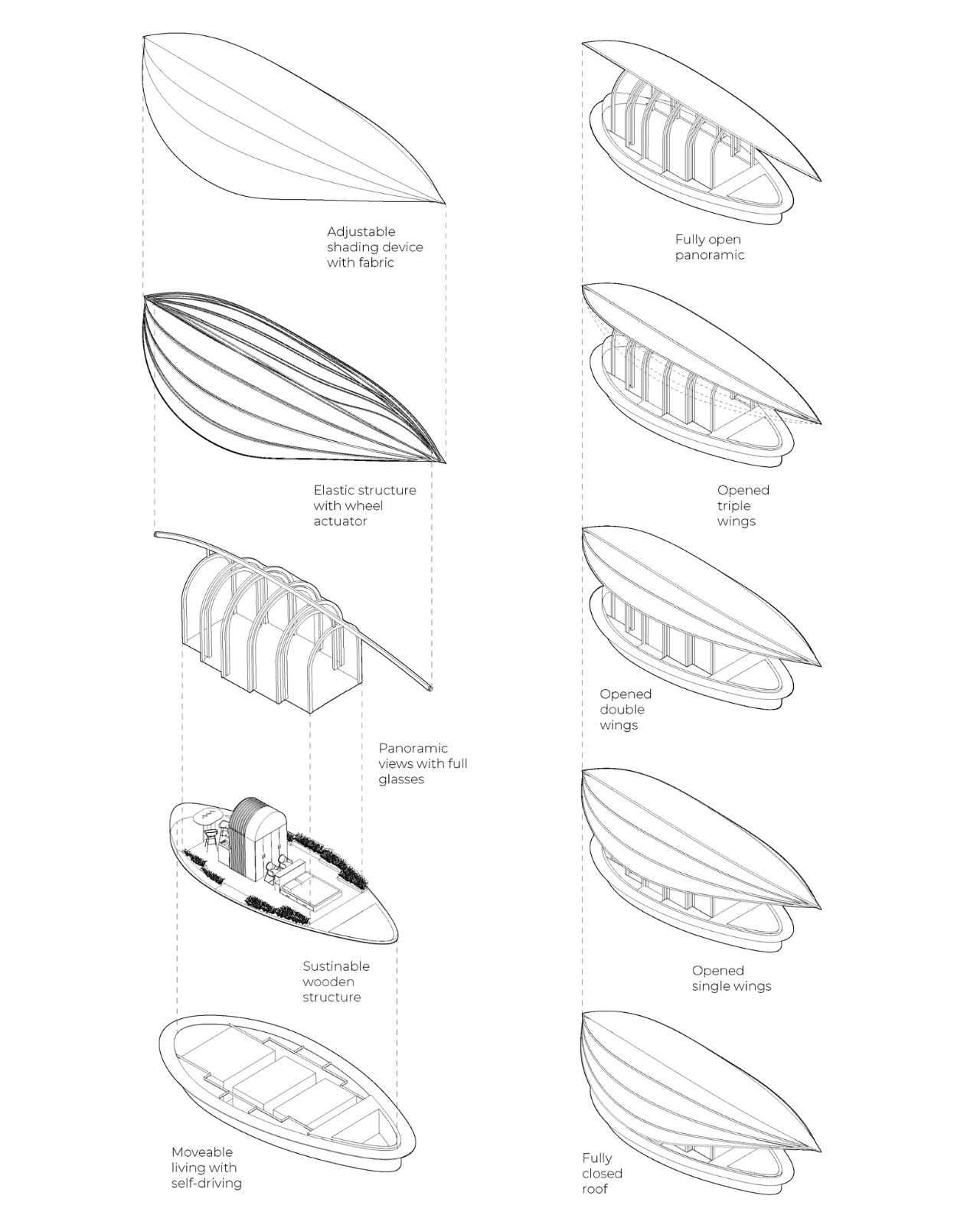
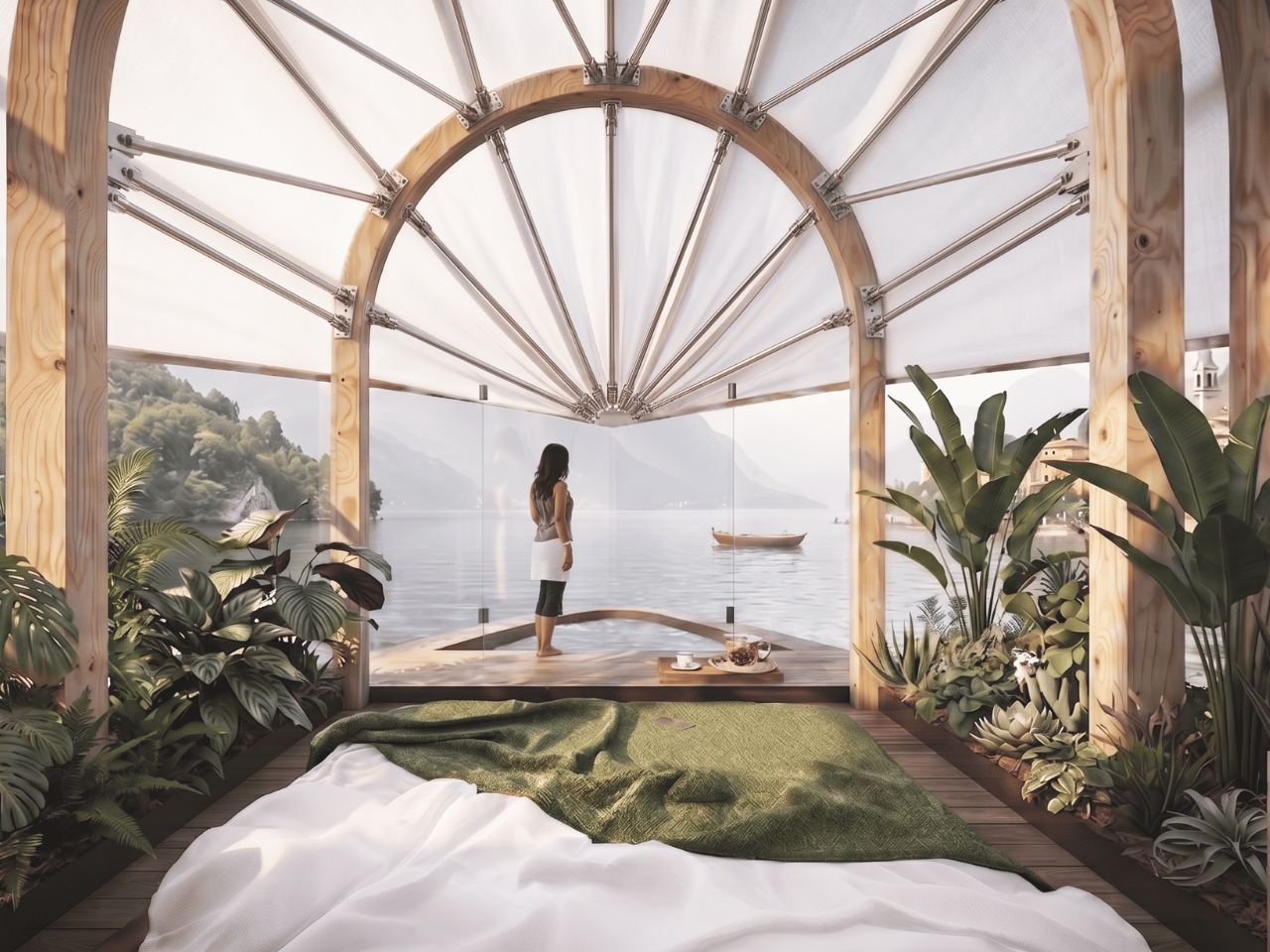
The signature feature is a foldable canopy roof that opens and closes depending on how much of the lake you want to let in. Fully open, the interior feels like an extension of the water itself. Closed, it becomes a more private, sheltered space, quieter and more contained. That flexibility matters more than you might think. Living on a lake means negotiating between exposure and enclosure constantly, and Lucia gives you full control over that tension without asking you to compromise on either.
The interior is single-floor, fully accessible, and built around modular, multifunctional furniture that can be reconfigured depending on how you’re using the space. It’s compact by design, not by compromise. uau studio was deliberate about this: nothing is wasted, nothing is redundant, and the materials prioritize reuse over novelty. For a project set against one of the most photographed backdrops in Europe, that kind of restraint is actually a design statement in itself.
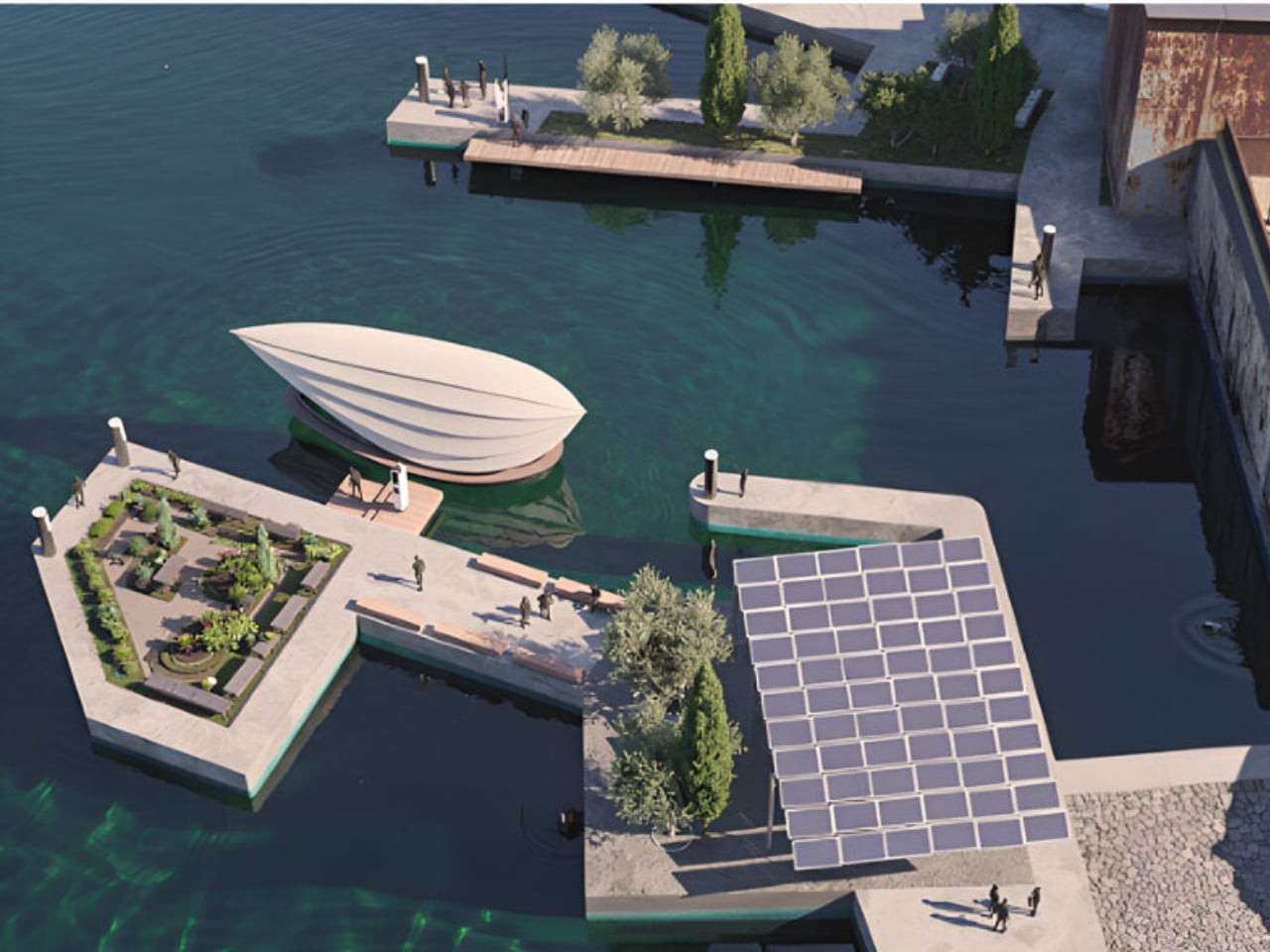
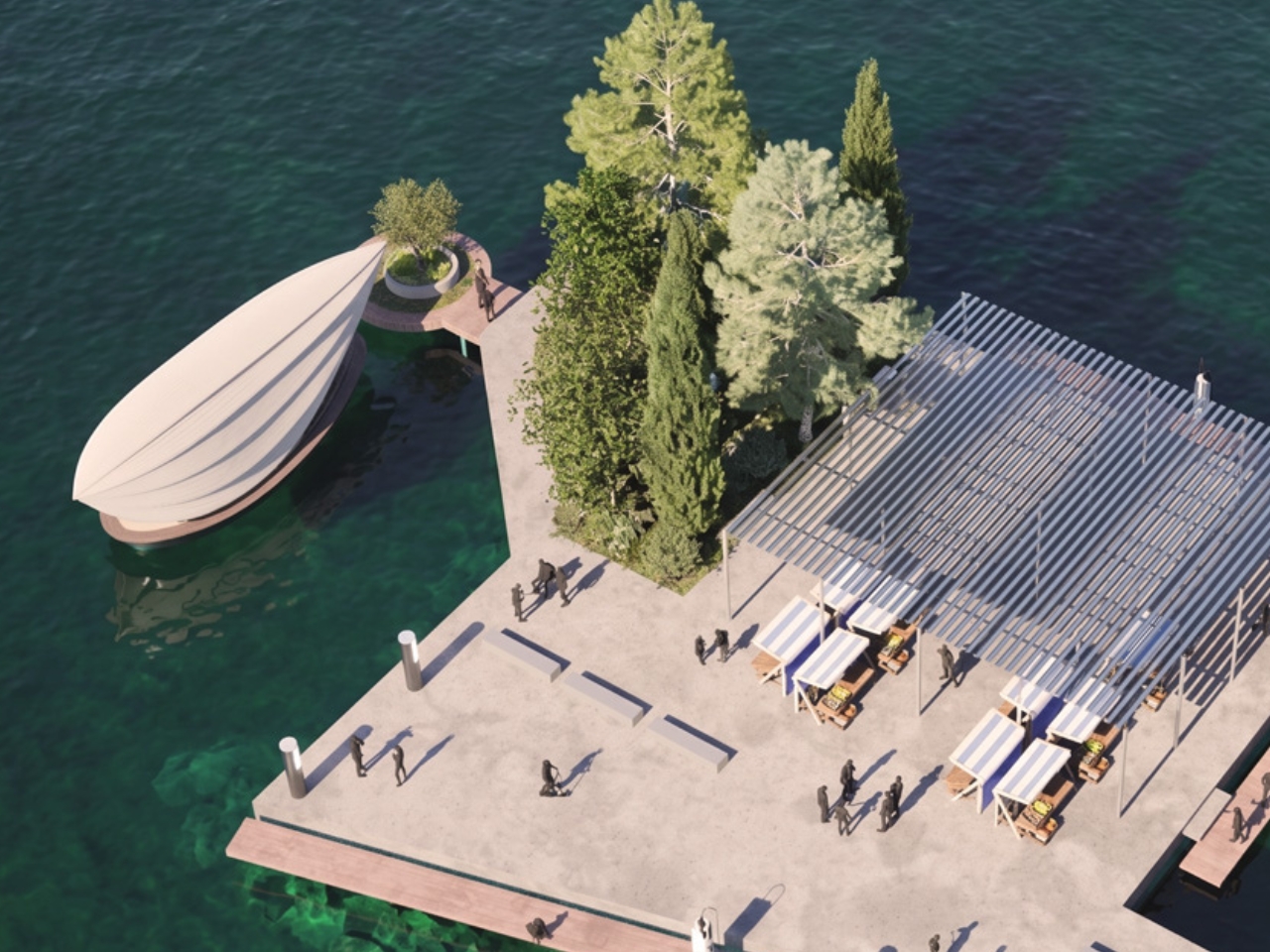
Lucia also plugs into what the studio calls Darsena Link, a network of solar-powered docking hubs around the lake that would support the vessel’s movement and keep it charged. The infrastructure isn’t an afterthought. It’s part of the concept. You can wake up anchored at one point on the lake and, by afternoon, quietly motor to another. The house follows you, or you follow it.
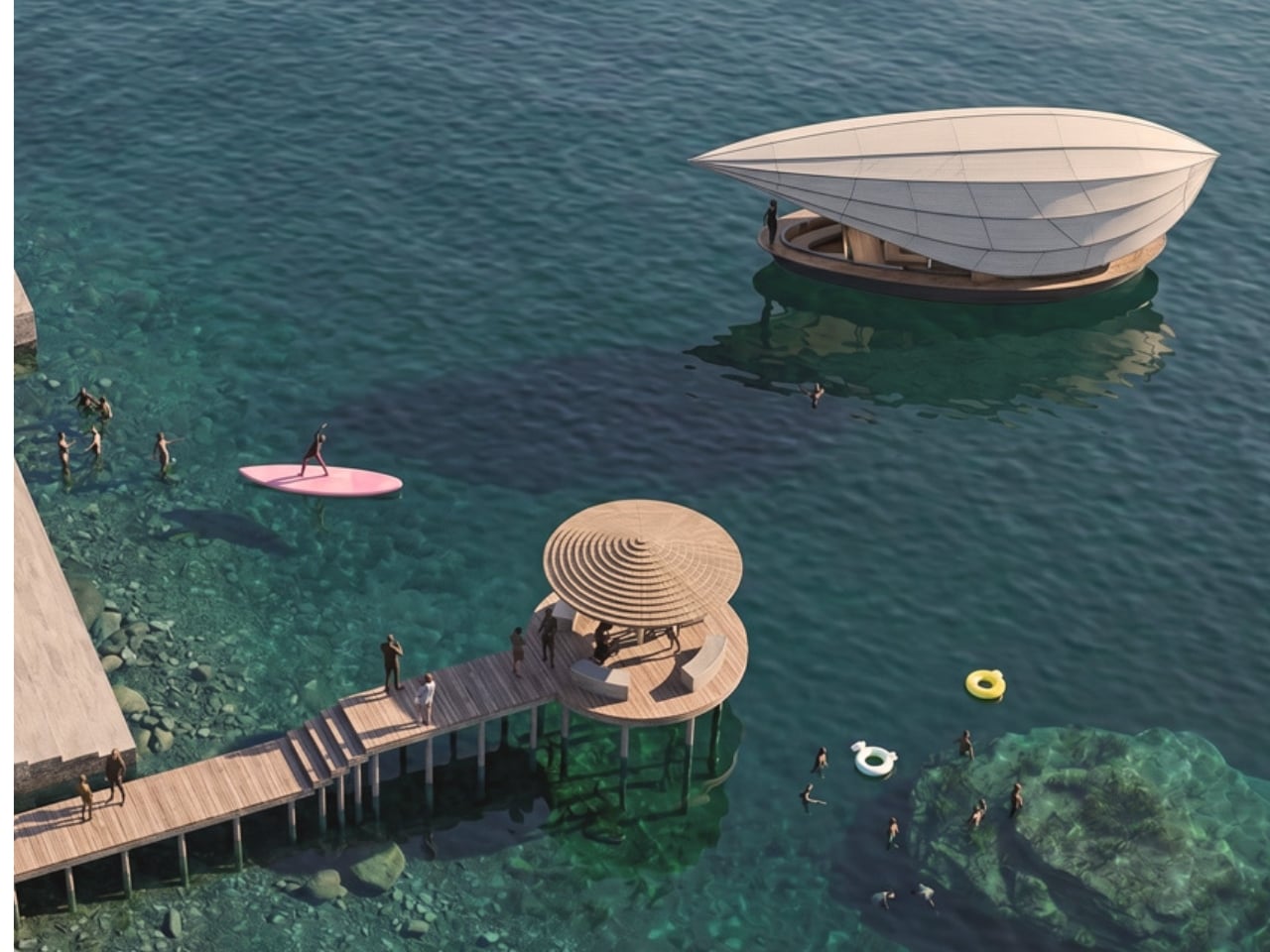
I’ll be transparent: Lucia is still a concept, not something you can book or buy today. But I think that’s exactly what makes it worth paying attention to right now. It represents a direction more designers and architects should be exploring. The tiny home movement has largely been a land-based conversation, with the water version mostly limited to houseboats that feel more nautical than architectural. Lucia doesn’t feel like a boat trying to be a house. It feels like a house that happens to float, and that distinction is more meaningful than it sounds.
The project also positions itself as a kind of social connector on the lake, what uau studio calls a “pollinator,” meant to move through different communities, bring people into contact with corners of the lake they might not otherwise reach, and revive its cultural fabric for a younger generation. Whether that vision scales beyond the concept stage or stays beautifully poetic is still an open question. But the intention gives the project a dimension that stretches well beyond aesthetics.
Lake Como already has villas, yachts, and Grand Hotel terraces competing for your attention. Lucia proposes something quieter: a life on the water that is small, considered, and genuinely mobile. Not every home needs to be rooted to the ground. Some of the best ones, apparently, simply drift.
SHARE