A coffee table can be plenty big and still have nowhere to set down a drink. Give it a remote, a paperback, and the mail you swear you’re going to open, and the usable surface starts to shrink. I like a living room with some evidence that people actually live there. I also like being able to put down a glass without first moving three things.
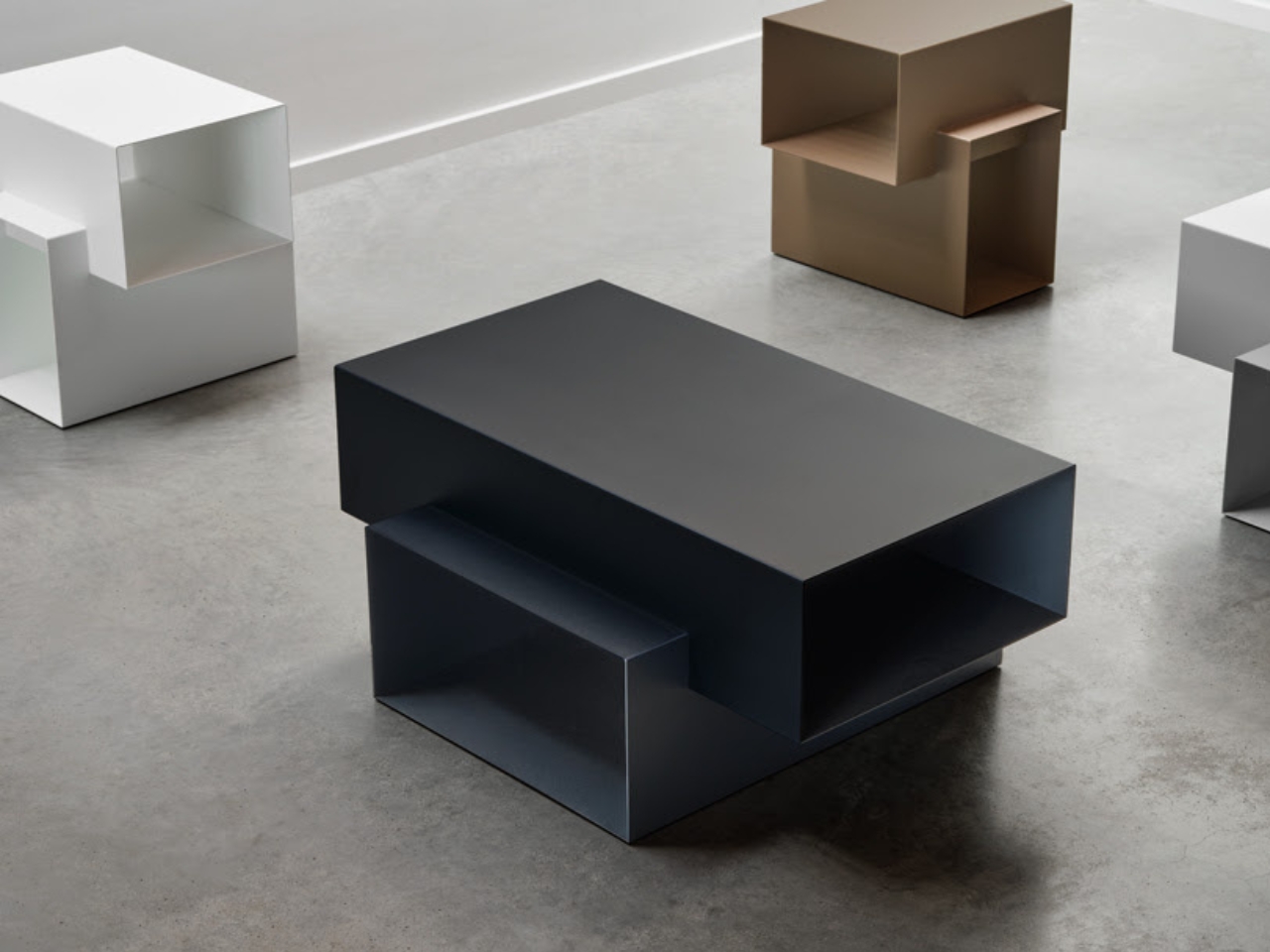
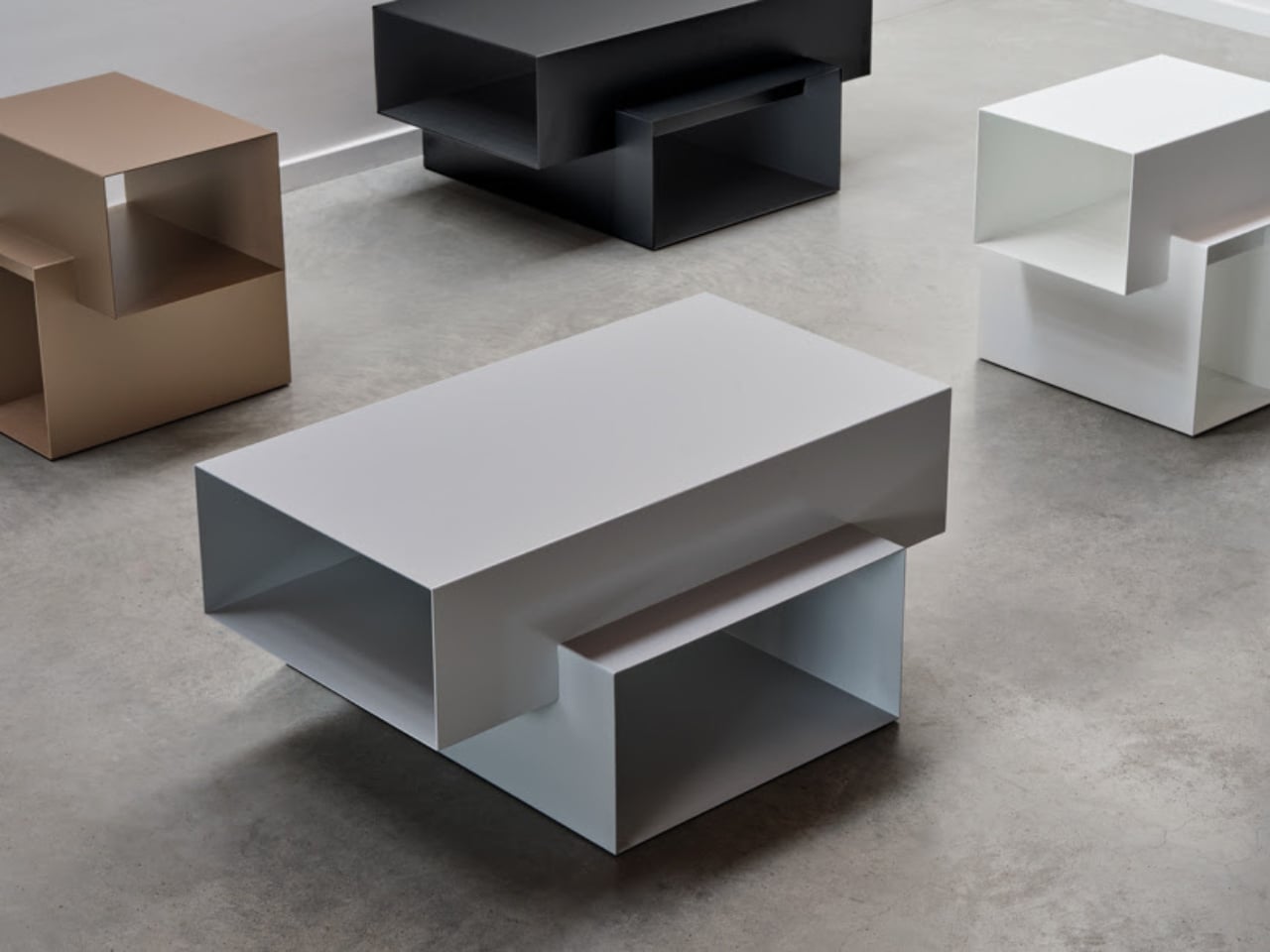
Frederik Roijé’s Building Blocks tables make room for both habits. Available as a coffee table and a side table, the design gives books, magazines, and other small things a place to go without asking you to clear them out of the room. The storage is open and built into the body of the table. A book can slide out of the way between chapters, and the top is free for a drink or whatever you actually want on display.
Designer: Frederik Roijé
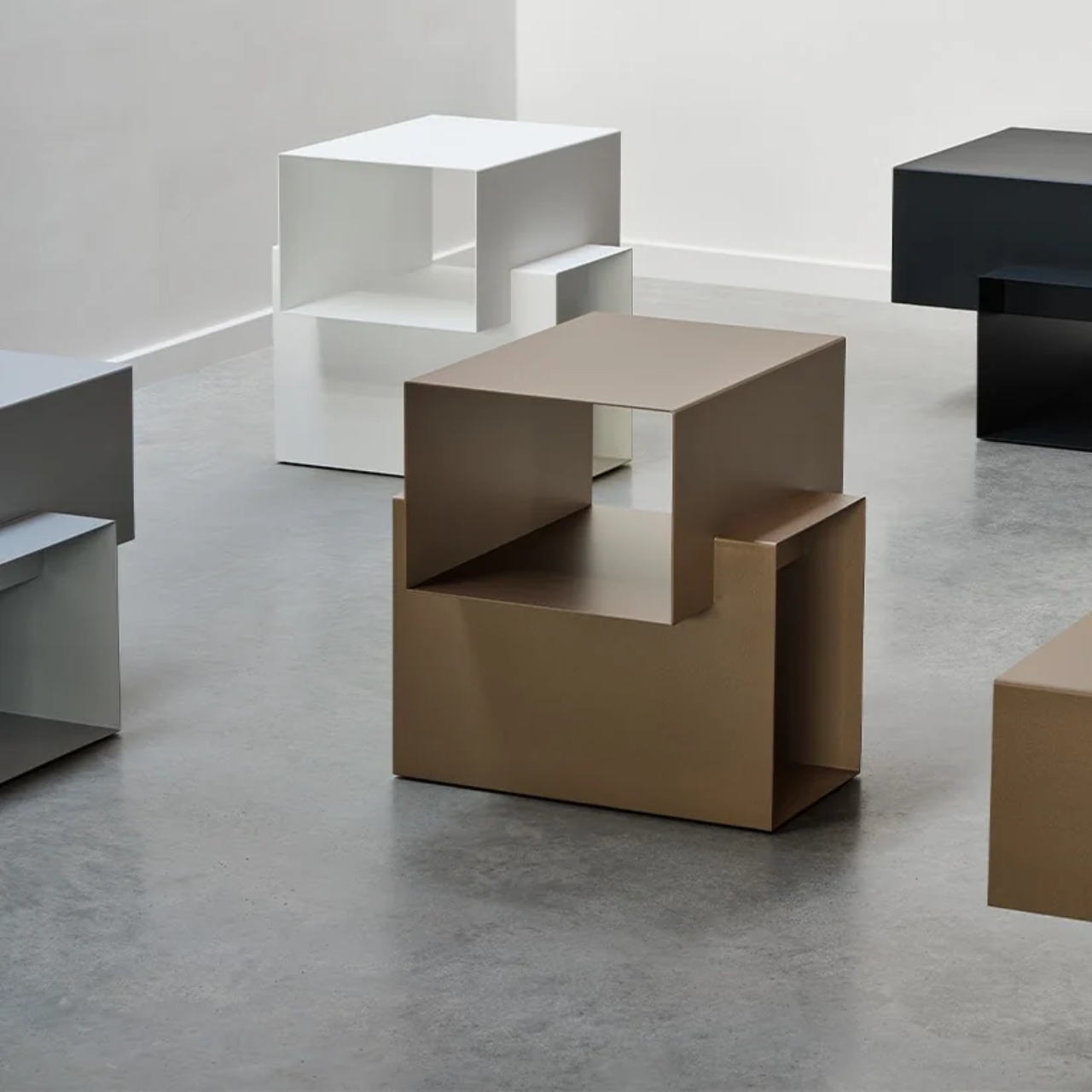
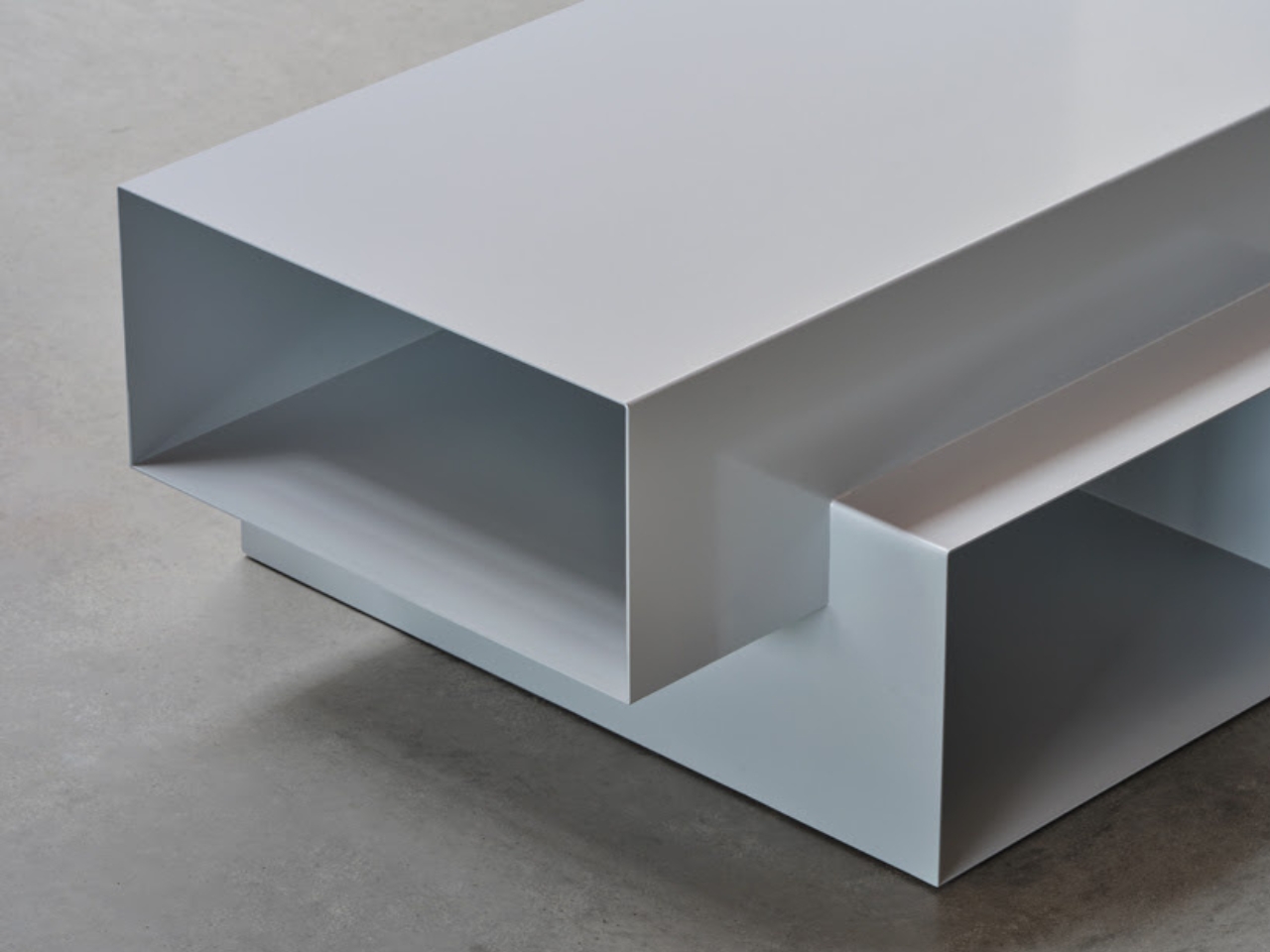
The name suggests solid blocks, which is part of the joke. Each table is made from two hollow rectangular forms that slot together at right angles. Roijé’s studio says the interlocking construction provides enough stability to use relatively thin sheet steel. You can see that thinness at the lip of each opening, even though the big, uninterrupted faces give the piece the presence of something much more massive. The tables are made in the Netherlands from powder-coated steel.
The coffee table shows off the trick especially well. In one photo, the longer upper form seems to hang over its base. Follow its edge around the corner and that apparent slab turns out to have a hollow end. The lower opening faces a different direction, so the whole thing looks more solid or more porous depending on where you’re standing. It reminds me of an architectural model, where a deep window can tell you more about a building than its entire front wall.
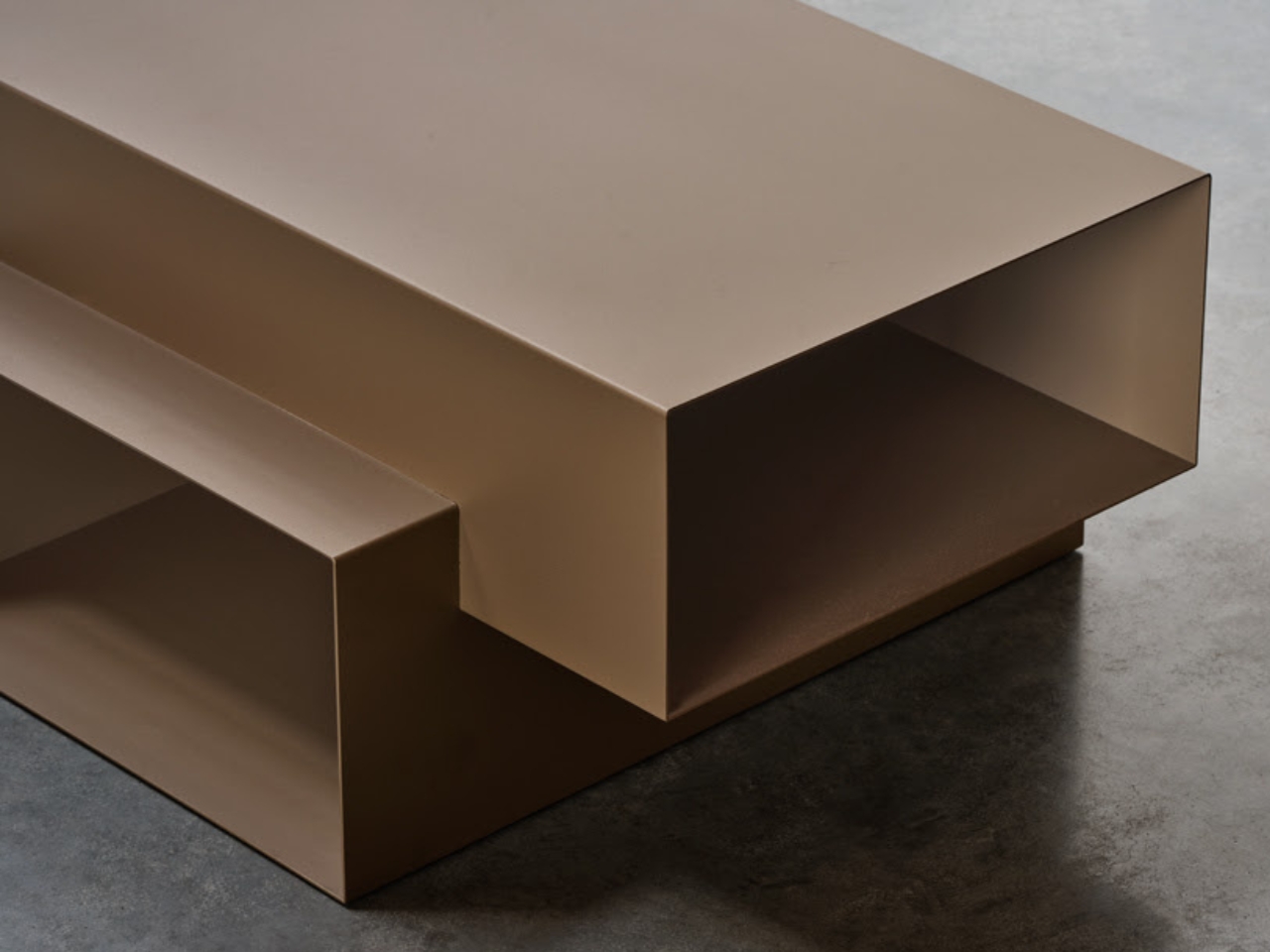
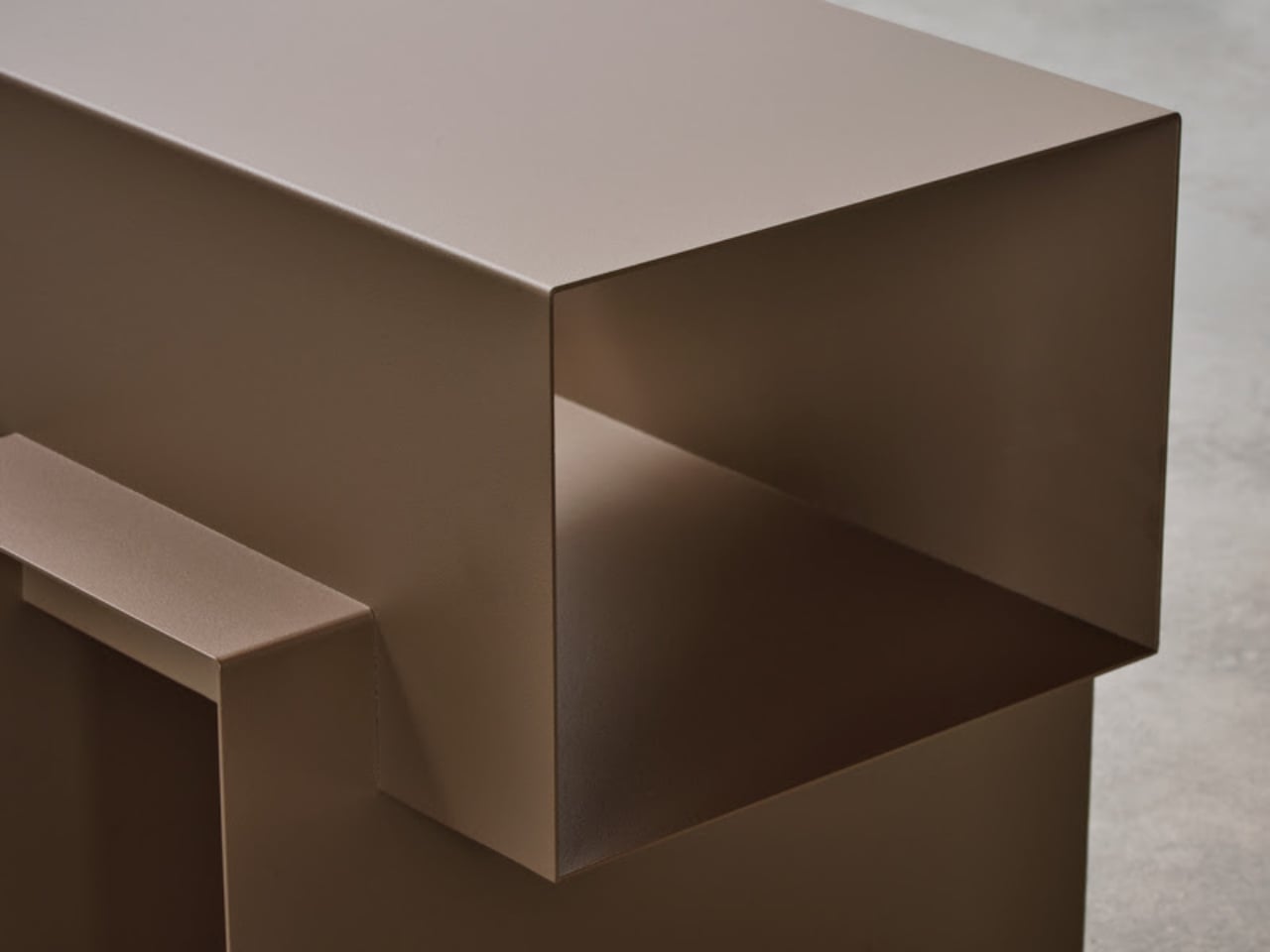
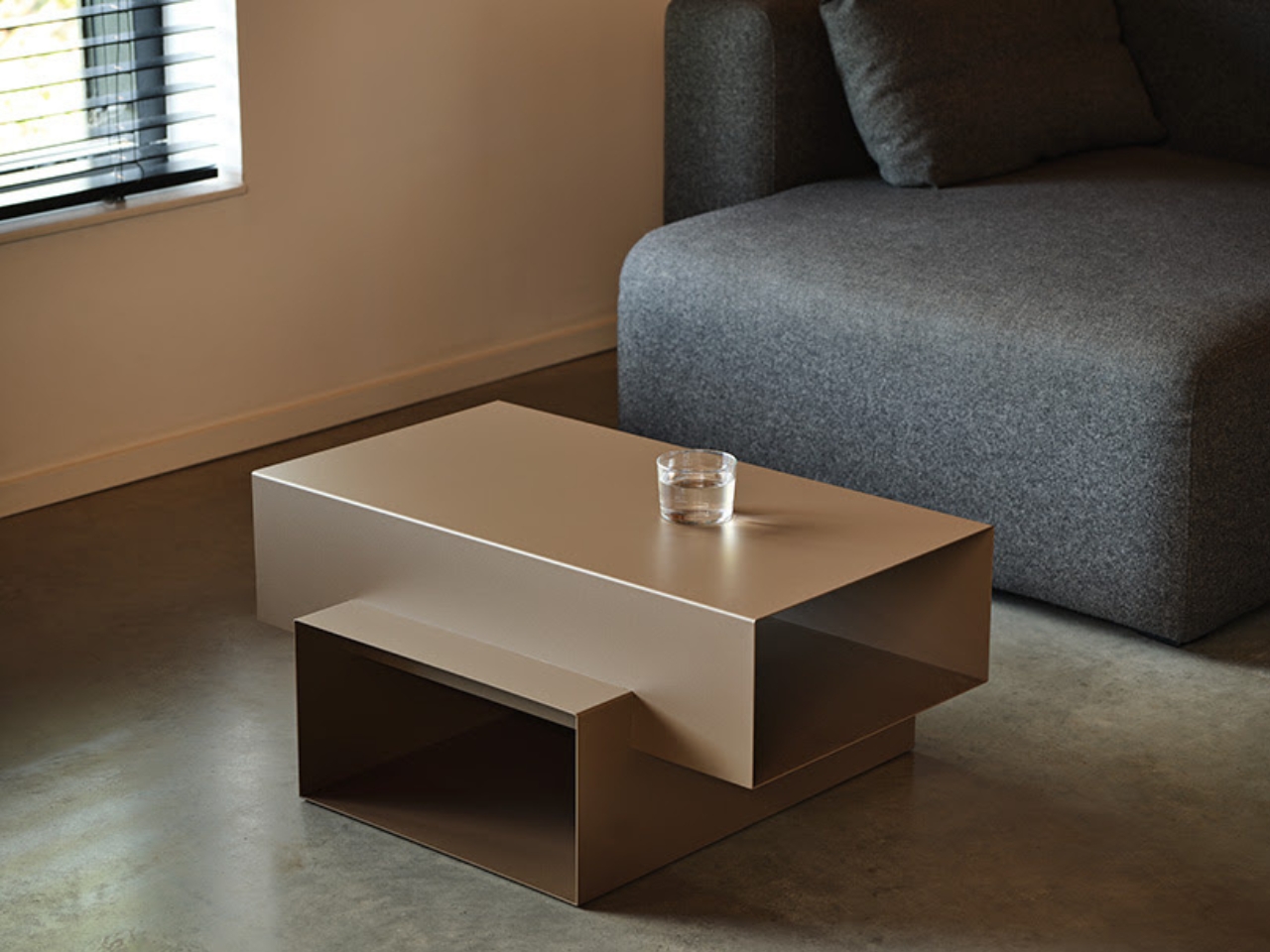
At roughly 28 inches long, 21 inches wide, and 12 inches high, the coffee table sits low enough that I’d check it against the sofa before buying. That low stance looks good in the studio’s photo with an upholstered sectional, but I’d also think about which opening I’d want to face the seat. A cubby for the remote is useful only if it’s on the side where you reach for it. Turn the table a quarter turn and you change both the view and which compartment is closest.
The side table, at about 15 inches tall, makes the same idea look surprisingly different. The upper opening reads more like a little window, while the lower one is tall and narrow. I can picture it beside an armchair with a book in the upper compartment and a mug on top. I’d take that arrangement over a tiny tabletop with a decorative tray, which tends to claim most of the surface before you’ve put anything in it.
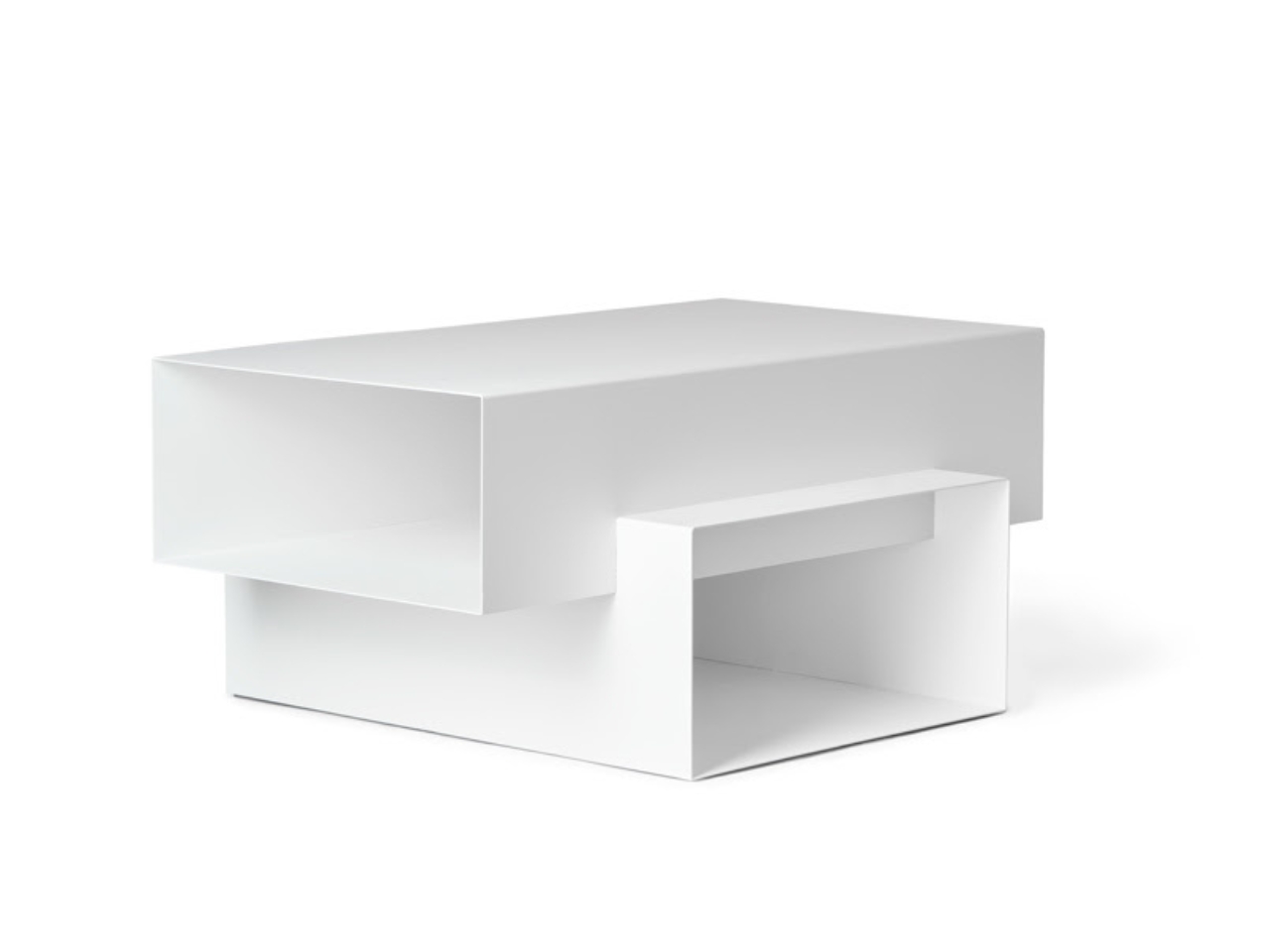
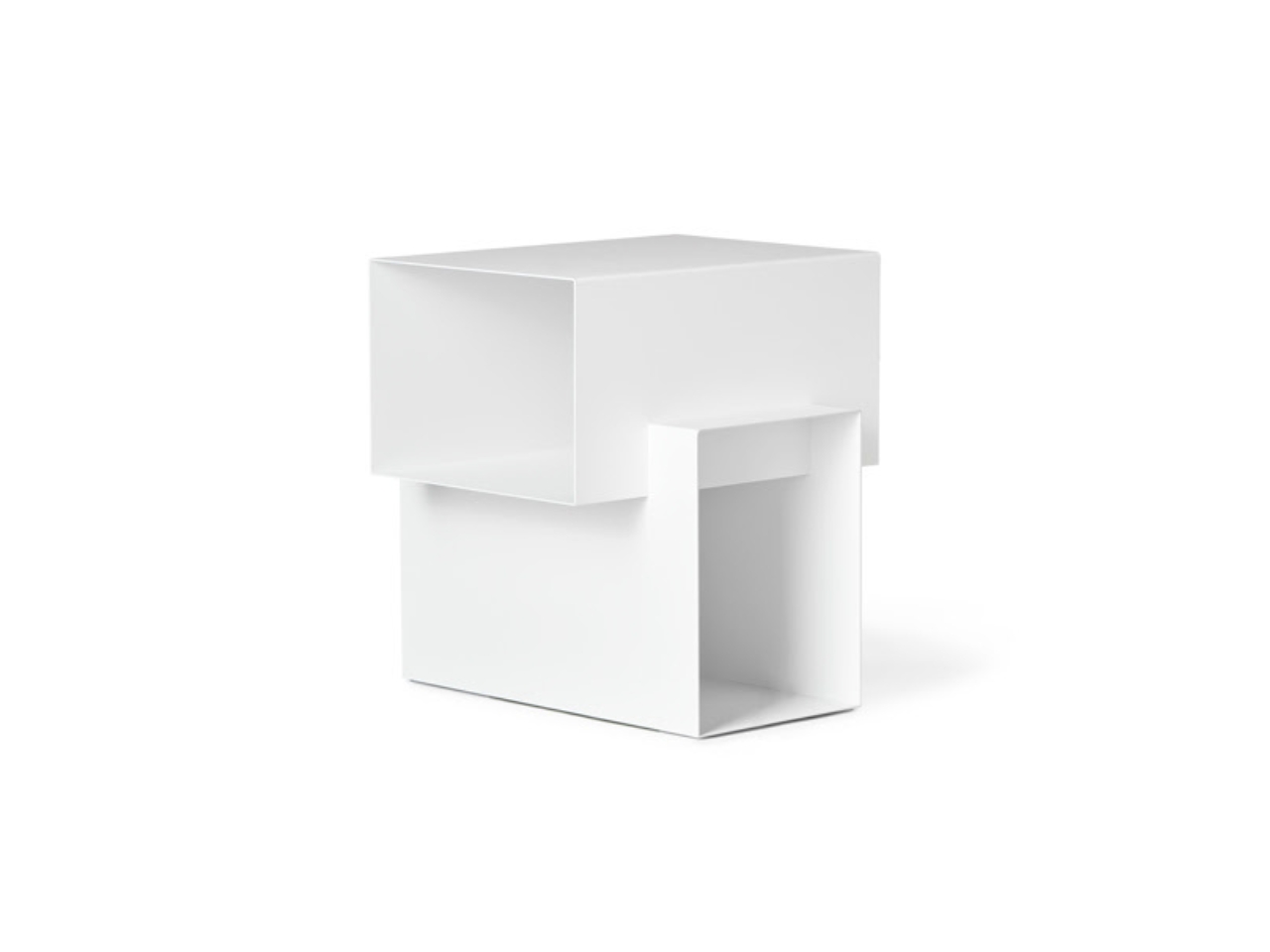
Of the finishes in the photos, the bronze is my favorite. In the shot by the sofa, window light picks out the top edge and leaves the inside of the lower compartment in shadow. It’s a small detail, but it makes the steel look less severe. The white version makes the geometry easier to read at a glance. The bronze lets parts of it disappear for a moment, which is more fun in a piece you’ll see from different spots in the same room.
Open storage does mean you’ll still see what you put in it. I wouldn’t use those compartments as a substitute for a junk drawer, especially when the empty space is half of what makes the table worth looking at. But a paperback laid flat in one opening would leave the other free to catch the light. That feels like the right amount of tidying up for a piece of furniture whose main job is to let you sit down.