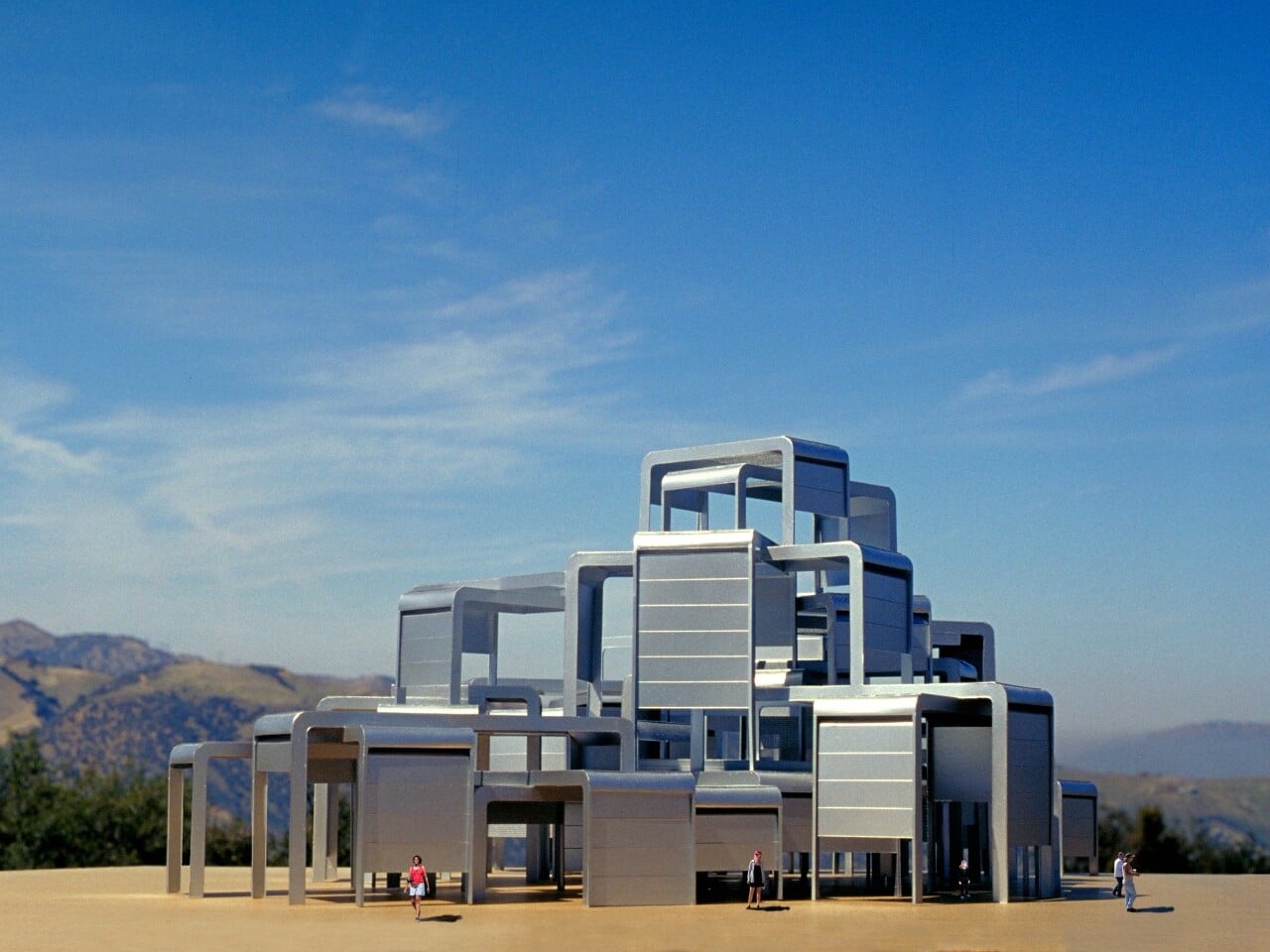
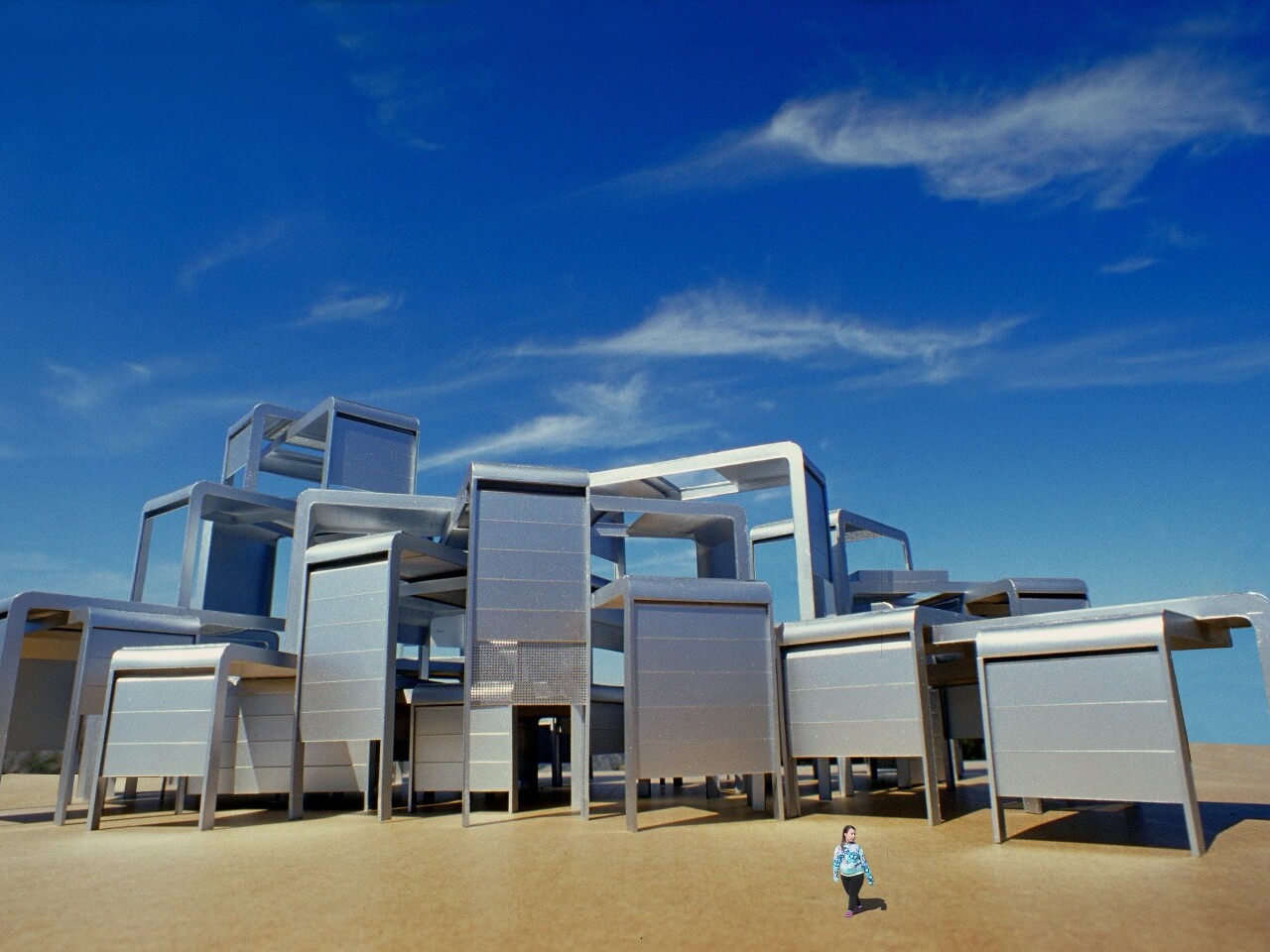
Every garage door opener sitting in a car visor does one boring job: raising and lowering a single panel between a car and the weather. The Garage Door Pavilion takes that same reliable, forgettable mechanism and multiplies it across dozens of steel panels woven into a public structure, letting anyone walking by reshape an entire building with the press of a button they’ve used a thousand times before.
Each door in the cluster gets its own dedicated opener mounted just in front of it, so a visitor doesn’t need any special instruction to participate. Pressing a button raises or lowers that single panel to any position between fully open and fully closed, turning a solid wall into a shaded opening or a covered passage into open sky within seconds, entirely on the visitor’s own terms.
Designer: Michael Jantzen
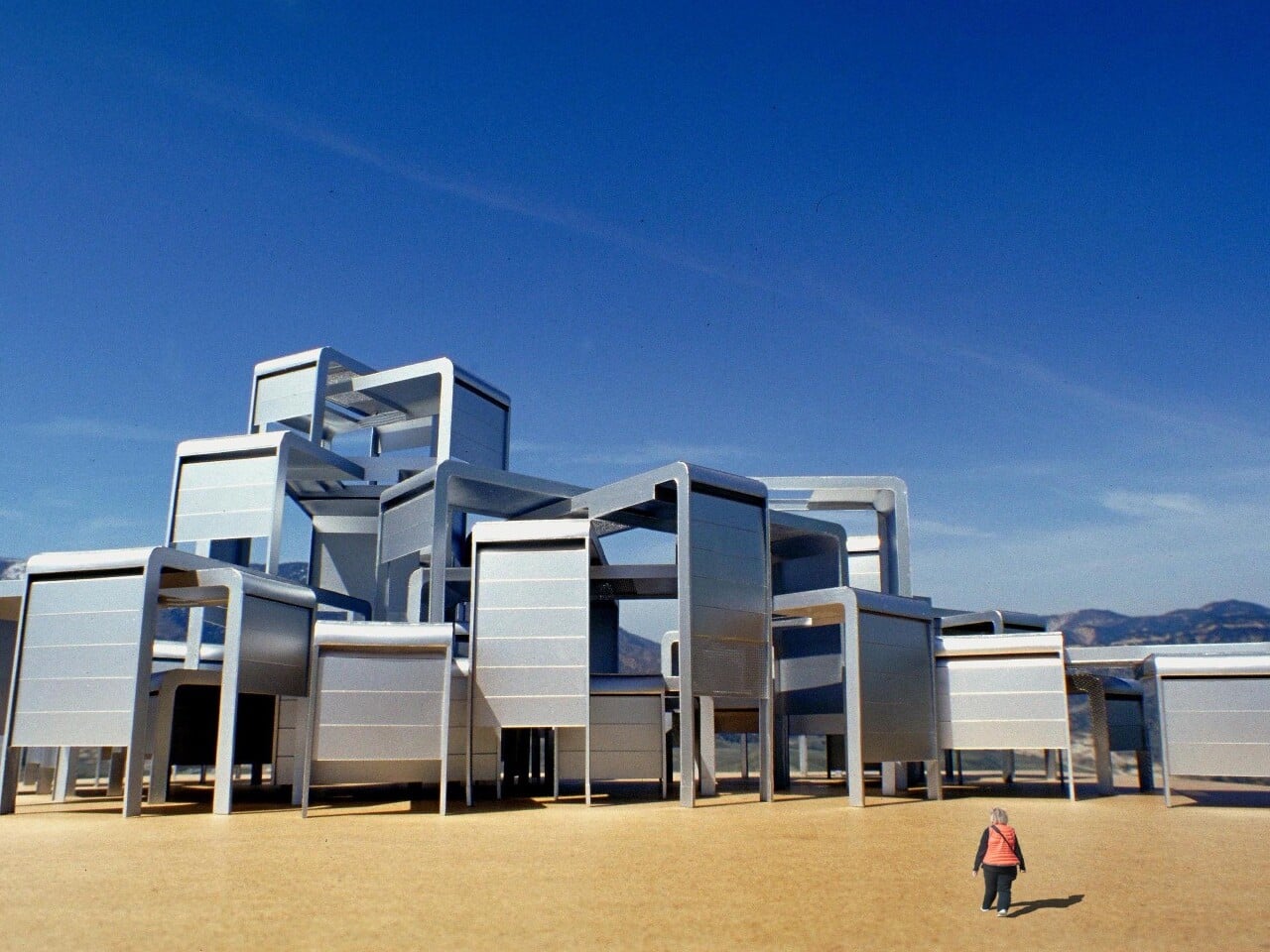
Most of those panels are solid, painted steel, borrowed straight from standard garage door manufacturing rather than custom fabricated for a one-off art piece. Others swap in perforated metal instead, letting light and air filter through even when fully shut. Mixing solid and perforated surfaces across the same structure means no two configurations look or feel quite the same, depending on which doors a visitor chooses to move.
Structurally, the whole assembly relies on a series of support frames sharing the same width but varying in height, woven together at different orientations rather than stacked in a predictable grid. That irregular weaving is what gives the pavilion its dense, clustered silhouette, closer to a jumble of oversized shipping containers caught mid-shuffle than any conventional roofline a visitor might expect walking up from a distance.
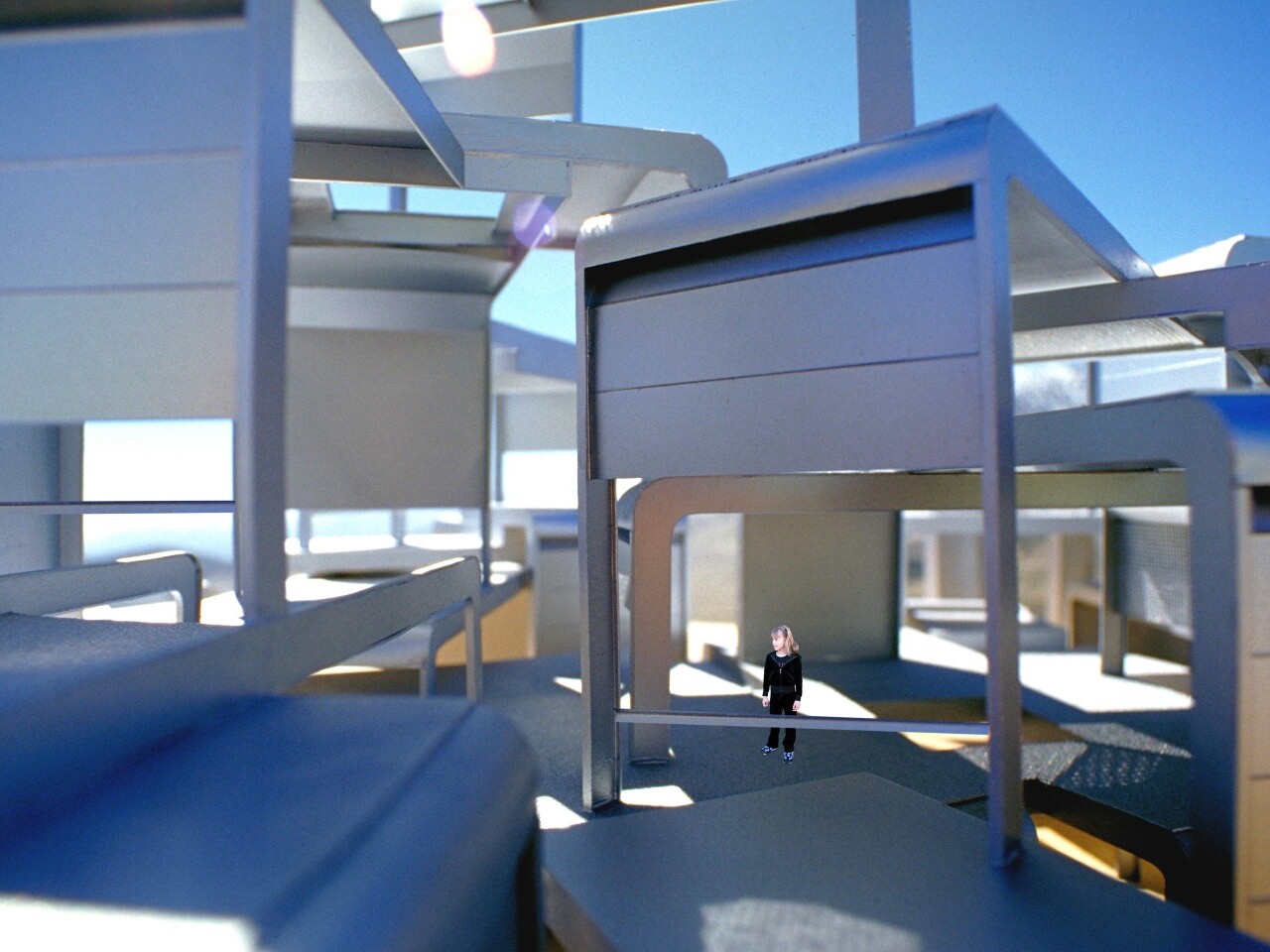
Walk underneath once a few doors lift overhead, and covered passageways start to appear between the raised panels, offering shade in an otherwise open desert setting. Close a few doors nearby instead, and those same passageways seal into private, boxed-in rooms. The structure never settles into one fixed identity, since every visitor’s button presses leave it slightly different from how they found it.
That instability is deliberate rather than an engineering compromise. Treating a public structure as something visitors actively reshape, rather than a fixed backdrop, reframes what adaptability actually means in architecture. A door lifted for shade at noon can drop shut by evening, all without a maintenance crew or a redesign, just the same mechanical reliability people already trust in their own homes.
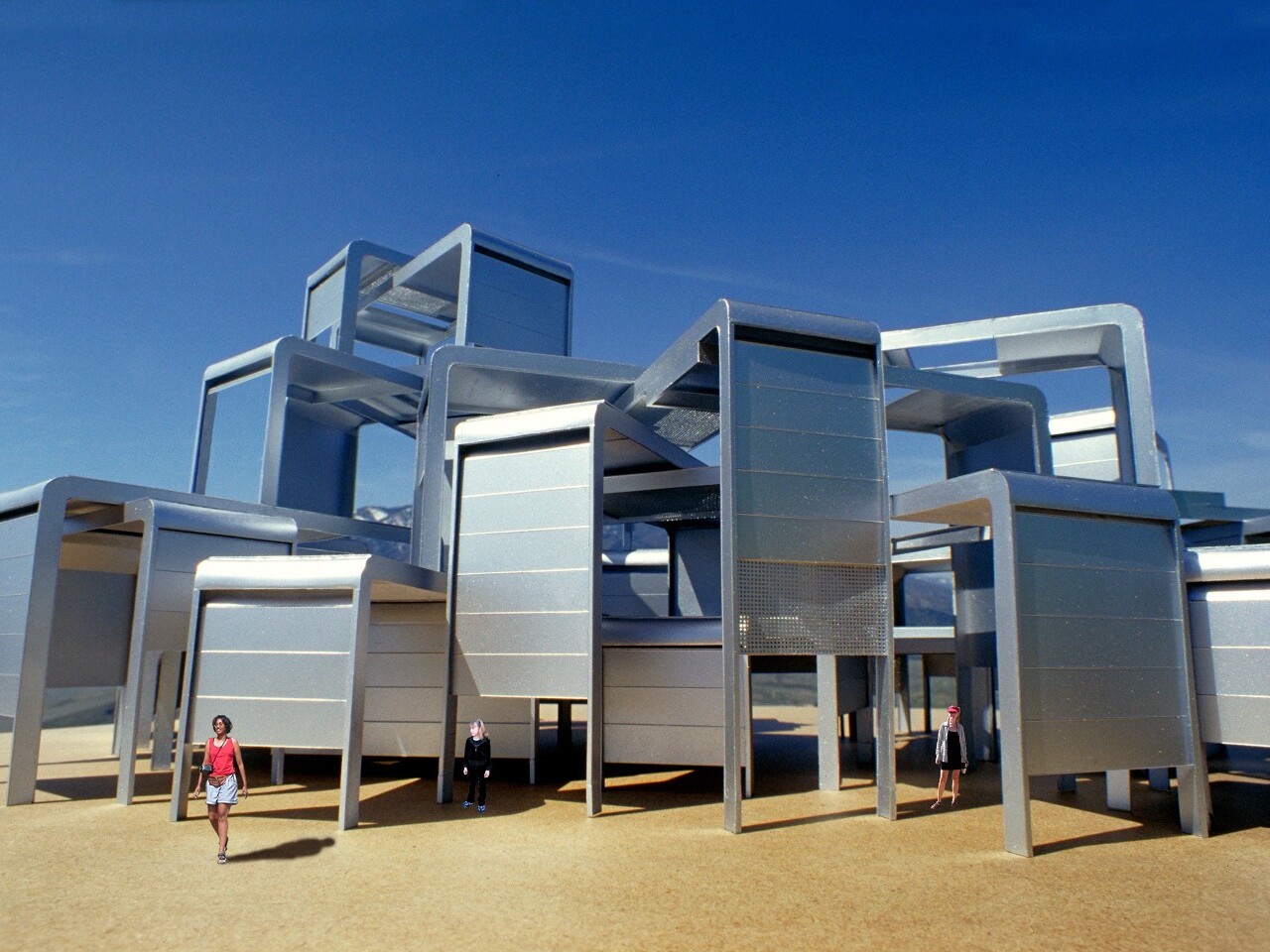
The project ties this physical flexibility to a larger argument about what buildings owe the people using them. A pavilion that can’t be adjusted asks everyone to accept its default state, whatever the weather or crowd size happens to be that day. One built from reconfigurable panels instead treats a changing climate and shifting social needs as ordinary conditions to design around, not exceptions worth ignoring.
Placing that logic in an exposed desert landscape only sharpens the point. Conditions shift dramatically between morning shade and afternoon heat, and a structure that can’t respond to that shift in real time asks visitors to simply endure it instead. The Garage Door Pavilion answers with something closer to a responsive shell, changing shape at the same speed a driveway door already does every single day.
SHARE