The iMac G3’s translucent Bondi Blue shell sold 800,000 units in its first five months, which was Apple’s way of proving that exposing a computer’s internal geometry could be its single most compelling feature. Nothing put a transparent back on a phone in 2022 and made every other Android’s solid slab look like it had something to hide. Skeleton mechanical watches have been charging a premium for visible gear trains for centuries. Teenage Engineering turned exposed PCBs into a full aesthetic identity. The pattern is clear enough: when mechanisms are beautiful, hiding them is just a waste. CD sales have been quietly growing for four years now, physical music is back in force, and the SYITREN RM1 arrives to give CD players the transparent treatment they probably always deserved.
The RM1 houses its full CD mechanism inside a dual-layer ultra-clear acrylic frame, with precision metal corner pillars and the disc, optical pickup, and PCB all visible from the front. SYITREN, founded in 2017 and recognized by the MUSE, London, French, IDA, and A’ Design Awards, designed it with the CD’s own iridescence as a feature rather than a side effect. You press a disc onto the transport and suddenly there’s a spinning, light-catching object on your desk or wall that is also playing music. Audio routes out via Bluetooth 5.3 or 3.5mm AUX, with SYITREN leaving the speaker out entirely and trusting you to own one already. It measures 260 x 260 x 42mm, weighs 0.9kg, and starts at $89.
Designer: SYITREN
Click Here to Buy Now: $99 $179 (45% off) Hurry, 62 of 1200 units left!
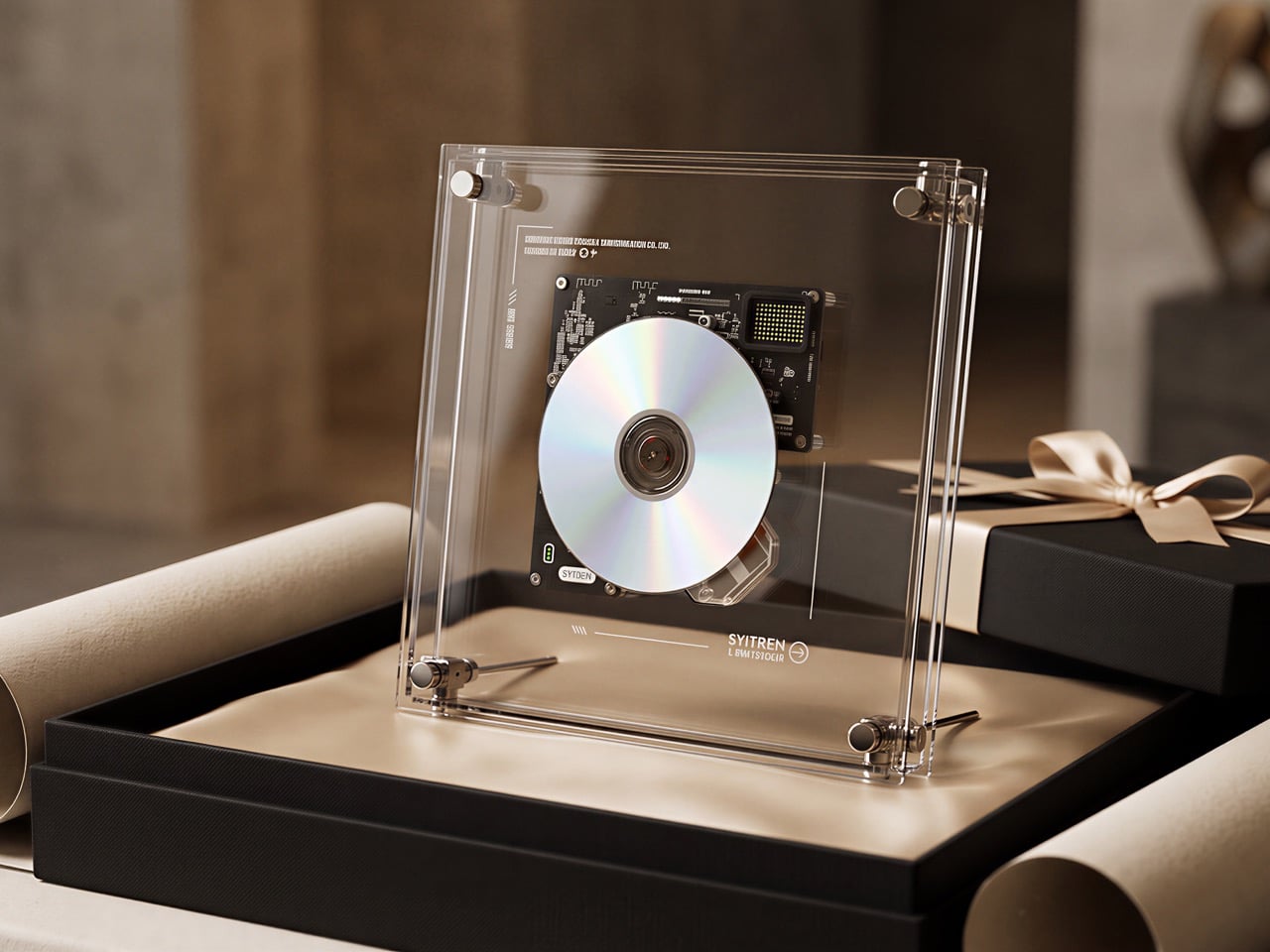

Dual-layer acrylic panels sandwich the CD mechanism between them, and the precision metal corner pillars at each corner read as structural jewelry rather than hardware fasteners. As the disc spins, its iridescent surface catches ambient light through the panels and scatters it differently depending on the label design, the printing, and the reflective surface underneath. Some discs glow gold under warm room lighting, others catch cool blue from overhead. A disc with a dense printed label plays completely differently as a visual object than a silver-surface one, which means every album in your collection has a slightly different personality in this frame.
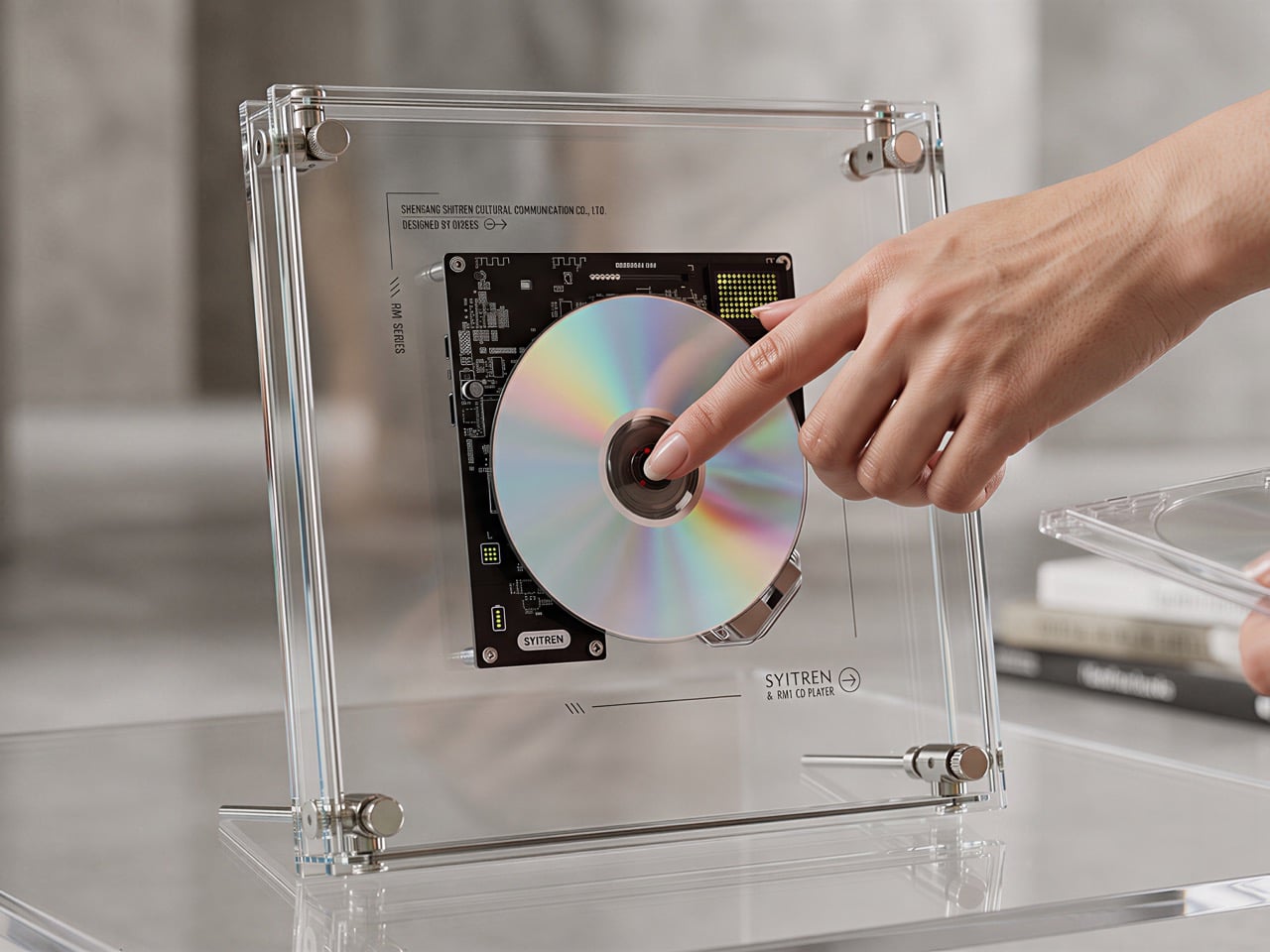
A warm-yellow 2×8 LED matrix, visible through the acrylic from the front, shows track number, animated visuals, and volume level alongside a linear progress bar. The amber glow against the spinning disc creates what SYITREN calls a “visual rhythm,” and it’s a phrase that actually earns its keep here. Warm lighting and a slowly rotating disc at the center of a room does something to the quality of an evening that a Spotify queue on a phone simply cannot. It’s a mood object as much as an audio component. The choice of warm yellow over a cooler white or blue LED tone is clearly deliberate, positioning the RM1 alongside lamps and wood furniture rather than making it look like something pulled from a server rack.
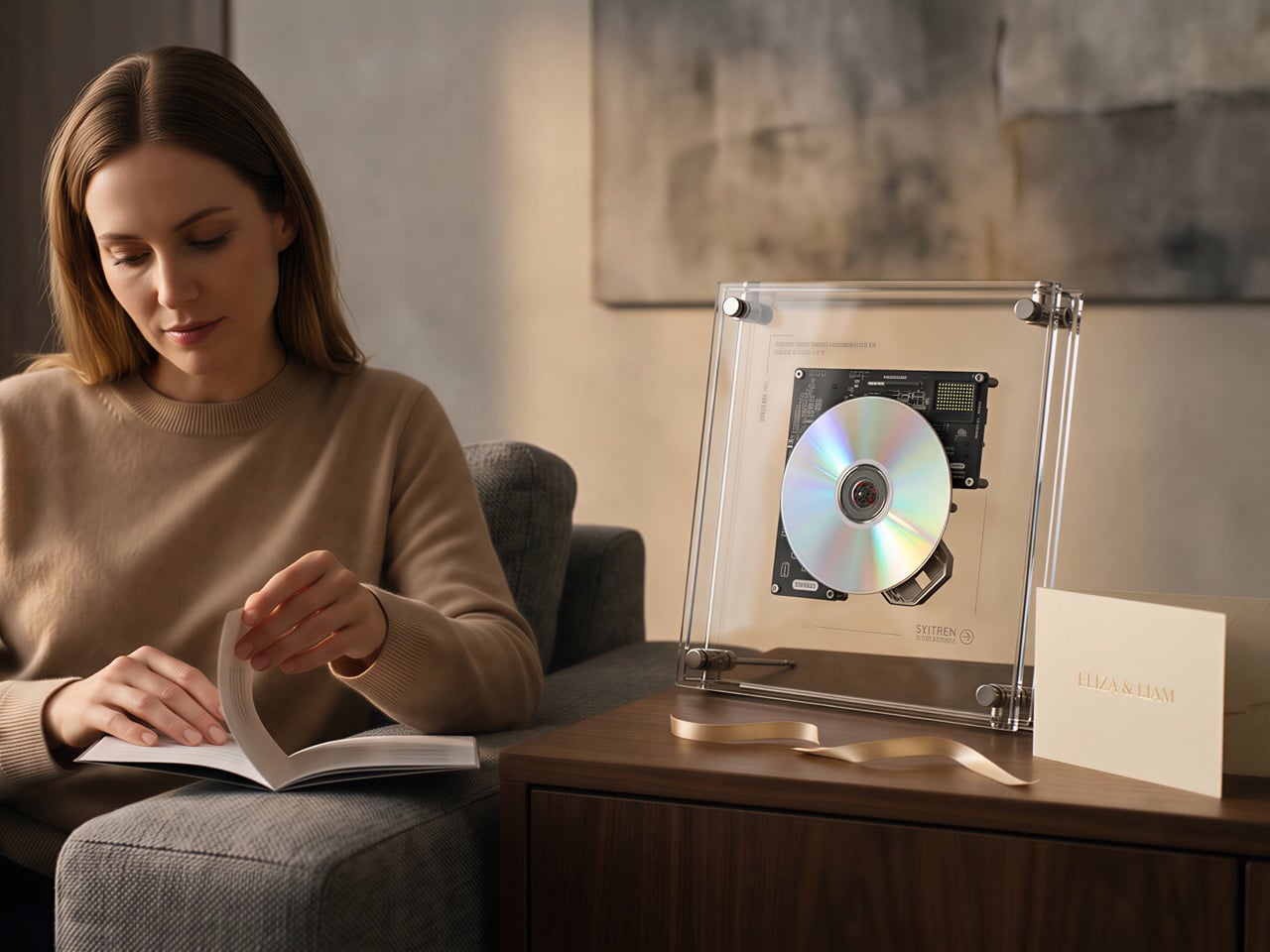
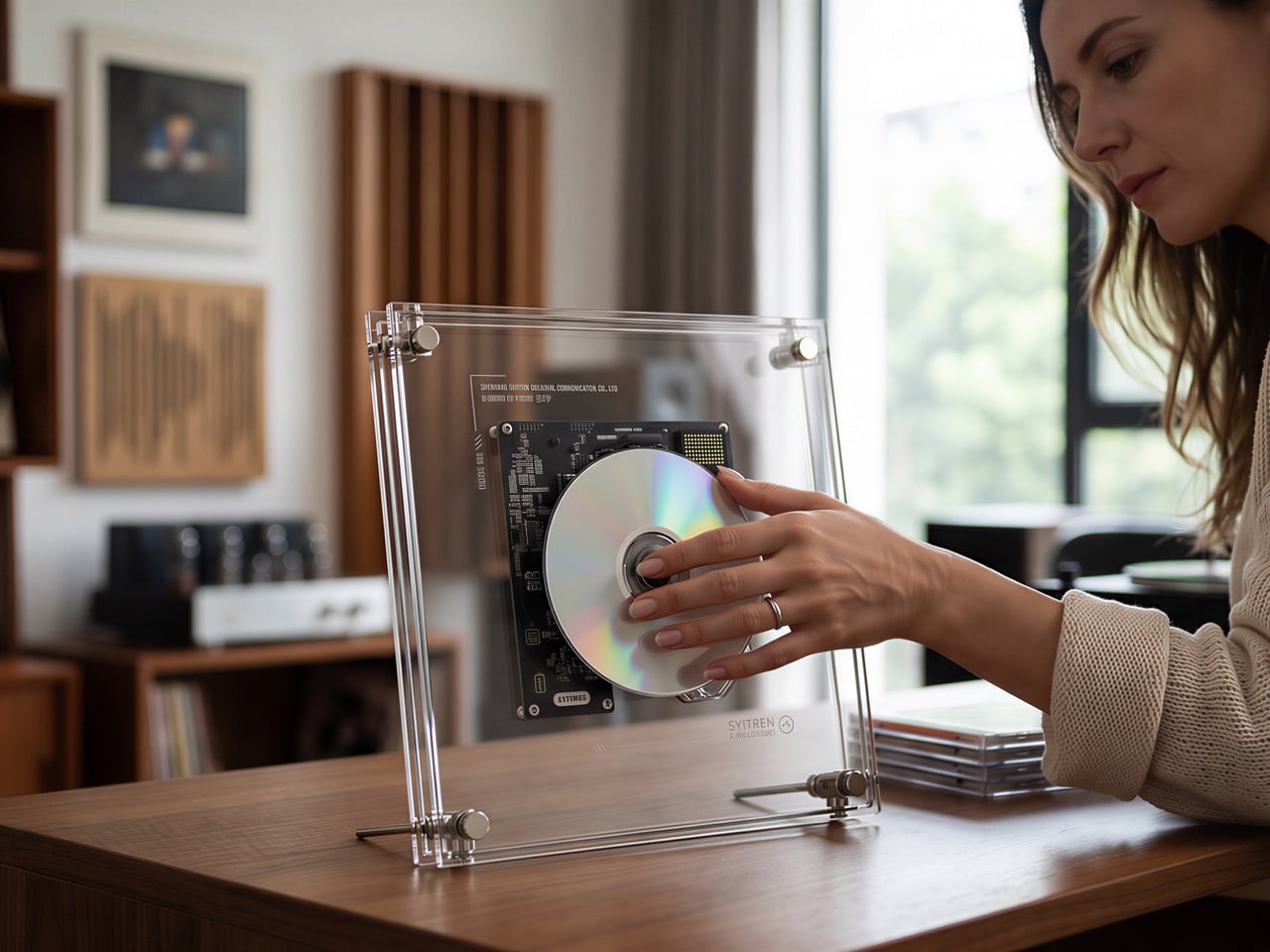
SYITREN’s decision to ship the RM1 without a built-in speaker is both a nod to the Discman-meets-headphones culture, but also just fair common-sense engineering. Squeezing a driver into a 42mm-thick transparent frame would have produced tinny, directionally compromised sound that undermined everything else about the product. Instead, the RM1 connects to your existing speakers or headphones via Bluetooth 5.3 at a 10-meter range with a 95 dB SNR, or through a 3.5mm AUX jack for wired setups. For anyone who already owns a decent Bluetooth speaker or a bookshelf stereo, this approach makes the RM1 a source component and a visual object, which is exactly what it should be. It’s the same logic that drives high-end audio separates: source, amplification, and output each handled by the component built specifically for that job.
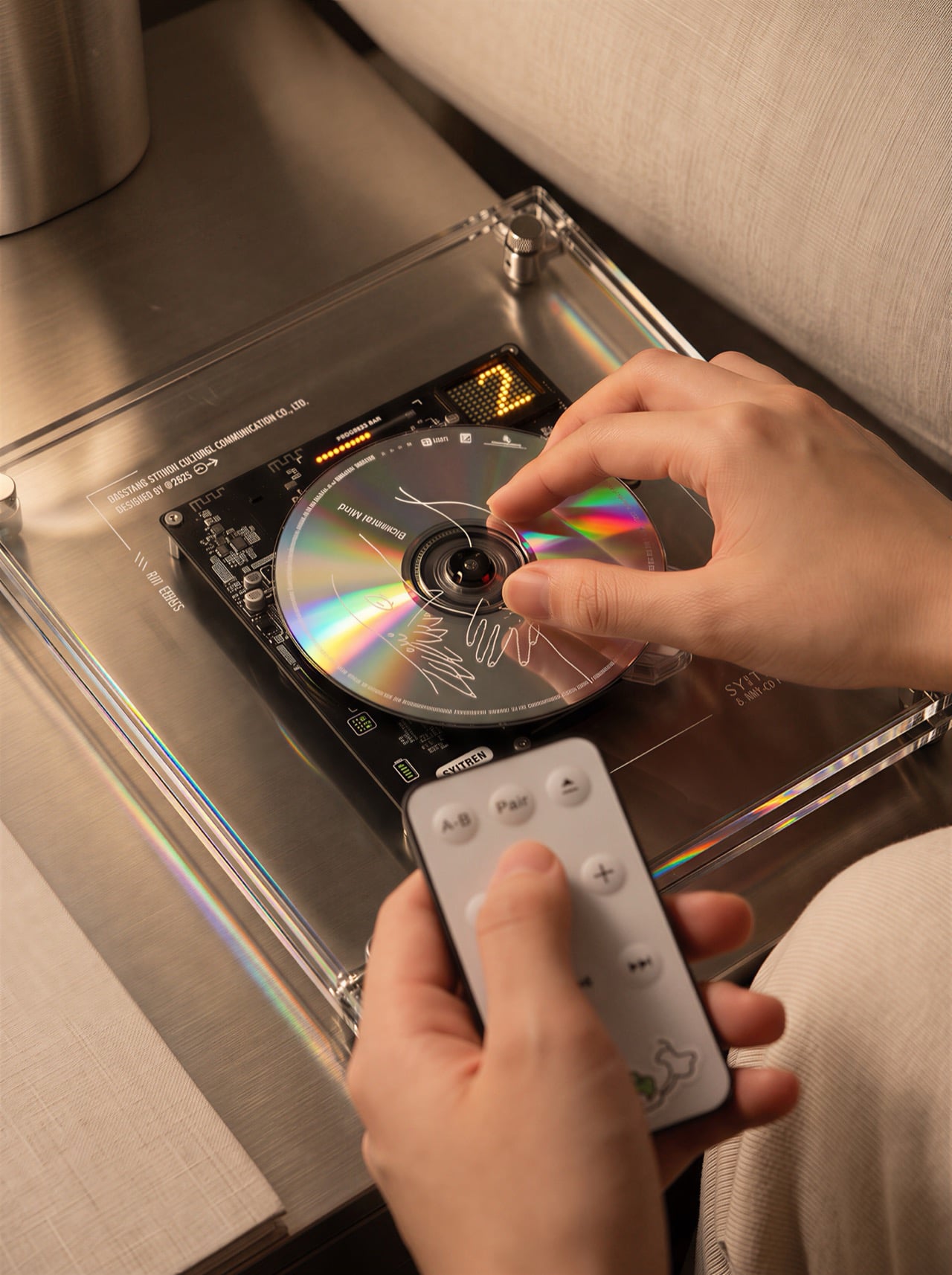

A built-in 16-bit DAC and 24-bit DSP sit at the core of the RM1’s signal chain, sampling at 8-48 kHz with a CD audio SNR of ≥85 dB and total harmonic distortion plus noise below 0.1 percent. Dynamic range lands at ≥70 dB, which is a respectable figure for a consumer portable at this price. Supported formats include standard audio CDs, MP3 discs, and WMA discs, which covers everything from your 2004 burned collection to freshly pressed albums. Playback modes offer repeat one, sequential play, and shuffle, with a remote control included in the box. The battery is an 18650 cell rated at 2000mAh, charging via USB-C in one to two hours and delivering six to eight hours of continuous playback.
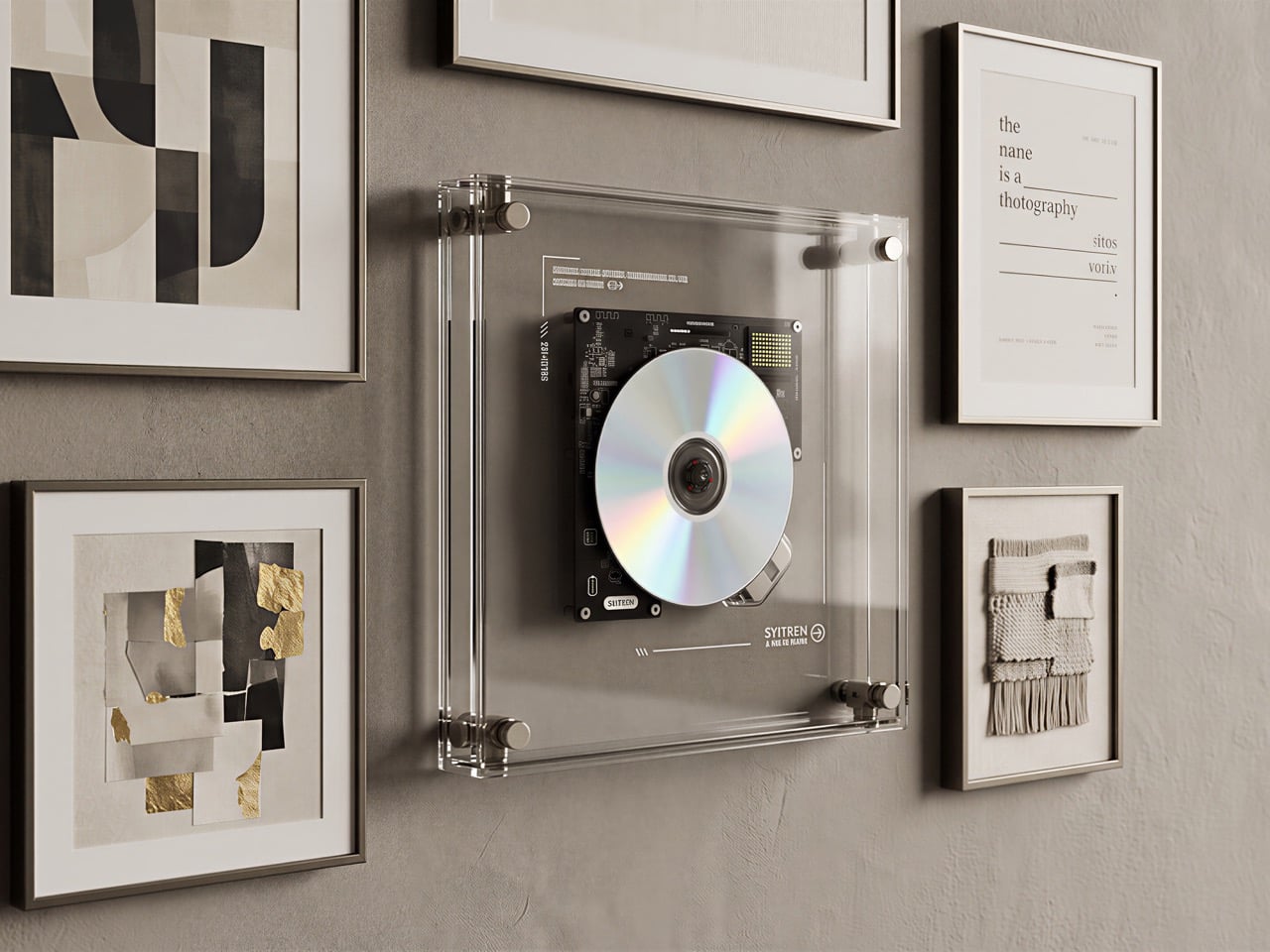
Wall-mounting a CD player requires solving a problem that horizontal-tray consumer units have never had to worry about. CD optical pickups are designed to track a horizontally spinning disc, and tilting the whole assembly vertically introduces vibration and skip risks that would make most standard mechanisms unreliable on a wall. SYITREN addressed this with a 40-second anti-shock buffer for standard audio CDs and a 120-second buffer for MP3 discs, pre-reading and caching audio data so that ambient vibration or minor disturbances can’t interrupt playback. The optical pickup itself was also specifically engineered for vertical operation. Most people who buy the RM1 will probably never think about any of this, which is precisely where engineering and design blur together in the best way.
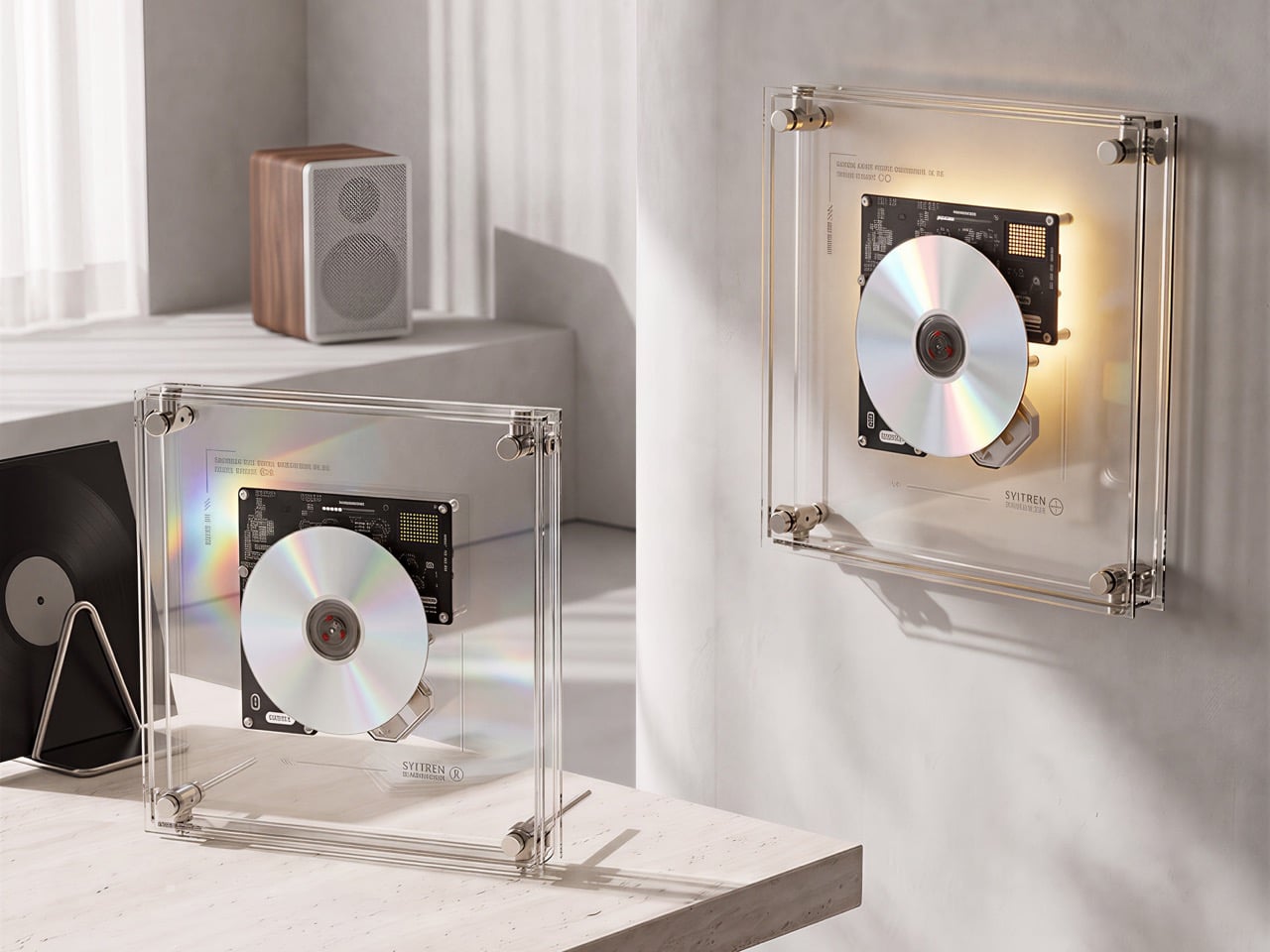
The RM1 ships with both a wall-mount system and a detachable desk stand, making the placement decision entirely yours and entirely reversible. Hung against a wall between picture frames, it reads as a kinetic art piece during playback and a minimal geometric object when the disc isn’t loaded. On a desk or shelf, the angled stand positions the disc facing you directly, turning the player into the kind of object your eye keeps returning to from across the room. SYITREN’s own imagery places it in apartments, studios, cafes, and living rooms, and the transparent form factor genuinely holds up across all of those contexts. At 0.9kg and 42mm deep, it’s also considerably lighter and thinner than photographs tend to suggest.
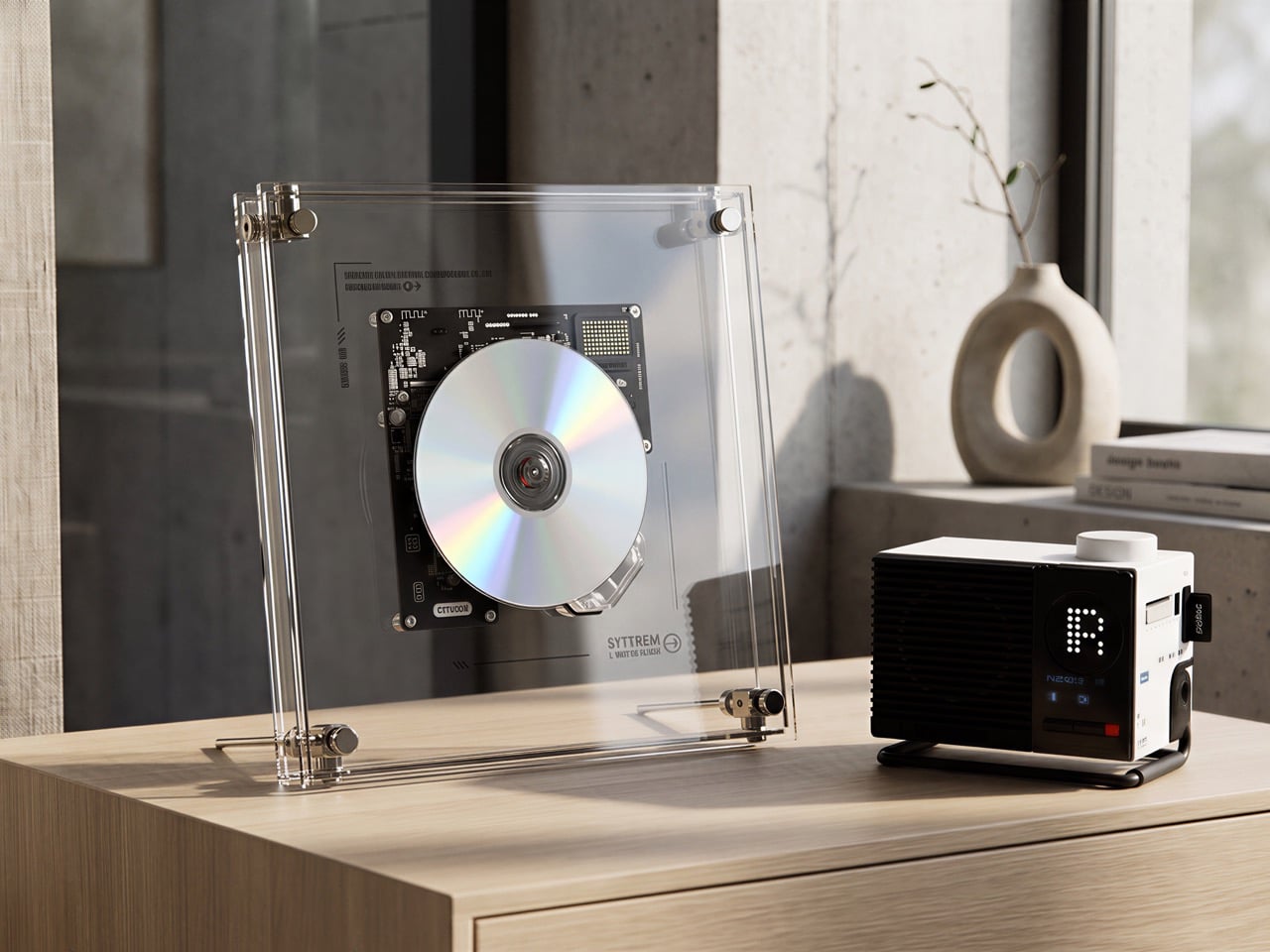
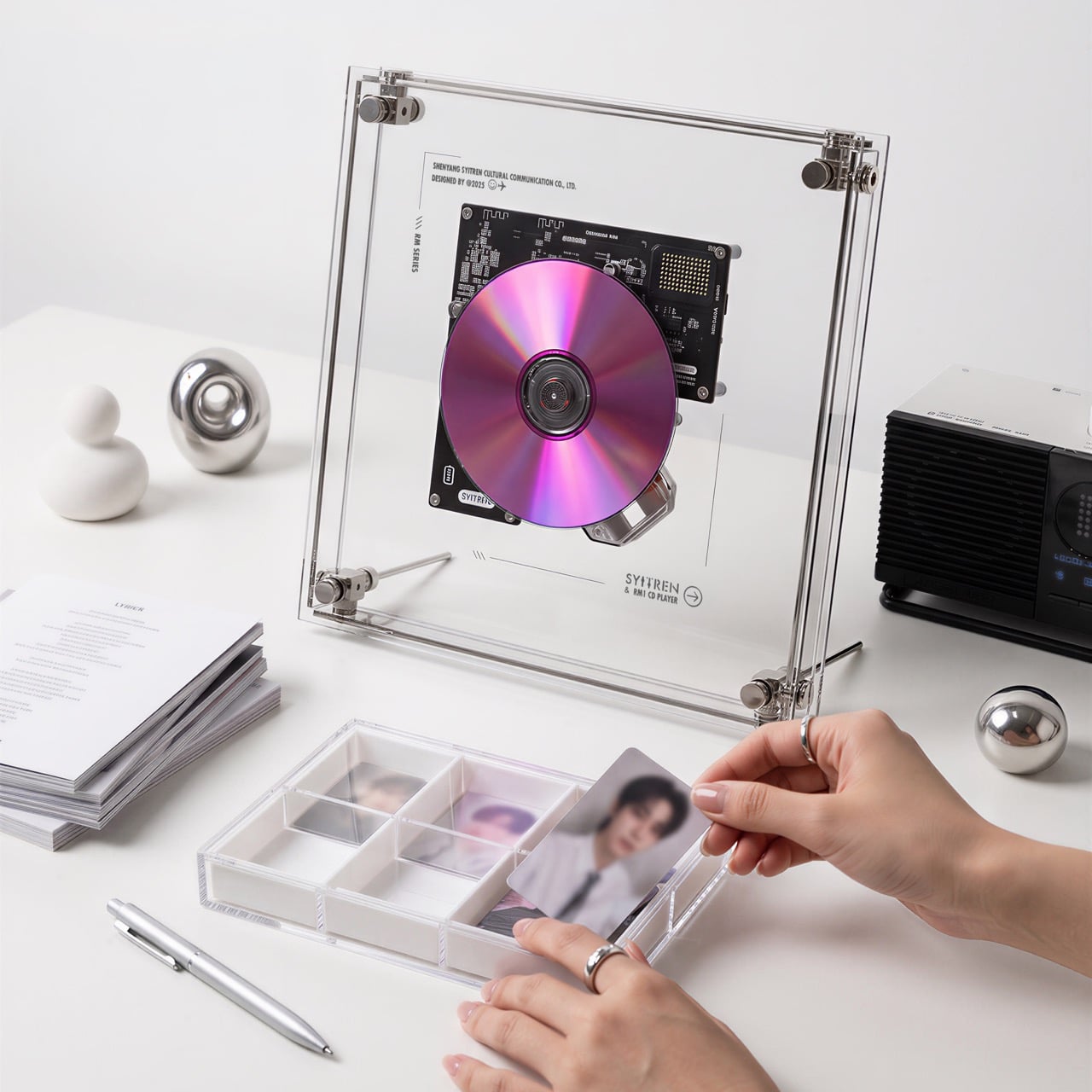
The RM1 starts at $99 and is available through SYITREN’s campaign, with the N200 Bluetooth speaker bundled together for a price of $139. The 18650 cell charges via USB-C in one to two hours and delivers up to eight hours of continuous playback, so the unit is genuinely portable if you want to move it between rooms. SYITREN doesn’t publish a formal warranty term in its current materials, so confirm those details directly before purchasing. The company has been manufacturing and shipping audio hardware since 2017, with distribution across more than 15 US retail cities and five global markets. At $99, the RM1 is the most considered CD player I’ve seen that treats the format as something worth displaying, and for anyone sitting on a collection of discs that hasn’t been played in years, that’s a genuinely compelling reason to dust them off.
Click Here to Buy Now: $99 $179 (45% off) Hurry, 62 of 1200 units left!