There’s a specific failure mode that most bedside alarms share. You reach for your phone to set an alarm, and by the time you’re done, you’ve also checked your messages, scrolled through something you didn’t mean to read, and lost twenty minutes of wind-down time to a screen that was already too bright. The phone isn’t bad at being an alarm; it’s just not designed to stop there, and that distinction costs more than most people acknowledge.
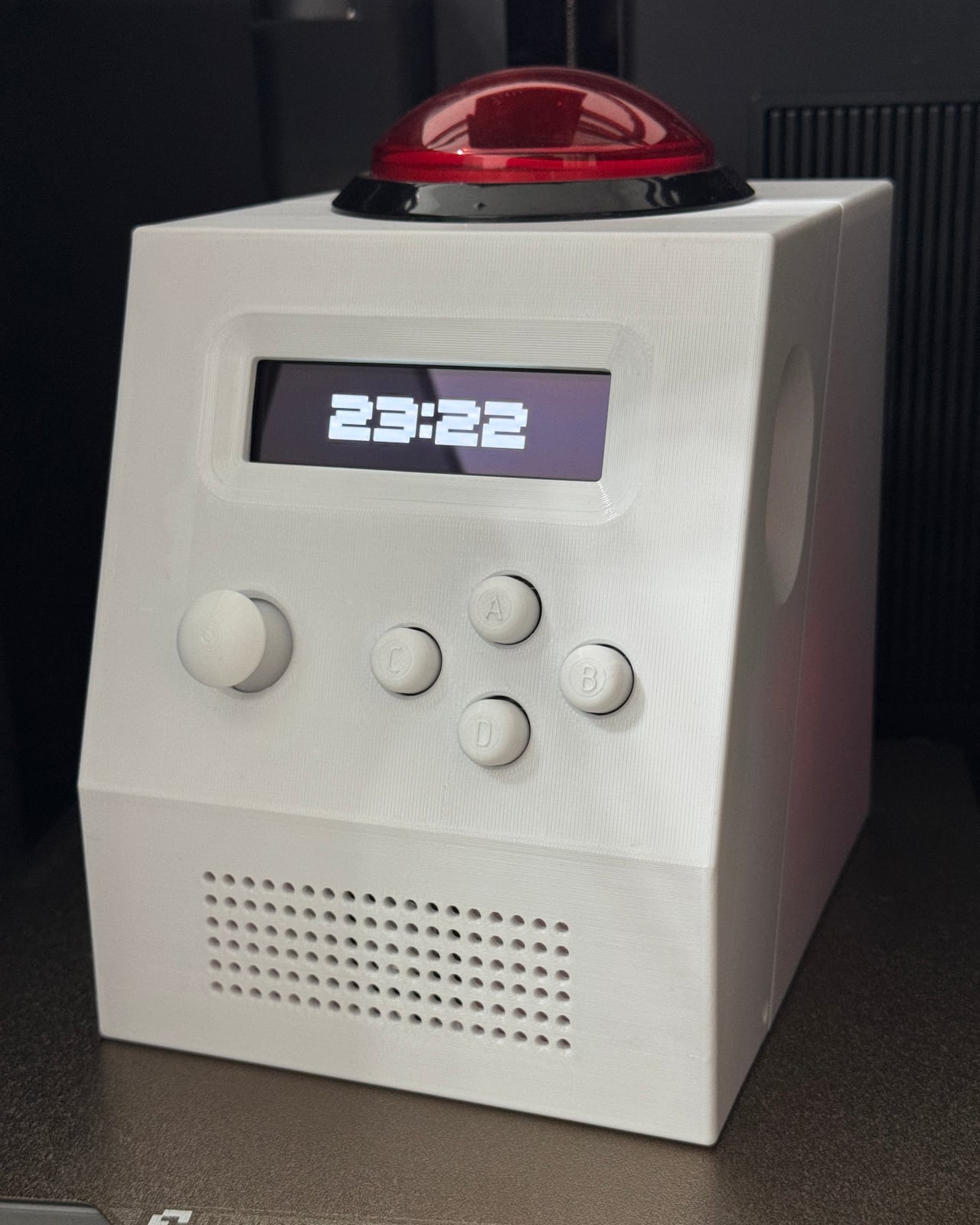
The CinderClock was designed with exactly that failure mode in mind. It’s a multi-purpose standalone desktop clock built to handle the things a bedside table needs without handing those tasks back to a phone. The device runs entirely on itself: no app, no cloud connection, no subscription, and WiFi that stays off at boot unless deliberately switched on to push a firmware update. What it does, it does without outside assistance.
Designer: Aqnazar Arysbek
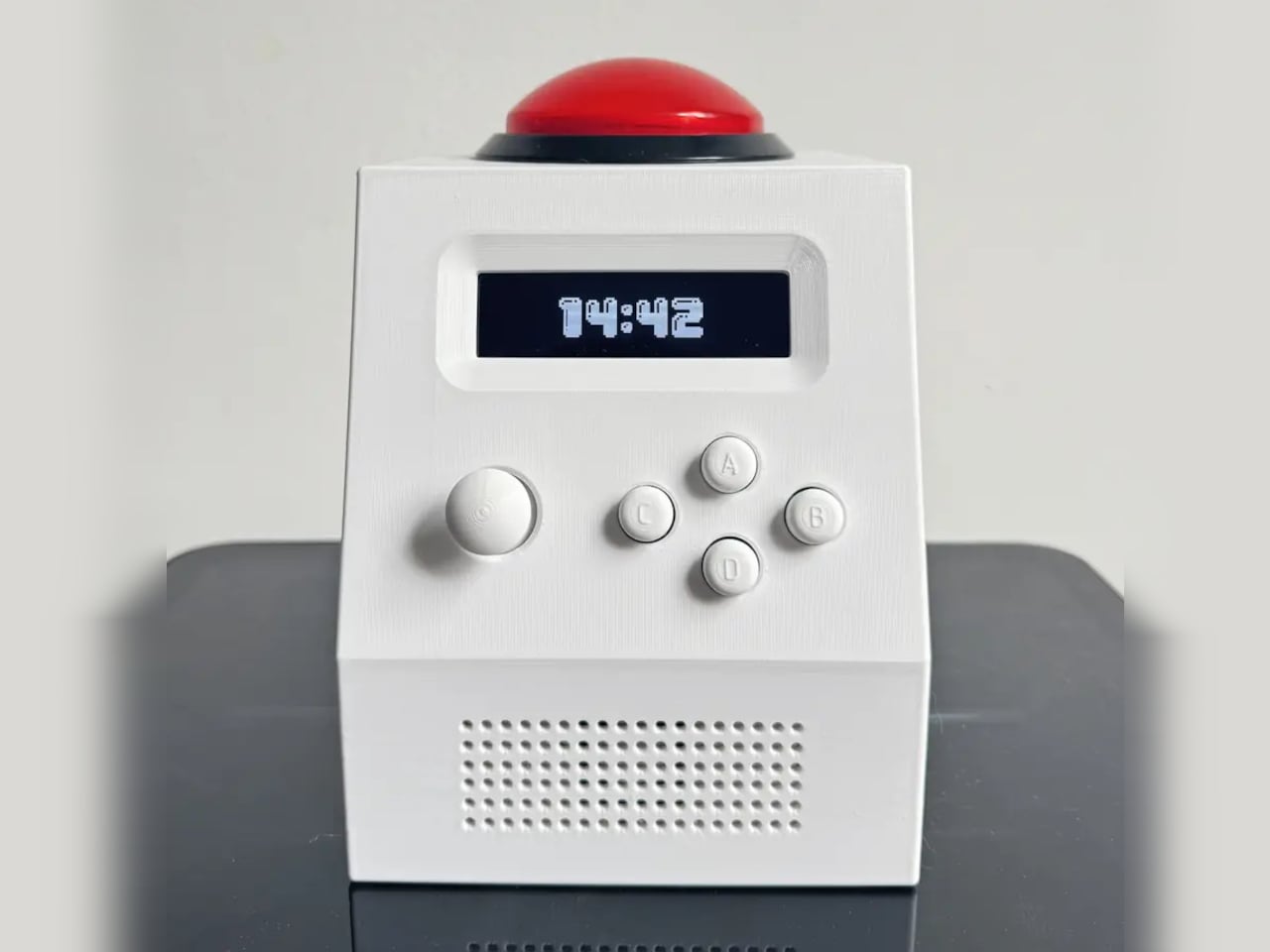
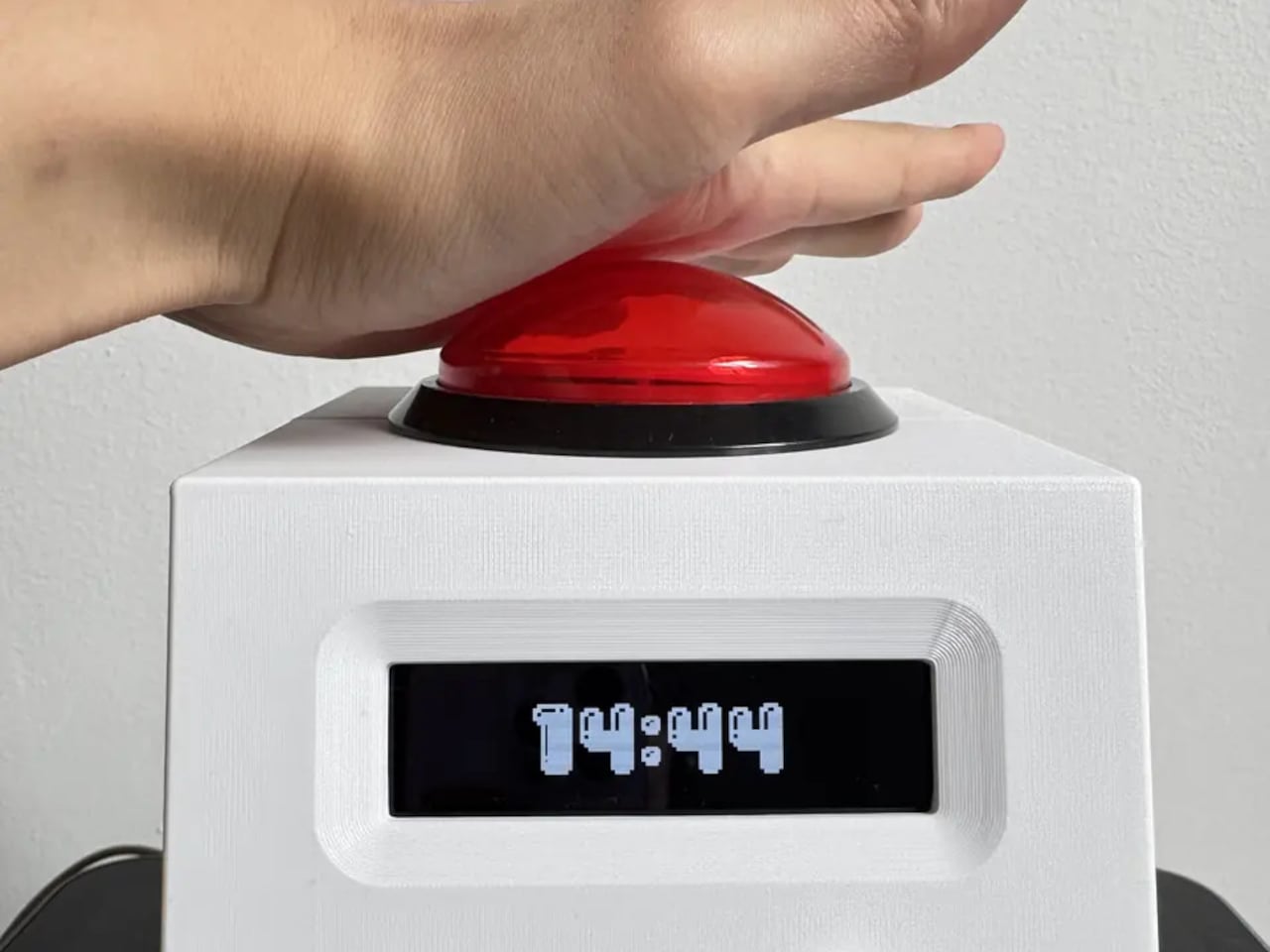
The feature set covers the practical range of what a desk clock might reasonably be asked to do. Alarm history holds ten entries, a countdown timer runs while you navigate elsewhere in the menus, and the stopwatch tracks four laps with centiseconds. The fast-changing stopwatch display can be hidden, because a rapidly updating number on a desk is a distraction rather than information. Two Pomodoro presets store work and rest periods from 1 to 999 minutes, each phase signaled by a distinct jingle. Local temperature and humidity are monitored continuously, and sunrise and sunset times are available for anyone whose schedule tracks natural light rather than a fixed shift.
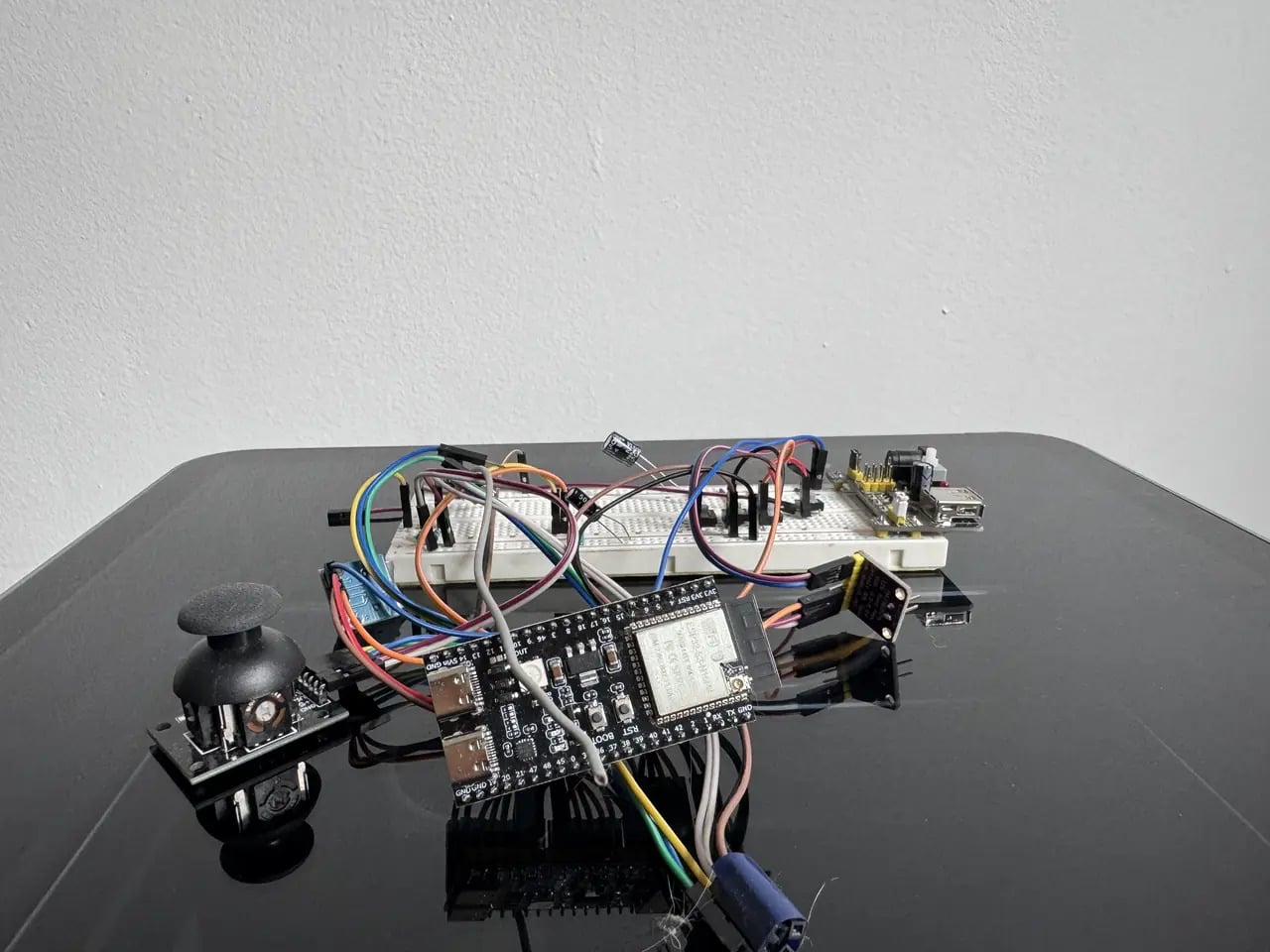
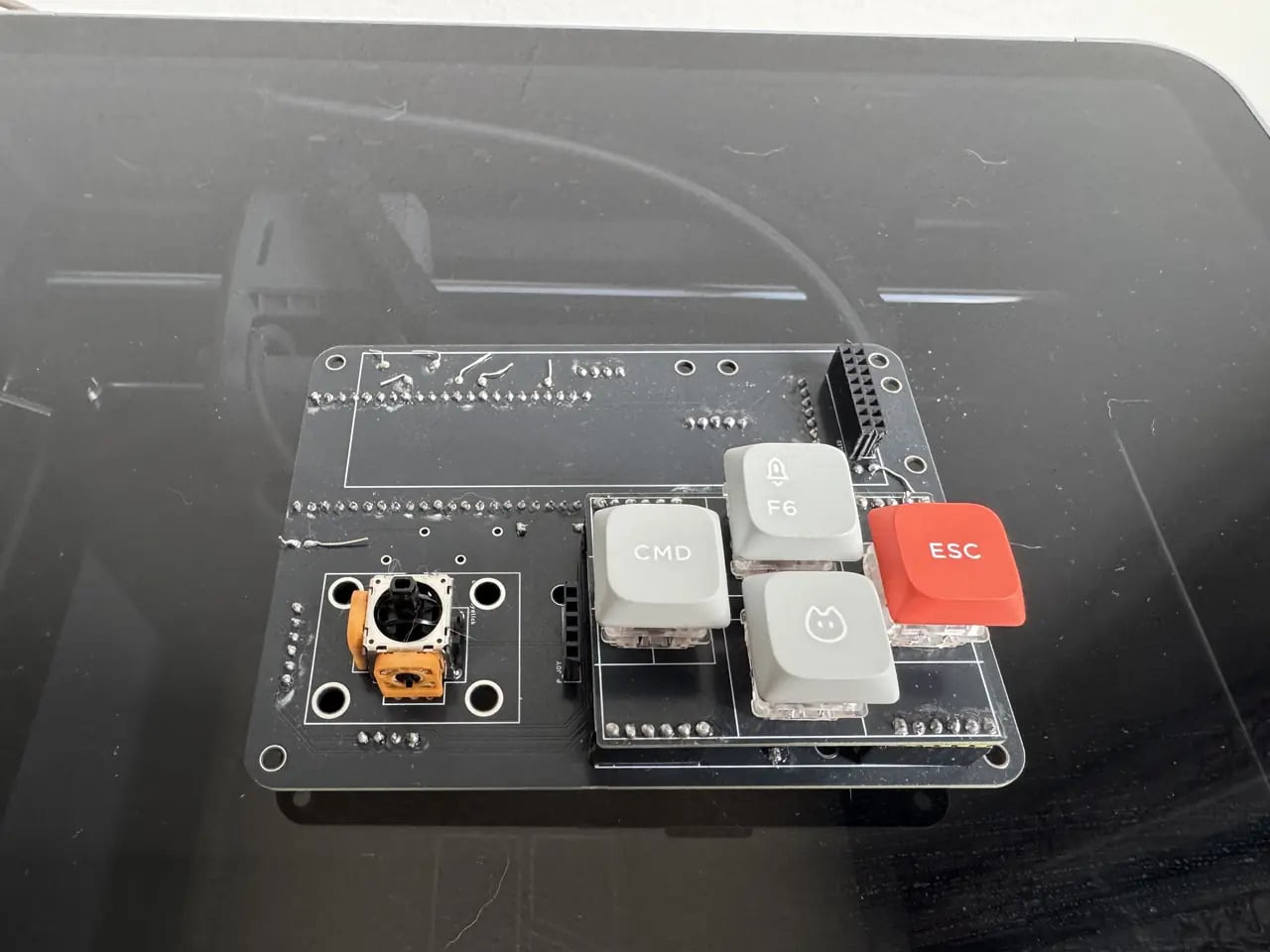
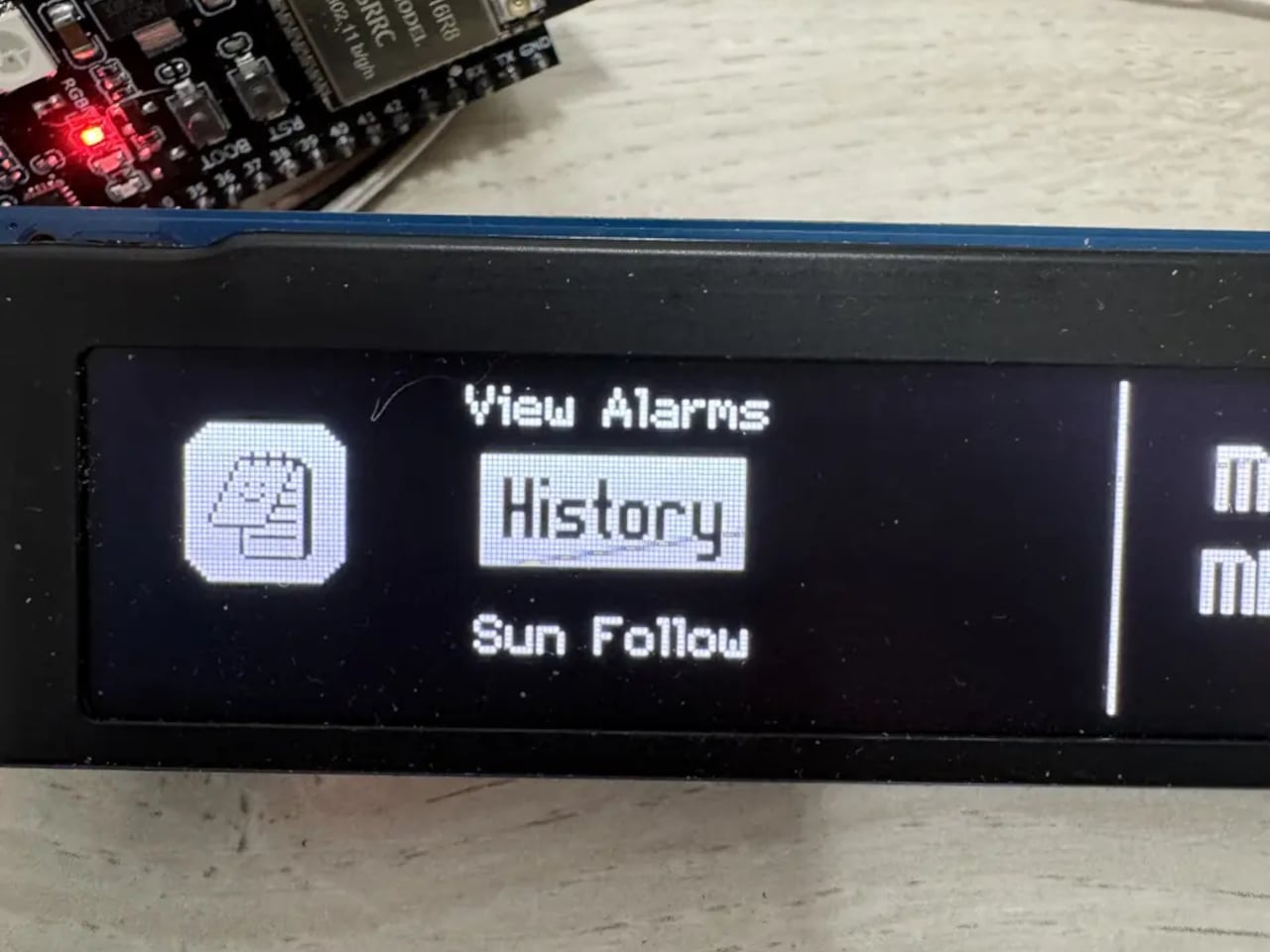
The physical form follows the logic of something designed to live on a desk permanently. The face is raked at an angle chosen for legibility whether the clock sits low on a nightstand or higher on a shelf. Navigation uses four keys and a joystick, with one move from standby opening a quick menu for alarm, timer, and stopwatch. The 3D-printed enclosure integrates the speaker grille into the same shell. The processor sleeps between seconds to work toward a two-week battery target, though the actual runtime won’t be published until measured.
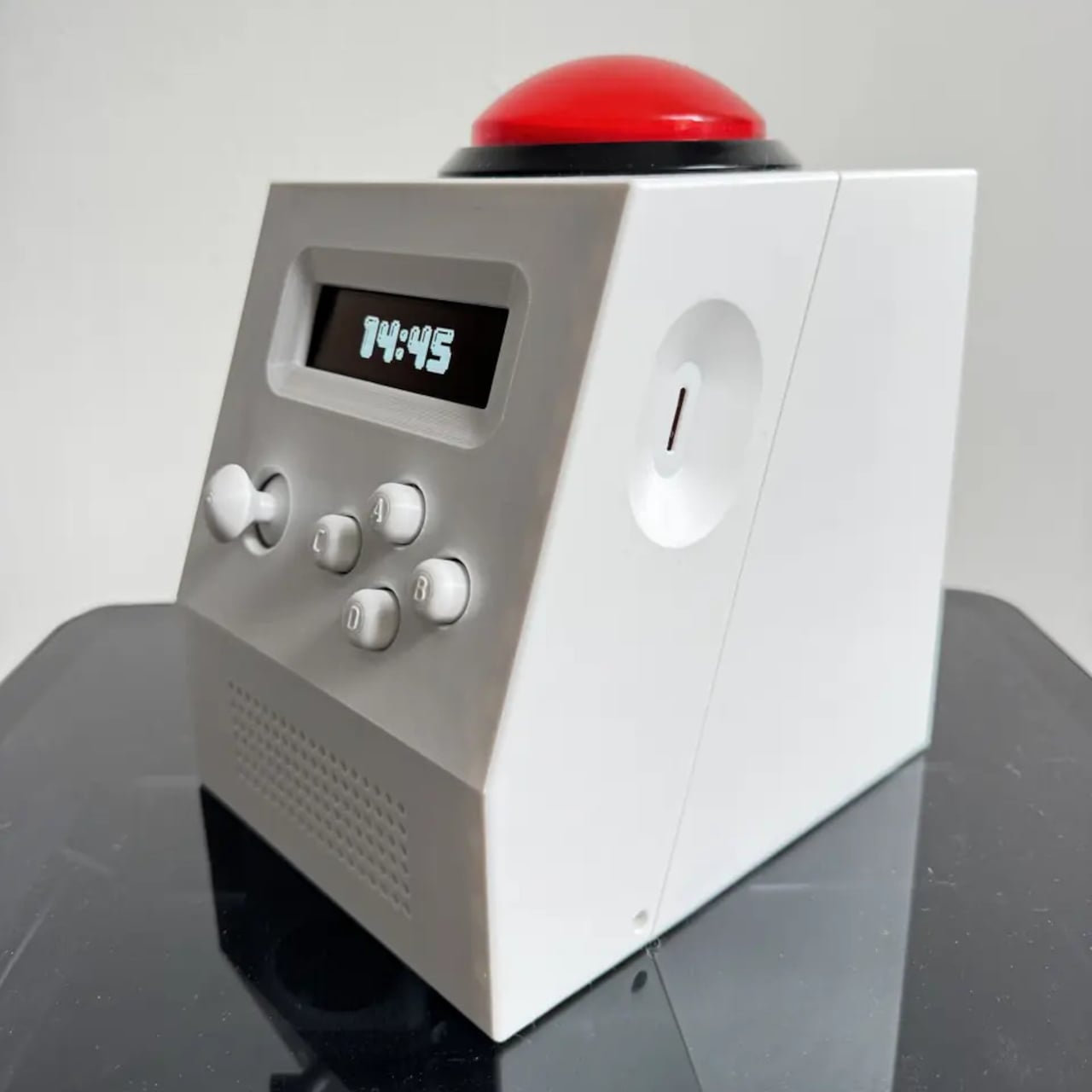
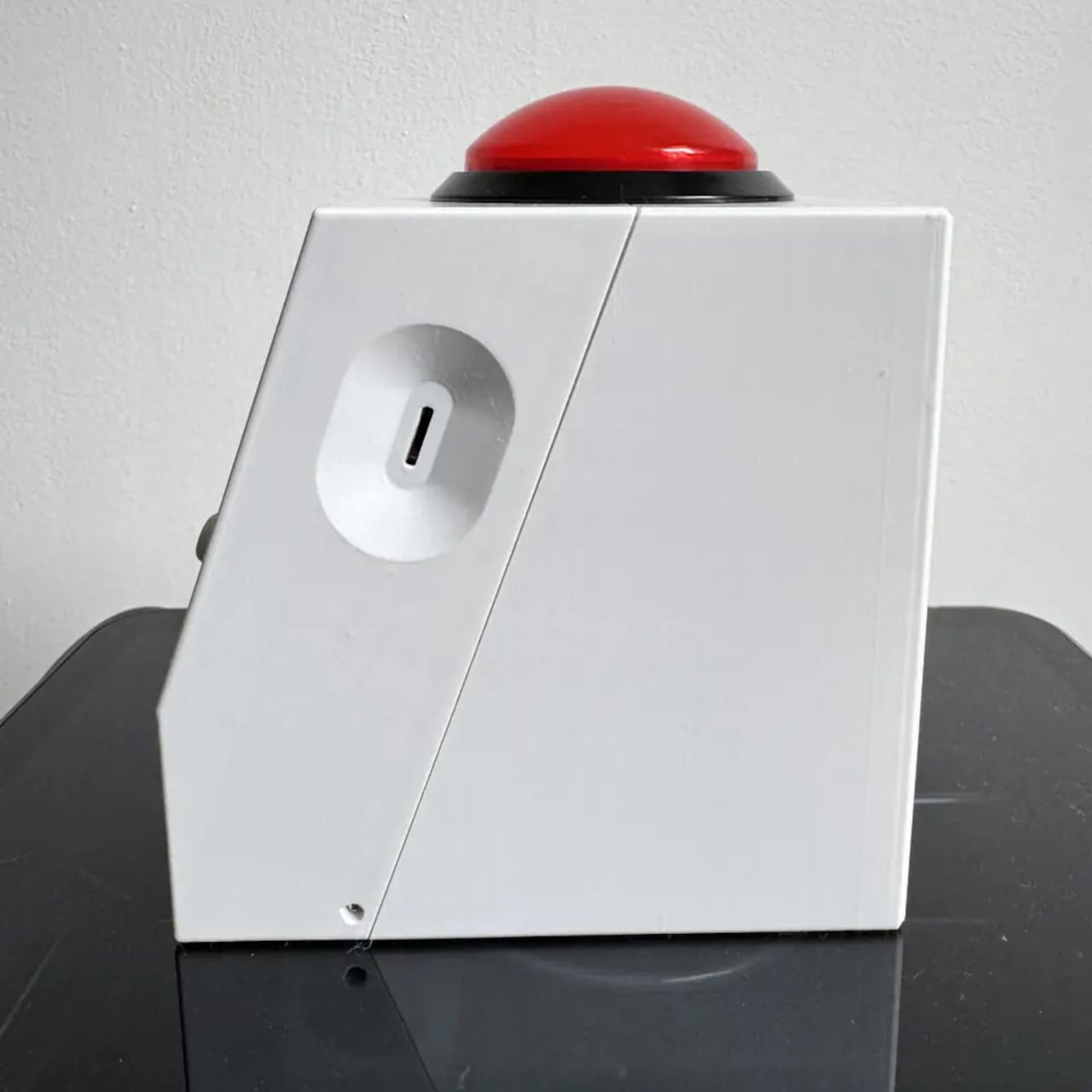
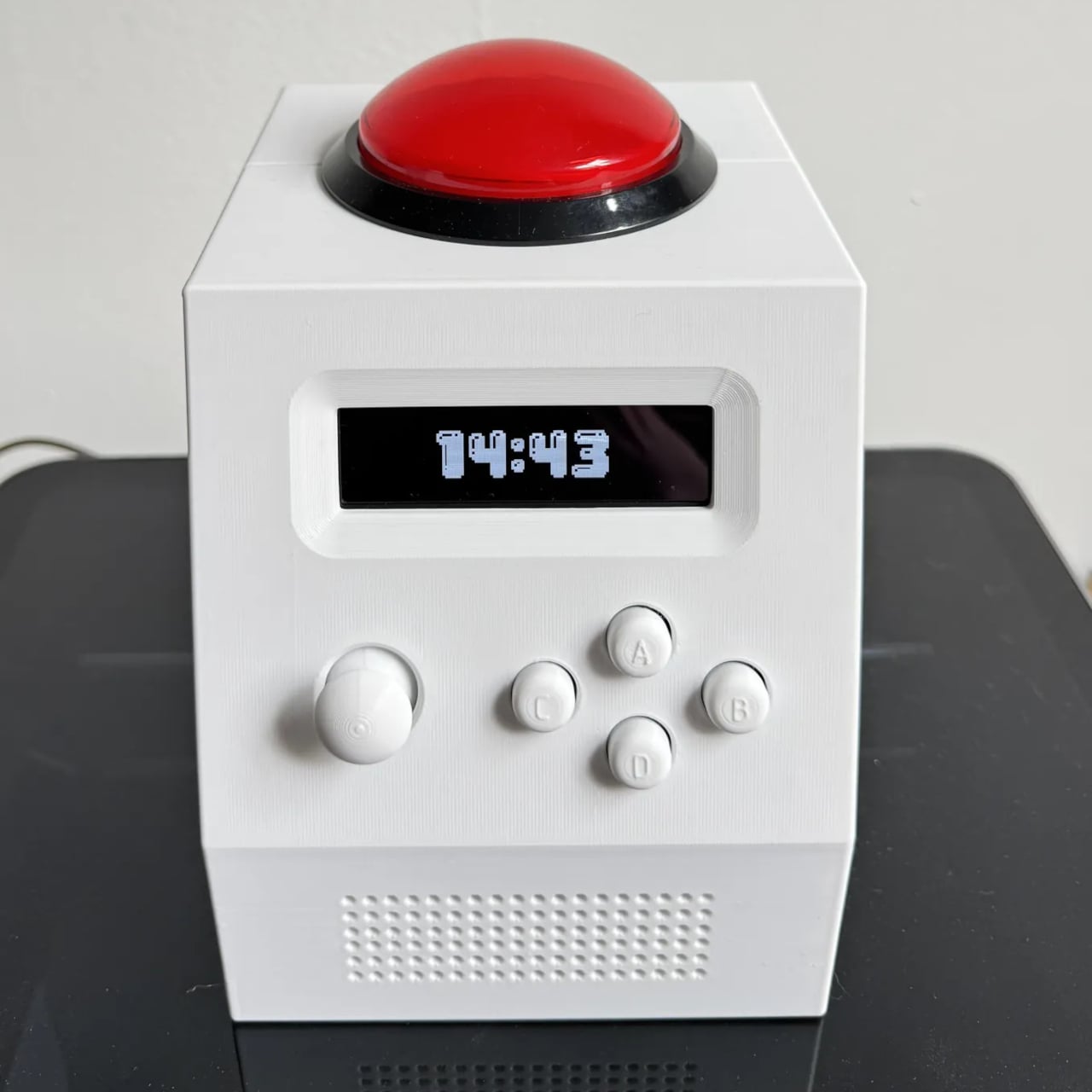
The repairability case is where the design earns a different kind of attention. The bill of materials, PCB design files, and enclosure models are all published at launch. The firmware is already on GitHub under a permissive Apache 2.0 license. Every module position is labeled on the back of the main board. The preference for common, well-documented components isn’t primarily about cost; it’s about sourcing availability, which is what keeps a device repairable years from now, when original sellers may no longer be around.
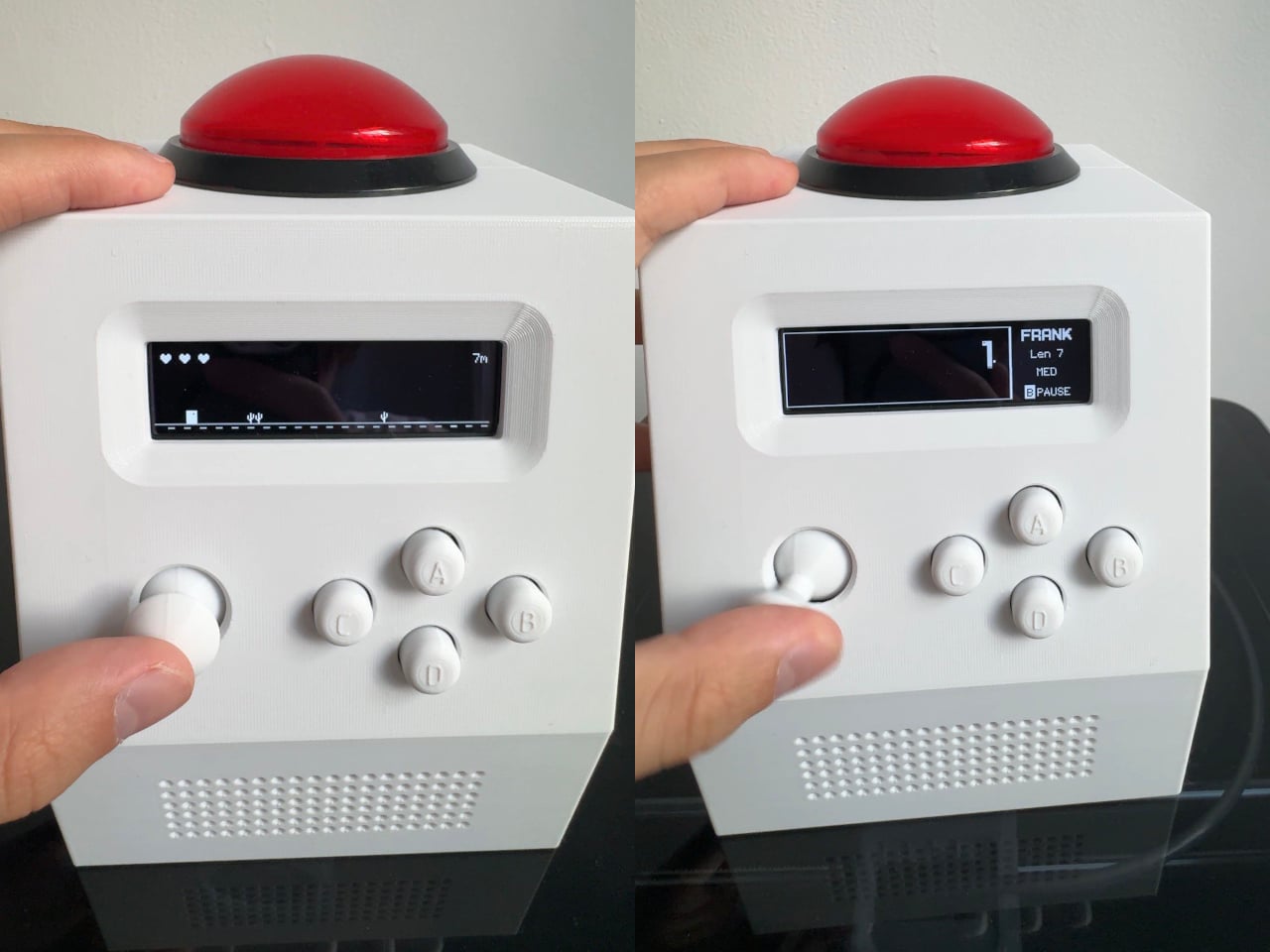
Most alarm clocks are priced to be replaced rather than fixed, and their design reflects that assumption. The CinderClock treats longevity as a design value rather than a bonus, and it makes that case consistently, from the open-source firmware down to the labeled circuit board that any careful owner can understand and service. It’s a more demanding thing to build, which is probably why it’s rare.