If you’ve ever spent twenty minutes dialing in your grinder before 8am, you already understand the particular madness of home espresso. It’s a hobby disguised as a morning routine, and a punishing one at that. Somewhere between the tamping pressure, the grind size, and the extraction time, the actual coffee gets lost. Datum is betting that most people are over it, and they might be right.
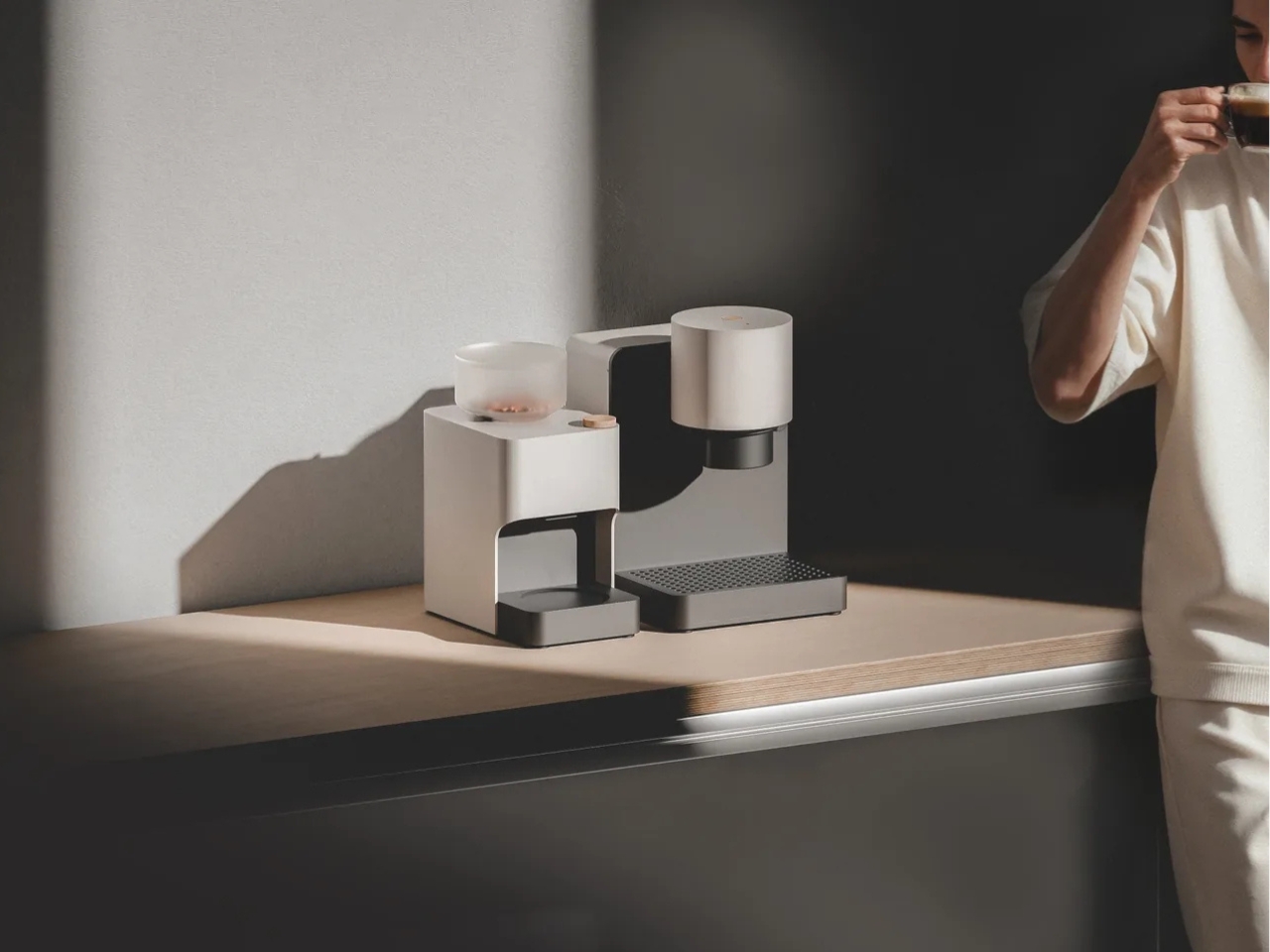
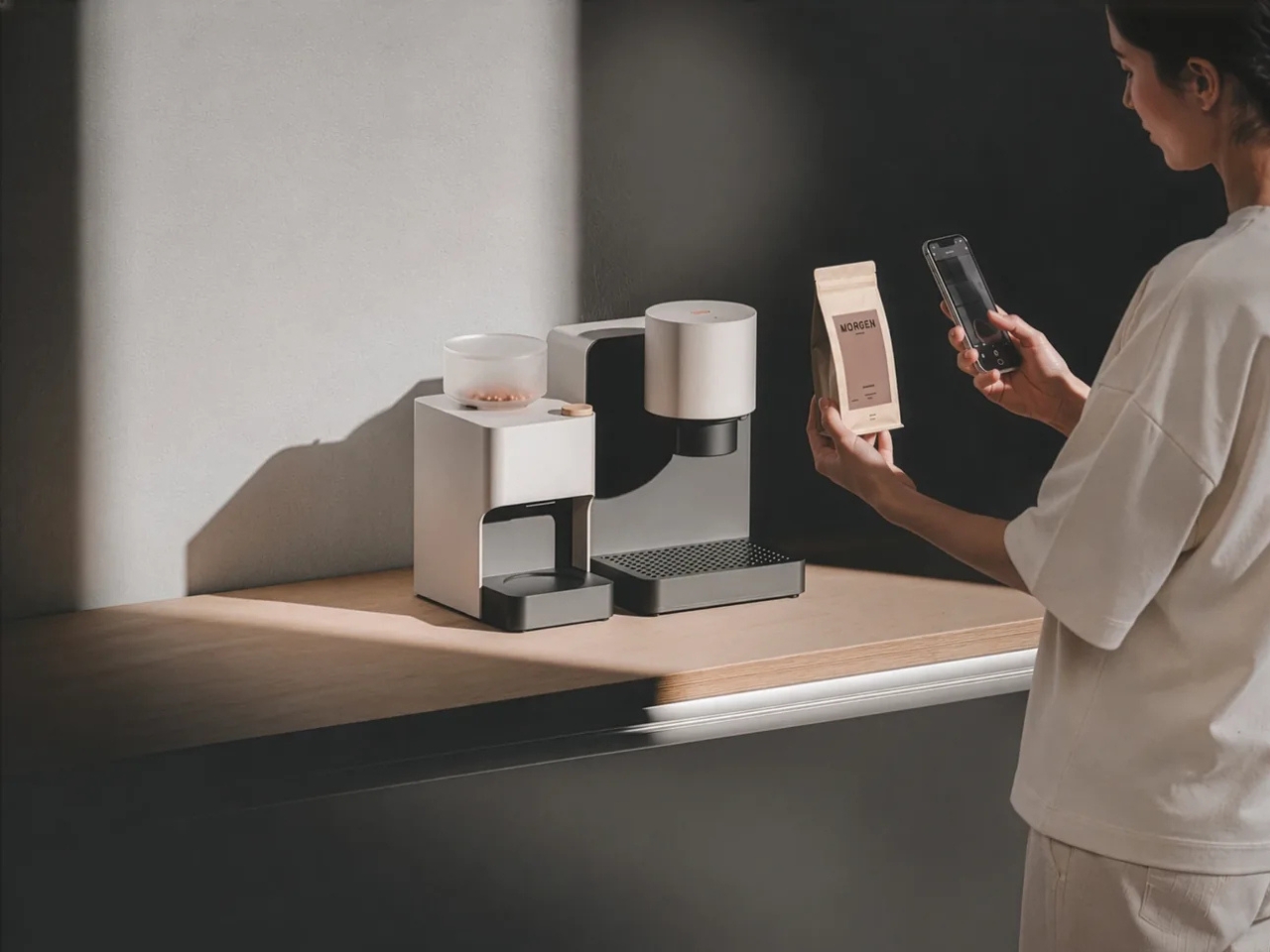
Datum is an Austrian startup founded by two 28-year-old mechanical engineers and designers, Christoph Konheisner and Nikolaus Potapow, out of Innsbruck. What they’ve built, or rather what they’re building, is an espresso machine and grinder designed as one cohesive system, paired with an open recipe platform that connects the machine directly to the roaster’s knowledge. The concept is deceptively simple: scan your coffee bag once, and the machine sets itself up to brew it exactly the way the roaster intended. No guesswork, no wasted shots.
Designer: Datum
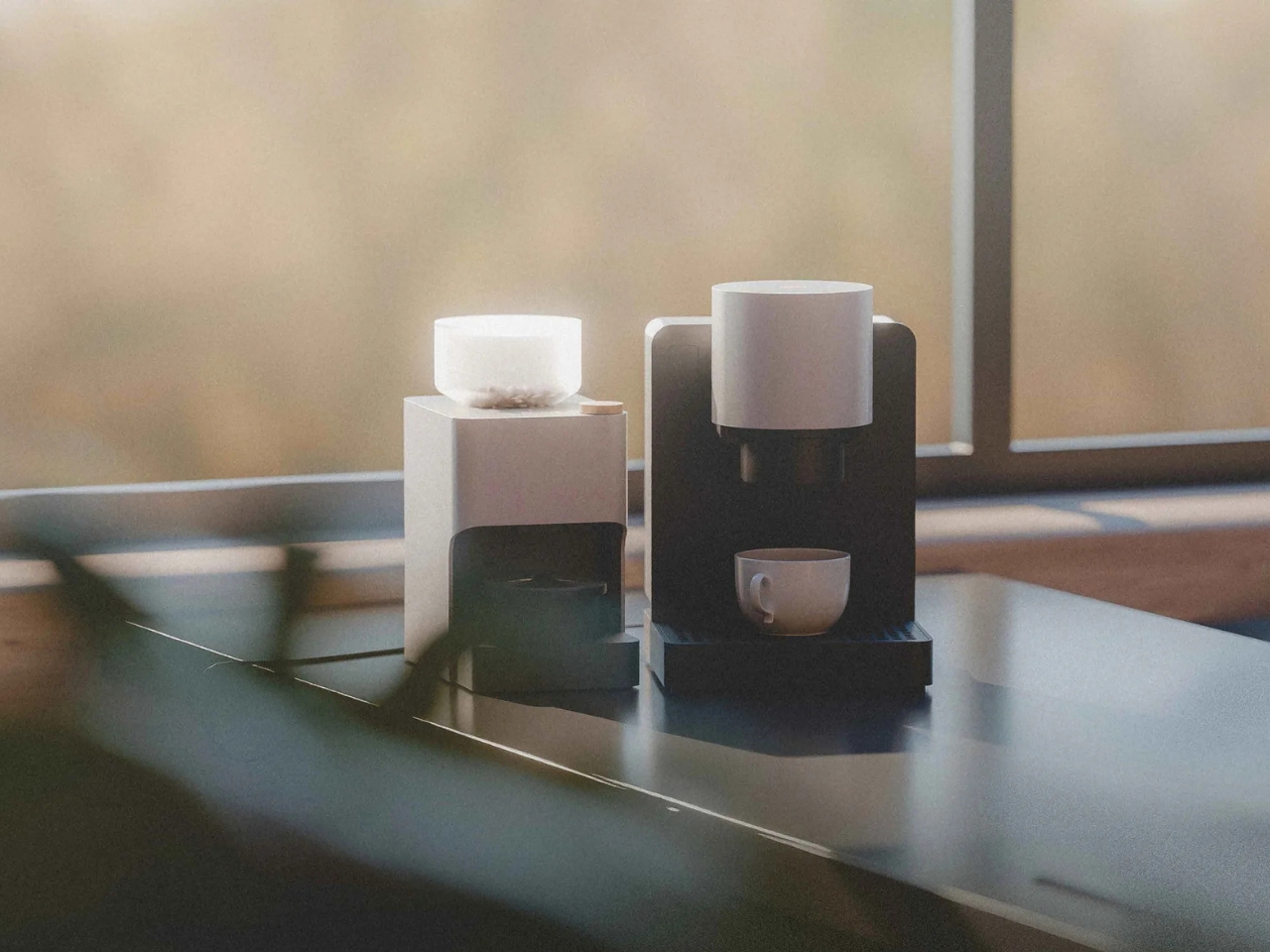
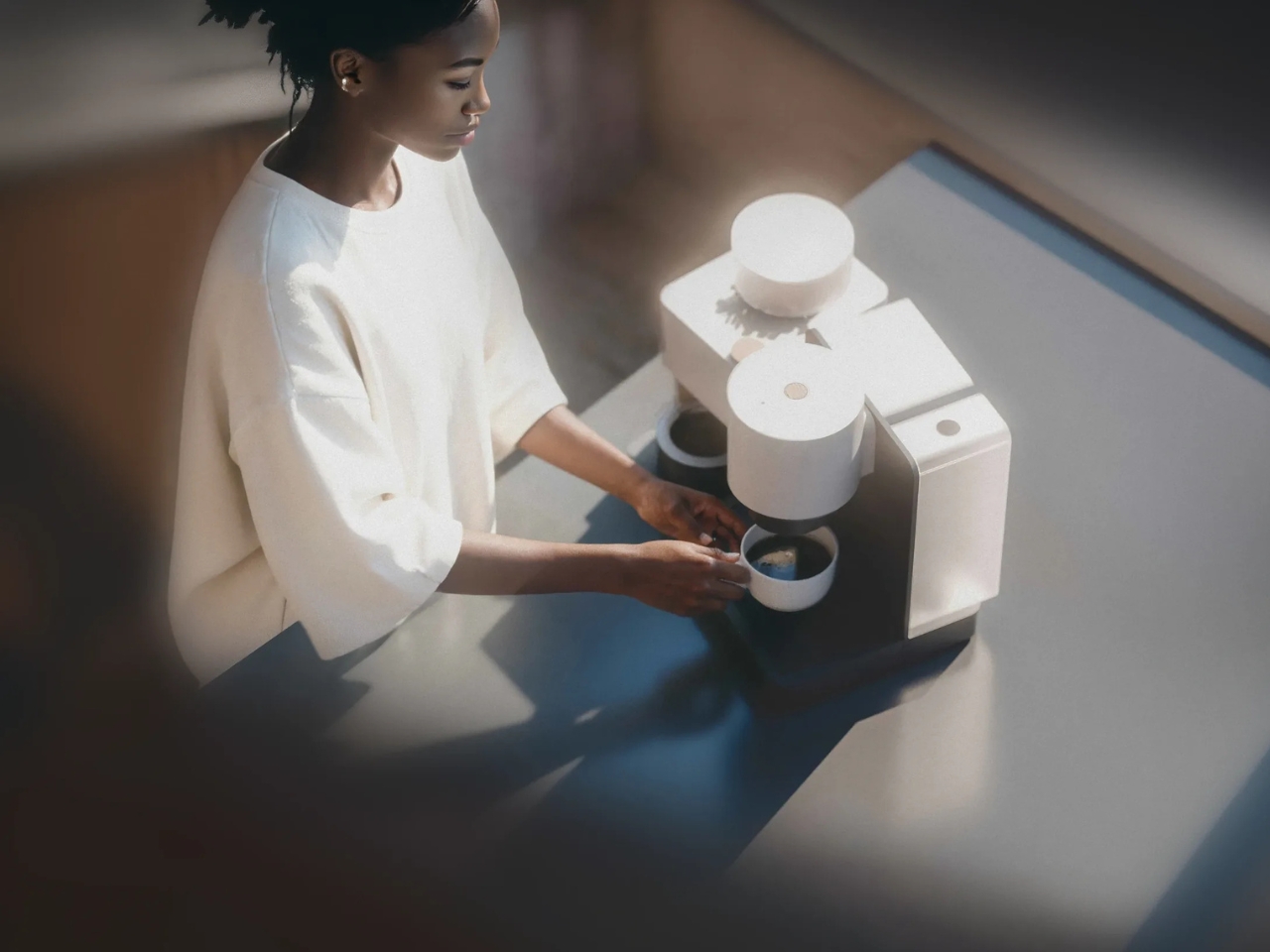
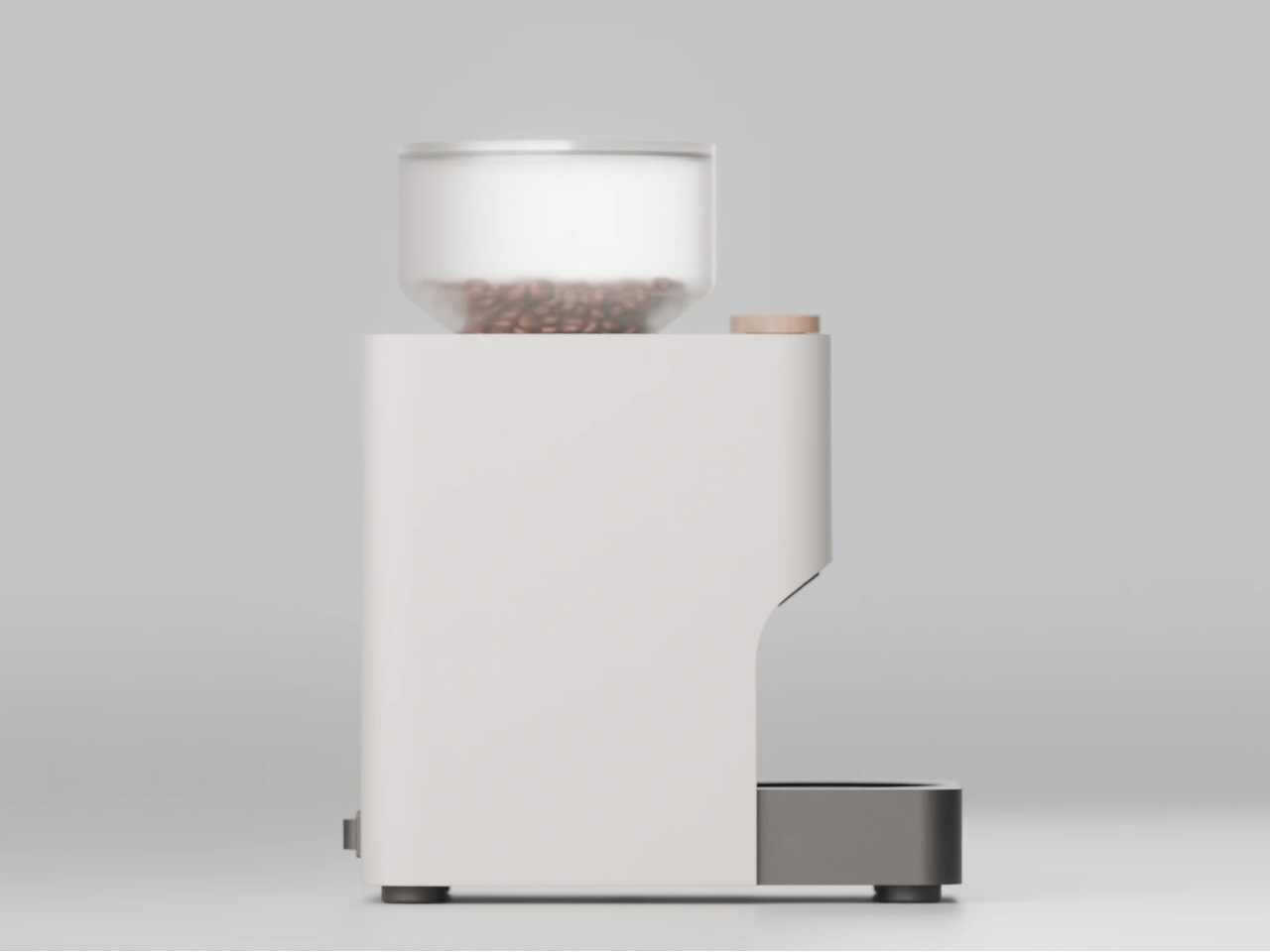
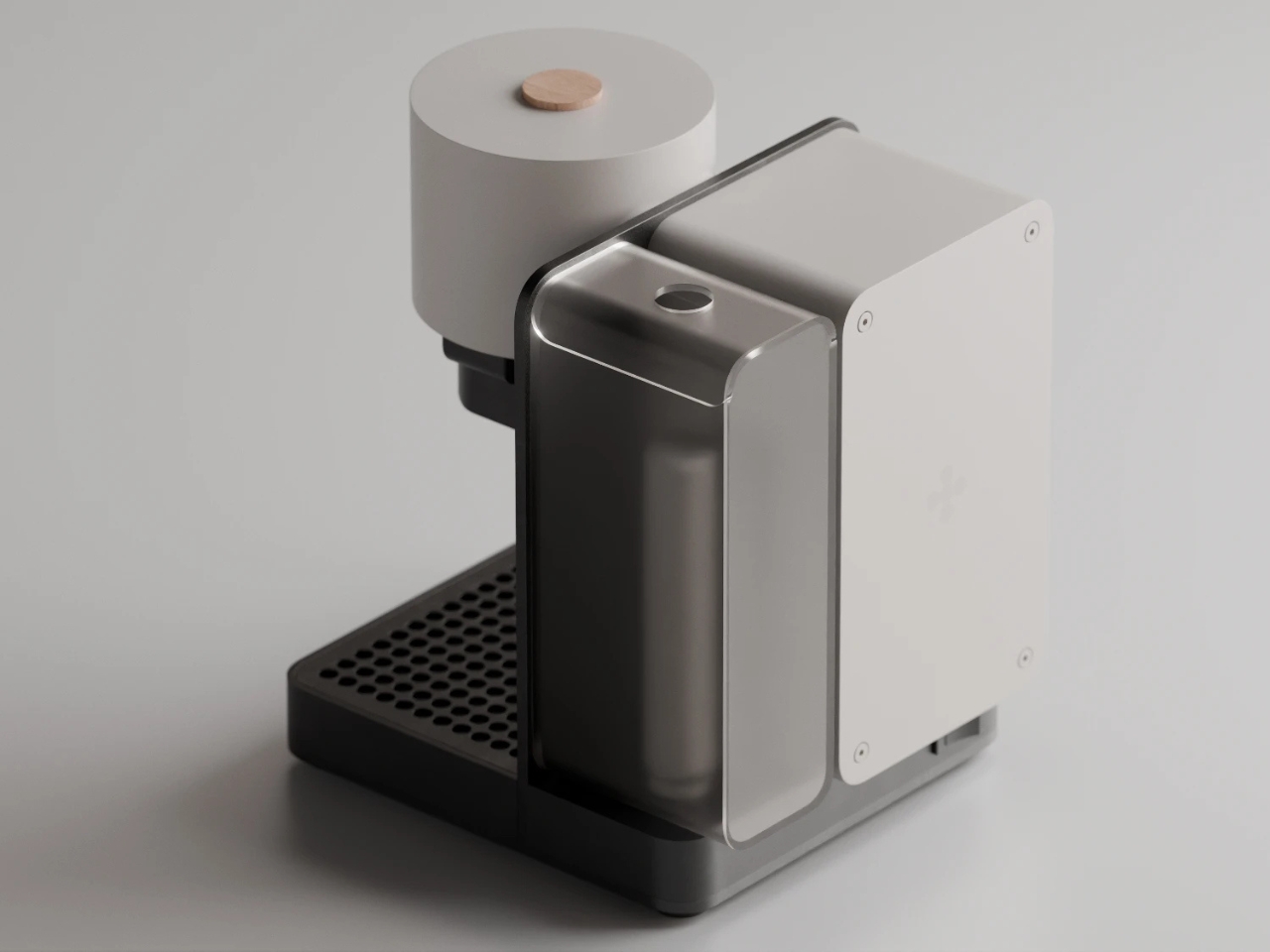
The hardware is where Datum earns its design credibility. The espresso machine and grinder aren’t just sold together; they’re built to talk to each other. The machine heats up while the grinder is running, which means no standing around waiting for it to get up to temperature. The grinder itself uses 64mm flat burrs with digital grind size adjustment at micrometer precision, which on paper sounds like specialty coffee jargon and in practice means your grind is never accidentally off. The portafilter basket is a standard 58mm, which coffee purists will appreciate, but the real conversation-starter is the integrated auto-tamp function built directly into the brew head. Insert your portafilter, press start, and the machine takes care of tamping before brewing. Pressure, flow, and temperature are all handled automatically.
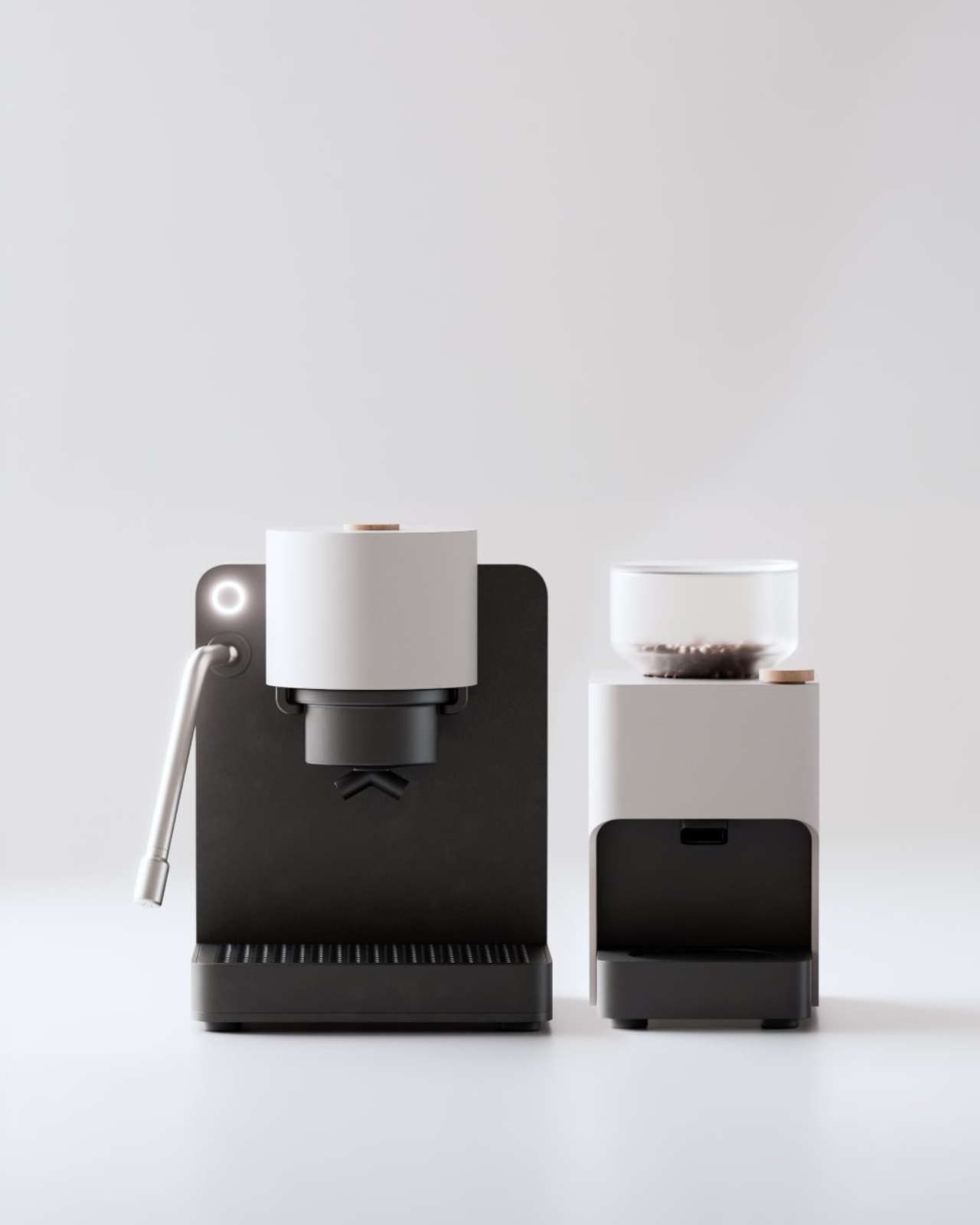
I’ll be honest: the auto-tamp alone feels slightly revolutionary to anyone who has ever pulled a bad shot because their tamp was uneven on a Monday morning. It’s such an obvious pain point in the home espresso experience that it’s almost surprising no one has tackled it this elegantly before.
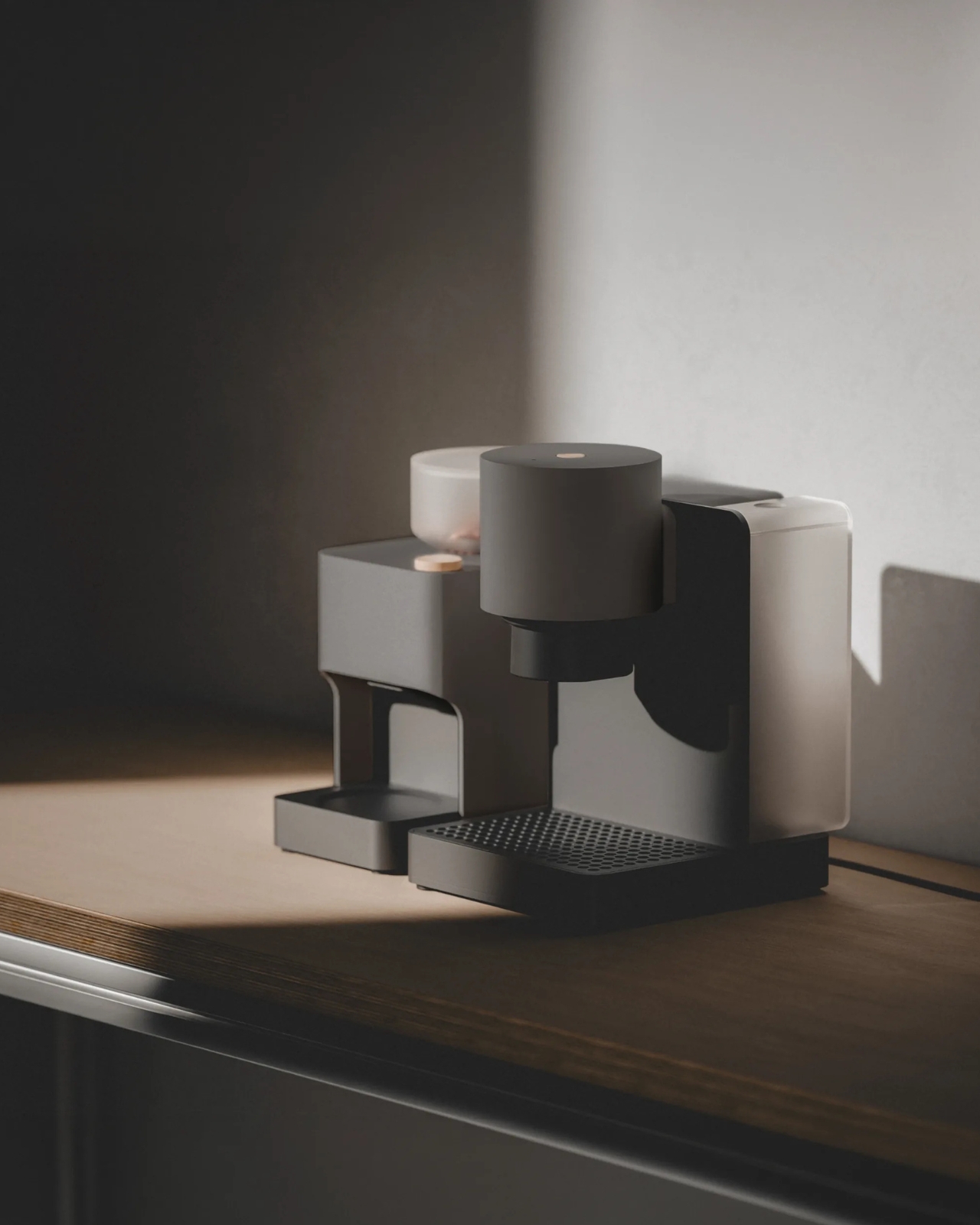
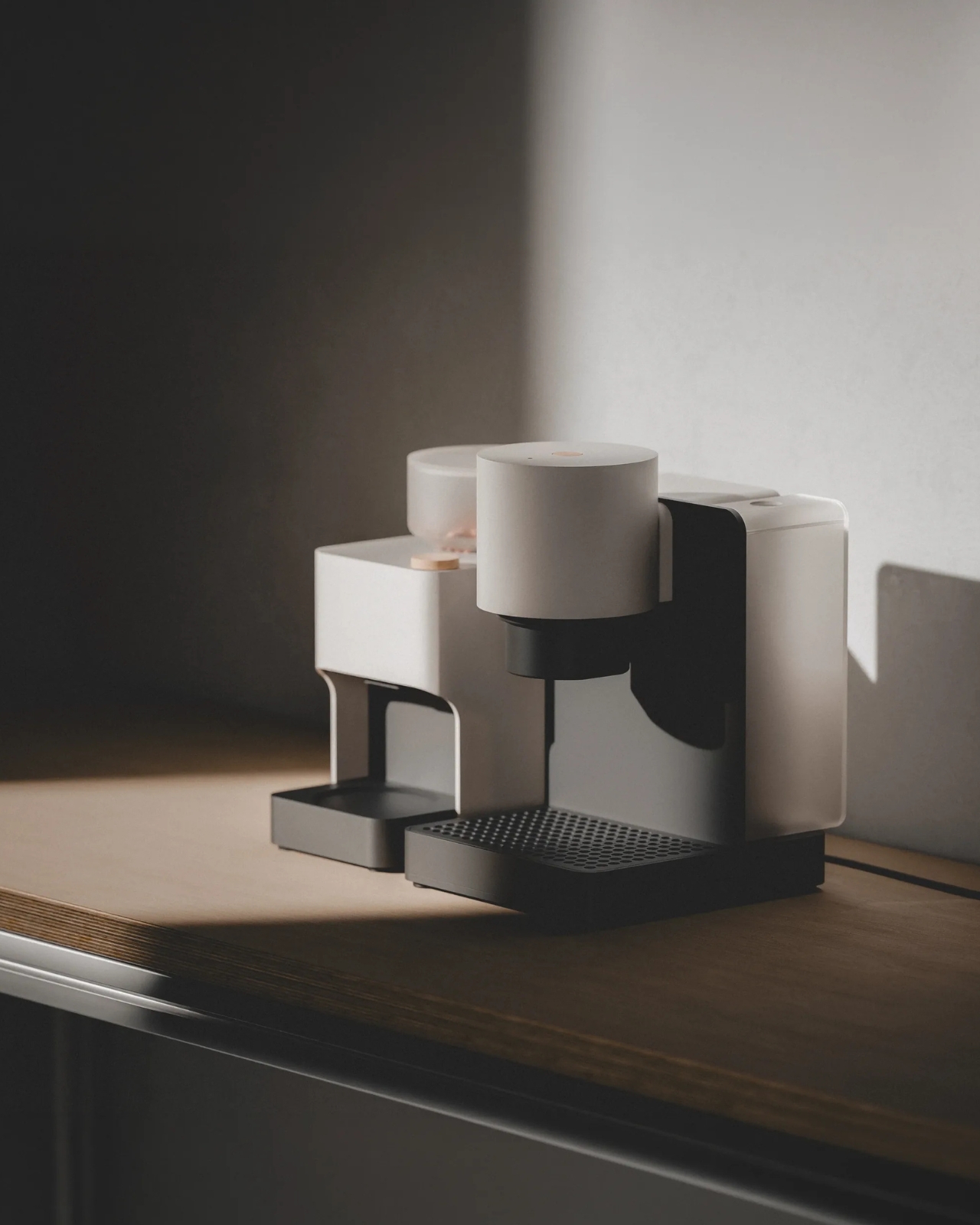
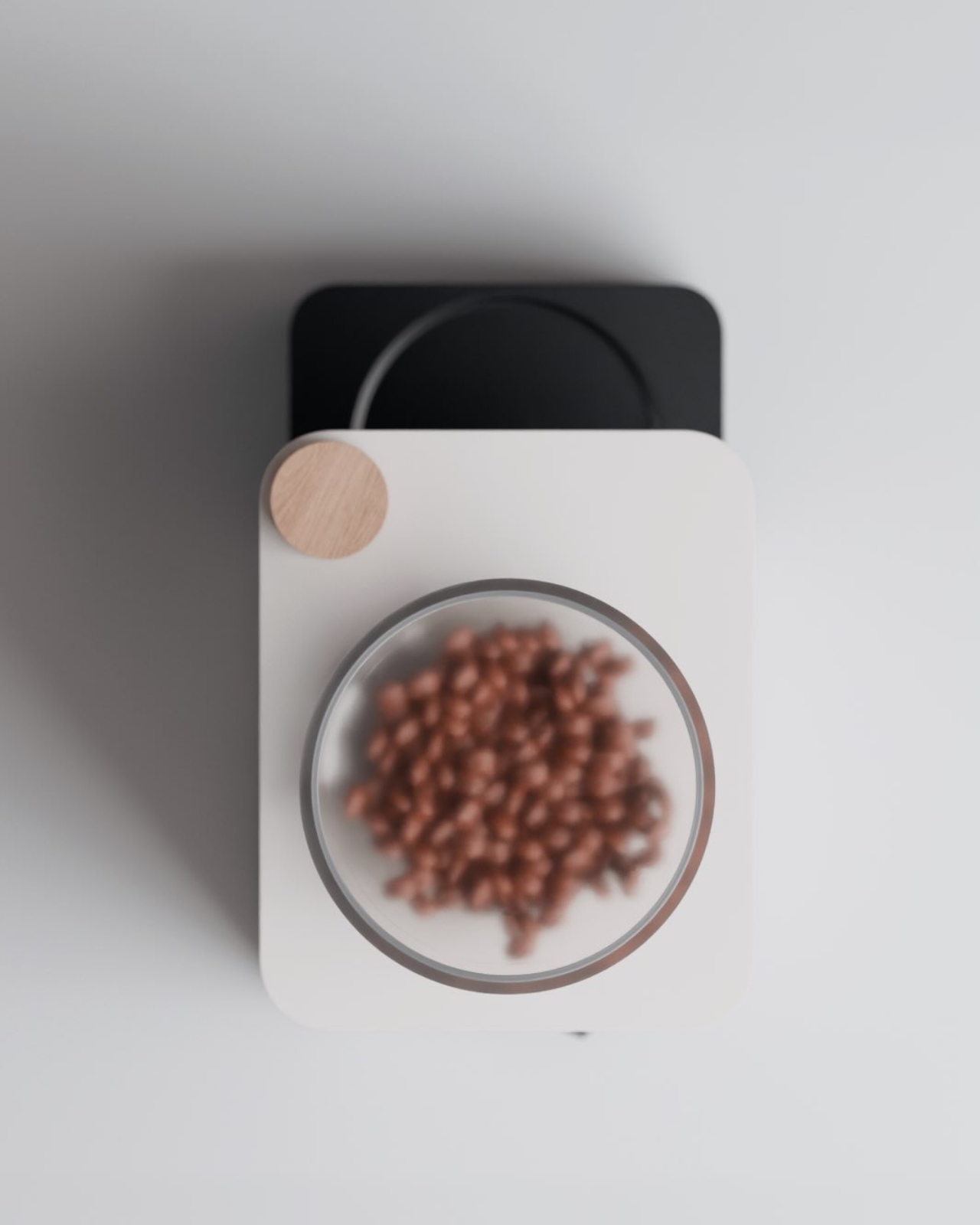
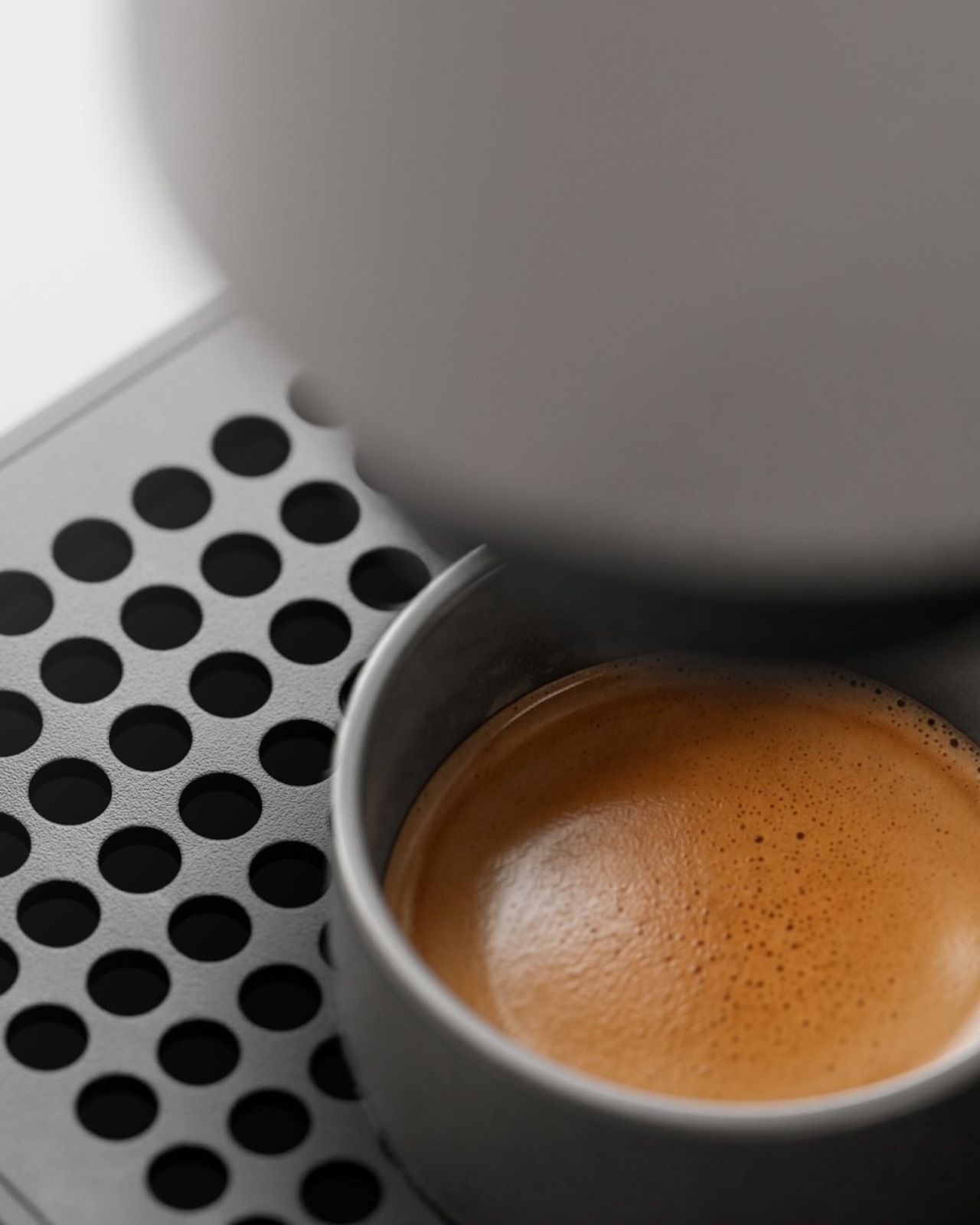
Aesthetically, Datum is very much a product of its design moment. The palette is stark and monochromatic, a matte off-white and deep charcoal that reads more Scandinavian architecture than countertop appliance. Soft surfaces, clean geometry, and what the team describes as “small natural details” give it a quietly confident look. It photographs beautifully, which is not an accident when your target audience lives on Instagram and Pinterest, but it also seems to be built with intention beyond surface beauty. The machine is designed around circular economy principles: modular, dismantlable, and repairable. The continuous flow heating system reduces energy consumption, and even the compact footprint is deliberate, minimizing material use in the build.
The third layer of Datum, and arguably the most ambitious, is the platform. Datum wants to create an open ecosystem where roasters upload their ideal recipes and home brewers simply access them through a scan. Every coffee bag becomes a kind of instruction set. For roasters, it’s a way to extend their craft directly into a customer’s kitchen. For drinkers, it removes the barrier between buying excellent coffee and actually doing it justice. It’s the kind of idea that sounds almost too sensible, and it genuinely changes the relationship between the person who sources the bean and the person who drinks the cup.
Datum is still a prototype. The Kickstarter is planned for late 2026, with delivery expected sometime in 2027. The early bird price sits at €1,199 for the machine and grinder as a set, which, for what’s on offer, is actually competitive in a market where serious espresso setups regularly cost double that before you even account for the grinder. Whether it delivers on its promises at that price point remains to be seen.
But the concept is genuinely worth paying attention to. Coffee culture has spent years pushing consumers toward either expensive, complicated setups or oversimplified pod machines with no soul. Datum is reaching for the middle ground, and doing it with real design intelligence. That’s harder to pull off than it looks.