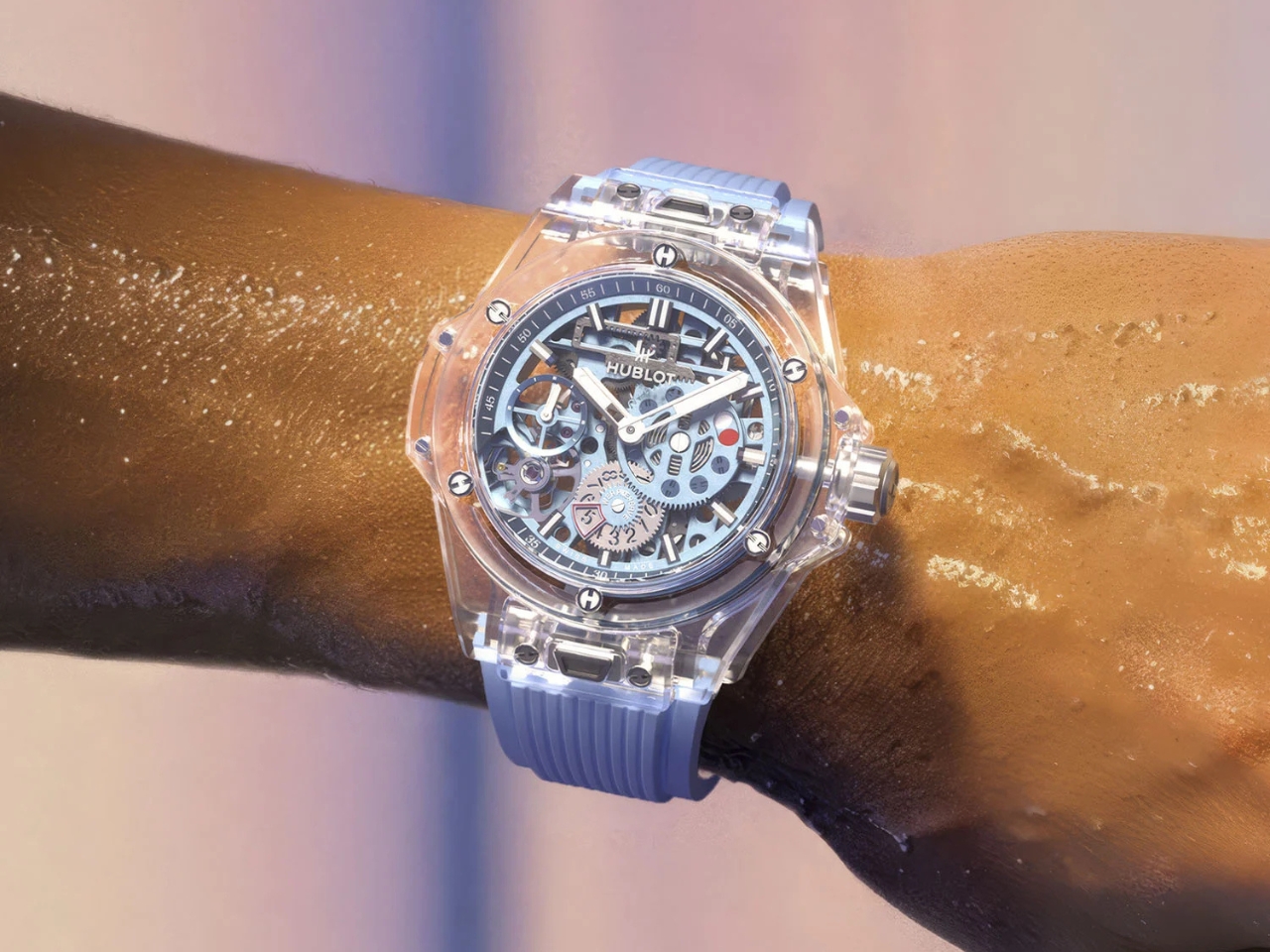
I have a theory about luxury watches: the best ones don’t just tell time, they start conversations. The Hublot Big Bang Sapphire Sky Blue is exactly that kind of watch. It’s a 44mm piece of sky-blue transparency that makes you stop mid-sentence and stare, not because it’s flashy in the traditional sense, but because it looks almost impossibly light. Like someone poured an afternoon sky into a case and sealed it with titanium screws.
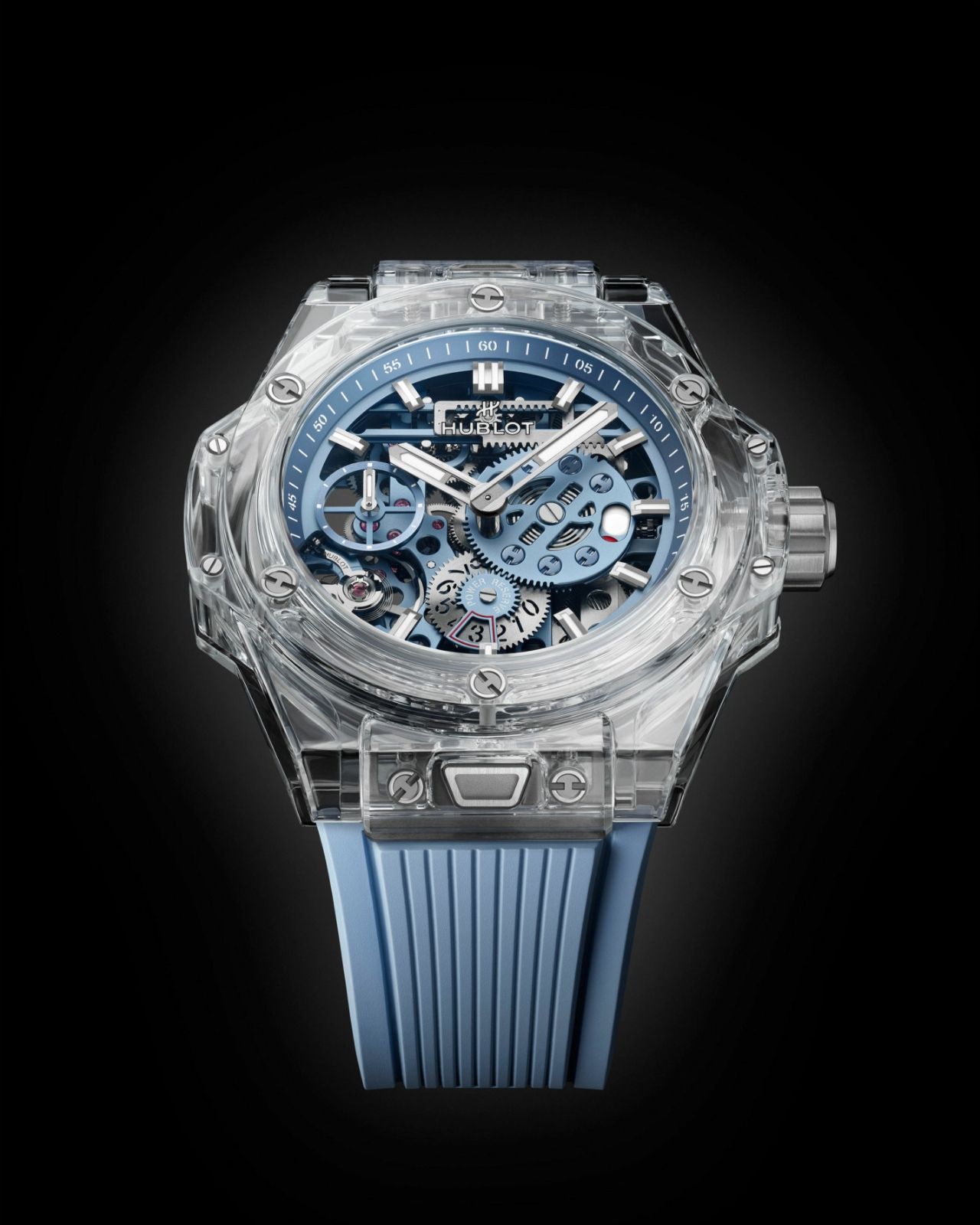
Hublot has been working with sapphire as a structural material since 2016, earning a reputation as the go-to house for pushing what this material can actually do. What started as a clear sapphire case has evolved into something more ambitious, and this new limited edition is a strong example of that progression. The 44mm case and bezel are crafted from fully polished sapphire crystal, not coated or tinted, but rendered in a genuine sky-blue transparency that shifts subtly depending on the light. Depending on how the light catches it, this watch can feel cool and airy or warm and atmospheric, a kind of visual fluidity that’s rare even in this price category. It’s the kind of color that doesn’t settle for one mood.
Designer: Hublot
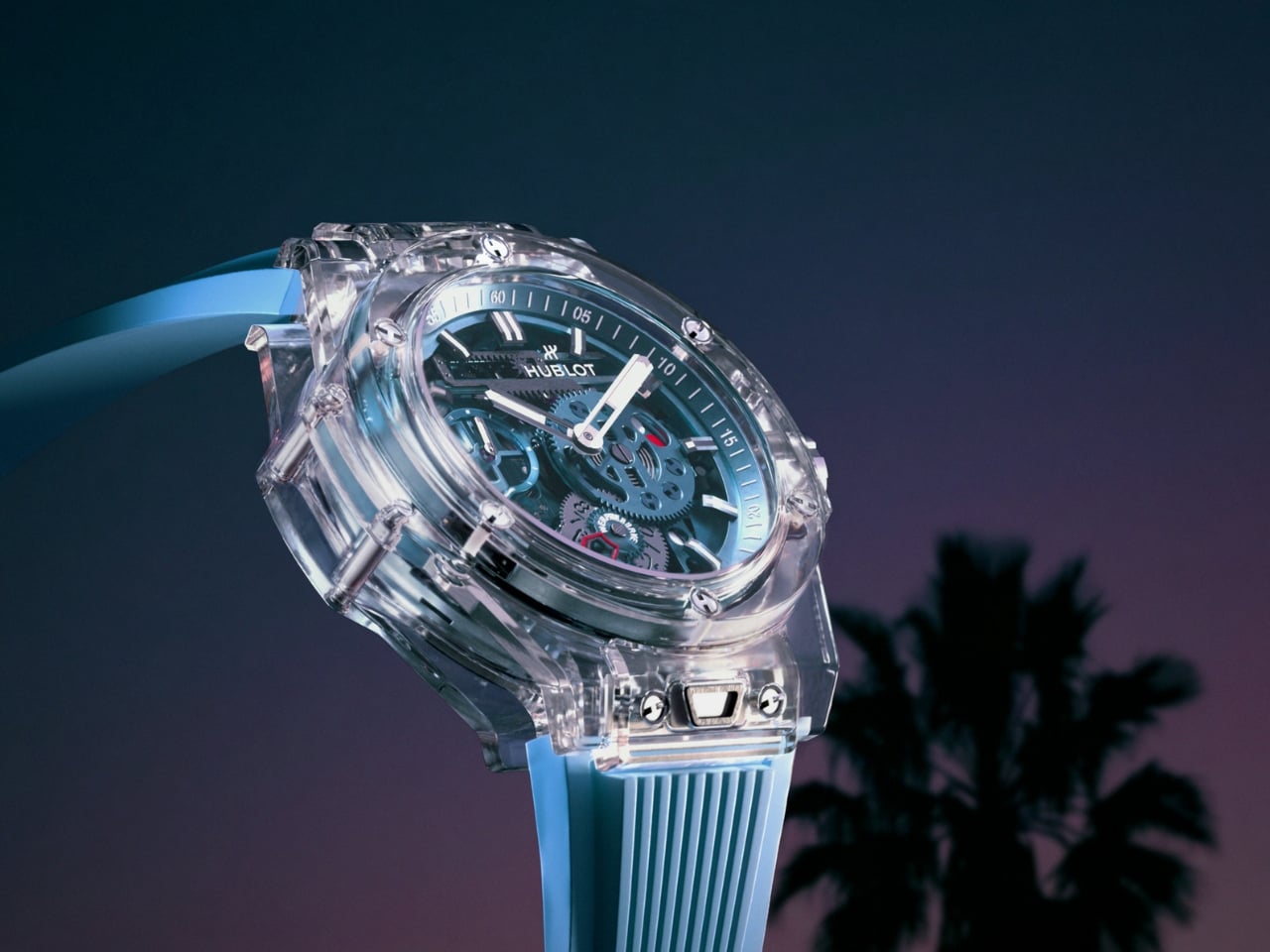
The case is held together by Hublot’s signature H-shaped titanium screws, and if you’ve spent any time with the Big Bang line, you know those screws are as much a design statement as a structural one. The six-screw bezel is recognizable at a glance, and pairing that hardware with a transparent sapphire case feels like the right call. Nothing hides, everything is intentional. The strap continues the color story in structured sky-blue rubber, and the matte sky-blue skeleton dial and matching movement bridges create an immersive, coordinated picture that somehow avoids feeling one-dimensional.
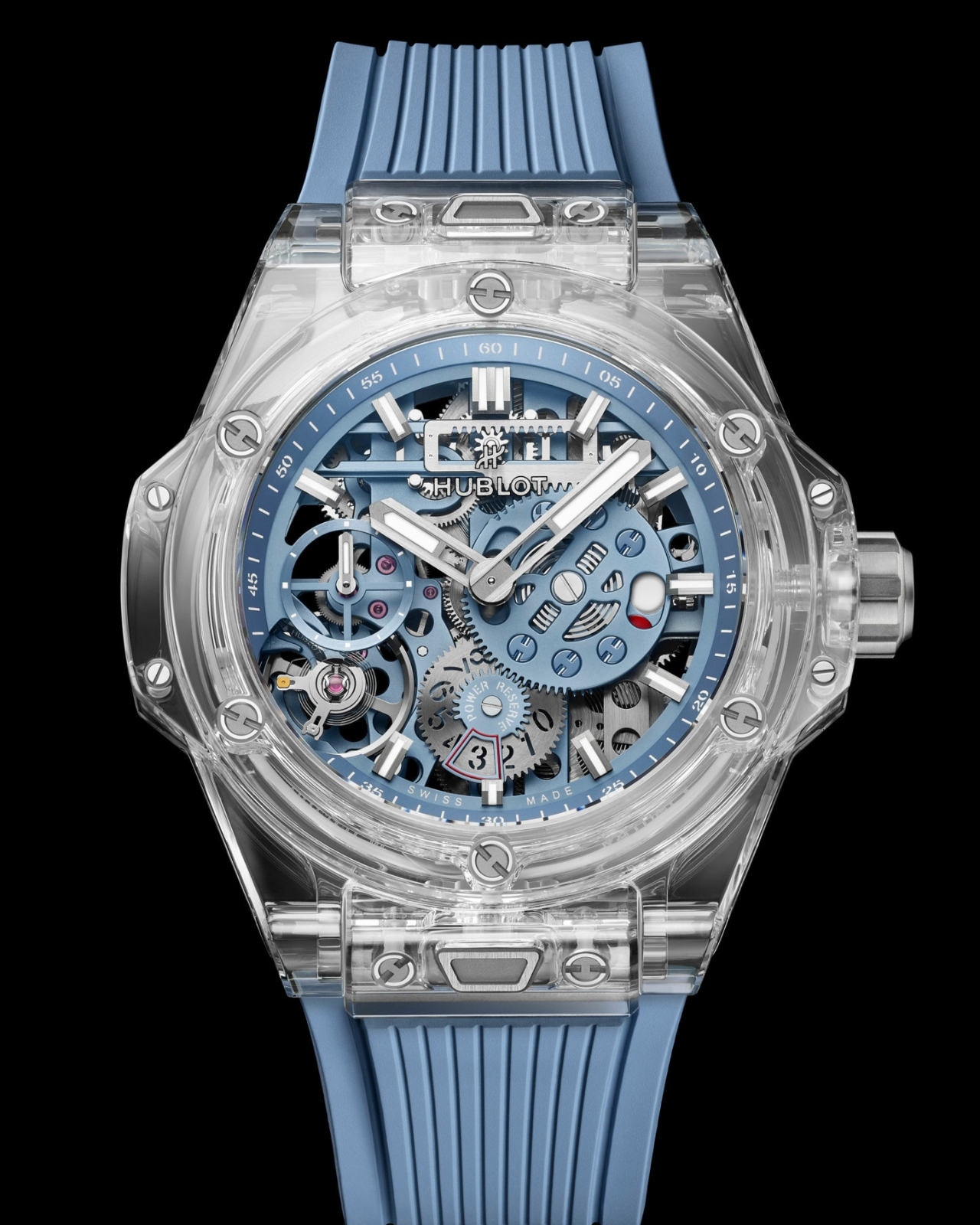
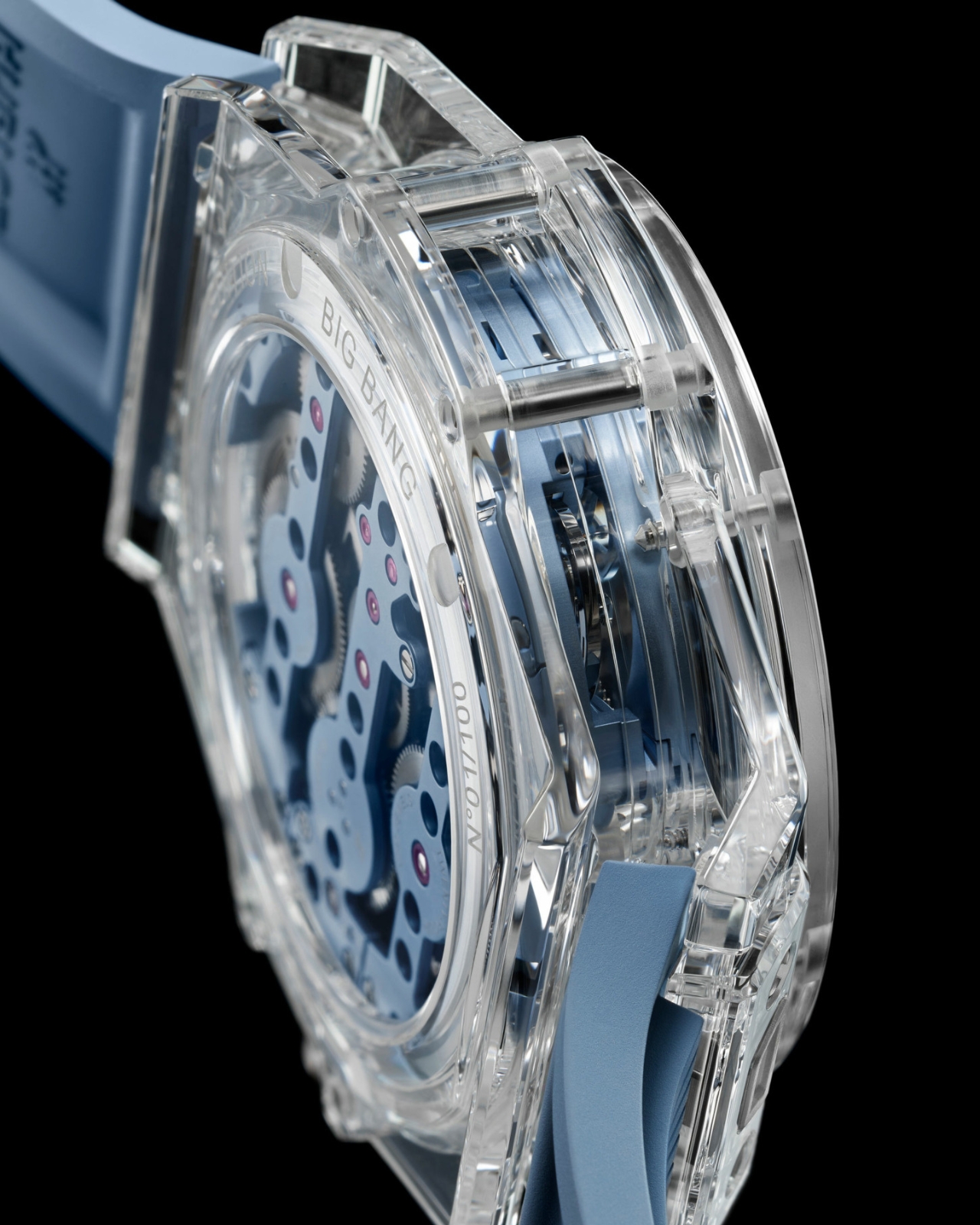
None of that would matter as much without something genuinely interesting happening inside. The movement powering the Big Bang Sapphire Sky Blue is the HUB1201 Manufacture Meca-10, a caliber that debuted in 2016 and remains one of the most visually distinctive in modern watchmaking. It was designed around the movement itself rather than squeezed into a conventional watch architecture, and the influence of mechanical construction systems, almost Meccano-like in its visual logic, is impossible to miss. Two parallel mainspring barrels give the watch a 10-day power reserve, meaning you won’t be winding this one every morning. A rack-and-pinion mechanism moves two sliding racks across the dial to display that power reserve in a way that reads more like industrial art than traditional horology. Running seconds at 9 o’clock, power-reserve display at 6 o’clock, and through the sapphire caseback, you can see all of it in motion.
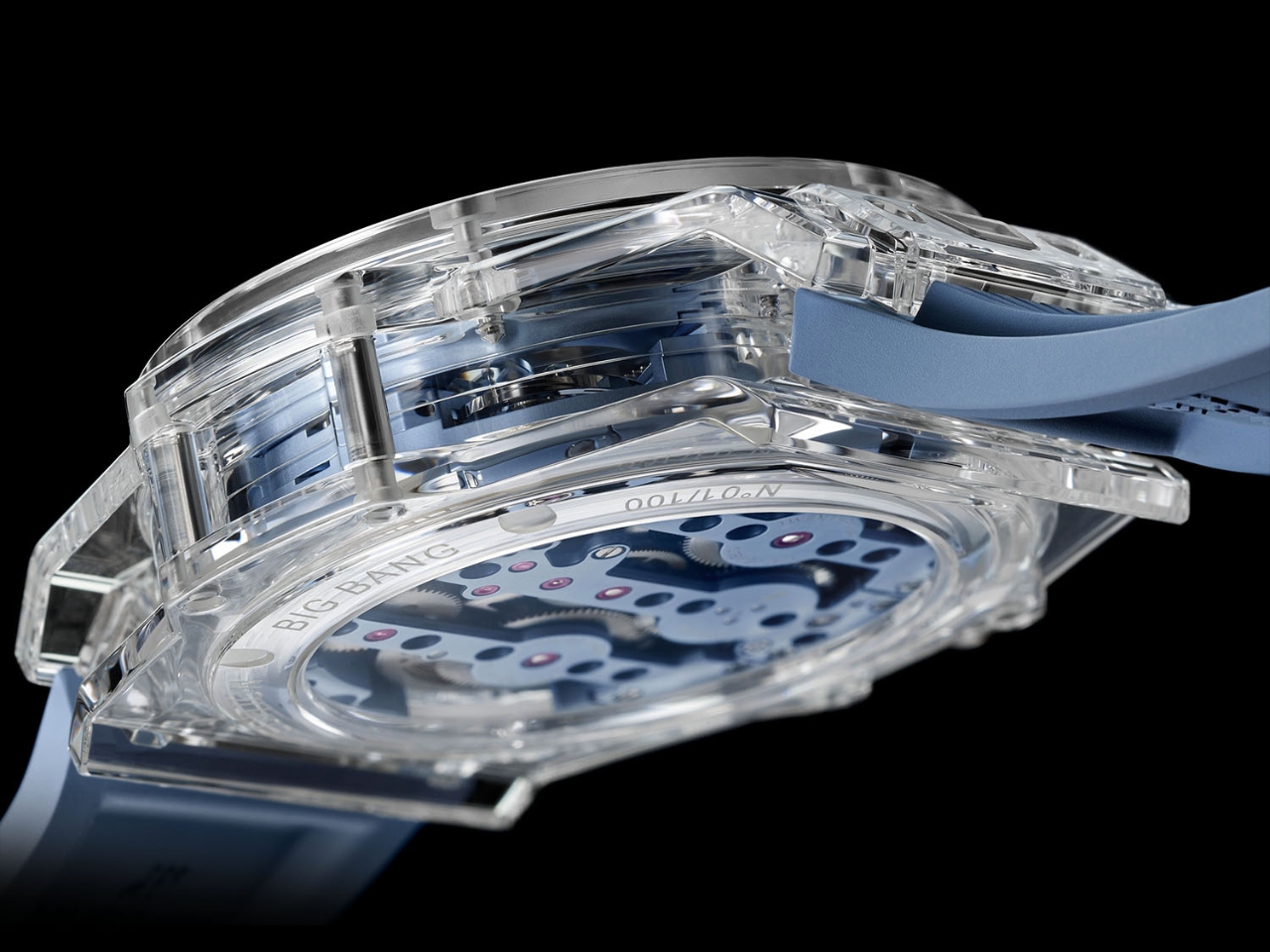
Most skeleton watches look beautiful and stop there. The Meca-10 is different because the architecture actually makes sense when you study it. The structure has visual logic even for someone who’s never read a watchmaking manual, and the sky-blue bridges and dial frame the movement rather than compete with it. That restraint is harder to pull off than it looks.
At $84,300, the Big Bang Sapphire Sky Blue is not a casual acquisition. With only 100 pieces produced worldwide, it lands firmly in serious collector territory, and the scarcity here feels genuinely earned. Crafting a colored sapphire case at this scale is a real engineering challenge, and that material ambition justifies the exclusivity more convincingly than a simple limited-edition number ever could.
Could you wear it every day? Possibly. Should you? That’s a more personal question. At 44mm with a very deliberate visual presence, this watch commands attention. With 50 meters of water resistance, it handles daily life comfortably, though anything more demanding than that would be pushing it.
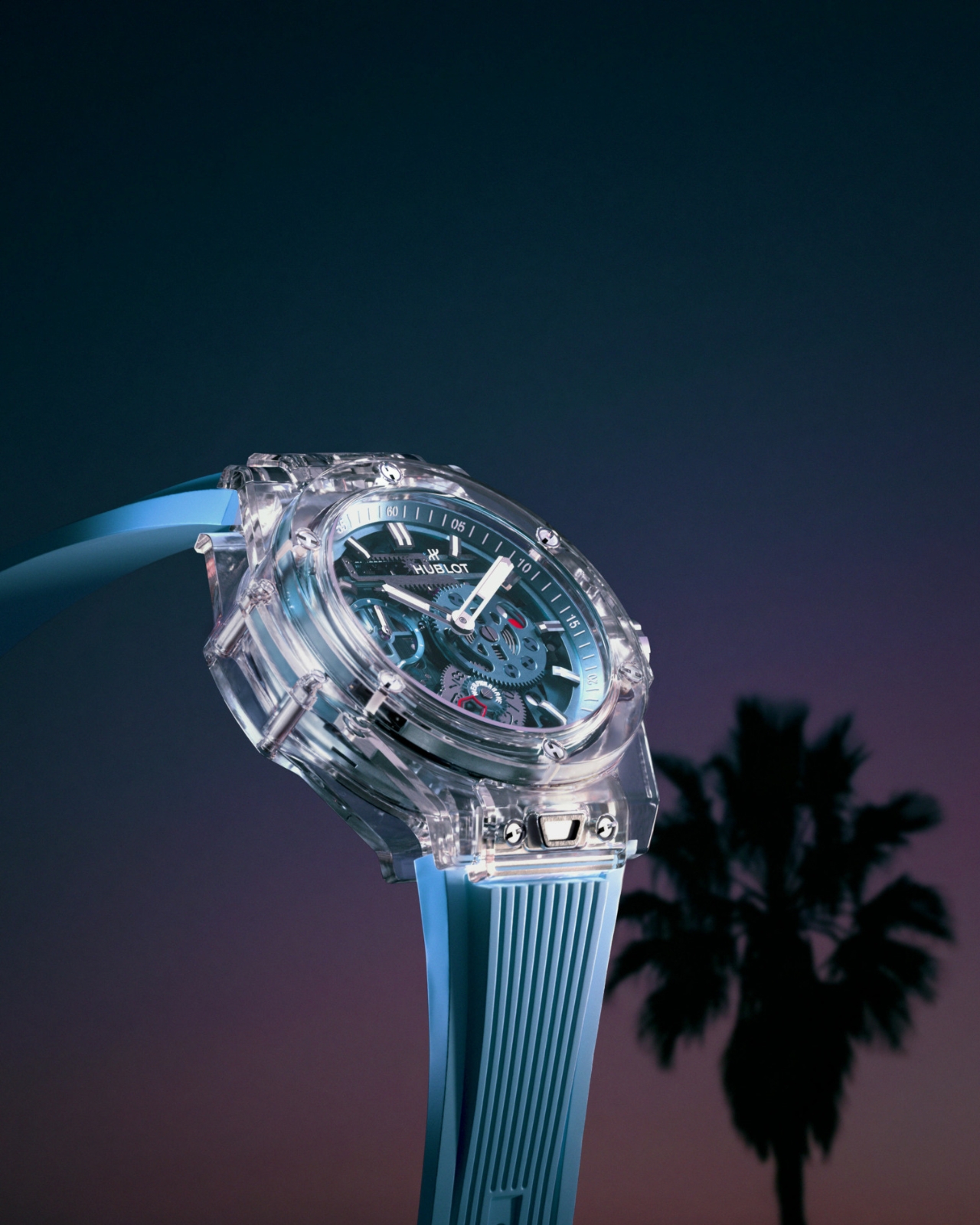
The concept itself is what’s worth sitting with: a watch that bets entirely on material and mechanics, and asks you to find that more compelling than a gem-set dial or a celebrity campaign. For the right collector, that’s a very easy bet to take. The Big Bang Sapphire Sky Blue makes transparency, literal and otherwise, its entire argument. And it’s a persuasive one.