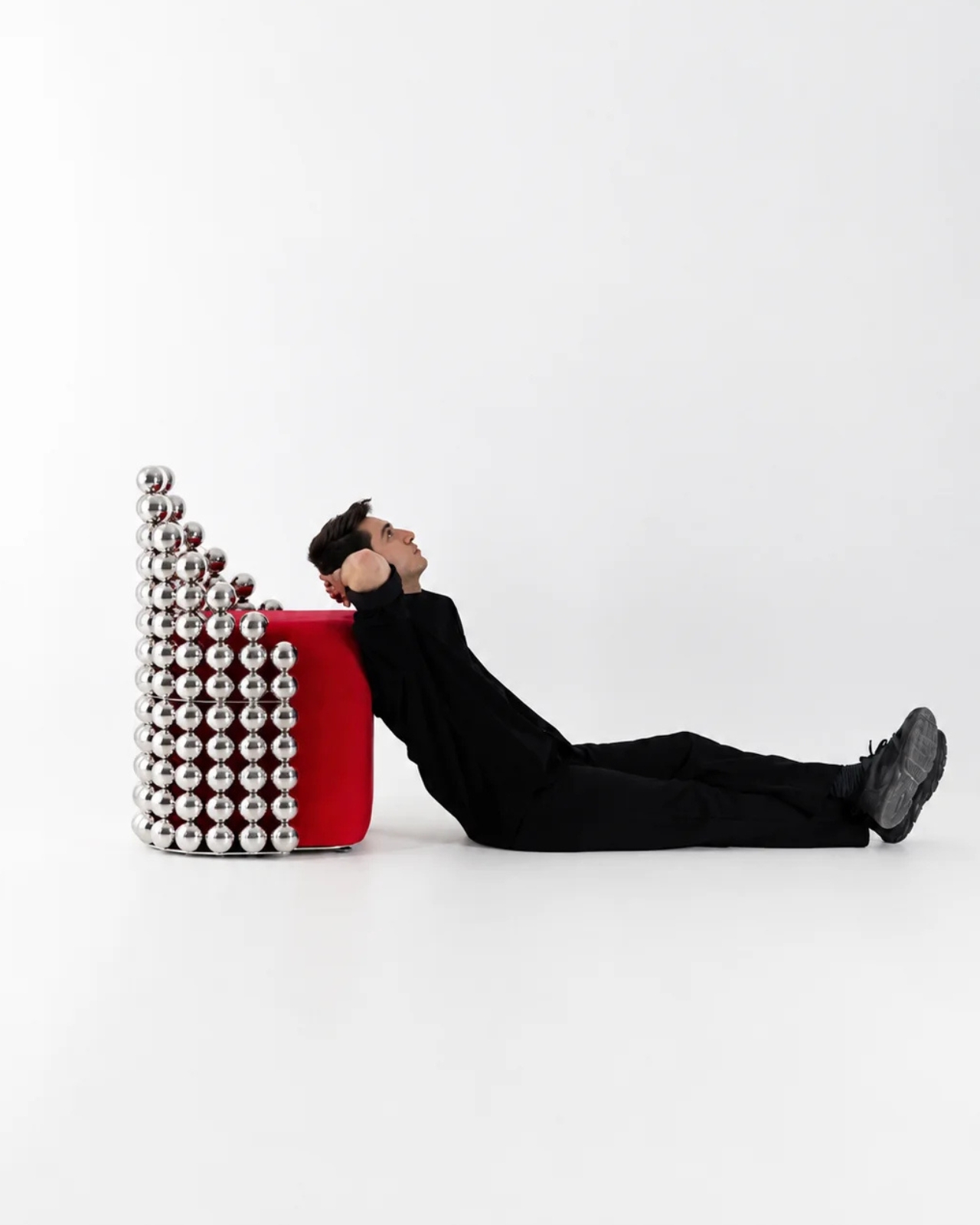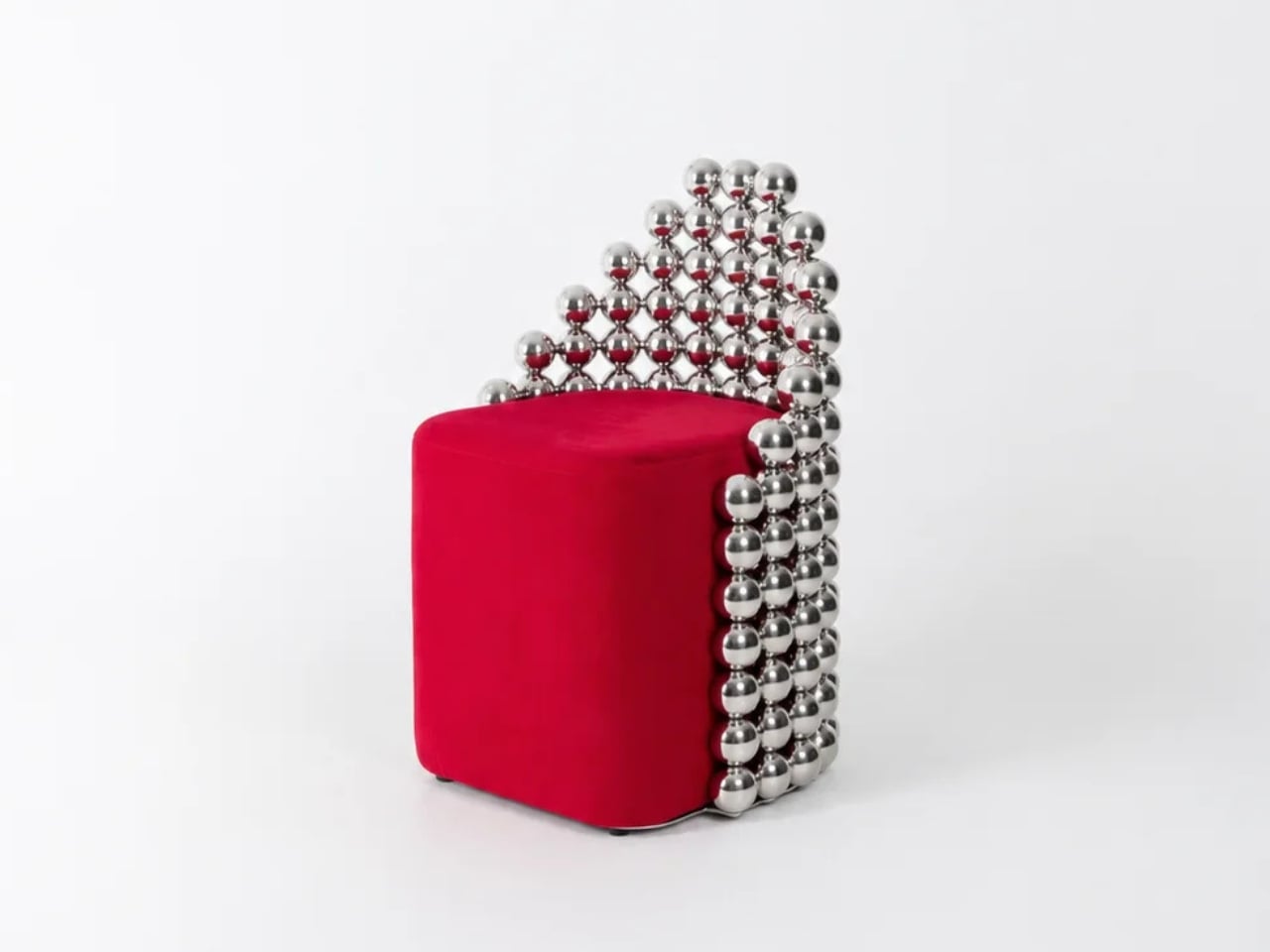
The easiest way to describe the Wishes Collection is to say it looks like someone took a string of chrome Christmas ornaments and turned them into furniture. But that description undersells it considerably.
Designed by Reza Raeisifar in collaboration with Saber Abar, the Wishes Collection is a limited-edition furniture and lighting series built around a single, almost stubborn idea: take one spherical module, connect it to another, and keep going until you have a chair. Or a rocking chair. Or a bench, a table, a lamp, or a pet house. The collection includes all of these, and the remarkable thing is that they all feel like they genuinely belong together, not as a marketing decision, but as a structural one. Literally, visually, and materially.
Designers: Reza Raeisifar, Saber Abar
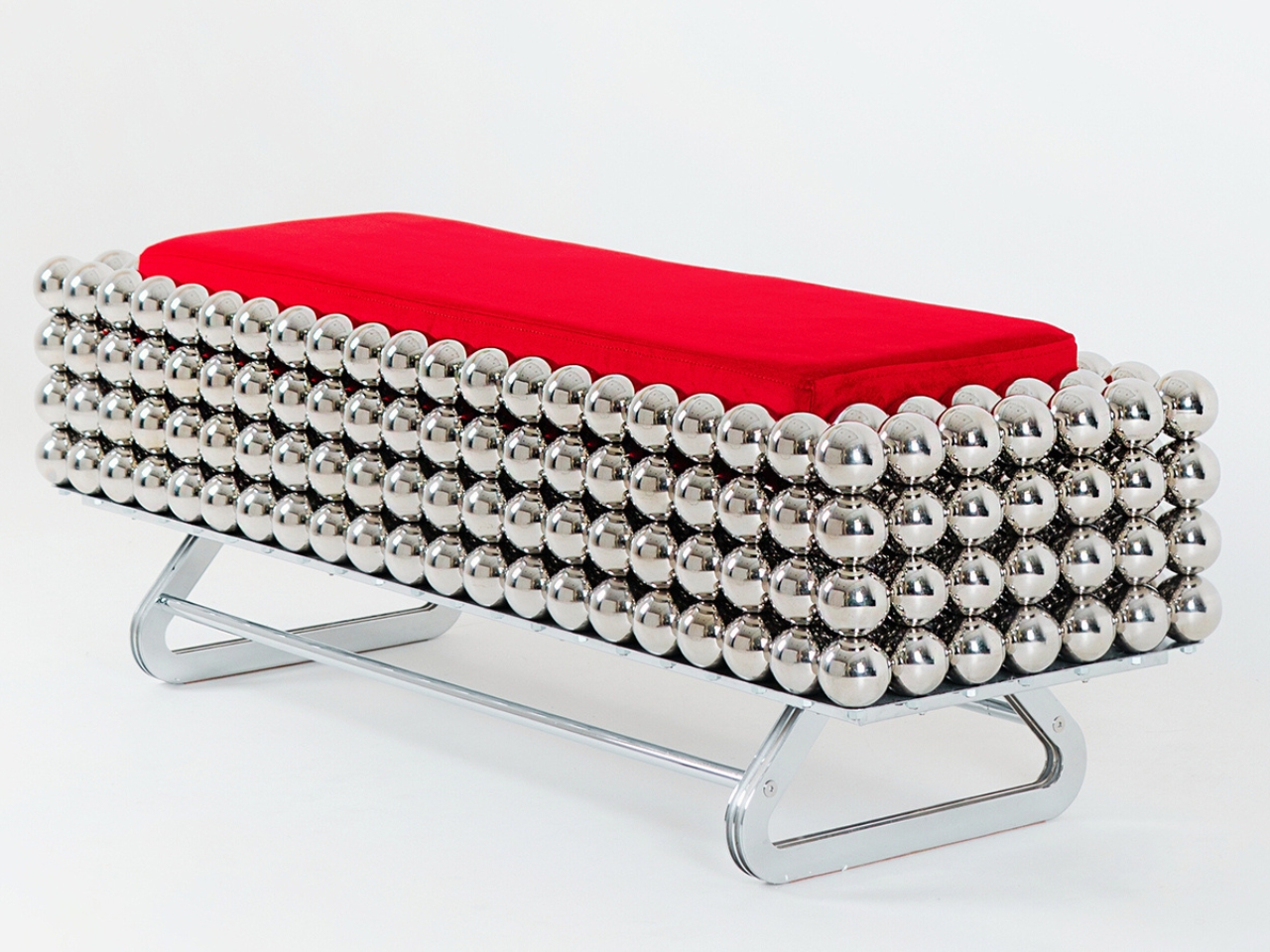
The concept draws from how nature builds complexity. Think coral reefs, honeycomb, bone structure. Raeisifar and Abar were inspired by the way intricate forms emerge from the patient repetition of simple elements, and they made that principle the backbone of everything here. It is a surprisingly old idea to apply to contemporary furniture design, but that is part of what makes the execution feel considered rather than gimmicky. Each piece is constructed from interconnected spherical modules in Grade 404 stainless steel with a nickel-chrome finish. The result reads as opulent without being overwrought, sculptural without needing to announce itself.
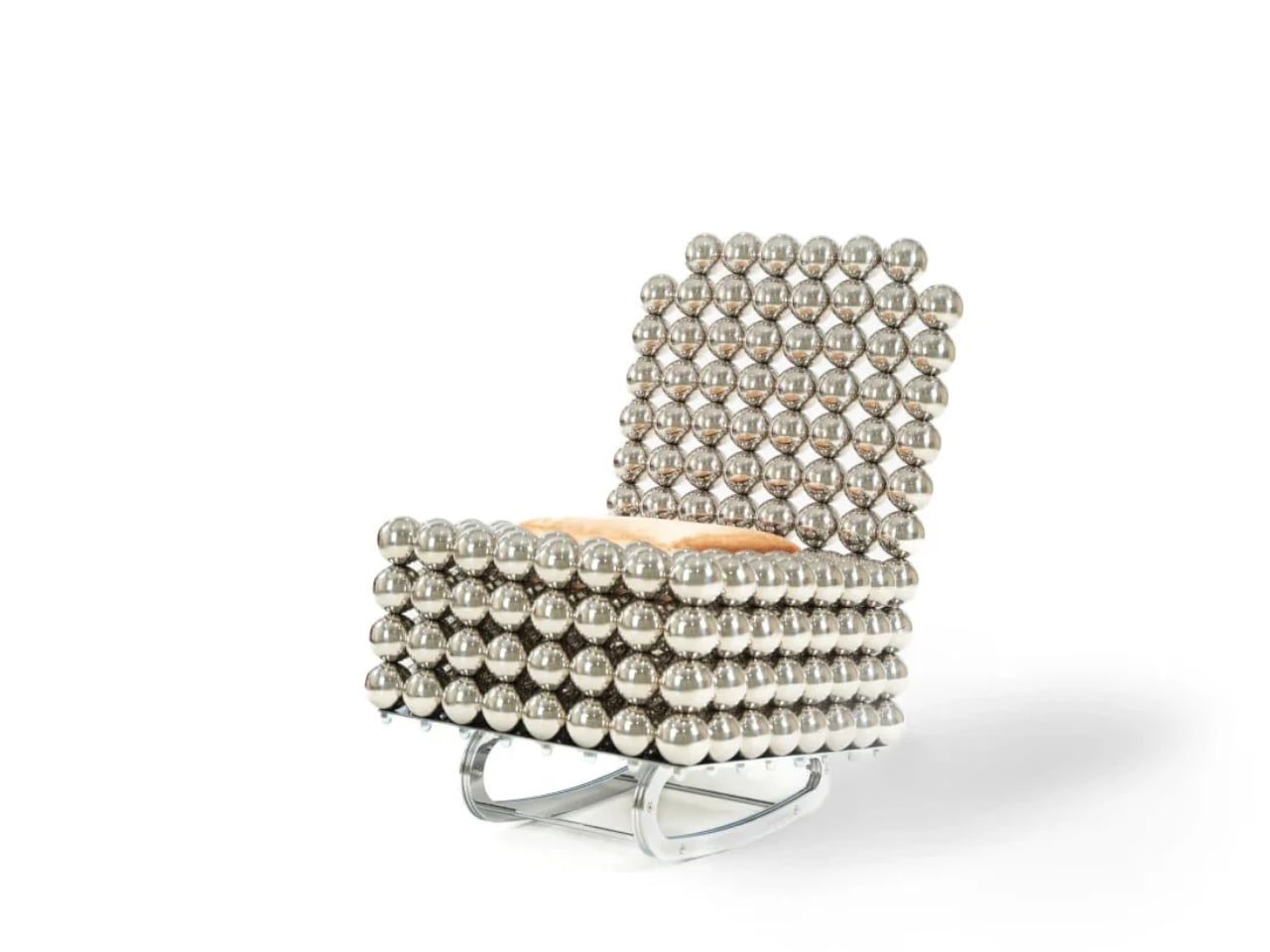
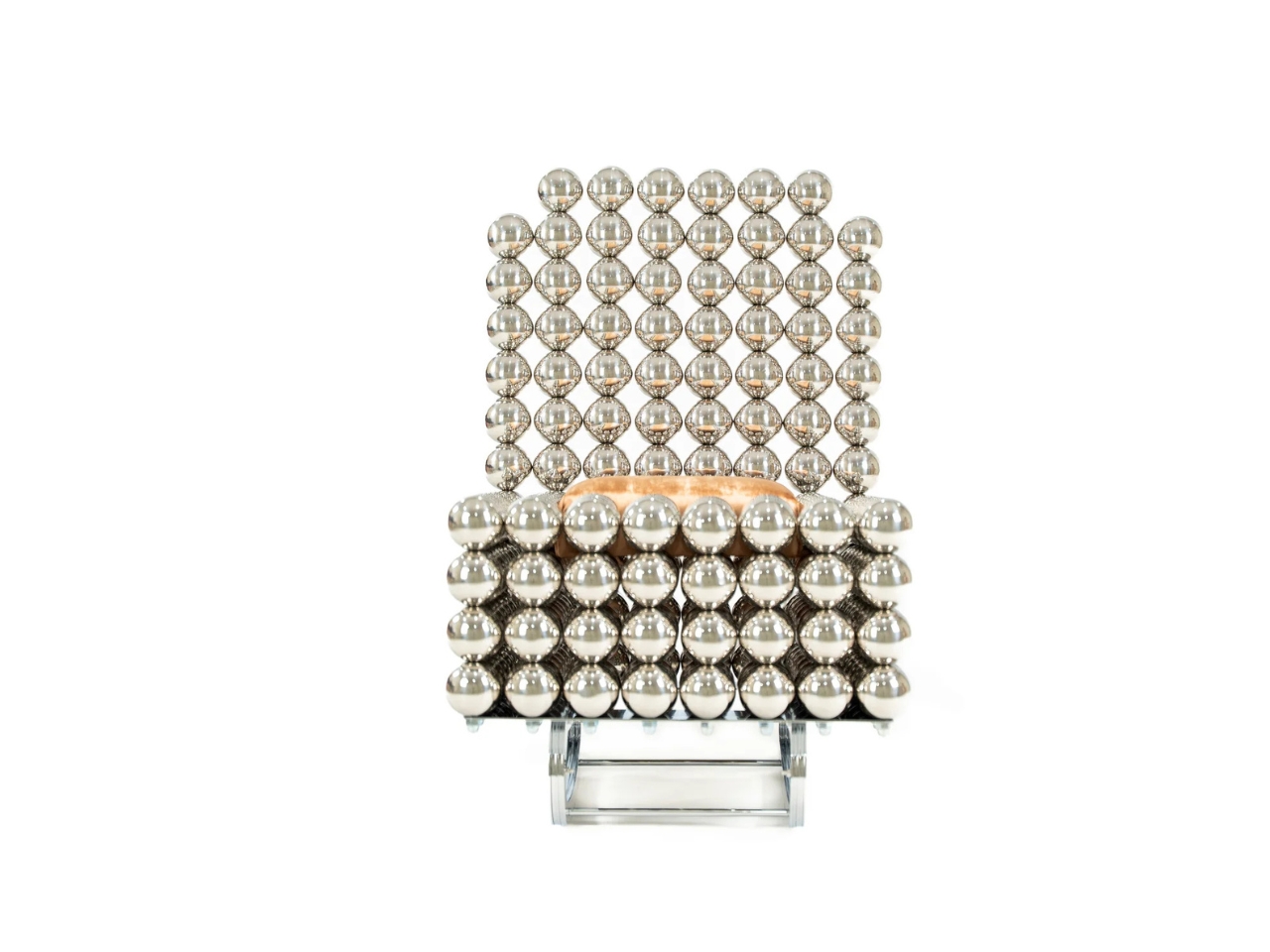
The rocking chair is where the collection’s internal logic gets genuinely interesting. On paper, chrome steel spheres and a piece of furniture meant to sway gently do not sound like natural partners. The spheres carry an obvious rigidity, an almost architectural seriousness. But paired with curved wooden runners beneath and a soft cushion on top, the chair pulls off a kind of material negotiation that should not work as well as it does. You see the tension and it reads as deliberate. It is.
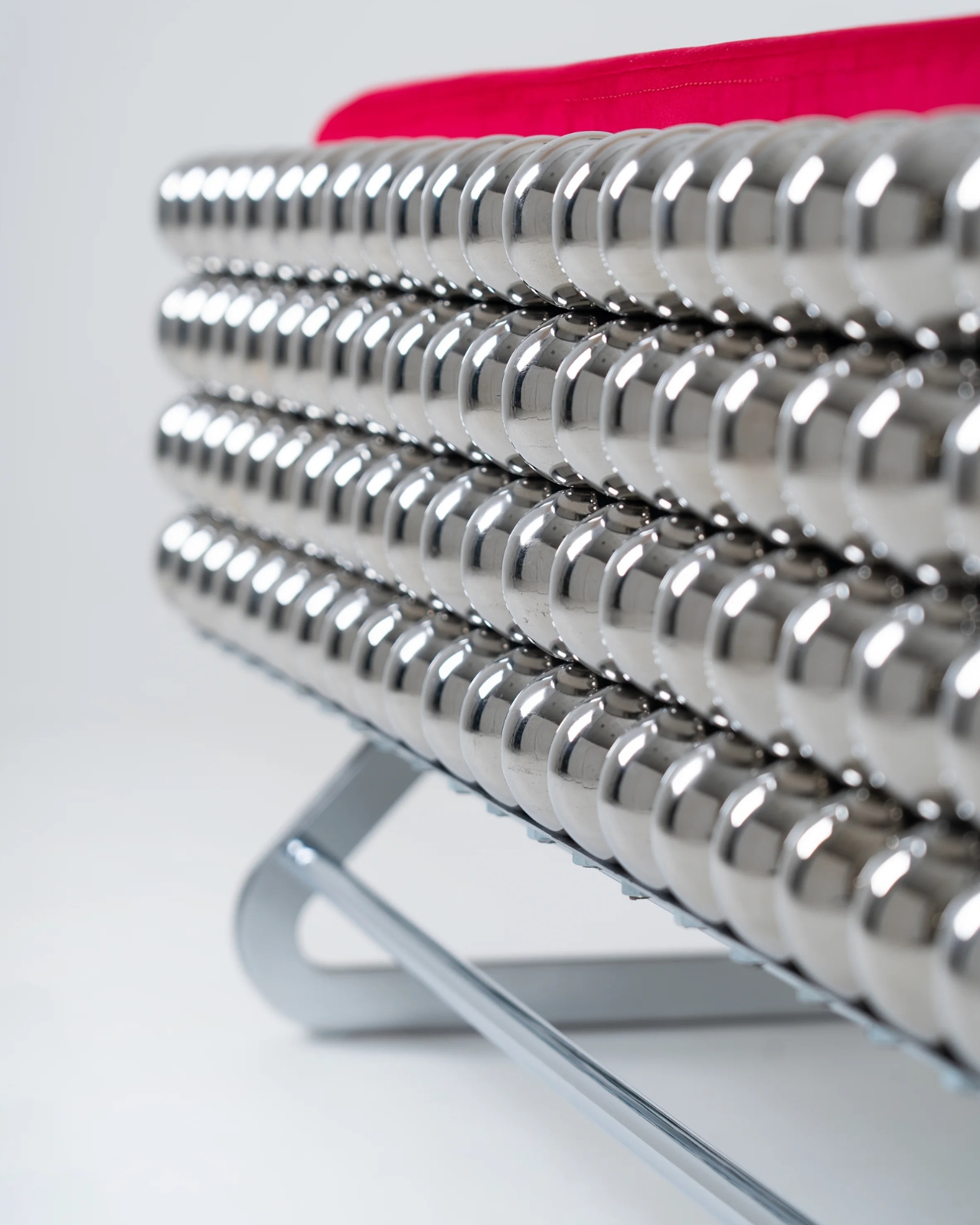
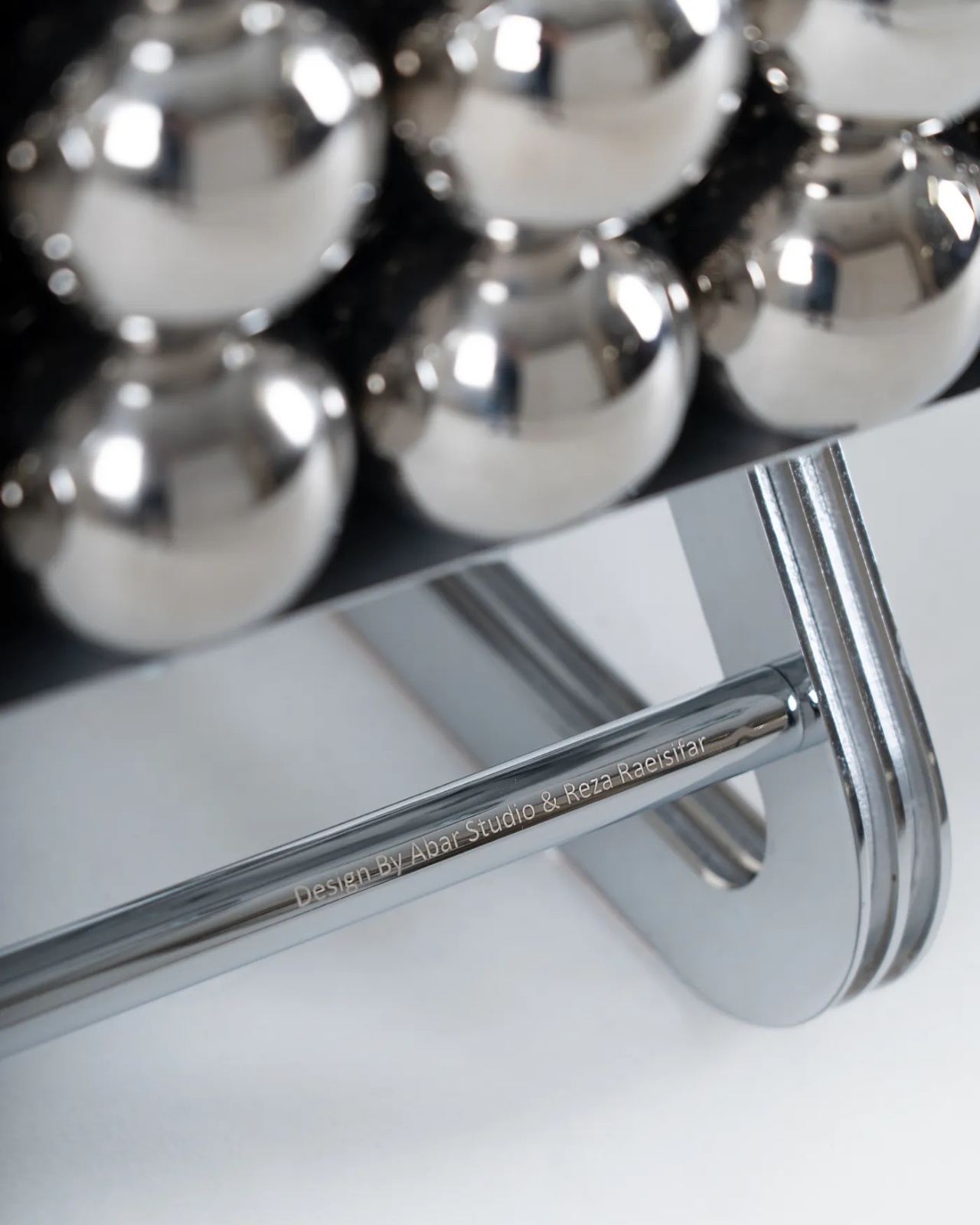
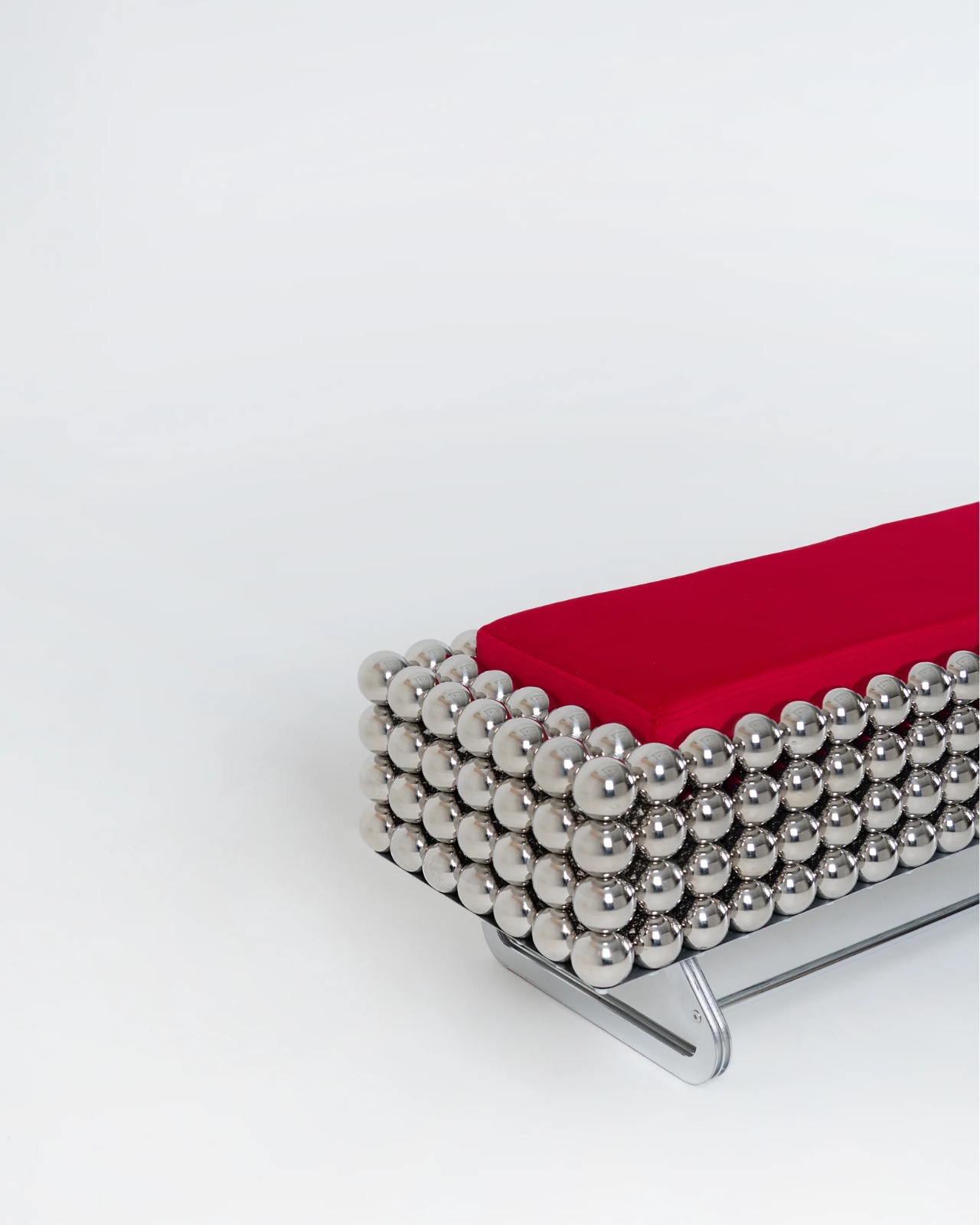
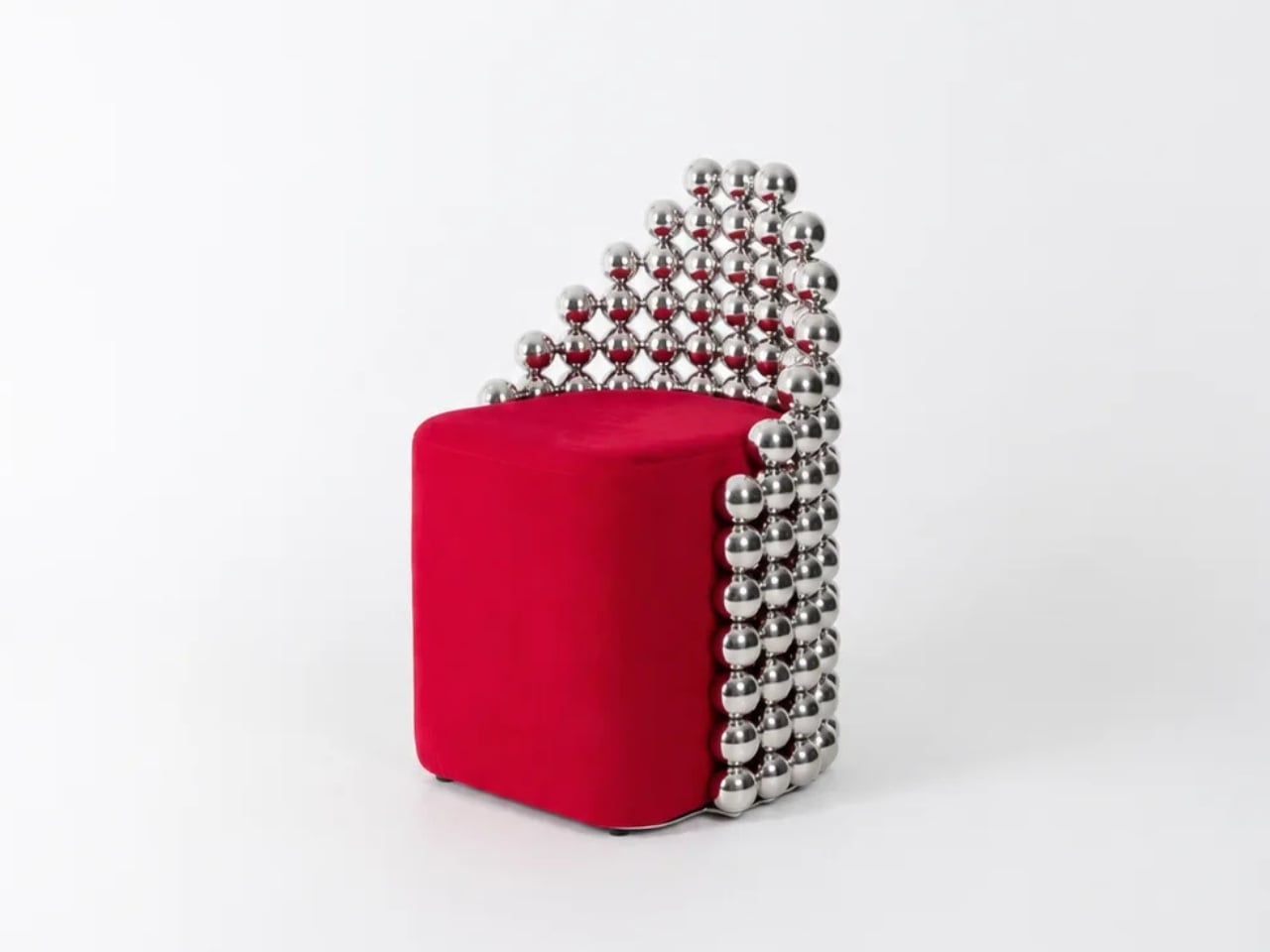
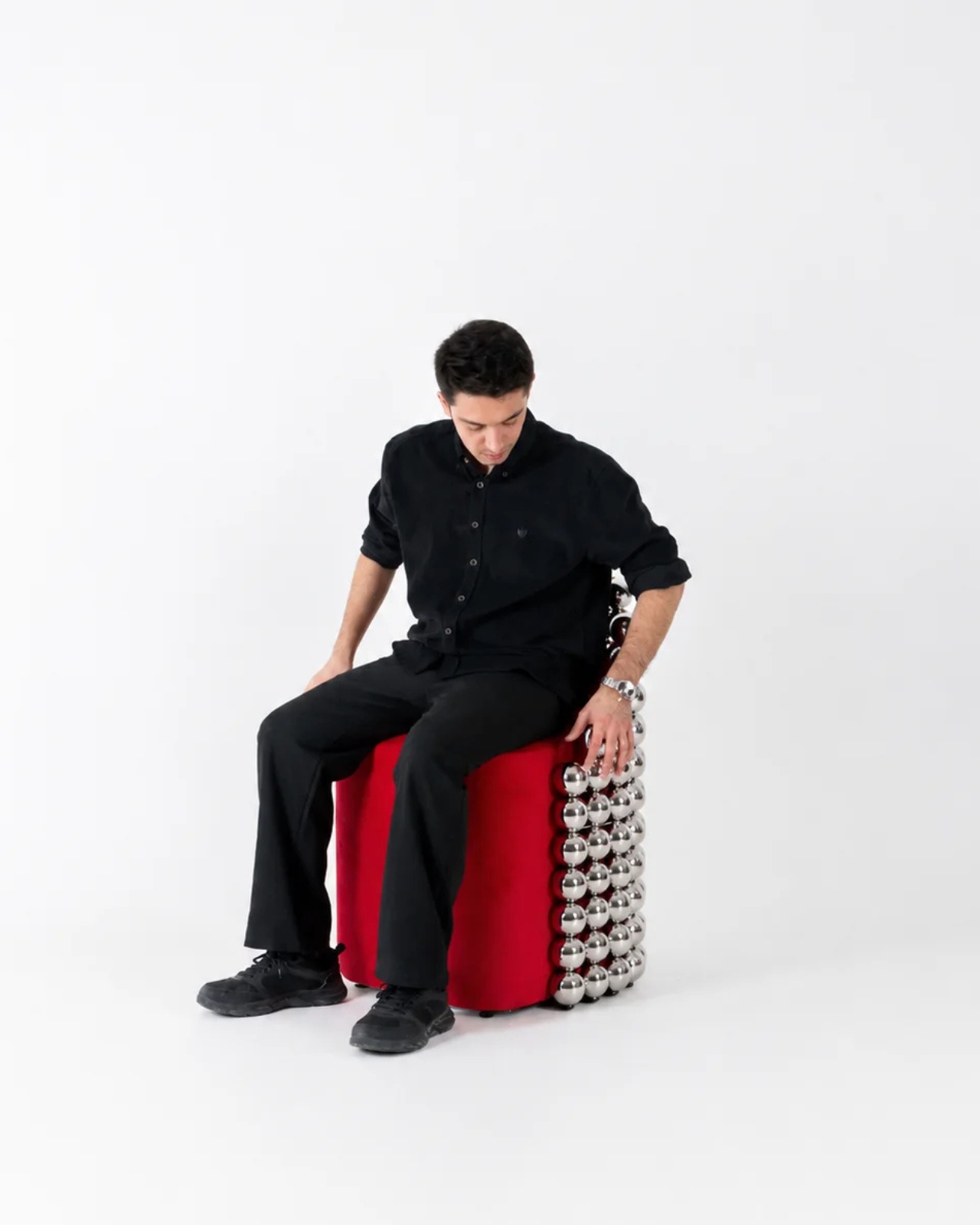
The bench and chair follow the same logic. Polished steel spheres form the body, a cushion in red or velvet sits on top, and the whole thing manages to look both industrial and inviting at the same time. It is the kind of furniture that makes you want to sit in it before you even think to ask whether it is actually comfortable. For a limited-edition piece, that is exactly the instinct you want to provoke.
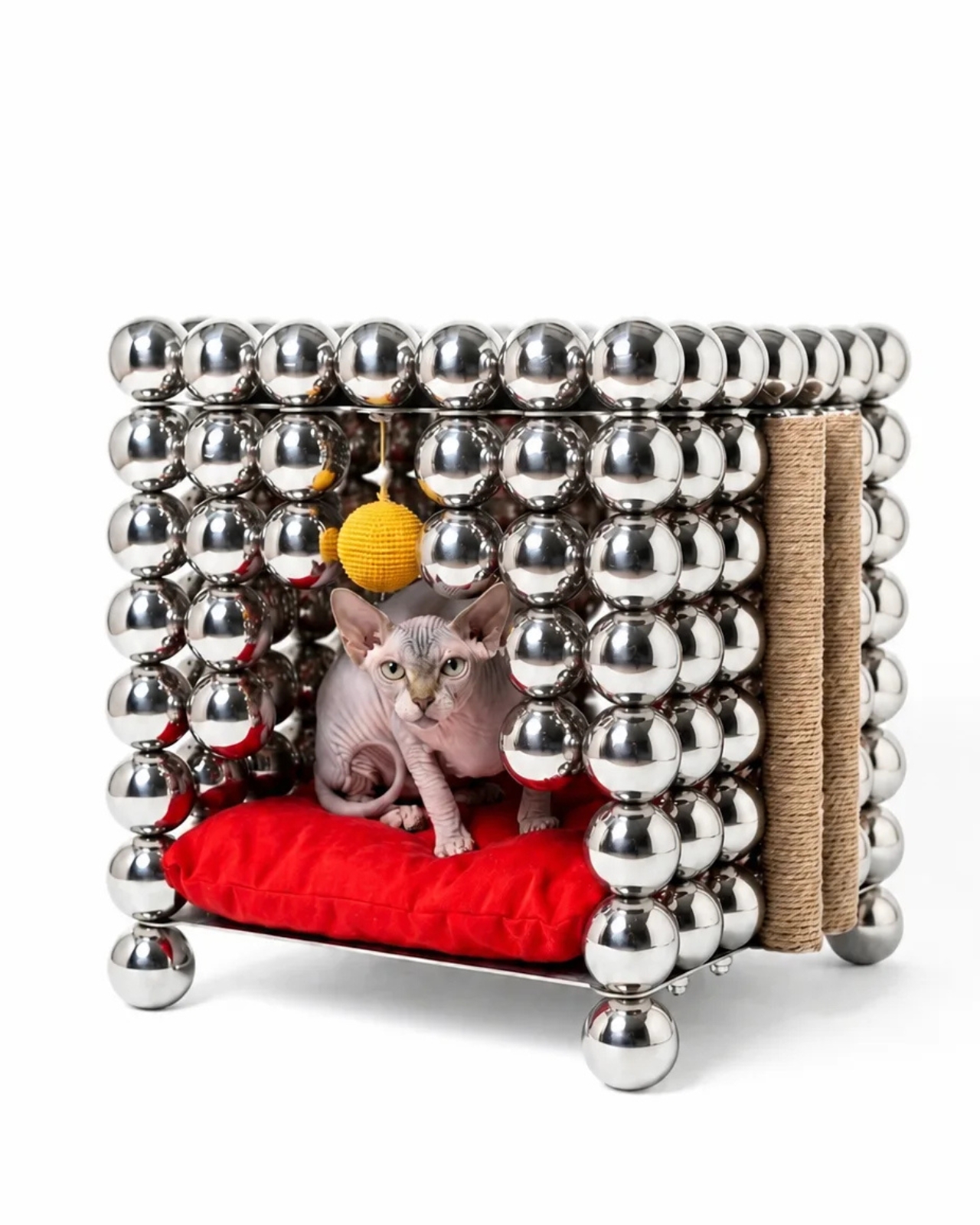
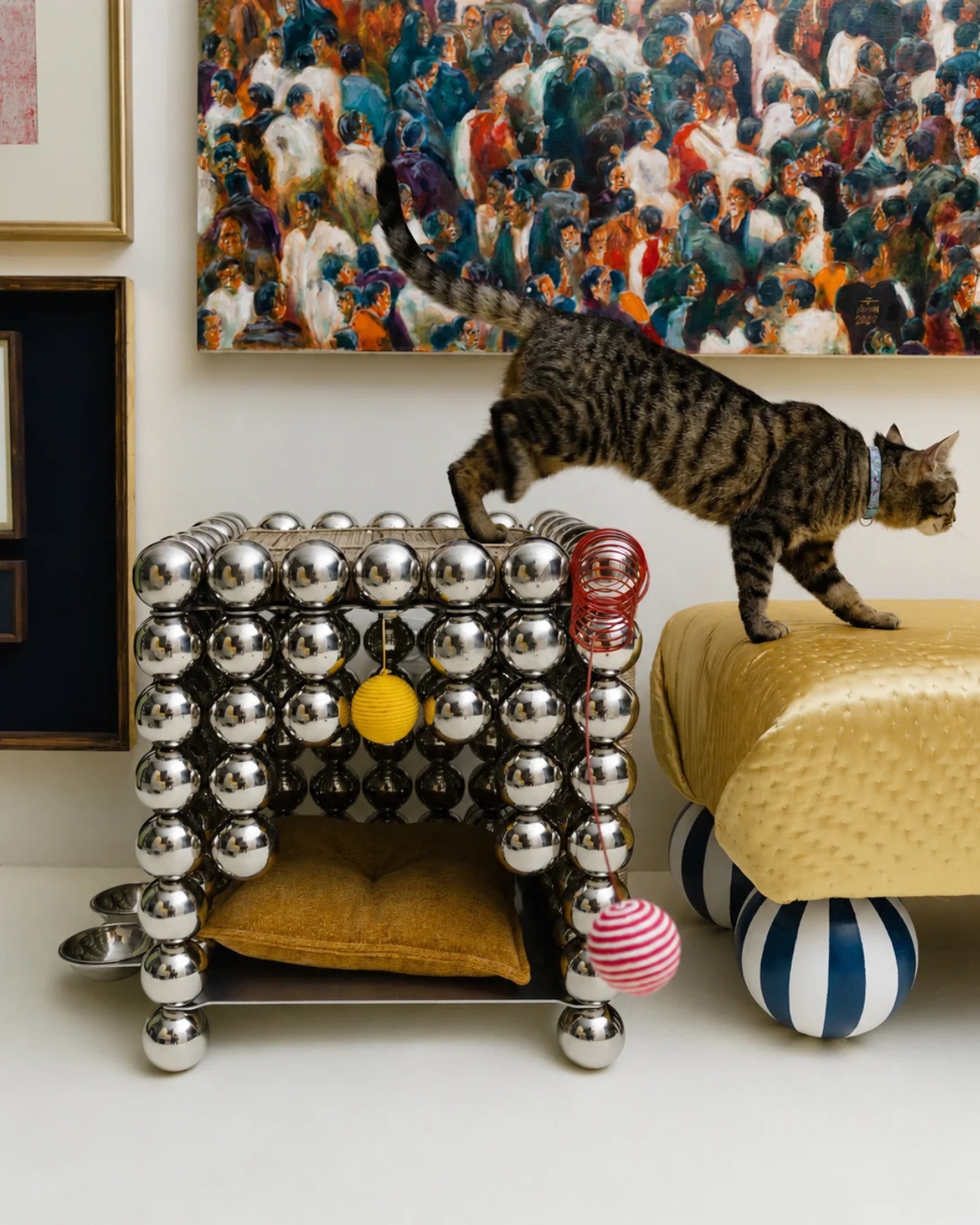
Then there is the pet home, which is either the collection’s best joke or its most earnest moment, depending on how you look at it. The same modular sphere system that supports a grown adult on the rocking chair now forms a miniature shelter for a cat, a cat that, in the campaign images, looks perfectly unbothered living inside polished chrome walls. The designers describe it as the architectural boundary element now forming a miniature interior of its own, and while that framing reads a bit grand for a cat house, they are not entirely wrong. The logic holds, and it lands.
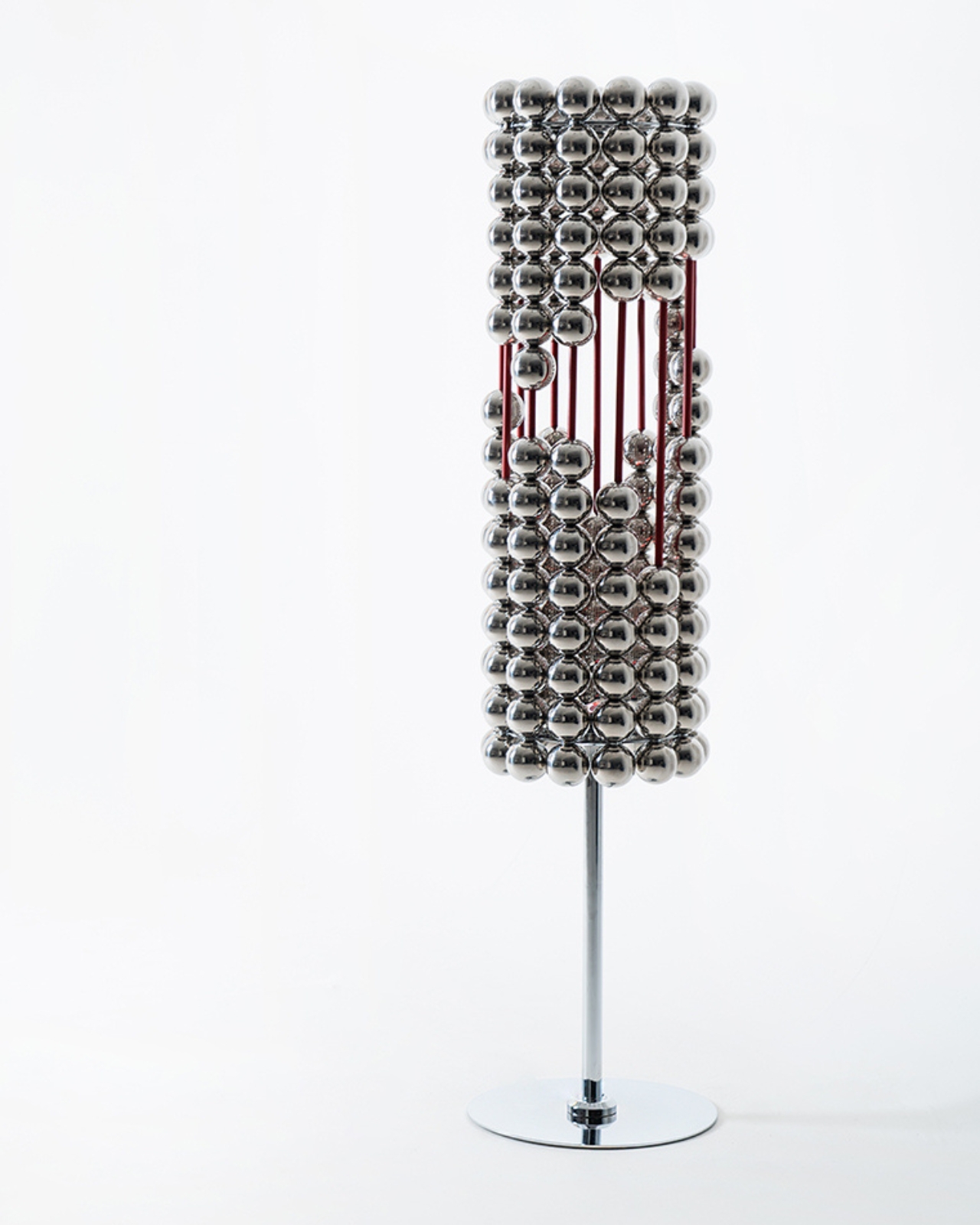
The floor lamp completes the picture by pushing the modular system beyond furniture altogether. Here, the spheres are no longer bearing weight or defining form. They are catching light, letting it fracture across their polished surfaces in ways that feel more jewel-like than industrial. It is a smart shift in function, and it shows how far a single design language can travel when the designers trust it enough to keep pushing rather than introducing something entirely new.
Raeisifar and Abar have tied the collection’s name to a metaphor. A wish, they suggest, takes shape through many small actions over time. One modest step, repeated often enough, eventually becomes something whole. The Wishes Collection makes that idea physical, and it works. Not because the metaphor is particularly new, but because the execution is committed enough to make you believe it.
For a limited-edition collection, Wishes does what the best ones do. It does not just sell you an object. It sells you on a way of thinking about design. And given how much of the current design conversation rewards loudness and novelty at almost any cost, a collection this disciplined, this committed to a single shape, feels more interesting, not less.