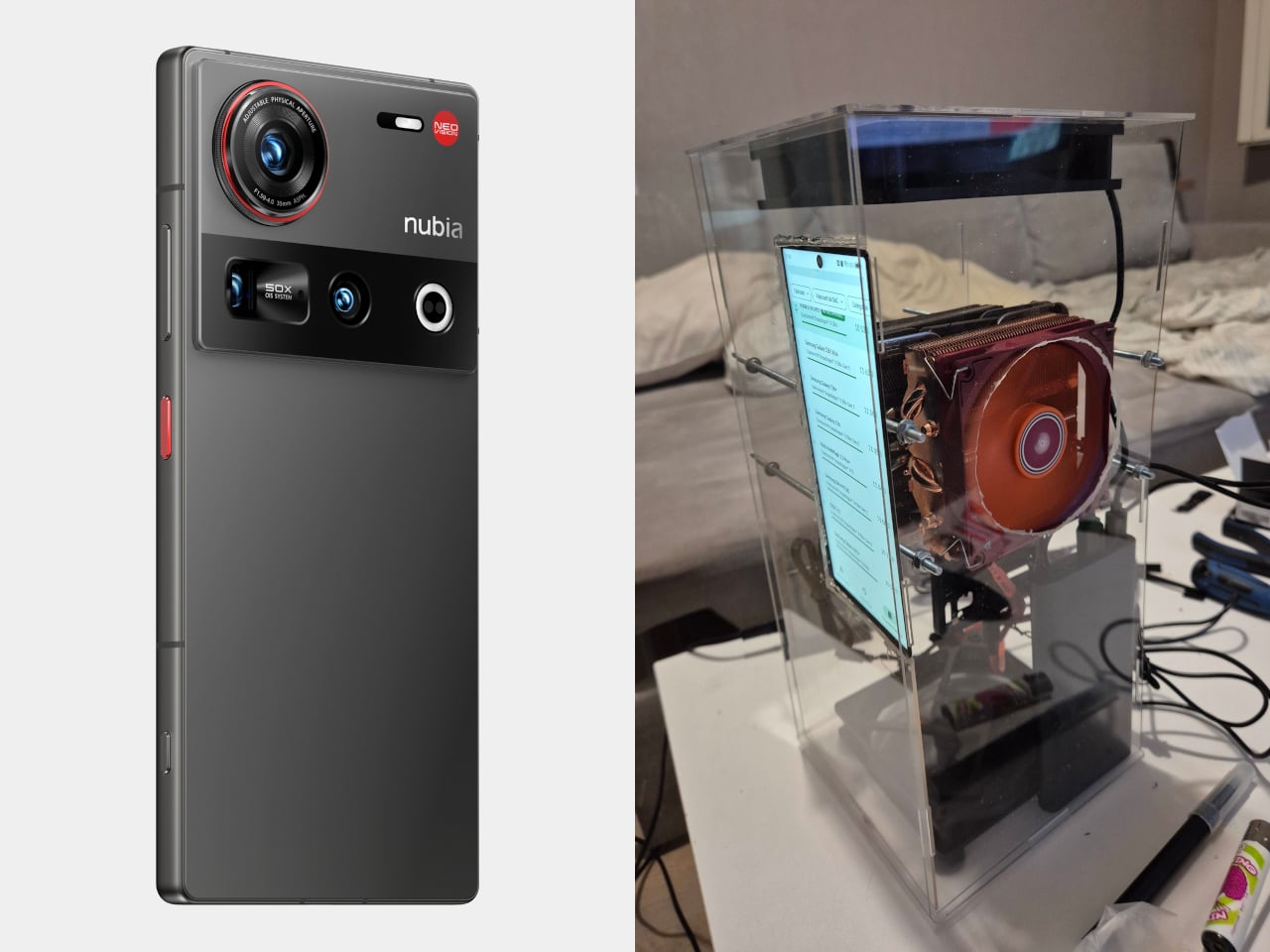
The boundary between a smartphone and a desktop computer has been narrowing for years. Modern flagship phones carry processor configurations, RAM capacities, and GPU performance that would have qualified as desktop territory not long ago. Most of the time, that hardware sits underutilized inside a slim glass slab, throttled by thermals the moment any sustained workload asks it to perform at its actual ceiling.
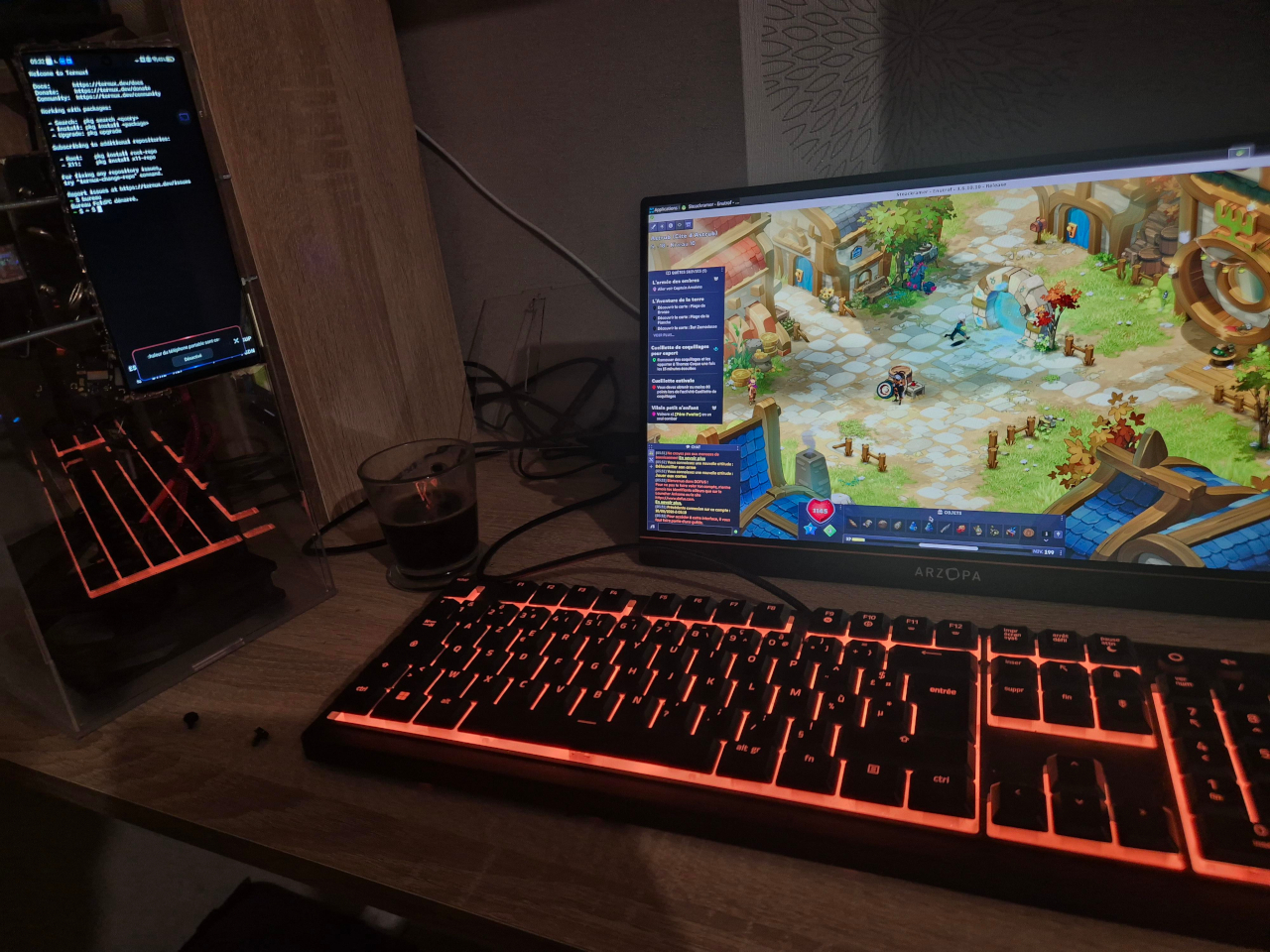
One modder decided to find out what a flagship Android phone such as the nubia Z70 Ultra could actually do if thermal throttling was removed from the equation. The answer involved relocating the screen to the front of a custom acrylic case and sandwiching the phone itself between two desktop-grade CPU coolers with direct contact against the Snapdragon chip’s shielding. The result doesn’t fit neatly into any existing product category.
Designer: ntsow
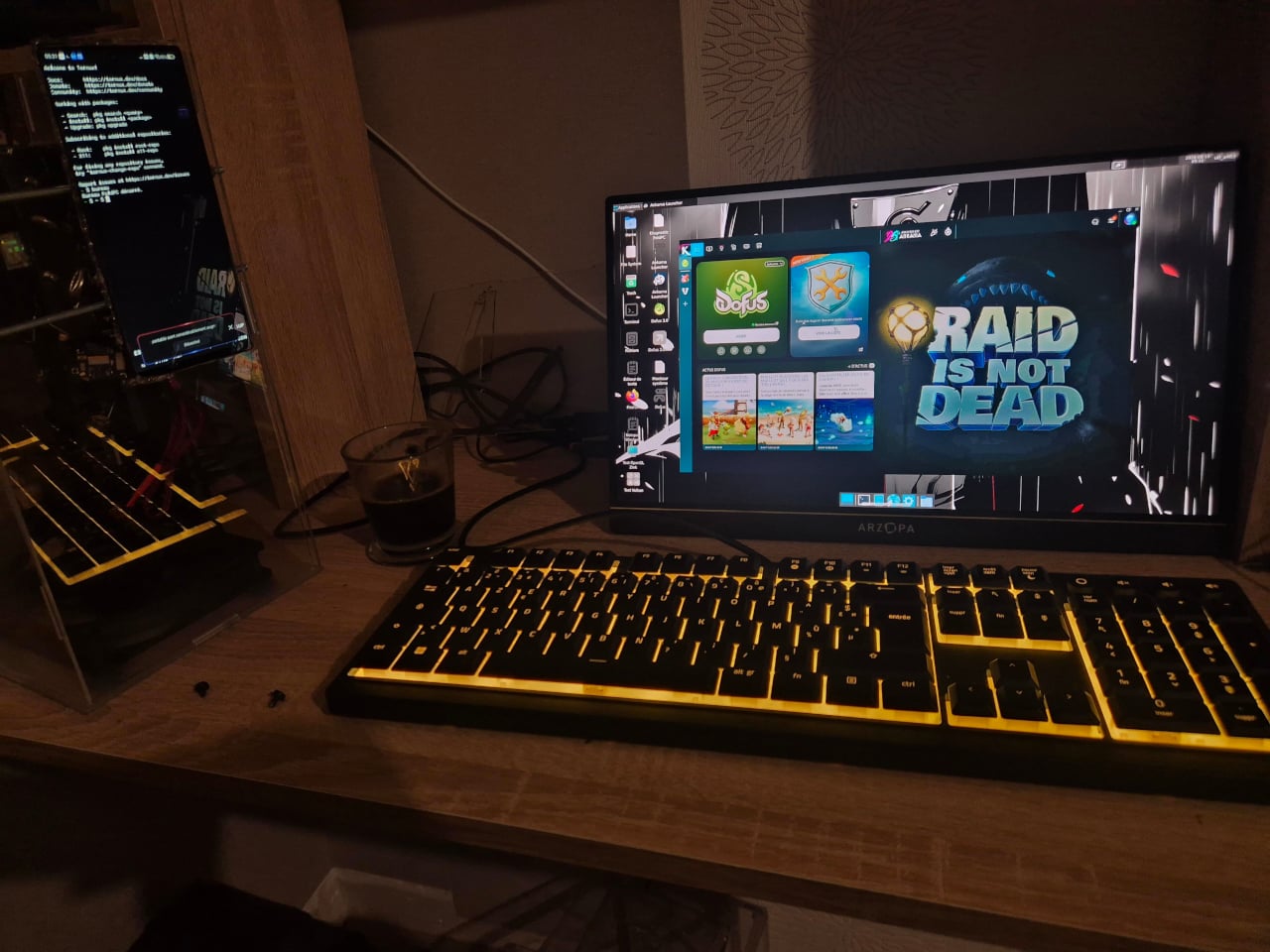
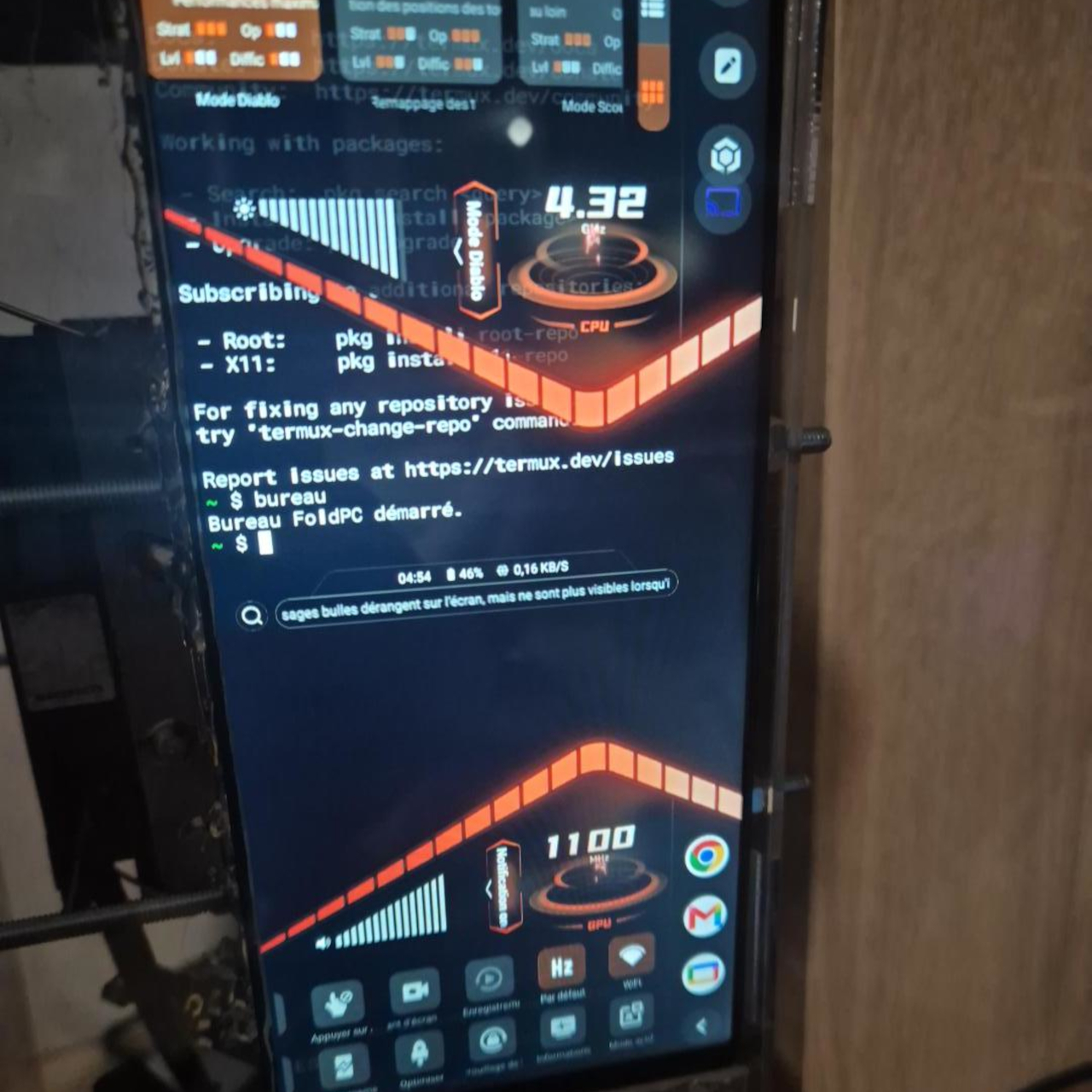
The Nubia Z70 Ultra carries a Snapdragon 8 Elite processor with a maximum clock speed of 4.32 GHz and 24 GB of RAM. Removing the screen was the key step: the CPU coolers need direct access to the chip’s shielding for full thermal contact, so the display had to migrate to the outside of the case. A power bank handles the energy supply, completing the self-contained build.
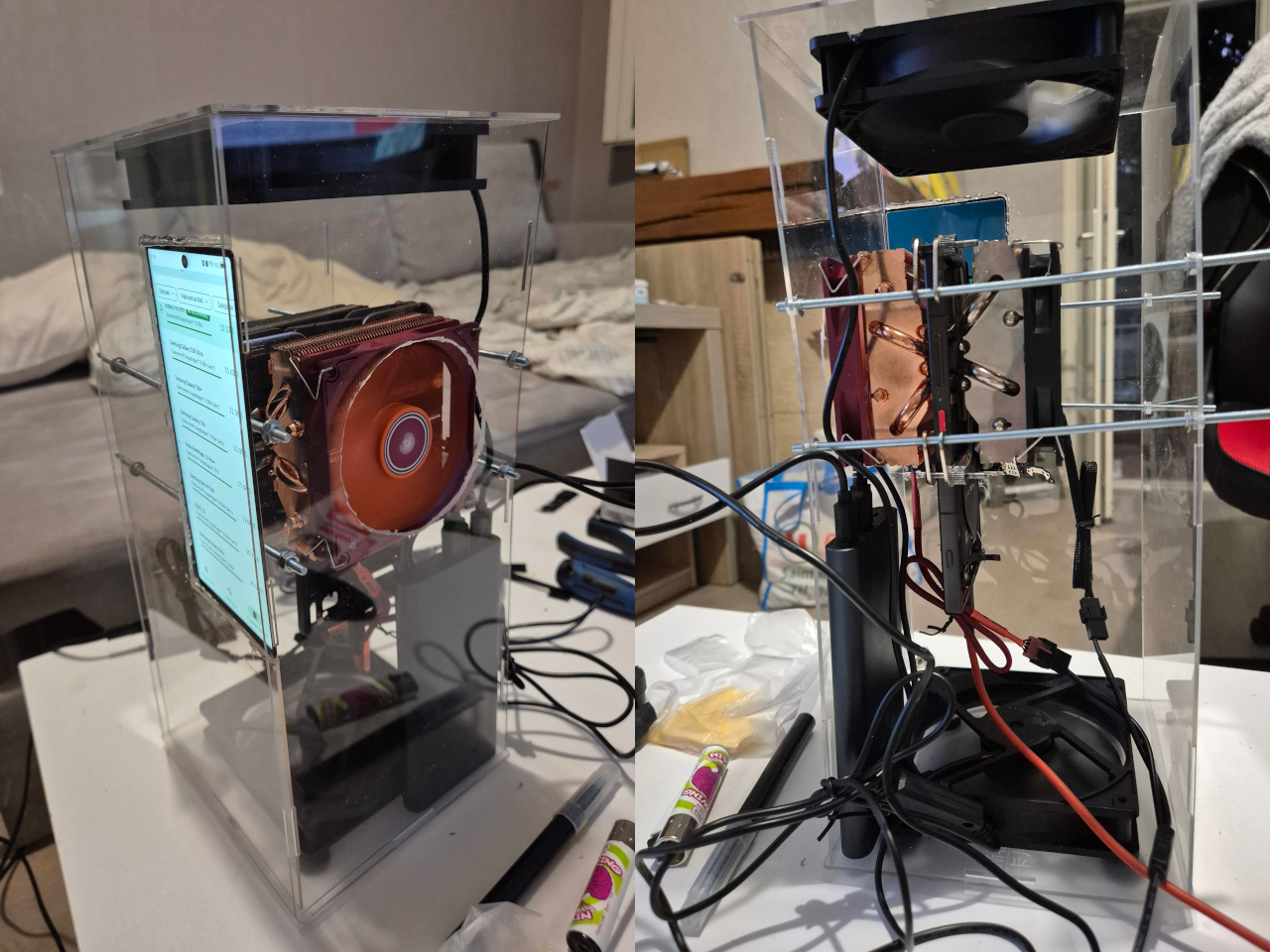
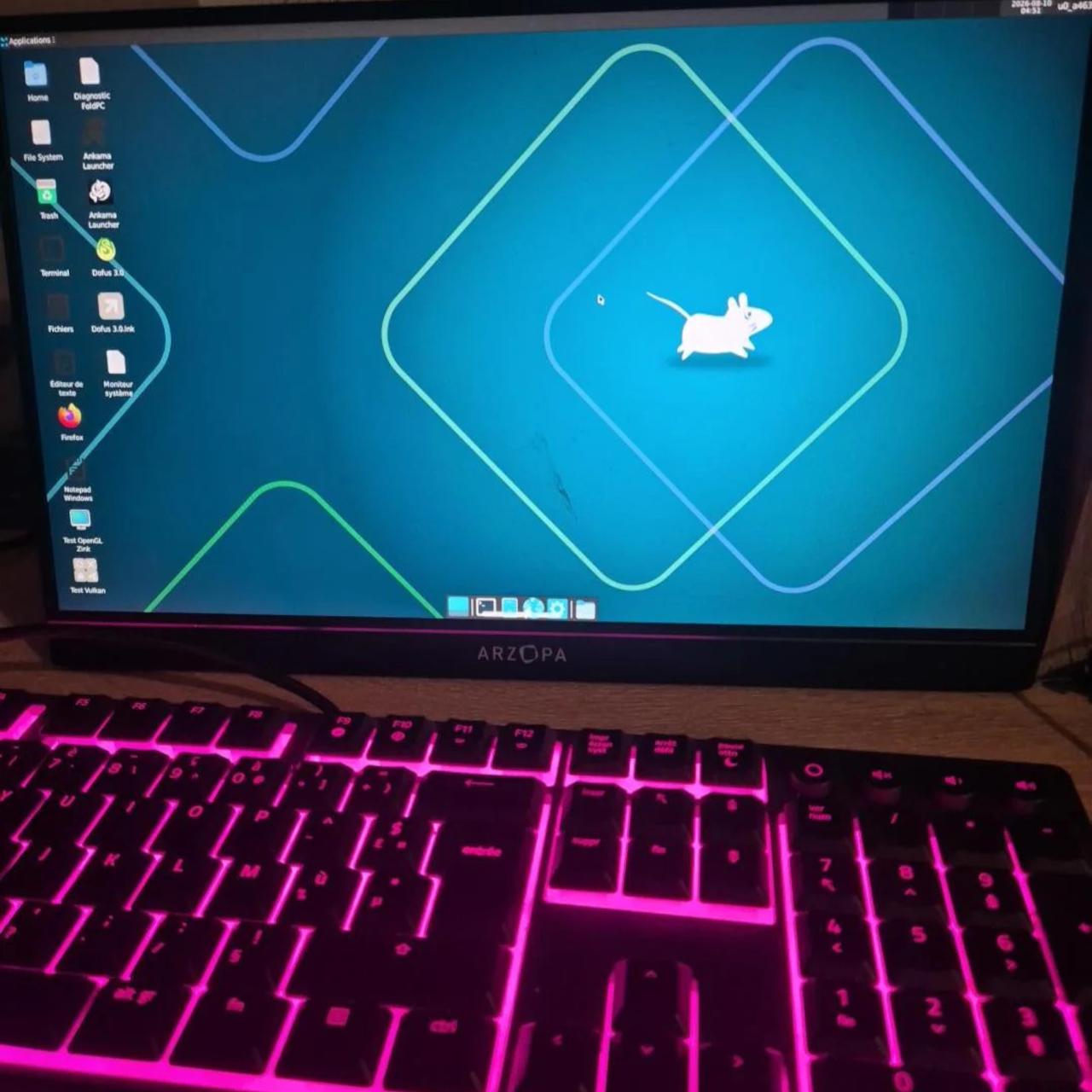
On the software side, the build runs a full XFCE Linux desktop through Termux with GPU acceleration, layering Windows application support on top via Wine and Box64. The Android system remains fully intact underneath, making the device simultaneously a phone, a Linux workstation, and a Windows gaming machine. The stated end goal is one device that handles everything, including native Linux work and full Windows game support.
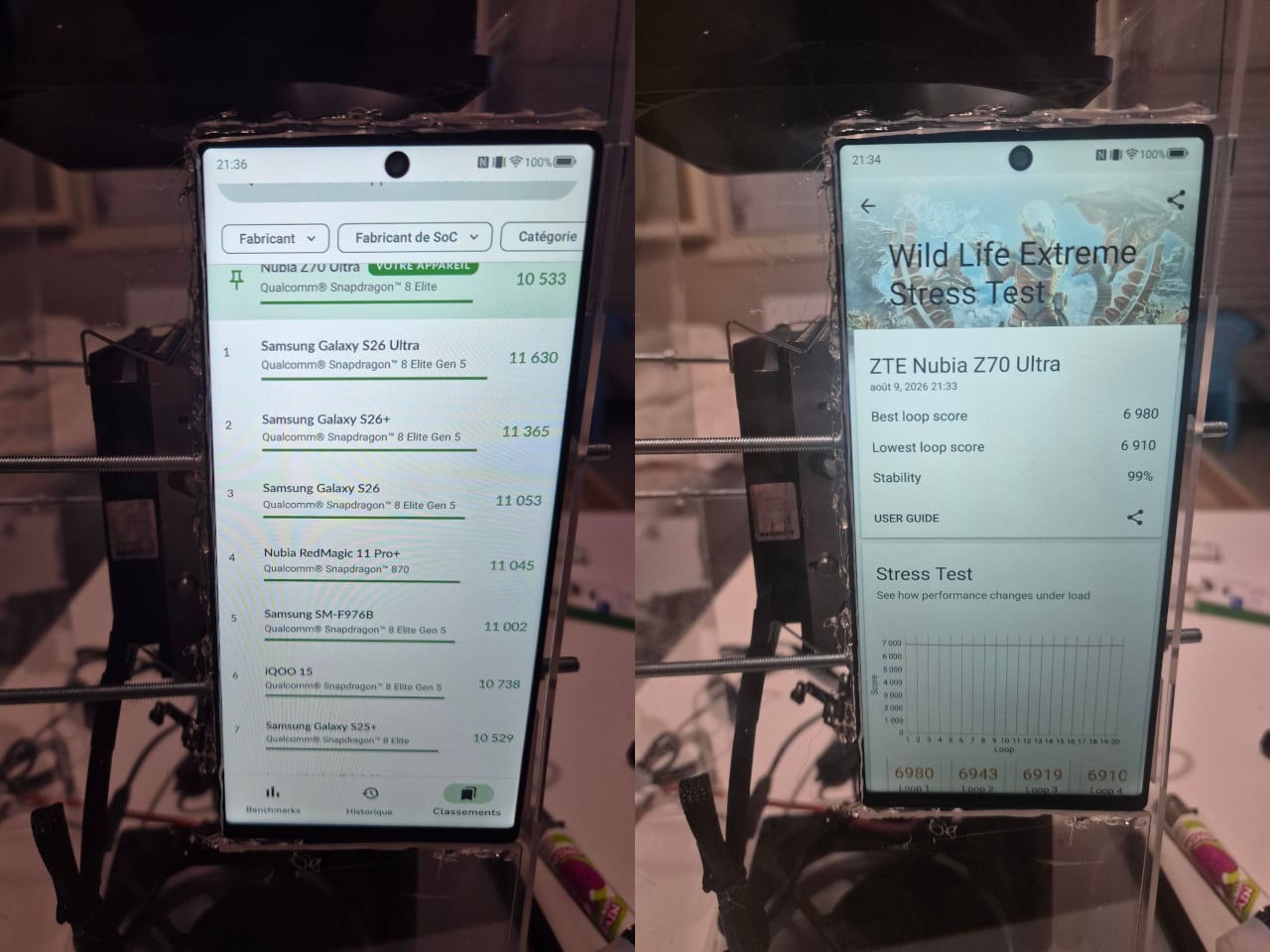
The cooling changes what the hardware is capable of sustaining. In 3DMark’s Wild Life Extreme Stress Test, the modified phone achieved 99% stability across 20 loops, outperforming the newer Snapdragon 8 Elite Gen 5, Apple A19 Pro, and Dimensity 9500 on the consistency metric. That sustained performance is the point: most mobile chips can briefly hit impressive scores, but they thermal-throttle within minutes under continuous load.
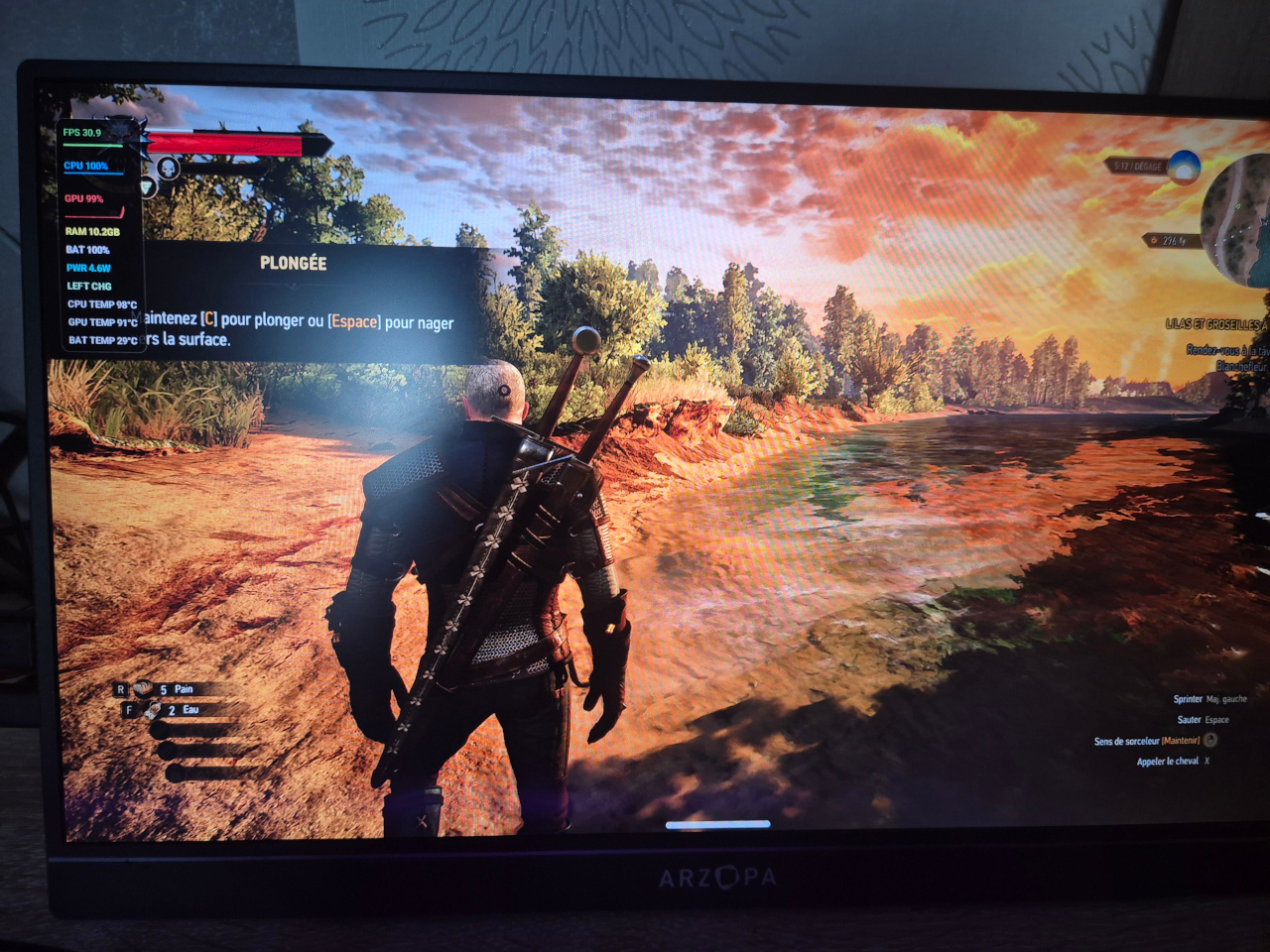
The Witcher 3 runs at 1080p with Ultra graphics settings, hitting 20 to 30 fps and occasionally exceeding 30 fps when the phone operates in its maximum-performance overclocking mode. The Adreno GPU runs at 99% utilization during those sessions, and the build connects to an external monitor with keyboard and mouse support for a genuine desktop gaming setup. For an Android phone, the performance is difficult to dismiss.
What the build demonstrates is less about running The Witcher 3 at any particular resolution and more about how far the gap between a phone and a desktop has actually closed. Adequate cooling was the only thing separating the Snapdragon 8 Elite from sustained desktop-class workloads. The question the project raises isn’t whether phones can replace PCs but how much work remains before the hardware inside them can already handle it.