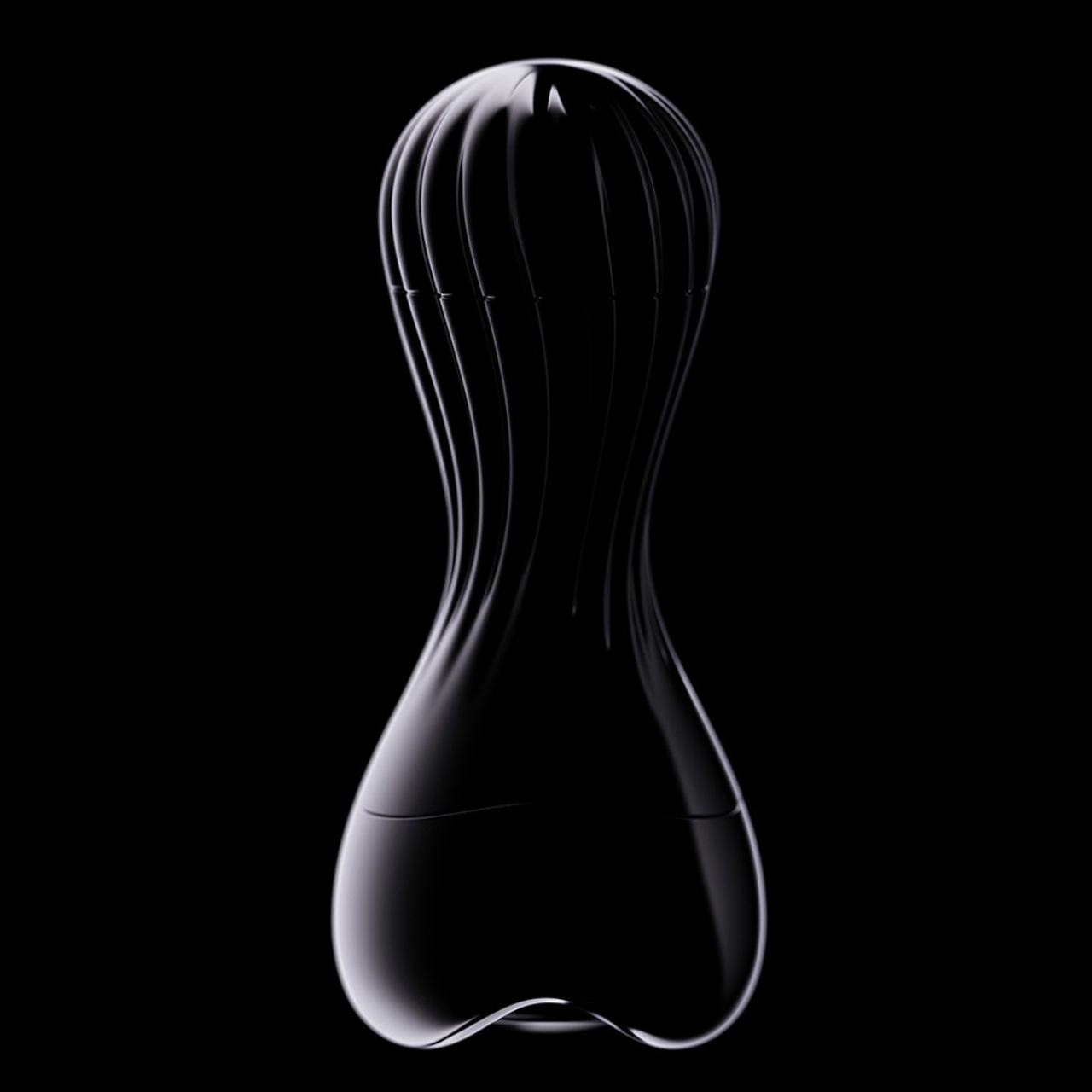
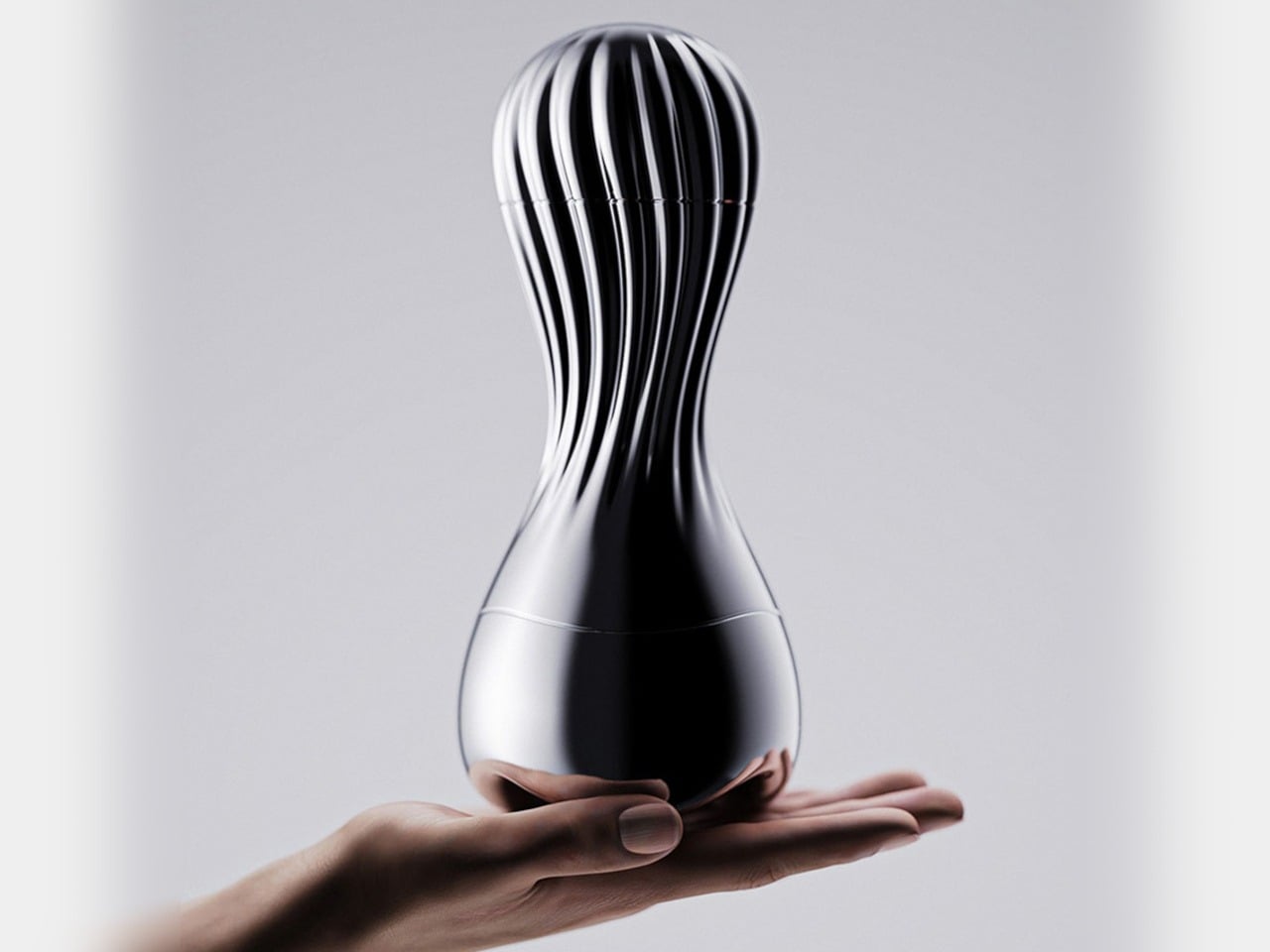
The Coffee Juicer has the silhouette of a chess piece that wandered into a science-fiction movie. Its glossy, pinched body looks far removed from a conventional espresso machine, but the problem behind it is familiar: wanting a decent shot of coffee without turning the kitchen counter into a barista workstation. I like that ambition, especially when the alternative can feel like adopting a second hobby before breakfast.
Designed by Arpad Bogdan, the Coffee Juicer is a manual espresso concept aimed at people who find traditional machines intimidating, expensive, or impractical. Developed at the University of New South Wales, it proposes a simpler brewing routine through a spring-powered mechanism and an integrated preparation basket. The appeal, for me, is having a recognizable sequence of actions rather than a collection of separate techniques to master.
Designer: Arpad Bogdan
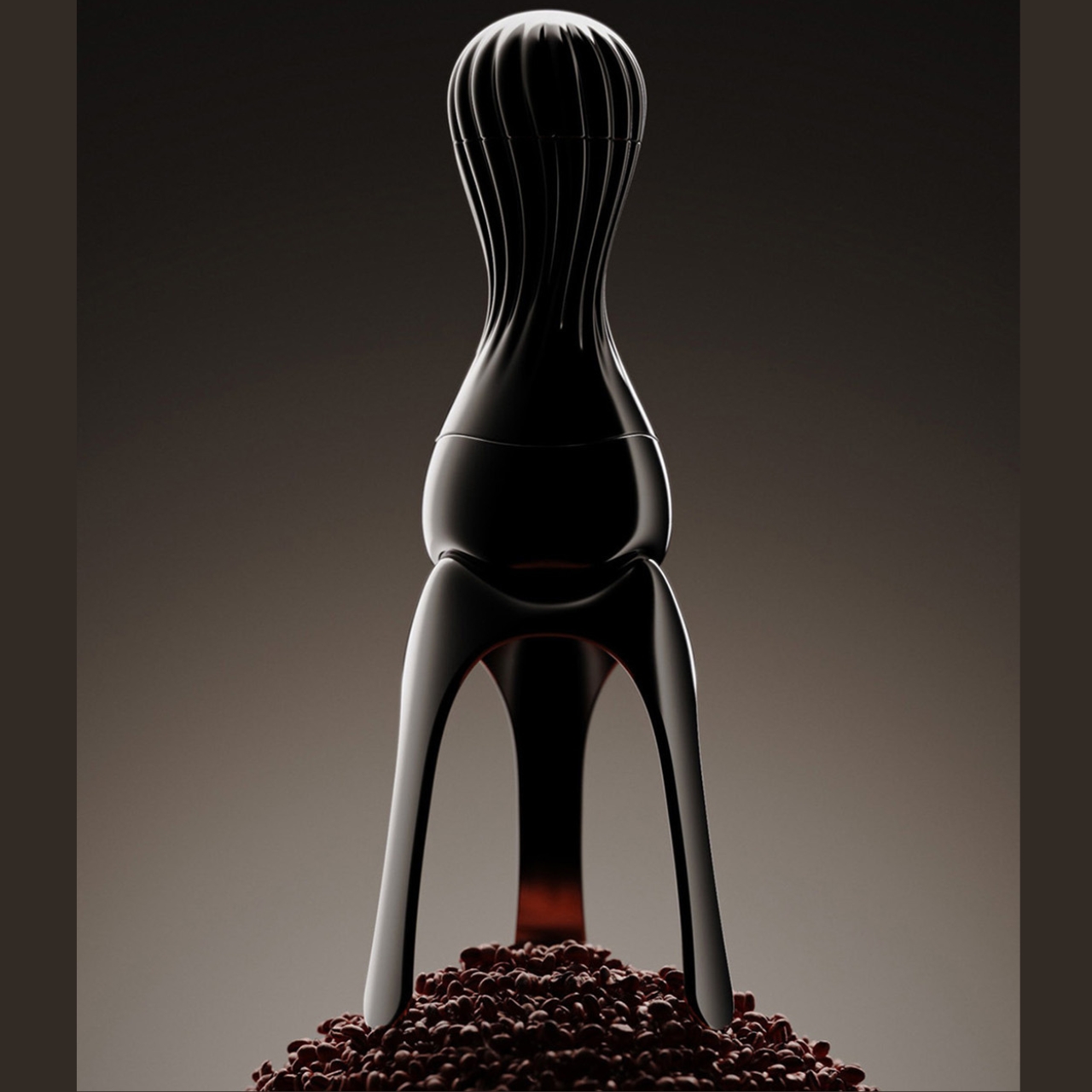
Instead of relying on an electric pump, the design uses a spring-powered piston, a twistable knob, and a ratchet mechanism. Winding stores the energy intended to drive extraction, with the mechanism taking over pressure delivery. Think of the interaction as winding up your coffee maker before it gets to work. That feels like a sensible division of labor: your hands provide the energy, while the mechanism is intended to make its release more predictable. Whether that translates into repeatable shots needs testing.
Preparation gets similar attention. Bogdan describes a double-basket arrangement that indicates the coffee dose, helps tamp the grounds evenly, and separates them from the water. The portafilter, the part holding the coffee, uses a magnetic fitting alongside a mechanical lock for brewing under pressure. Those are useful places to concentrate the engineering. A compact brewer loses much of its appeal if preparing it still requires spreading several accessories across the counter.
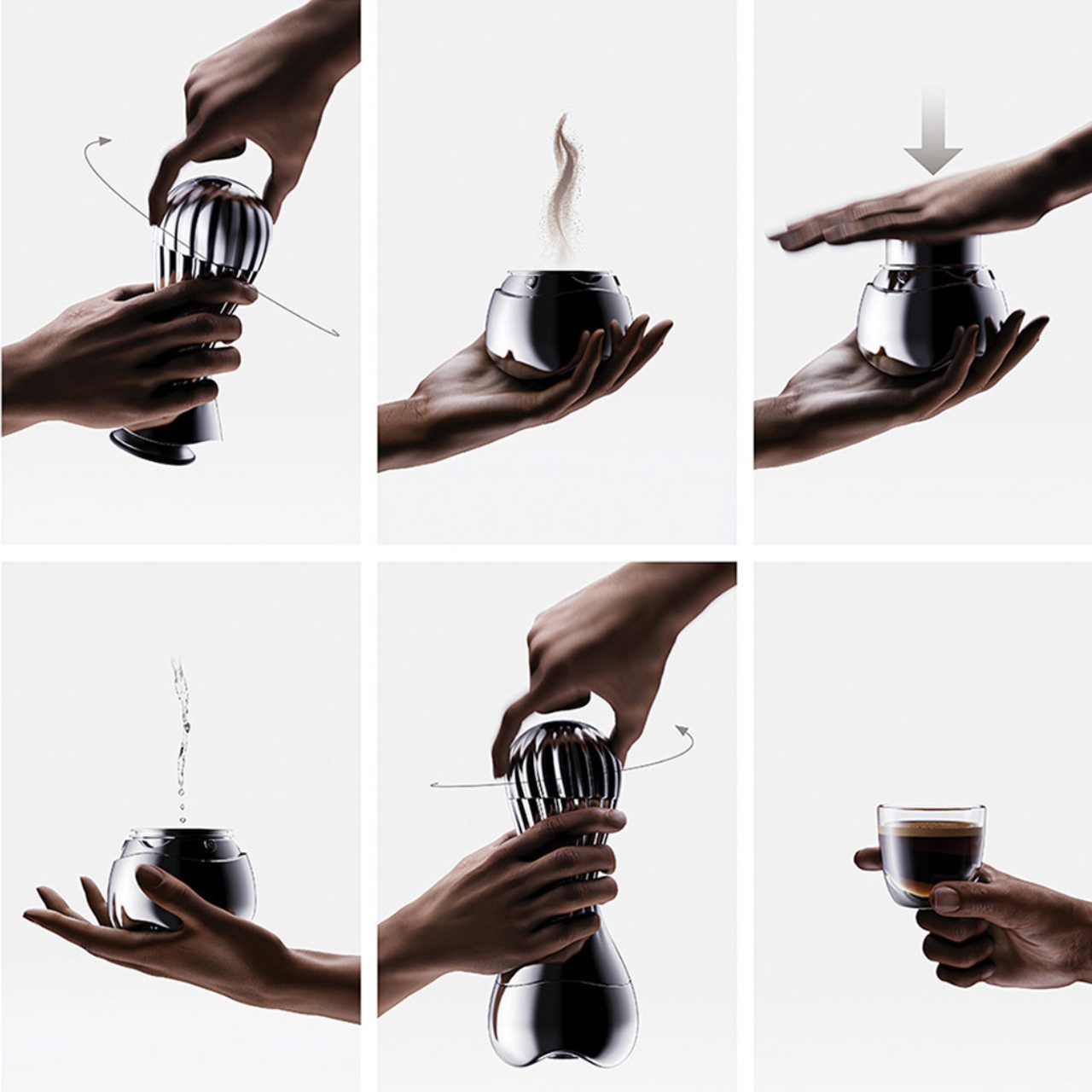
Visually, the most persuasive detail is the fluted upper body. In the supplied images, its ribs stretch down from a rounded crown toward a narrow waist, giving the object a slightly theatrical personality. The broad lower section balances that elongated grip, while the separate three-legged stand makes the assembly look almost creature-like. I’d take this over another anonymous black cylinder. It has enough character to stay on display, although those deep grooves also make me curious about cleaning around them.
The illustrated workflow includes adding water separately, so “without the plug” shouldn’t be mistaken for “without a heat source.” The spring supplies brewing pressure, not hot water. That distinction matters if you’re picturing an entirely self-contained coffee setup. Personally, I’m comfortable with a kettle being part of the routine. I’d rather have one straightforward job handled well than expect a palm-sized object to become an entire café.

Bogdan specifies aluminum construction, replaceable silicone components, and no electronics, with repairability among the design goals. Replaceable parts deserve attention here. I want an everyday object to accommodate wear without making the whole purchase disposable. Still, a material list can only tell us so much. Accessing those components, obtaining replacements, and putting everything back together correctly would determine whether maintenance feels approachable or becomes another project postponed until the weekend.
The important qualification is its development stage. Bogdan’s award entry says rough mechanism prototypes informed the design, while a fully functional prototype and performance validation remain future steps. It’s a concept in development, not a finished brewer ready to order. I’d want to know the winding effort, how it handles hot water, and how consistently it brews before treating the attractive coffee stream in the imagery as evidence of what lands in the cup.
Even with those questions open, the Coffee Juicer has a clear reason to exist. I appreciate a design that gives its mechanism a visible role in the morning ritual without asking the user to become its technician. The challenge now is making that sculptural little body as understandable in the hand as it is compelling in a photograph. For an everyday coffee tool, that’s the test worth passing.