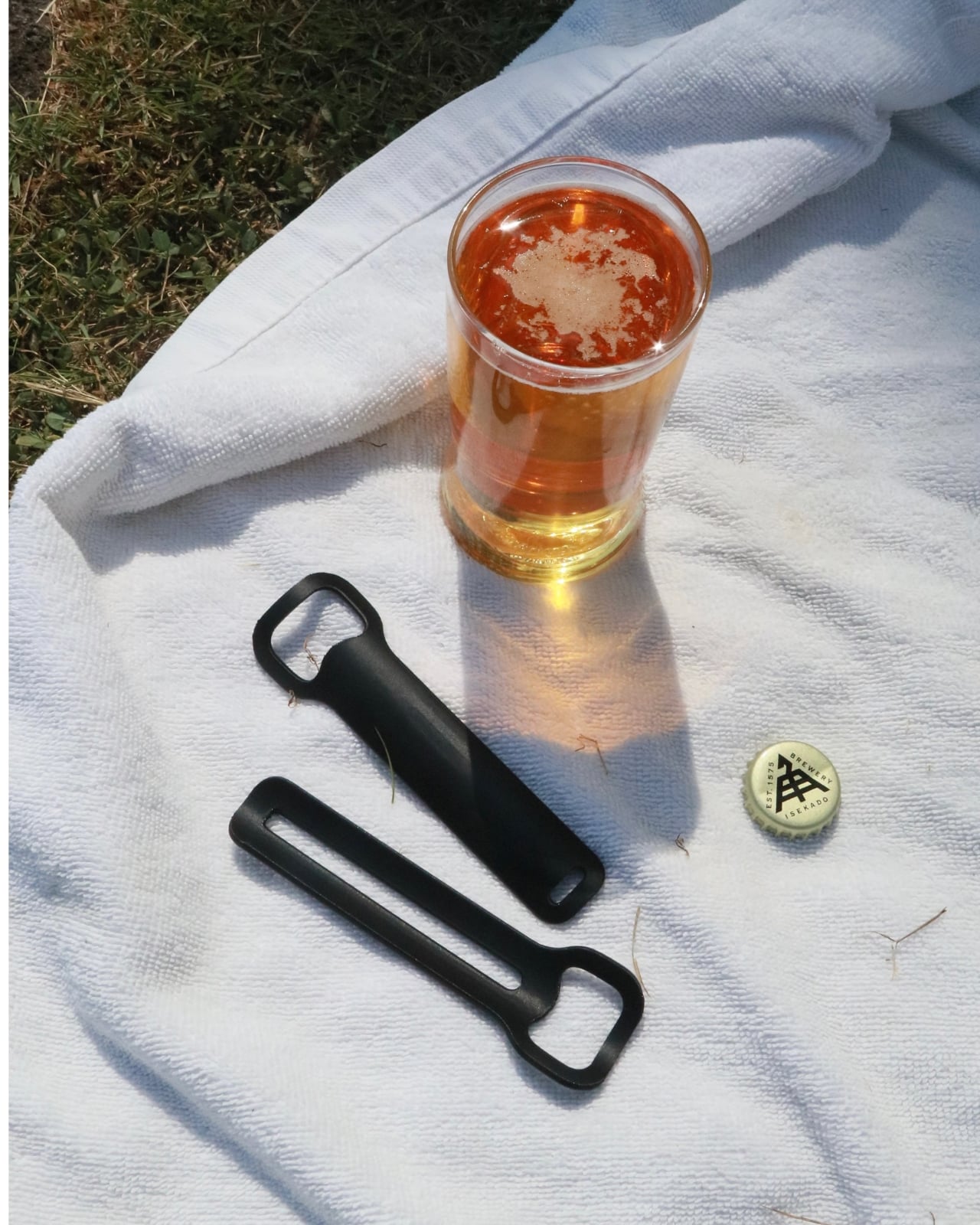
There are things that we use for almost every day life that we don’t really think about their design. One of them are bottle openers. As long as they’re able to open the bottle that I want to drink or use for cooking, I’m not really particular about how they’re designed or what material the designer uses. But this new one begs users to actually think about where it came from and what the minimalist design means.
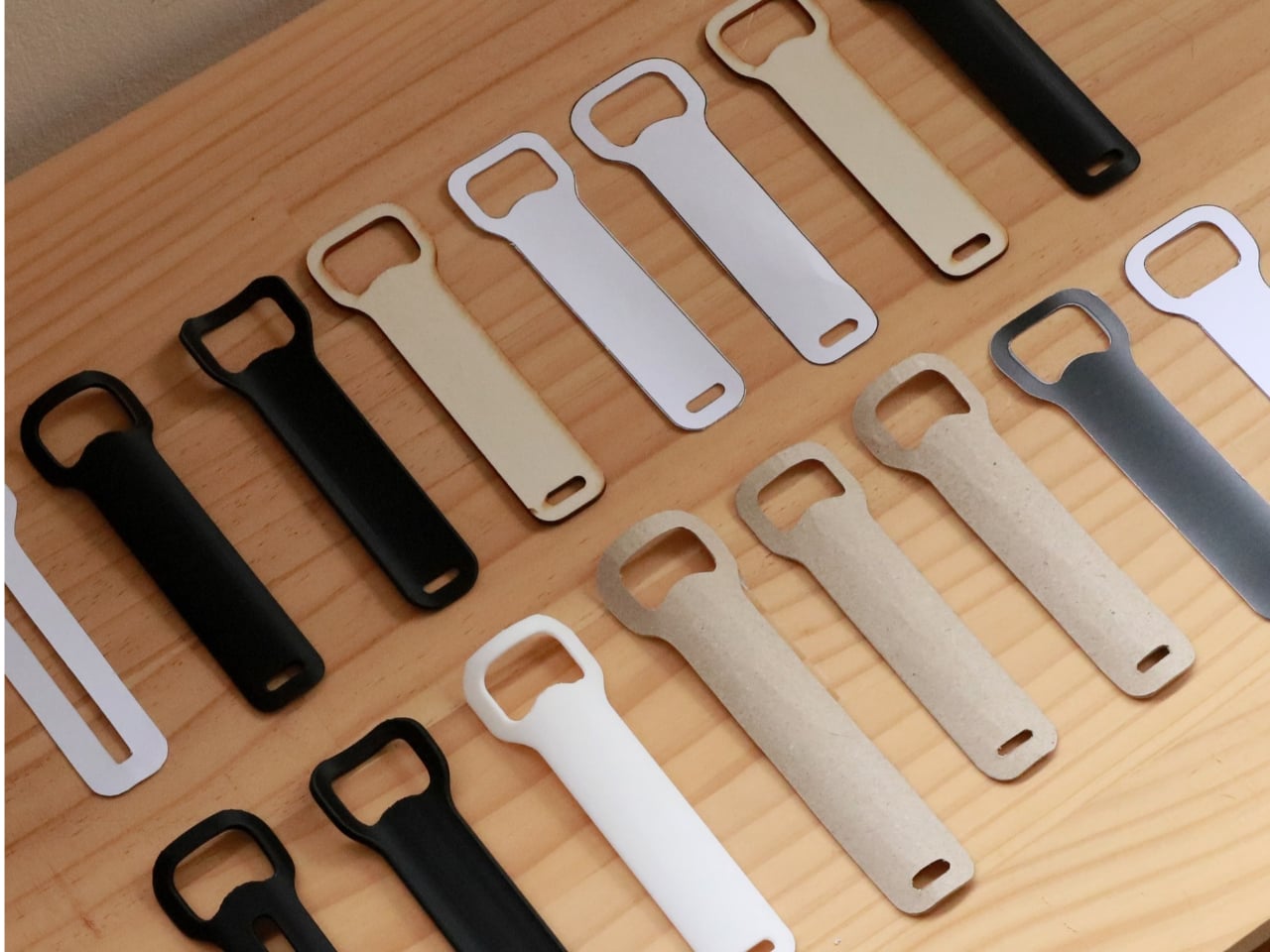
Clink starts with a curve that its designer didn’t have to create. Hsinhung Chou’s stainless steel bottle opener is cut from standard tube stock, borrowing its three-dimensional shape from material that already exists. It’s a practical response to a less photogenic design problem: custom tooling can demand a serious investment before an independent designer has sold a single object. Chou’s solution is to work around that expense.
Designer: Hsinhung Chou
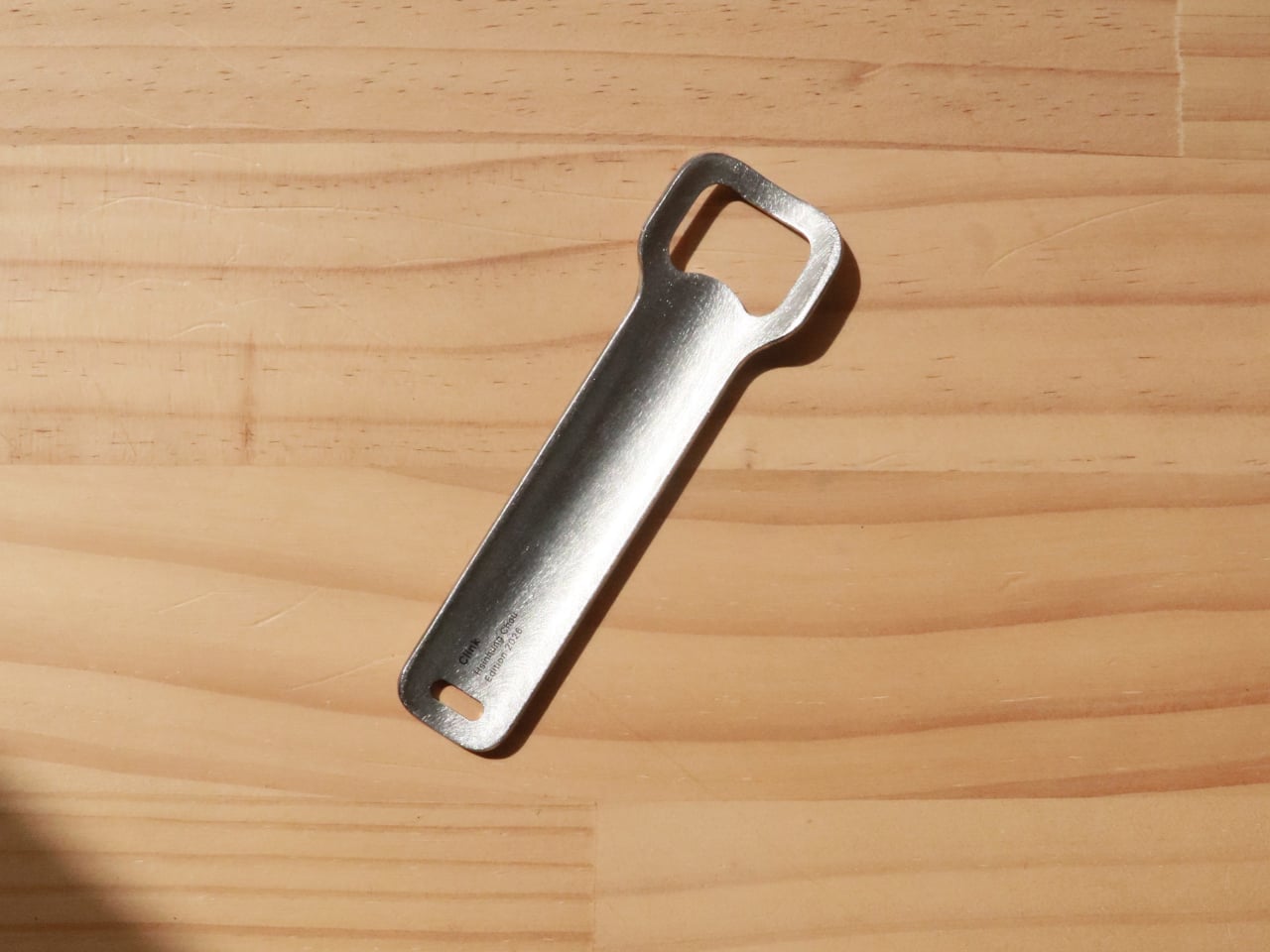
For the person opening a soda or beer, the payoff from this bottle opener is more immediate. Chou says the tube’s curvature gives Clink greater structural rigidity than a conventional flat opener while creating a contour for the thumb. That’s a sensible ambition for an object you press against your hand. A manufacturing decision becomes part of the grip, rather than remaining an invisible detail in a production spreadsheet.
I like that the starting point is so ordinary. A tube already has a radius, a wall thickness, and a shape that places limits on what can be cut from it. Those limits become useful design information. Instead of asking a factory to reproduce any imaginable shape, Chou has developed an object around the possibilities of an existing material. That feels like a more interesting exercise than styling another flat bar.
The process behind it is laser tube cutting. It is a way to cut different contours into tubes and profiles without changing cutting tools for each geometry. For Clink, the important distinction is that the starting material is already curved. The laser defines the opener within that surface, rather than creating a flat piece that needs its curve added afterward.
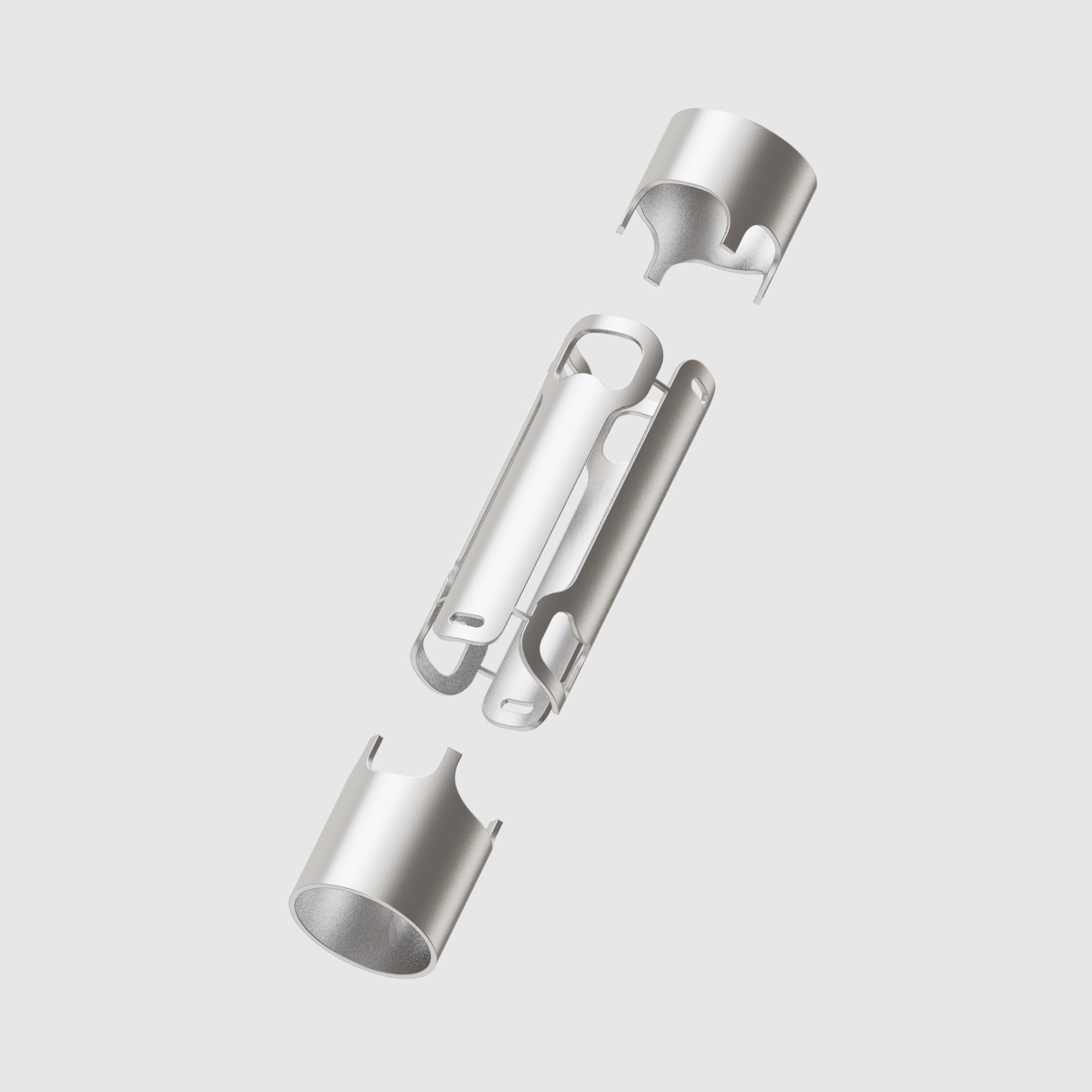
That relationship between process and shape is the strongest reason to pay attention here. Plenty of objects come with a manufacturing story, but I’m more interested when knowing the process helps explain the object itself. Clink’s curve has a reason to exist beyond looking distinctive. According to Chou’s description, the same geometry addresses both stiffness and thumb placement. It gives a small detail more than one job.
Still, an ergonomic intention isn’t the same as a comfortable opener. They say it has a satisfying tactile response but since I haven’t experienced it yet, I’ll just take their word for it. The useful questions would be straightforward: how the edges meet your fingers, how securely it engages a cap, and how much pressure the grip puts on your thumb. Those details would decide whether the production logic translates into a tool worth reaching for.
The stainless steel finish is another deliberate part of Chou’s approach, with the material’s surface texture included in his description of the design. My preference with a small metal tool is for that finish to support the shape rather than distract from it. An opener doesn’t need much visual explanation. Its proportions and the places where your hand makes contact should carry most of the conversation.
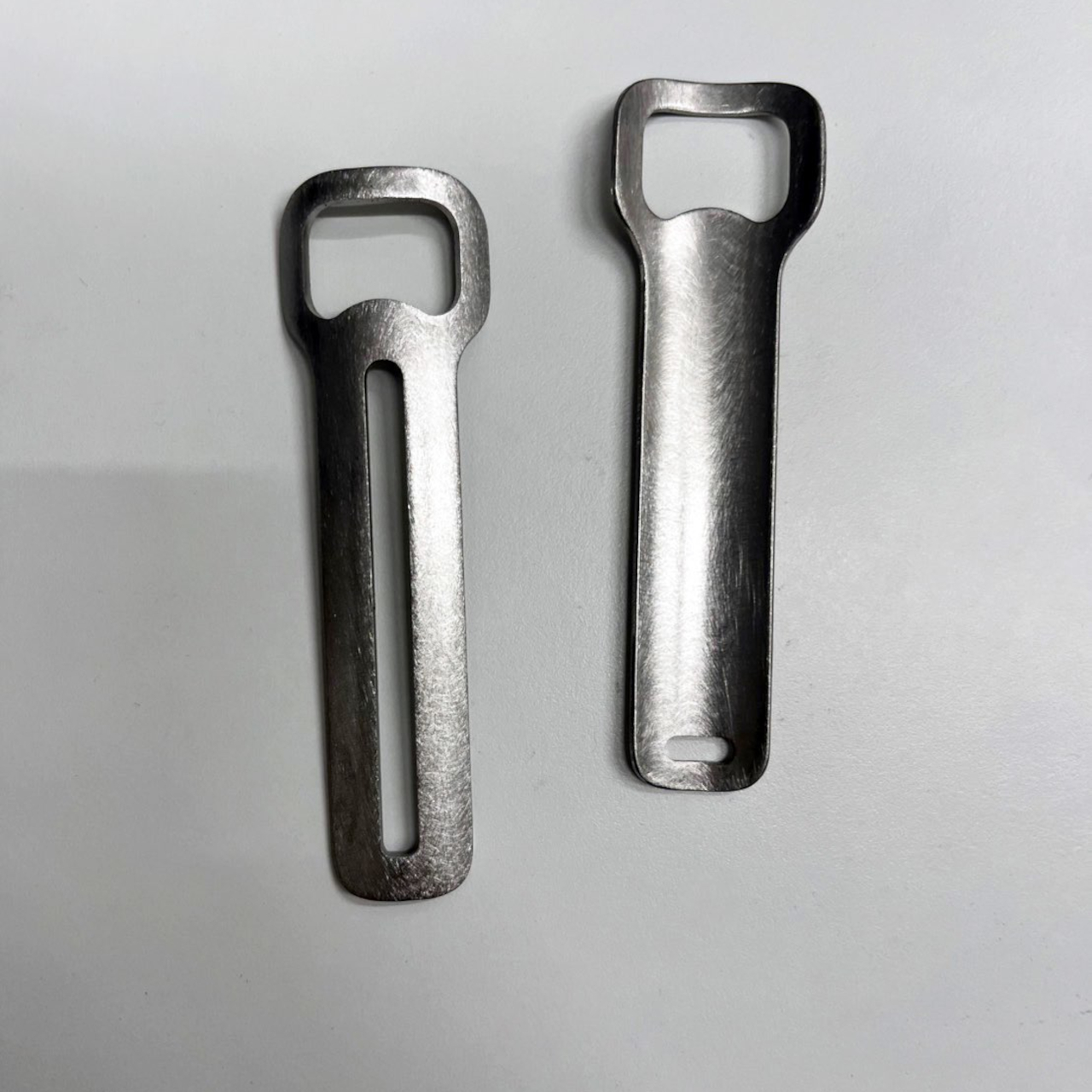
Clink has also moved beyond a one-off design study. Chou has already batch-produced the openers and sells them for NT$1,280, approximately $38 in its coverage. Of course there’s still shipping to consider to wherever you are so that puts this firmly in considered-purchase territory for a bottle opener. I’d want it to earn its place through use, even if the fabrication story helped get my attention.
The appeal is in recognizing that a standard piece of tubing already contains part of the answer. Chou has used its curve as a design resource, with a practical purpose attached. The remaining test is refreshingly ordinary: when a bottle needs opening, does your hand choose Clink over the other opener already in the drawer?