
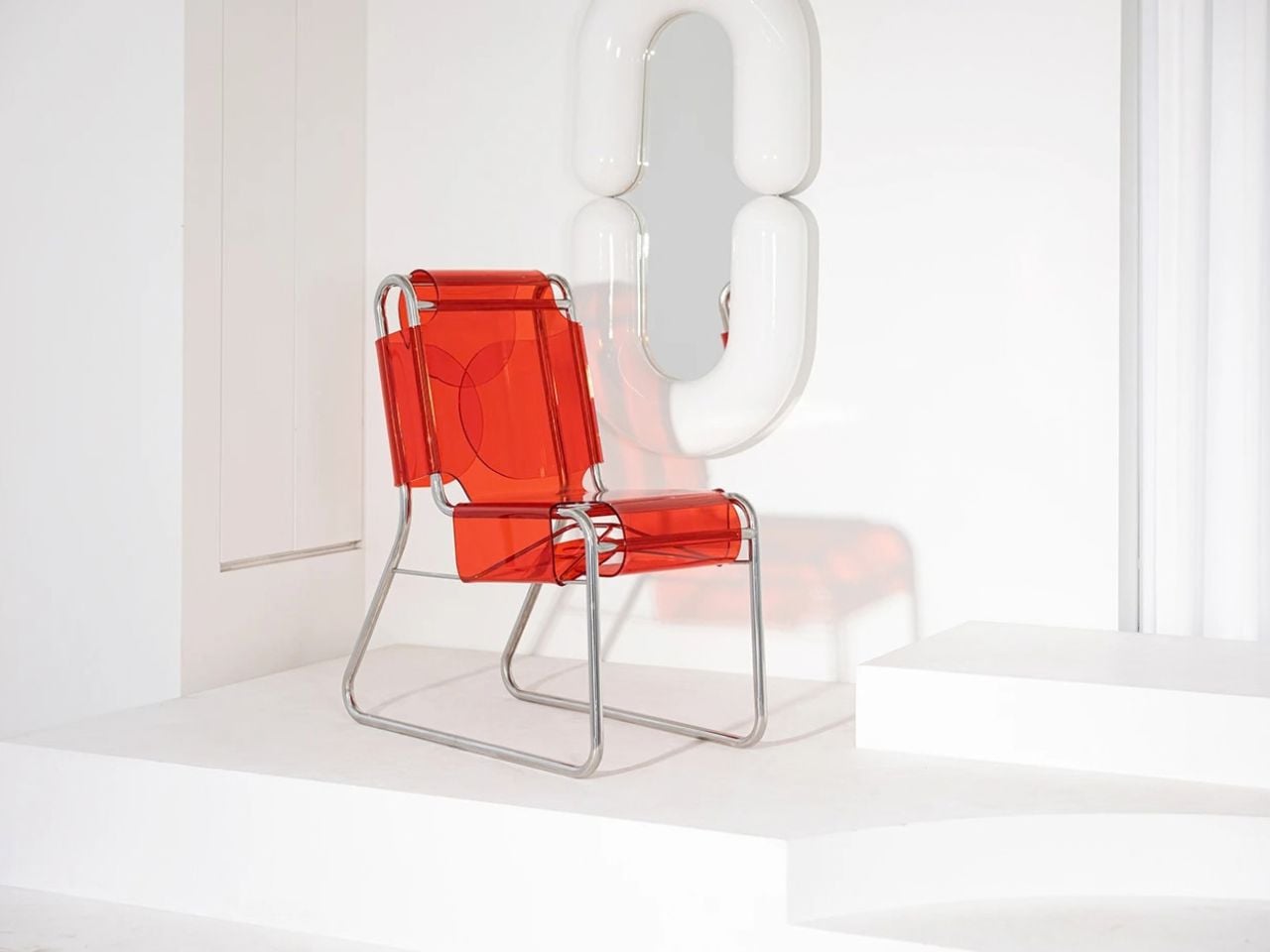
A folding chair is usually designed around one simple promise: disappear when it is not needed. This concept takes that familiar piece of furniture in a more expressive direction. Instead of treating folding purely as a practical mechanism, the chair turns the act of folding into its defining visual language. The result feels somewhere between an origami object, an inflated form, and a piece of transparent sculpture.
Its shape begins with an interesting contradiction. Acrylic is naturally thin and rigid, yet the chair appears soft, rounded, and almost inflated. The designer draws inspiration from origami and balloons, two references that create volume from something initially flat. Thin acrylic sheets are folded into pronounced curves, producing the appearance of substantial thickness without relying on a heavy solid mass. Visually, the chair feels generous and substantial, while the construction helps reduce some of the weight typically associated with acrylic furniture of a similar perceived volume.
Designer: Jihong Lee
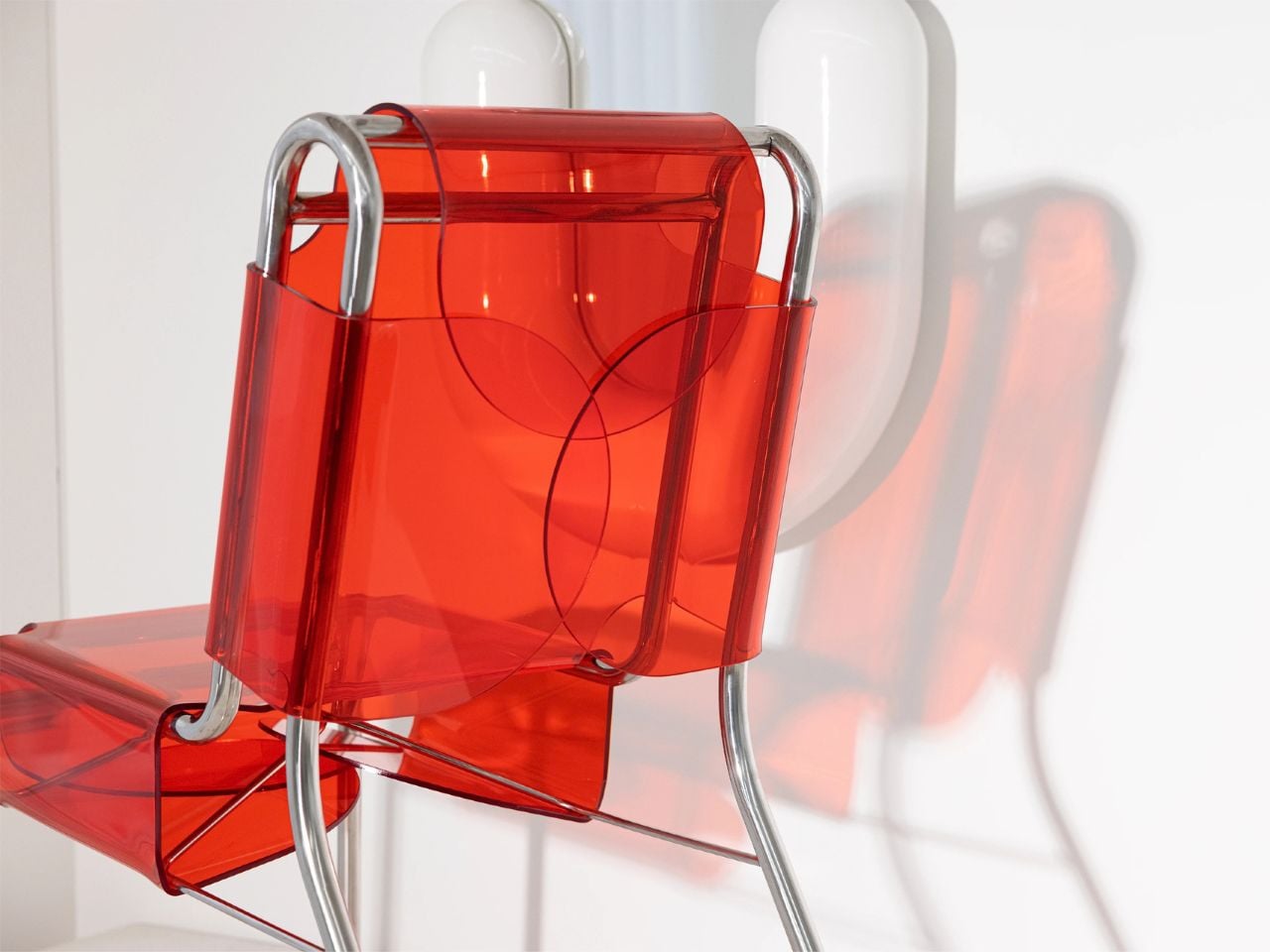
There is something especially appealing about the way the material is treated. Acrylic is often associated with crisp edges, polished surfaces, and a certain visual coldness. Here, those expectations are disrupted by broad curls and smooth transitions. The chair is hard to the touch, but its silhouette suggests softness. Its curved surfaces resemble something closer to pudding or a slowly inflated form than a conventional rigid seat. That mismatch between what the eye expects and what the material actually feels like gives the design much of its personality. It almost invites you to reach out and touch it simply to understand what you are looking at.
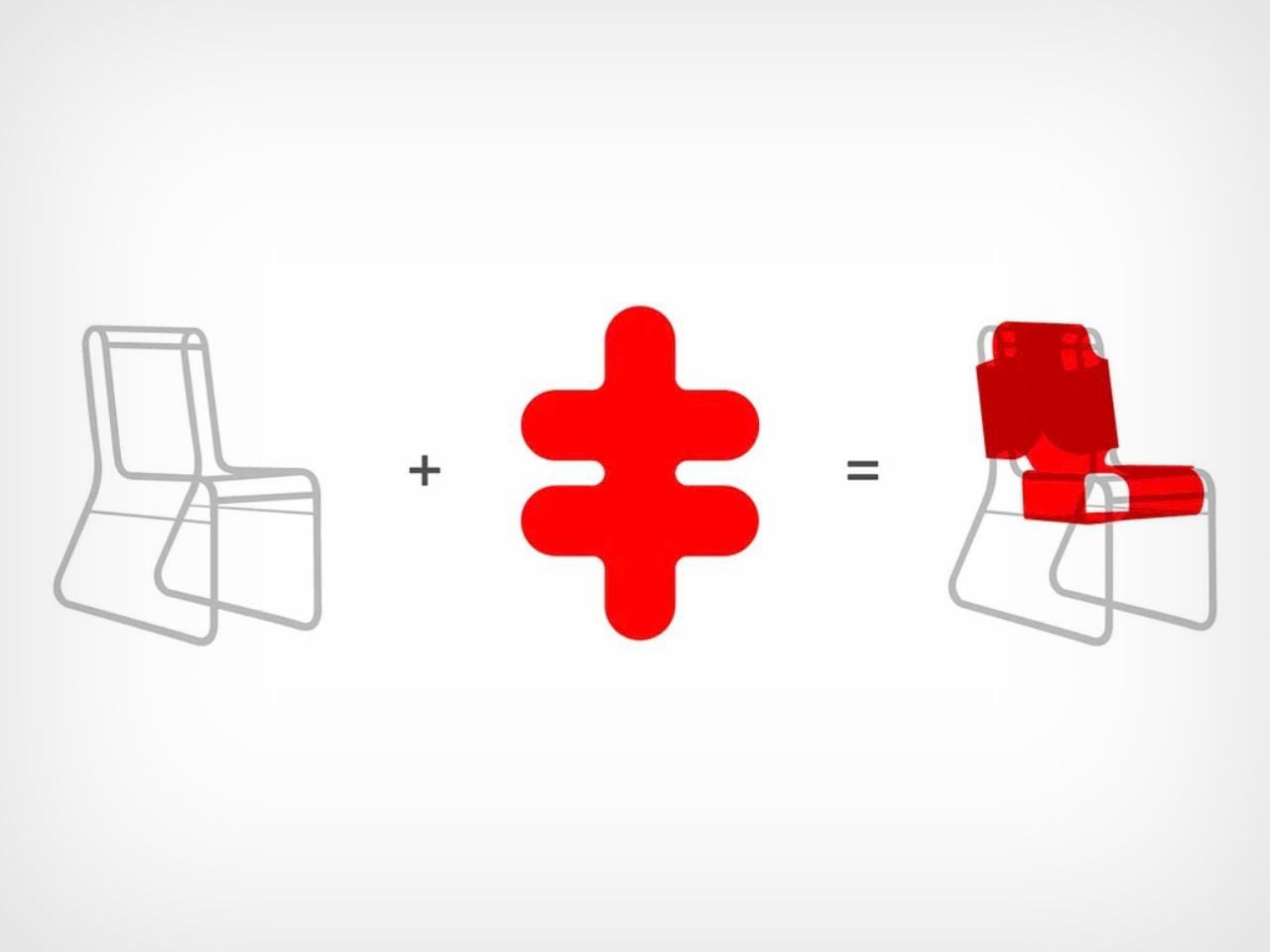
The construction is equally considered. The folded acrylic sits over a structured chair leg system and can be fixed in place without additional bolt assembly or bonding. This allows the material itself to take on a structural role while keeping the overall appearance clean. There are fewer visible interruptions, so the chair reads as a continuous form rather than a collection of assembled components.
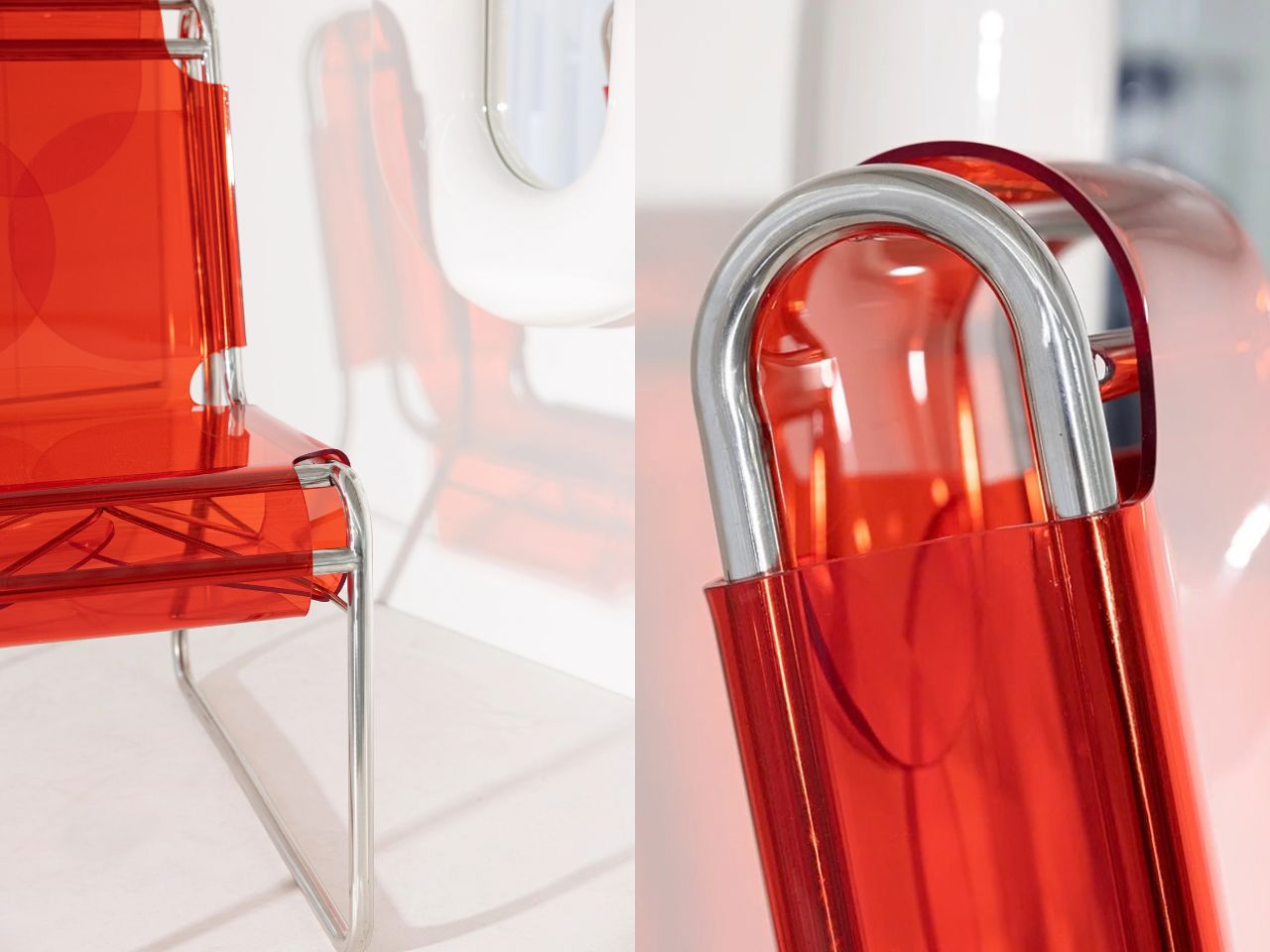
Its flat-packed nature adds another layer to the idea. Folding becomes more than a visual gesture. It becomes part of how the chair can be transported, assembled, and understood. There is a satisfying DIY quality to the process, almost like completing a large piece of origami and watching a usable object emerge from a flat sheet. That sense of participation makes the chair feel approachable despite its sculptural appearance.
This is what gives the design its charm. It does not hide the logic behind its construction. The folds are visible, understandable, and central to its character. There is an immediacy to that simplicity. You can look at the chair and begin to imagine how it came together.
As an object in a room, it would easily become a focal point. Its transparent material keeps it visually light, while the exaggerated curves give it enough presence to shift the atmosphere of a space. It feels playful without becoming novelty furniture, and experimental without losing its function as a chair.
The strongest idea is ultimately quite simple: take a thin, rigid sheet and make it feel full, soft, and substantial through folding alone. In doing so, the chair turns a familiar material into something unexpectedly tactile and expressive. It brings the pleasure of making, folding, and assembling into furniture design, giving the finished object the curious charm of something that looks as enjoyable to build as it is to live with.