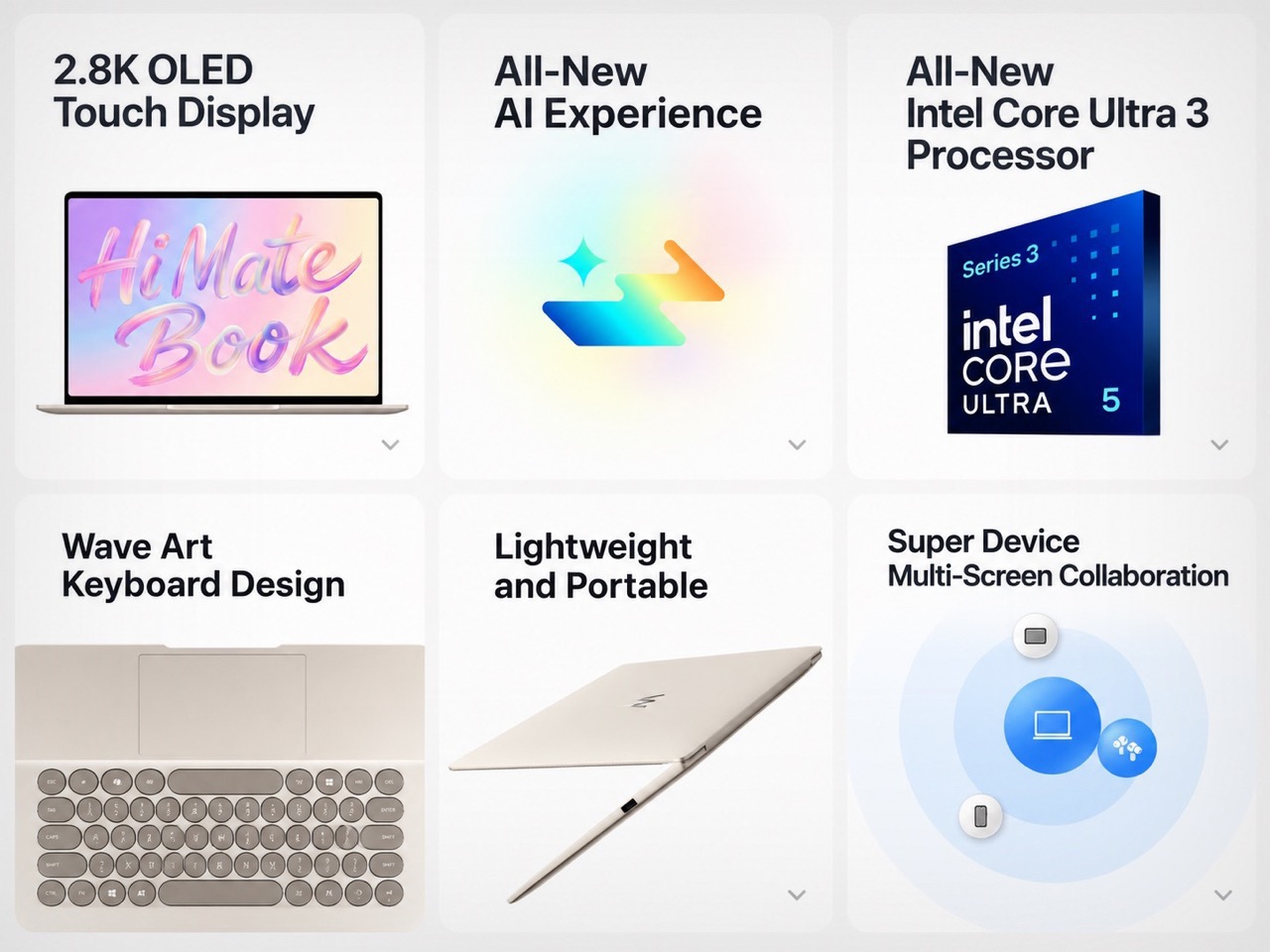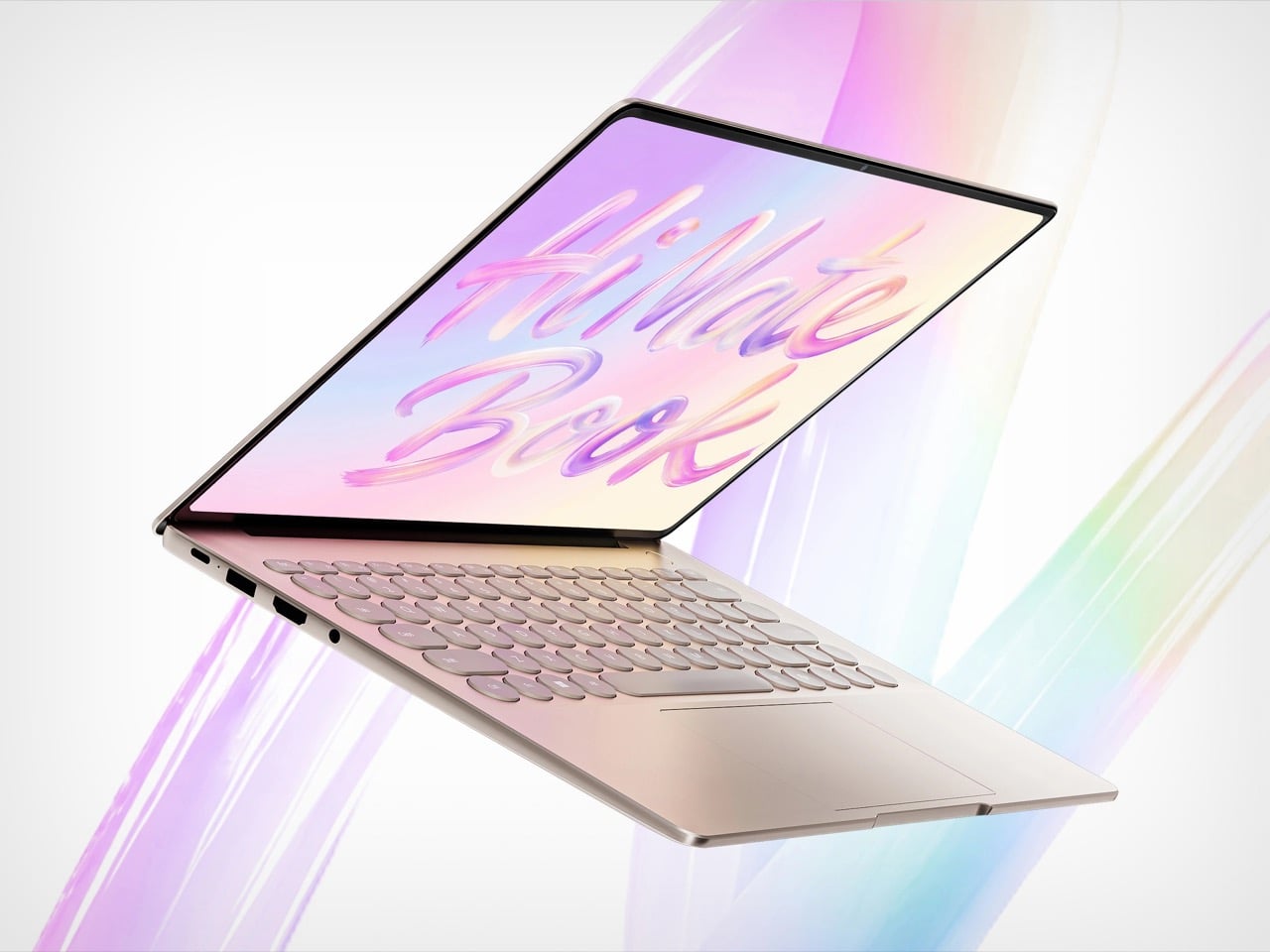
WIKO started in Marseille, spent a decade making budget Androids, got acquired by a Chinese telecom group in 2021, found its way into Huawei’s retail ecosystem, and is now selling a laptop with a patterned keyboard. Quite the corporate journey. The Hi MateBook 14 Core Edition 2026 is the result: a Windows ultrabook built around a 14.2-inch OLED touchscreen with 120Hz and touch support, running Intel’s Panther Lake Core Ultra 5 325. Scrolling through a long document on a 3:2 screen just hits differently, and that taller aspect ratio separates it from the 16:10 default most ultrabooks settle for. WIKO is betting on the display as the machine’s loudest selling point, and on paper, that bet is defensible.
The MateBook name borrows aesthetic language from Huawei’s own laptop family, but WIKO and Huawei are separate companies, and this is WIKO’s product running Windows on Intel silicon. Right now it is a China-market release at CNY 8,199, roughly $1,220, with no confirmed availability outside that region. The port selection tells you something about the intended use case: two USB-A ports, a full-size HDMI, a USB-C, and a headphone jack on a 14.5mm body weighing 1.33 kg (about 2.93 lbs). It is a laptop that genuinely wants to live at a desk, while still dressing like it has somewhere nicer to be.
Designer: WIKO
A 3:2 OLED Panel at a Price Most Windows Laptops Skip
At 2880 by 1920 pixels across a 14.2-inch panel, the Hi MateBook 14 Core Edition runs a resolution and aspect ratio that most Windows machines at this price simply skip. The 3:2 format gives you meaningfully more vertical space than the 16:10 panels most premium ultrabooks default to, which changes how a document or spreadsheet actually feels to navigate. OLED, touch support, and 120Hz simultaneously under $1,300 is a short list in the current Windows market, and the Hi MateBook 14 checks all three on its documented spec sheet. LG’s gram Pro 16 makes a similar display argument but at a higher price. On paper, WIKO is building a screen story worth paying attention to.
Reflectivity, color accuracy, hinge stability, and real-world battery life are all measured quantities that require physical testing to confirm, and none of those numbers exist yet for this machine. WIKO claims 450 nits of peak brightness, sitting slightly below the 500 nits Apple quotes for the MacBook Air M5’s IPS Liquid Retina display. Whether that 50-nit gap matters under different lighting conditions is genuinely unknown at this stage. The primary product documentation is in Mandarin and has not been independently tested yet. The display spec is compelling on paper; the only responsible thing to do is leave it there for now.
Two USB-A Ports and Full-Size HDMI on a 14.5mm Chassis Tell You Who This Is For
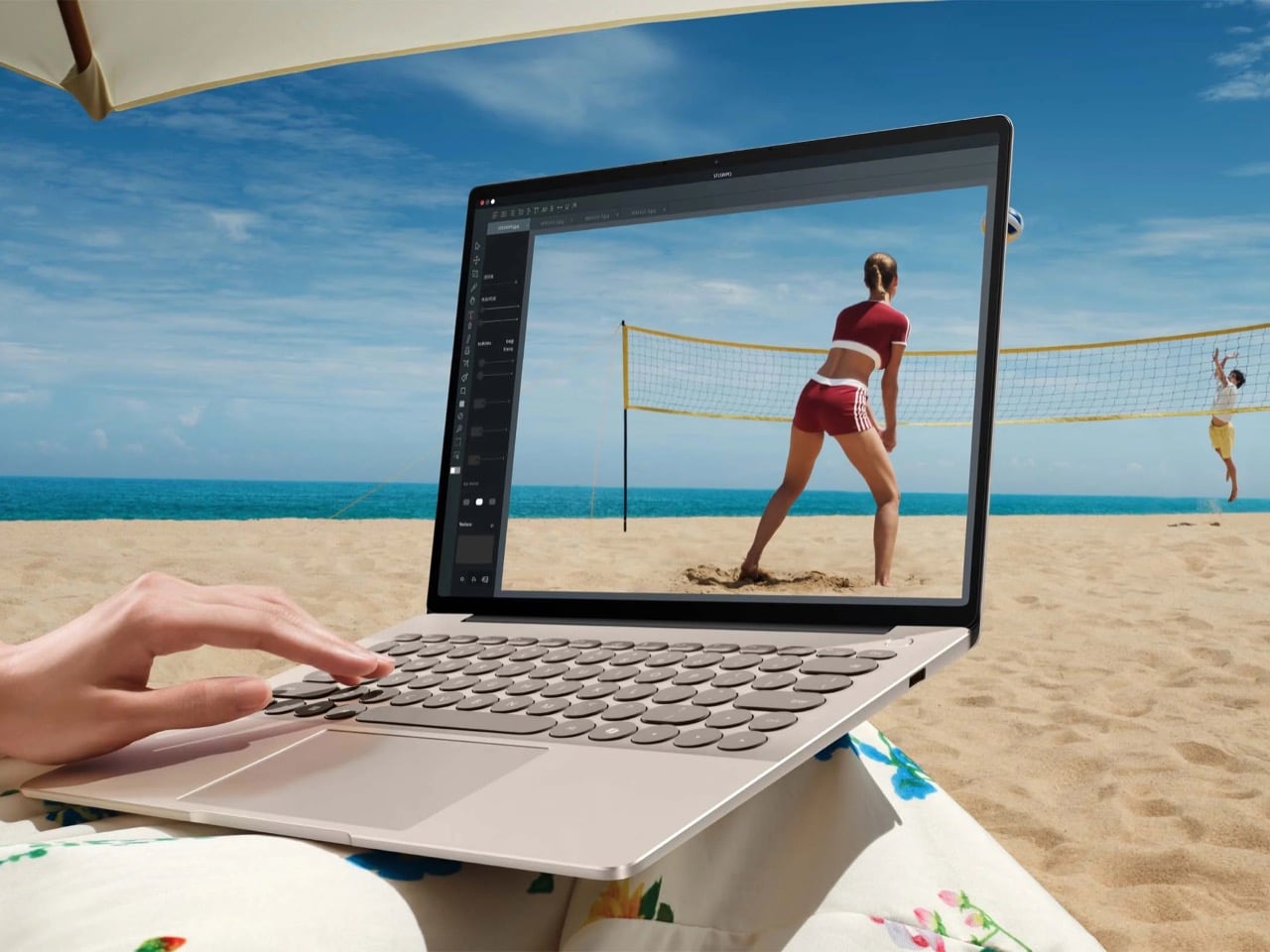
Two USB-A ports and a full-size HDMI on a 14.5mm (0.57-inch) chassis is a statement about who this laptop is designed for. Most premium ultrabook design over the past several years has treated legacy connectors as things to discreetly remove in the name of thinness. The Hi MateBook 14 goes the other direction, covering the ports most desk setups still rely on, then adding a USB-C and a 3.5mm jack alongside them. The result is a machine that does not need a dongle to connect a monitor or flash drive on day one. That is a practical courtesy that has largely disappeared from the premium thin laptop segment.
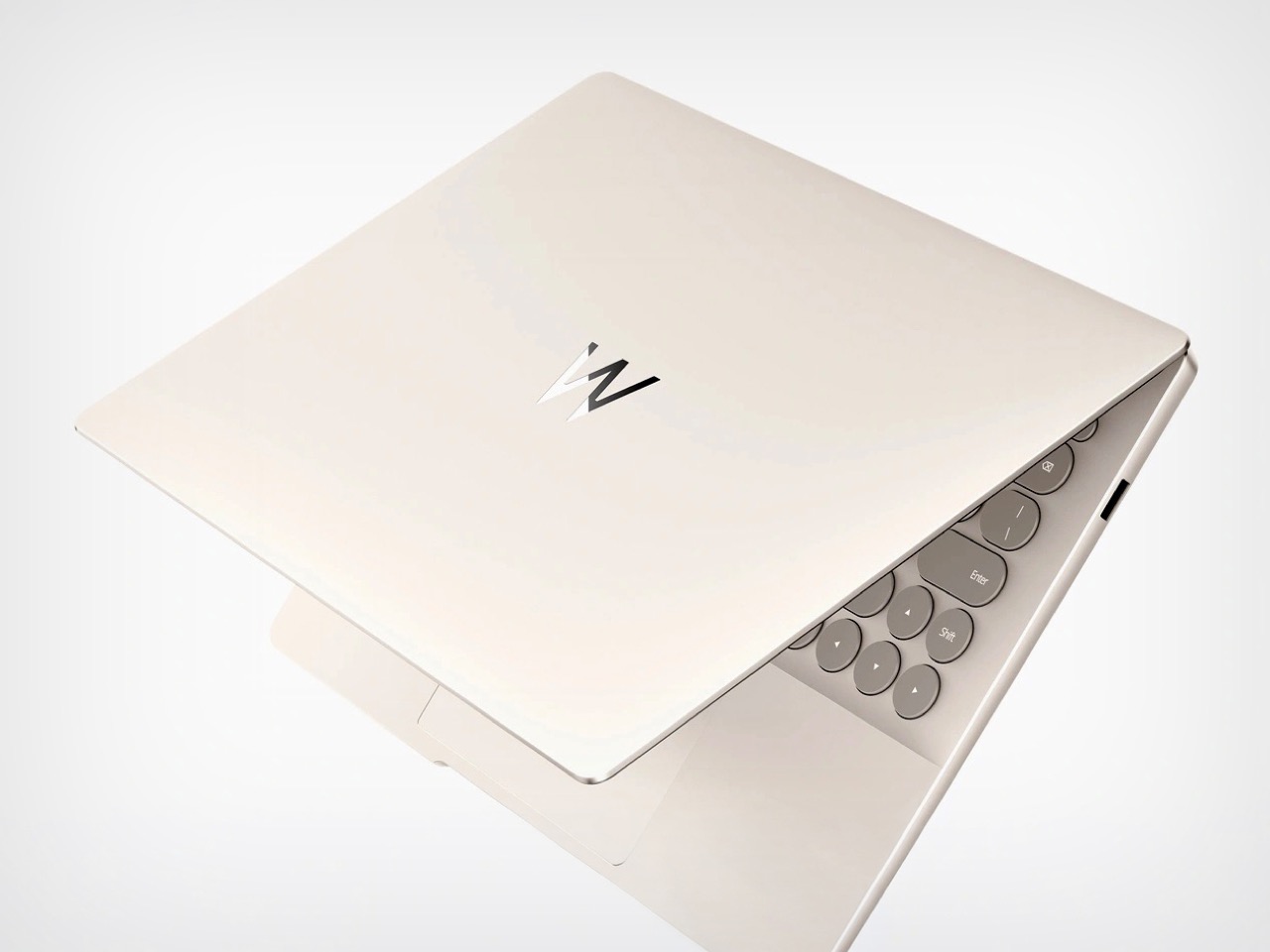
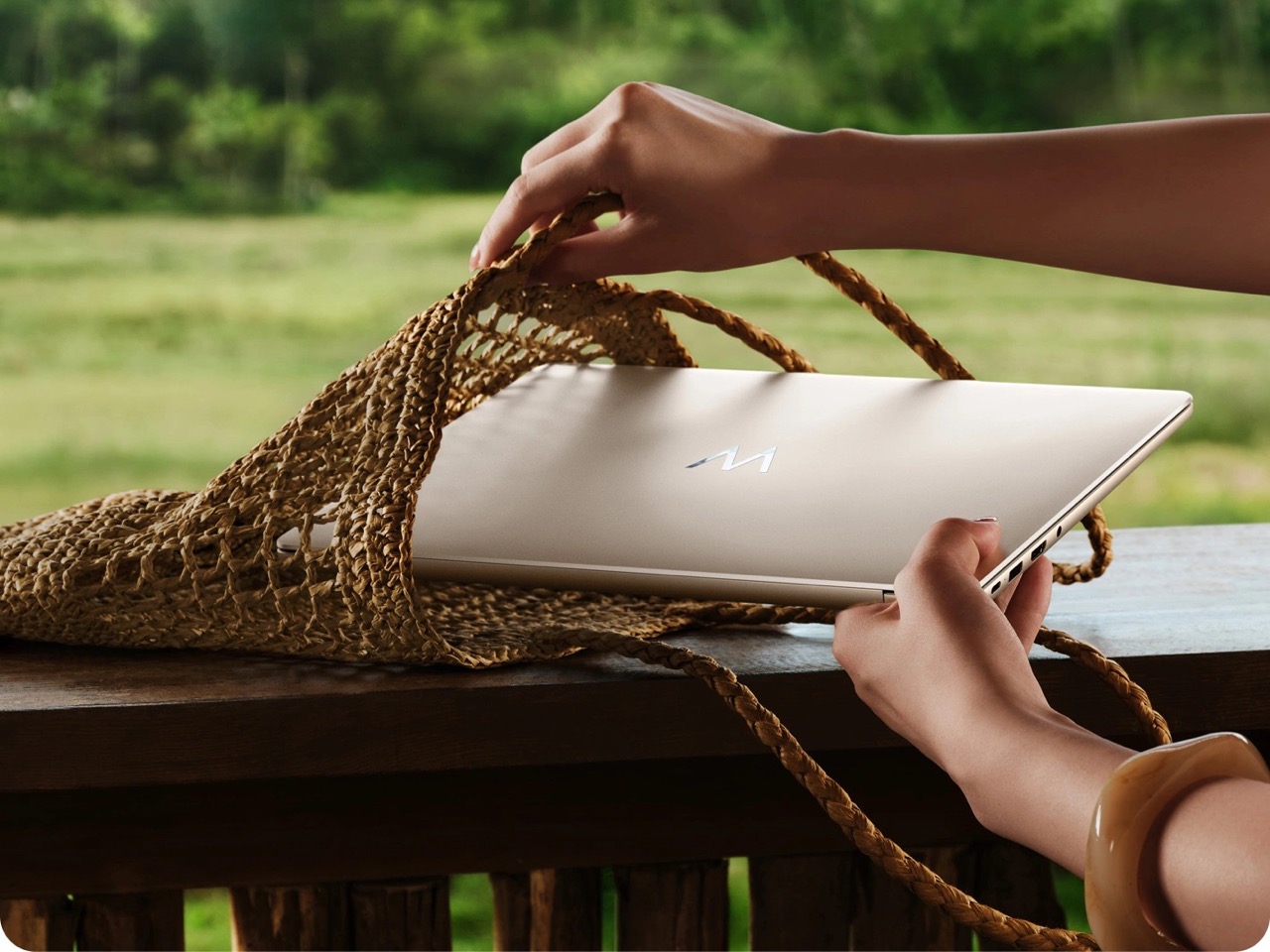
WIKO puts the keyboard front and center in the Hi MateBook 14’s product photography, with a patterned keycap treatment that differentiates the machine from the generic anodized-slab look most ultrabooks default to. Rounded corners carry the same softened sensibility through the chassis, which at 1.33 kg and 14.5mm thick is legitimately bag-carry friendly. Whether the keycap pattern applies to all regional configurations or is market-specific needs direct confirmation from WIKO. Memory options, storage tiers, and keyboard localization are similarly unconfirmed in the English-language documentation. These are open questions worth pinning down before treating any spec here as settled.
Core Ultra 5 325 Is the Entry Rung of Panther Lake, and That Distinction Matters
The Core Ultra 5 325 inside the Hi MateBook 14 is a U-series entry-level part from Intel’s Panther Lake family, launched Q1 2026. Panther Lake generated real performance enthusiasm at the H-series end, with top-tier chips delivering substantial gains over Lunar Lake and AMD’s Ryzen AI equivalents in independent testing. The U-series 325 runs a different brief, built for efficiency rather than peak throughput. For document editing, browser workflows, and video calls, it is a capable match for what the Hi MateBook 14 appears designed around. Comparing it to the H-series benchmarks that drove February’s coverage would be a misread of the spec sheet.
CNY 8,199 converts to roughly $1,220, placing the Hi MateBook 14 Core Edition alongside the MacBook Air M5 entry config and a wide field of Windows ultrabooks. For most readers outside China, this is a machine to follow rather than to buy right now, since US availability is unconfirmed. YD covered a similarly geographically restricted machine with the VAIO T Series earlier this month, and the dynamic feels familiar: a compelling design case with no current purchase path for most of the world. WIKO is building something that competes at the spec-sheet level in a segment where that matters. The gap between the paper and the product is still waiting to be closed.