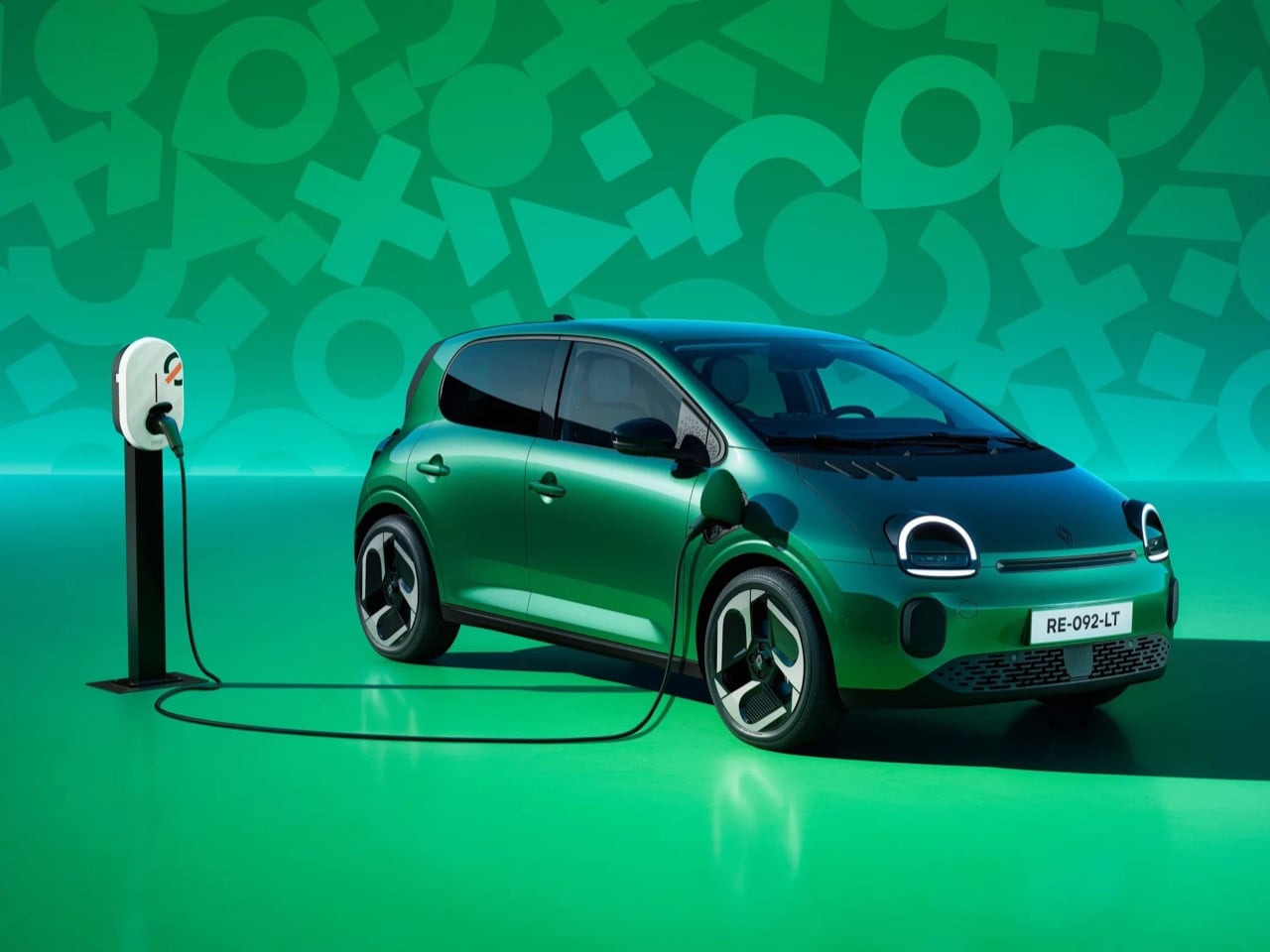
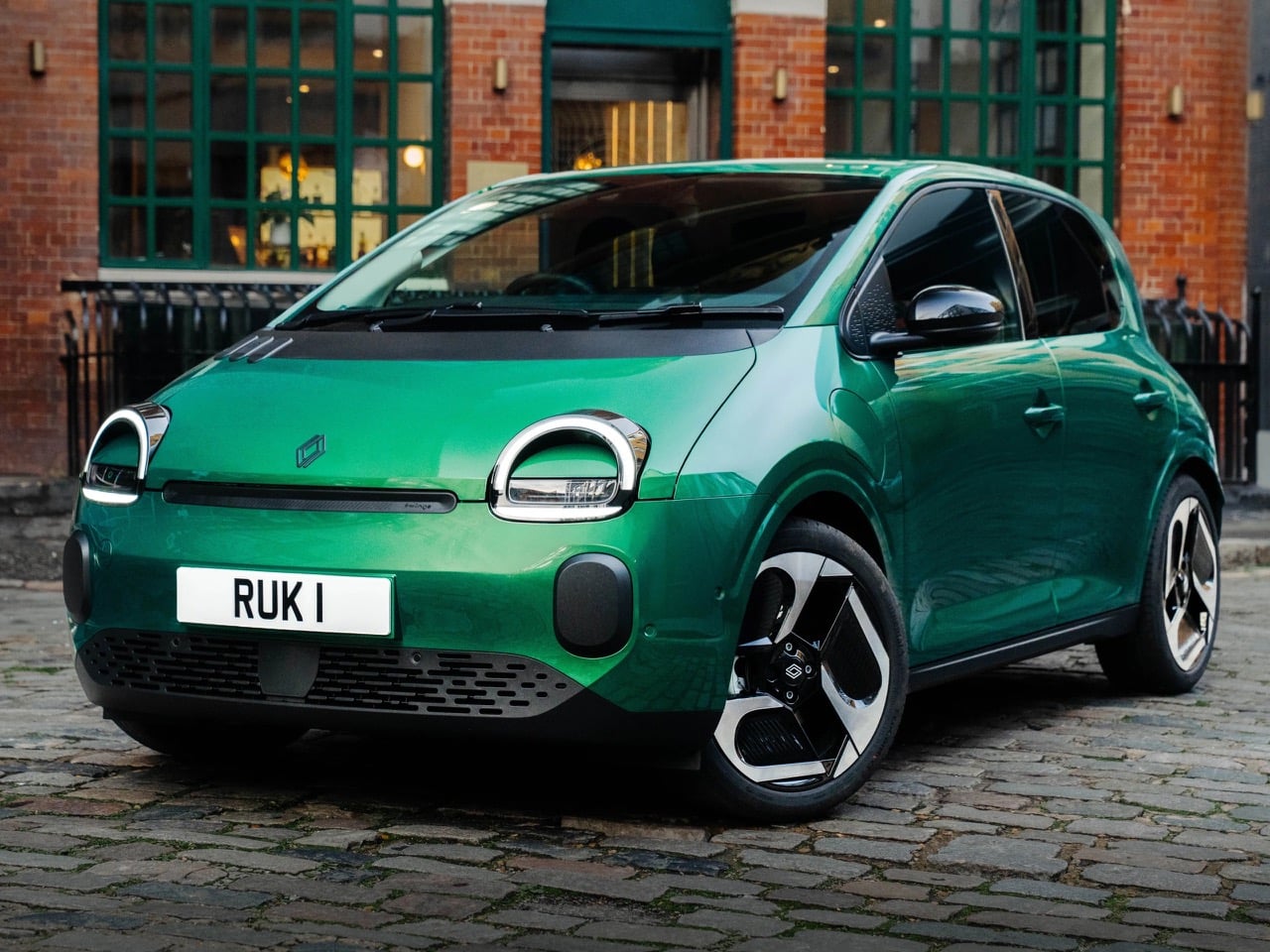
The cheapest new EV you can buy in America right now is the 2027 Chevy Bolt, at $28,995. That’s a perfectly nice car, but it costs about 50 percent more than what a Brit will pay for a base Renault Twingo E-Tech. The little French hatch starts at £14,745 after the UK’s EV grant, or roughly $19,500, and it looks like a cartoon frog that just heard good news. It has five doors, sliding rear seats, and a face you physically cannot frown at. The Techno trim gets Google built in, too. It is also, sadly, not coming to the US.
Renault pulled this off by being ruthlessly practical about where things get made. Designers in Paris drew the car, a development team in Shanghai sorted out the battery, powertrain, and systems, and a factory in Slovenia bolts it all together. A 27.5 kWh LFP pack from CATL gives it a WLTP rating of 163 miles, which is plenty for a car that lives in cities. The whole thing went from a blank sheet to production in 100 weeks, roughly half the usual time. Even before the UK grant kicks in, its £18,495 sticker undercuts America’s cheapest EV by several thousand dollars.
Designer: Renault
The 1992 Frog Face, Redrawn for the EV Era
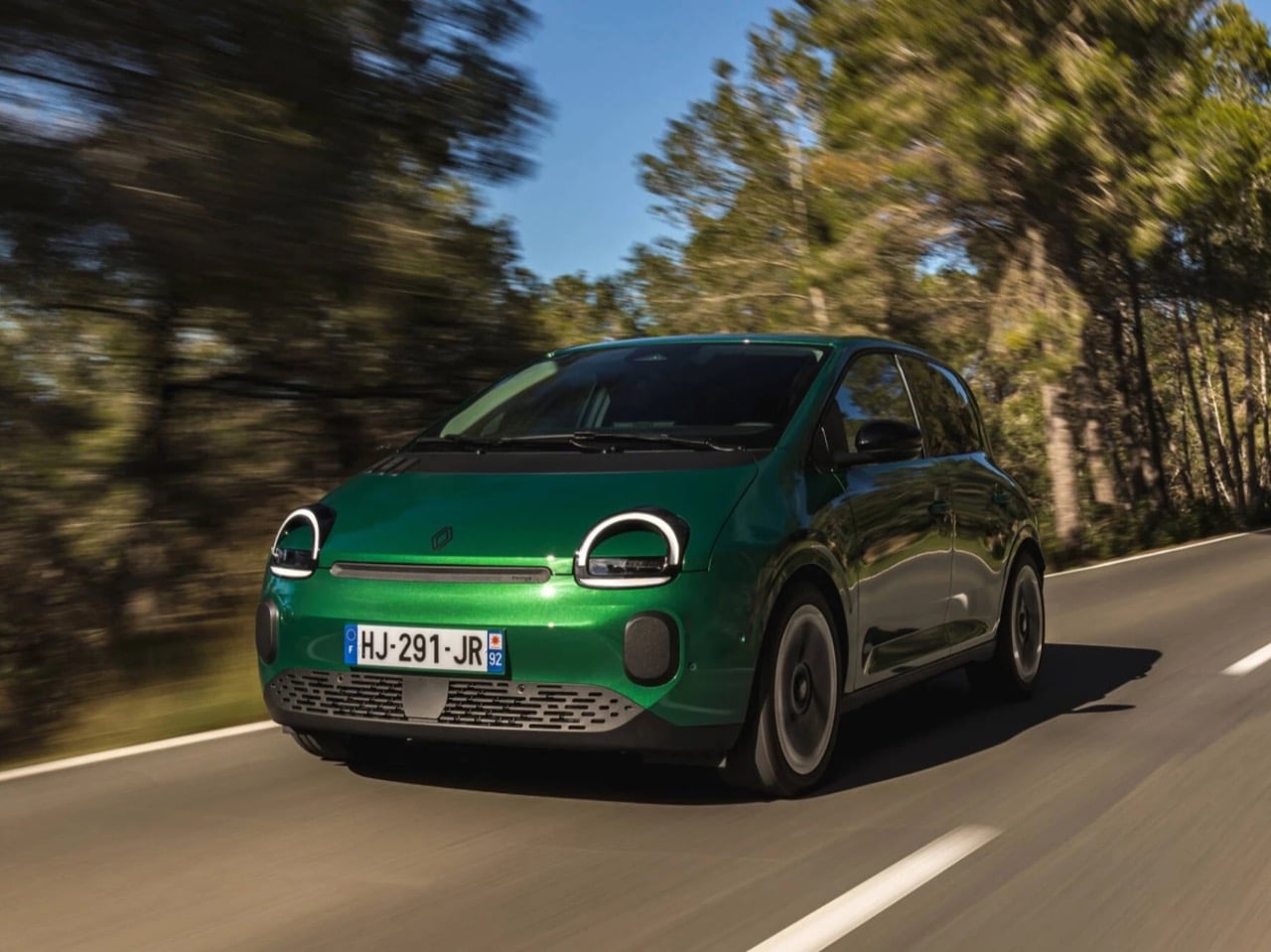
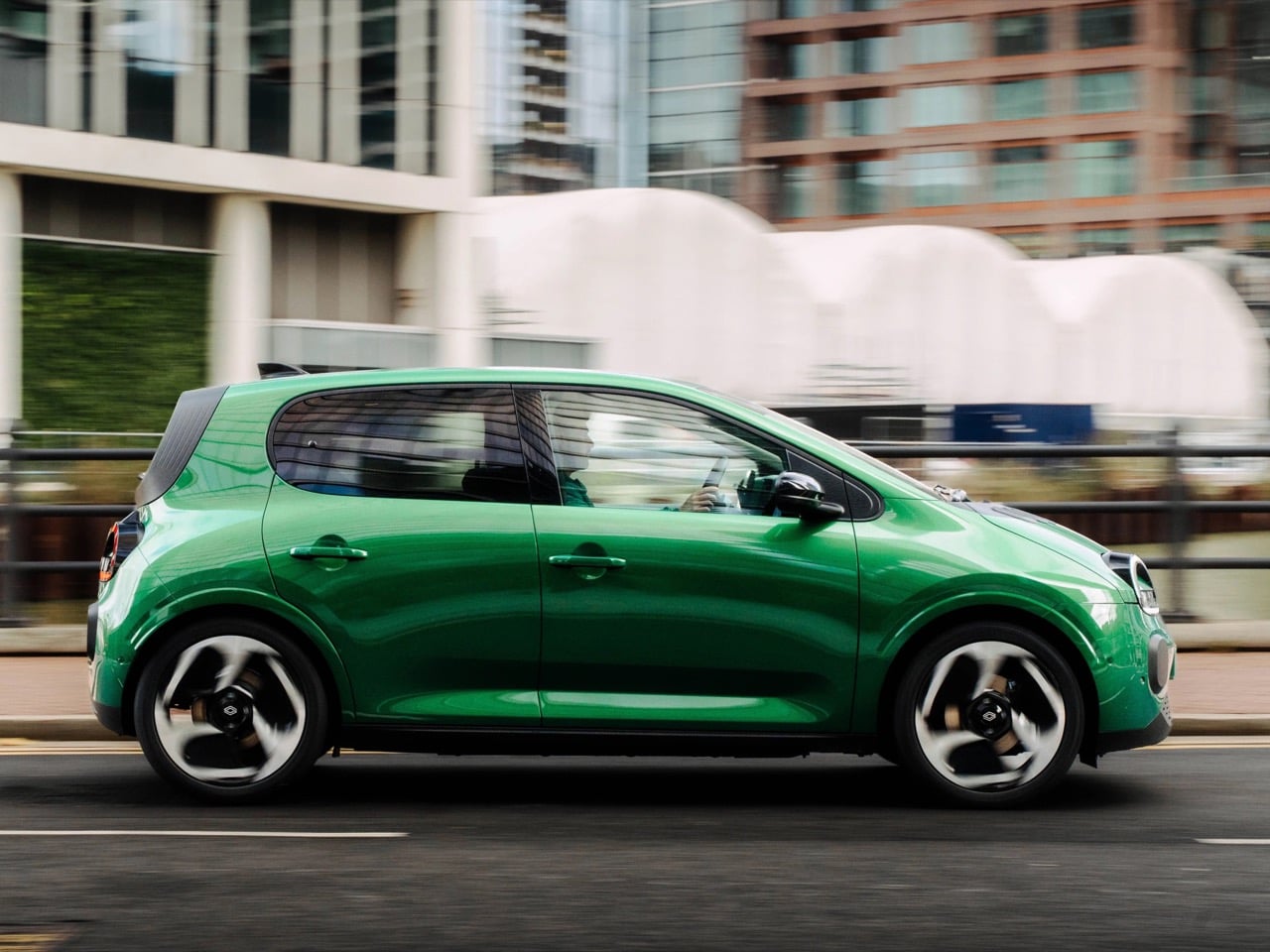
Renault has been circling this nostalgia for a while, from Sabine Marcelis’s translucent Twingo for the car’s 30th birthday to this production revival led by Paula Fabregat-Andreu’s team. The 1992 original started life as a Jean-Pierre Ploué sketch that Patrick Le Quément refined, adding those famous lidded frog-eye headlamps. The new version redraws them as two LED half-circles above a horizontal line, keeps the smiling grille, and even brings back the three little hood vents, which now hide the washer fluid filler. Crash rules pushed the A-pillar back, so a black insert fakes the original’s forward-leaning windshield. The 25.2-inch (640 mm) wheels sit right out at the corners for a planted bulldog stance. Renault calls their diameter a segment record.
The best trick is inside, and it goes back to a 1926 Louis Renault patent on adjustable rear space. The 1992 Twingo turned that idea into a rear bench that slid 6.7 inches (17 cm), a party trick that forced Renault to make it a strict four-seater. The third-generation car dropped the feature, and the E-Tech brings it back with two rear seats that each slide 6.3 inches (160 mm). Slide them forward and the trunk grows from 10.8 to 12.7 cubic feet (305 to 360 liters), with 35.7 cubic feet (1,010 liters) on tap when you fold them down. Up front, a floating dash pairs a 7-inch instrument cluster with a 10-inch touchscreen, and you still get proper physical dials for the climate controls.
Paris Drew It, Shanghai Engineered It, Slovenia Builds It
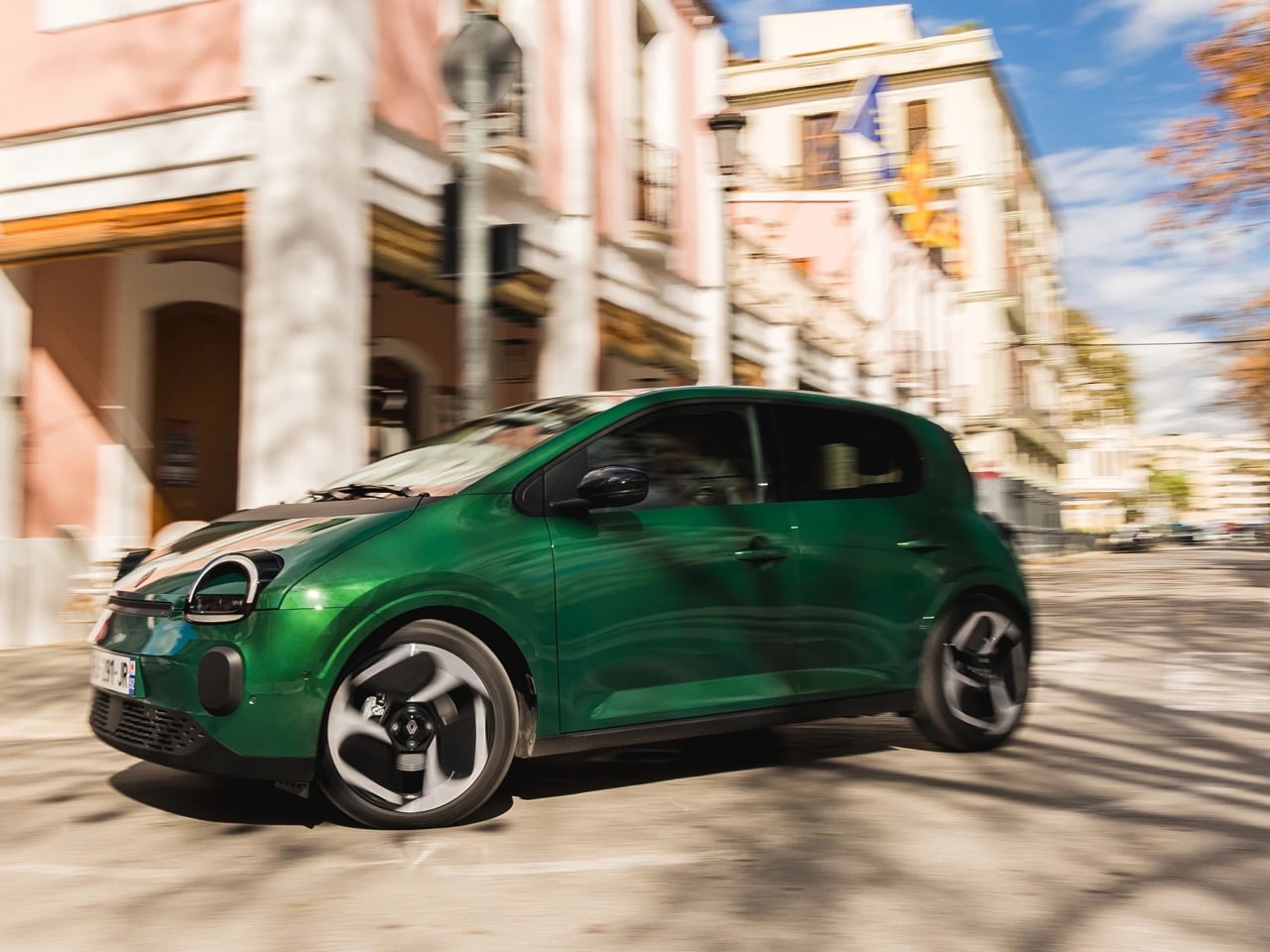
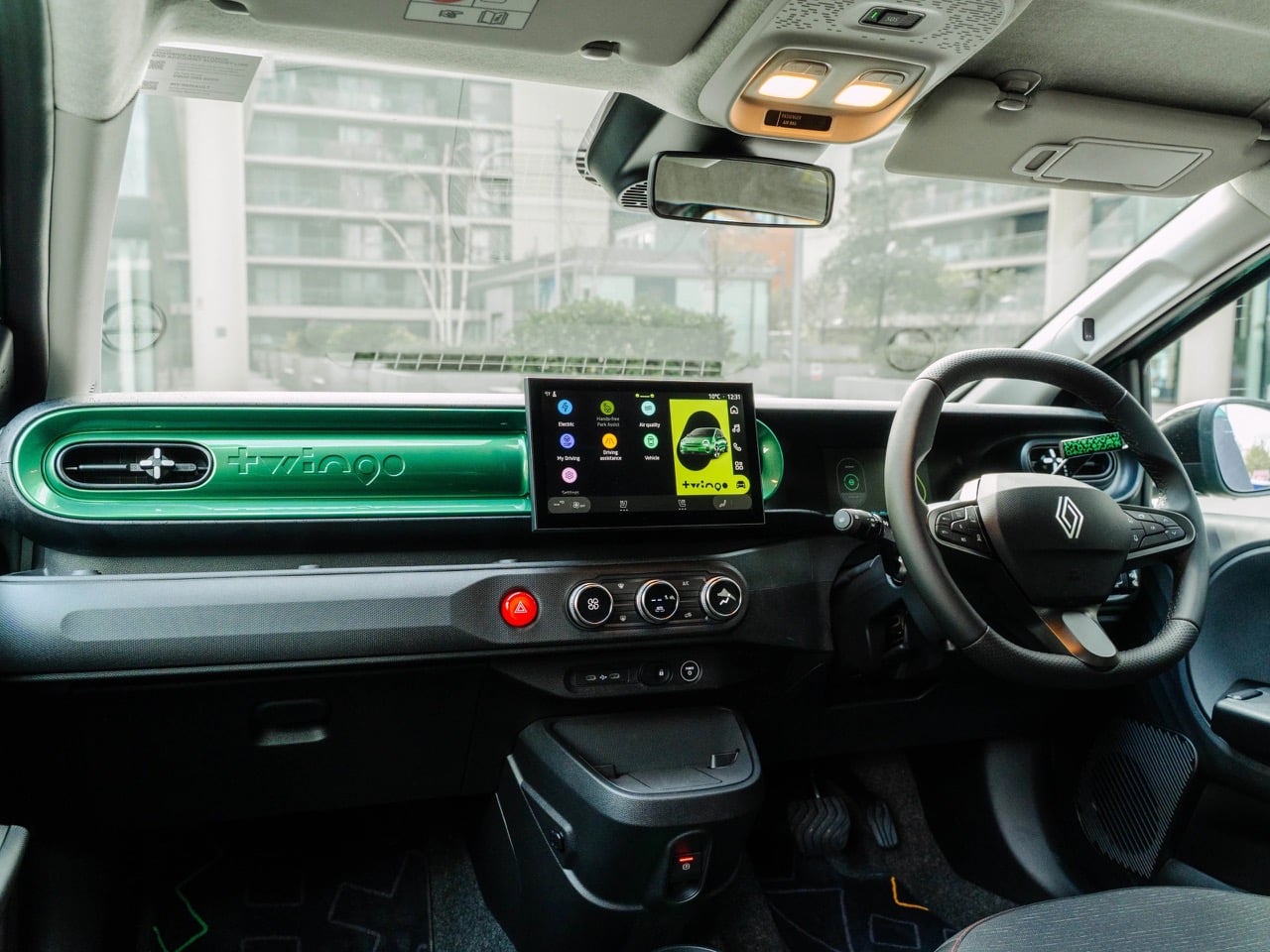
Renault calls its new development process Leap 100, as in 100 weeks from concept to production. The Twingo is the first car to come out of it. Renault used to need four to five years. The fix was ACDC, Renault’s Advanced China Development Center in Shanghai, where a small team worked directly with Chinese suppliers on the battery, powertrain, and systems integration. The team built the first Twingo prototype in four weeks, and Renault CTO Philippe Brunet summed up the mission as being in China “to copy and learn.” Styling stayed in Paris, assembly happens in Novo Mesto, Slovenia, and Renault says the Twingo uses about 750 parts and costs roughly 40 percent less to build than a Renault 5.
The Twingo rides on the same AmpR Small platform as the Renault 5 E-Tech, with a cheaper torsion-beam rear axle swapped in. LFP chemistry sacrifices some energy density in exchange for lower costs and longer battery life, and CATL’s cells sit directly in the pack without modules. Renault says that combination cuts battery costs by about 20 percent. On paper, that works out to about 6 miles per kWh. UK-spec cars get 50 kW DC charging, with a quoted 30 minutes to go from 10 to 80 percent, or roughly one coffee and a croissant. With its 80 hp motor, the Twingo gets to 62 mph in 12.1 seconds and tops out at 81 mph, numbers that suit a city car just fine.
The Price Tag Detroit Should Be Losing Sleep Over
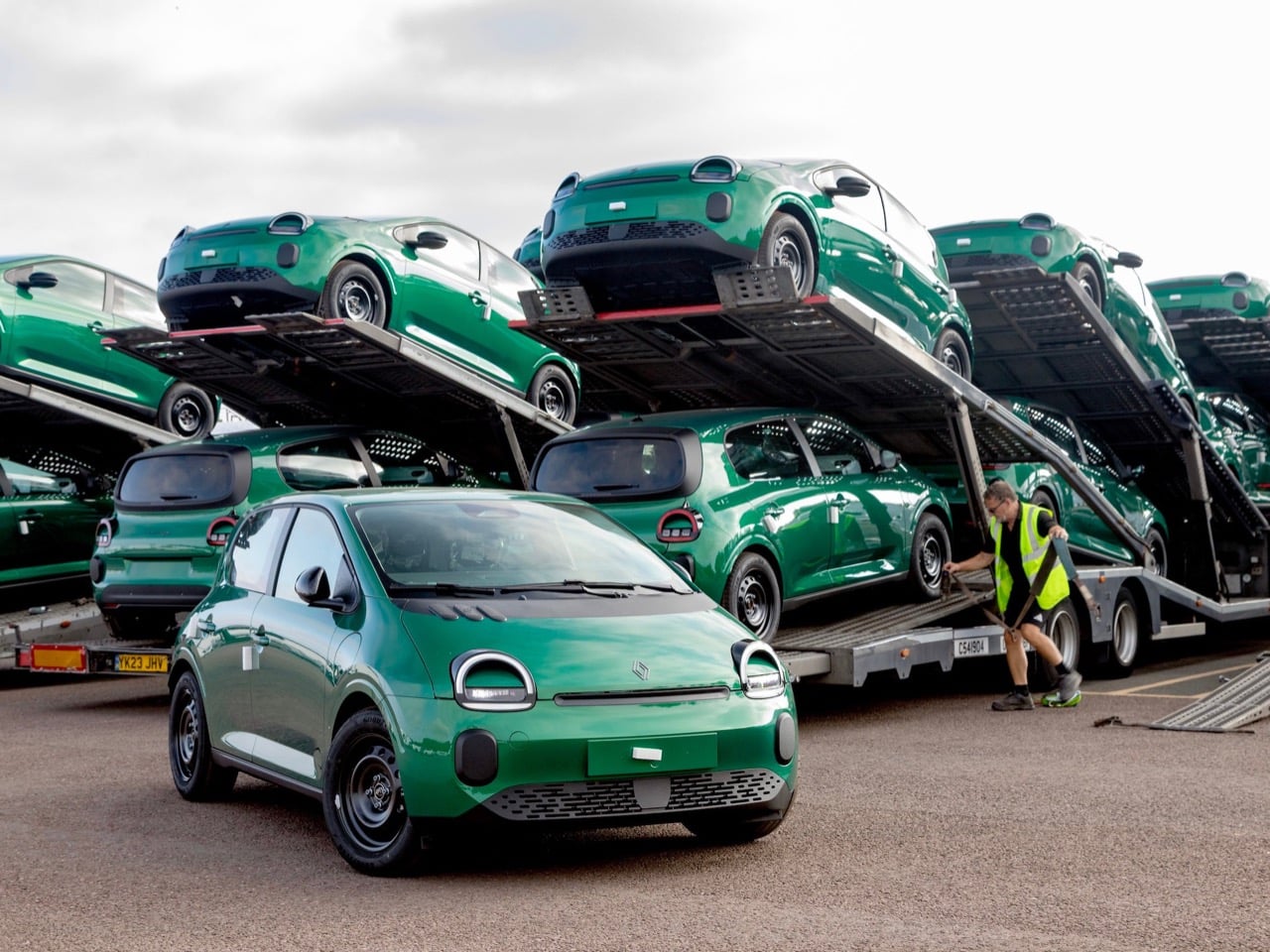
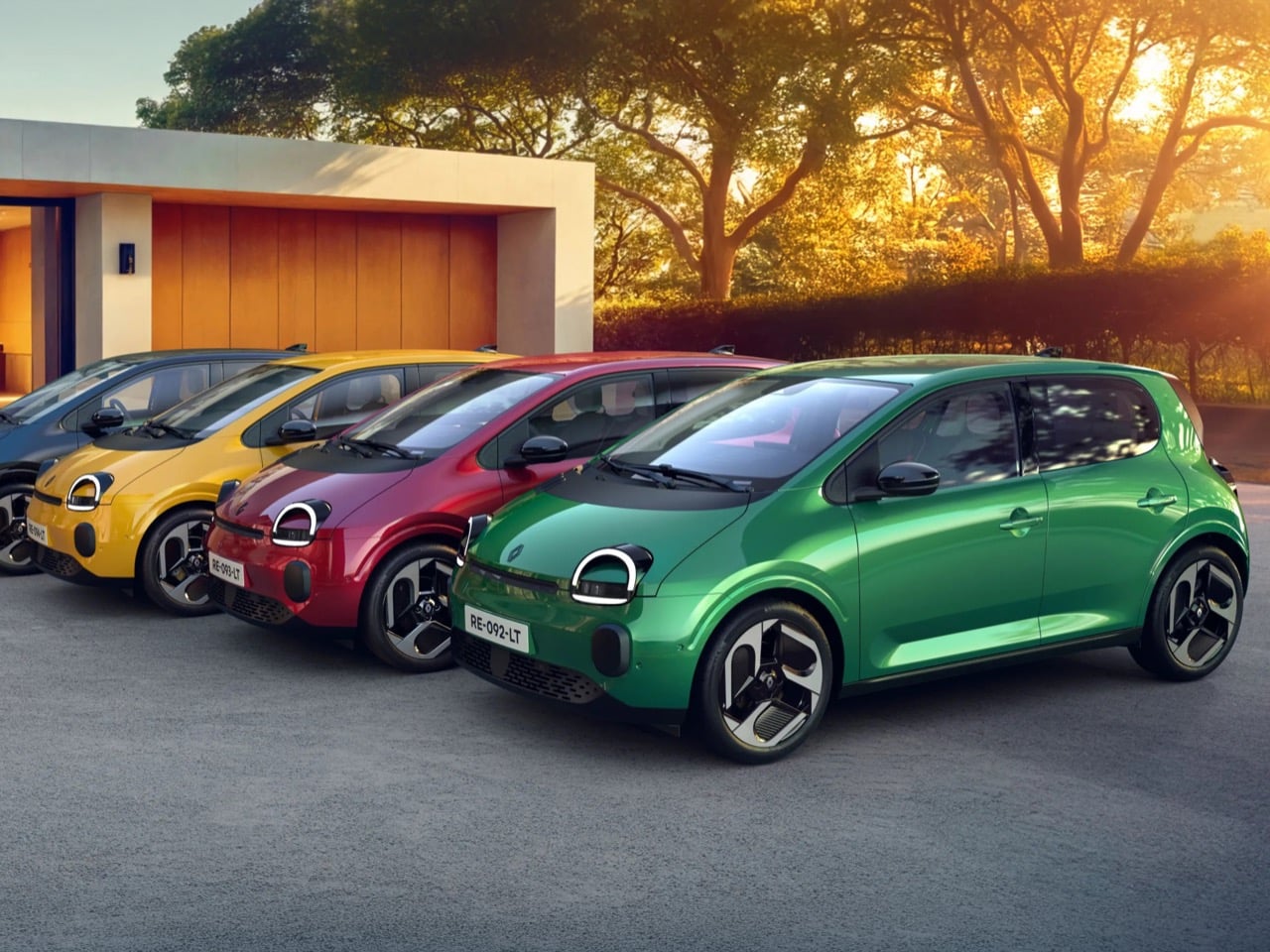
In the UK, the Twingo comes in three flavors: Evolution at £14,745, Techno at £16,245, and Launch Edition at £17,645, all after the £3,750 grant. Techno adds Google built in, a reversing camera, and heated front seats, while the Launch Edition brings blind-spot warning and hands-free parking, which Renault says is a first in the segment. Orders open in the first quarter of 2027, with deliveries expected by March. It still isn’t Britain’s cheapest EV: a discounted Dacia Spring and the Leapmotor T03 both undercut it. Against the BYD Dolphin Surf and friends, though, the Twingo has those sliding seats, a cabin that looks designed rather than pulled from a parts bin, and a lot more personality.
Back home, the average new car sells for $48,644, according to Kelley Blue Book, and our cheapest EVs, the Bolt and the $29,990 Nissan Leaf, sit near $30,000. Tariffs keep Chinese budget EVs out of the American market, and no one selling here has gone below the Bolt’s $28,995. The Twingo shows a way around that: borrow China’s development speed and supply chain, keep your own design studio and factory, and build something people want to hug. The first Twingo started with a price picked before the car existed and a design team told to make it fit. Thirty-four years later, Renault has built another Twingo that way. Detroit can copy it whenever it likes.