A lot of the lamps that we see in the market announce themselves as lamps just by its silhouette and design. A glowing pebble tied up like a tiny parcel is a pretty appealing alternative to another bulky bedside lamp. Entoro Design’s sekimori-ishi lamp addresses a familiar little problem: wanting a pool of evening light without necessarily surrendering your nightstand to a stem, shade, and trailing power cord. The handmade lamp has a rechargeable battery, so its placement doesn’t have to revolve around an outlet.
Its reference is more specific than a general appreciation for Japanese gardens. A sekimori-ishi is a stone bound with cord and placed along a garden path to communicate that visitors shouldn’t proceed farther. No words are necessary but only if you understand the convention. I like the restraint of that idea. A boundary can be communicated through an object that belongs in the landscape, rather than a sign competing with it.
Designer: Entoro Design
The project began after the designer encountered one of these stones at a Kyoto temple. Back home in Hokkaido, he searched a riverbed in neighboring Shiraoi for stones, then worked through the handmade process over several months. The aim was unusually tactile for a lighting project. He wanted it to be a surface that would transmit light like frosted glass, paired with a weight that would feel convincingly stone-like.
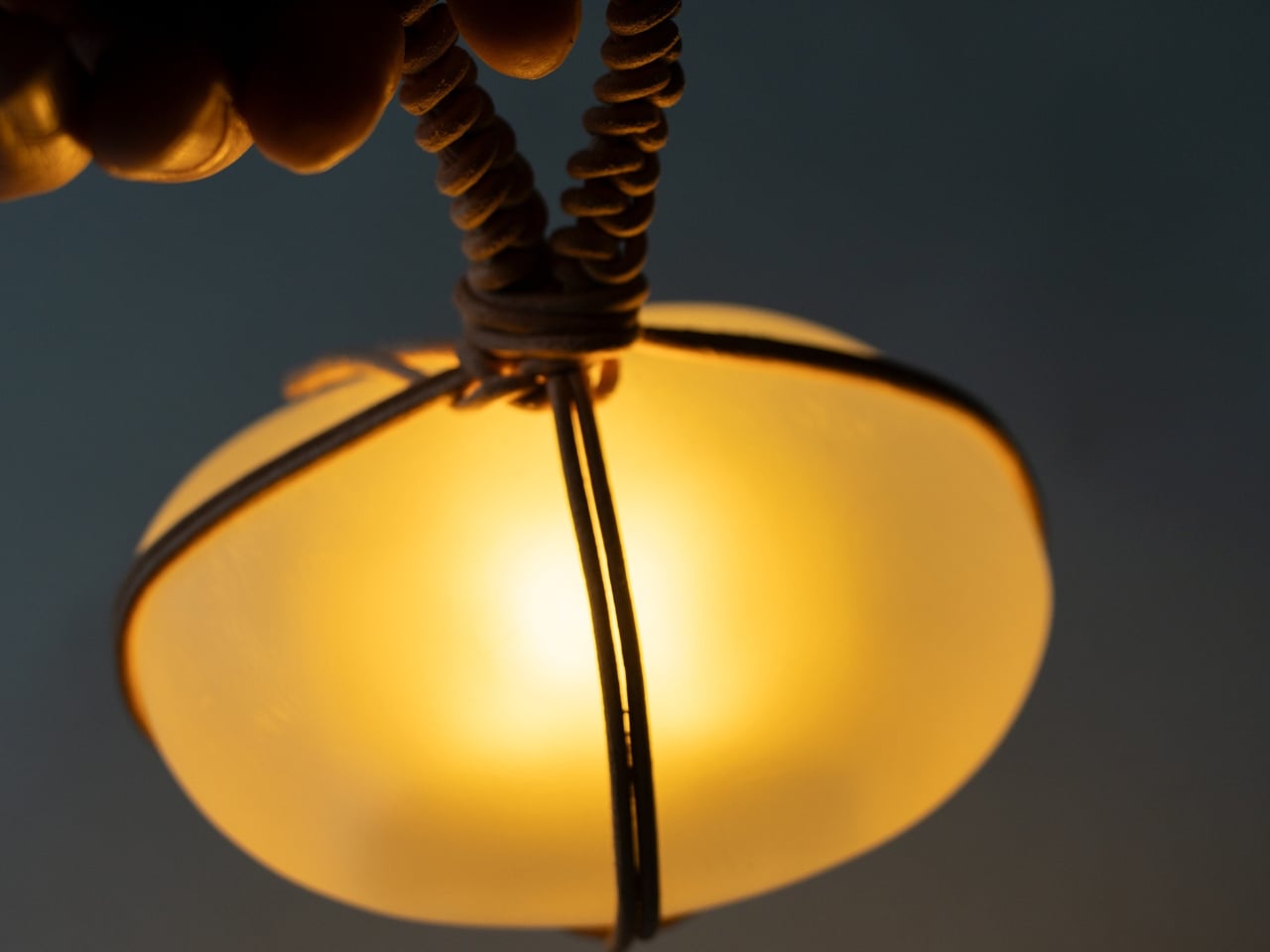
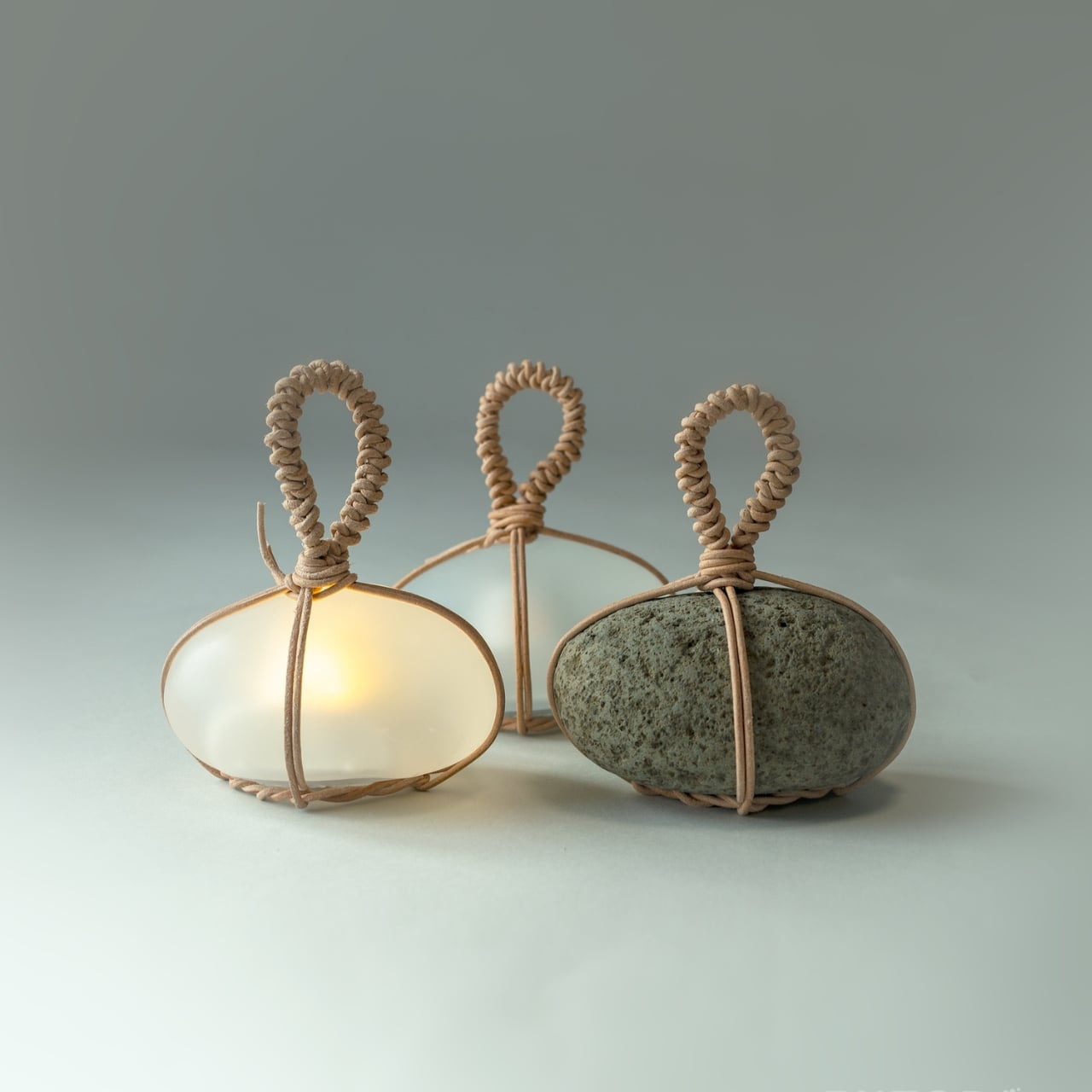
The finished shade is cast epoxy resin, not an illuminated rock or a piece of frosted glass. Vegetable-tanned leather cord replaces the traditional rope which adds to the character of the lamp. That distinction matters because the appeal depends on a little visual uncertainty. Unlit, the pale body in the supplied photographs looks cool and cloudy. Switched on, it becomes a warm, luminous volume, with the crossing cords remaining sharply defined against it.
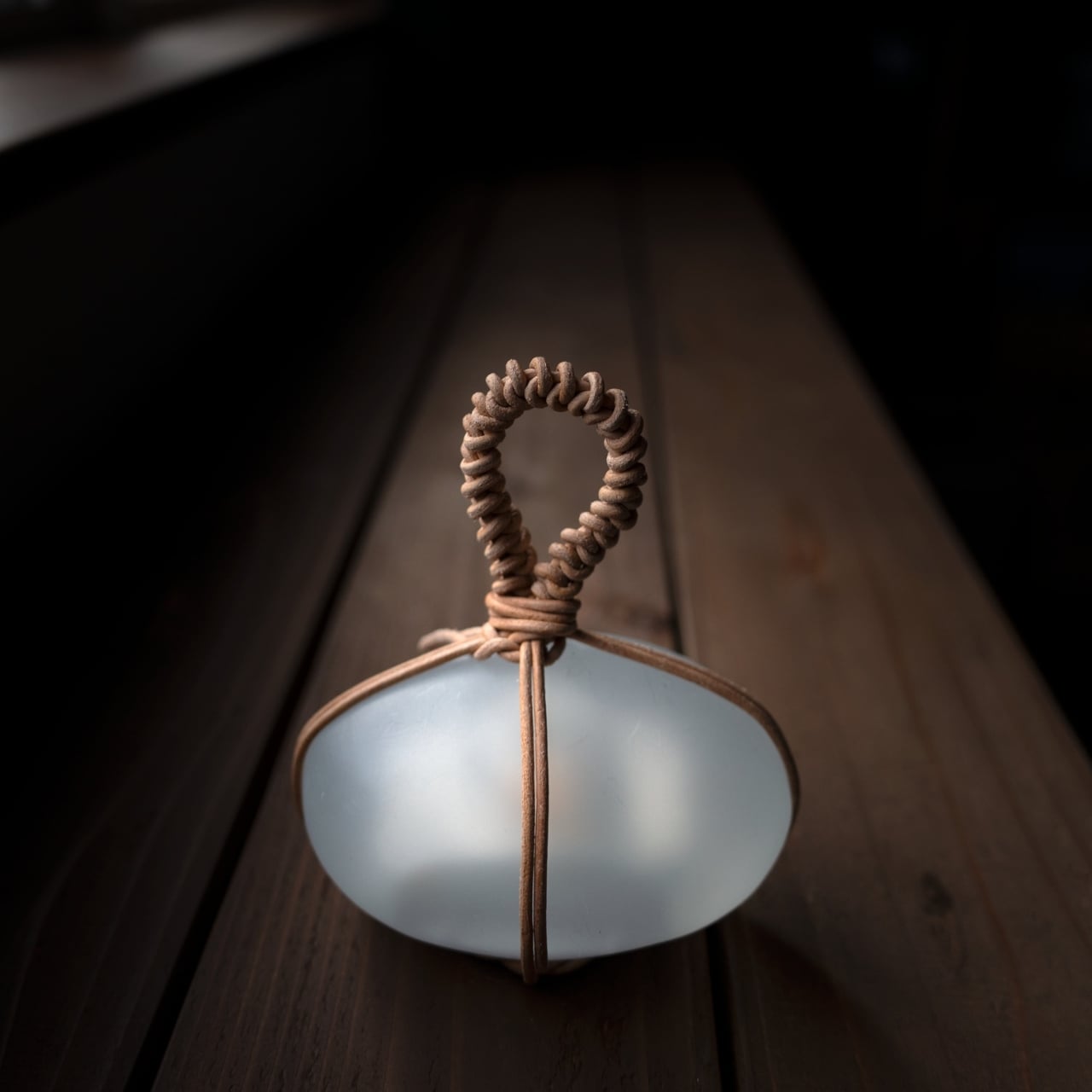
Those cords do a surprising amount of visual work. They trace the rounded body, gather at the top, and form an upright loop with a tightly wrapped texture. Without them, the shade might read as another pebble-shaped accent light. With them, it has a recognizable construction and a slightly endearing awkwardness. I’m particularly fond of how the loop gives the squat shape some height without introducing a separate stand.
The lighting controls are less conspicuous. Entoro specifies three brightness settings, selected through a touch sensor underneath, and a warm-white color temperature of 2700K. Putting the control below preserves the uninterrupted body, although I’d want to try that arrangement before praising its convenience at bedtime. A hidden switch can make an object look wonderfully simple while asking a little more of the hand using it.
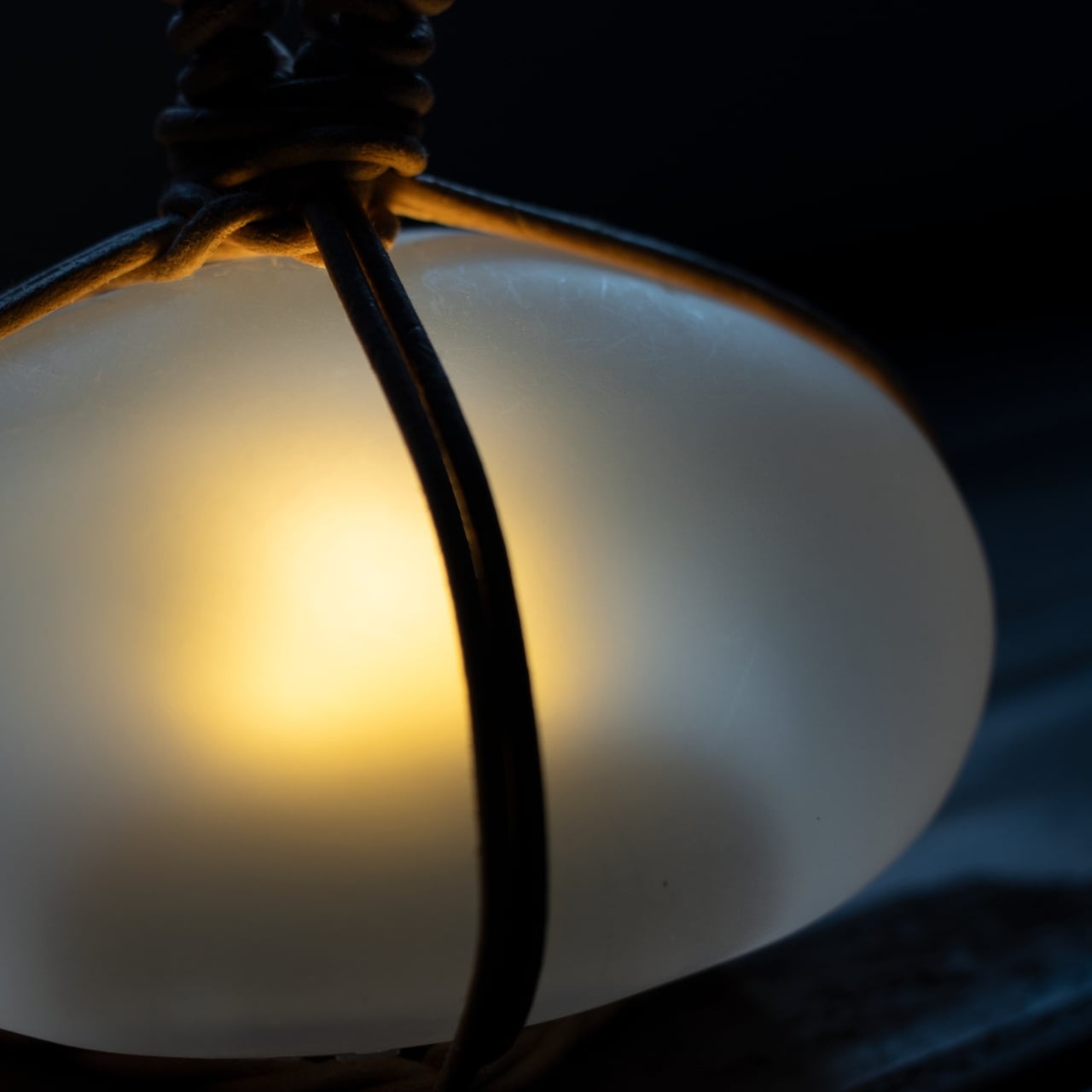
Cordless operation also comes with a practical limit. Entoro lists approximately 6.7 hours of battery life on low, dropping to 1.6 hours on high, with USB-C charging. For me, that positions it more naturally as an evening companion than a light to leave running all night. Moving it between a bedside table and a living room shelf makes sense. But also, forgetting to recharge it remains entirely possible, especially for a forgetful person like me.
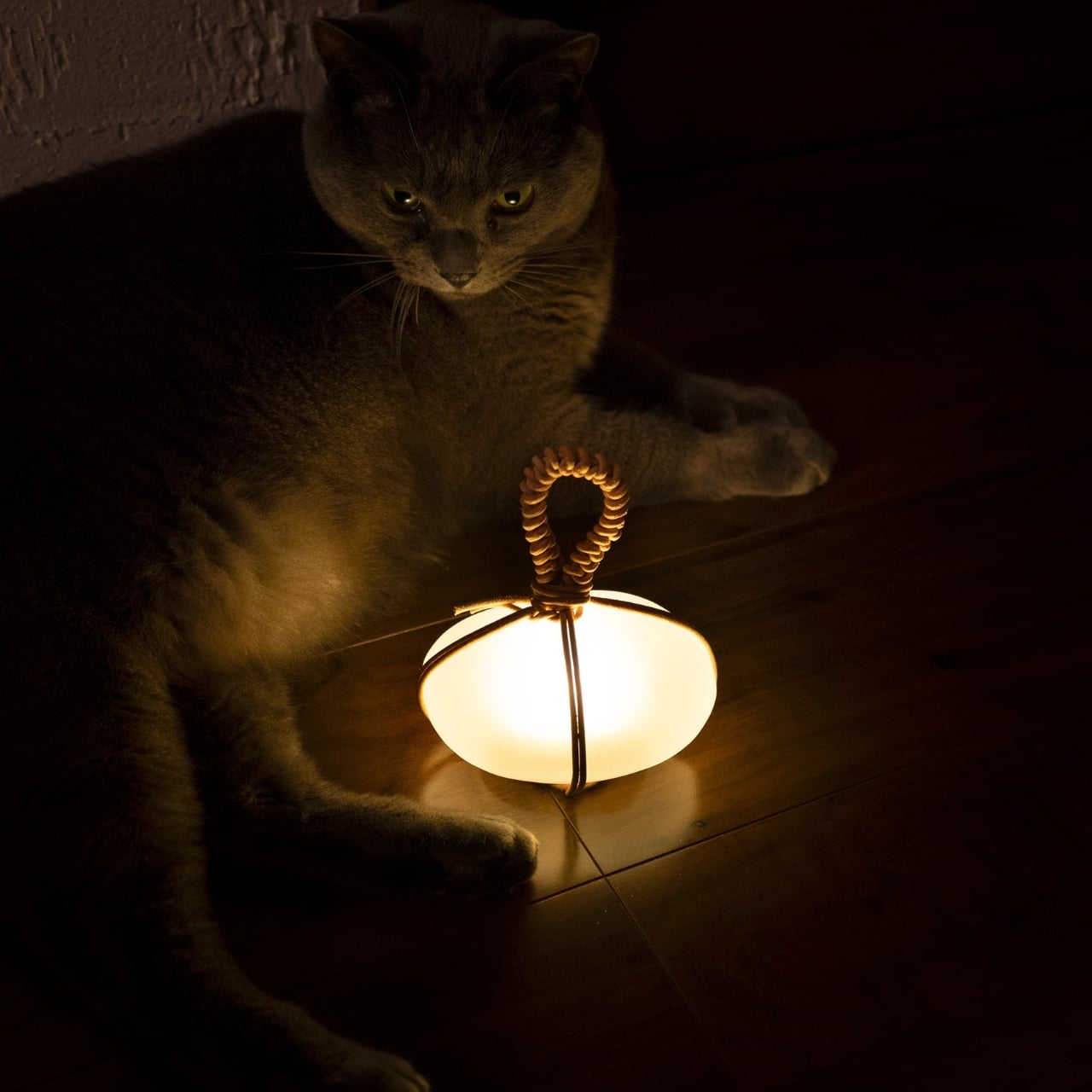
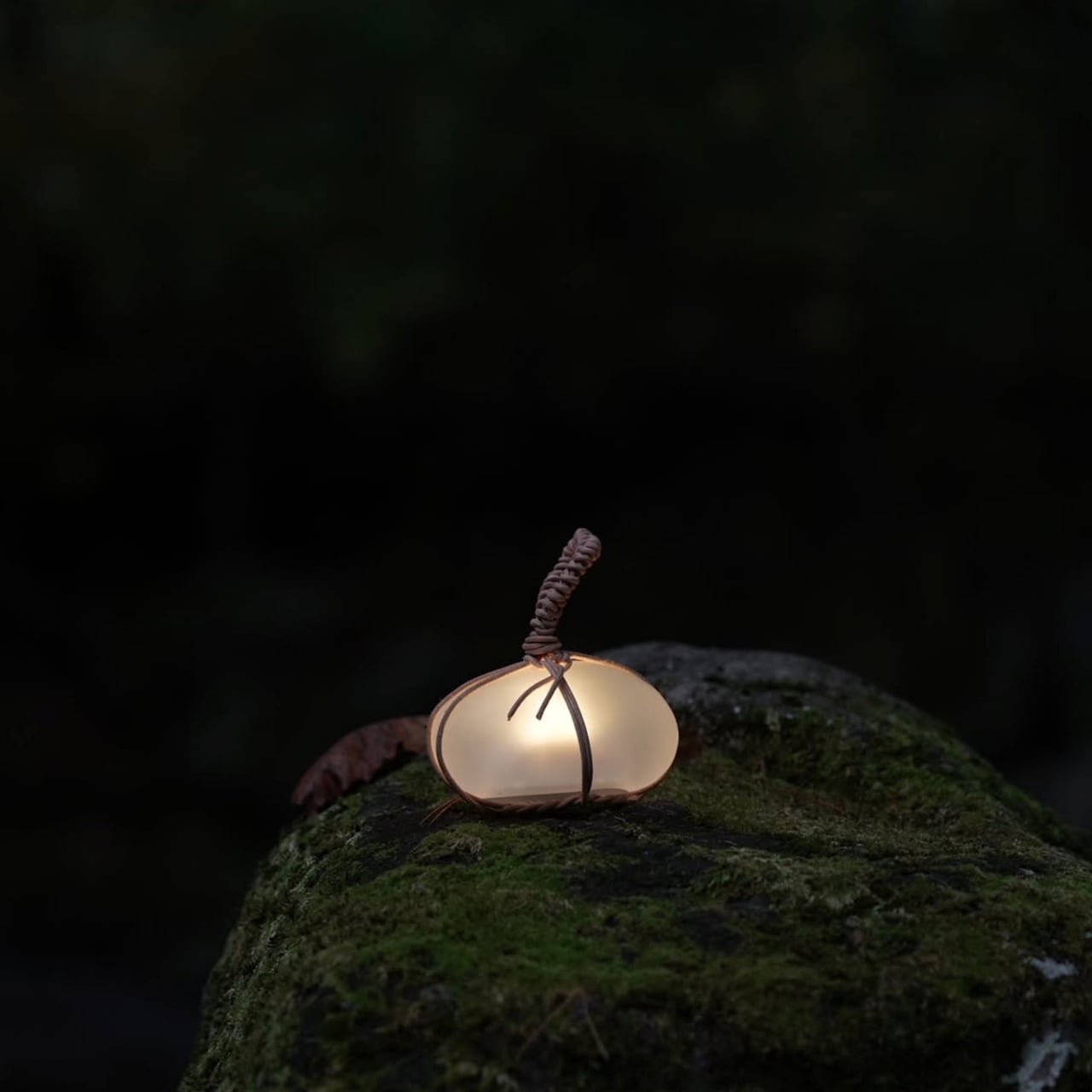
The photographs encourage that intimate reading. In one, the lamp sits beside a reclining cat, its glow illuminating a small patch of wooden floor. Another places it on a moss-covered rock. The outdoor setting is lovely, but I wouldn’t mistake a photograph for confirmation of weather resistance. Indoors, the low profile and visible wrapping are enough to give it character without requiring an elaborate arrangement around it.
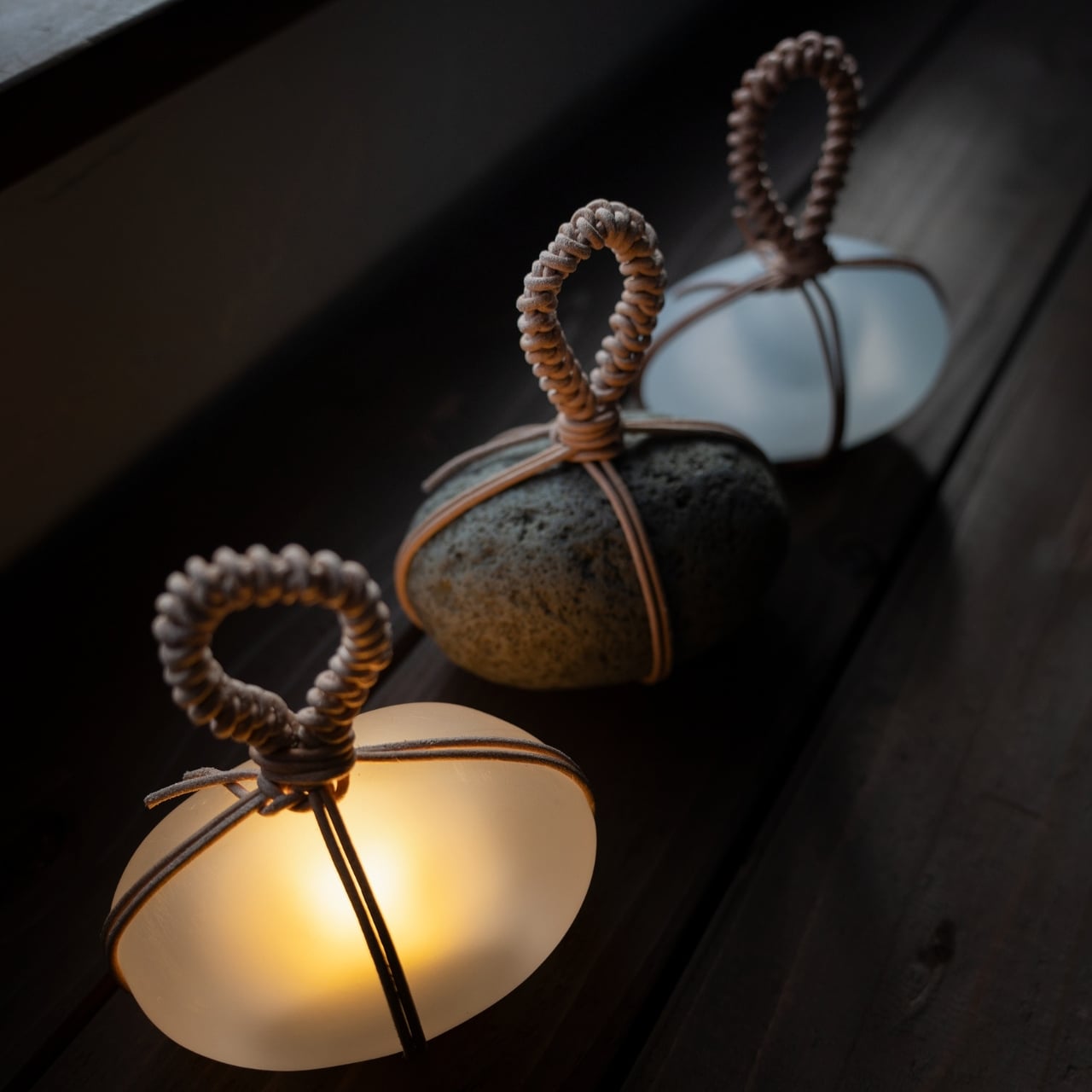
I’d choose this for a room that already has adequate functional lighting and needs something smaller for the hours afterward. The design’s strongest quality is how carefully its parts relate: the broad, flattened body, the narrow crossing lines, the generous loop. Even before knowing the garden reference, I can read those proportions. Learning the story adds another layer rather than doing all the work.
That’s a balance I appreciate in an object with a cultural reference. You can understand where the form came from without treating the lamp like an exhibit. On a nightstand, it still has an ordinary job to do: provide some light, occupy a little space, and look worth keeping when it’s switched off.