
A favorite song can make you want to play piano long before you know where to put your fingers. That gap between musical taste and musical ability is where Casio’s new Casiotone CT-FS1 makes its pitch. Its Feel Sync feature adjusts the notes you play to fit a song’s harmony, letting beginners join in without first learning the chord changes. I like the premise: getting some enjoyment out of an instrument shouldn’t always require weeks of preparation.
According to Casio, the companion app analyzes a selected recording’s chord progression, melody, and rhythm, then the keyboard adapts the pitches it produces as you play along. You still decide when to press a key, how firmly to strike it, and how many notes to play together. Think of it as help with the harmonic decisions, leaving you to explore how a few gentle notes feel different from a busier, more emphatic accompaniment.
Designer: Casio
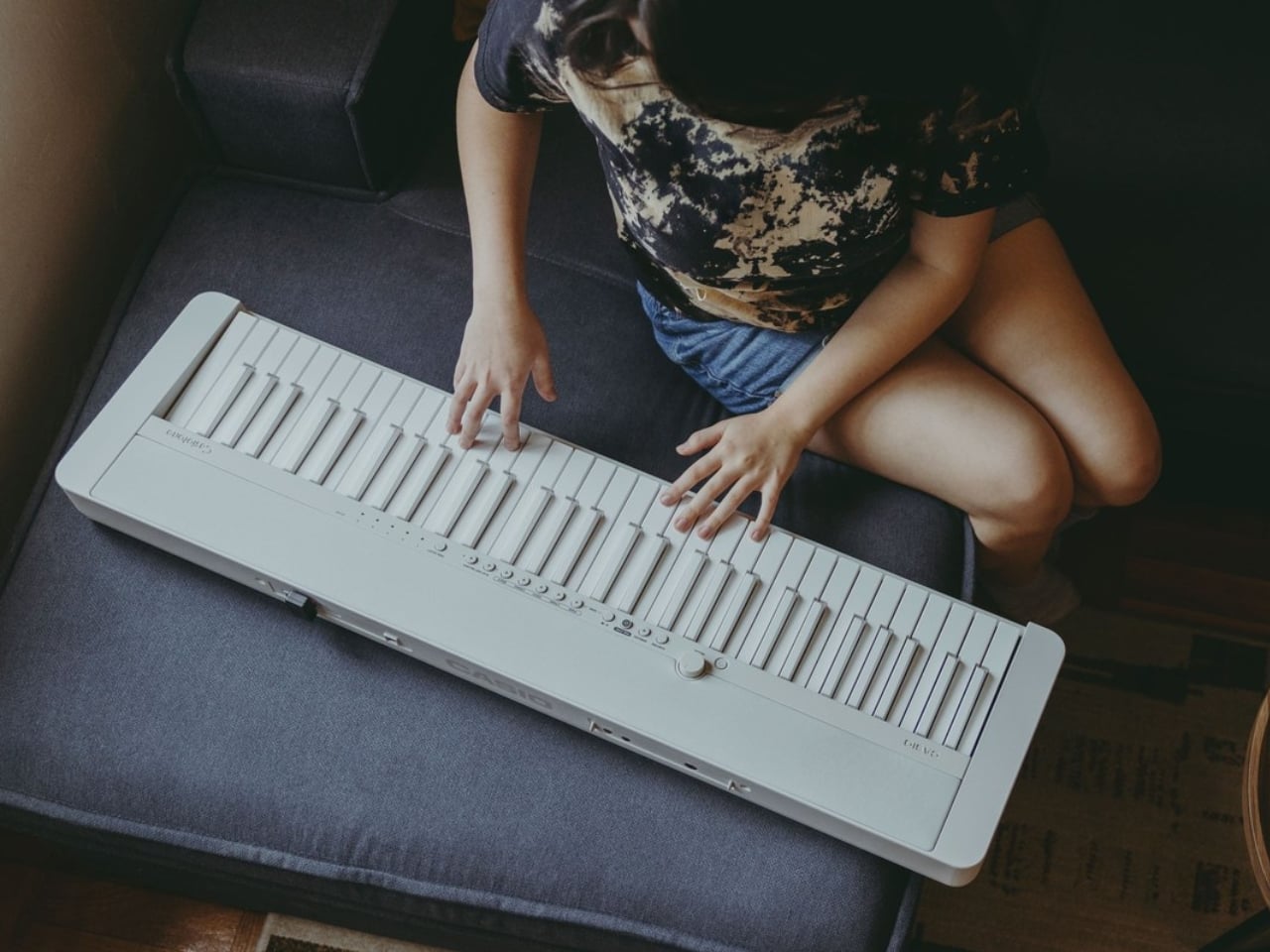
That distinction matters. Hitting notes that fit a recording isn’t the same as learning to play that song, and I wouldn’t buy this expecting corrected notes to teach my hands their way around a piano. But making music for pleasure is a reasonable goal on its own. How reliably Feel Sync handles different recordings still needs hands-on testing; the appealing idea is giving a beginner fewer things to worry about at once.
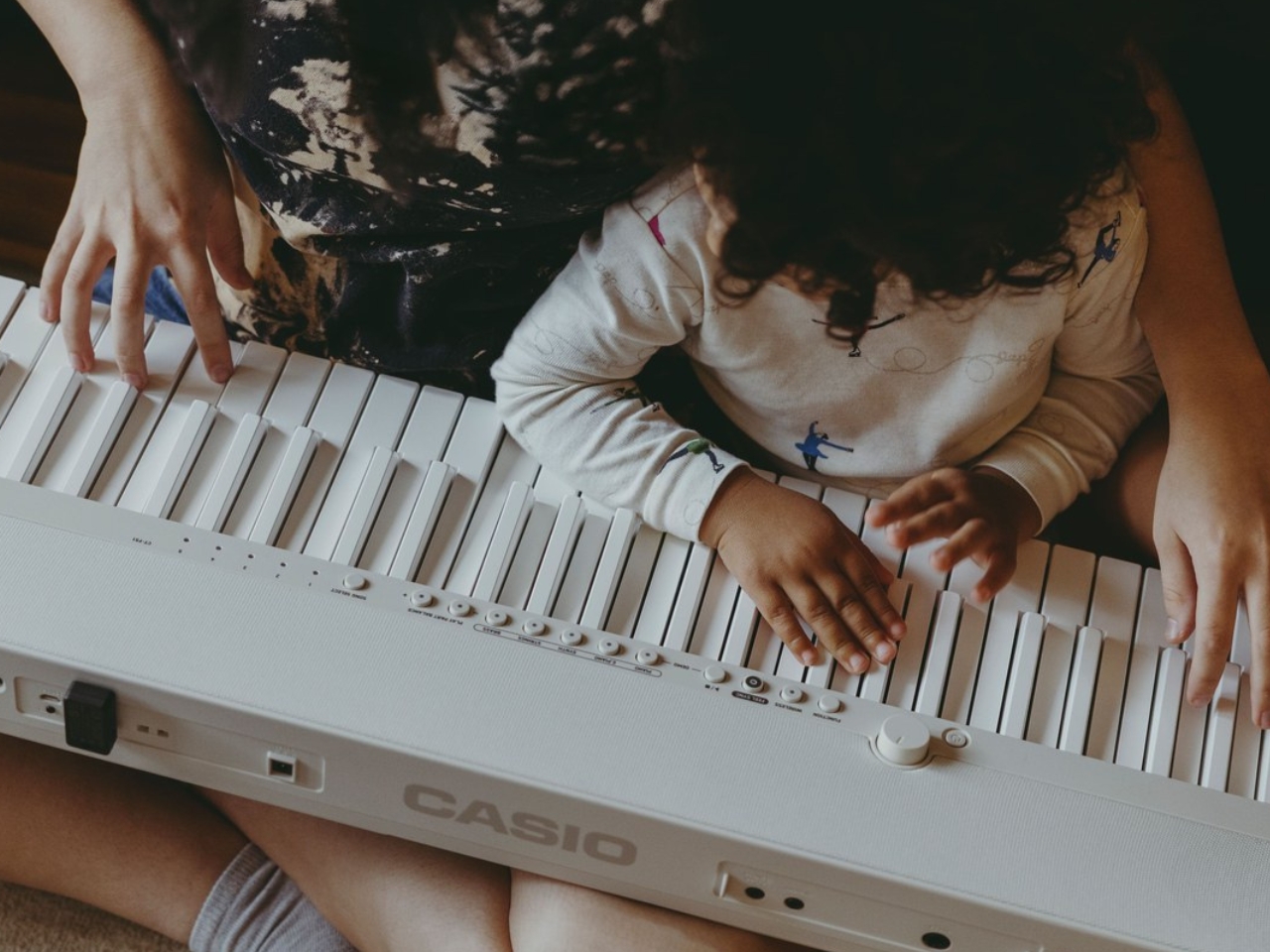
The physical design follows a similar logic. Available in Midnight Black or Alpine White, the CT-FS1 carries one color across its case and all 61 keys. Casio also leaves a screen off the top panel, keeping the instrument visually restrained. I appreciate a keyboard that doesn’t look like it needs its own dedicated studio corner. For an object that might live beside a couch, that restraint feels like a practical design decision.
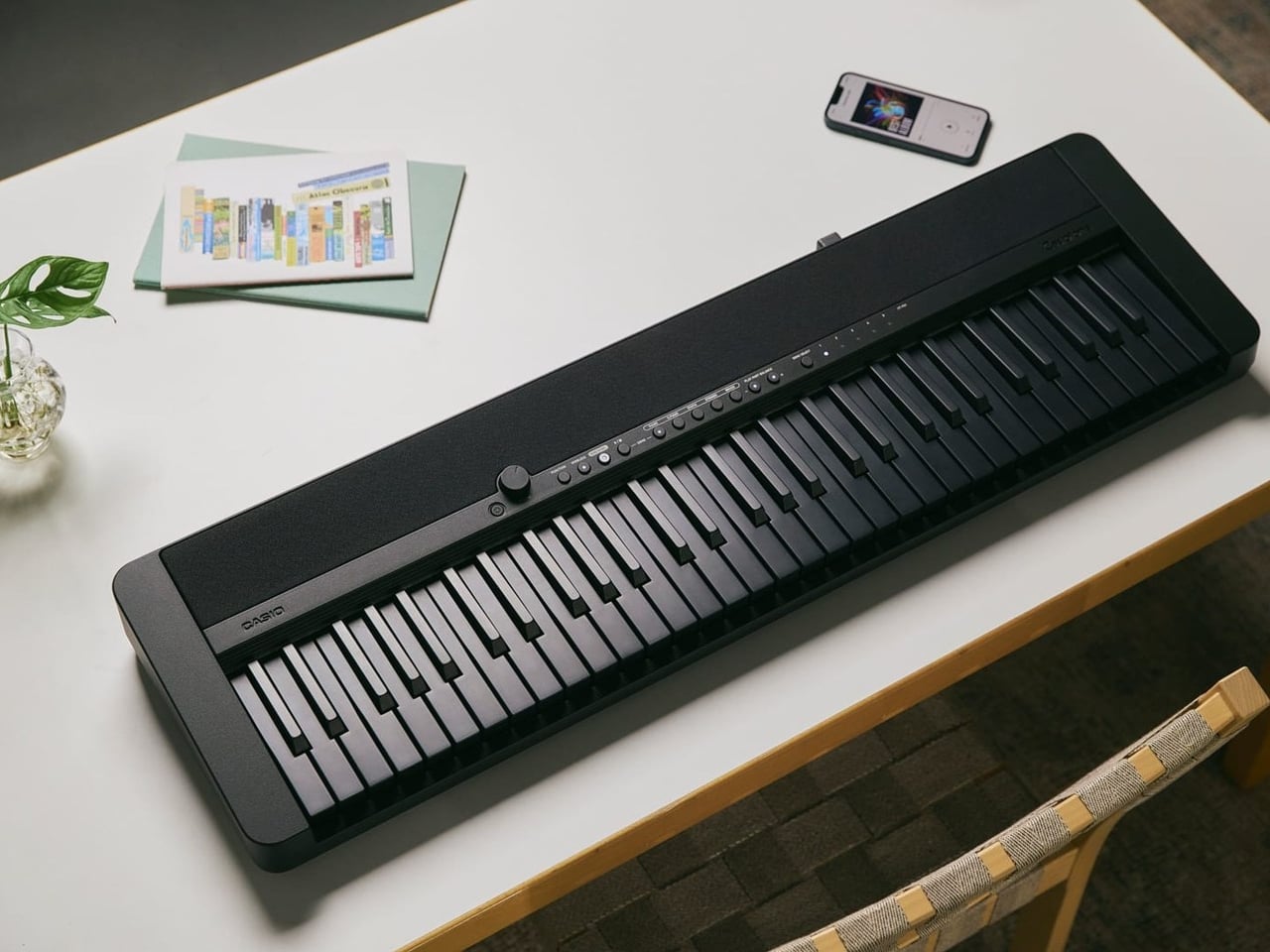
I’m a little less sold on removing the familiar contrast between black and white keys. The monochrome treatment makes a strong visual statement, but it also removes a useful reference for finding your place. That seems worth considering if conventional piano lessons are the eventual plan. The appearance suits the product’s invitation to experiment, even if it introduces a tradeoff for learning.
Underneath that matching finish are full-size, touch-responsive keys and 61 built-in tones, covering piano, electric piano, organs, strings, and synths. Built-in stereo speakers let it function without an external speaker setup, while a headphone jack offers a less public option. It weighs about 9.9 pounds without batteries and can run from the included AC adapter or six AAs. Those are sensible provisions for moving it between a desk and the living room.
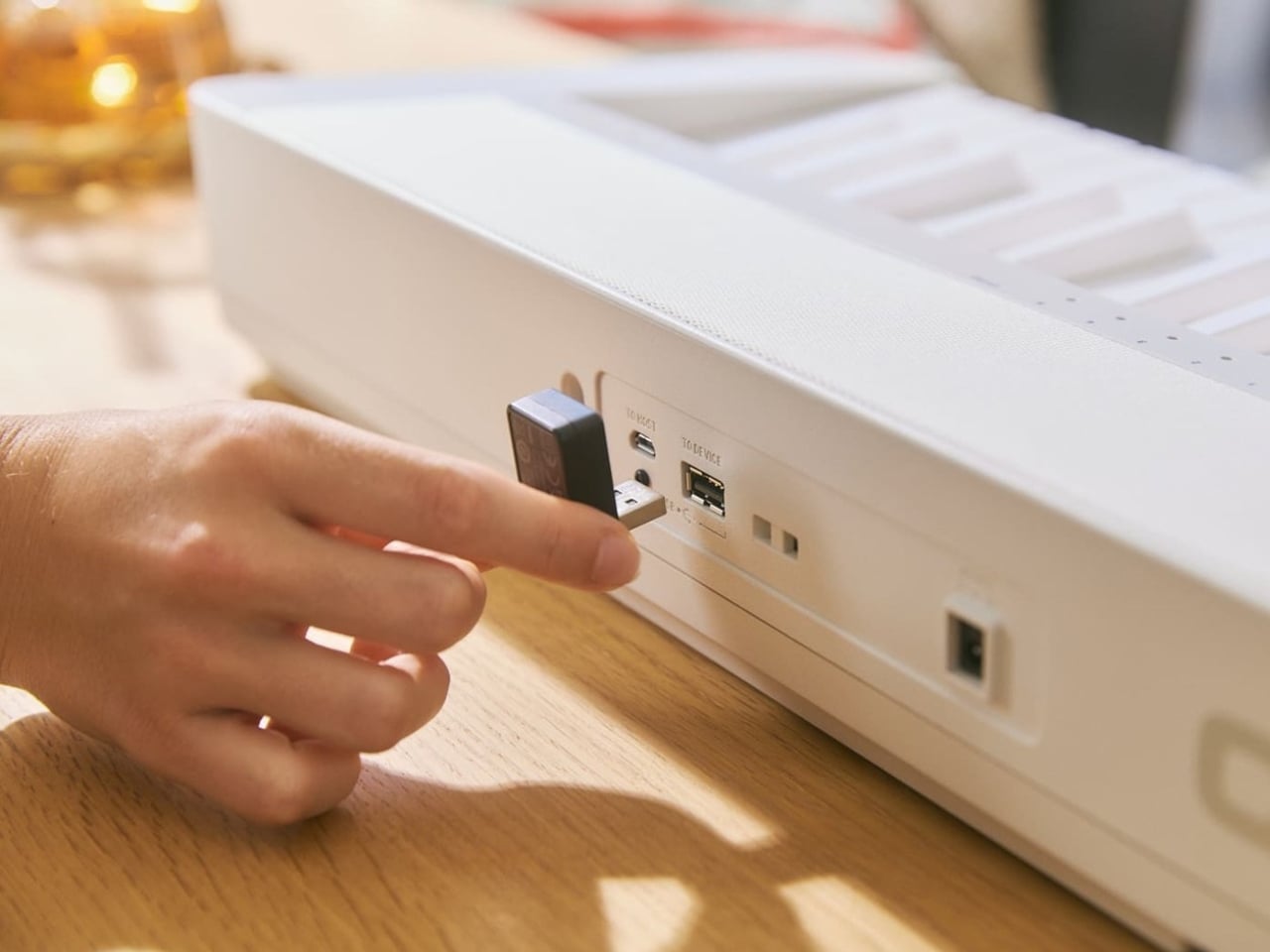
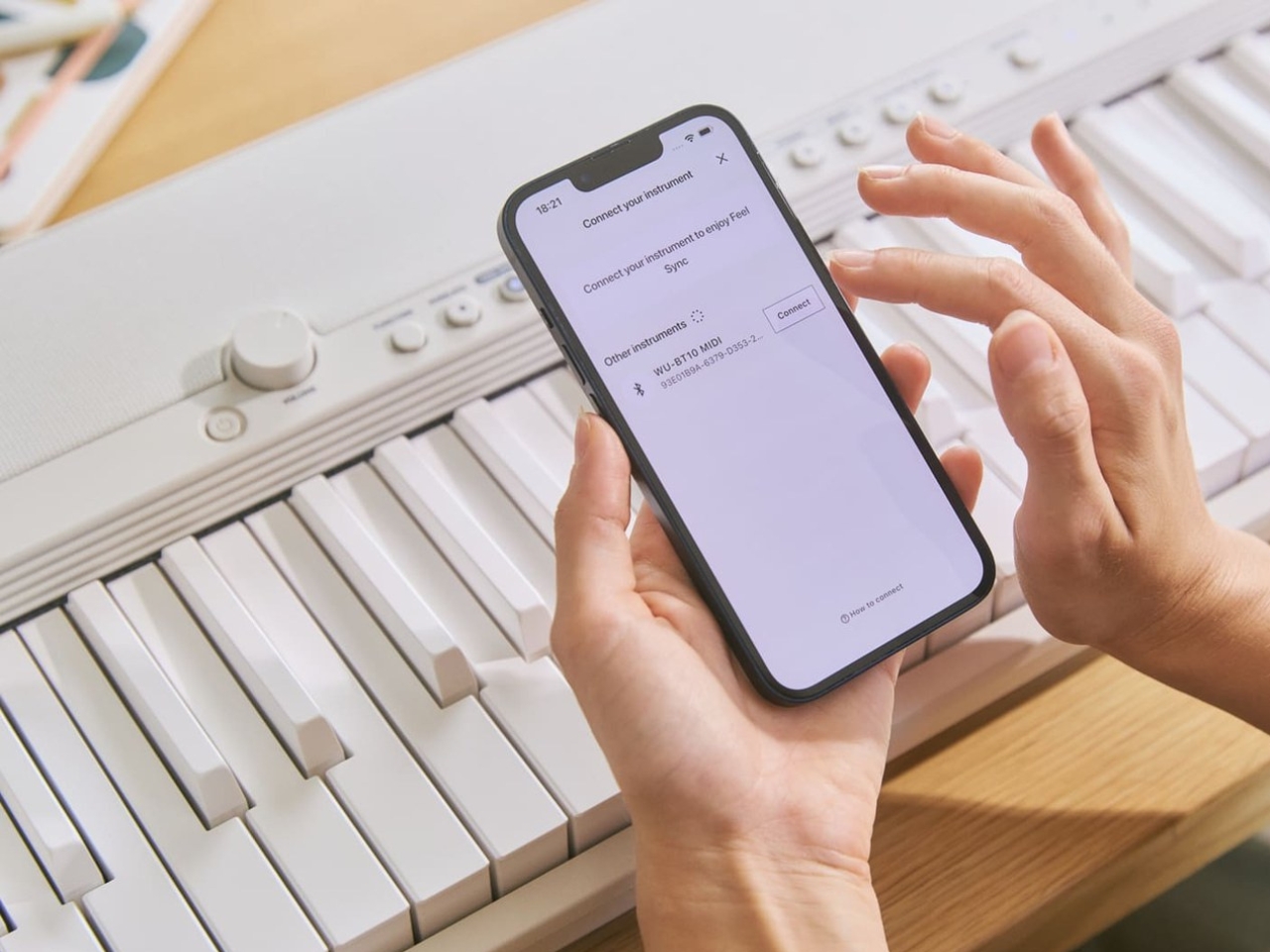
One limitation deserves attention before anyone buys it for their favorite playlist: Feel Sync doesn’t support streaming services. It accepts MP3, WAV, and AIFF files stored on your device, so choosing a song isn’t as simple as opening Spotify. The included WU-BT10 adapter handles the wireless connection to a compatible phone or tablet. I’d check which recordings I actually have as files before treating the play-along feature as an effortless route into my music library.
The split mode might be the most thoughtful feature here. One half can use Feel Sync while the other remains a conventional keyboard, allowing an experienced player and a beginner to share a song. That could make a family session feel less like one person demonstrating while the other watches. Feel Sync can also be switched off entirely when you want the keys to behave normally.
Announced November 3 and available now at roughly $400, the CT-FS1 asks buyers to value that easier entry into playing. I’d be more interested in it as a living-room instrument for casual accompaniment than as a shortcut through piano lessons. There’s room for both kinds of ambition. If someone wants to spend twenty minutes adding their own rhythm to a favorite track, I don’t think the instrument needs to demand a larger commitment before letting them have fun.