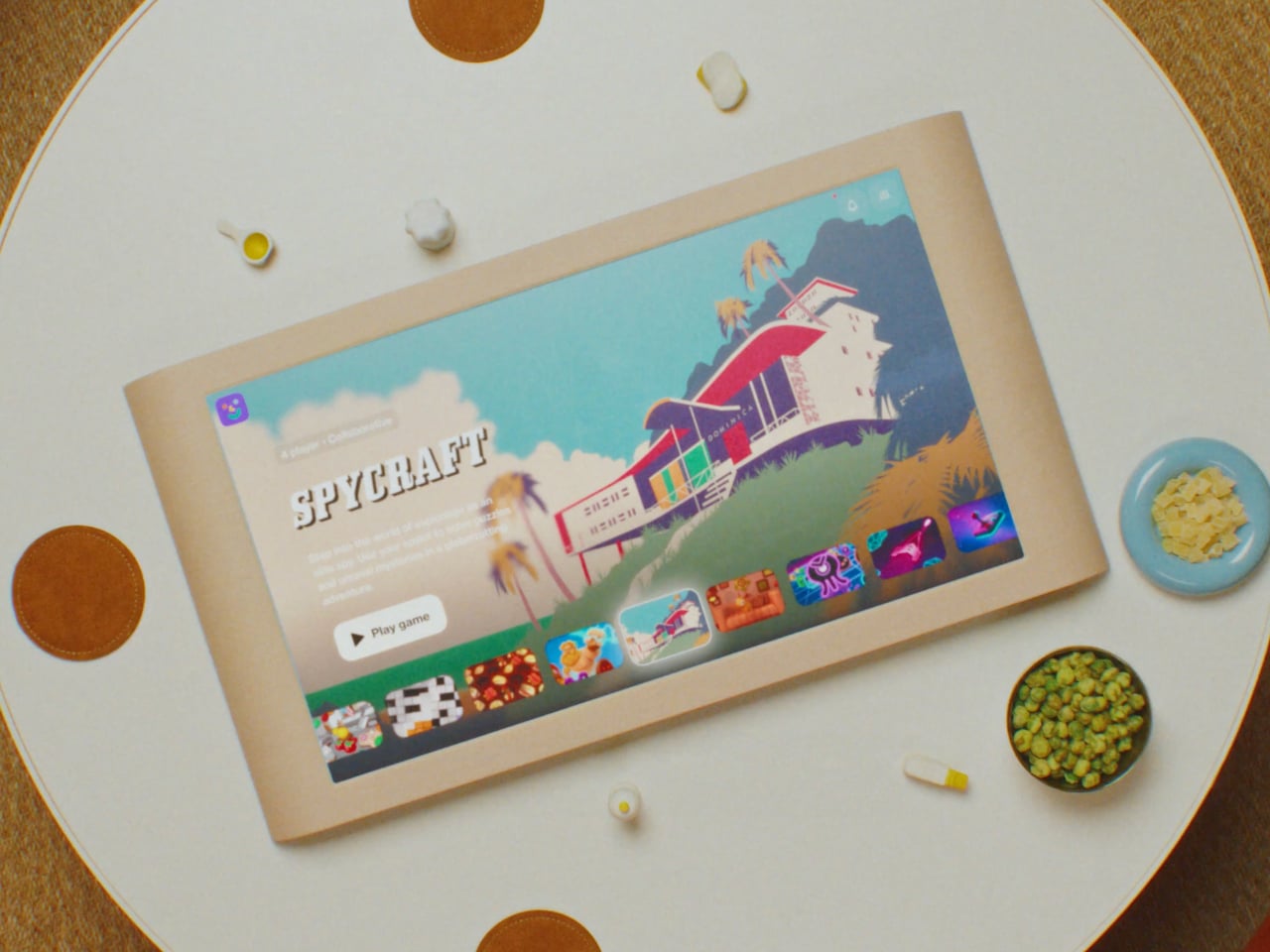
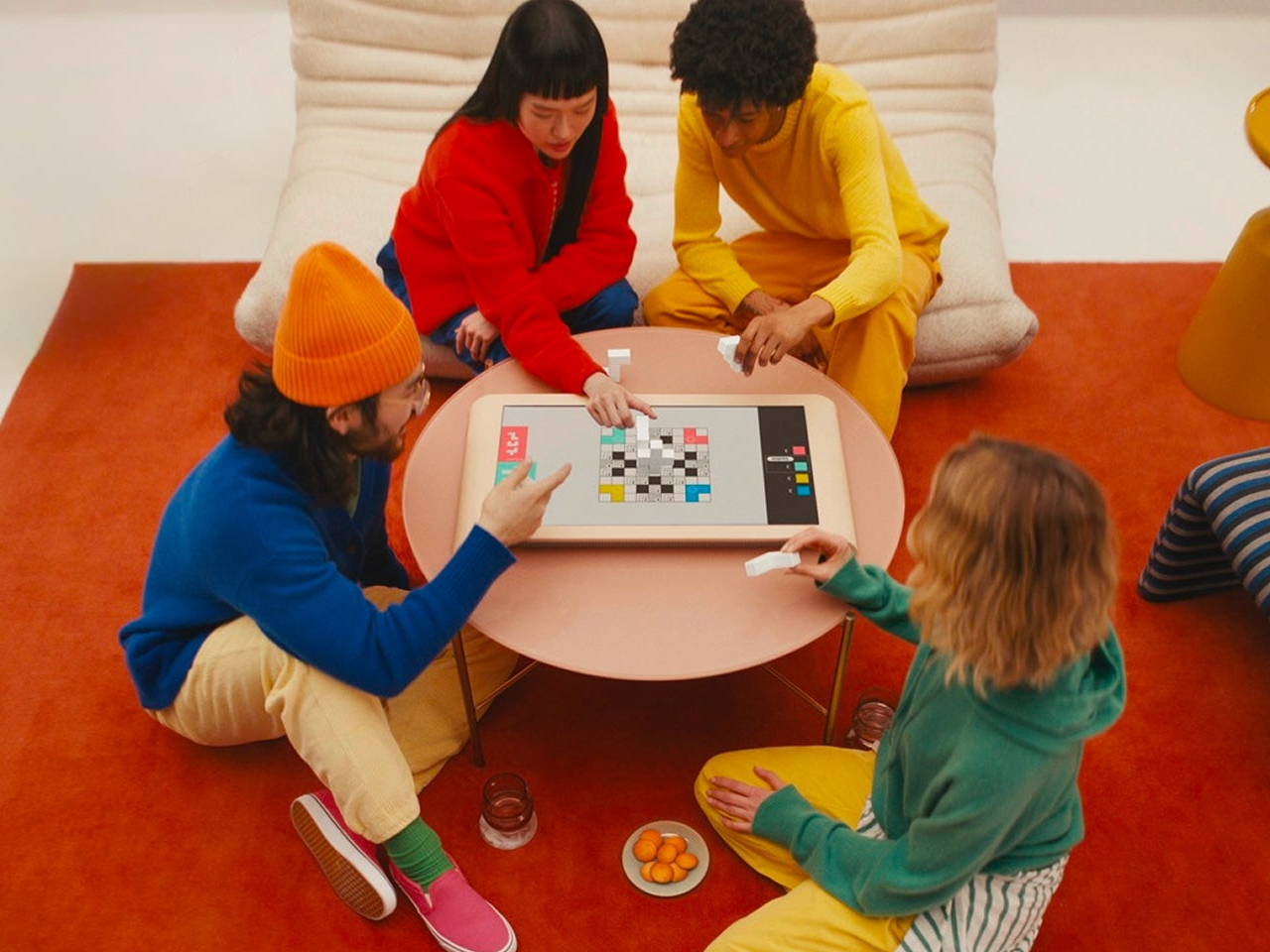
Touchscreens have plenty of games, but tapping on glass doesn’t quite replace moving a piece across a board. The Board, a tabletop console from the company of the same name, makes that physical interaction central to its design. Its 24-inch screen responds to toy utensils, spaceships, and robots, giving players something to hold while keeping the action on the table between them.
The broad, wood-finished frame gives it more in common with a serving tray than a television console. Rounded corners and gently curved edges soften its rectangular outline, while the large screen lies flat so people can gather around it. At 25.7 inches wide and 1.5 inches thick, it’s a substantial tabletop object, not something you’ll casually hold in one hand between turns.
Designer: Board
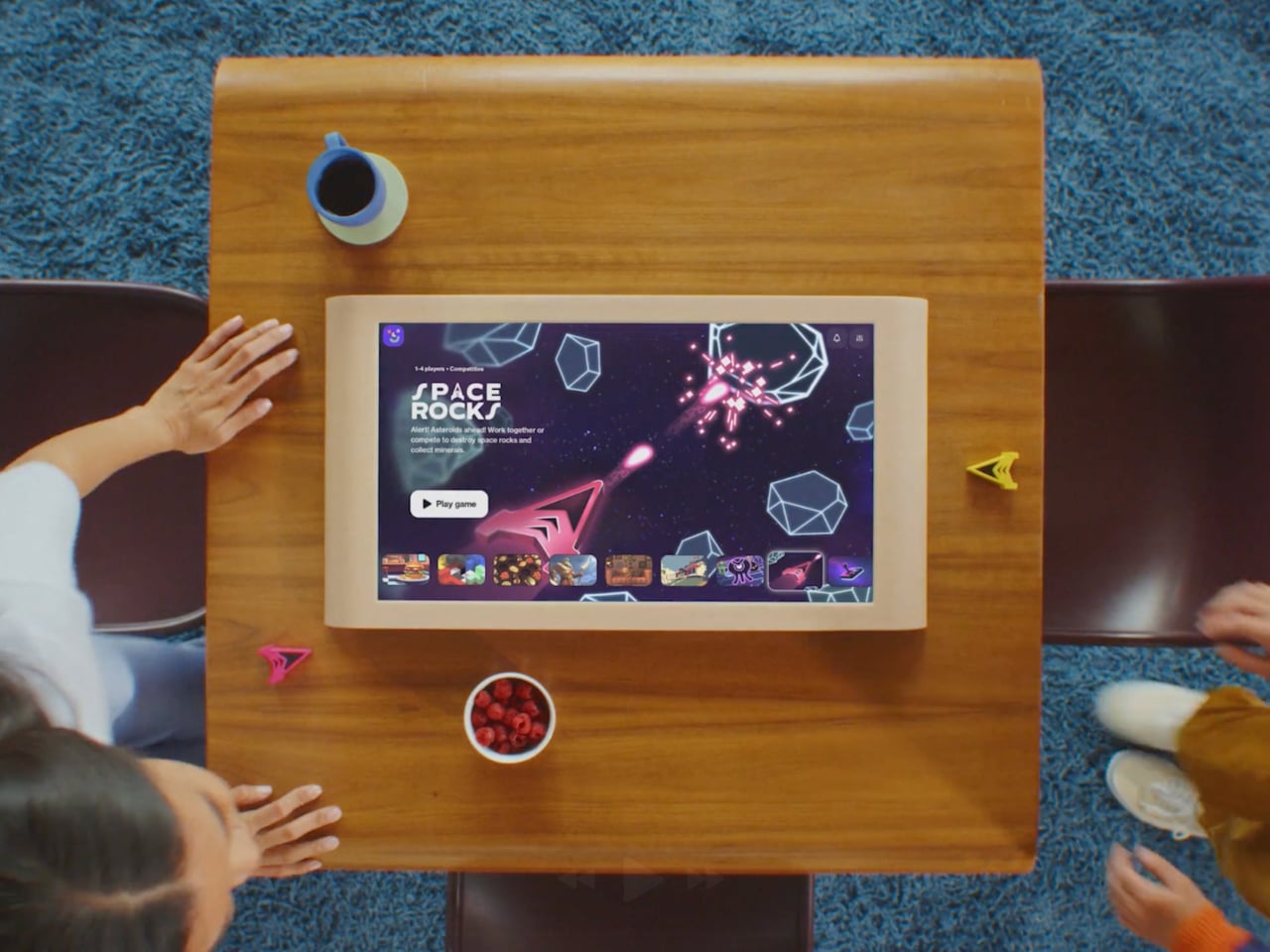
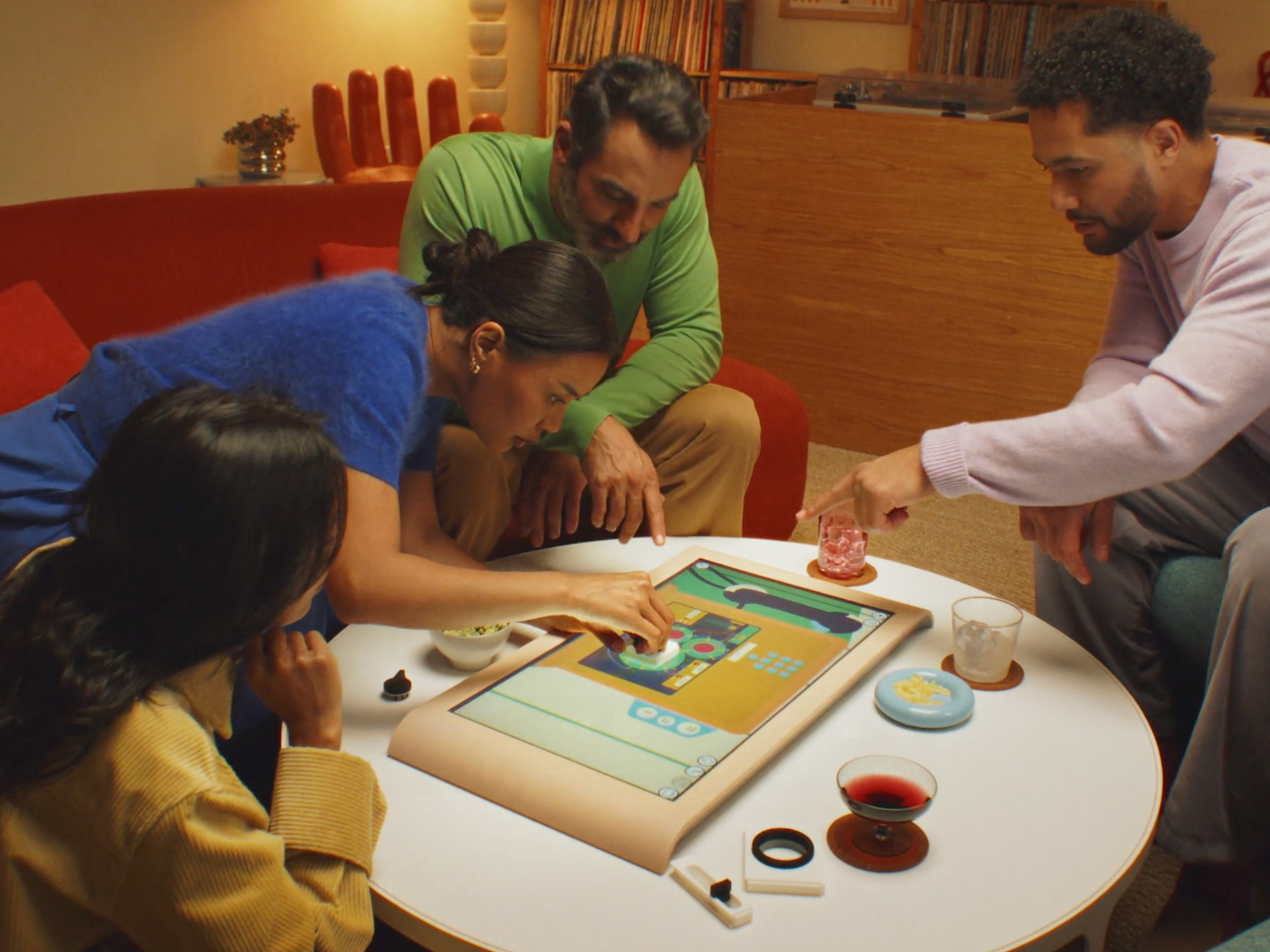
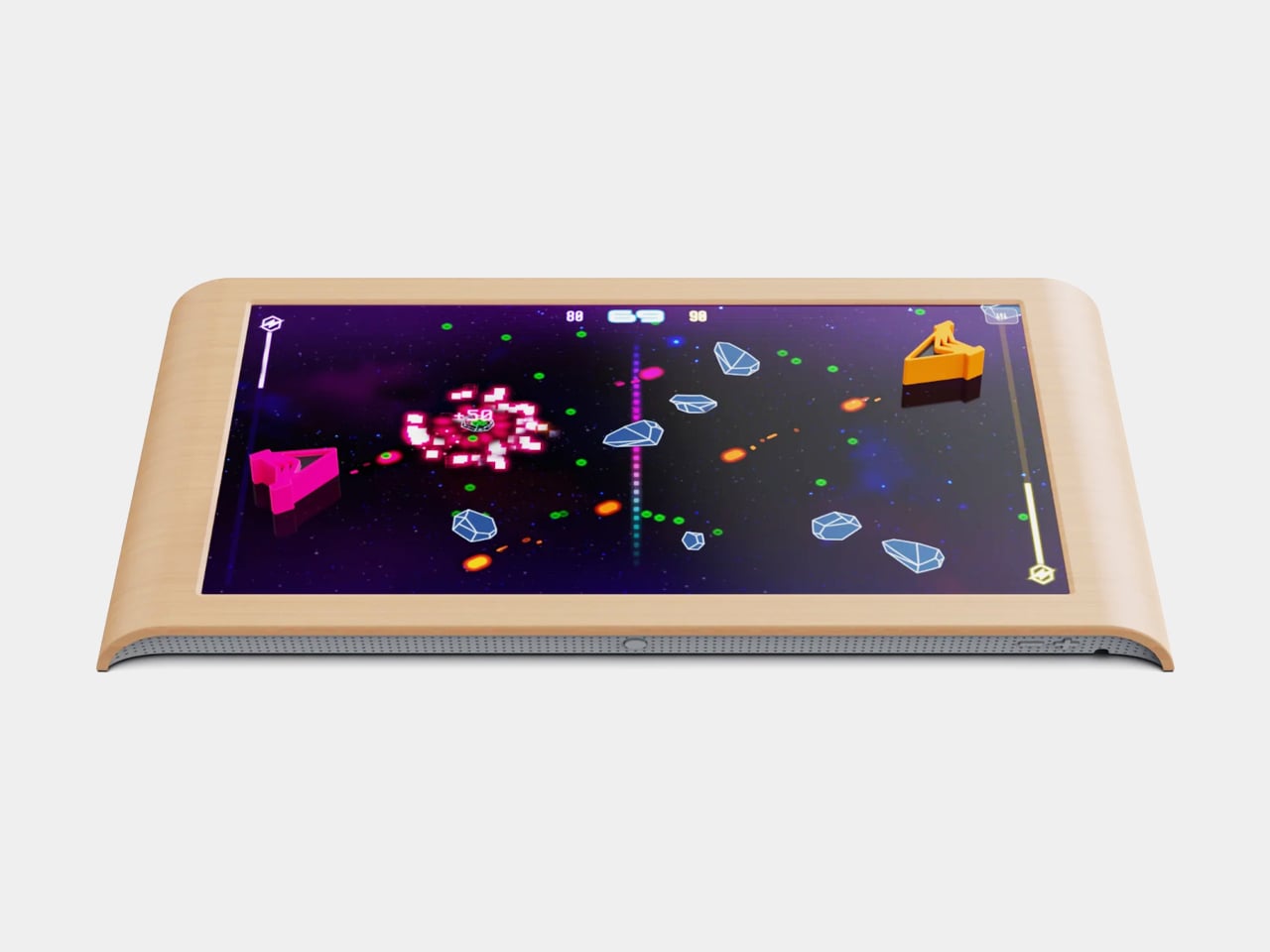
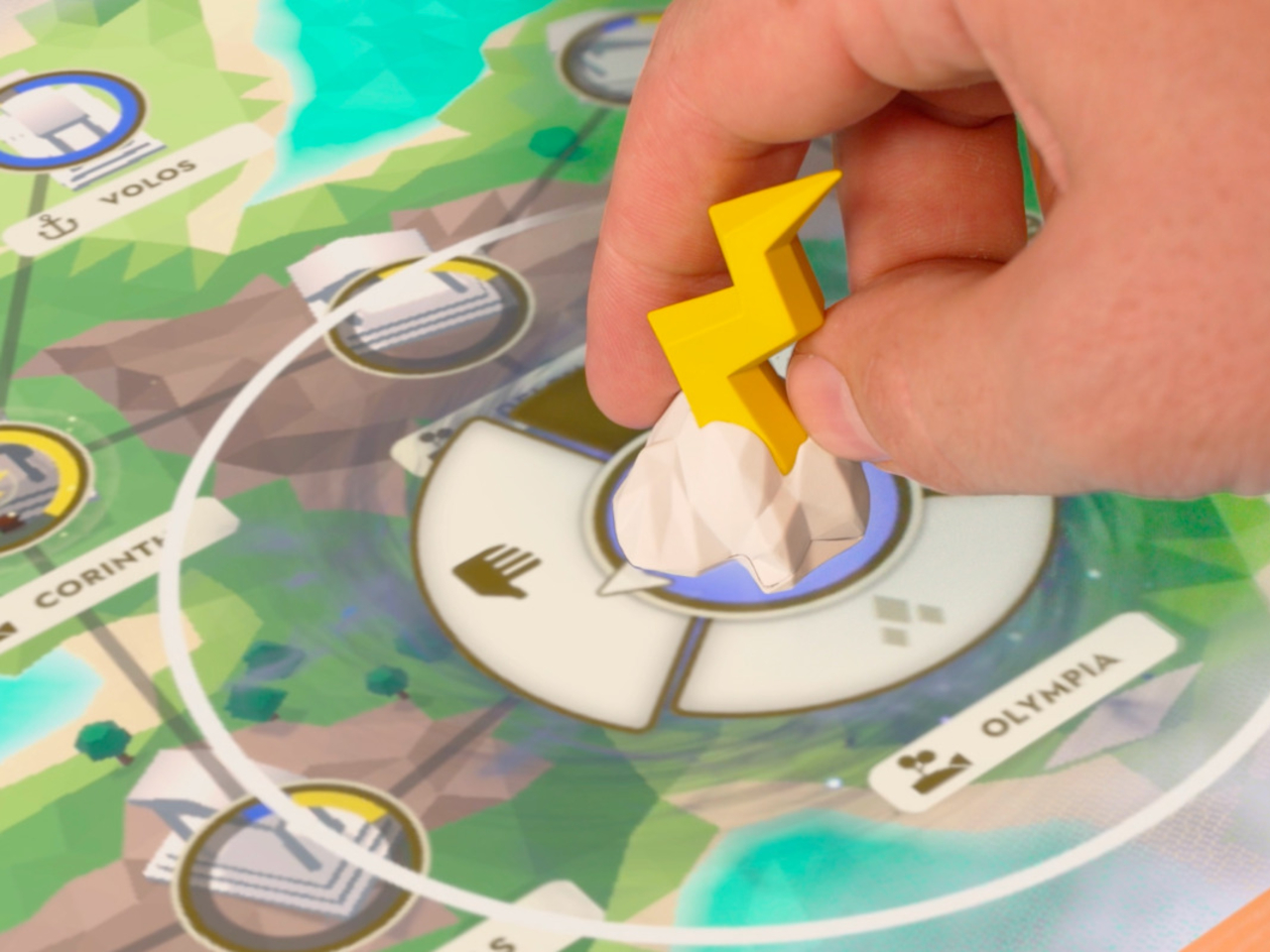
The clever part is underneath those playful pieces. Each has a distinct conductive pattern on its base that the screen can recognize through capacitive sensing, the same general touch technology used in phones and tablets. According to Board, the pieces contain no batteries, sensors, or electronics. There’s nothing to charge or pair before a plastic spaceship can become your controller for the evening.
That recognition happens through PieceSense, Board’s system for identifying pieces and following their position and rotation. Its machine learning runs on the device rather than sending those interactions to the cloud. It’s also designed to filter out accidental palm touches. That’s an important distinction when several people lean over the same screen, although Board’s developer guidance acknowledges that very fast movements can interrupt tracking.
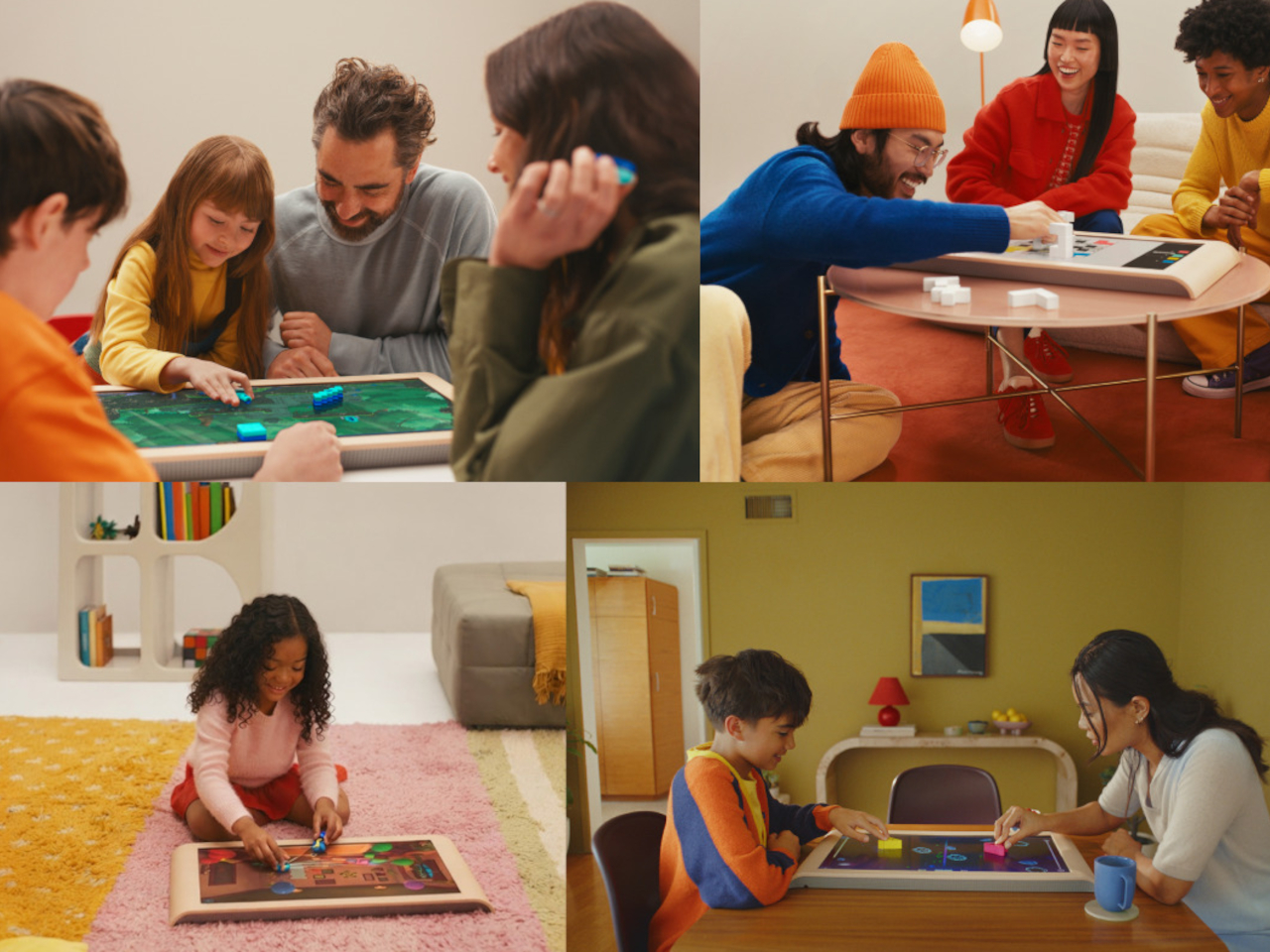
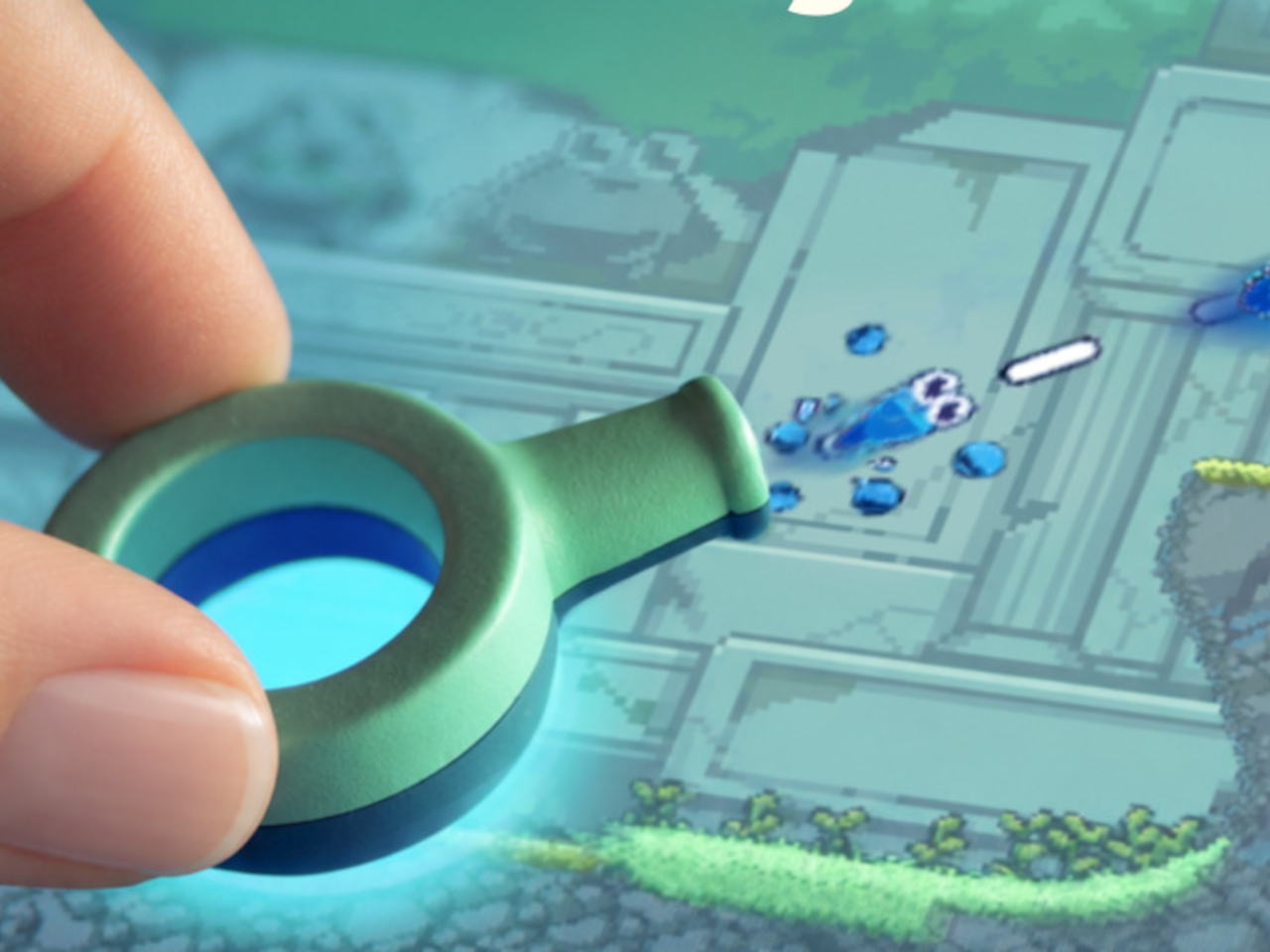
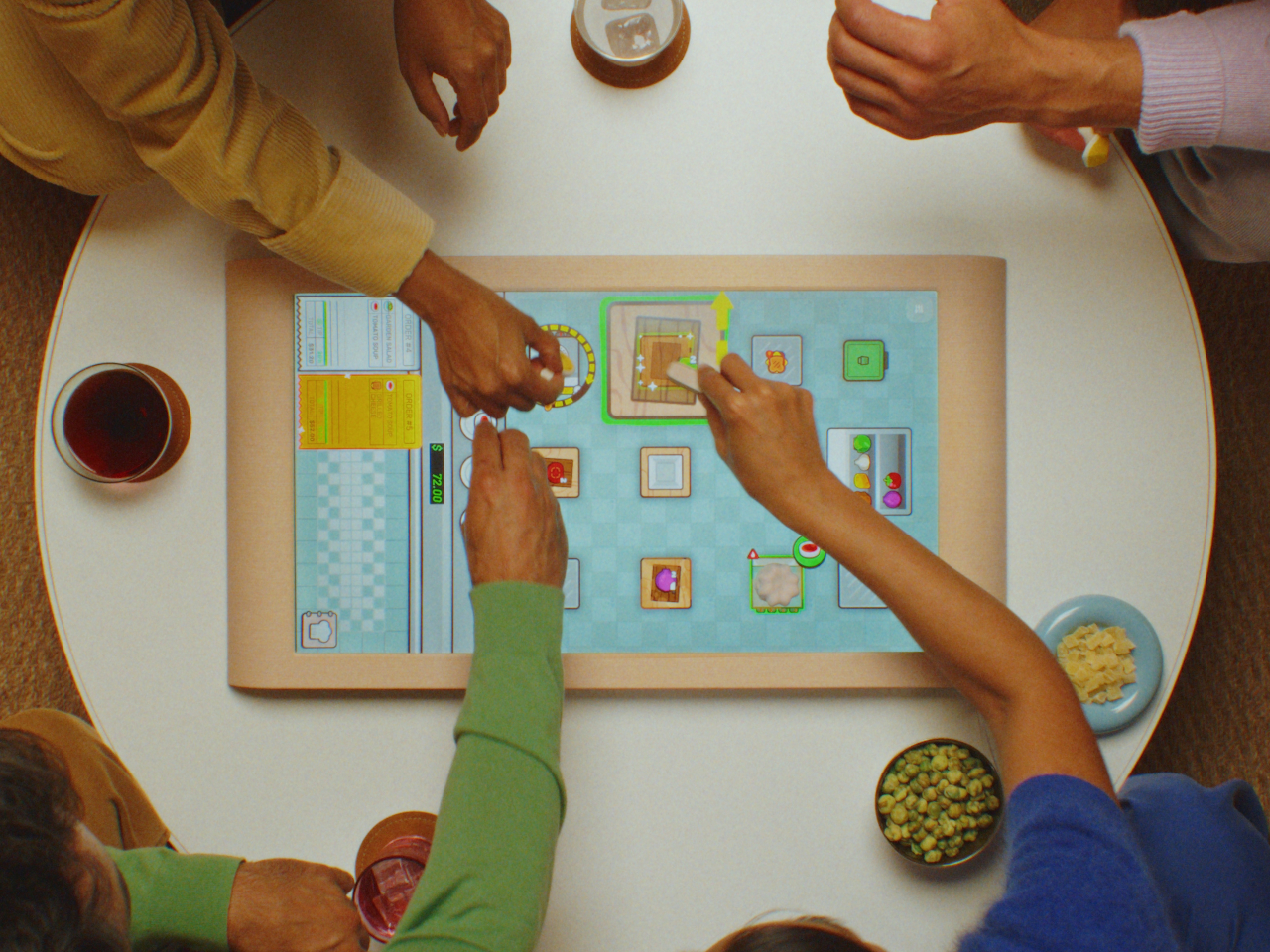
Chop Chop puts that relationship between shape and action to work. You use a little knife to slice and a spoon to stir, rather than memorizing which button handles each task. The physical tools give the digital kitchen a familiar vocabulary. Passing a utensil across the table also puts some of the game’s coordination outside the screen, where everyone can see it.
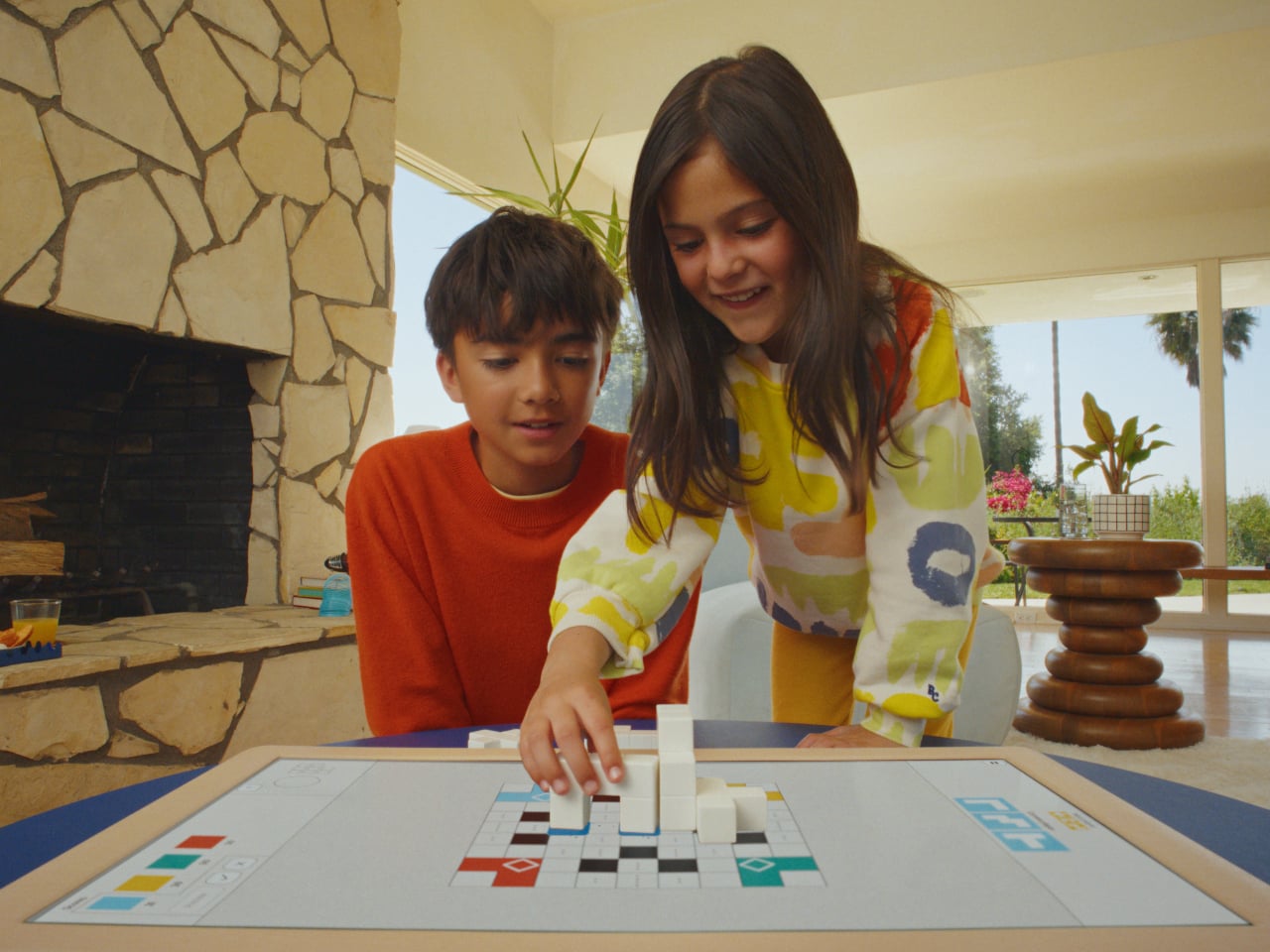
Strata takes a different approach, using chunky blocks to build upward and claim territory. Here, the pieces contribute height instead of standing in for characters on a flat display. A new game can redraw the playing field, while different pieces give your hands another way to interact. Of course, those pieces will need a home when it’s time to put everything away.
Board currently lists the console at $339 in the US, reduced from $399, with seven games and their pieces included. There’s no required subscription, and additional individual titles range from free to $34.95. Software downloads directly to the console, while any corresponding pieces ship to your door. Expanding the collection can involve waiting for a package, rather than simply tapping another download button.
There is a power cord to consider, though. Board runs from a wall outlet, so its place on the coffee table depends on where you can plug it in. It’s still another screen in the living room, of course. The interesting design decision is giving everyone an object to move on that screen, with the players sitting close enough to steal your actual spoon.