There is something oddly comforting about an object that can lose its balance and find its way back. Nevi takes that small, almost childlike pleasure and turns it into a sculptural desk lamp. Inspired by the classic roly-poly toy, it borrows the familiar idea of wobbling, recovering, and returning upright, then translates it into a much quieter and more refined design language.
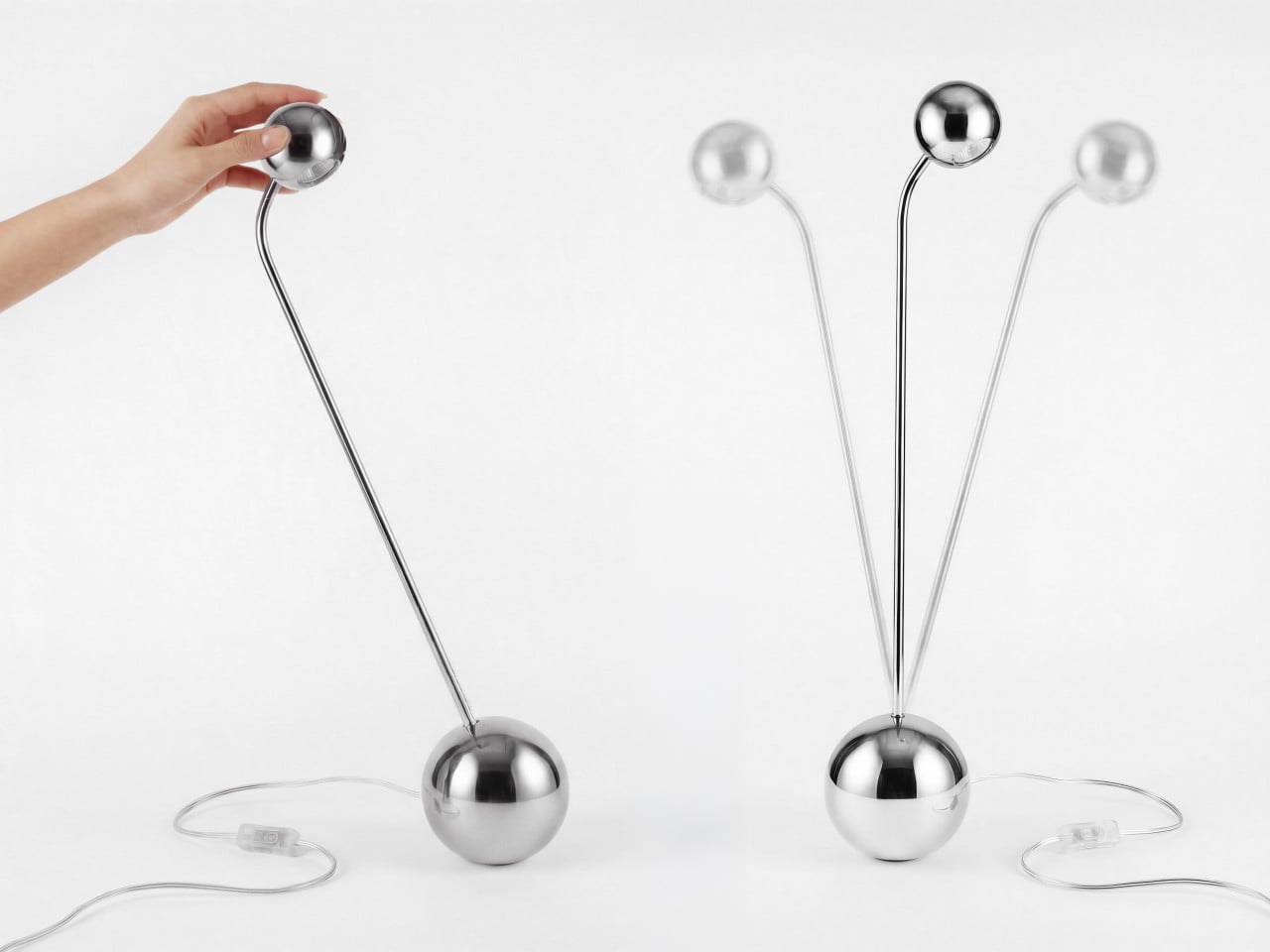
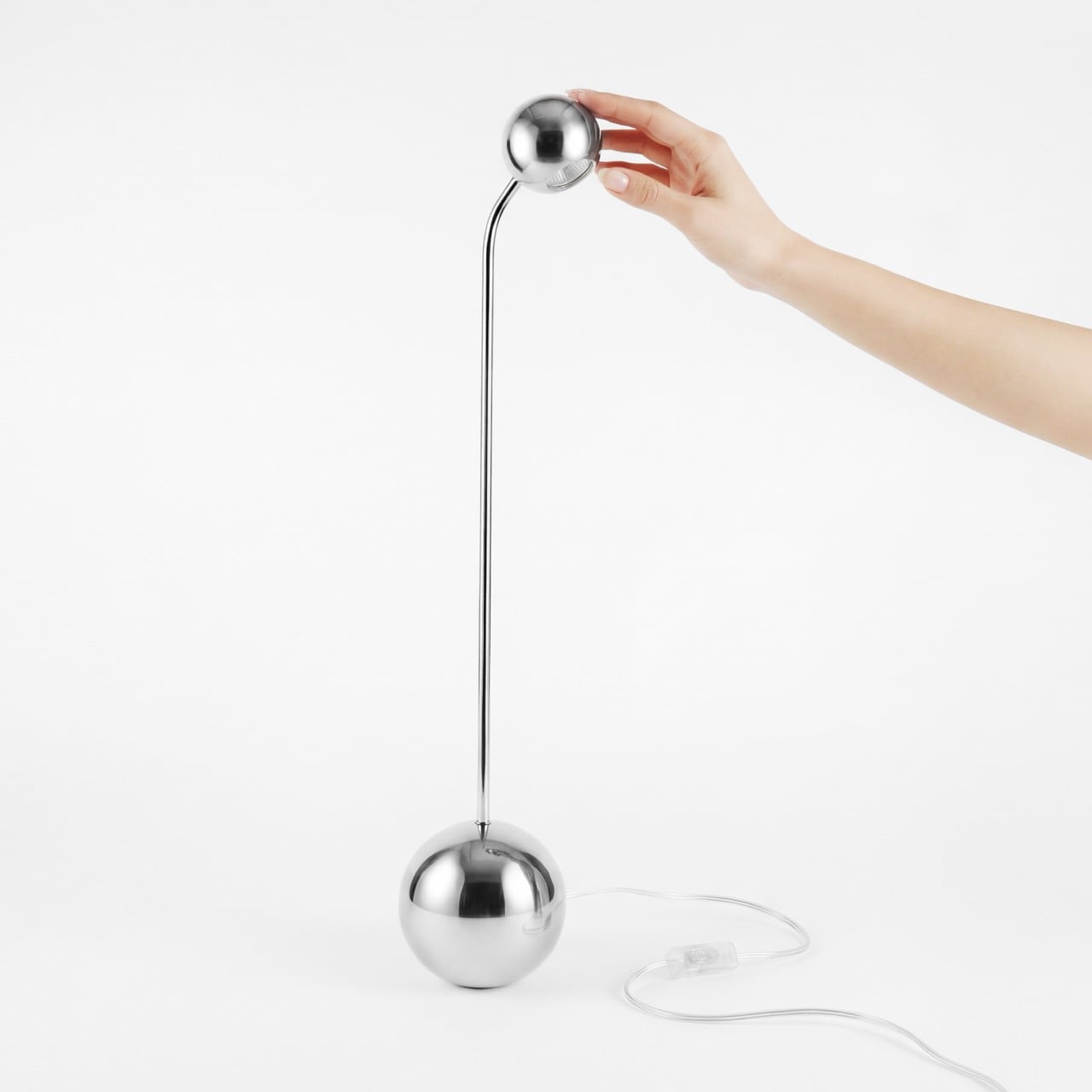
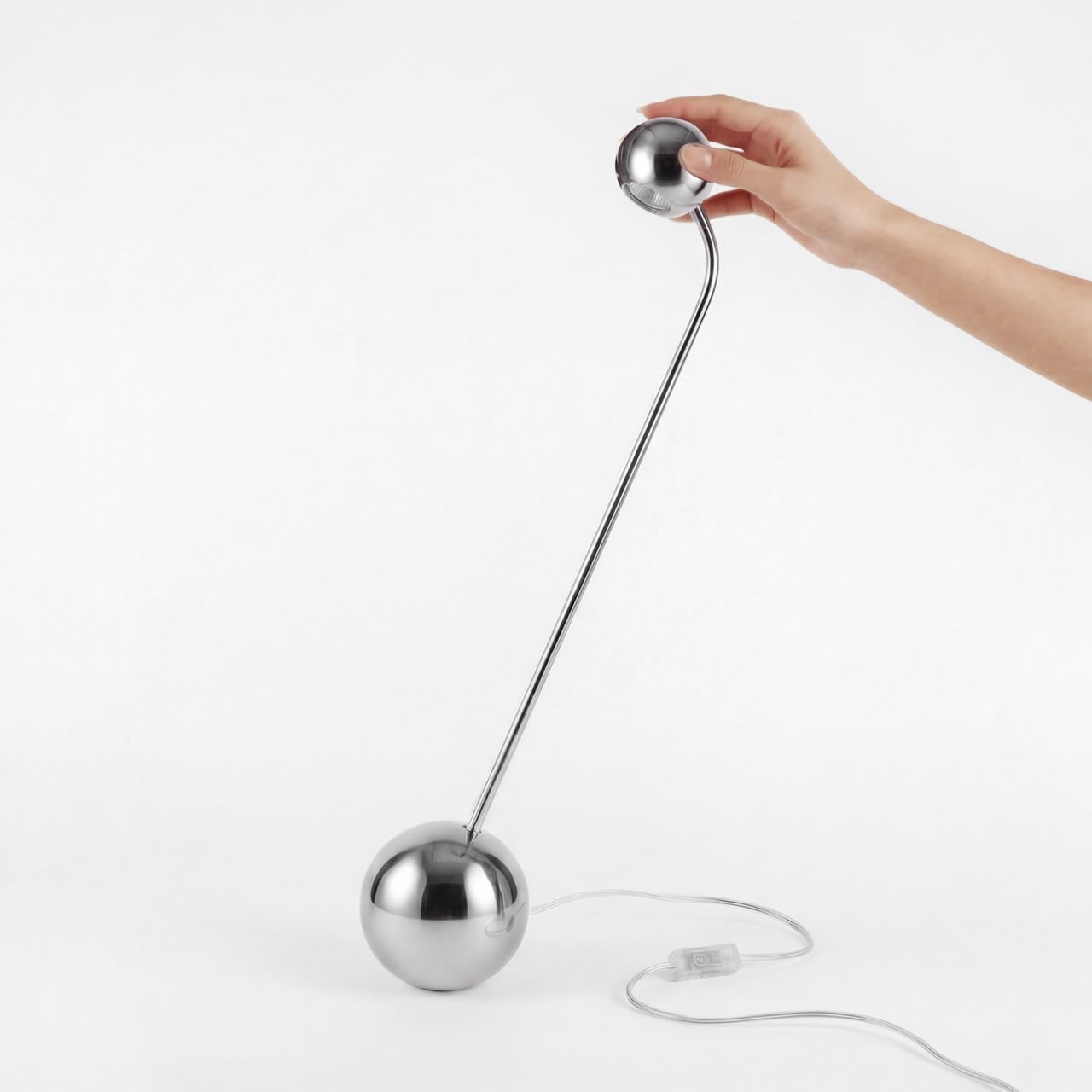
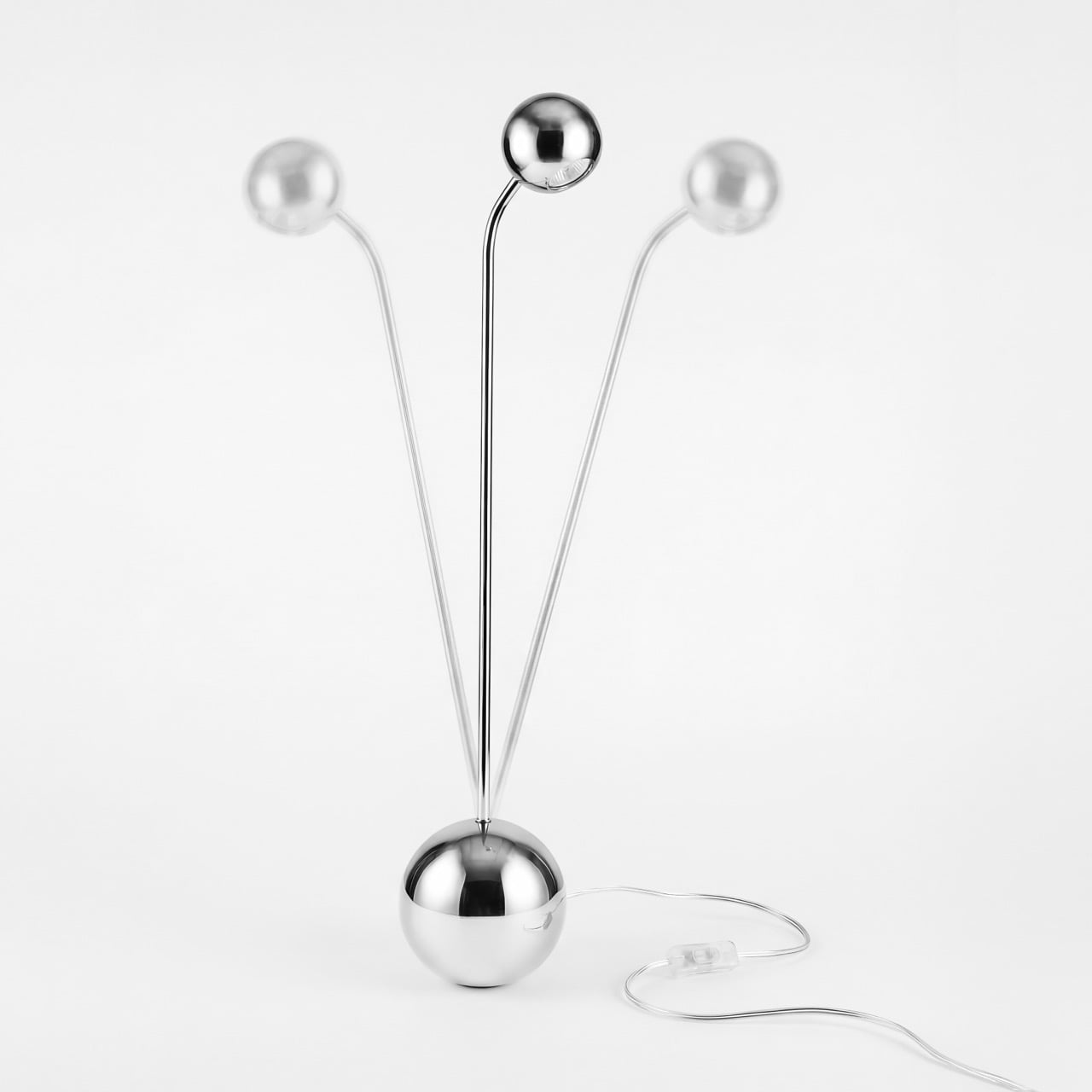
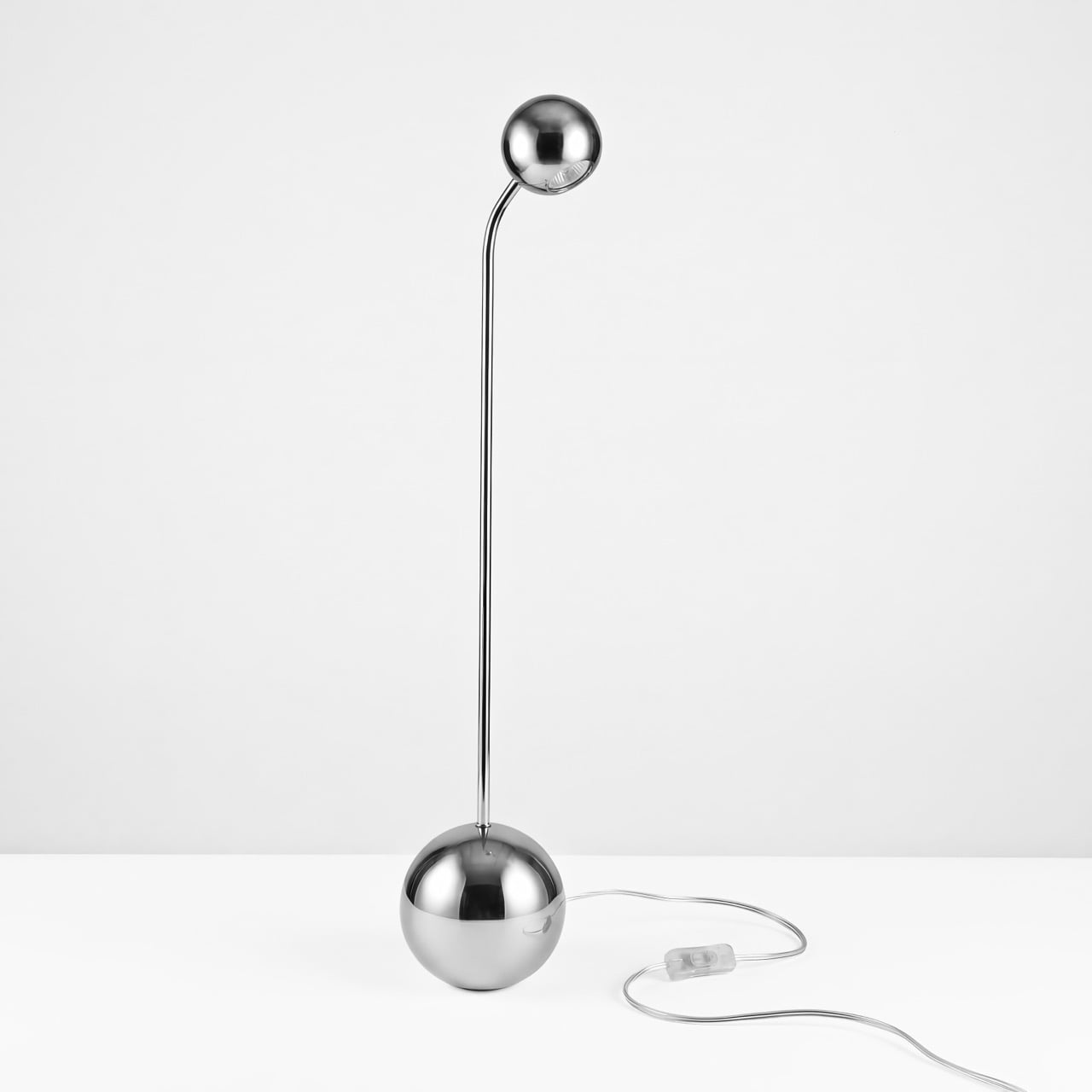
At rest, Nevi feels calm and almost architectural. A rounded stainless-steel base anchors a slender vertical stem, creating a silhouette that feels minimal without becoming cold. But the lamp is not meant to simply sit still. Give it a gentle touch, and it begins to sway, moving smoothly before gradually returning to its upright position. That subtle interaction gives Nevi a personality that most task lights never attempt to have. Instead of being an object that disappears into the background of a desk, it responds to the person using it.
Designer: Andrei Ananenka
The movement is deliberately restrained. Nevi does not perform tricks or demand attention. Its appeal lies in the small moment of interaction: the slight push, the controlled oscillation, and the satisfying return to equilibrium. It makes something as ordinary as a desk lamp feel tactile and surprisingly alive.
Material plays an important role in that experience. The lamp is made from AISI 304 stainless steel and finished entirely by hand. The lower portion of the spherical base has a satin-brushed finish that feels soft and durable, while the upper section is mirror-polished. When Nevi moves, that polished surface catches fragments of the room around it, making reflections shift across the base as the lamp rocks from side to side. The combination of brushed and reflective metal gives an otherwise simple form a sense of depth and movement even before the light is switched on.
For all of its sculptural qualities, Nevi remains a functional desk light. Its focused beam is designed for activities such as reading, writing, and working, with high color fidelity that keeps illuminated surfaces looking natural. The lighting itself is kept intentionally precise rather than flooding the surrounding space, which suits the lamp’s controlled and disciplined character.
Much of the complexity required to create that simplicity remains hidden inside. The designers had to carefully balance the lamp’s internal weight so that its tall, slender body could move freely without ever feeling unstable. The proportions, center of gravity, and duration of each movement were all studied to make the oscillation feel smooth rather than awkward or mechanical. Even the stainless-steel body quietly performs another role by helping manage the heat created by the light source, allowing the clean silhouette to remain uninterrupted.
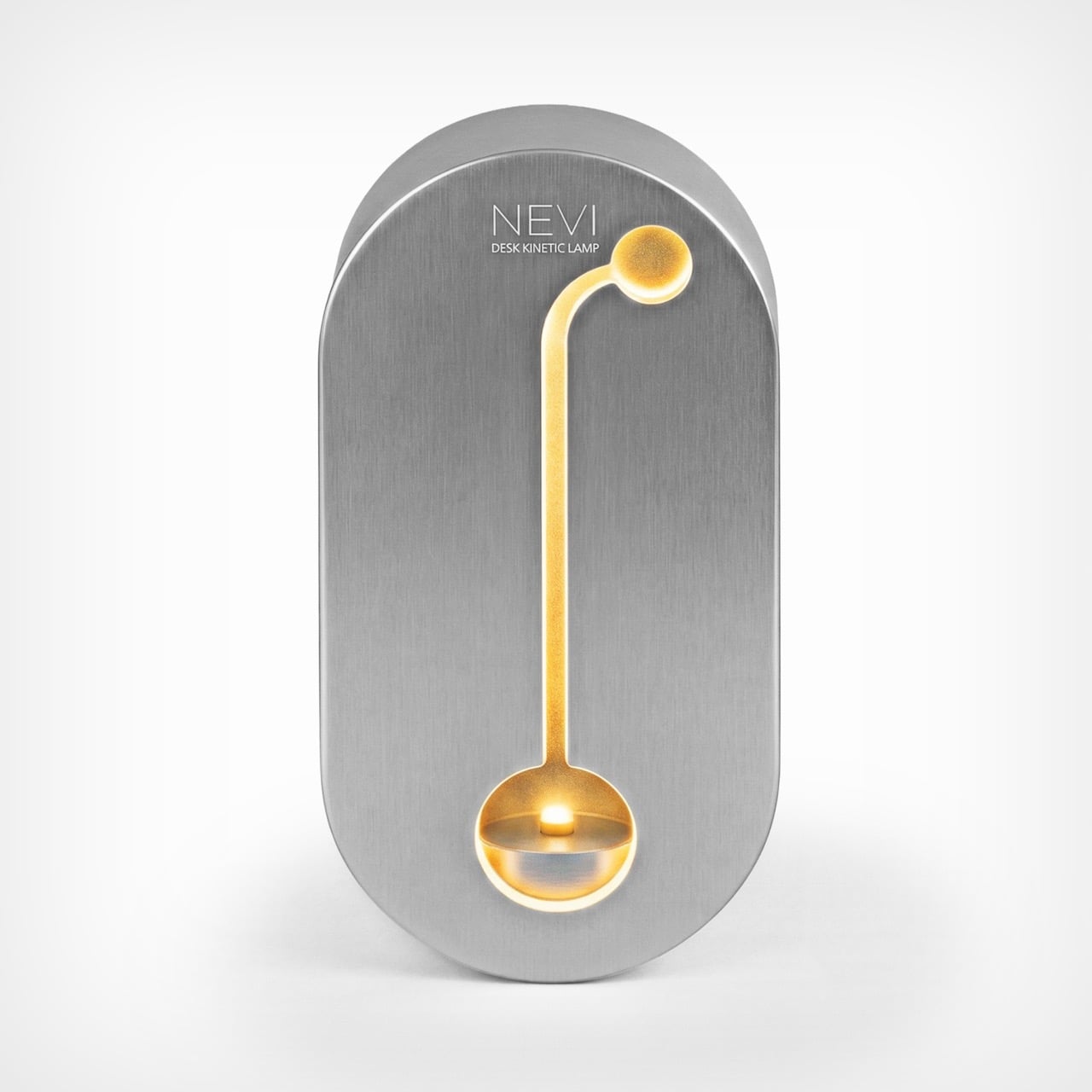
Perhaps Nevi’s most interesting idea, however, arrives before the lamp itself is even revealed. Its packaging was designed with the same self-centering behaviour as the product inside. Rather than becoming an elaborate box that is admired for a few minutes and then stored away or discarded, the high-grade aluminum package has a second life as an ambient light.
After unboxing, a wireless warm LED illuminates a CNC-milled silhouette of the Nevi lamp on the lid, turning the packaging into a small illuminated object for the interior. It can also rock and return upright, echoing the movement of the lamp itself. The package therefore becomes part of the product story rather than an accessory that immediately loses its purpose.
That approach makes the sustainability thinking behind Nevi feel particularly natural. Instead of asking the user to feel responsible for disposing of premium packaging correctly, the design simply gives them a reason to keep it. The box becomes another useful and visually considered object within the home.
The research behind Nevi focused heavily on movement and perception. The designers explored how far an object could tilt, how quickly it should recover, and how long the motion should continue before returning to stillness. Optical studies helped refine the quality and direction of the light, while material experimentation informed the contrast between the satin and mirror-polished finishes. Each decision seems to support the same broader idea: making the lamp feel calm, responsive, and almost instinctive to interact with.
Nevi is ultimately compelling because it brings emotion into a category that is usually defined by utility. It does not reinvent the desk lamp through screens, smart controls or complicated technology. Instead, it uses something much simpler, the pleasure of touch, movement, and return.
There is a quiet metaphor embedded in it too. Push Nevi away from its natural position, and it does not fight the movement. It follows it for a moment, sways, adjusts, and eventually comes back to where it belongs. What began as the behaviour of a childhood toy becomes the defining character of a sophisticated lighting object, turning balance itself into part of the experience.