A robot dog usually arrives with a trick and a lot of wiring. Q8botOne takes the opposite approach, putting its core electronics onto a central circuit board that also serves as its backbone. It fits on desks, but its exposed workings make it feel less like a miniature pet and more like a machine you can take apart, understand, and teach to move.
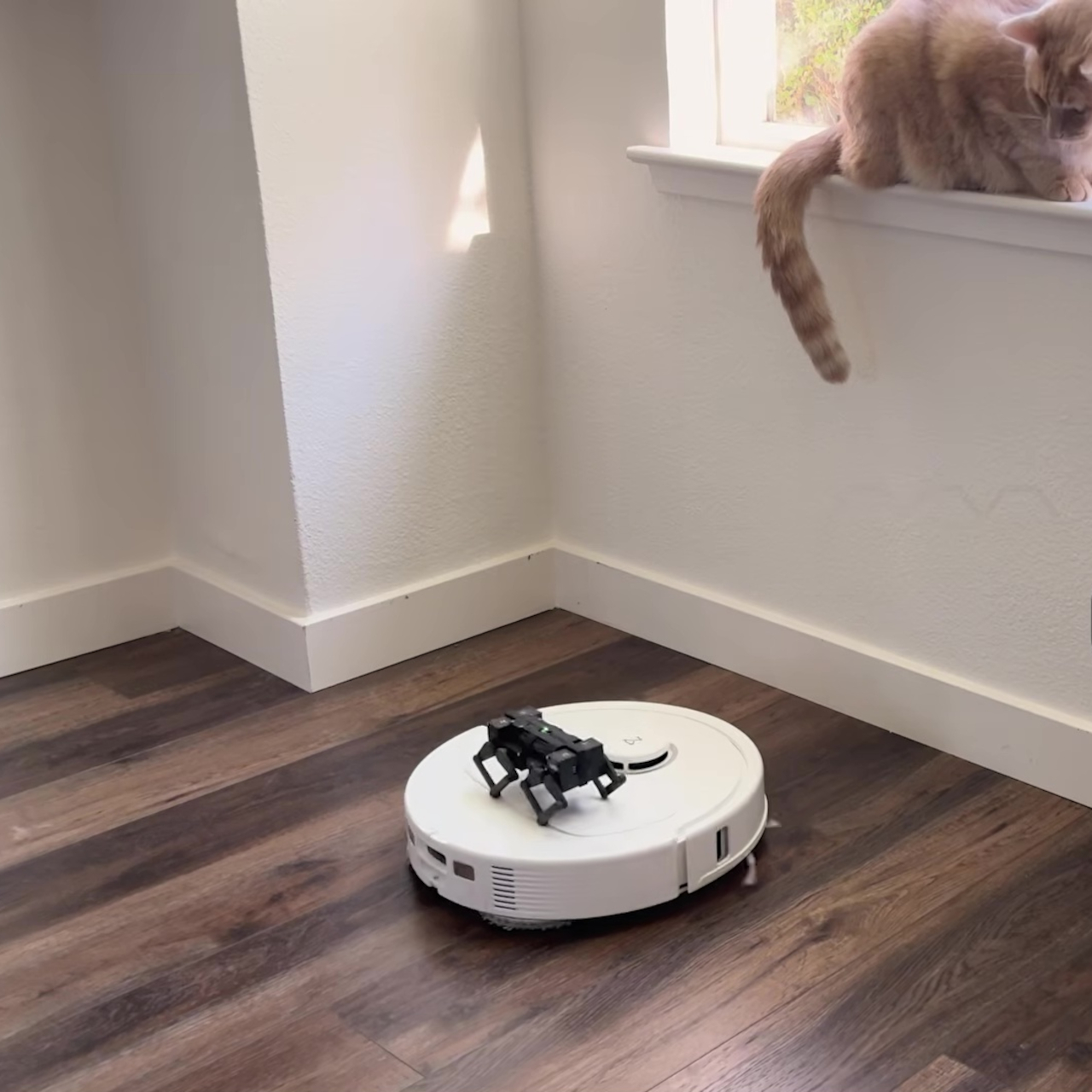
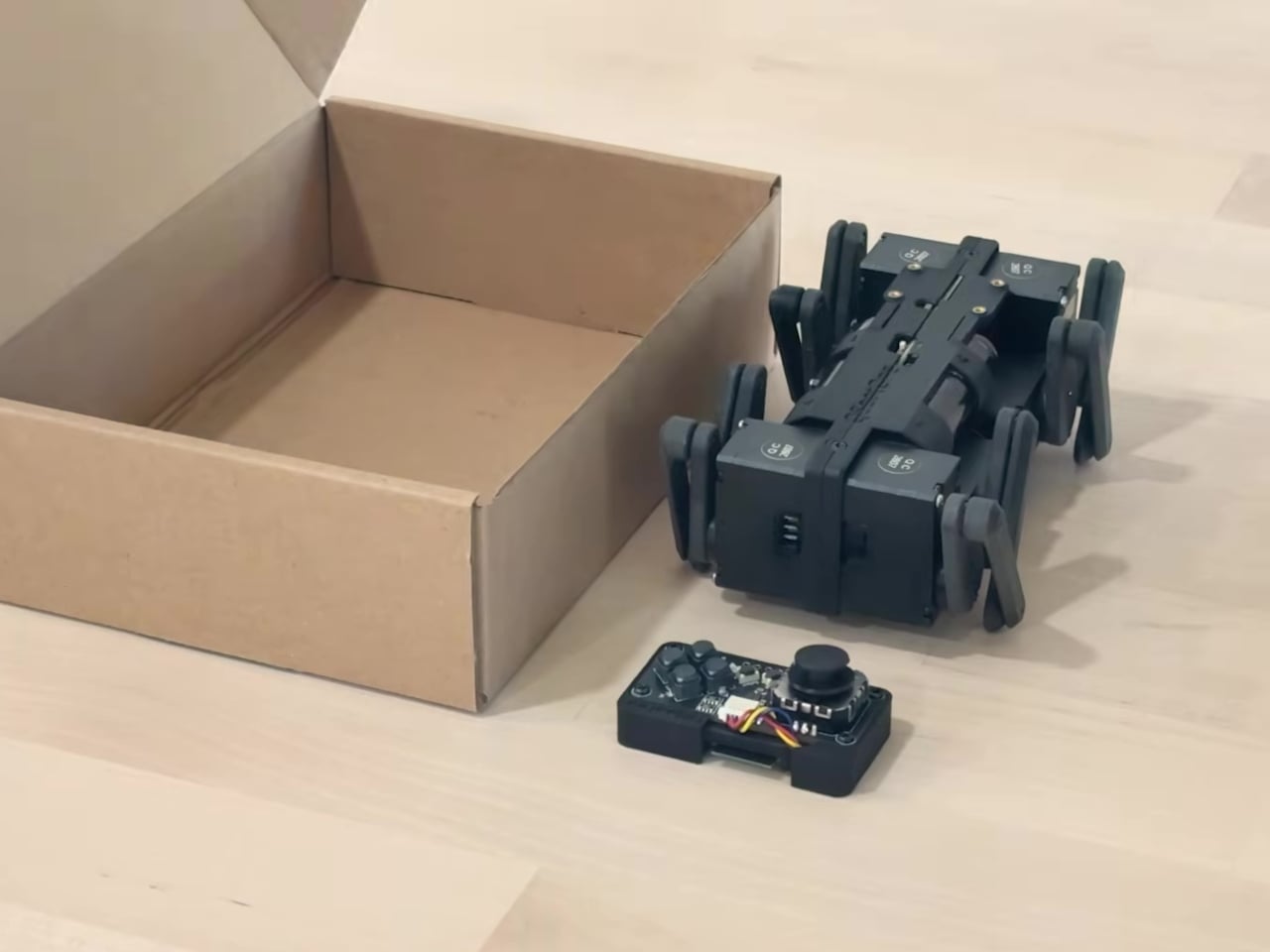
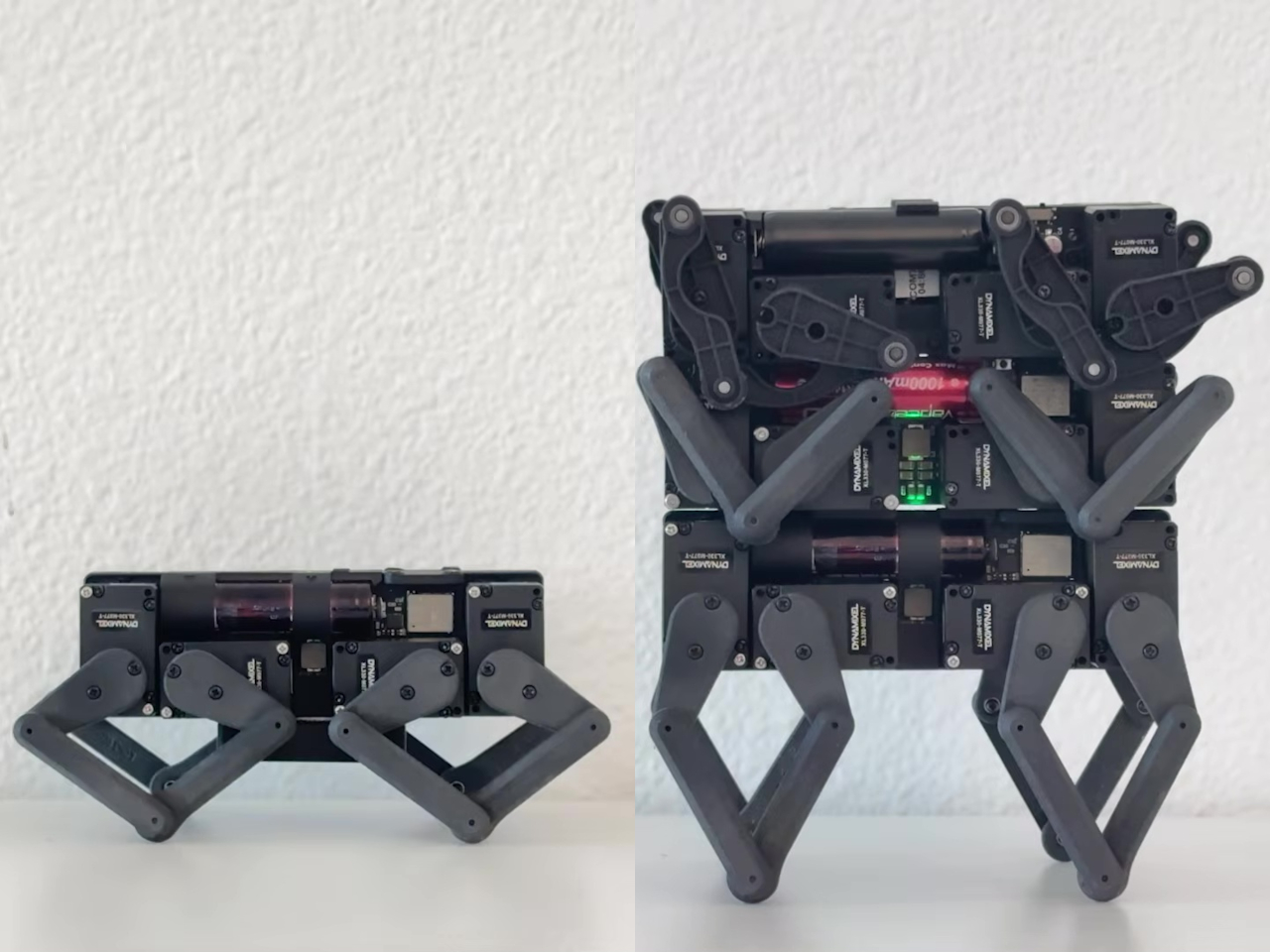
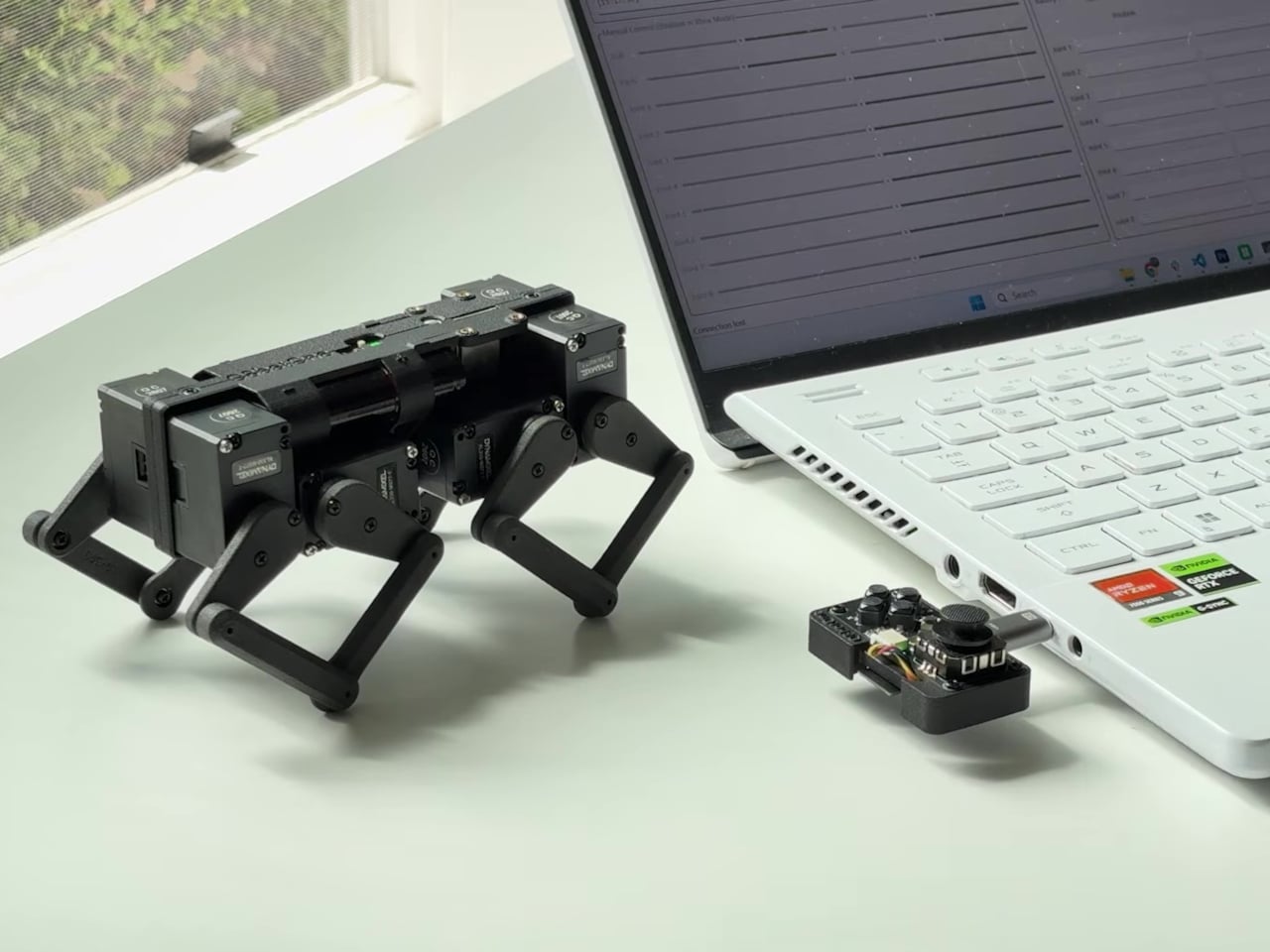
Its rectangular body doesn’t bother with a face, tail, or other attempts at animal charm. Four parallel-linkage legs do the expressive work instead, folding and extending as the robot changes pace. At about 4.7 inches long and 2.8 inches wide, Q8botOne is small enough to roam across a worktable, provided you clear a path between the coffee cup and your laptop.
Designer: ZeroWire Robotics
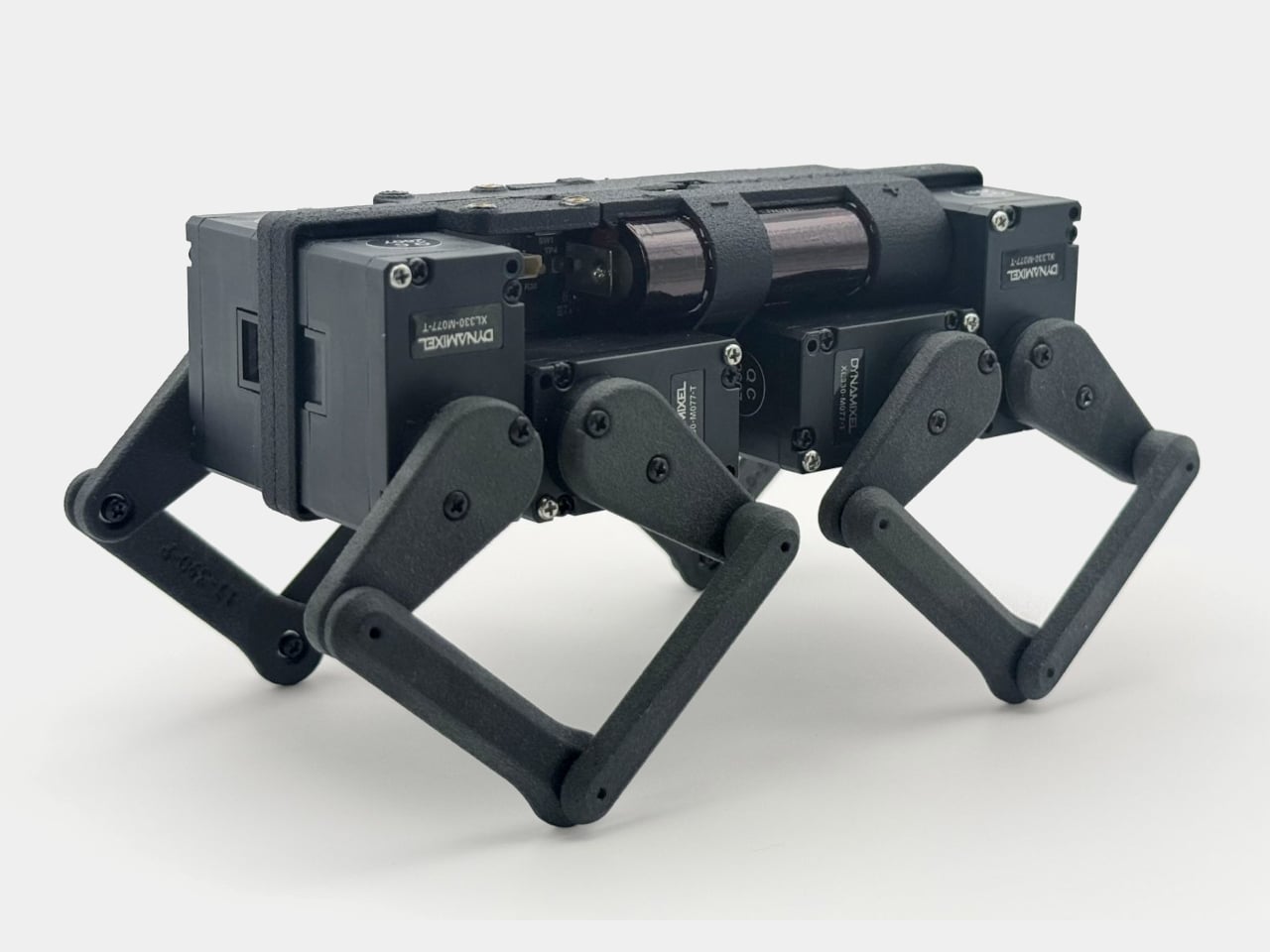
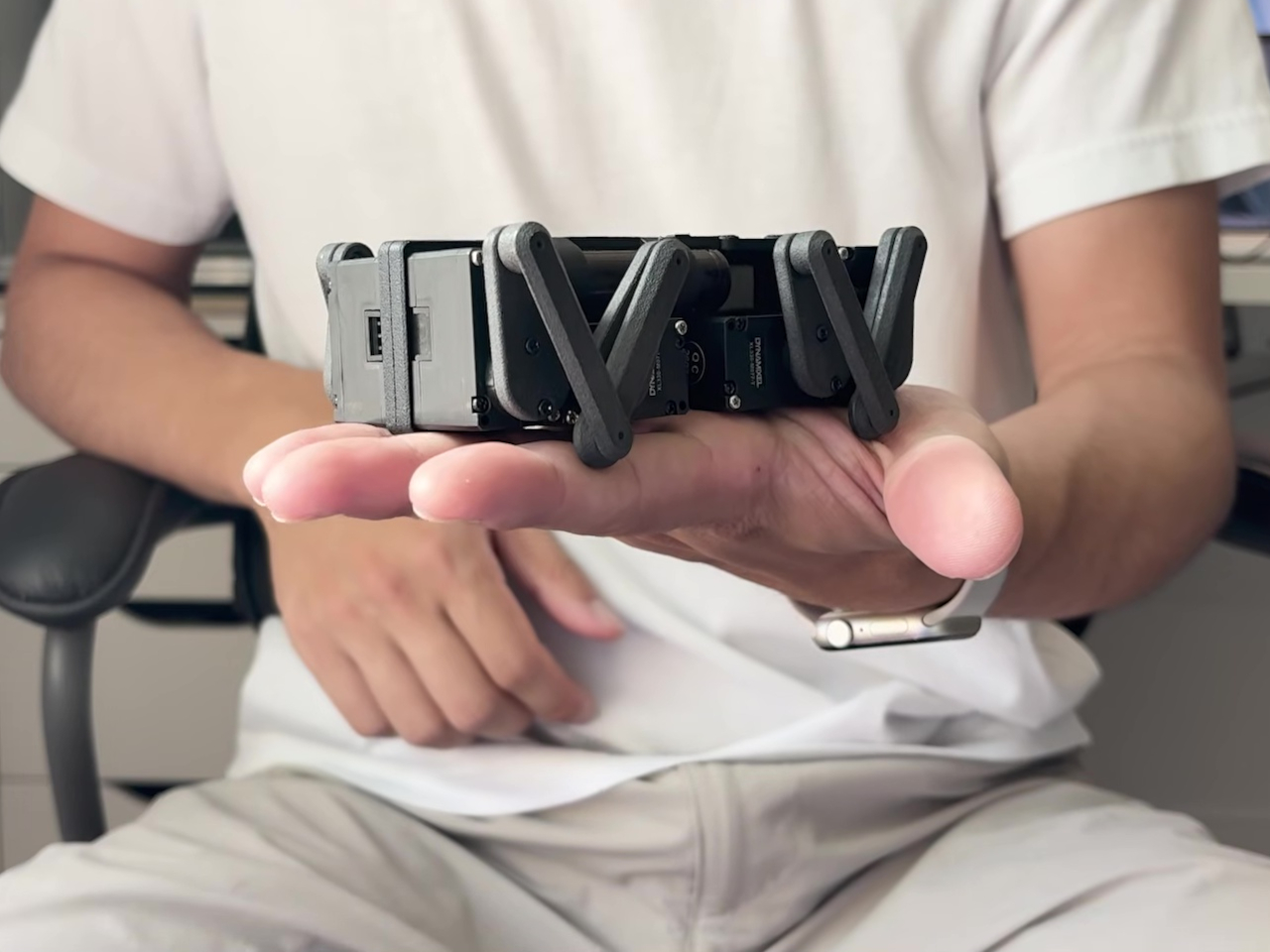
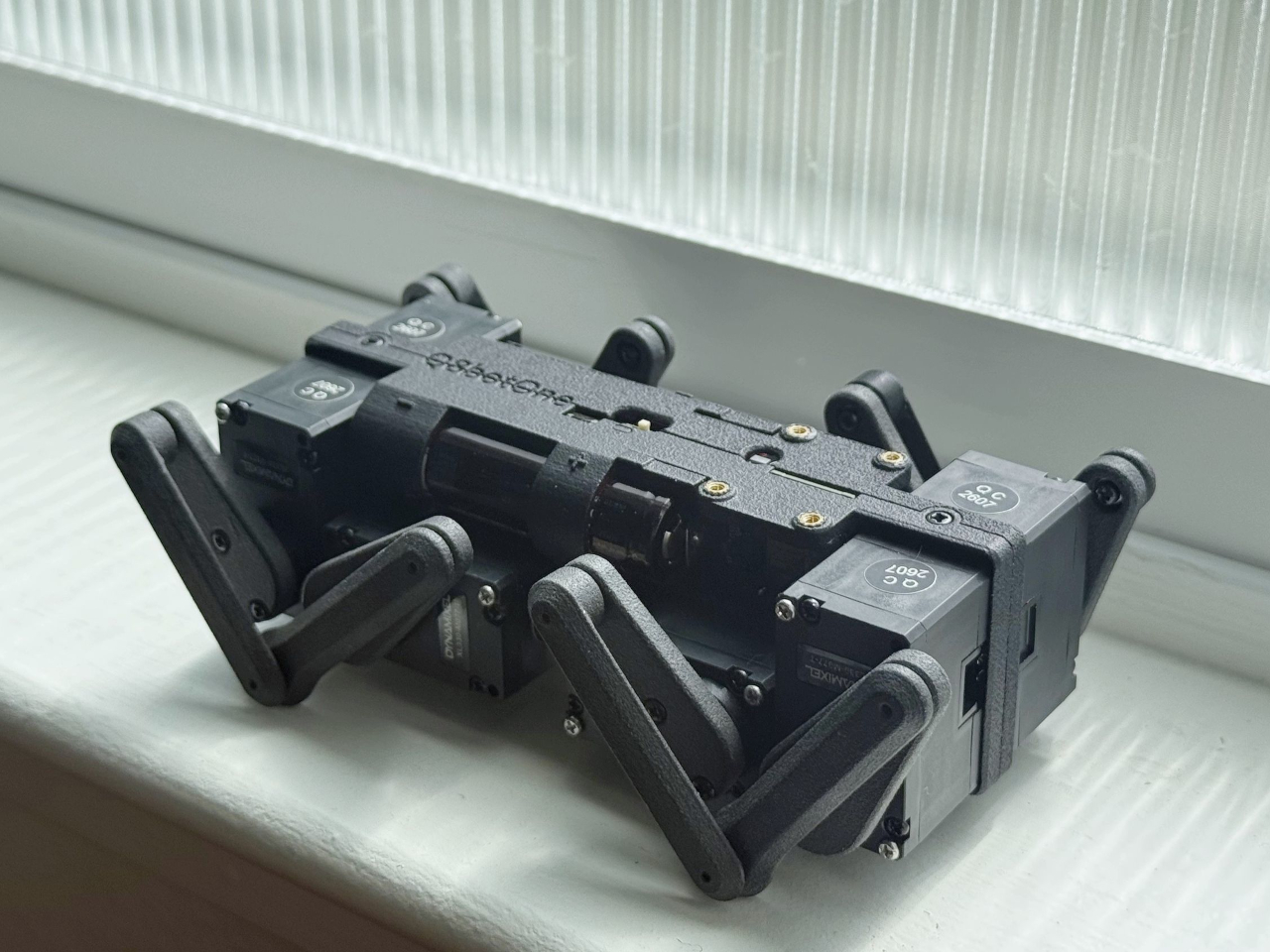
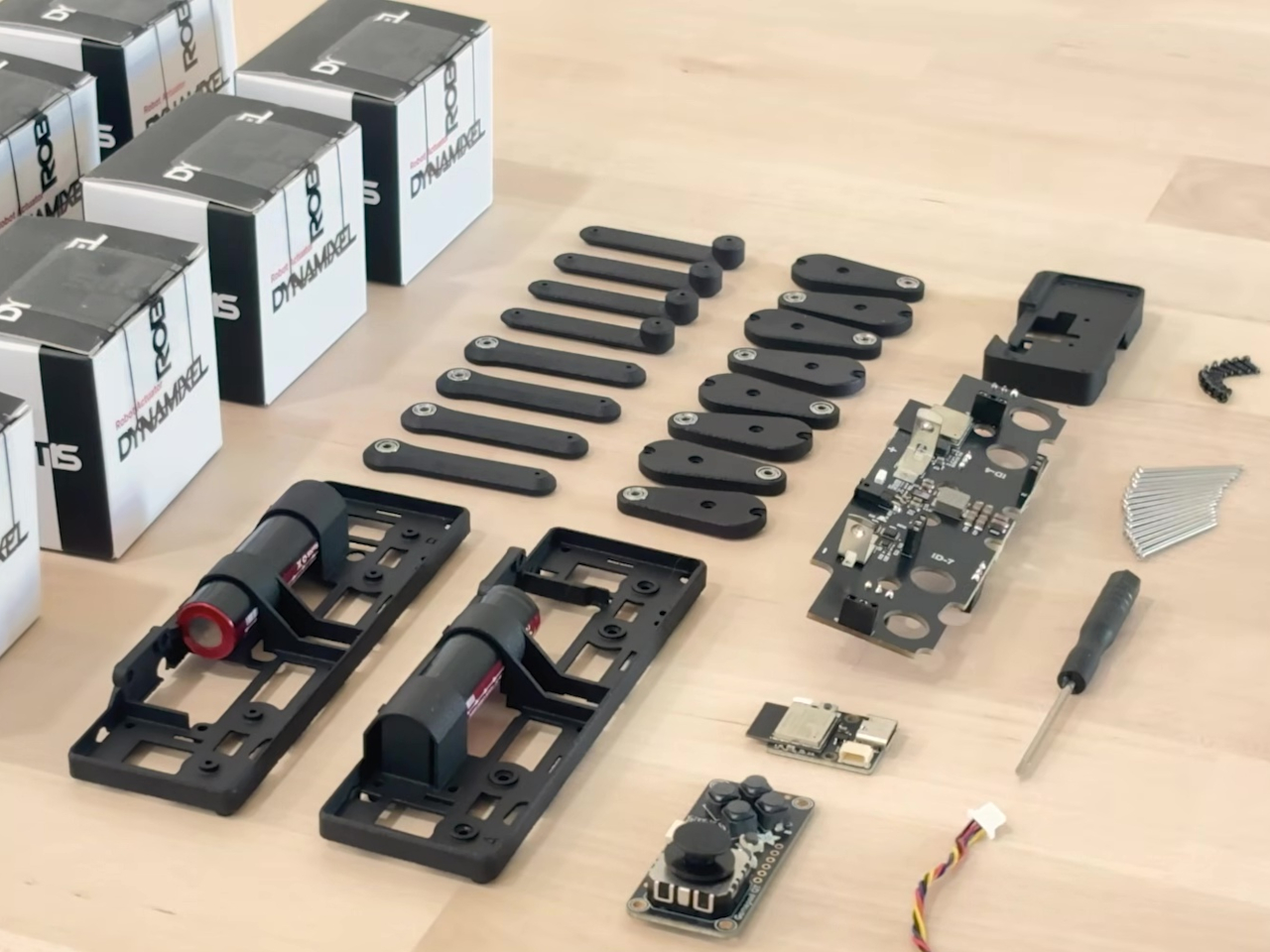
That open, mechanical character comes from doing away with the tangle of internal cables. Eight motor modules and two batteries plug into the main printed circuit board, which doubles as a structural spine. Fewer internal connections should mean fewer loose wires to chase when something goes wrong, although adding optional sensors or a camera can still bring cables back into the picture.
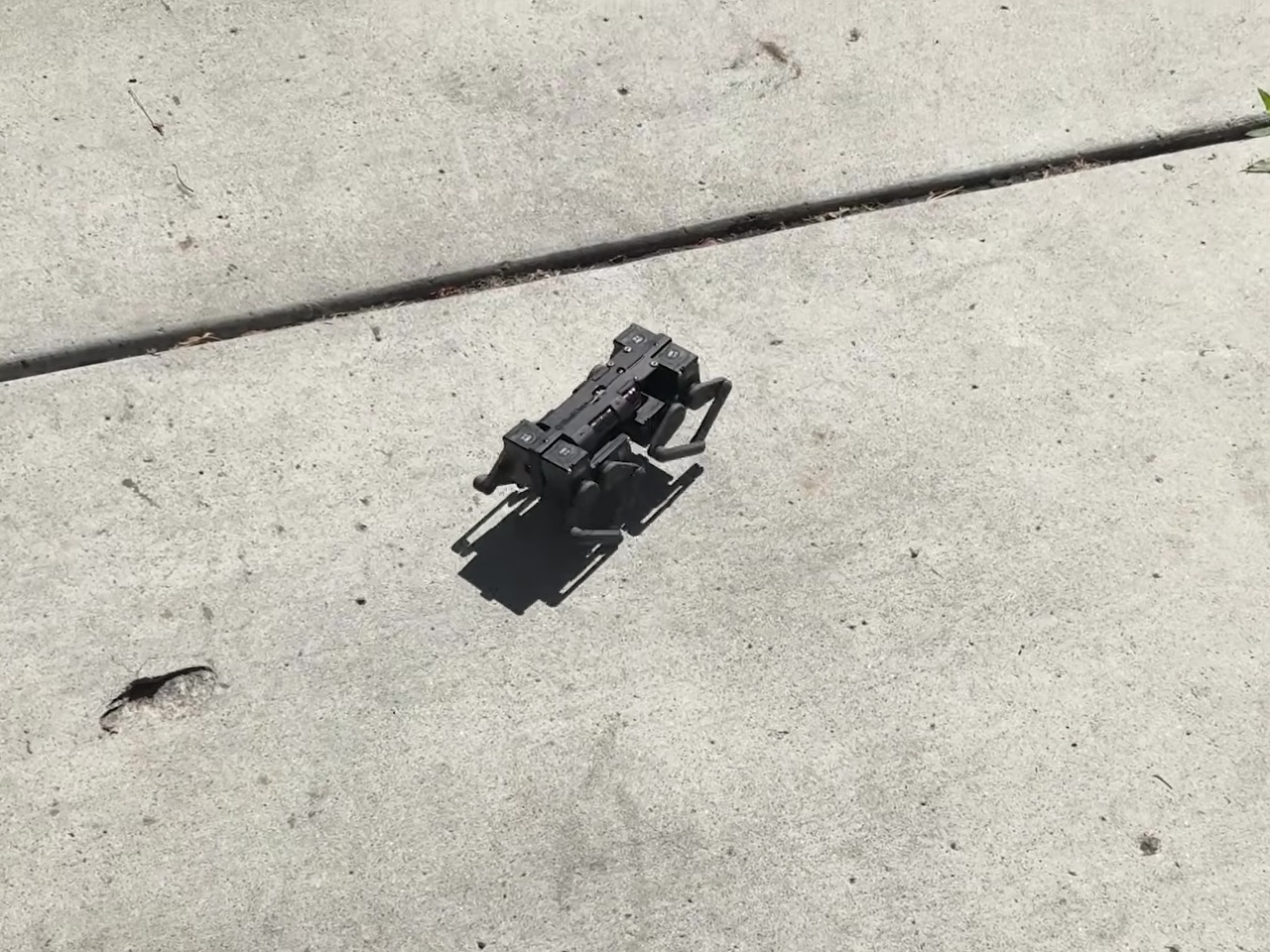
Those eight DYNAMIXEL actuators give the joints feedback, so the machine can respond to more than a simple instruction to move. The developers say it can jog, jump, and carry up to twice its weight, though those performance claims still need independent verification. For someone learning how a walking robot balances, watching a gait change on a tabletop beats an animation.
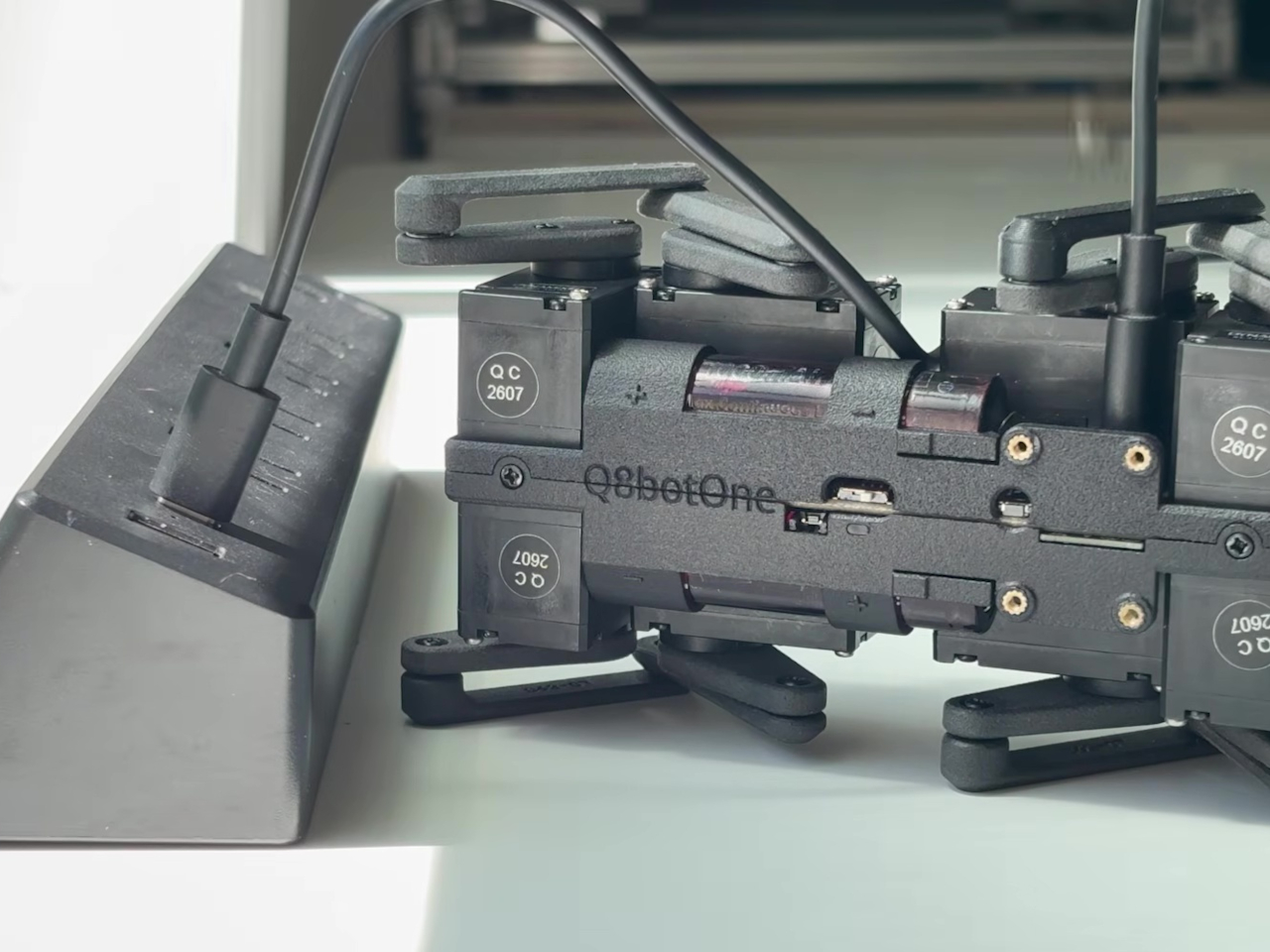
There’s a simple way to get it moving without writing code first. Power the included controller through USB-C, and its joystick and buttons can steer the robot wirelessly. Connect that controller to a computer, and it becomes a bridge to a desktop interface, an Xbox controller, or your own software. Beginners can start by driving, then try changing how the legs step.
The basic robot leaves off a built-in camera and motion sensor, which makes its design less cluttered but also means it won’t navigate the room by sight. Mounting holes and expansion connectors let tinkerers add those parts later. That turns an empty patch above the body into space for the next experiment, rather than a promise that every feature comes ready to use.
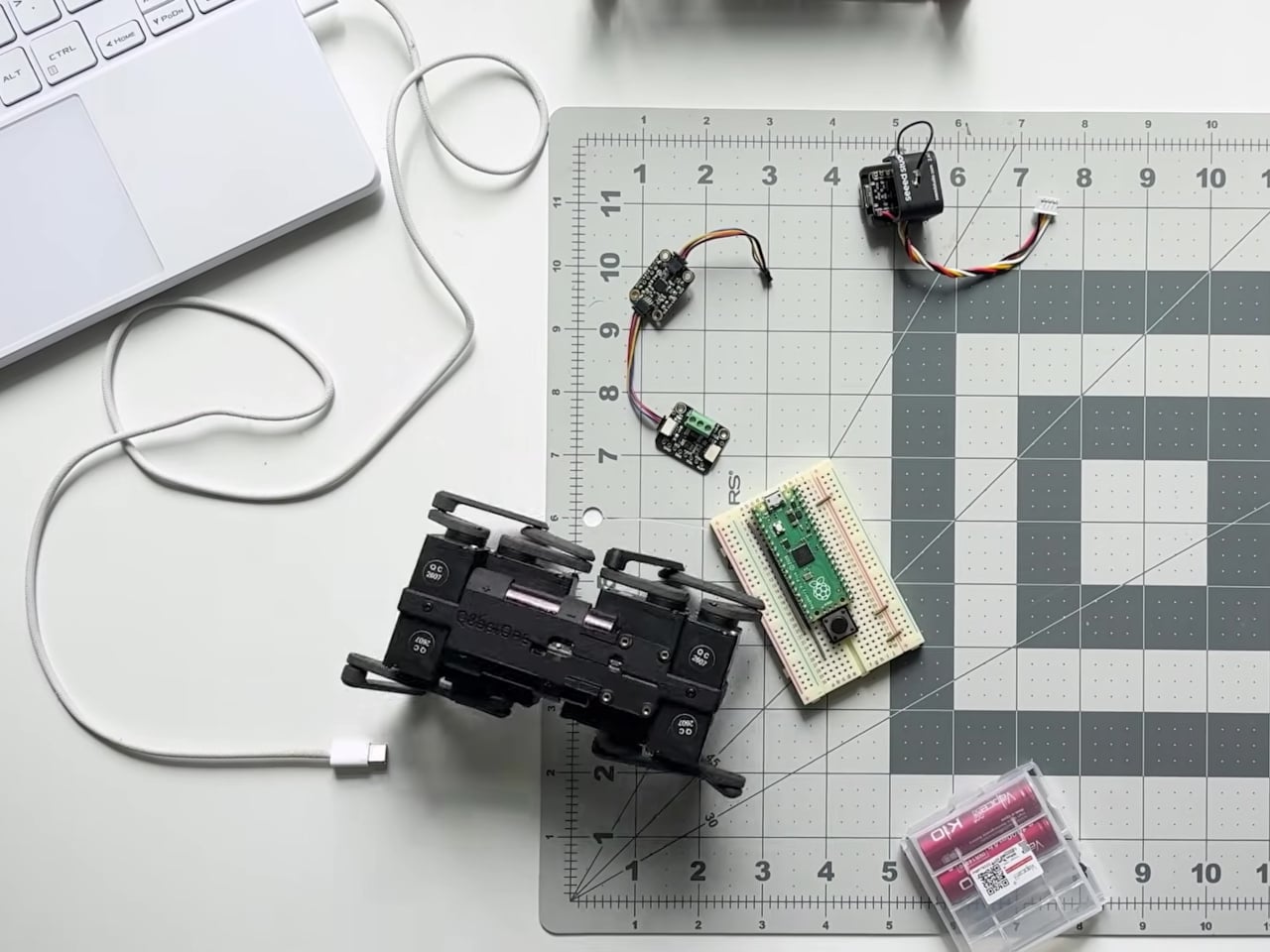
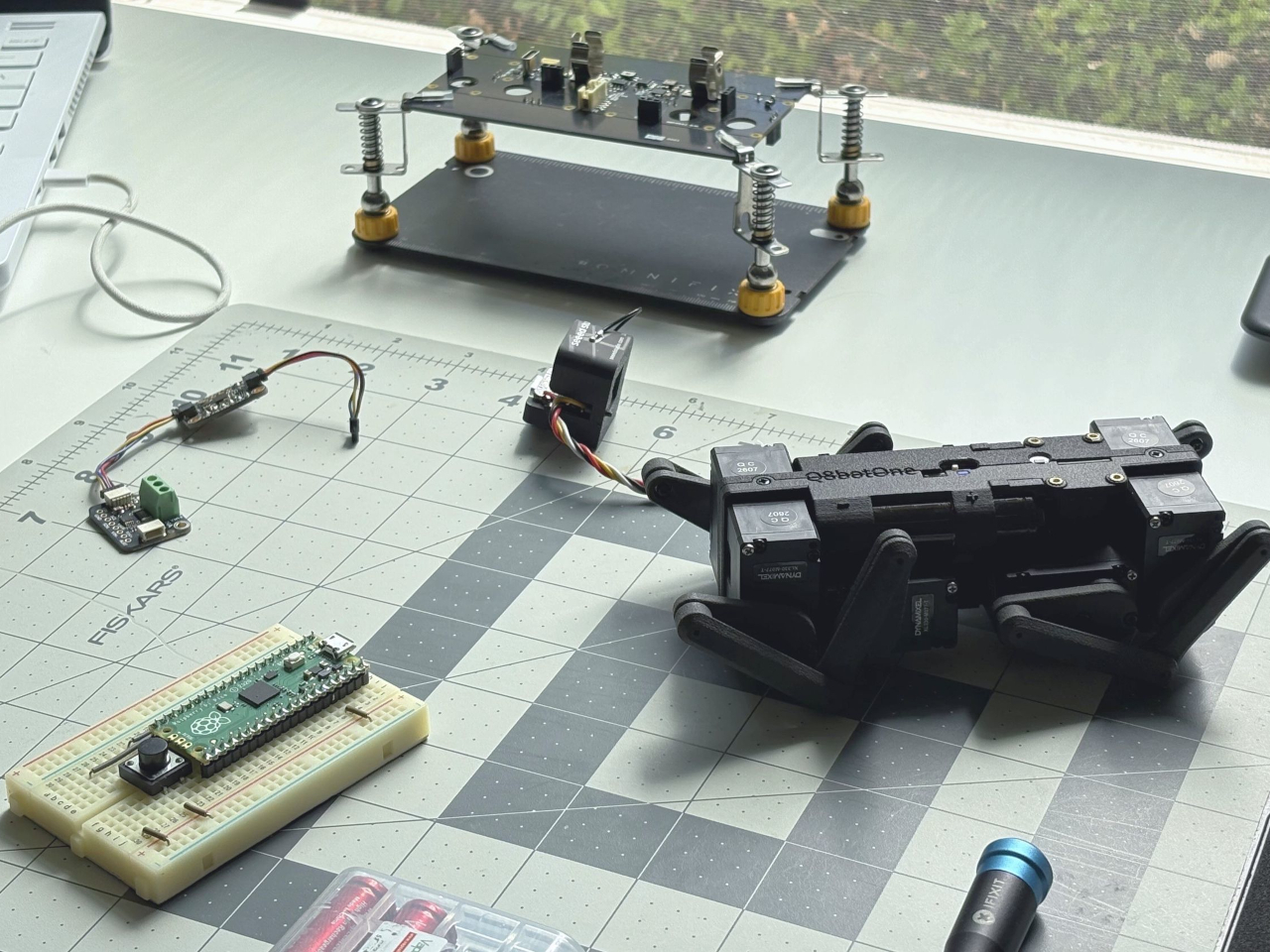
That invitation extends past plug-in accessories. The hardware plans, firmware, and assembly instructions are openly available, so someone can study the board, alter the chassis, or build a new controller around the same ideas. Its printed nylon legs and bearing-supported joints keep the mechanism legible. Instead of sealing the moving parts away, Q8botOne leaves something for a student or hobbyist to investigate.
The assembled Q8botOne is listed at $599; a $199 kit omits the eight actuators, which you’d need to supply separately. Production and delivery are still planned, so the finished machine and its claimed strength need a closer look when units arrive. For now, its most interesting move is architectural: making the circuit board carry the robot, while leaving enough room for people to make it their own.