The birdwatching boom of 2020 was, genuinely, one of the nicer things to come out of a rough couple of years. Millions of people discovered that birds are interesting, feeders are meditative, and there is something quietly satisfying about identifying the bird that keeps eating everything before anything else gets a turn. Technology followed the money, and a proper smart feeder category emerged, with Bird Buddy, Netvue Birdfy, and others shipping camera-equipped, AI-powered feeders that identify species and send clips to your phone. All of them, however, assume you want to watch birds from your own backyard, within range of your home router, which is a reasonable assumption for some people and a fairly annoying one for everyone else. BirdVue’s FEED 1 was designed for everyone else.
Running on 4G LTE and dual-band Wi-Fi with a built-in eSIM, the FEED 1 works wherever cellular signal reaches, which is a much larger area than your router covers. BirdVue, based in Wyoming, also added millimeter-wave radar, meaning the camera fires before the bird lands rather than after. The AI layer identifies species, logs visits, auto-generates highlight clips, monitors food levels in real time, and lets you remotely dispense seed from your phone. Dual 3W solar panels top up a 5200mAh battery, IP65 weatherproofing handles outdoor conditions year-round, and GPS tracking tells you exactly where the device is at any given moment. All of that hardware lives inside a forest-green birdhouse shell that looks considerably more at home in a garden than in a tech review.
Designer: BirdVue
Click Here to Buy Now: $179 $299 (40% off). Hurry, only 62/100 left!
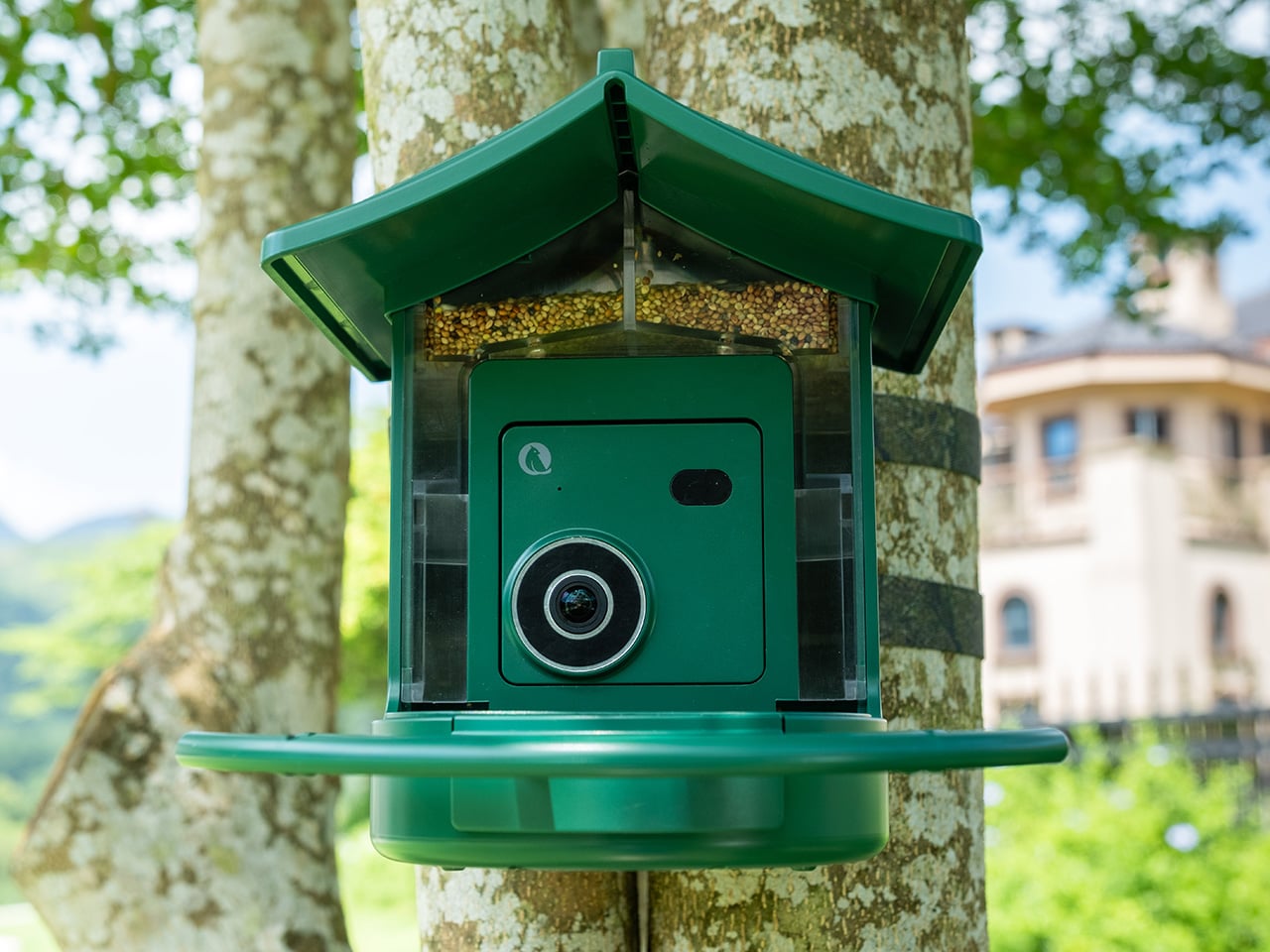
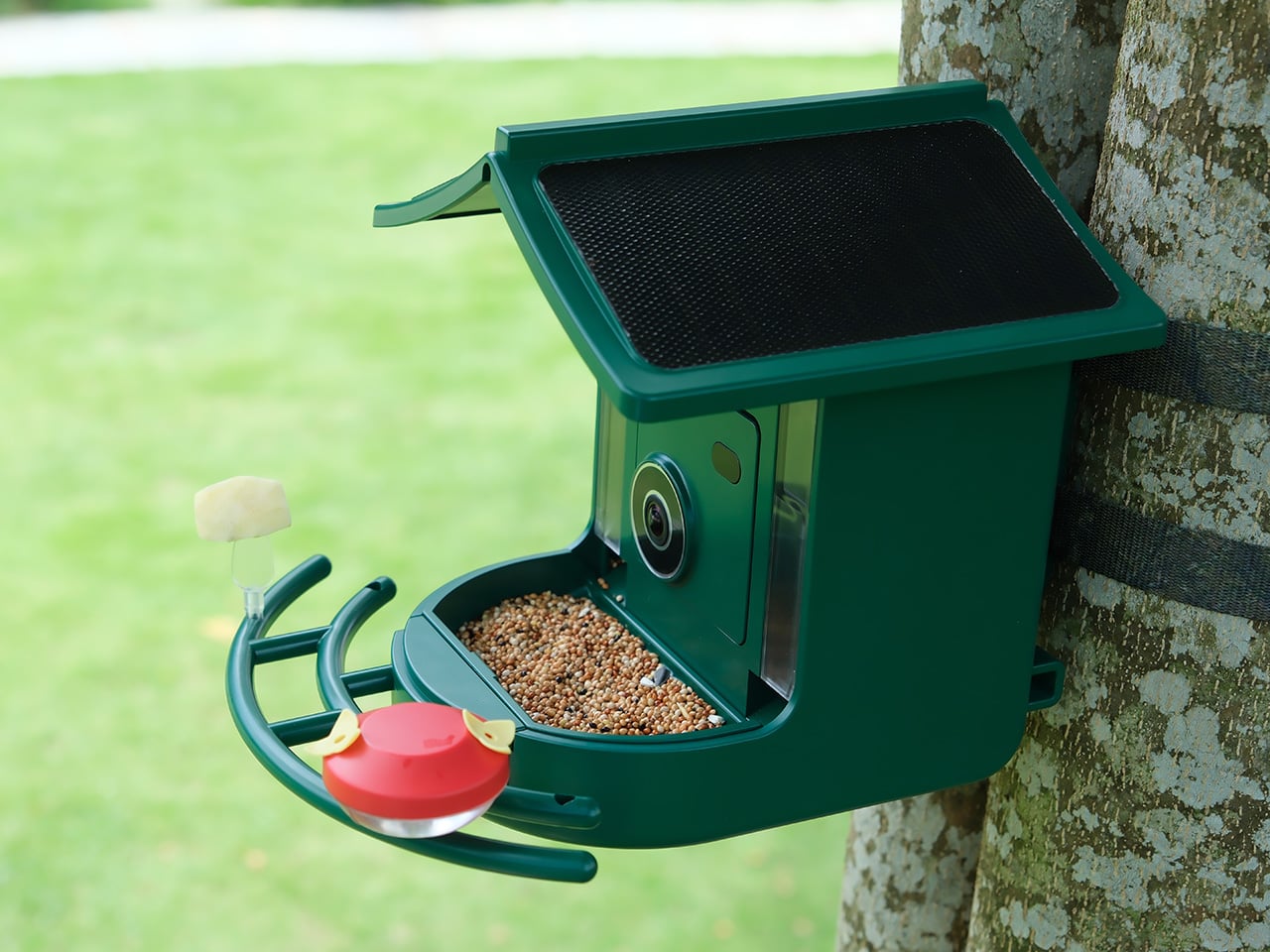
The clearest advantage the FEED 1 has over its competition is where you can actually put it. It supports both 4G LTE and dual-band Wi-Fi simultaneously, with a built-in eSIM handling the cellular connection so there is no physical SIM card to source. That combination lets the feeder go wherever birds naturally gather: deep into gardens, along tree lines, beside lakes, or anywhere on a rural property with cellular coverage, rather than being pinned to your router’s range. Installation is flexible too, with a hanging hook, mounting straps, and a base bracket all included, so the FEED 1 can be suspended from a branch, strapped to a tree trunk, or mounted on a post depending on where the birds actually are. The birds decide where the feeder lives, not your router.
Millimeter-wave radar is the detection technology that changes what “capturing a bird visit” actually means on the FEED 1. Passive infrared sensors, which most smart feeders use, respond to heat signatures only once something is already on the perch, and camera-based motion detection has similar timing problems along with a tendency to false-trigger on wind-blown leaves or shifting light. BirdVue’s radar fires at millisecond speeds the moment a bird enters the detection field, starting recording during the approach and landing rather than after the bird has settled in and started eating. It also operates identically in rain, fog, and low light, conditions where PIR and camera-based triggers routinely get confused and miss the shot. The result is footage that begins with the bird in flight, not already perched.
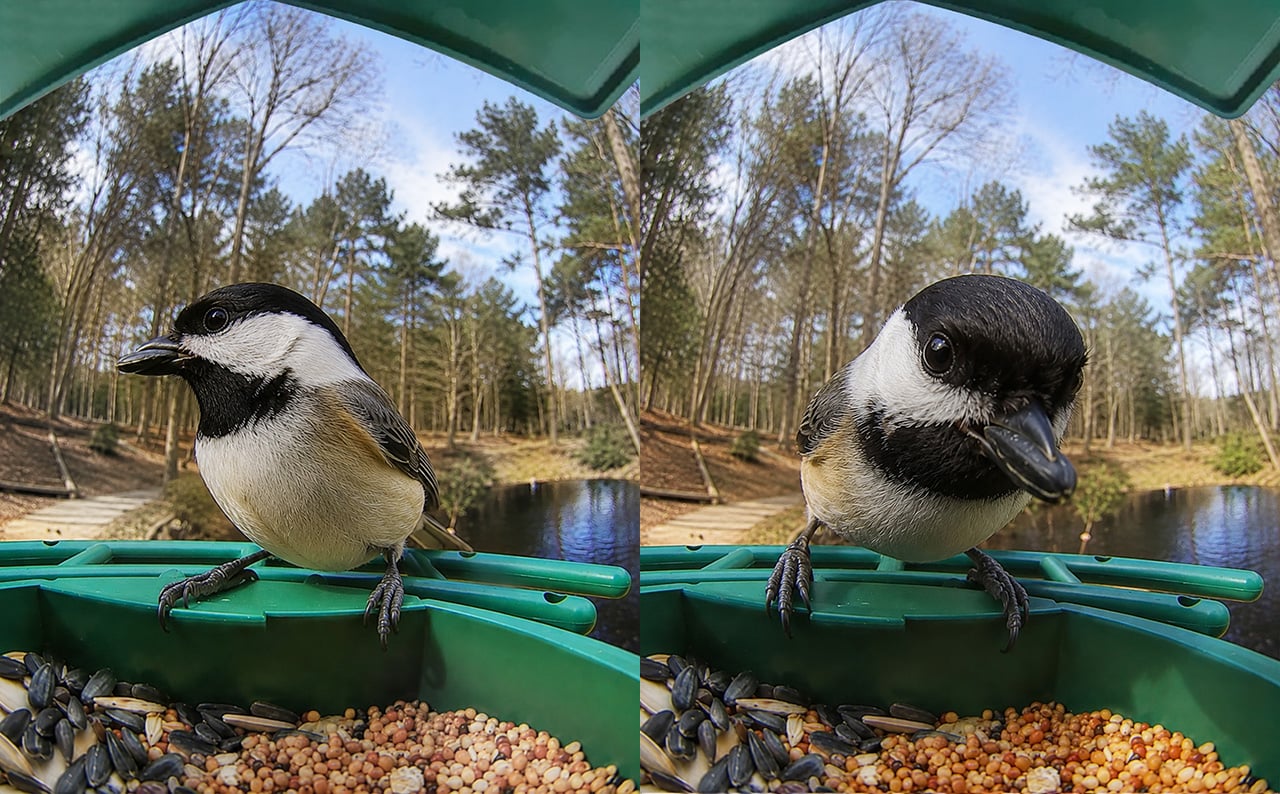
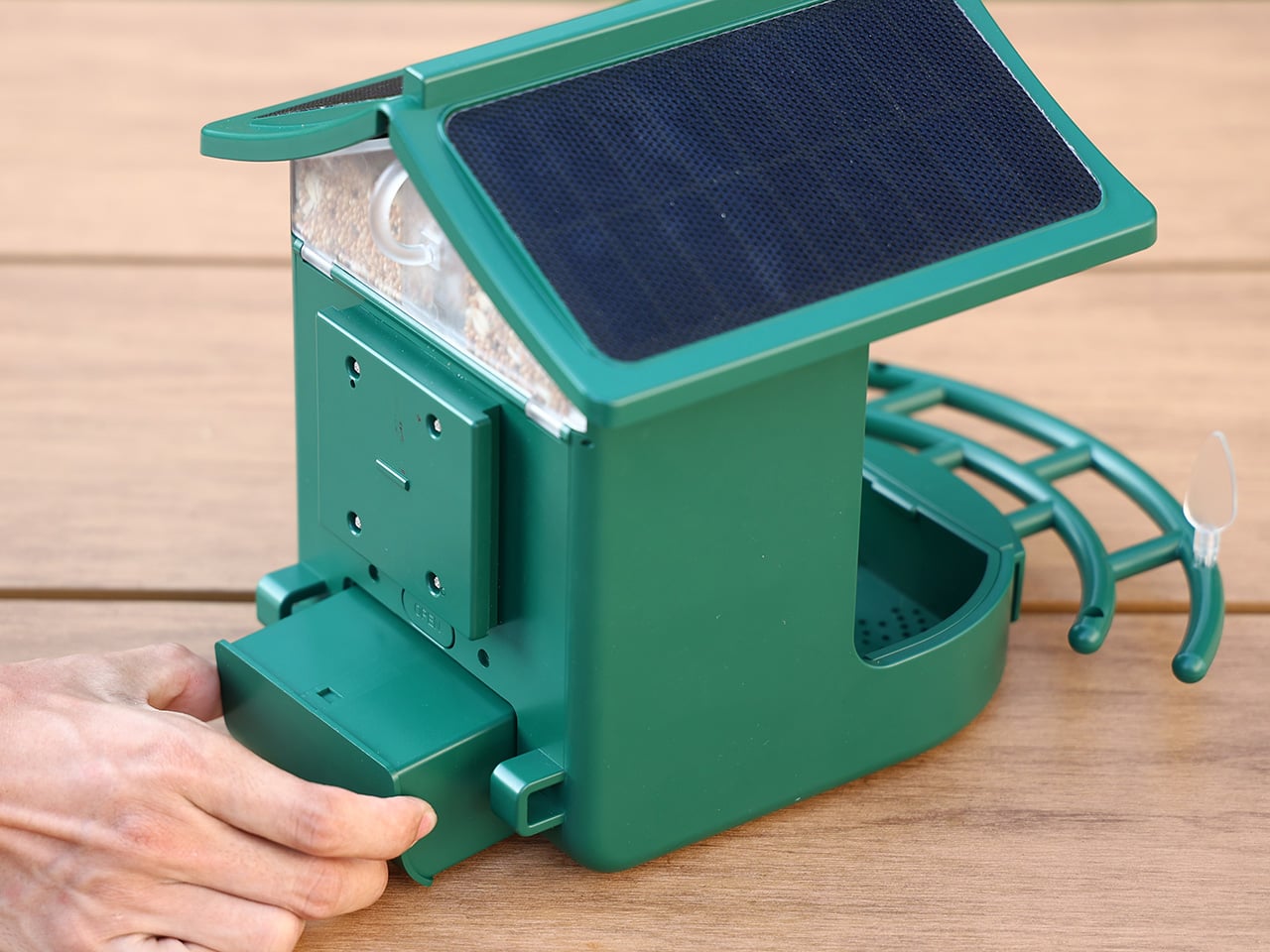
BirdVue’s forest-green birdhouse shell is the most deliberate design decision on the FEED 1, and it reads very differently from anything else in this category. Most competing products look like outdoor security cameras that somehow acquired a seed tray, with angular plastic bodies and an aesthetic that screams “technology that ended up near birds.” The FEED 1 uses a pitched roof silhouette with dual solar panels flush across the surface, a wide perch tray at the base, and the camera lens centered below the roofline like a front window. At 7.8 by 7.9 by 8.8 inches and 3.8 lbs, it is proportioned like a real birdhouse, and the dark green finish reads as garden furniture rather than gadgetry. It is the kind of aesthetic effort that takes real work to pull off in a product this technically loaded.
Species identification is the floor, not the ceiling, of what the FEED 1’s AI actually does. It identifies species in real time and flags rare visitors separately from regulars, sending push notifications when something unusual shows up. The app tracks behavioral patterns, recording what each bird does at the feeder: feeding, spreading their wings, even fighting for perch space. It monitors signs of illness in visiting birds, which is genuinely the last feature I expected to find in a bird feeder spec sheet but makes complete sense once you think about it. A built-in AI Bird Story Engine assembles the best footage into curated highlight reels, auto-removes low-quality captures, and organizes everything into a searchable bird journal with seasonal trend tracking.
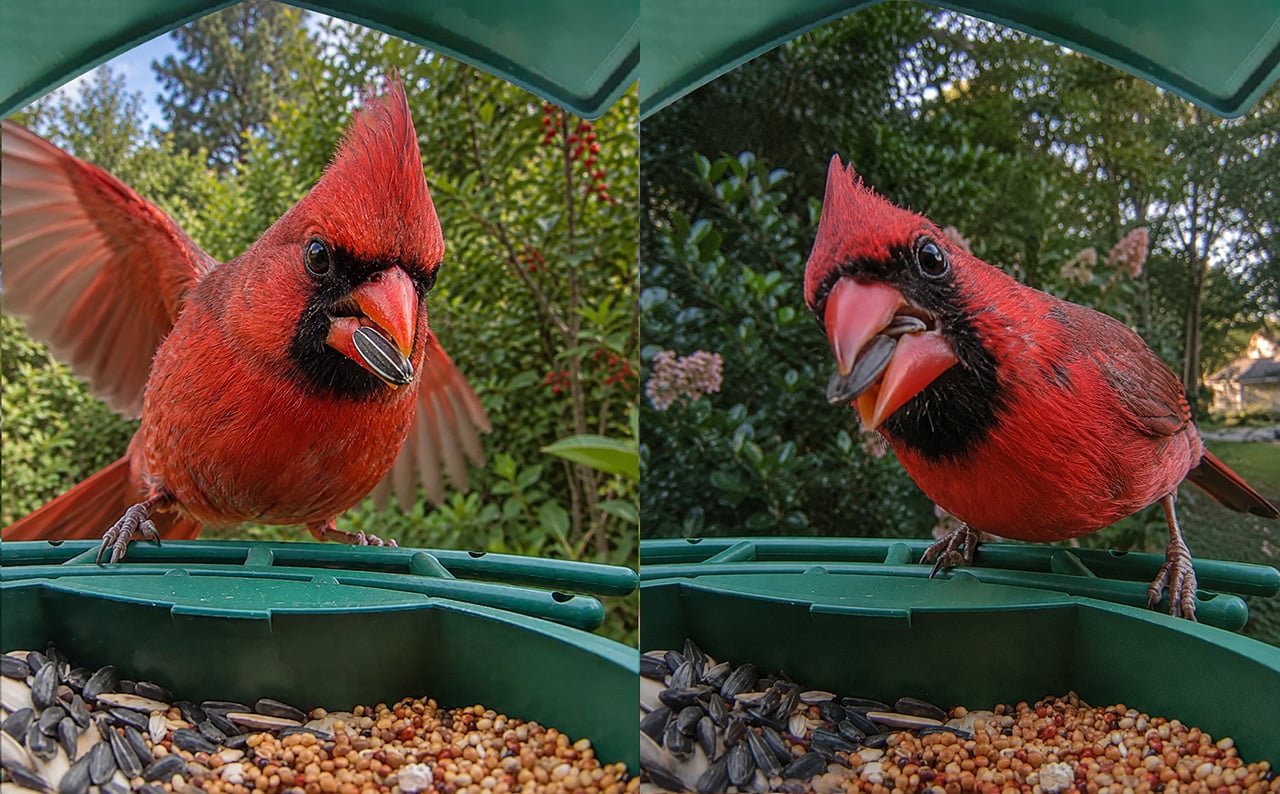
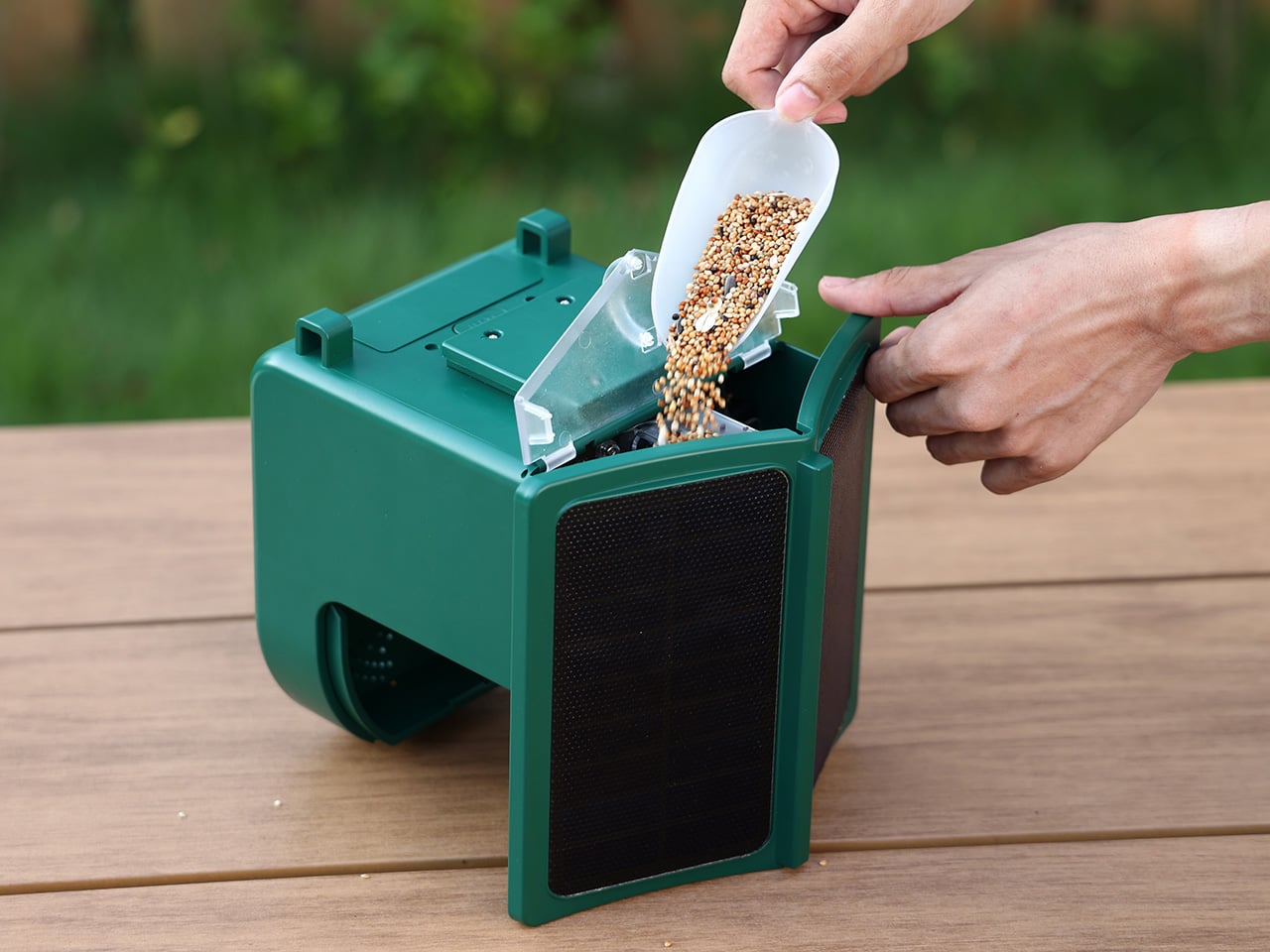
The dual-bin enclosed feeding system keeps seed fresh, prevents mold, and lets you manage the feeder entirely from your phone. Each bin is monitored independently, with the AI detecting food levels in real time and alerting you when a chamber runs low. You can trigger a manual dispense remotely with one tap, or let auto-feed mode release seed based on detected bird activity. The enclosed design solves a hygiene problem that most smart feeders simply ignore: open trays collect moisture and develop mold faster than most owners realize, which affects bird health and return frequency. A community feature in the app also lets you browse highlights and activity from nearby BirdVue feeders, which keeps things interesting on the days your own birds are apparently somewhere else.
Dual 3W solar panels across the pitched roof charge the 5200mAh internal battery, with an optional 10,400mAh removable backup battery available for extended cloudy stretches or harsher winters. IP65 weatherproofing and an operating range of -4°F to 140°F (-20°C to 60°C) cover nearly every outdoor environment. GPS tracking lets you locate the feeder in the app at any time, which is particularly useful once the unit is strapped to a tree well away from the house. The 3MP camera shoots 2K video at 1440p with both local and cloud storage options, and seed capacity sits at roughly 2.3 cups across the two bins. BirdVue also produces the TRAIL 5, a companion trail camera rated IP67, for field monitoring that extends beyond the feeder setup entirely.
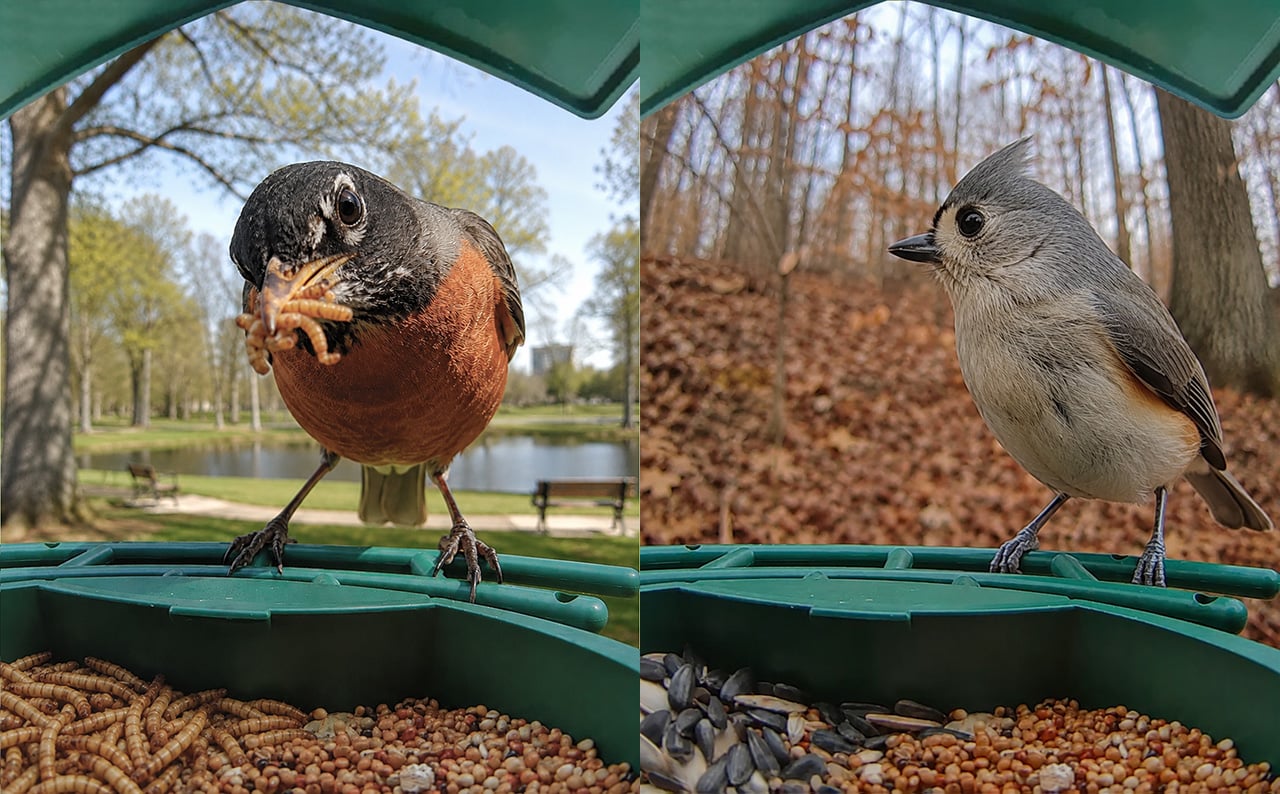
The FEED 1’s strongest case is made to anyone whose best bird activity consistently happens outside router range: rural property owners, birders with forested or lakeside land, nature photographers who want passive automated capture in locations they cannot babysit. The radar trigger, behavioral AI, remote feeding, and off-grid power system also give it a meaningful feature lead over Wi-Fi-only competitors even for straightforward backyard use. BirdVue also produces a companion trail camera, the TRAIL 5, rated IP67, for field monitoring that extends beyond the feeder setup entirely.
The Birdvue FEED 1 is available starting at $179, discounted from its $299 MSRP. The device ships globally in November 2026.
Click Here to Buy Now: $179 $299 (40% off). Hurry, only 62/100 left!