Most children’s furniture falls into one of two camps: purely practical pieces that look like they belong in a hospital ward, or aggressively themed designs slathered in cartoon characters that parents quietly regret within a year. Gaudutė Žilytė, a product designer based in Vilnius, Lithuania, had no patience for either when she created the SAULUTĖ bed, and the result is the kind of children’s furniture that adults actually covet.
The name nods to Saulė, the Baltic sun goddess and one of the most enduring symbols in Lithuanian folk culture, representing life, warmth, and protection. It’s an apt reference for a bed designed with a child’s comfort and safety at its center, though what makes SAULUTĖ remarkable is that it earns that reference without leaning on it. The design does the heavy lifting.
Designer: Gaudutė Žilytė
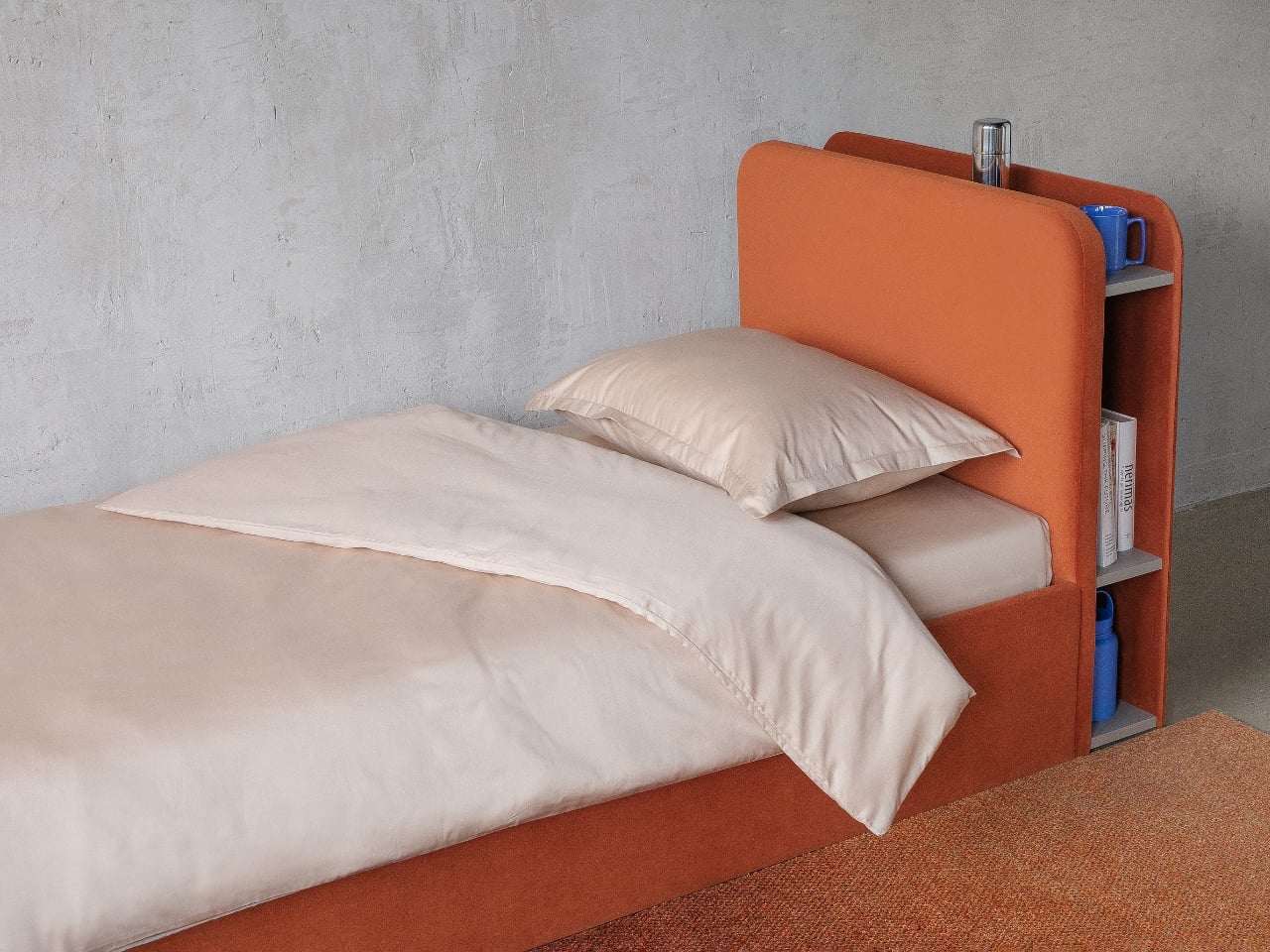
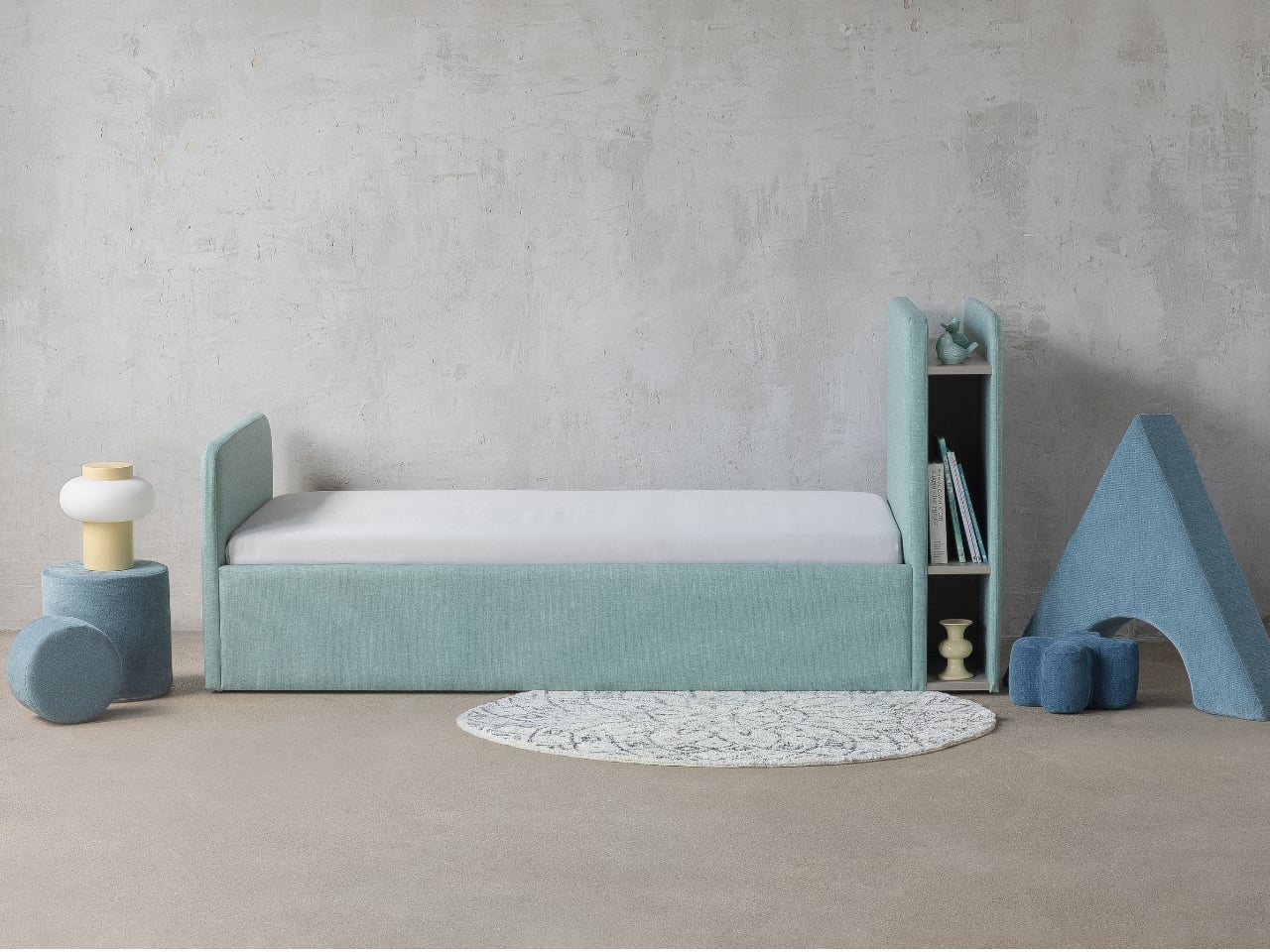
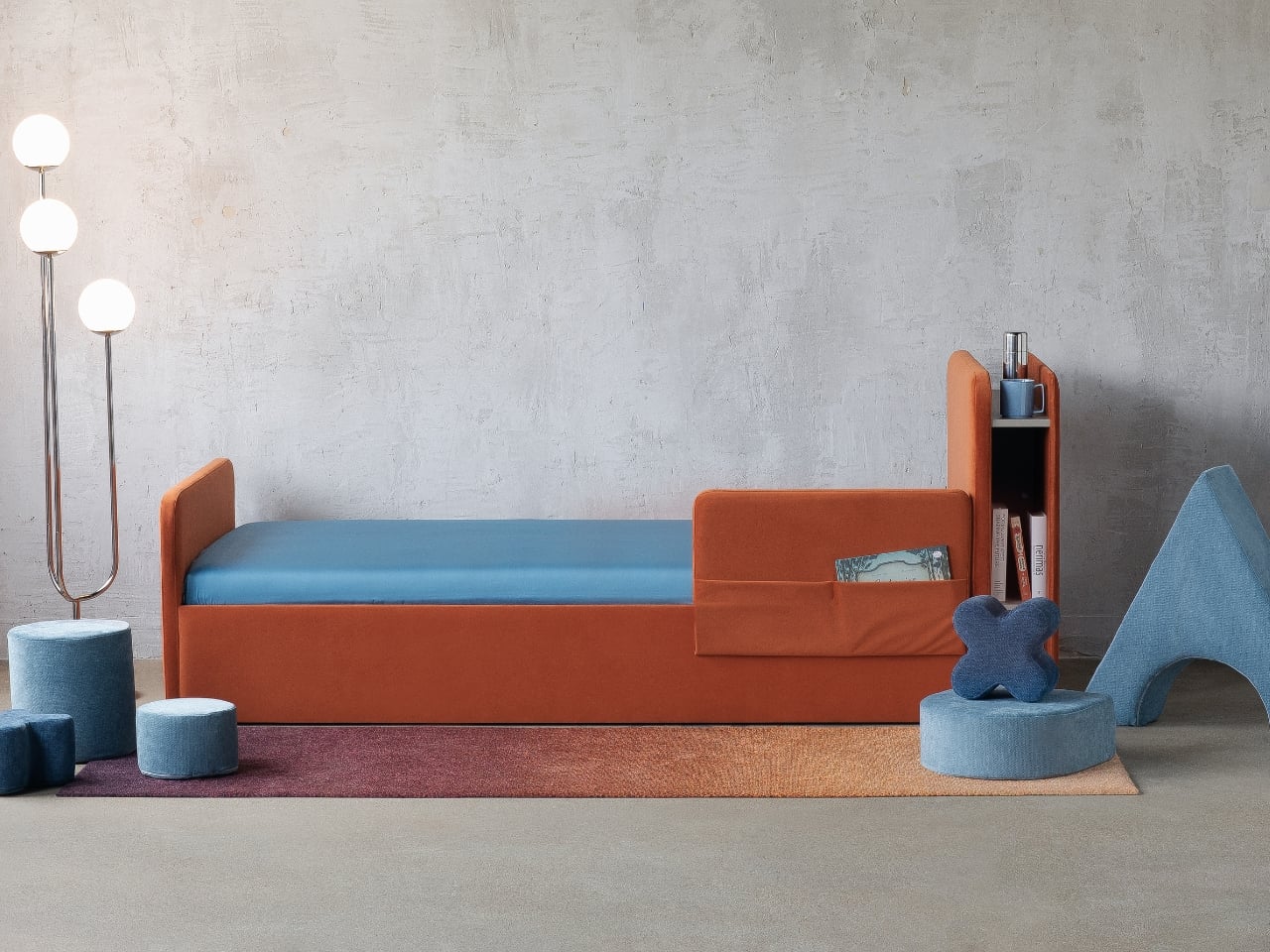
The first thing you notice is the color. A rich terracotta orange upholstery wraps the entire frame, paired with a cooler blue mattress surface that creates a contrast that feels deliberately considered rather than randomly cheerful. It reads warm without being sugary. The palette is one of those design decisions that ages well, which matters a lot when you’re buying furniture for a child who will spend most of a decade in the same room.
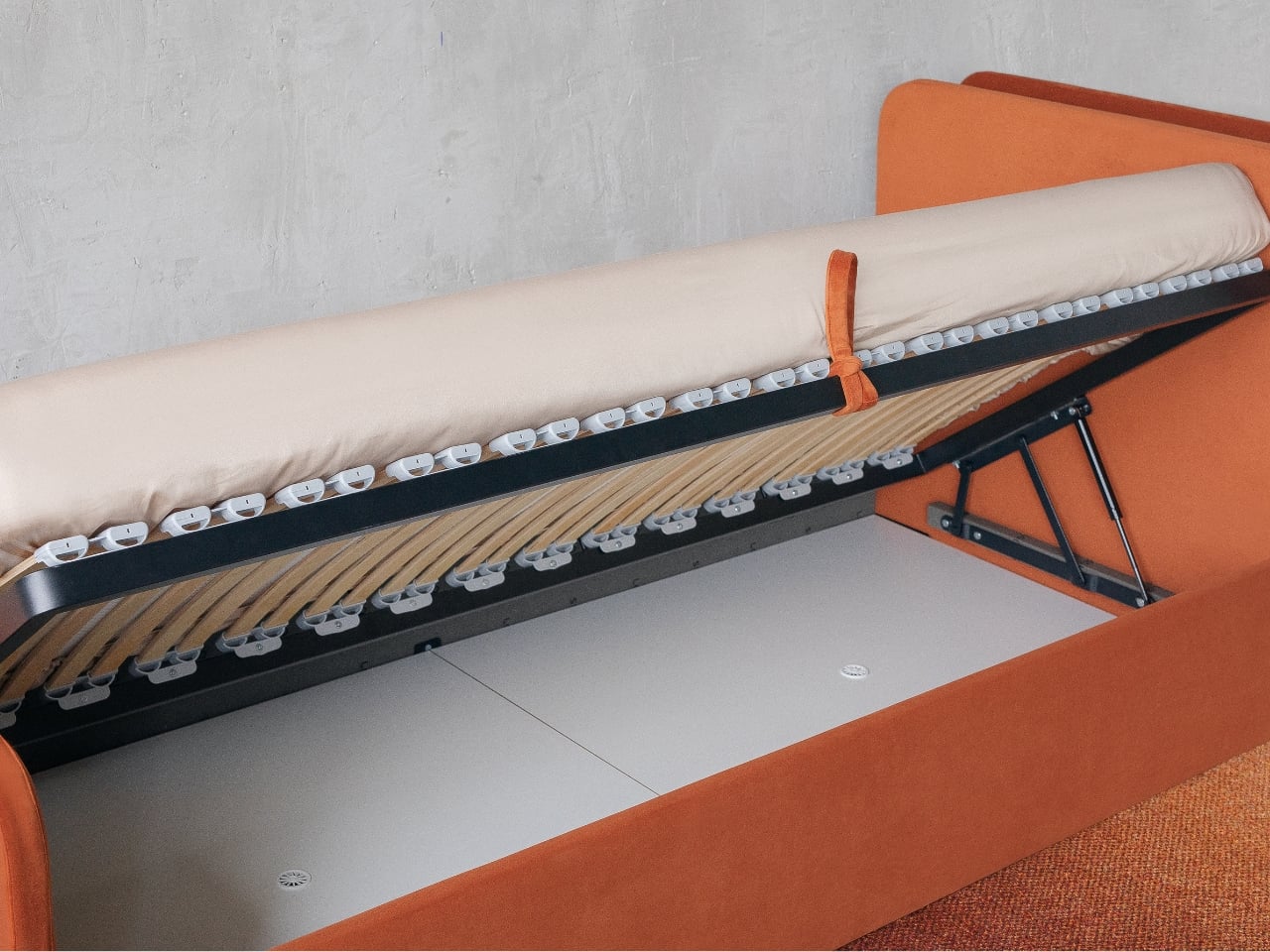
The silhouette is low and grounded, almost daybed-like in its proportions, giving the piece a visual lightness that typical beds don’t have. The overall form is soft and rounded at the edges, a shape that reads as playful without resorting to novelty. Žilytė describes the design as playful and minimalist, and that combination is harder to pull off than it sounds. Minimalism has a tendency to go cold. Playfulness has a tendency to go chaotic. SAULUTĖ sits neatly at the intersection of both without tipping into either.
The real intelligence, though, is in the functionality. A built-in shelf sits integrated into the headboard, designed to hold books, a nightlight, or whatever small objects make a child’s bedtime feel like theirs. This is not a decorative gesture. It replaces the need for a separate nightstand in rooms where space is almost always limited, and it keeps the essentials within arm’s reach without cluttering the floor. In a child’s room, that kind of spatial thinking matters enormously.
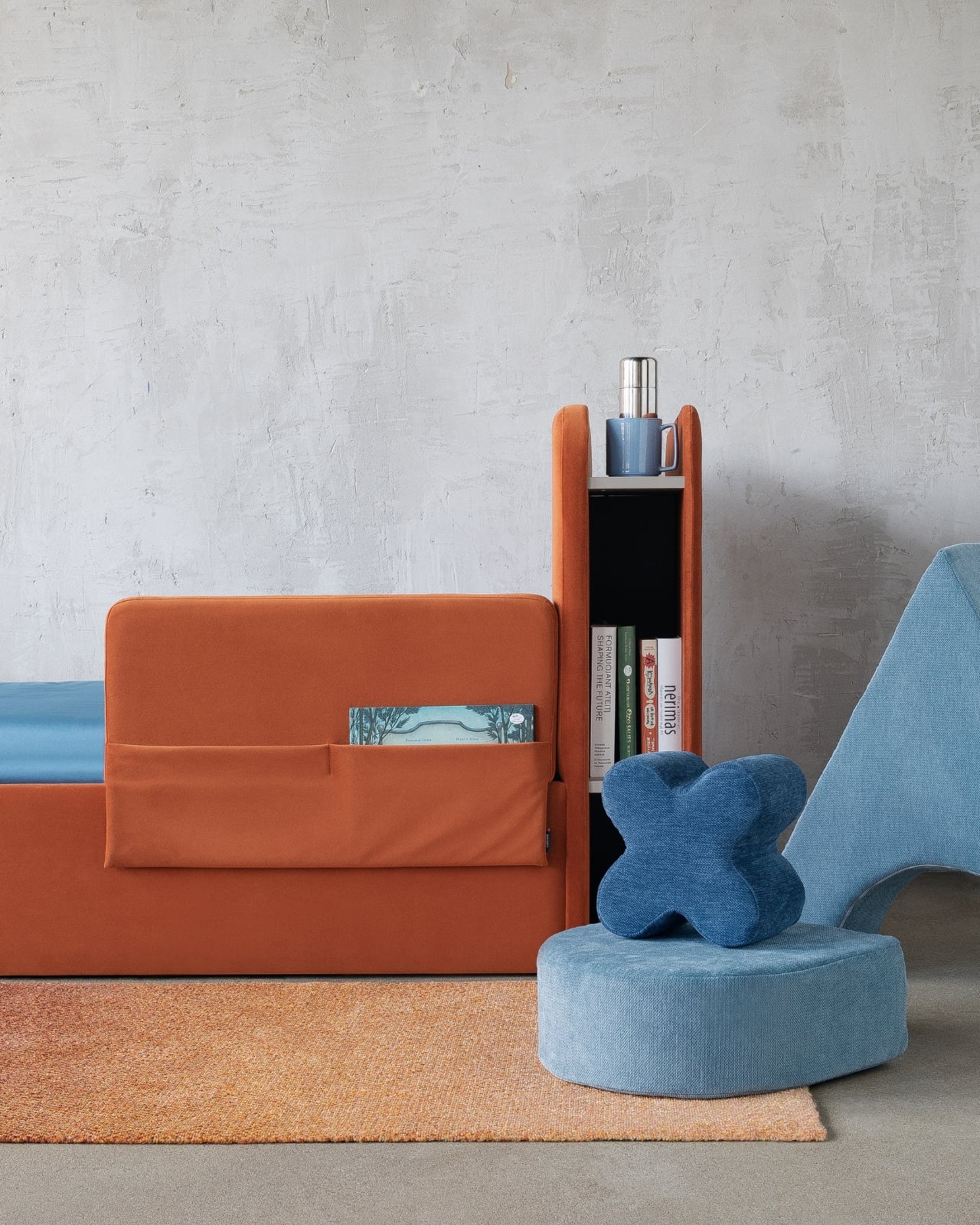
Then there’s the protective side wall, a guardrail built into the design that keeps younger children safe during sleep without looking institutional or industrial. A lot of safety additions to children’s furniture read as afterthoughts, bolted-on solutions that disrupt the visual integrity of the piece. Here, the guardrail is absorbed into the overall form. It looks like it belongs. It looks like it was always supposed to be there.
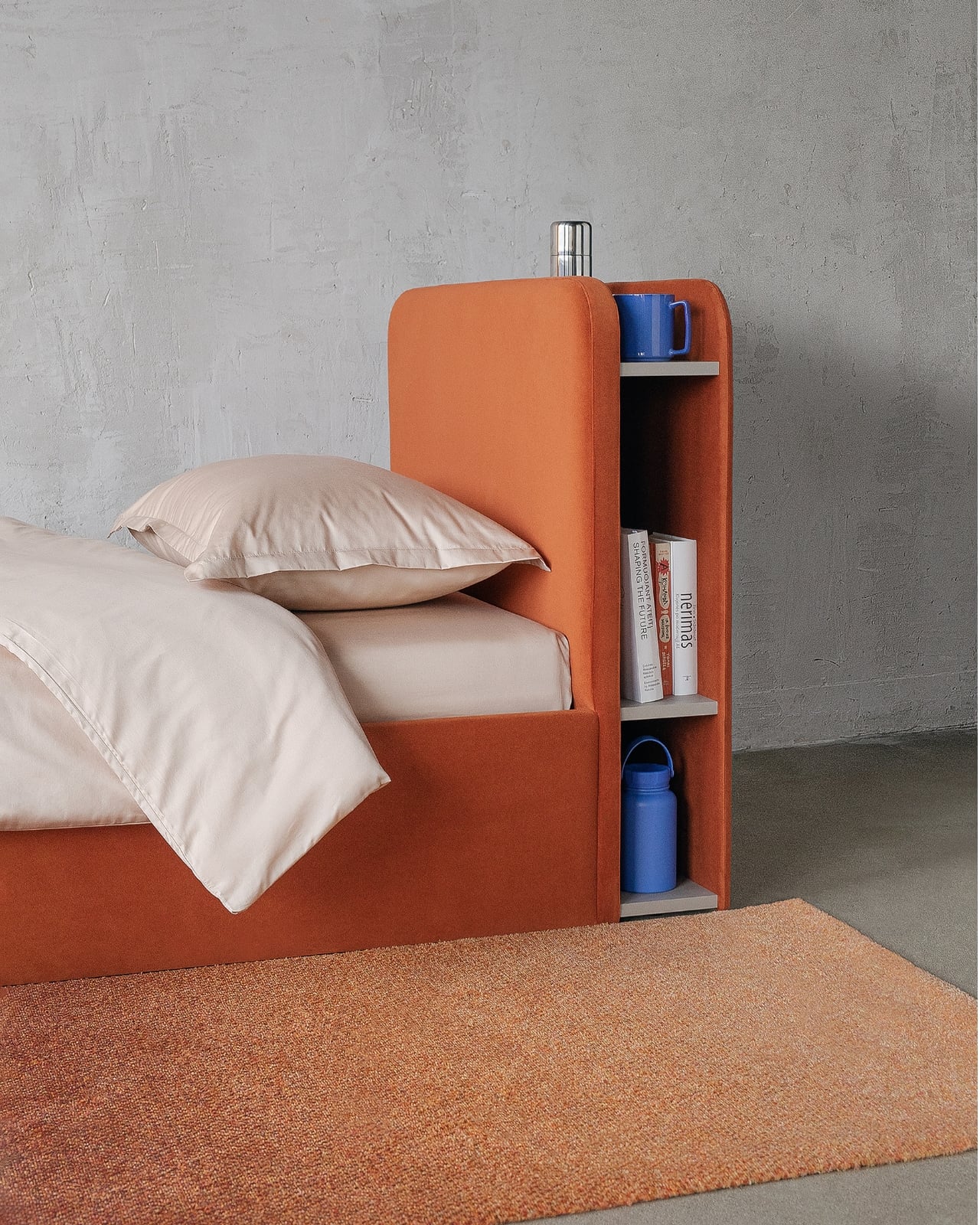
What Žilytė has understood, and what a surprising number of furniture designers miss when it comes to children’s spaces, is that function and form are not competing priorities. The shelf is functional, yes, but it also breaks up the headboard in a way that makes the overall silhouette more interesting. The protective wall adds safety, but it also frames the sleeping area, giving the bed a sense of enclosure that children intuitively find comforting. Every practical decision contributes to the design rather than fighting against it.
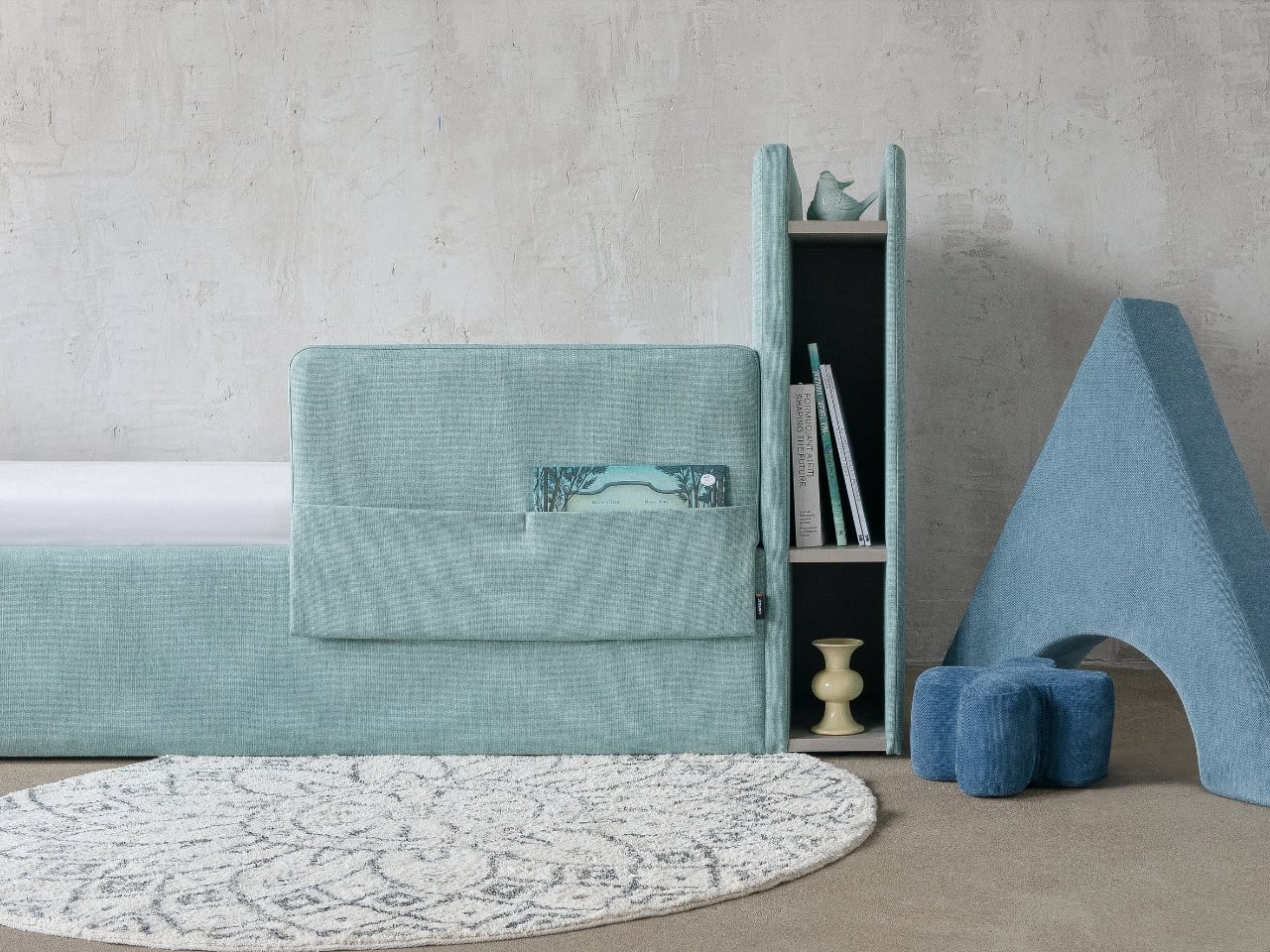
SAULUTĖ is available in two sizes, which means it works for both younger children and teenagers, a lifespan that most children’s beds never manage to cover. The design is deliberately neutral enough to grow with the child, which is a courtesy to both the family budget and the environment. Furniture that lasts longer is, by default, furniture that performs better.
Few things in furniture design are as genuinely satisfying as a piece that has clearly been thought through from every angle. Not just aesthetically, not just practically, but both at once. SAULUTĖ manages to be a beautiful object that also happens to serve a child’s actual daily life. That’s not a low bar. In children’s furniture, it’s almost revolutionary.