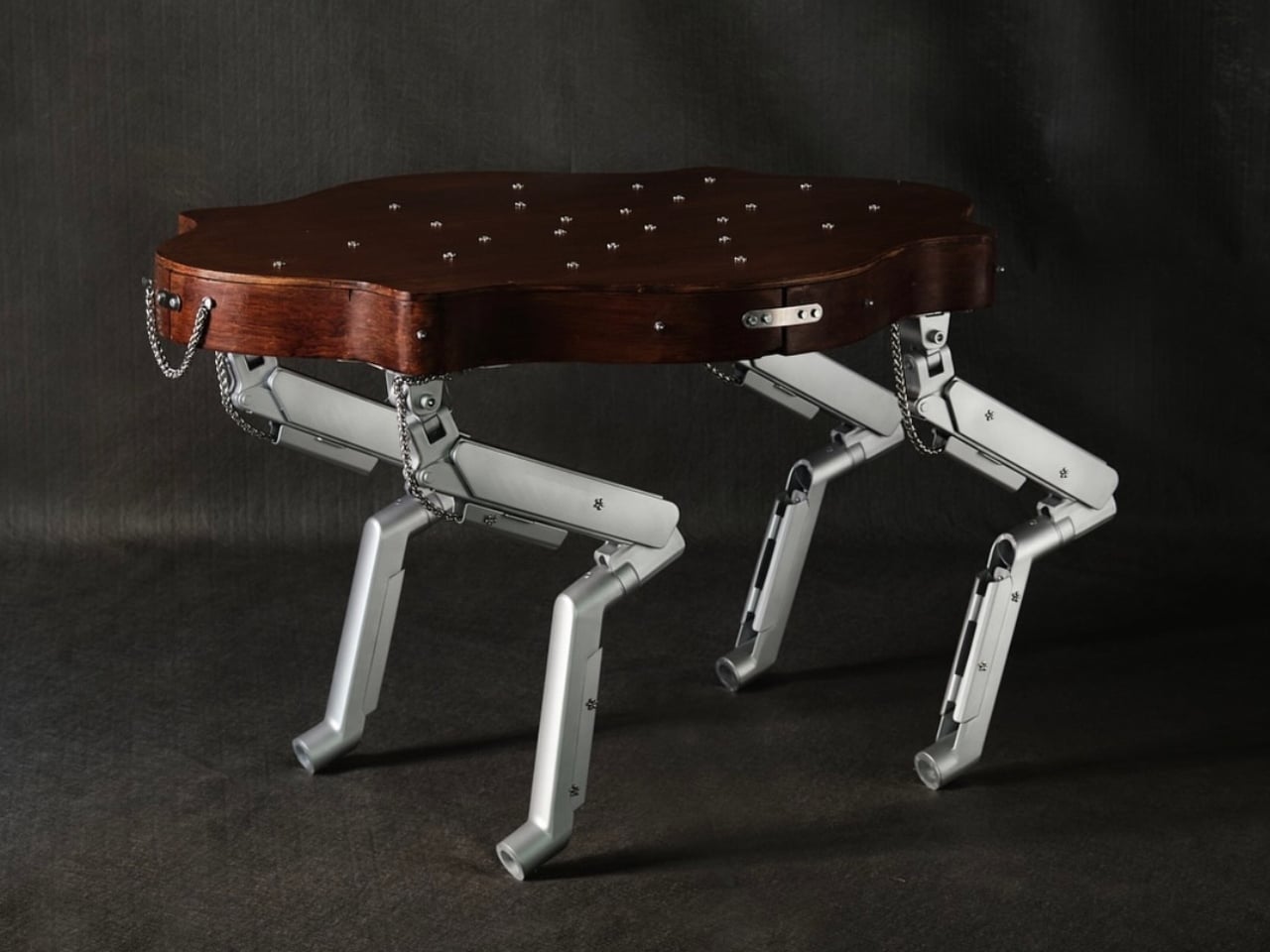
Most furniture sits quietly in a room and asks nothing of you. Alexandre Veillon’s latest piece does the opposite. It crouches. It stares. It makes you feel like you walked into someone’s living room and the coffee table is about to bark.
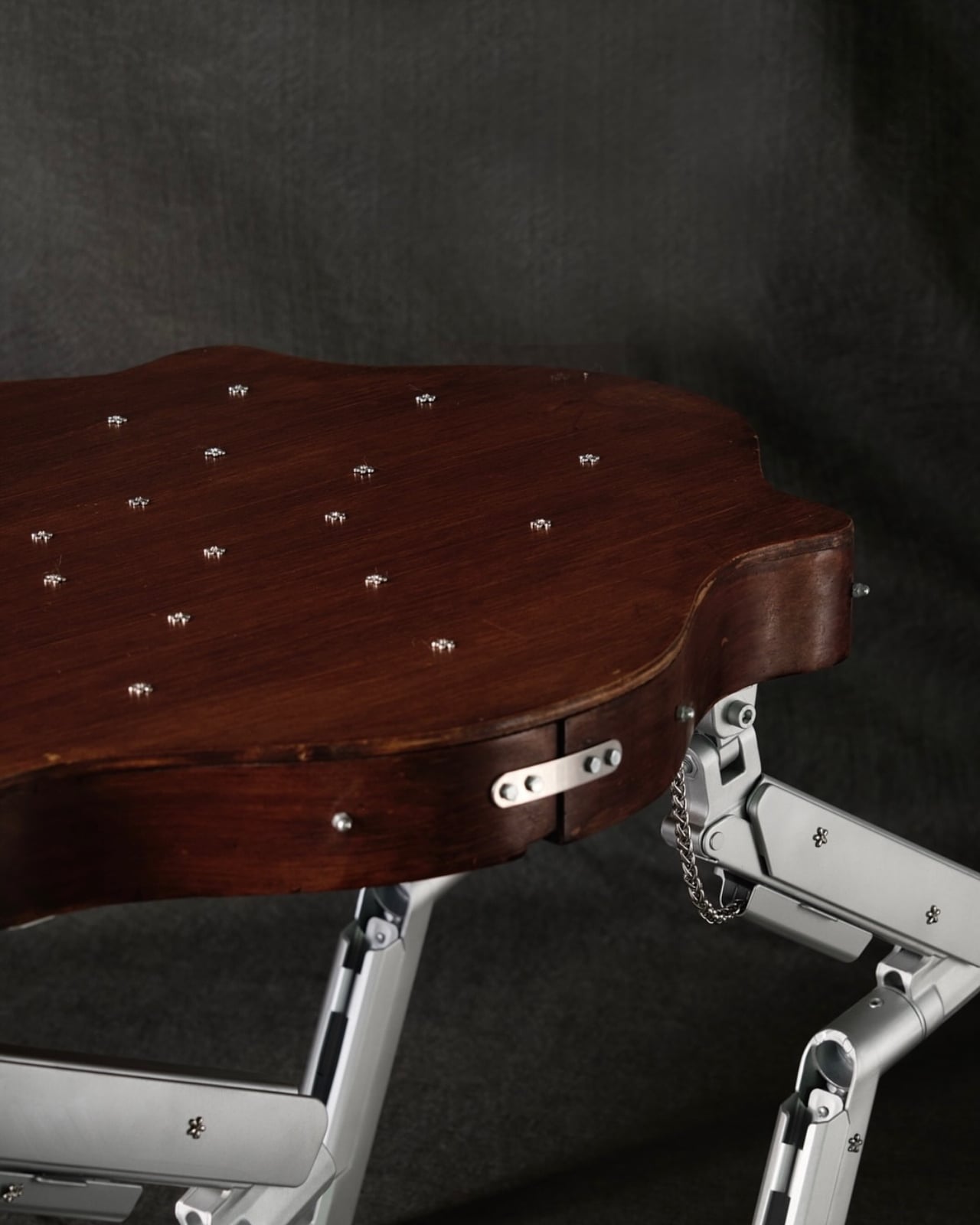
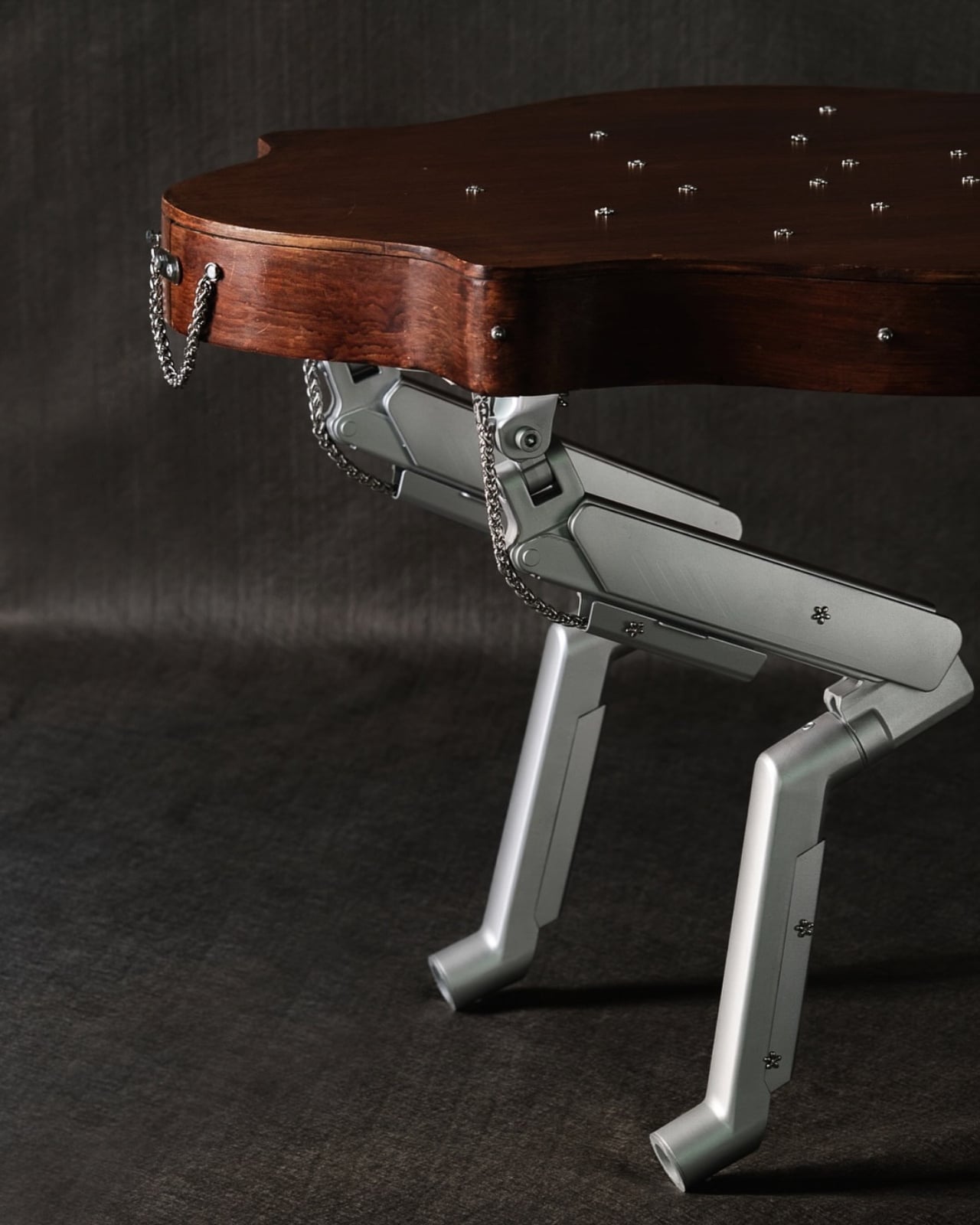
The piece is called Let the Dog Out, and it is exactly what it sounds like: a 19th-century coffee table reborn on four articulated robot legs salvaged from a computer monitor stand. The wooden top, dating back to the 1840s, is all warmth and grain and age, the kind of surface that absorbs decades of living and doesn’t apologize for it. The legs are cold aluminum, jointed and mechanical, like something that crawled out of a Boston Dynamics prototype. Draped between the body and the legs are delicate silver chains that read unmistakably as a collar. It shouldn’t work. It absolutely works.
Designer: Alexandre Veillon
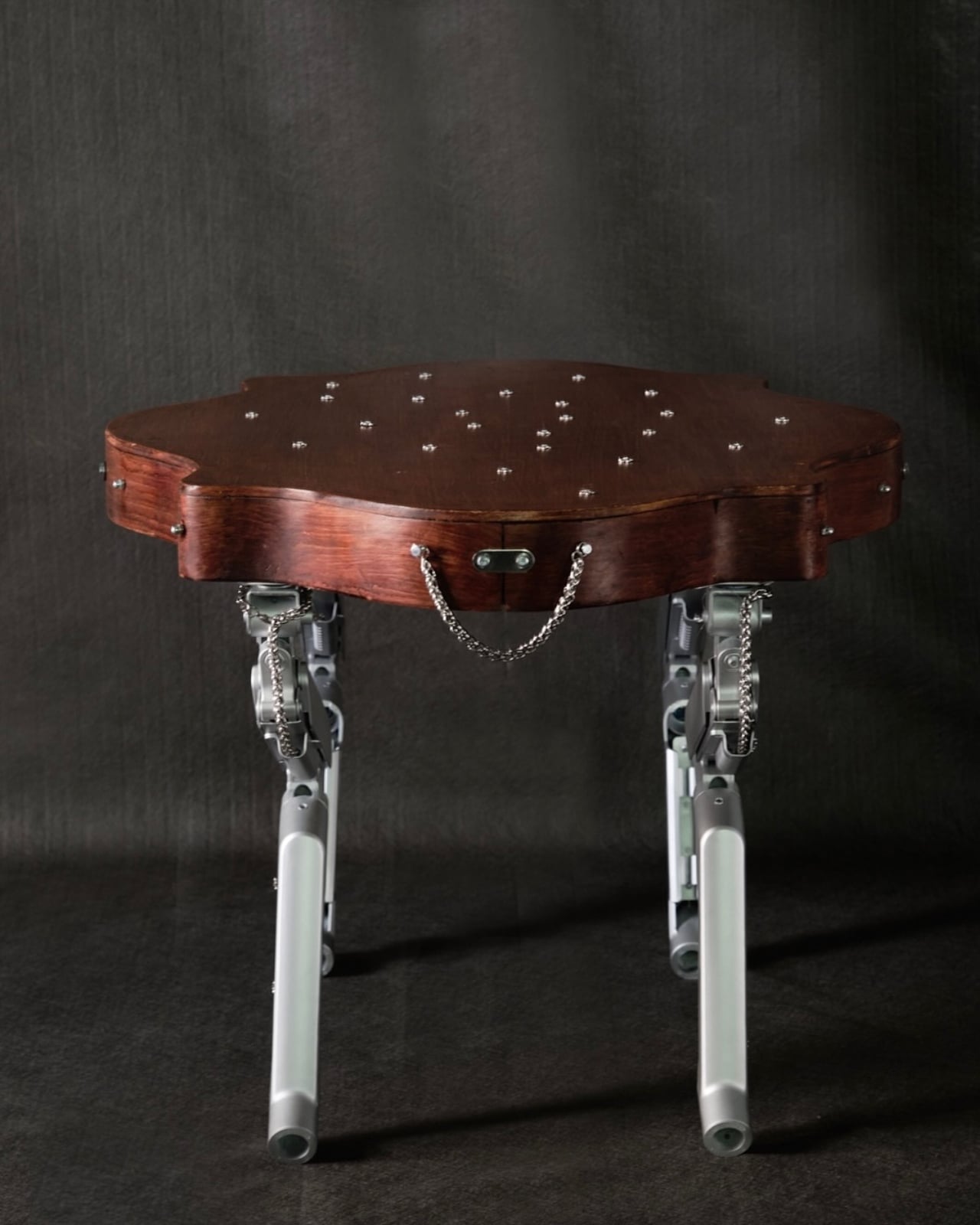
Veillon describes his practice as “bringing together two eras that were never meant to meet,” and that tension is precisely the point. The antique top carries the weight of domestic history, the kind of object that sat in parlors while people wrote letters by candlelight. The robotic legs carry the anxiety of the present, a moment when machines are being built to walk like animals, to patrol warehouses, to navigate the world on four limbs. Putting the two together doesn’t just make a conversation piece. It makes a statement about time, about obsolescence, and about what happens when old things refuse to stay still.
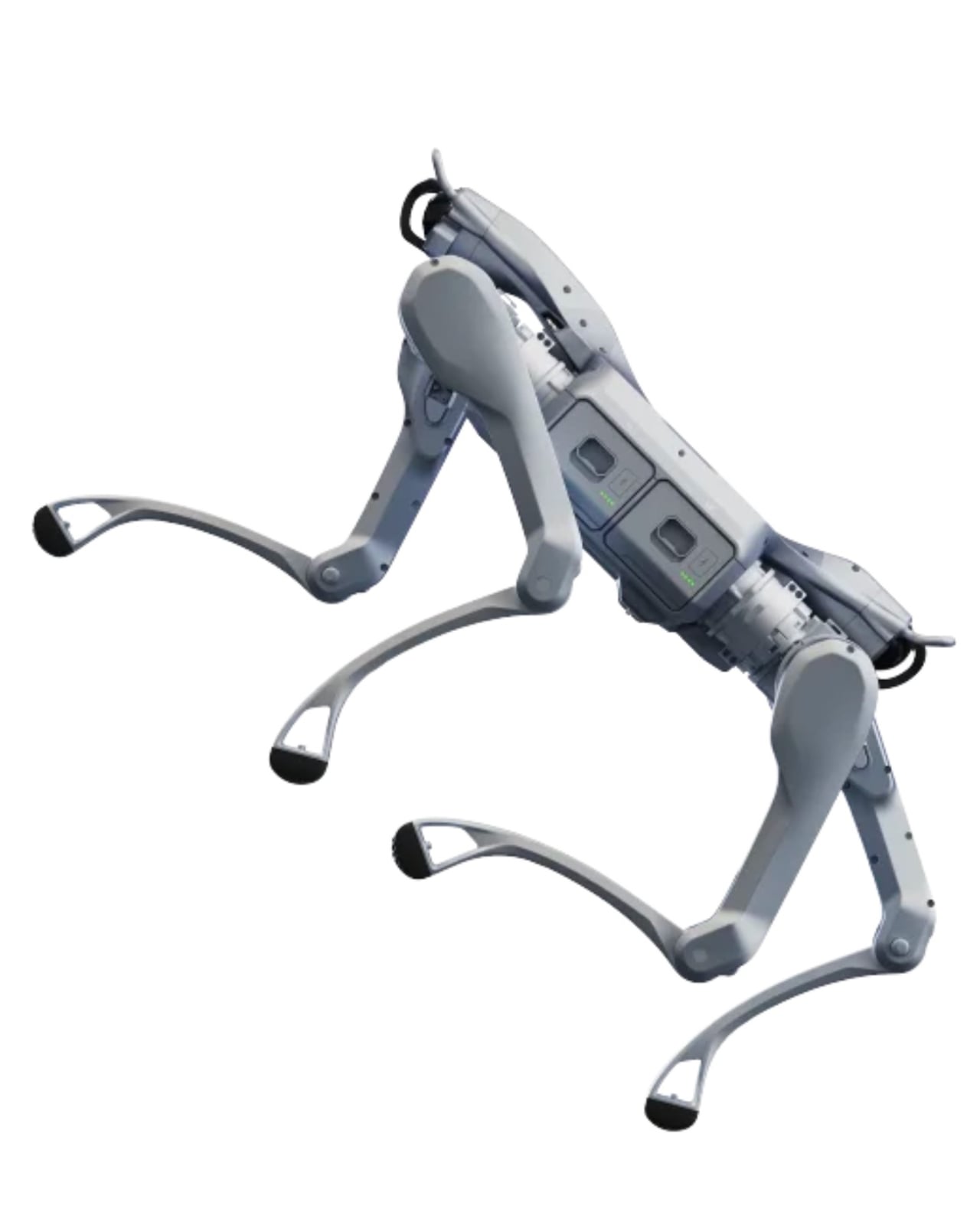
Veillon says the dog “emerged as the obvious choice,” describing it as “an instinctive, primal figure. A creature that seems poised to leap out of its own era.” That last line is doing a lot of heavy lifting, and I think it earns every bit of it. Because the choice of a dog isn’t arbitrary. Dogs have been beside humans for thousands of years, loyal and present through every era we’ve cycled through, from ancient hearths to Victorian parlors to whatever this current moment is supposed to be called. Pairing that symbolism with a piece of 1840s furniture feels intentional in a way that rewards you the longer you sit with it.
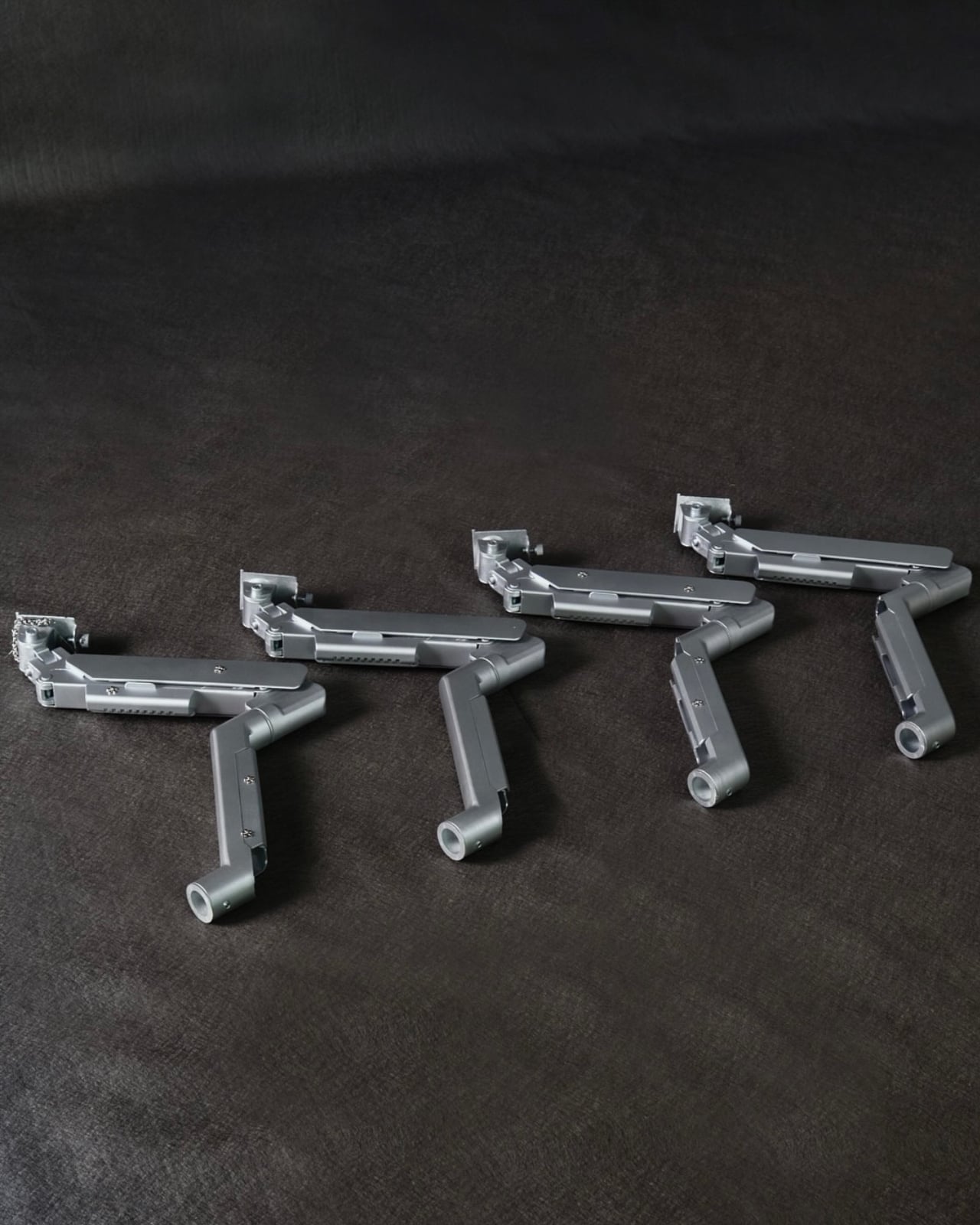
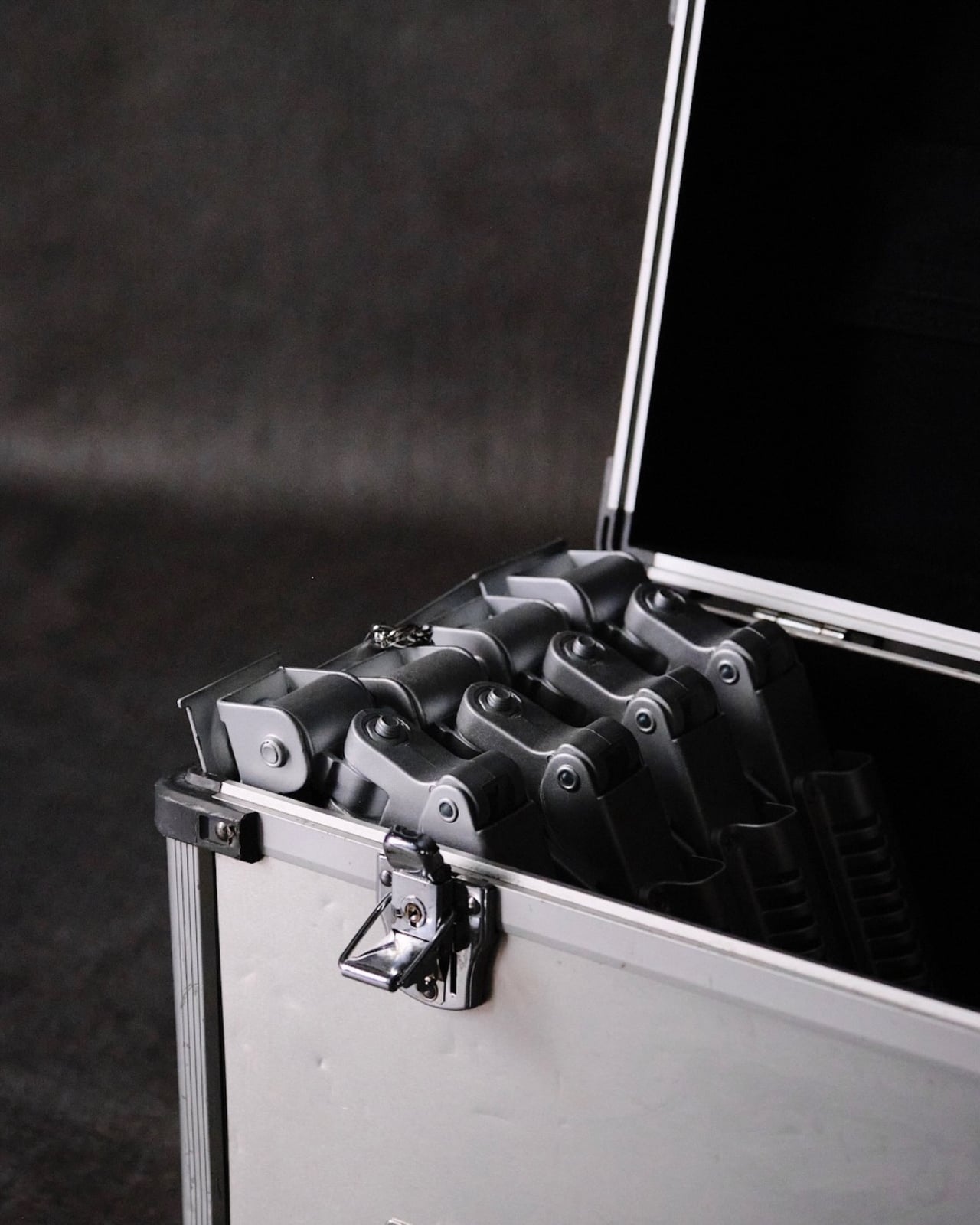
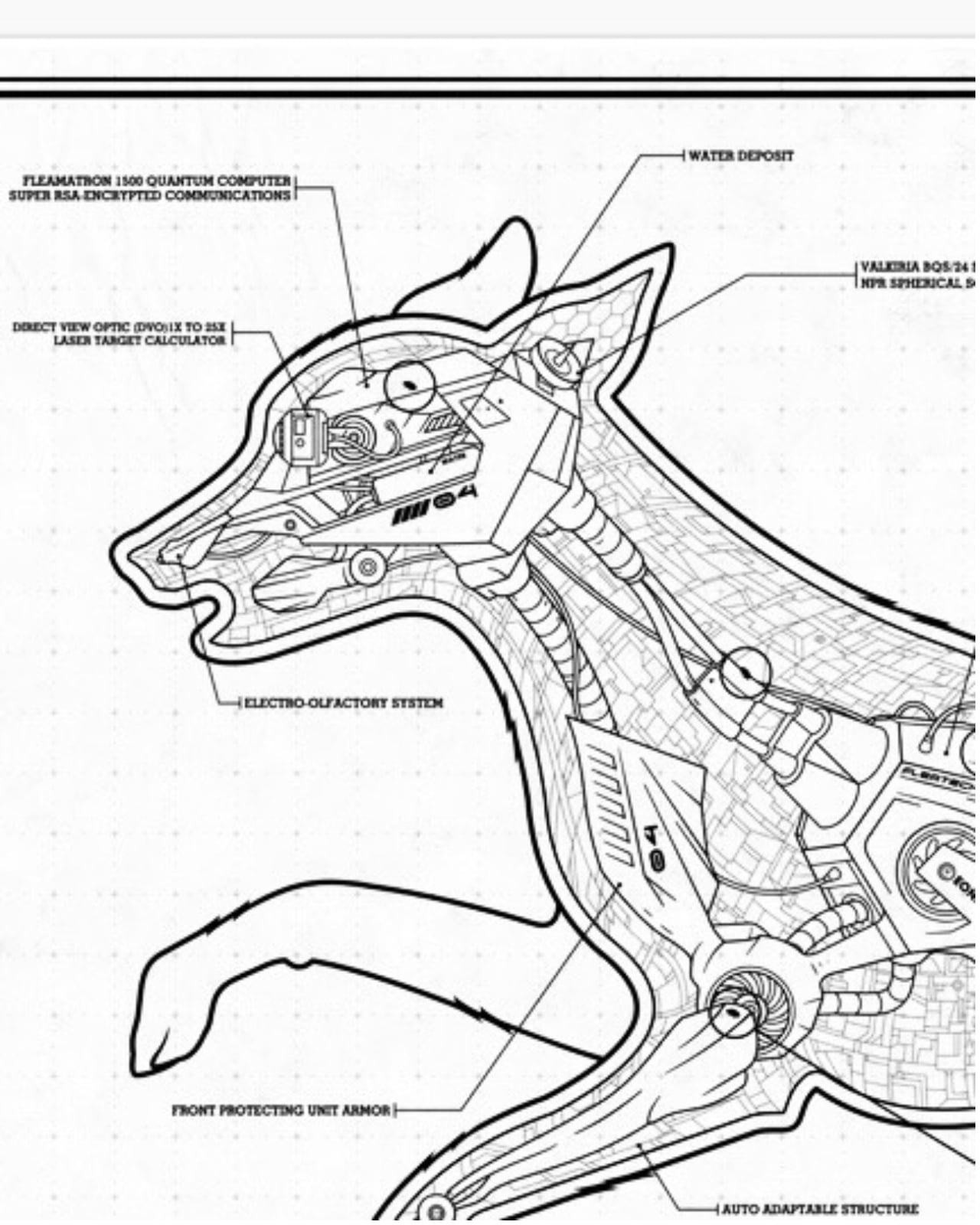
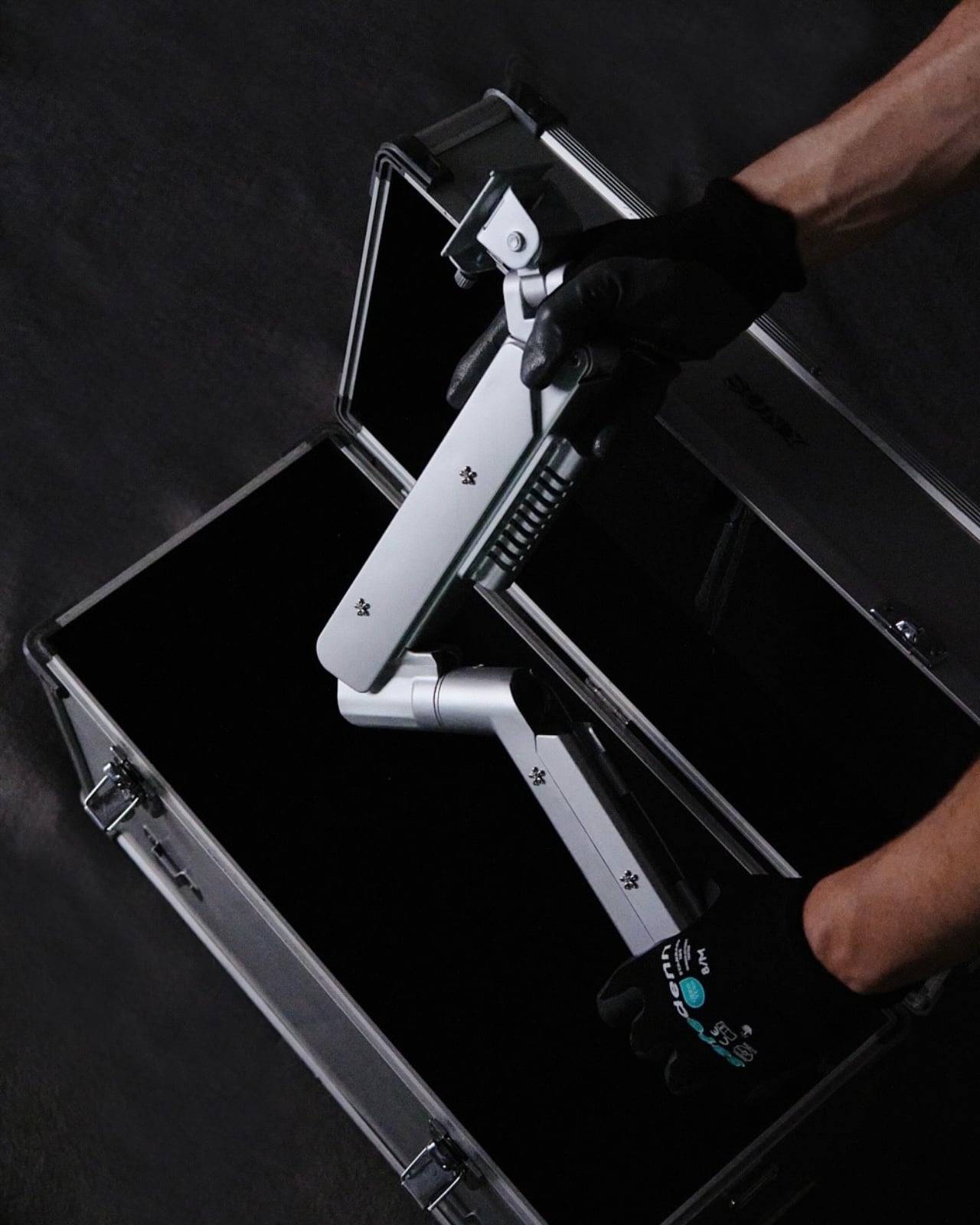
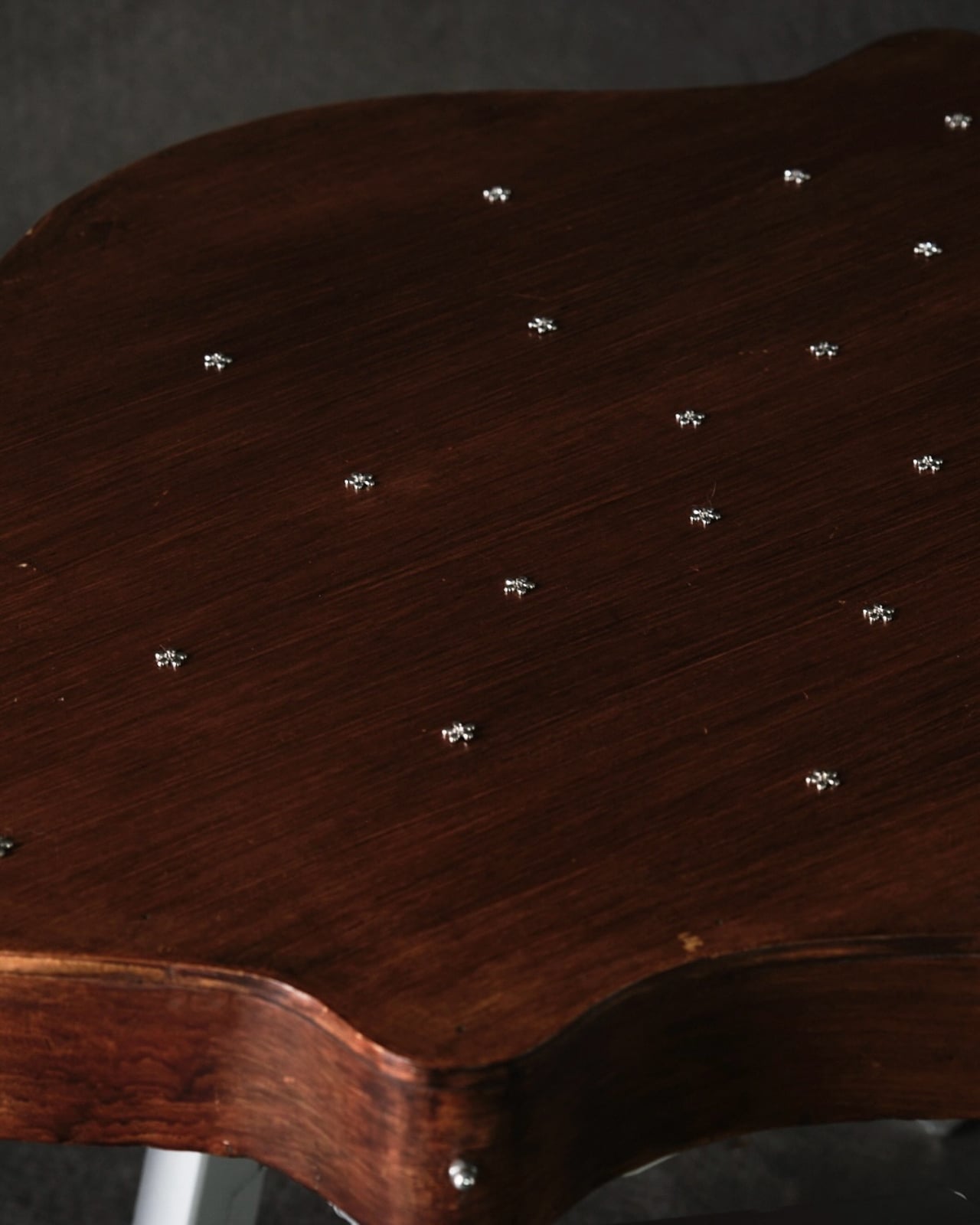
The images Veillon posted alongside the piece round out the vision: a detail shot of the wooden top studded with small silver bolts, a close-up of the jointed legs laid out on the floor like a dissected animal, a hand pulling a set of folded legs out of an aluminum equipment case as if loading up before a mission, and a technical illustration of the dog rendered in the style of a military schematic, complete with annotations like “Electro-Olfactory System” and “Fleamatron 1500 Quantum Computer.” It is deeply committed to the bit, and that commitment is what separates this from being a clever novelty. Veillon is building a world around this object, not just an object.
I’ll admit there is a part of me that wonders where the line is between design and sculpture. The piece is not functional in any traditional sense. You wouldn’t rest your coffee mug on it without a second thought, not with those legs positioned mid-crouch, not with that chain dangling like a leash. But maybe that’s the whole conversation Veillon wants to open. Furniture has always carried social meaning far beyond its utility. The ornate Victorian parlor table wasn’t just for setting things on. It was status, taste, cultural identity. By giving that same object animal instincts and mechanical limbs, Veillon is asking what happens when the decorative object stops pretending to be passive.
Designers working in this space, blending antique sourcing with contemporary material references, are becoming more visible, but few are doing it with this level of conceptual commitment. The decision to use computer stand arms rather than custom fabrications is exactly the right call. The off-the-shelf origin of those legs makes the collision more jarring, more honest, and somehow more interesting than any bespoke alternative would have been.
Whether you’d live with it is a completely different question. Whether you should be paying attention to Alexandre Veillon? That one’s easy.