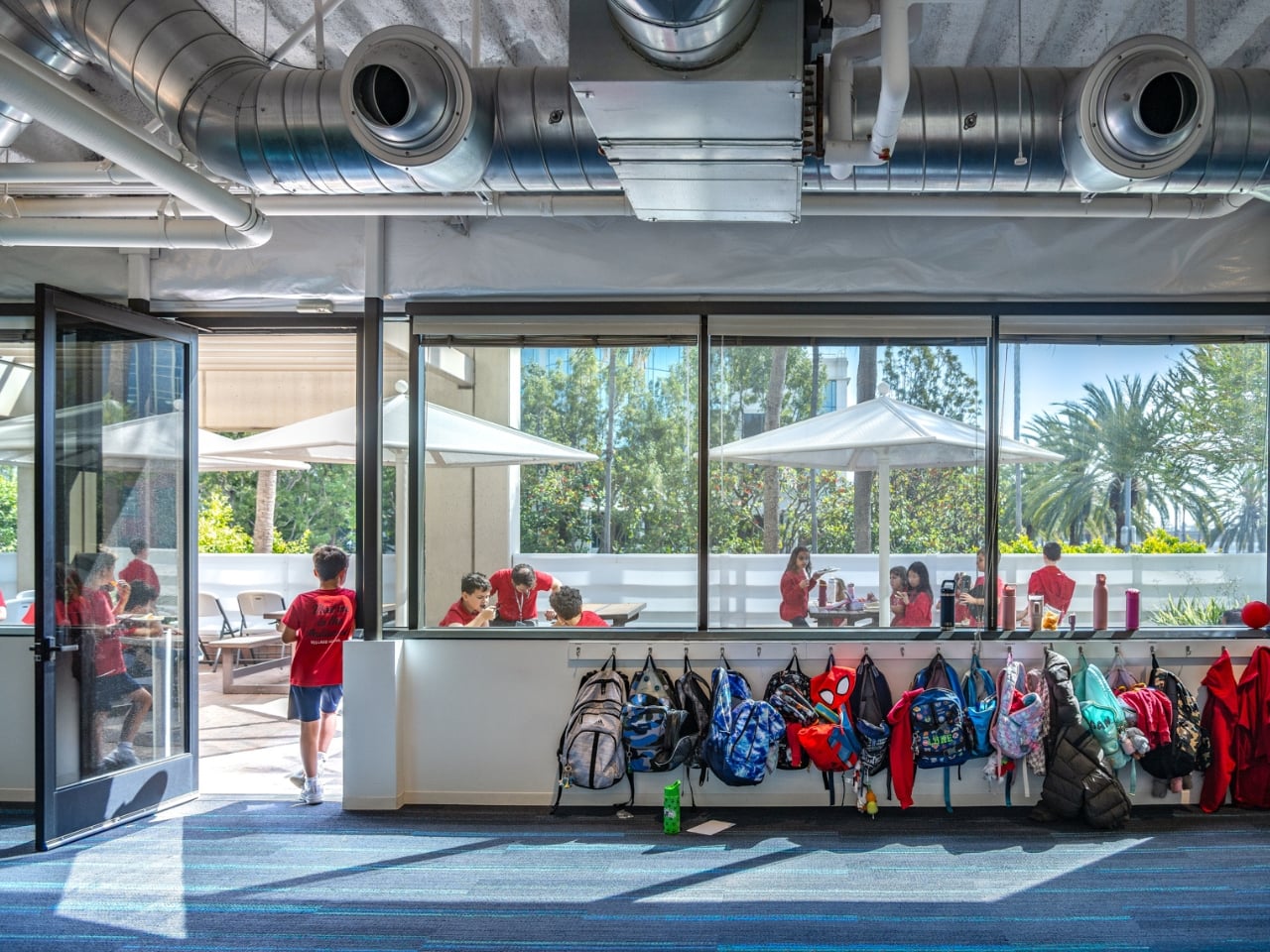
January 2025 was not a good month for Los Angeles. The Palisades Fire tore through neighborhoods with a speed and ferocity that left little room for preparation, and among the many losses it caused was the complete destruction of Village School’s campus, displacing nearly 300 kindergarten through sixth-grade students overnight. No campus. No warning. Just the sudden, devastating reality of having nowhere to go. What happened next is the kind of story that makes you genuinely believe design can do something meaningful beyond aesthetics. Not in an abstract, feel-good way, but practically, urgently, and with real consequence.
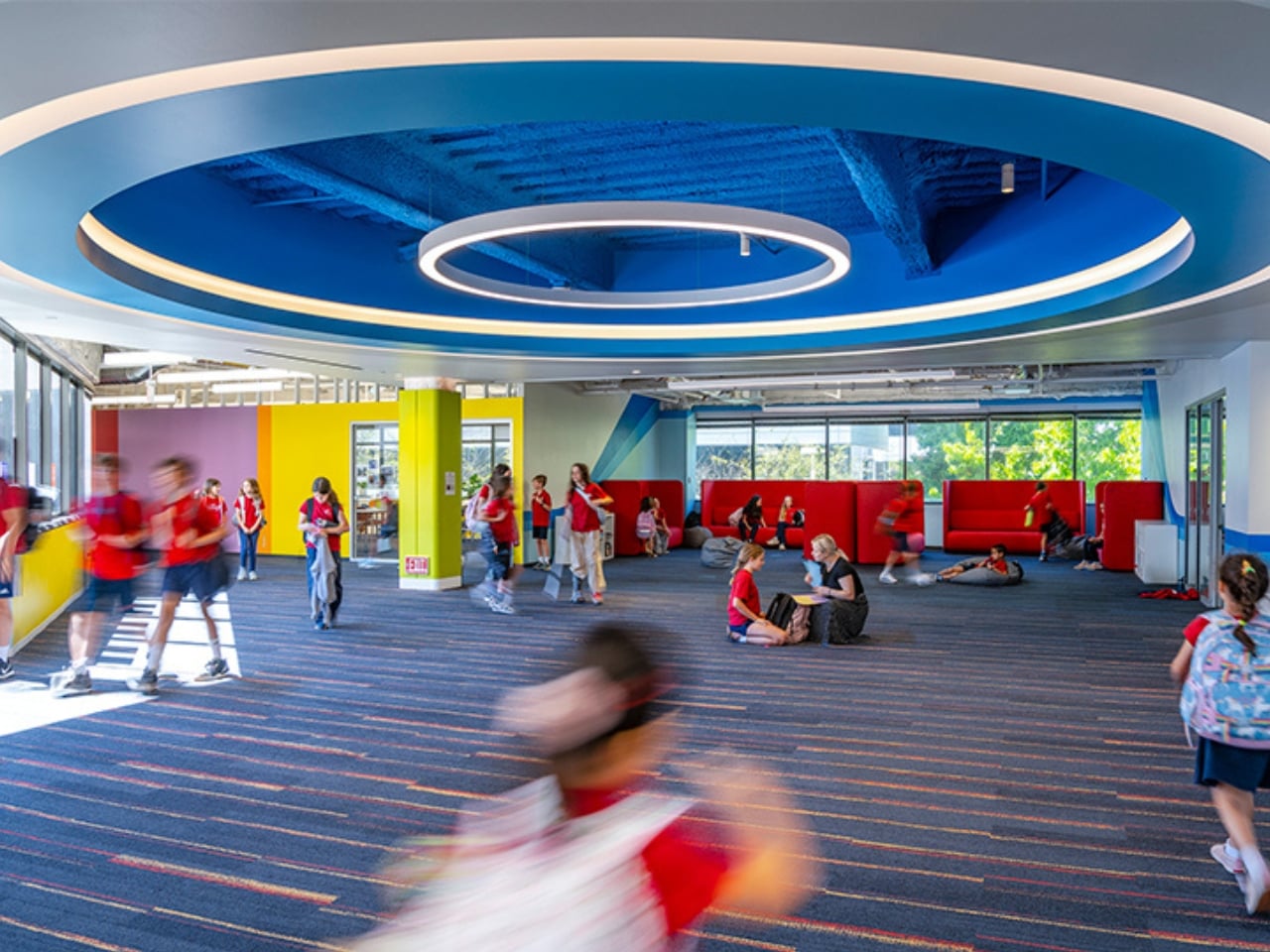
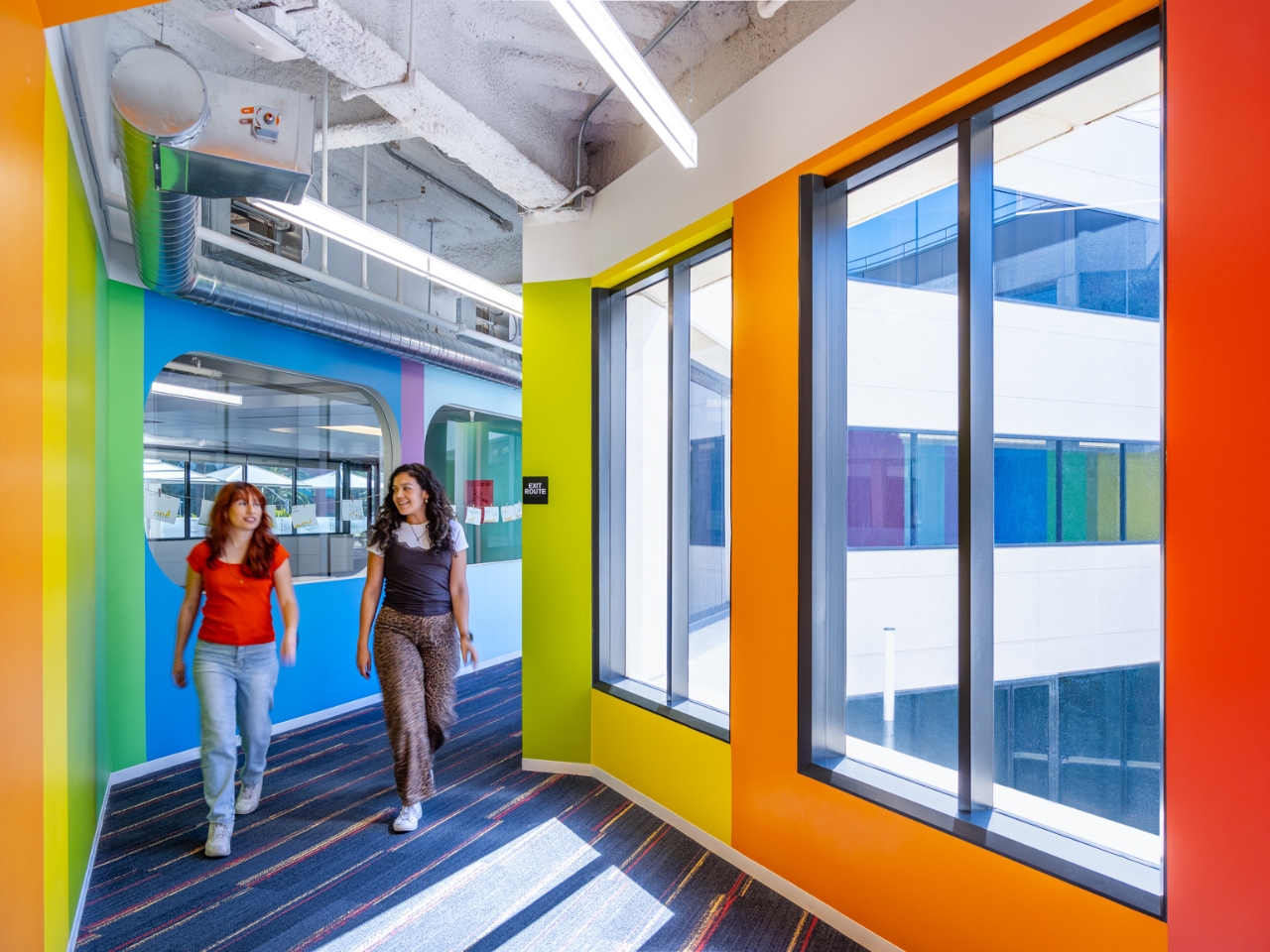
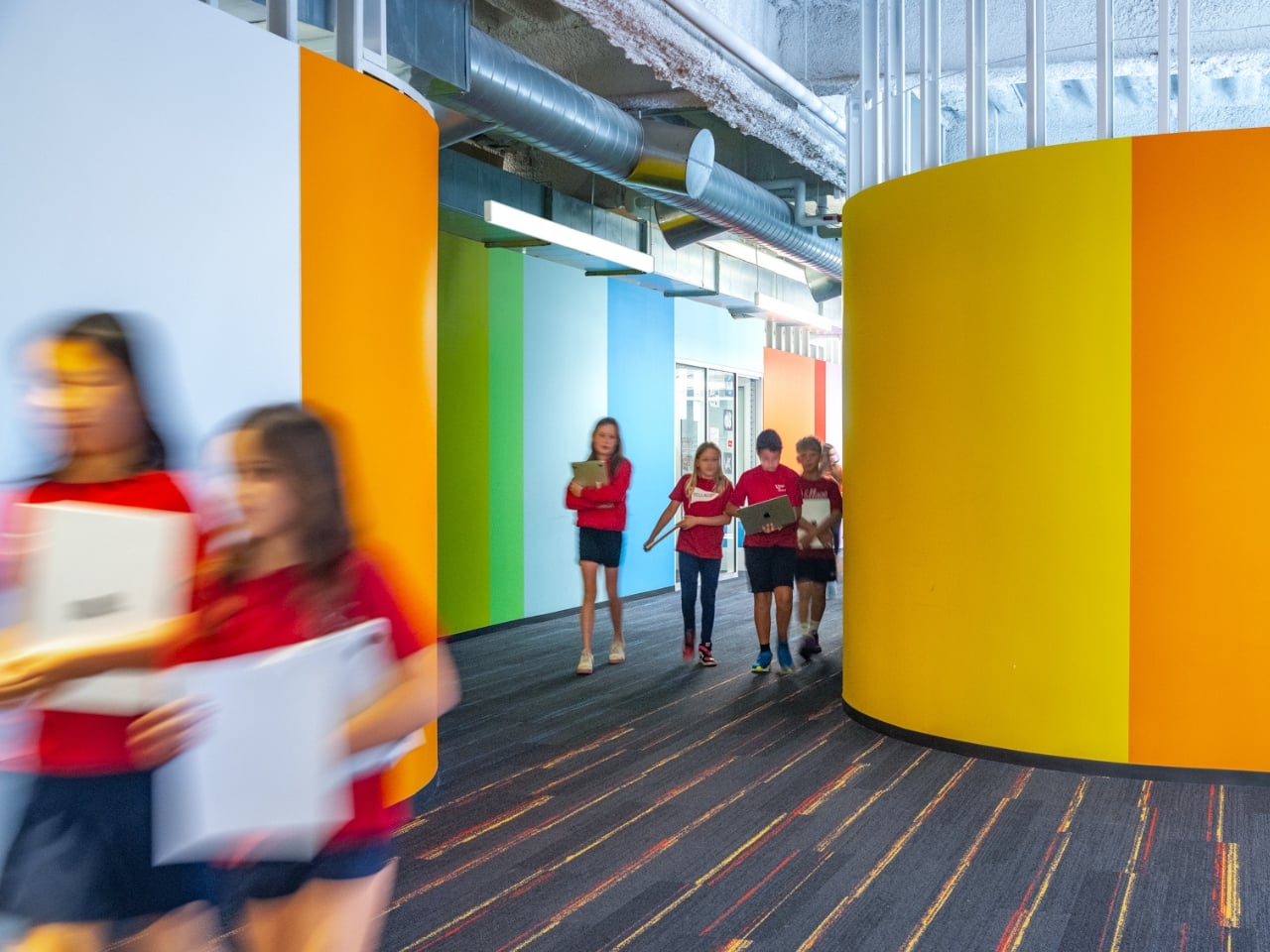
Working alongside the City of Santa Monica and architecture studio OFFICEUNTITLED, Village School took over a vacant corporate office floor inside BXP’s Colorado Center. Within three weeks, students were back in school. Within a single summer break, a fully realized second phase of the campus was designed, approved, and built. The final result is 54,000 square feet of what is now one of the more quietly radical school environments I’ve come across.
Designer: OFFICEUNTITLED (photos by Vittoria Zupicich Photography)
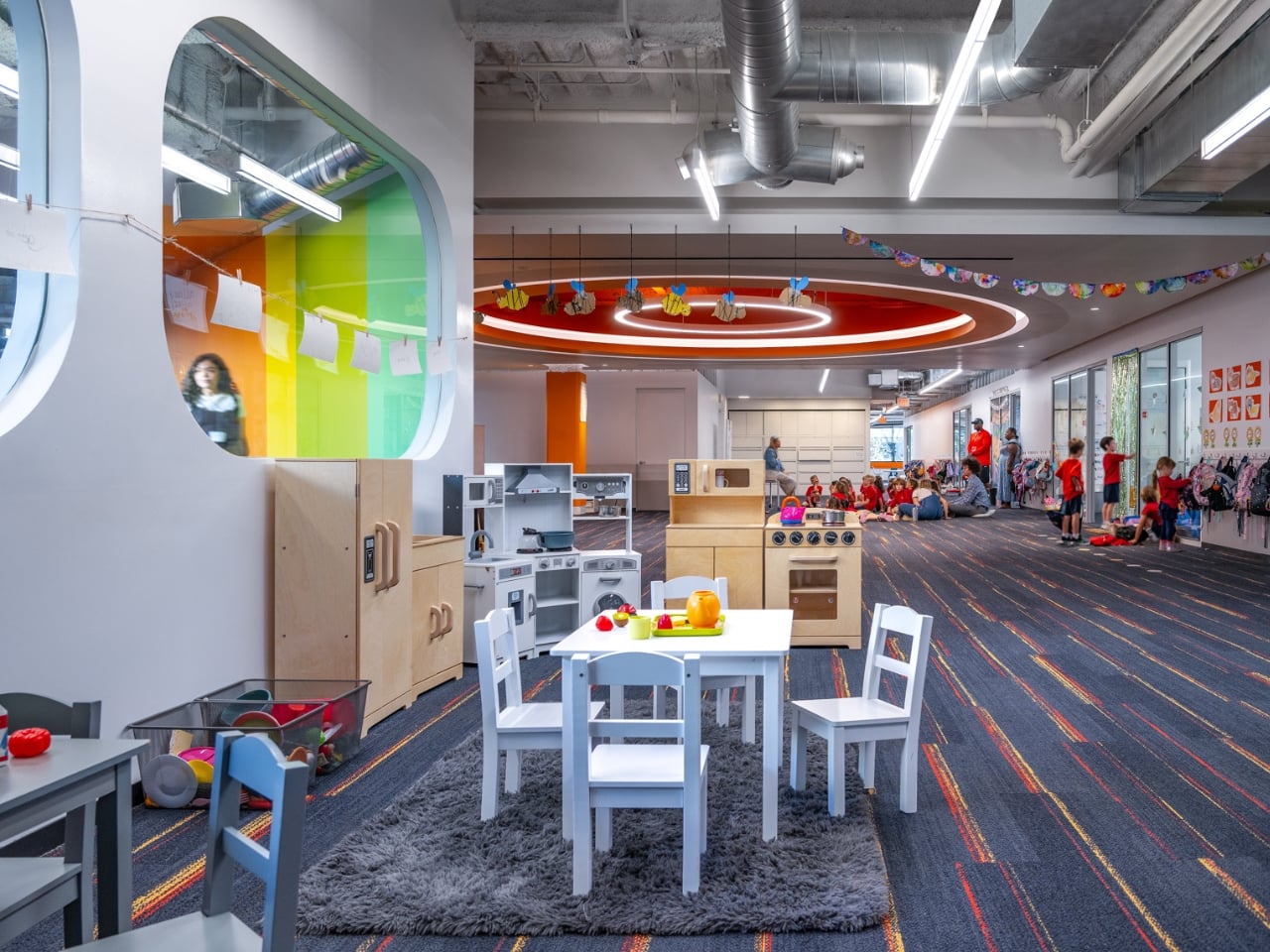
I want to be clear that “office converted to classroom” could have gone very badly. The standard response to a crisis like this is functional but forgettable: fold-out tables, fluorescent lights, and the low-grade sadness of a space that was clearly built for something else. That’s not what OFFICEUNTITLED delivered.
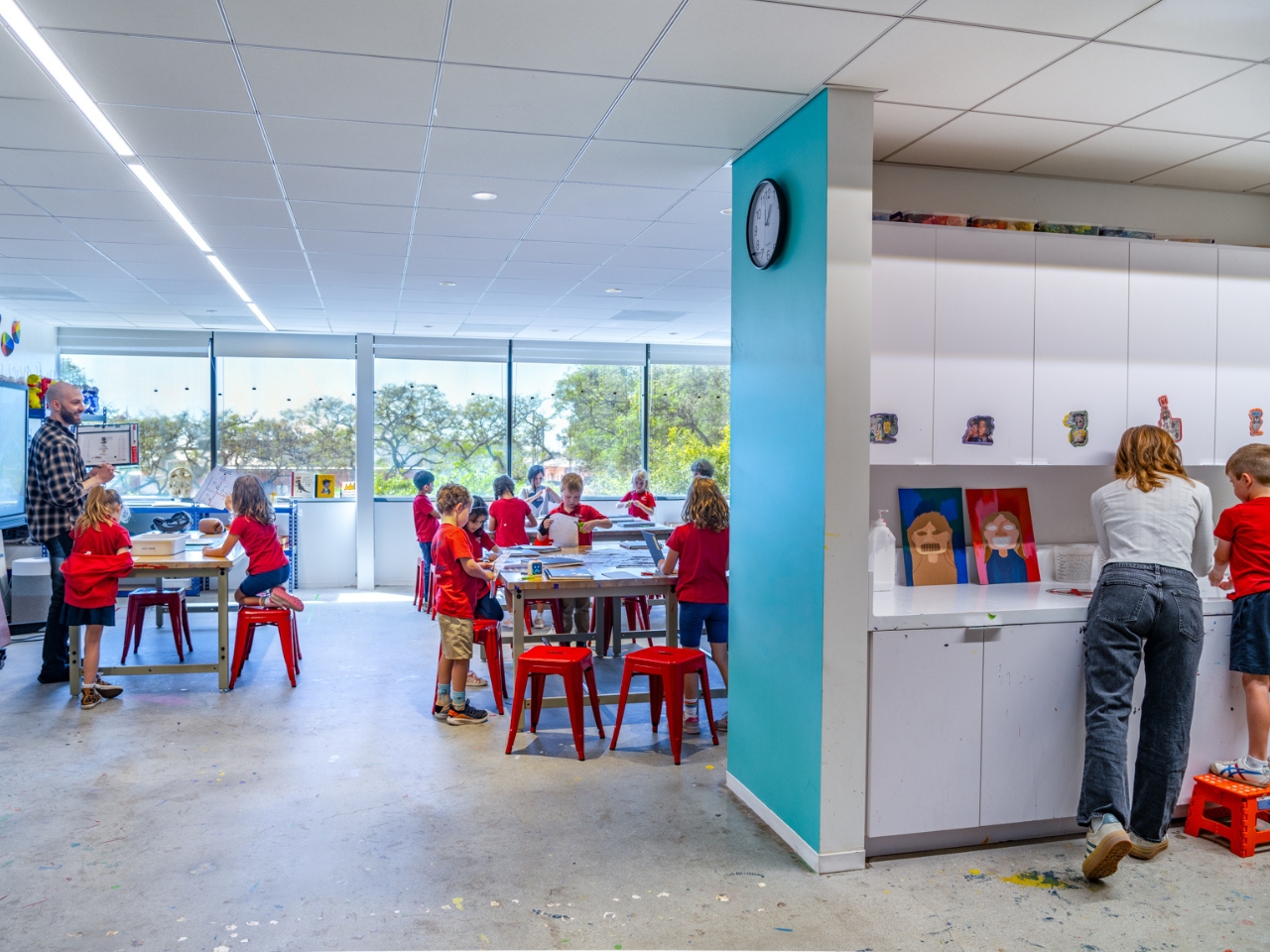
Instead of forcing a traditional corridor-and-classroom layout into a floor plan that was never designed for children, the team looked back at what made Village School’s original campus work. The original school had always valued informal learning, the kind that happens between lessons, during recess, during the wandering and wondering that children do when they’re not being directly instructed. That quality had to survive the move.
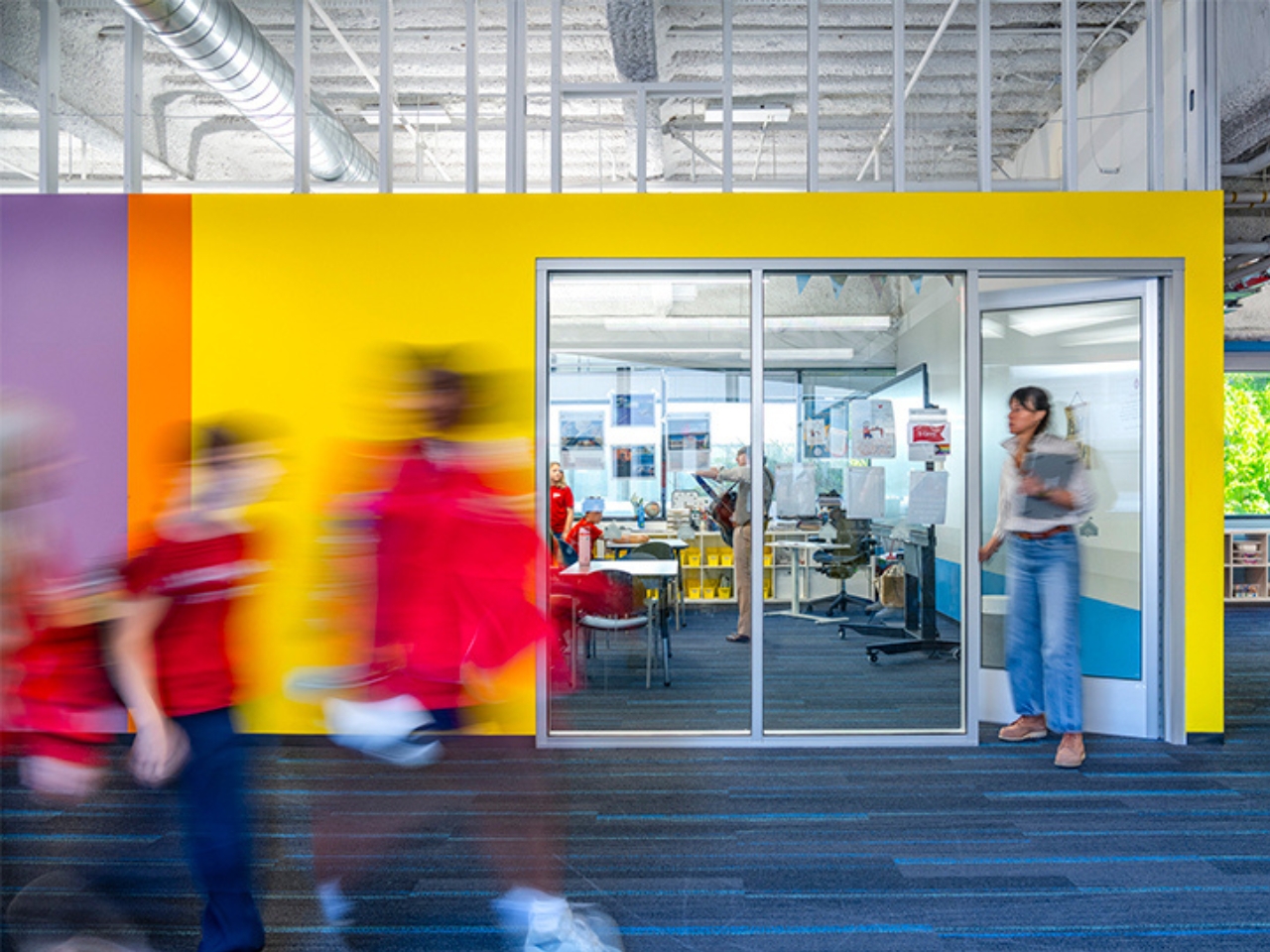
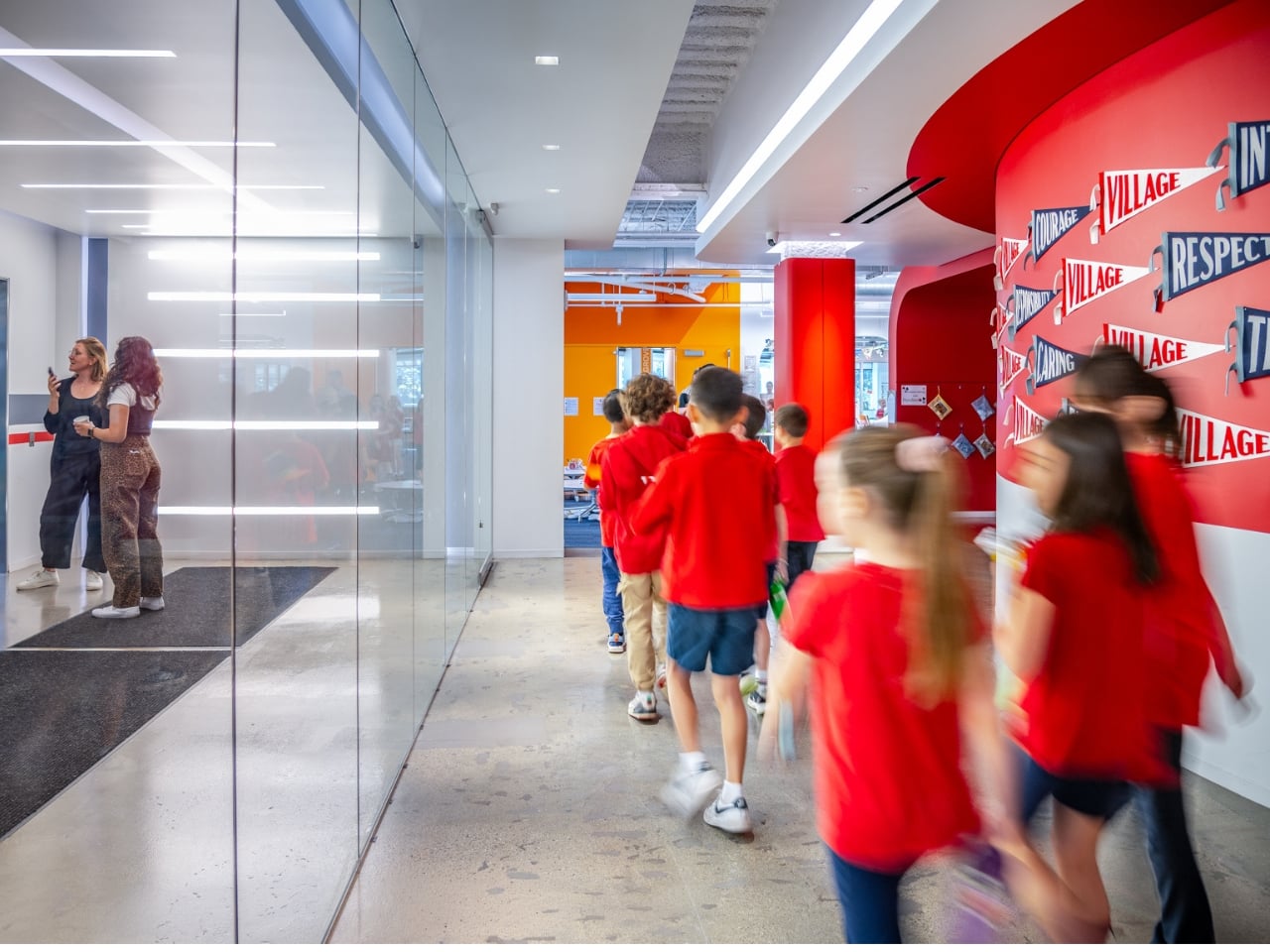
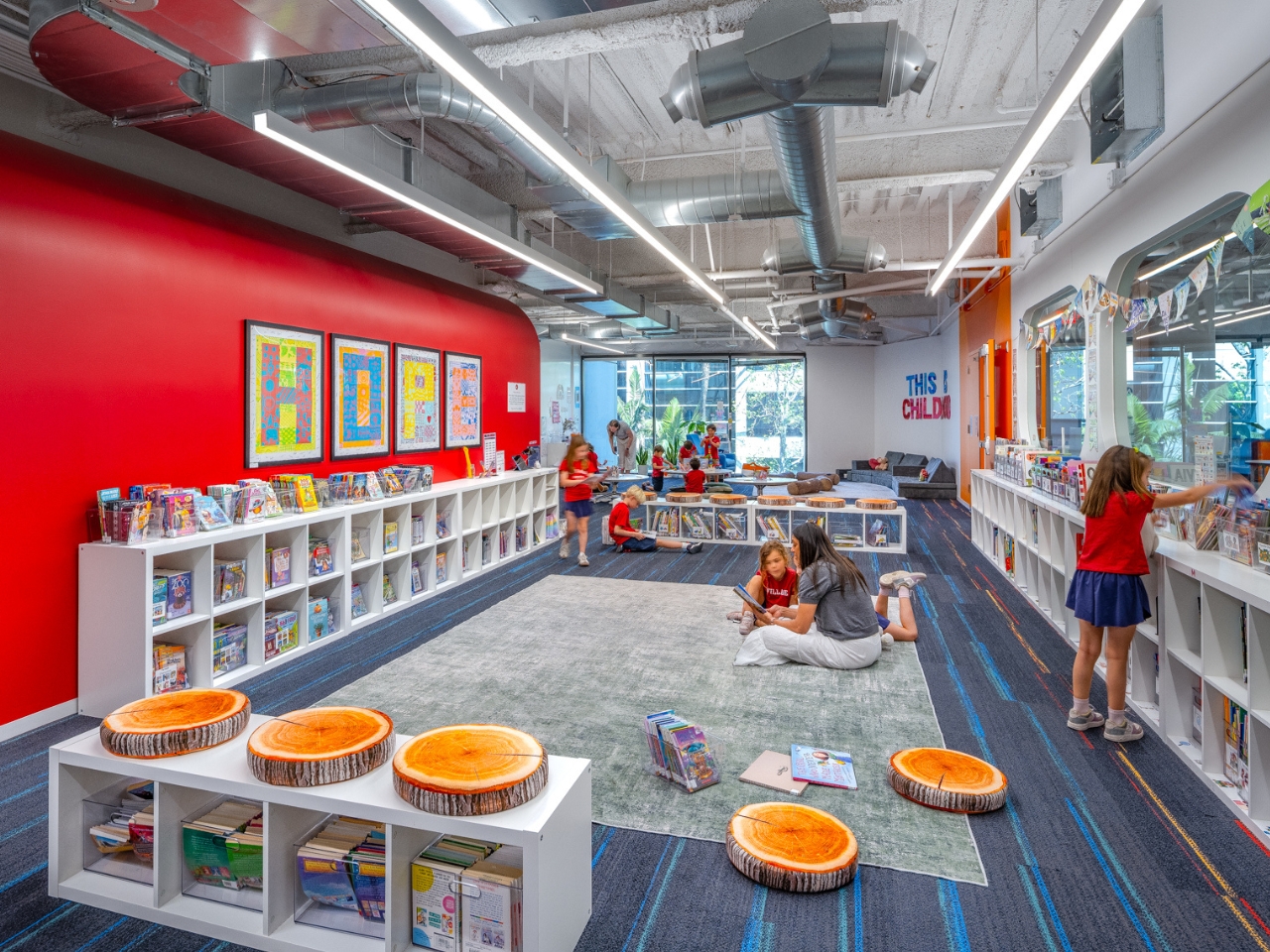
The solution was a network of spaces called Imaginariums, playful environments distributed across the floor that invite exploration and collaboration outside the formal classroom. Two internal circulation paths, named Bookworm Boulevard and Growing Grove, organize the flow of the building and give the space a sense of place that pure corporate architecture never would have created on its own. The names alone do work. Children navigate differently when a hallway has a name.
The graphic design strategy deserves its own conversation. OFFICEUNTITLED deconstructed Village School’s logo into five individual colorful figures and spread them across the campus, pairing each with a matching ceiling element. As students move through the grades, from kindergarten to sixth grade, those individual figures gradually come together into the complete school identity. Wayfinding becomes a game. The building itself rewards the experience of growing up inside it. That’s a subtle and genuinely smart idea, one that treats the school’s physical environment as something that should evolve alongside the children who inhabit it.
The project was completed in two phases, with the first enabling emergency occupancy and the second building out the full vision. The fact that the second phase was designed, approved, and constructed entirely within a single summer break is the kind of logistical detail that tends to get buried in architectural write-ups but is actually worth sitting with. It means dozens of people moved fast, made difficult decisions, and still delivered something coherent and considered under enormous pressure. The result doesn’t look like it was rushed. It looks considered.
I keep returning to the broader question this project quietly raises: what is an office actually for now? The pandemic accelerated a conversation that hasn’t fully resolved itself, and cities like Los Angeles are still sitting on significant amounts of vacant commercial space. Village School’s interim campus is one answer to that question, a provisional one, sure, but a genuinely hopeful one. A floor built for adults with laptops became a place where six-year-olds learn to read. The infrastructure was repurposed, the community was served, and the design is good enough to make you forget the original purpose entirely. Good design tends to do that. It makes necessity feel intentional.