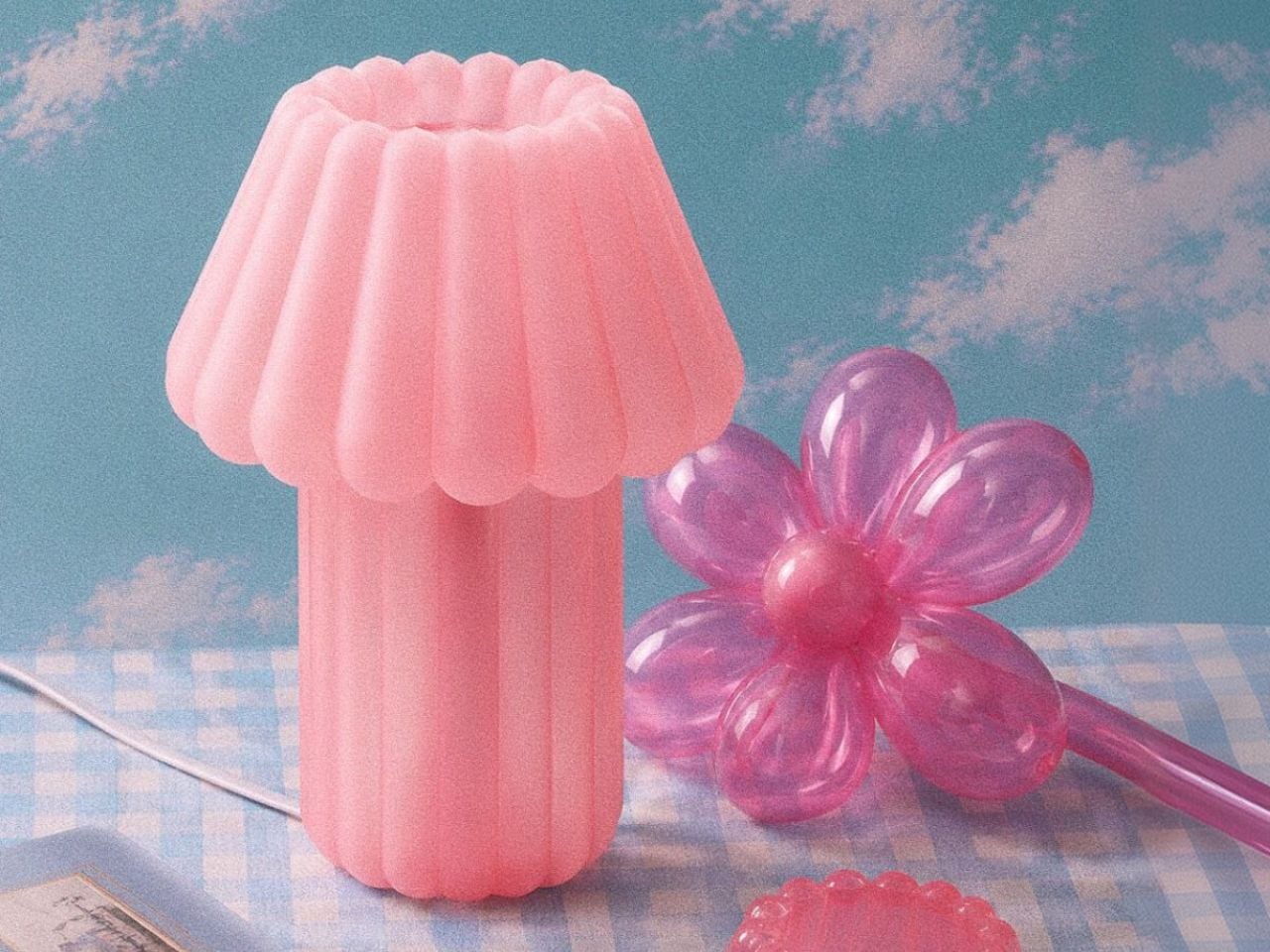
There is something inherently temporary about jello. It trembles, folds, and gives way under the slightest pressure. Balloon sculptures behave much the same way, holding their shape only until the air begins to escape. MAJU’s Jello Lamp takes these fleeting forms and gives them permanence.
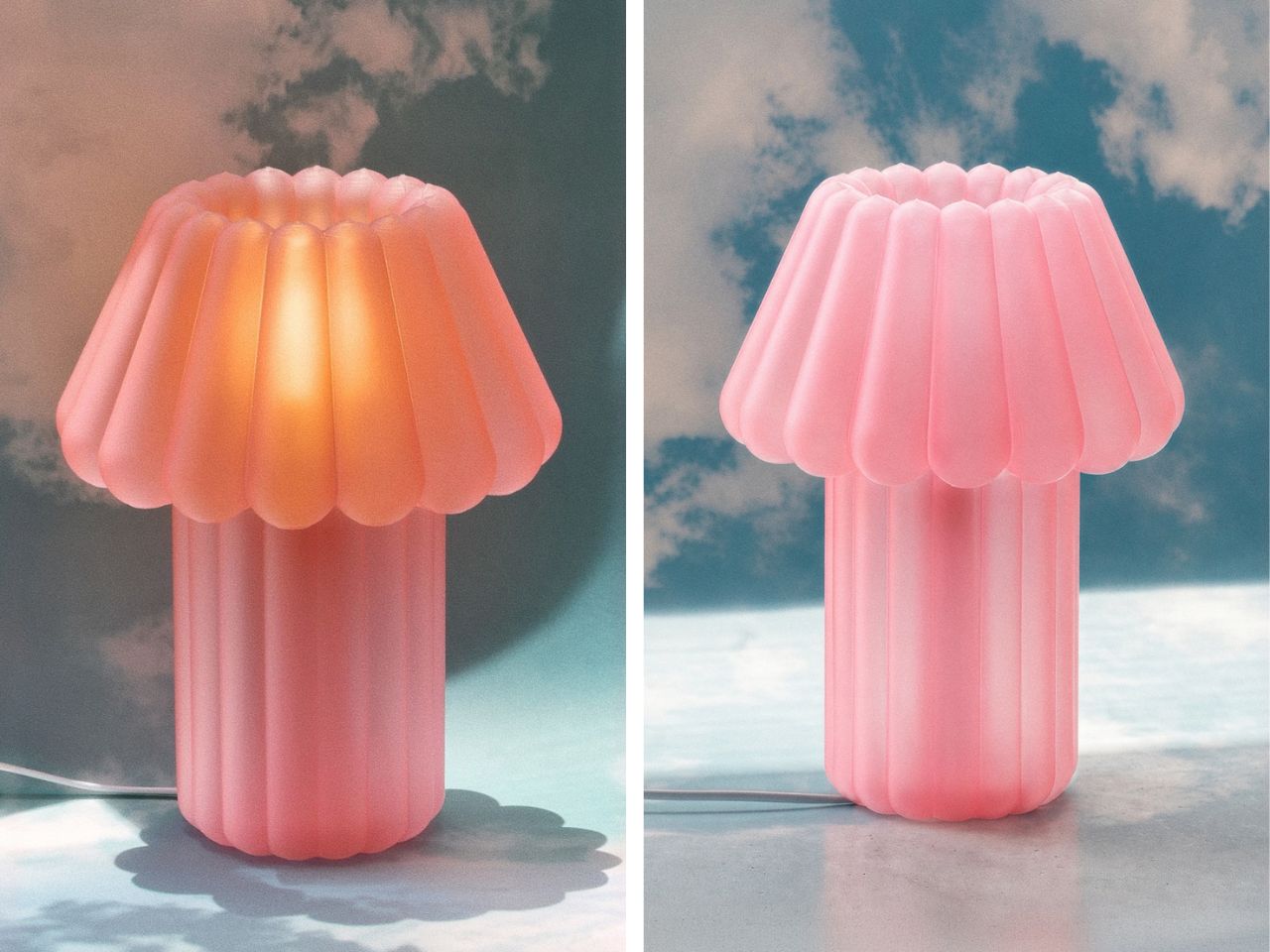
Designed by Hyu Lim, the sculptural table light translates the soft wobble of gelatin desserts and the inflated curves of balloon animals into a 3D-printed object. The result is playful without becoming novelty-driven, balancing generous proportions and rounded edges with the visual precision of digital fabrication. The lamp’s form is built around repetition. A fluted shade expands outward in soft, scalloped volumes, while the base continues the same inflated geometry below. Together, the two elements create a silhouette that appears almost compressible, despite being printed as a rigid, continuous body.
Designer: MAJU
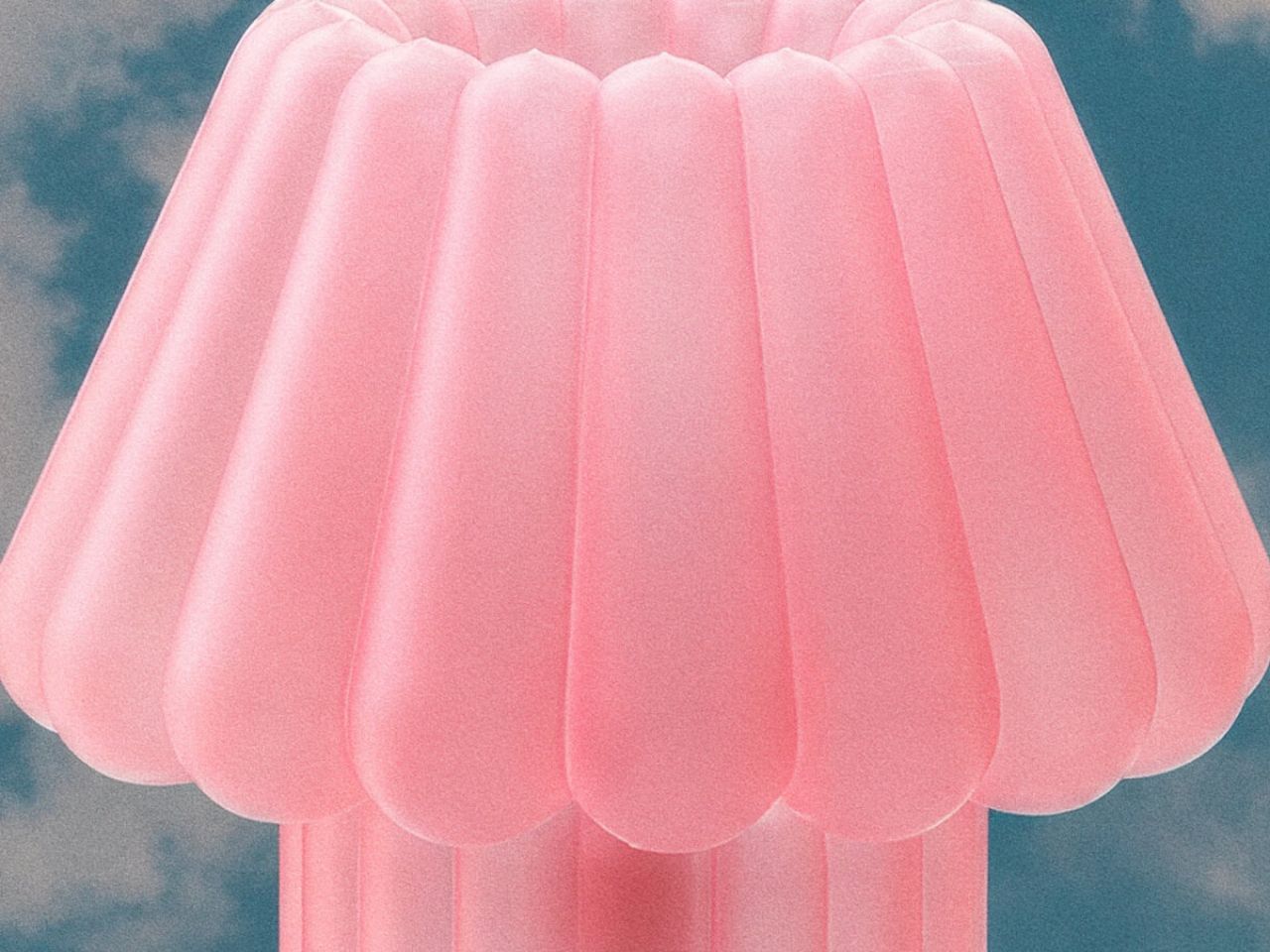
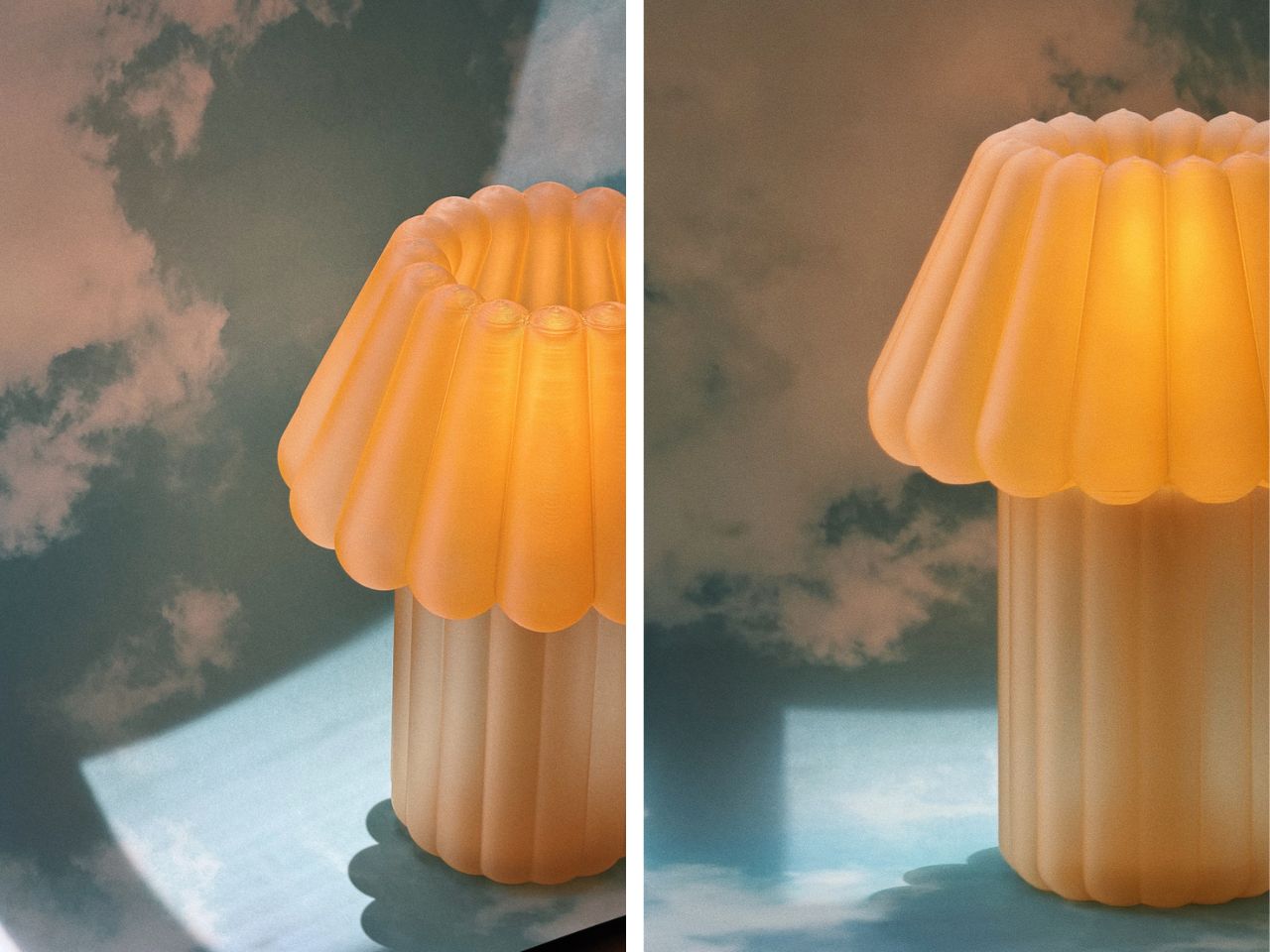
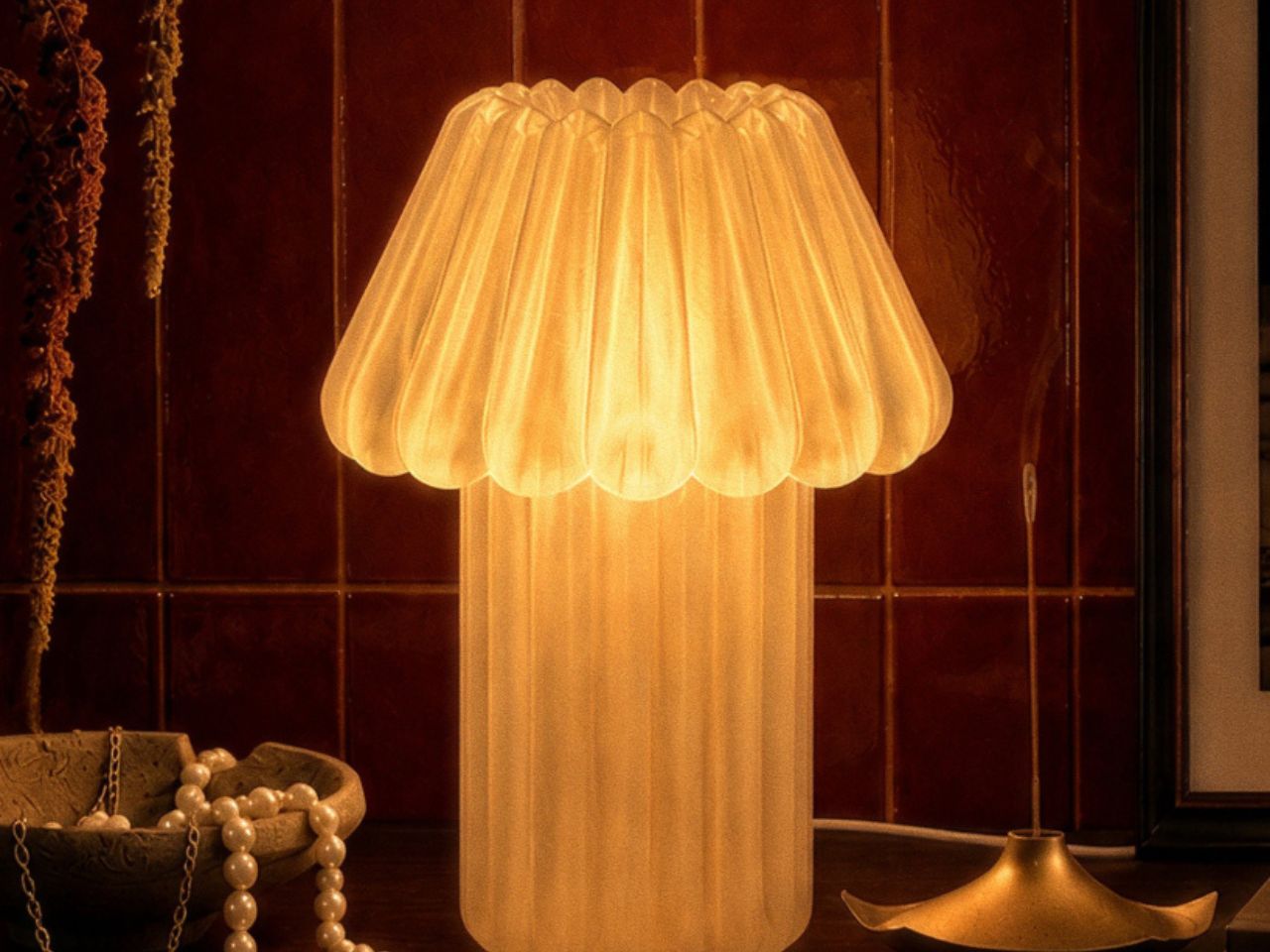
That tension gives the lamp much of its character. Its shape suggests movement, softness and instability, while its construction fixes those qualities in place. MAJU uses one of the most controlled contemporary production methods to capture something loose and unpredictable. When illuminated, the object begins to soften again. Light passes through the translucent shade, diffusing into a warm 2700K glow that gathers along the ridged surface. The flutes become less defined, and the lamp takes on a fluid, almost edible quality.
It is here that the Jello Lamp moves beyond a visual reference. Rather than simply resembling a moulded dessert, it recreates its translucency and sense of suspended volume. The light source becomes part of the form, turning the lamp into an illuminated sculpture rather than a fixture with a decorative shade. Each piece is 3D printed to order in MAJU’s workshops in California and Singapore using plant-based, biodegradable PLA. The process allows the studio to produce the lamp’s curved geometry without conventional moulds, while also reducing excess inventory and material waste.
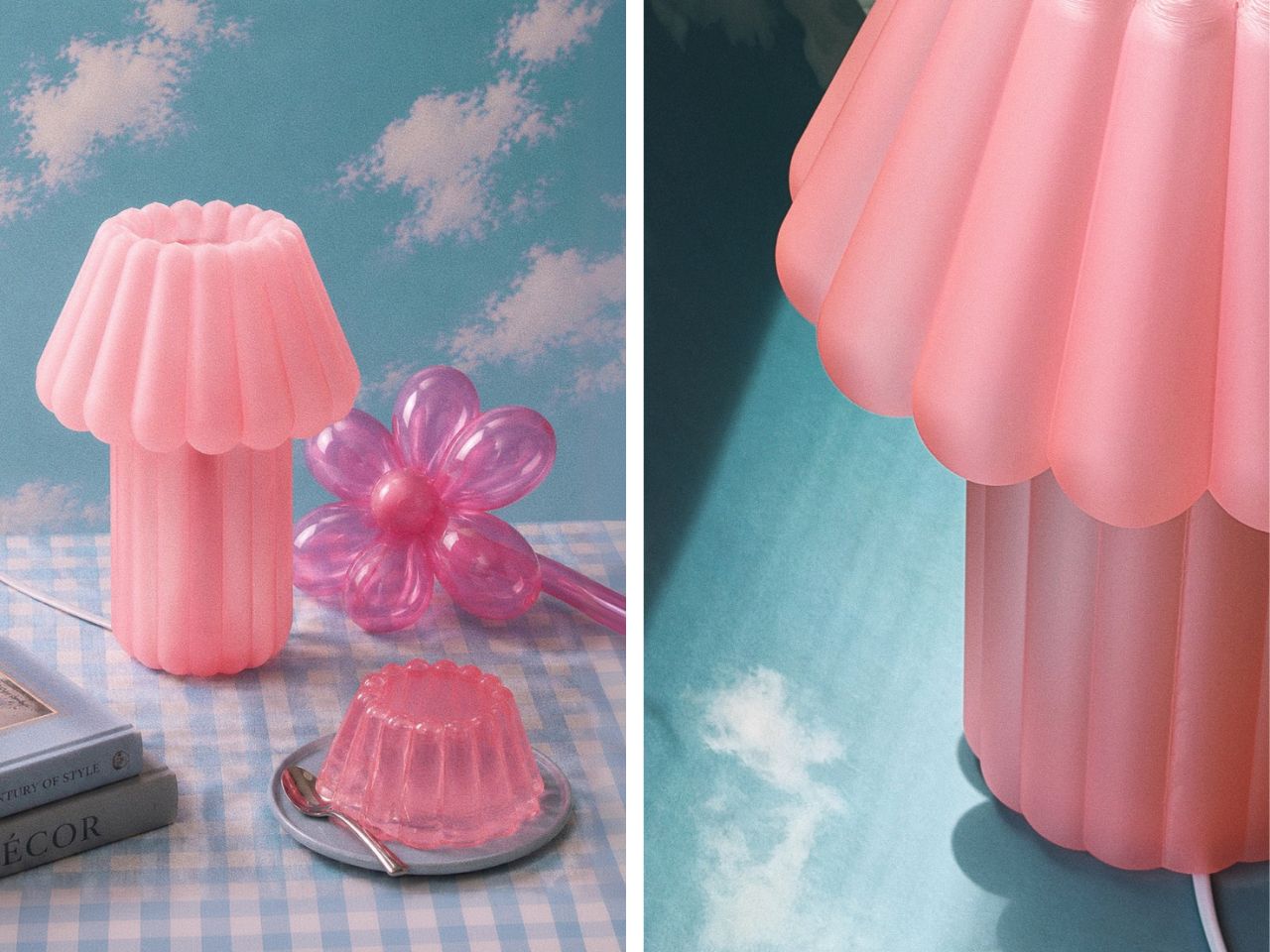
The visible texture of additive manufacturing is not concealed. Fine printed ridges run across the surface, catching light and revealing how the object was made. Instead of disrupting its softness, they add another layer of detail, sitting somewhere between the grooves of a dessert mould and the traces of a machine-built object.
The lamp is also designed as a modular system. Its shade and base can be replaced or upgraded independently, extending the life of the object rather than treating it as a sealed product. An integrated cord organiser is built into the base, keeping the cable from interrupting the lamp’s compact silhouette. Measuring 9.5 × 9.5 × 12.25 inches and weighing approximately half a pound, the Jello Lamp is light enough to move easily through domestic spaces. Its 2.9W bulb is intended to produce ambient illumination, positioning it as a quiet atmospheric object rather than a primary source of light.
Shown in Cottage Core Pink, the design leans into its confectionery associations. The colour, rounded profile and luminous surface recall something sweet and familiar, while the printed construction keeps the object rooted in contemporary production.
The Jello Lamp forms part of MAJU’s broader collection of plant-based home objects, shaped by the studio’s position between Singapore and California and by a combination of Eastern and Western design influences. Its most compelling quality, however, lies in a simpler contradiction. The lamp gives durability to forms that are usually defined by their impermanence. A balloon loses air. Jello collapses. Here, their softness is held in place, glowing quietly on a table.
SHARE