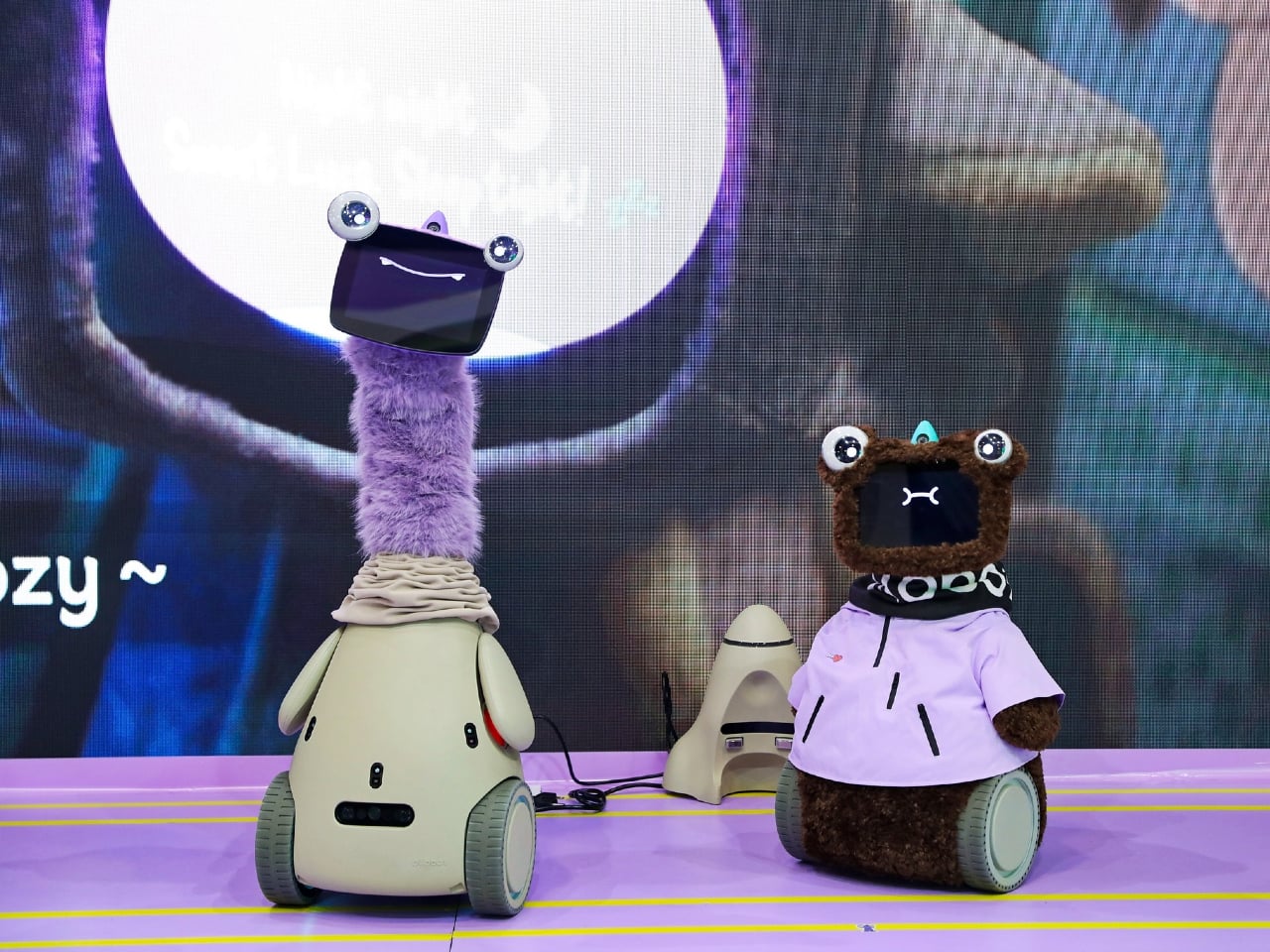
Trade shows usually reward the loudest promise in the room. Faster. Smarter. Smaller. Cheaper. Shenzhen’s Global Connect Show had plenty of that, but one image lingered longer than any spec sheet. A cyber pet named Ollobot stood beside its founder as if it belonged there, blinking at the crowd while a presentation about emotional intelligence unfolded behind it. In a sea of home tech, this was the product that behaved less like an appliance and more like a companion.
That image became a useful key for reading the rest of the event. Yanko Design attended GCS Shenzhen 2026 expecting to see the usual future-home playbook, AI family hubs, robotic lawn care, spatial scanning, smart personal care. Those products were all there. What changed was the framing. Again and again, founders described their devices in emotional terms, selling comfort, reassurance, confidence, and family harmony with the same urgency that hardware brands once reserved for raw utility. GCS itself was built for that kind of storytelling, a curated Shenzhen showcase designed to connect globally ambitious brands with international media, editors, and partners in a more focused setting than a giant expo floor.
Lymow One Plus – The Saturday morning machine
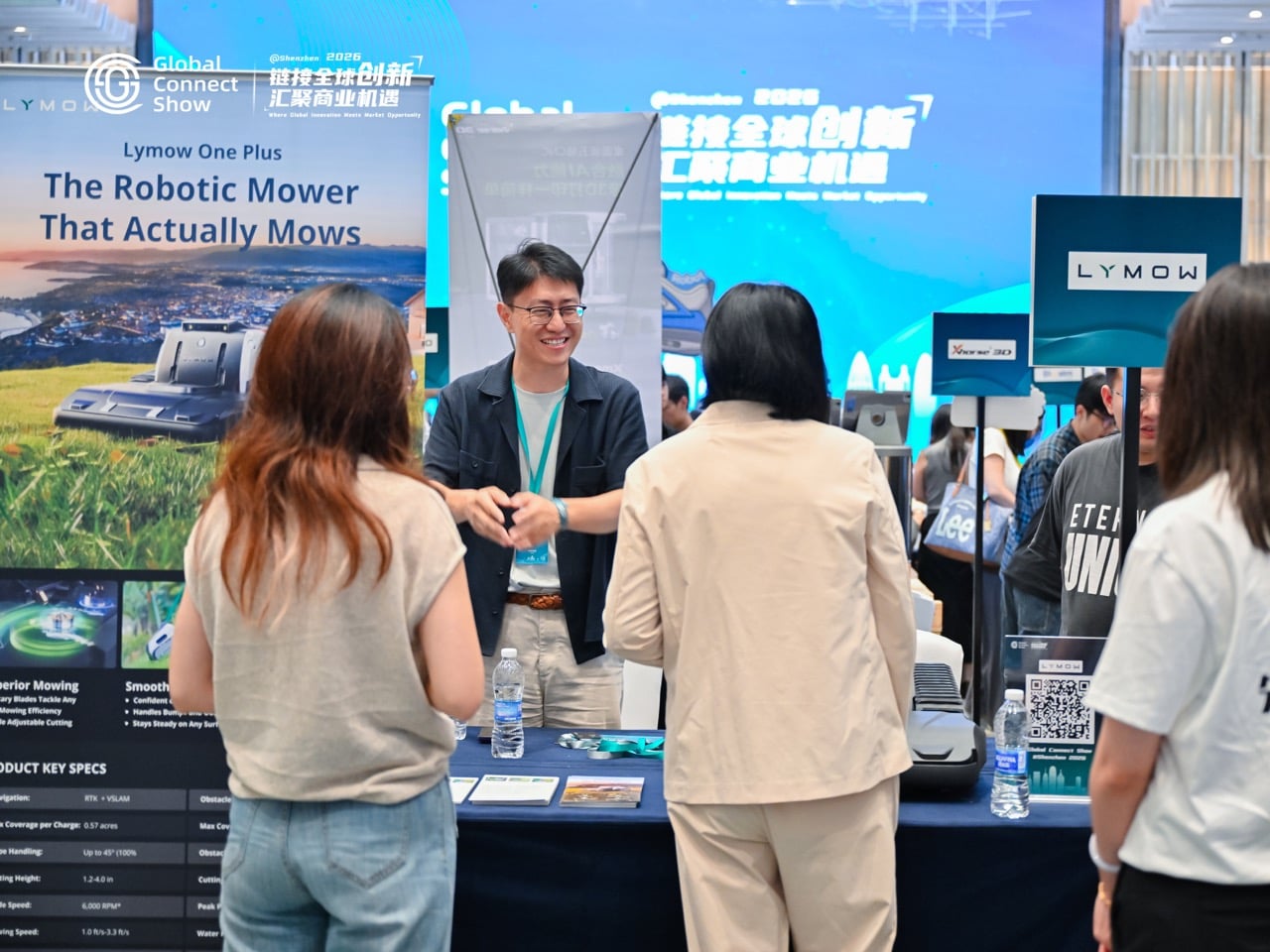
If you wanted a clean example of utility evolving into lifestyle design, Lymow made the case better than anyone. Co-founder Charles Lee opened with a blunt question about why robotic mowers still struggle once they leave the brochure and meet actual grass, uneven terrain, slopes, and the chaotic reality of a lived-in yard. That framing mattered. Lymow was not selling lawn care as novelty. It was selling competence.
The appeal of the Lymow One Plus sits in what it gives back. A mower that can handle difficult grass types, navigate complex terrain, and work through multiple zones promises something quietly luxurious, a weekend that stays yours. Smart home brands used to pitch automation as technical progress. Lymow pitches it as a better relationship with your own home. The dream here is simple and deeply relatable: coffee in the yard instead of labor in the yard.
NAVEE Birdie 3 and Birdie 3X – Leisure tech learns how to disappear
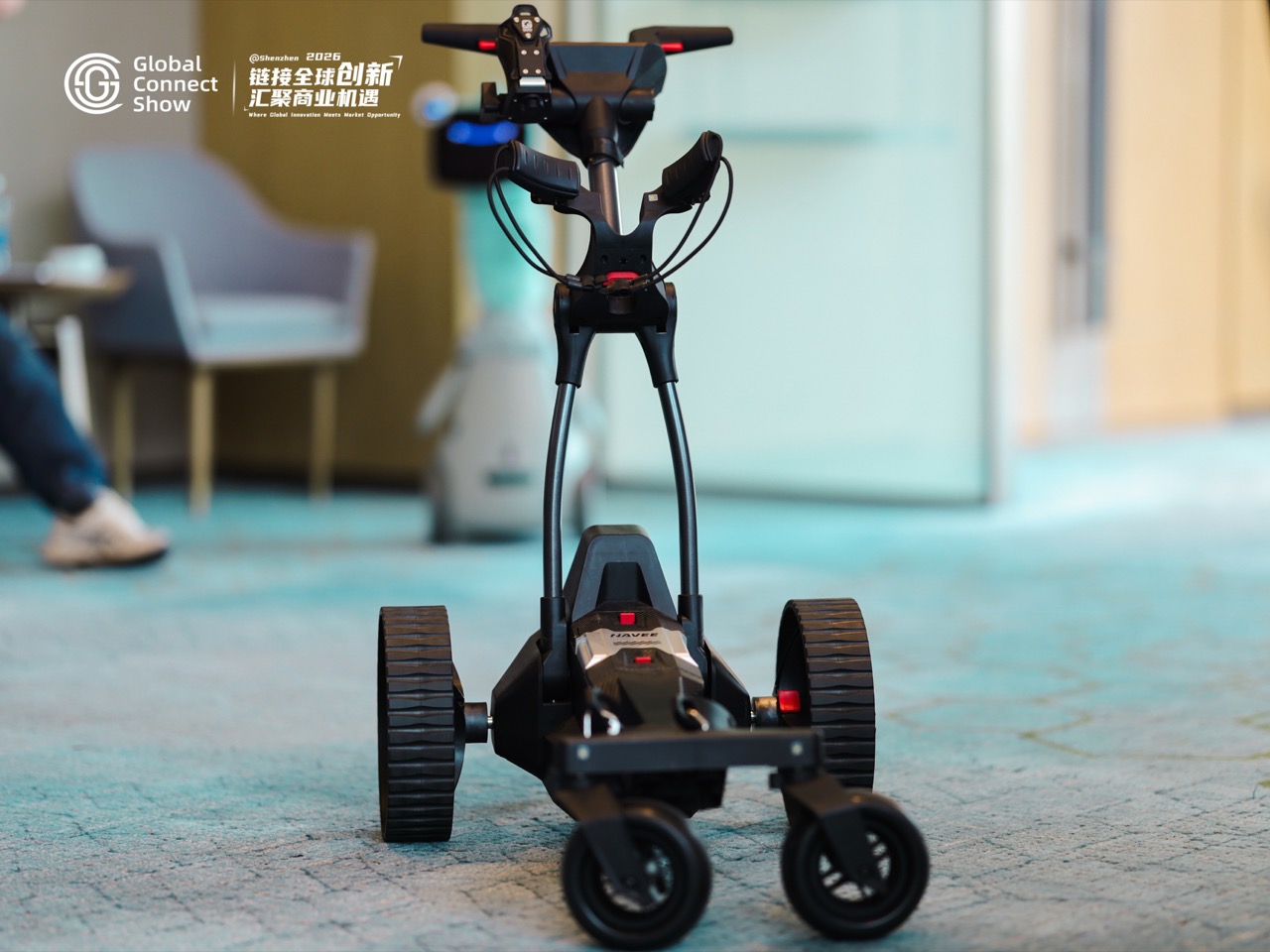
NAVEE’s electric golf push carts may seem slightly outside the article’s home-tech orbit, but they belong here for one reason: they show how emotional design is spreading into every corner of lifestyle hardware. The Birdie 3 and Birdie 3X were presented as compact, capable companions for the golf course, with features built around reducing friction during play.
That sounds minor until you think about what luxury often looks like in 2026. It is not always excess. Sometimes it is the absence of interruption. A cart that follows you, assists on inclines, and removes physical hassle from the round allows the player to stay mentally inside the experience. This is the same emotional logic driving the best home products right now. Great hardware increasingly succeeds when it fades into the background and leaves a cleaner emotional foreground behind.
Cozyla Calendar+ 2 – The family hub that sells mood
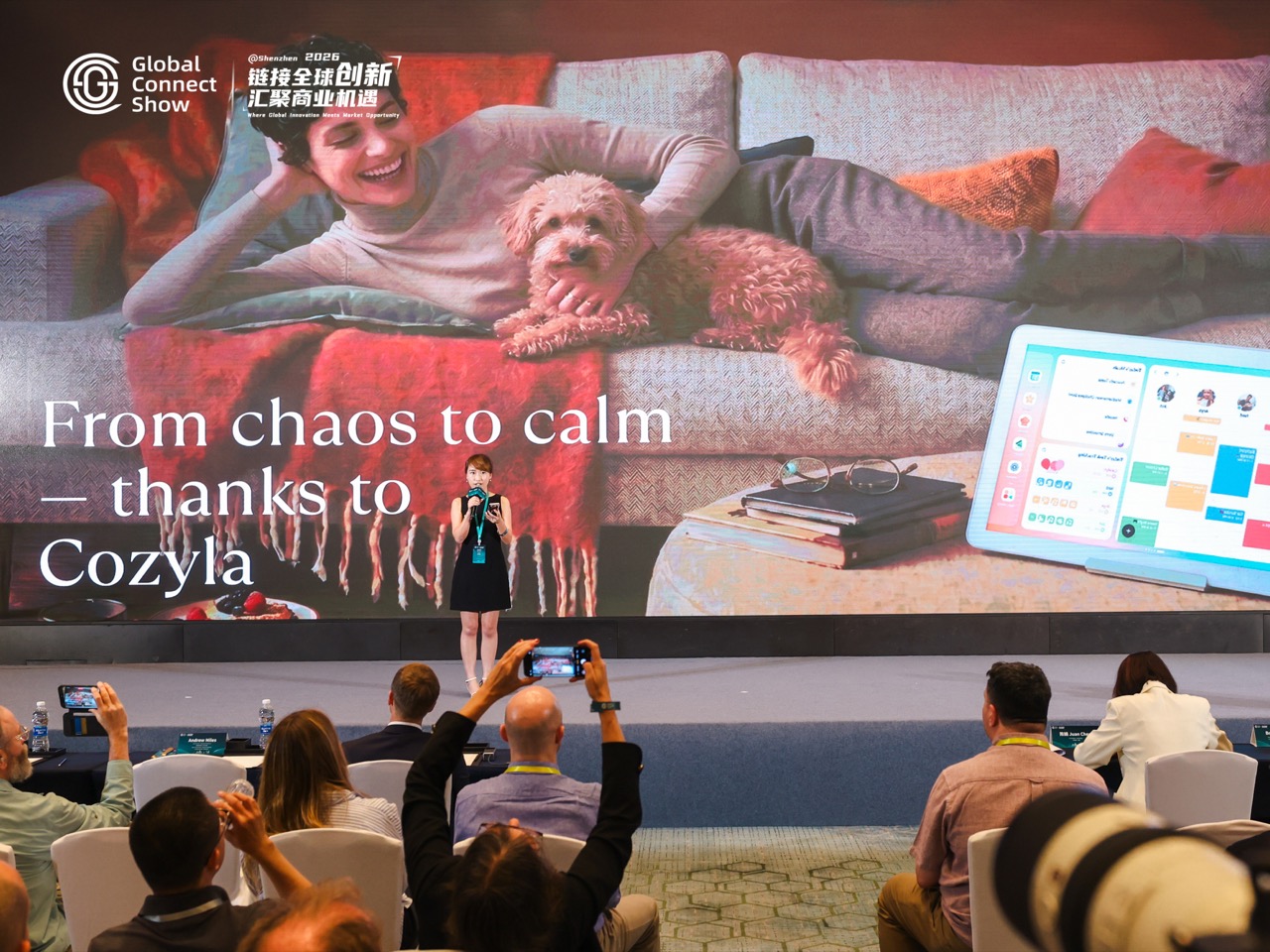
Cozyla was one of the clearest examples of a familiar smart home category being repositioned through feeling. The founder’s setup was instantly recognizable: rushed mornings, forgotten lunches, fragmented communication, children moving in different directions, adults trying to keep the day from collapsing before noon. Plenty of family dashboards have tried to solve that problem. Cozyla’s pitch stood out because it did not stop at efficiency.
The line that landed hardest in the room was about mood. A testimonial framed the product as something that changed the emotional atmosphere of the house, not merely the schedule pinned to the wall. That is a subtle but meaningful escalation in smart home language. Once a device claims it can improve the tone of family life, it enters a more intimate contract with its users. The screen becomes part planner, part mediator, part ambient stabilizer for the household. That is a far more ambitious role than calendar sync.
iClever Q950 – Safety as emotional design
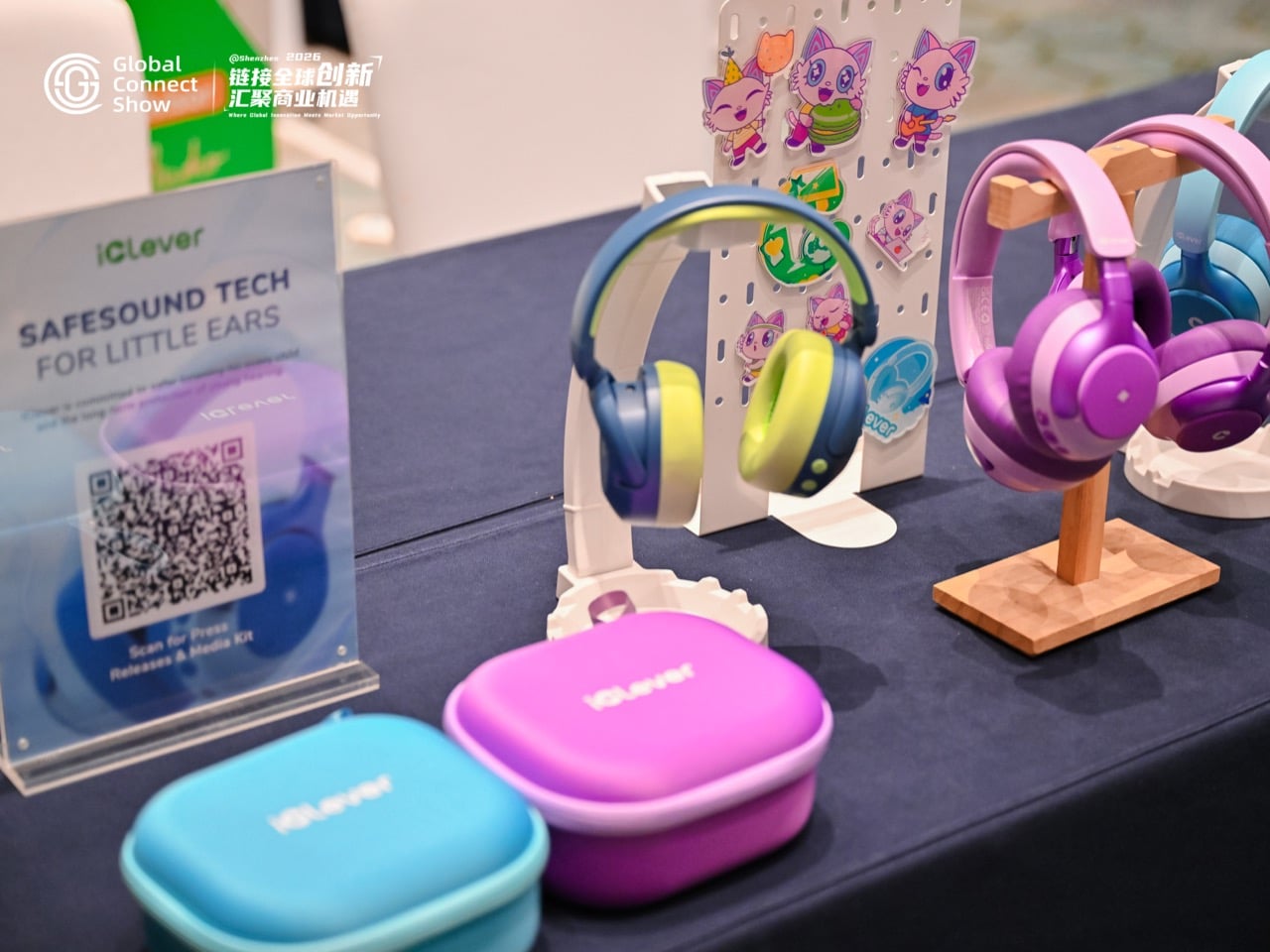
Children’s headphones are easy to dismiss as a practical category, but iClever showed why that would be a mistake. The Q950 was presented through the lens of hearing care, safe listening, and child-focused product development. On the surface, that is a straightforward wellness pitch. Underneath it sits something more emotionally resonant: parental reassurance.
That may be one of the least glamorous but most powerful forms of empathy in consumer tech. A product designed around safety communicates care before it communicates performance. Battery life, noise cancellation, and certifications matter, of course, but the emotional payload is trust. Parents buy peace of mind as much as they buy hardware. In that sense, iClever fits neatly into the broader pattern from GCS. The smartest products in the room were often the ones translating technical features into emotional relief.
POPOSOAP – The garden pond as emotional technology
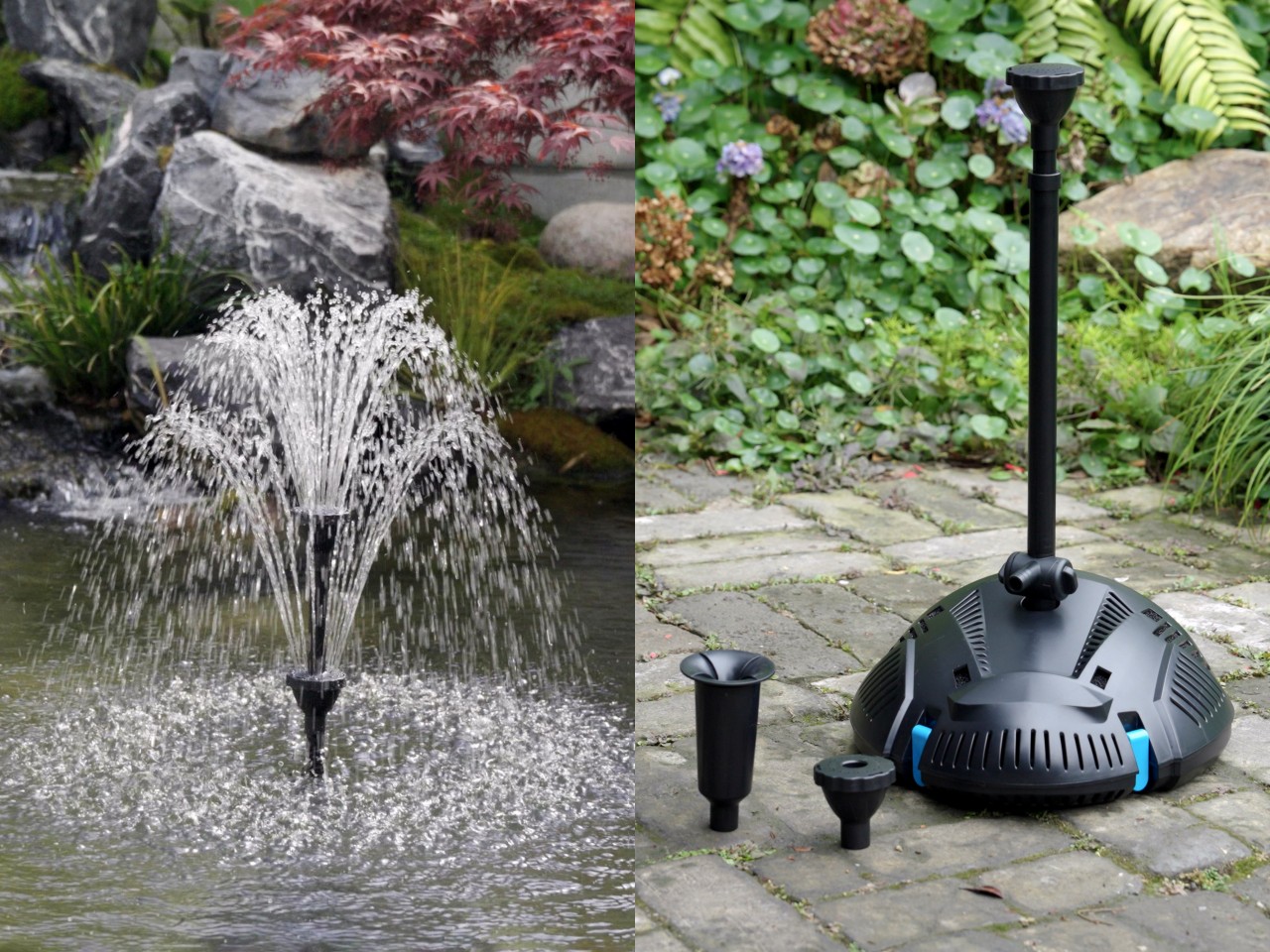
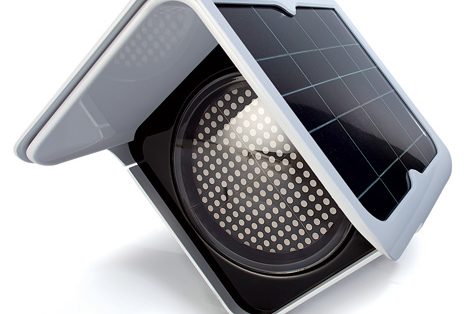
POPOSOAP brought a very different energy to the event, and that is exactly why it matters. In a room filled with AI, robotics, and smart domestic systems, the brand’s pitch was about building a tranquil, sustainable, animal-friendly water garden at home. Its modular pond and fountain products are designed to make that process easy, with the company emphasizing lightweight structures, DIY-friendly installation, minimal maintenance, and eco-conscious materials. One line from POPOSOAP sums up the emotional logic pretty well: everyone deserves effortless flow and everyday calm.
That makes POPOSOAP a surprisingly strong fit for the larger trend emerging at GCS. This is outdoor home tech framed around emotional restoration rather than raw capability. The featured 6.5W solar fountain pump is presented as a low-effort way to keep water moving year-round and make ponds or bird baths cleaner and more inviting, while the brand’s broader range includes filtration systems, waterfalls, spillways, aerators, underwater lighting, and smart water features. On the surface, these are garden products. In practice, they are mood products, tools for turning a backyard into a gentler sensory environment full of motion, sound, and life. That may be one of the purest forms of empathetic design in the whole room.
Dreame Window Cleaning Robots – Domestic polish becomes a daily mood setter
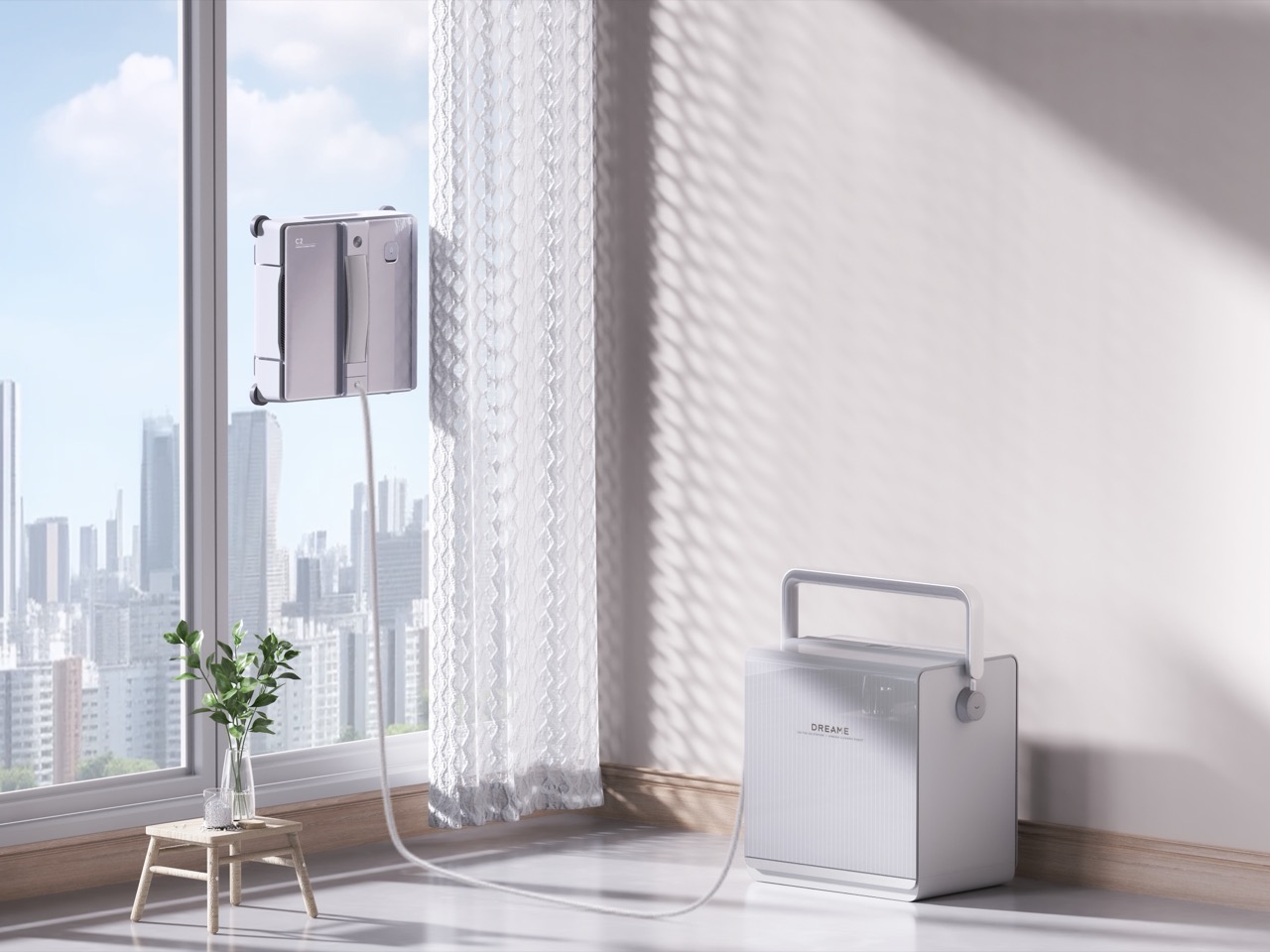
Dreame’s window cleaning robots pushed the empathy angle into a part of the home most brands rarely romanticize: glass. The brochure shows a full lineup built around the idea of crystal-clear windows as a quality-of-life upgrade, from the slim E1 Nano to the all-in-one E1, the portable C2 Station, and the hot-water P1 and P1 Station models. The language across the material is telling. This is less about brute-force cleaning and more about visual calm, cleaner light, and the satisfaction of a home that looks cared for.
The details reinforce that positioning. On page 3, the E1 Nano is described as a 59 mm ultra-slim design that can pass through window grilles, with a 120 mL water tank, up to 90 minutes of continuous wet cleaning, and 5 cleaning modes. On page 4, the E1 adds 10,000 Pa suction, 8 cleaning modes, and edge-detection cleaning with over 98% coverage. The P1 on page 6 goes even further with hot-water spraying and an auto-lifting wiper arm designed for zero water residue. What Dreame is really selling here is the emotional effect of transparency, brighter interiors, clearer views, and one less tedious chore standing between you and a home that feels settled.
Dreame Pool Cleaning Robots – Luxury tech that gives leisure back its point
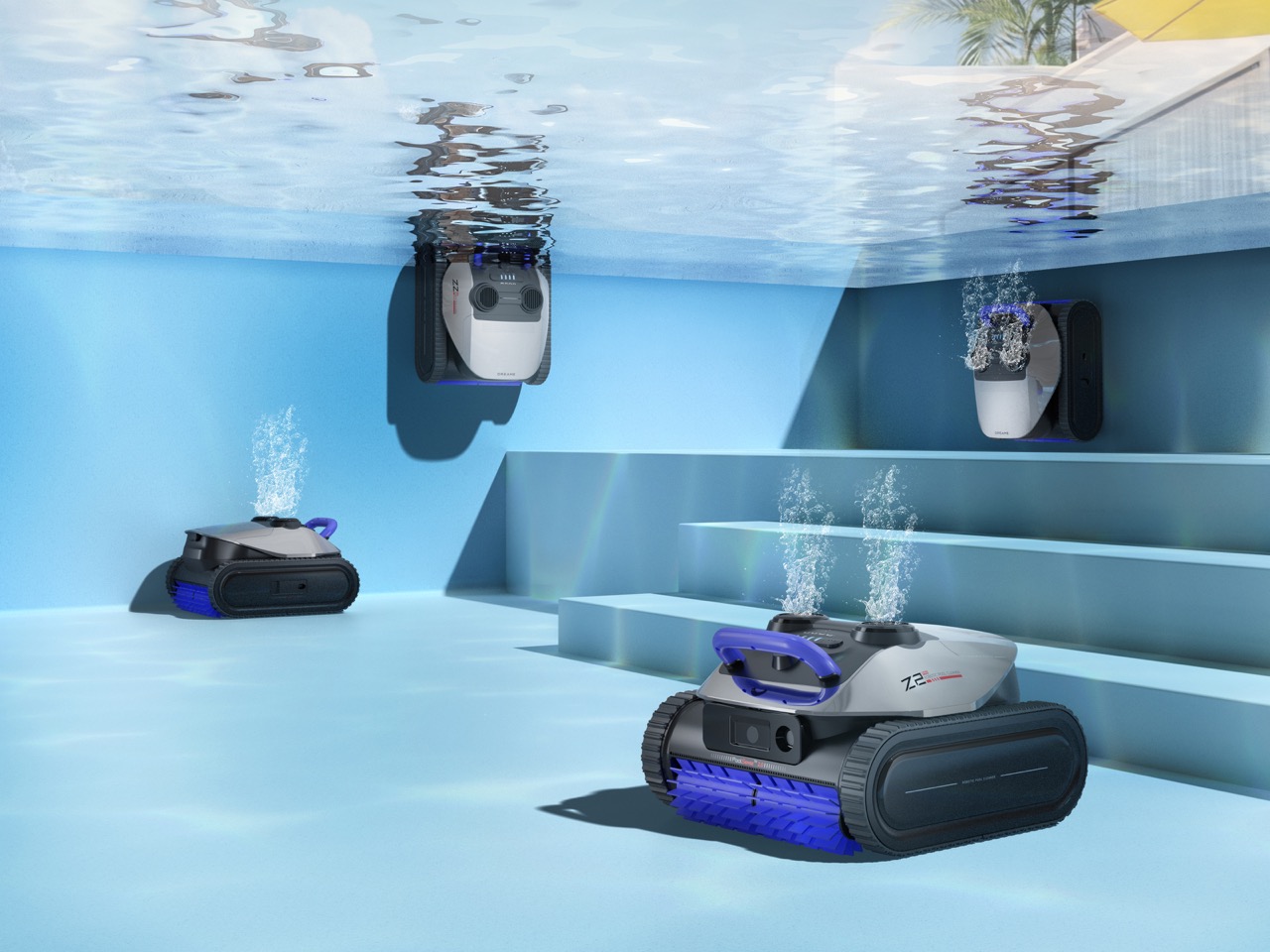
If the window robots were about visual serenity, Dreame’s pool cleaners were about reclaiming leisure from maintenance. The pool brochure opens with a line that says everything: “Enjoy your time. Redefine Pool Freedom.” That framing matters. A pool is supposed to symbolize relaxation, but in practice it often comes bundled with upkeep, debris, and constant intervention. Dreame’s pitch flips that equation and turns the pool into a space that stays ready for enjoyment.
The flagship Zircon 2 Ultra is positioned as the more advanced model, with 7-in-1 coverage, 3D laser mapping, PulseMap and LiDAR navigation, 10,000 GPH suction, a QuadLift four-pump system, and up to 6 hours runtime, according to pages 4 through 6. It also supports app control and wireless charging, and page 4 highlights easy retrieval through the app. The Zircon 2 Pro takes a slightly leaner approach, with 8,000 GPH suction, up to 4 hours runtime, and coverage across the floor, walls, and waterline, as shown on pages 9 through 11. Then there is the B2 Pro automatic charging station, introduced on page 15 with the line, “Just Dock. It Does the Rest.” That may be the most revealing phrase in the whole Dreame presentation. The emotional promise is not cleaning performance alone. It is uninterrupted leisure, a pool that asks for less attention, and a home environment that stays ready for pleasure with far less effort.
Realsee – Turning rooms into memory, media, and data

Realsee brought a very different kind of intelligence to the event, one rooted in space itself. Its digital twin platform can scan real environments and turn them into immersive 3D experiences that people can walk through remotely. The demo on site made the technology feel less like documentation and more like spatial publishing. A place becomes something you can revisit, present, share, and preserve.
That has obvious commercial applications in real estate, retail, architecture, and tourism, but it also expands the definition of what a home can be in digital form. A house stops being just shelter and starts becoming an experience layer, a navigable archive of how a place looked, felt, and was arranged at a particular moment in time. There is something emotionally charged about that. Once domestic space can be captured with this level of permanence and fidelity, the home becomes part memory object, part media asset, part data structure. Realsee may be selling scans, but the subtext is preservation.
Ocjoy – Oral care, recast as confidence
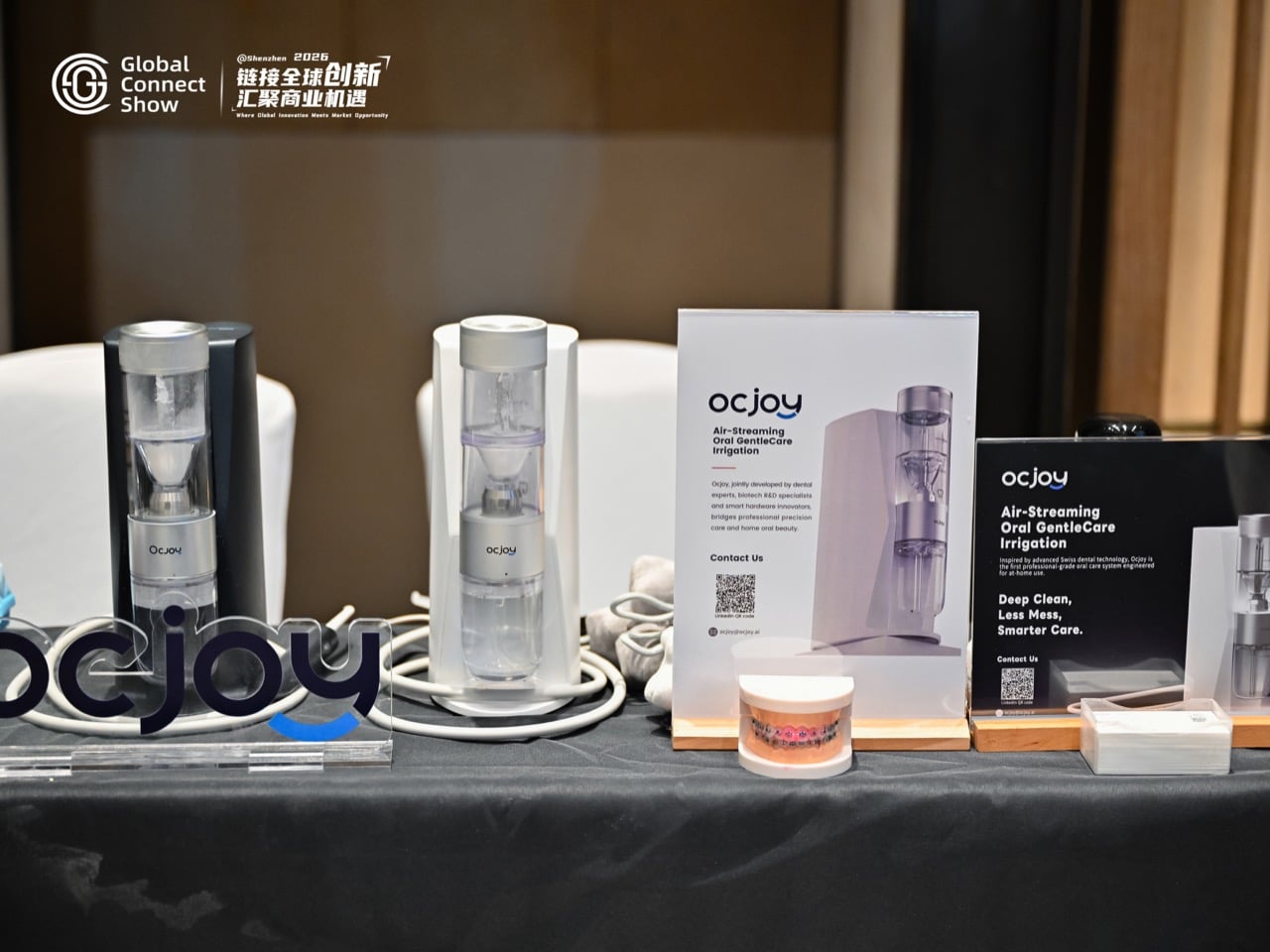
Few categories feel more clinically trapped than oral care. Most brands still speak in the language of plaque, whitening, sensitivity, and dentist-approved outcomes. Ocjoy took a different route. Its presentation focused on comfort, gentleness, and the emotional state attached to daily self-care. The most memorable line of the evening was not about performance metrics. It was about those two minutes before leaving the house and how that ritual should feel.
That reframing matters because it moves oral care out of the correction mindset and into the confidence mindset. The category has spent years talking like a clinic. Ocjoy talks like a lifestyle brand with an unusually intimate understanding of vulnerability. The promise is not simply a cleaner mouth. It is a better emotional launch into the day. When a founder positions a hygiene routine as a source of confidence, the product stops acting like equipment and starts behaving like emotional infrastructure.
Ollobot OlloNi – The thesis, standing on stage
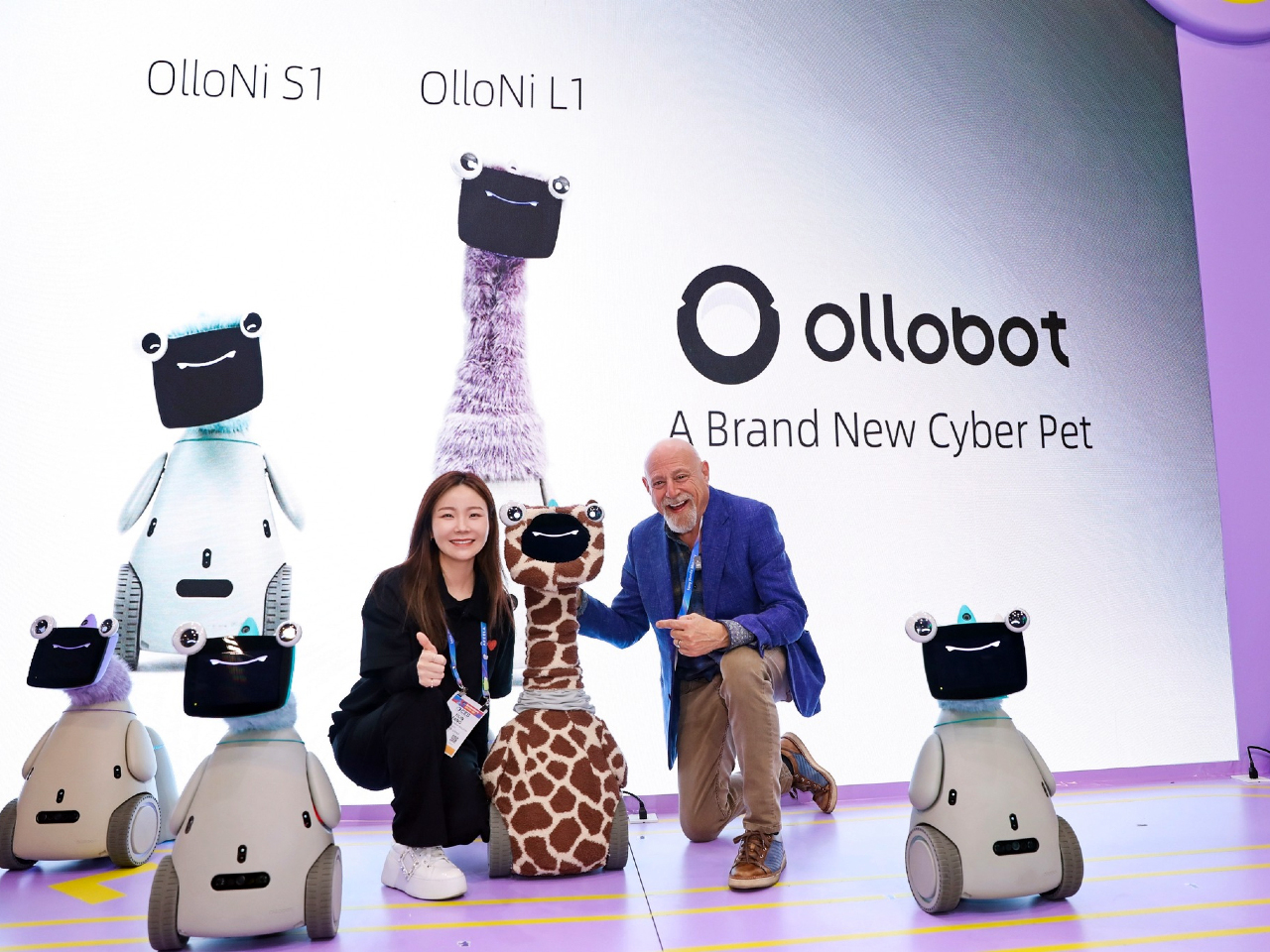
Then there was Ollobot, which felt like the entire article condensed into one physical object. The company’s cyber pet companion robot did very little to hide its intentions. This was a machine built for attachment. It was expressive, soft, almost creature-like, and explicitly framed as something that grows with a family over time. In a product landscape obsessed with doing, Ollobot was interested in being there.
That distinction is what made it so compelling. The company described emotional sensing, long-term memory, and a model of companionship shaped by repeated interaction. Even the idea that the robot’s memories could survive hardware failure, preserving continuity across bodies, suggests a design philosophy centered on relationship rather than replacement. That is a startling proposition for home tech. We are used to devices becoming obsolete. Ollobot imagines a household object whose value compounds through emotional history.
It also raises the biggest question hovering over this entire trend. What happens when the devices in our homes become fluent in feeling? A robot that remembers your face, senses your mood, and develops a unique personality over time can sound comforting, even beautiful. It can also sound like the most persuasive surveillance object ever designed. Empathy, after all, is a form of access.
What GCS Shenzhen 2026 actually revealed

Seen individually, these products occupy very different categories. Lawn care, golf accessories, family dashboards, children’s audio, digital twins, oral care, companion robotics. Seen together, they reveal a new competitive terrain. Features still matter. Performance still matters. Design still matters. But the strongest brands at GCS were reaching for something harder to quantify and easier to feel.
They were selling a home life with less friction and a better emotional texture. Calm instead of chaos. Confidence instead of routine dread. Presence instead of passive automation. Relief instead of one more task. That does not mean the smart home has become soft. If anything, it has become more sophisticated in the way it frames value. The next generation of domestic technology wants to be welcomed, trusted, and emotionally legible.
That is why Ollobot felt so important. It made visible what other brands were still expressing in subtler ways. The home is no longer simply getting smarter. It is getting more attuned to the people inside it, their moods, their rituals, their anxieties, their desire for time back, and their hunger for a domestic life that feels smoother on the inside.
Whether that future sounds comforting or invasive depends on your tolerance for intimacy from machines. Either way, Shenzhen made one thing clear. The smartest home products of 2026 are no longer competing only on what they do. They are competing on how they make you feel.
SHARE