Wandering hours watches have a bit of a wealth gap. On one end, you’ve got Audemars Piguet’s Starwheel and pretty much everything Urwerk makes, priced like a down payment on a house. On the other sit playful budget takes that let you test-drive the idea. The DWISS S1 lands between them, a Swiss Made automatic at $2,730 that won a 2026 European Product Design Award. It comes from Rafael Simoes Miranda, who has spent 15 years building DWISS around one stubborn idea: there’s always another way to show the time.
This is DWISS’s third take on the complication, after the two-disc RW1 in 2020 and the three-disc M3W a year later. Miranda’s brief came from the night sky, with the hours meant to travel across the dial the way the Moon circles the Earth. That orbit shaped everything from the disc layout to a new cushion case. The movement changes too, switching from the Sellita in the M3W to a modified La Joux-Perret G100 Soigné. Each launch color is limited to 50 pieces, and DWISS never reissues a design.
Designer: Rafael Simoes Miranda
Two Discs, Twelve Hours, Zero Hour Hands
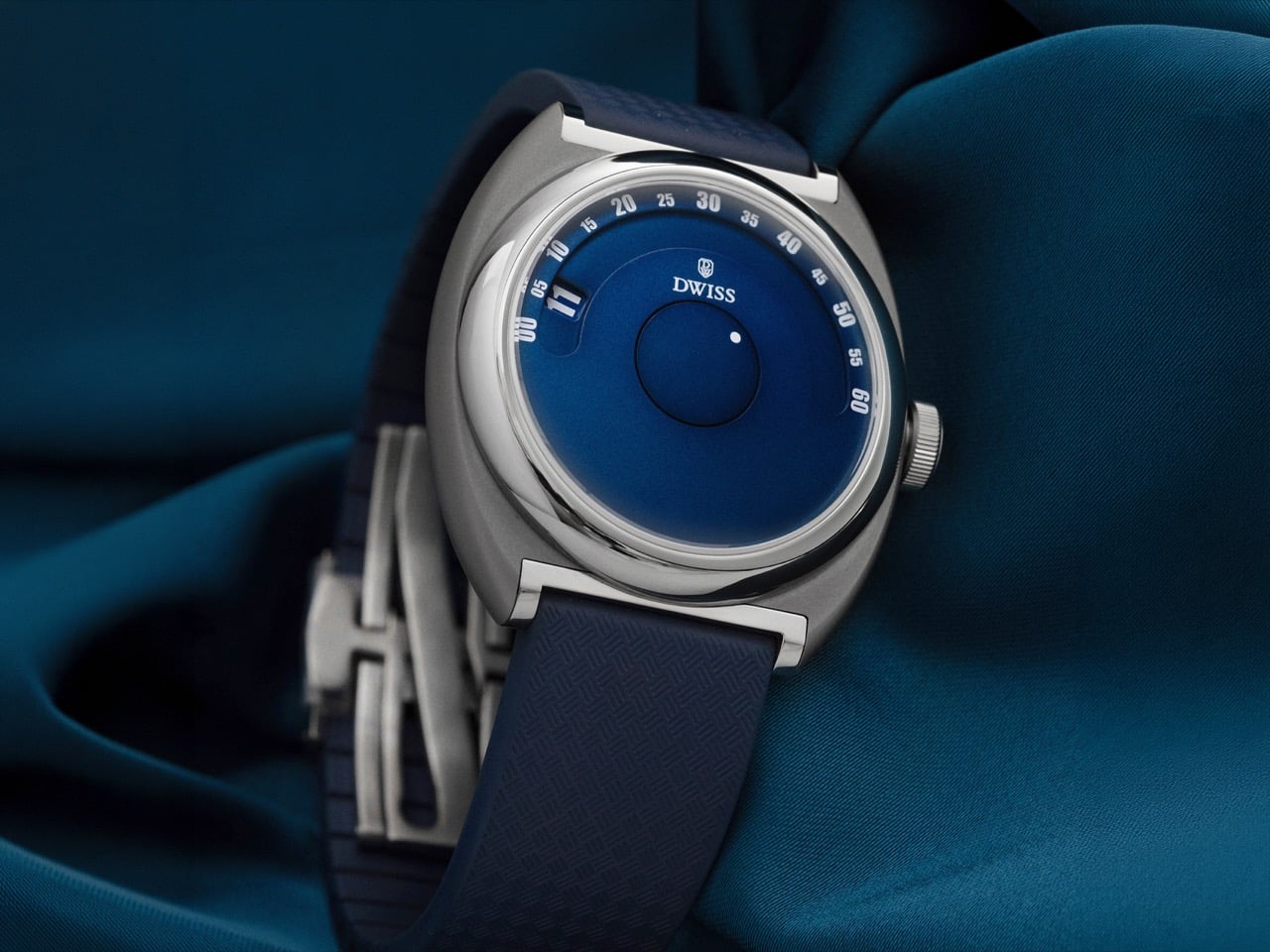
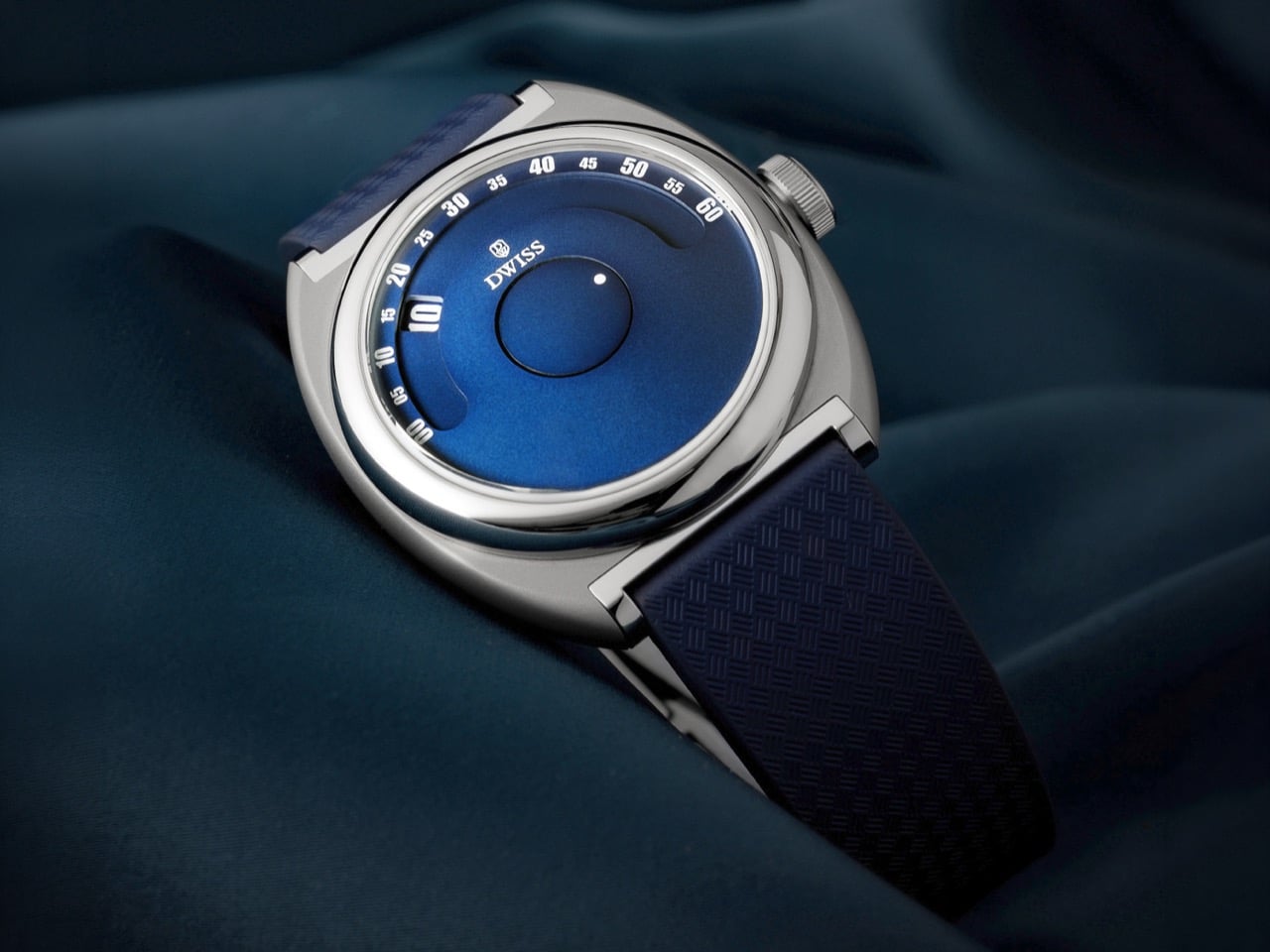
A minute scale running from 00 to 60 sweeps across the top half of the S1’s dial, and the current hour rides along it in a small window. The numeral’s position on the scale gives you the minutes, so a “10” hovering over the 15 means 10:15. Two satellite discs share hour duty, one carrying the odd numerals and the other the even ones. A central carrier turns once every two hours, presenting each numeral in turn and hiding the rest beneath the dial. Seconds get their own disc at the center, with a single white dot as the marker.
Using two discs trims the classic recipe. When Audemars Piguet revived wandering hours in 1991 with the Starwheel, it used three discs carrying four numerals apiece, a layout many brands have followed since. The idea itself goes back to 1656, when the Campani brothers built a silent, lamp-lit night clock for Pope Alexander VII, who couldn’t sleep through the ticking of a regular one. DWISS pares back that triple-satellite arrangement to keep the focus on the numeral crossing the minute scale. Give yourself a day to learn to read it, and maybe a week to stop showing it to everyone at dinner.
A Cushion Case Built Around an Orbit
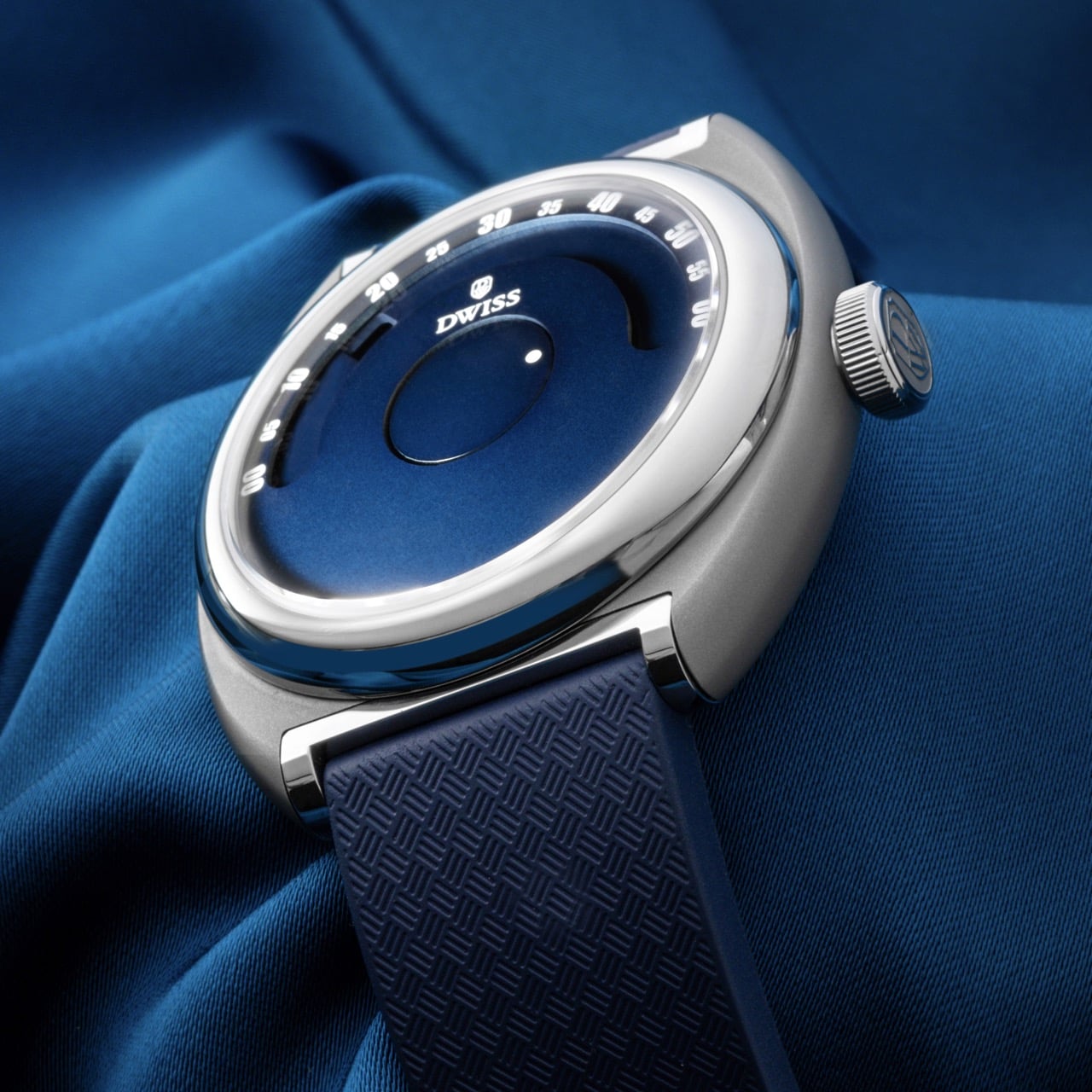
Miranda says the complication shaped the case. The hour display needs horizontal room to travel, so the S1 uses a cushion shape that widens the dial, with rounded corners softening its outline. It measures 1.57 inches (40mm) across, 1.73 inches (44mm) lug-to-lug, and 0.54 inches (13.8mm) thick, with 330 feet (100m) of water resistance. A double-domed sapphire crystal with anti-reflective coating bulges over the dial like a lens. DWISS also designed the central seconds disc to echo the case’s geometry.
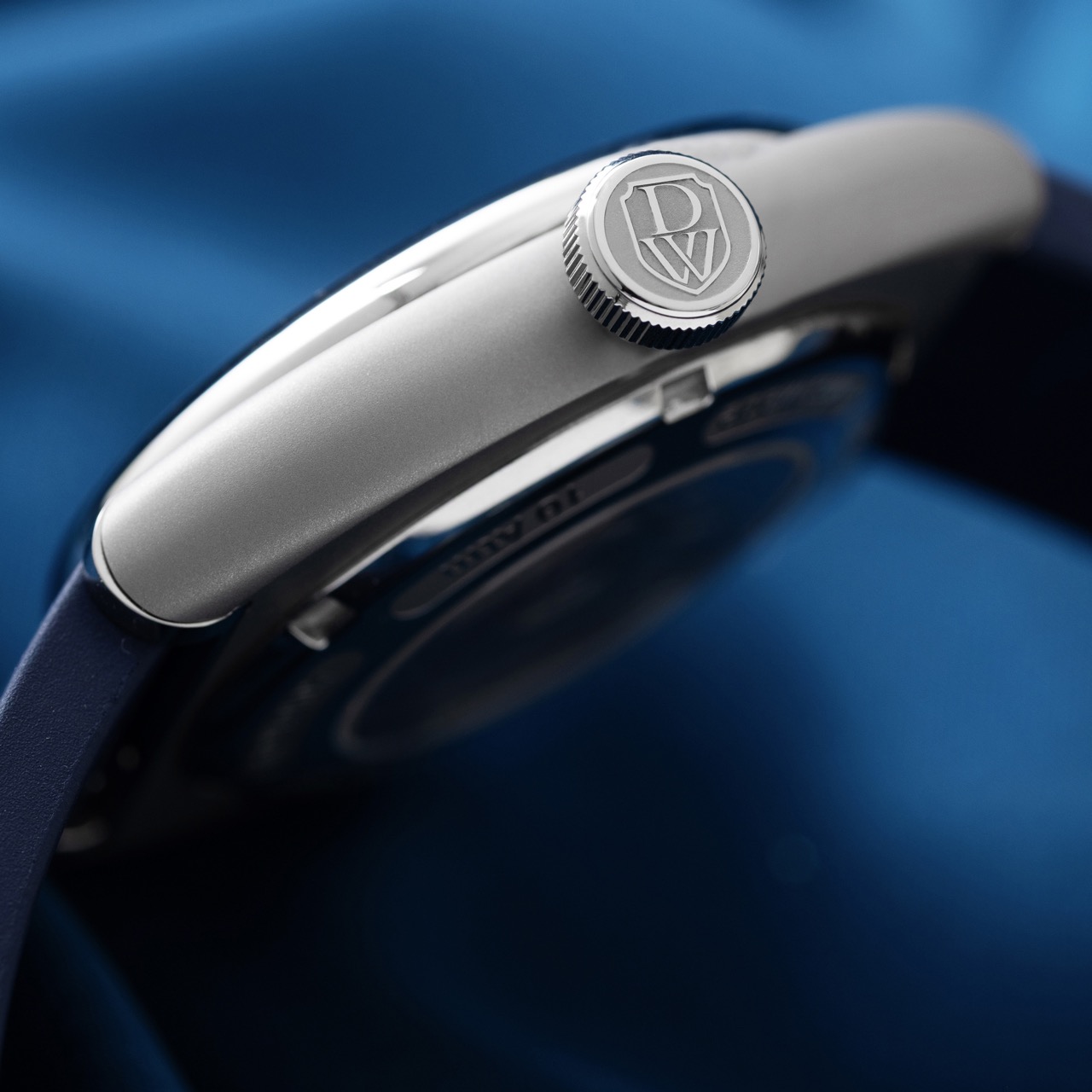
Texture does more work than shine here, with a sandblasted main body, brushed lugs, and a high-polish bezel. Flip it over and an exhibition caseback reveals the movement, with the edition number out of 50 printed on the back. The crown carries an engraved DWISS shield, a small touch you’ll mostly notice while setting the time. Each S1 ships on a cut-to-size FKM rubber strap with a steel butterfly clasp, in a shade matched to the dial. FKM is a fluoroelastomer valued for its resistance to sweat and skin oils.
Where $2,730 Lands in the Wandering Hours World
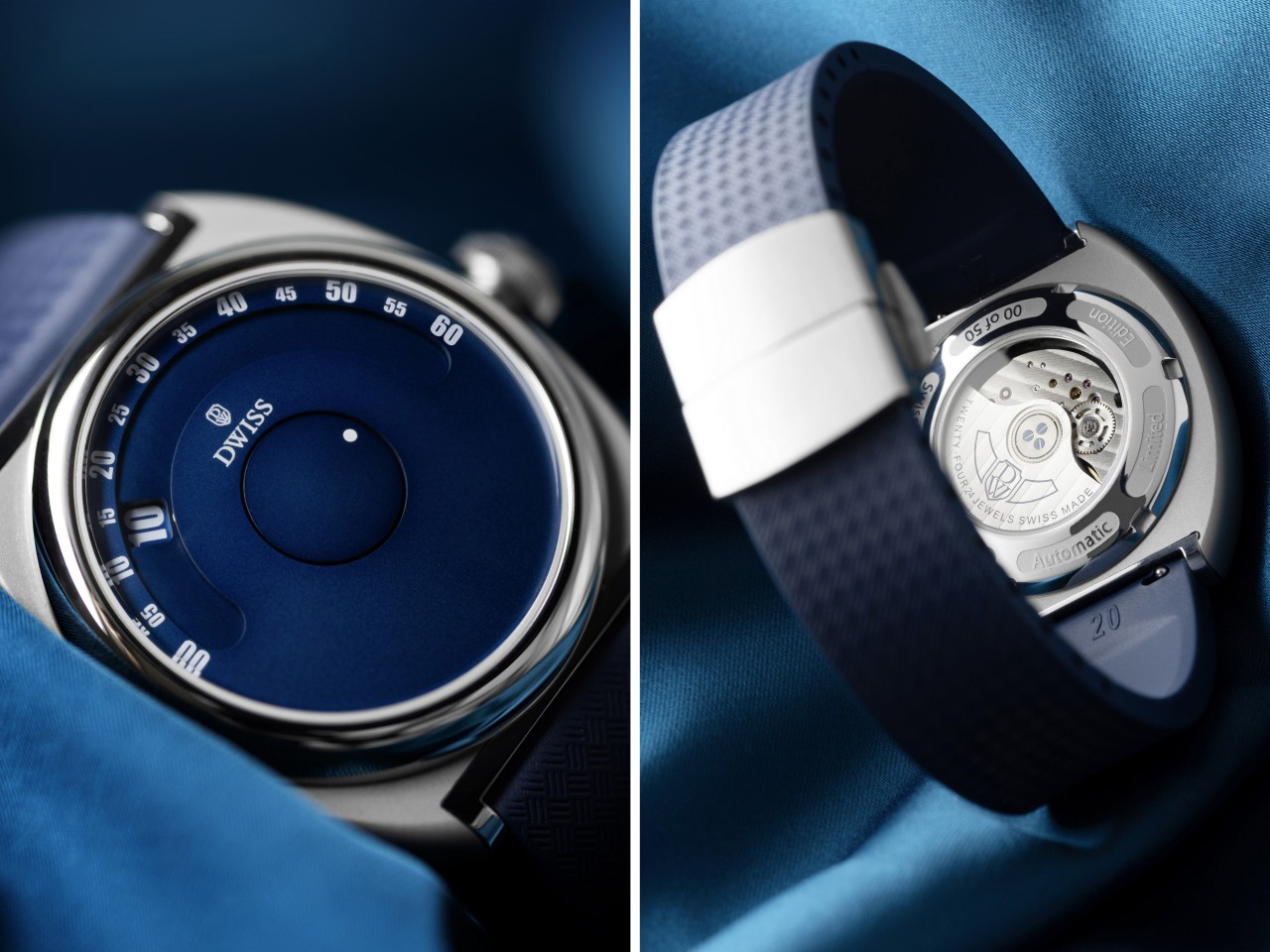
Inside sits a La Joux-Perret G100 Soigné, modified by DWISS to drive the wandering hours module. La Joux-Perret has been owned by Citizen since 2012, and the G100 was developed as a modern alternative to the ETA 2824 that has powered a huge share of Swiss automatics for decades. The big gain is power reserve, with 68 hours versus roughly 38 to 42 from a 2824 or Sellita SW200. Take it off Friday night and it’ll still be running Monday morning. The Soigné grade adds Geneva stripes, perlage, and blued screws, all visible through the caseback.
The S1 sells for $2,730 (CHF 2,200) in blue, green, salmon, and black, plus two 15th-anniversary editions in silver and orange at CHF 2,300, roughly $2,840. Every color is capped at 50 pieces, 300 in total, sold through DWISS’s website with free worldwide shipping. That slots it between the Xeric Scrambler at $1,199 and Gorilla’s Vaucher-powered Outlaw Drift at $3,950. The European Product Design Award recognized the S1 as a finished production watch in its luxury watches category.