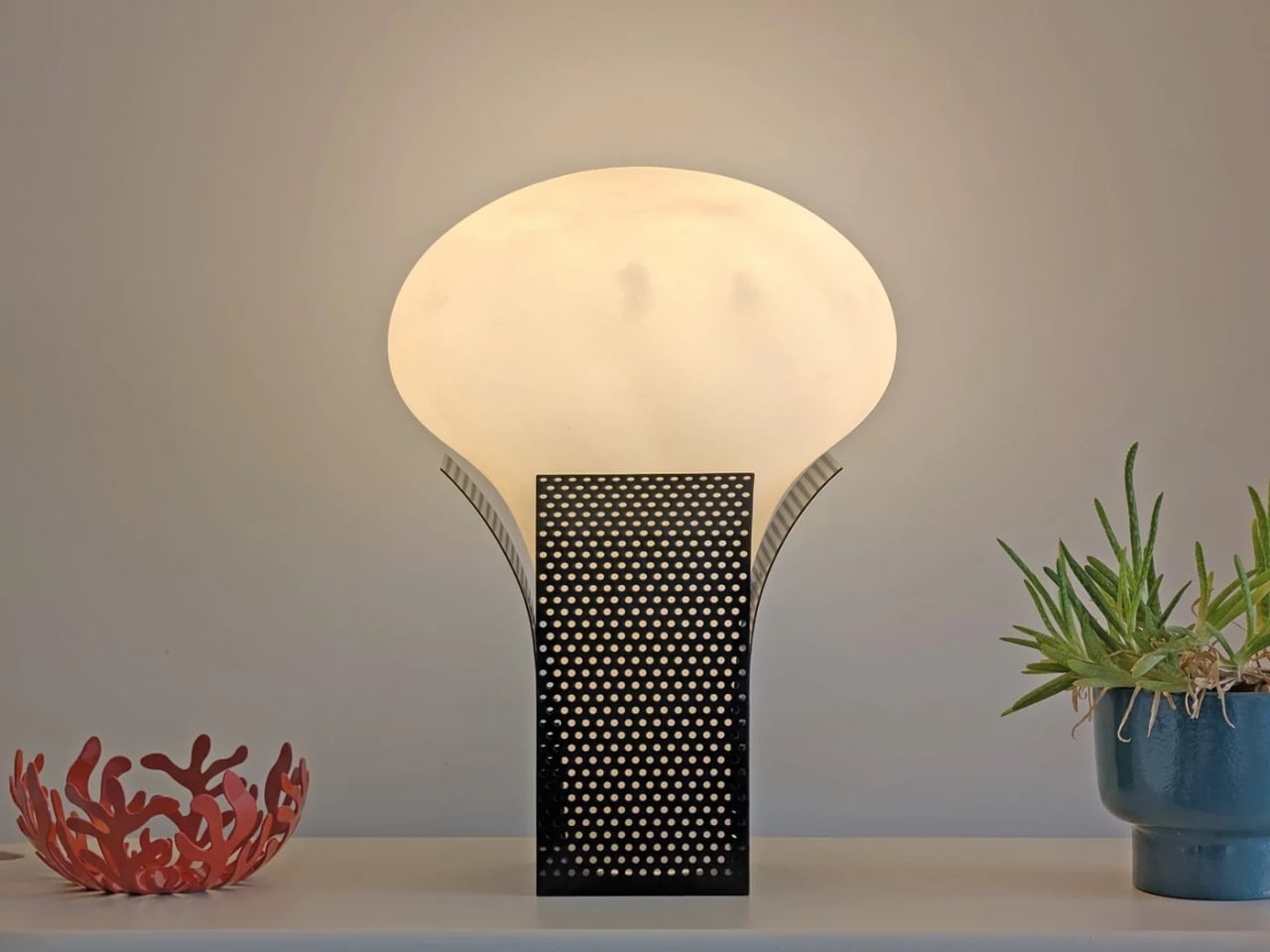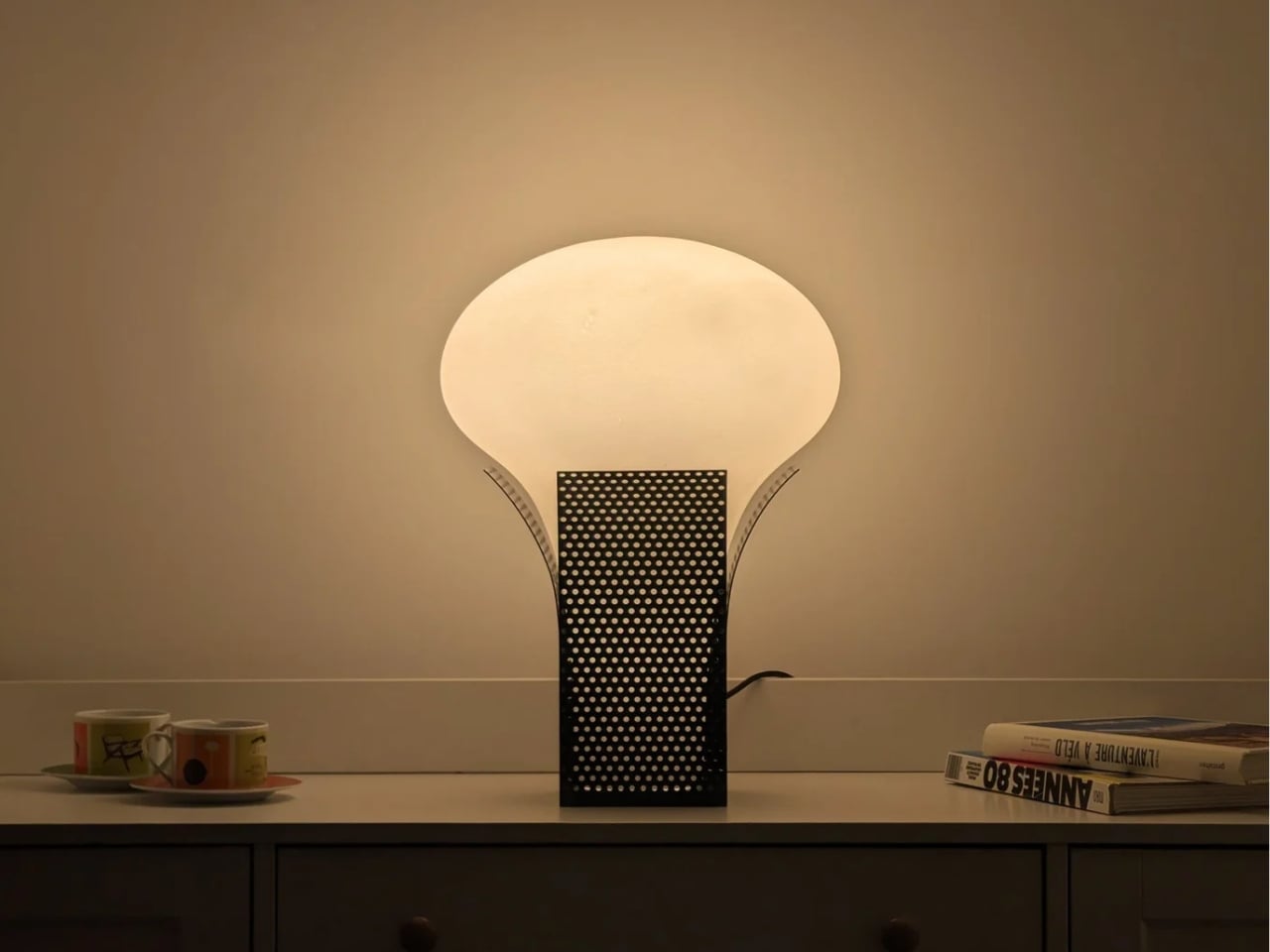
A glowing dome appears to have pushed its way out of a black steel box, bending the sides outward as it escapes. Pandora, a table lamp by François Kessler, makes that little visual drama its entire personality. It also offers an appealing answer to a familiar decorating problem: wanting softer evening lighting and an interesting object without adding a separate sculpture to an already crowded console.
Listed for sale through design marketplace Perlo, Pandora brings its sculptural ambitions to an everyday household object. I like that its appeal doesn’t depend on knowing anything about design. You can read the gesture immediately. The pale upper volume looks almost inflated, while the dark casing seems unable to contain it. A lamp sitting perfectly still manages to suggest that something is happening.
Designer: François Kessler
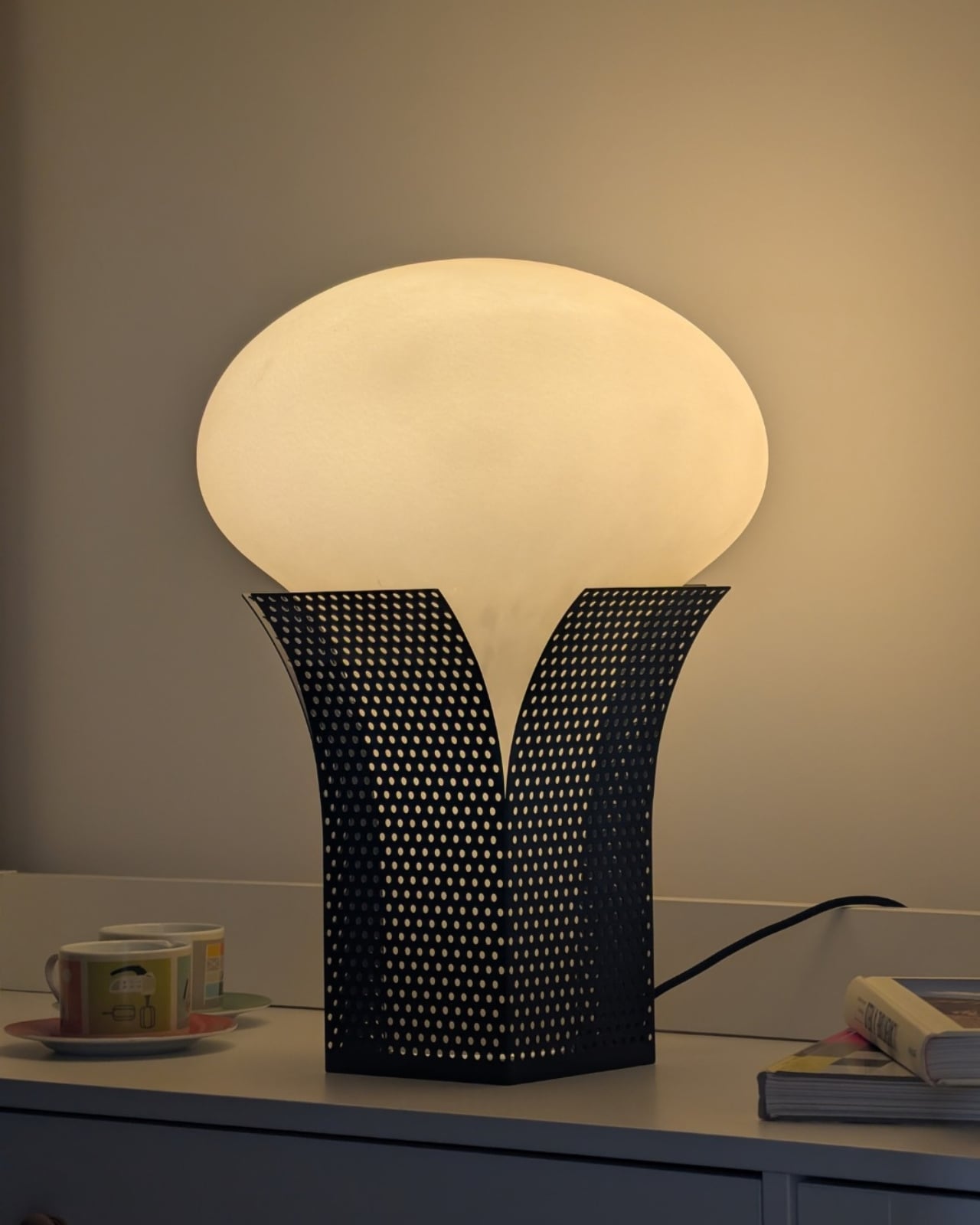
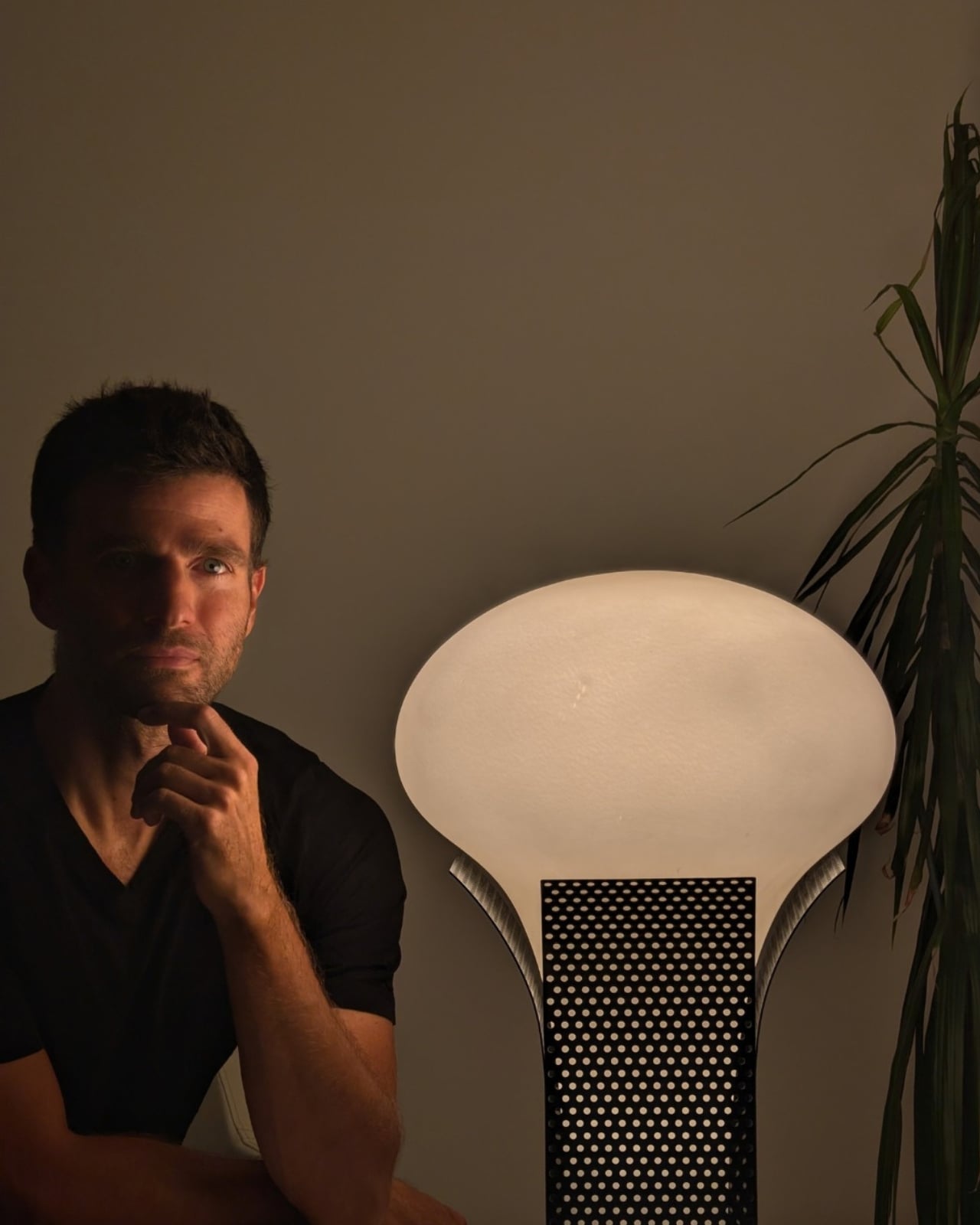
The silhouette has the broad cap and narrower lower section of a mushroom lamp, but the proportions feel a little unruly. In the supplied photographs, the dome spreads generously beyond its base. Below it, the steel rises in straight-sided panels before curving outward near the top. Those flared edges make the junction between the two materials the most interesting part of the object. Your eye follows the apparent pressure from inside.
Viewed from a corner, two panels form a deep V-shaped opening beneath the dome. From a more frontal angle, a rectangular perforated face dominates, with curved metal edges visible on either side. That change matters for a table lamp. It suggests Pandora could reward placement where you see it from several directions, rather than being treated as a decorative face that always needs to point toward the couch.
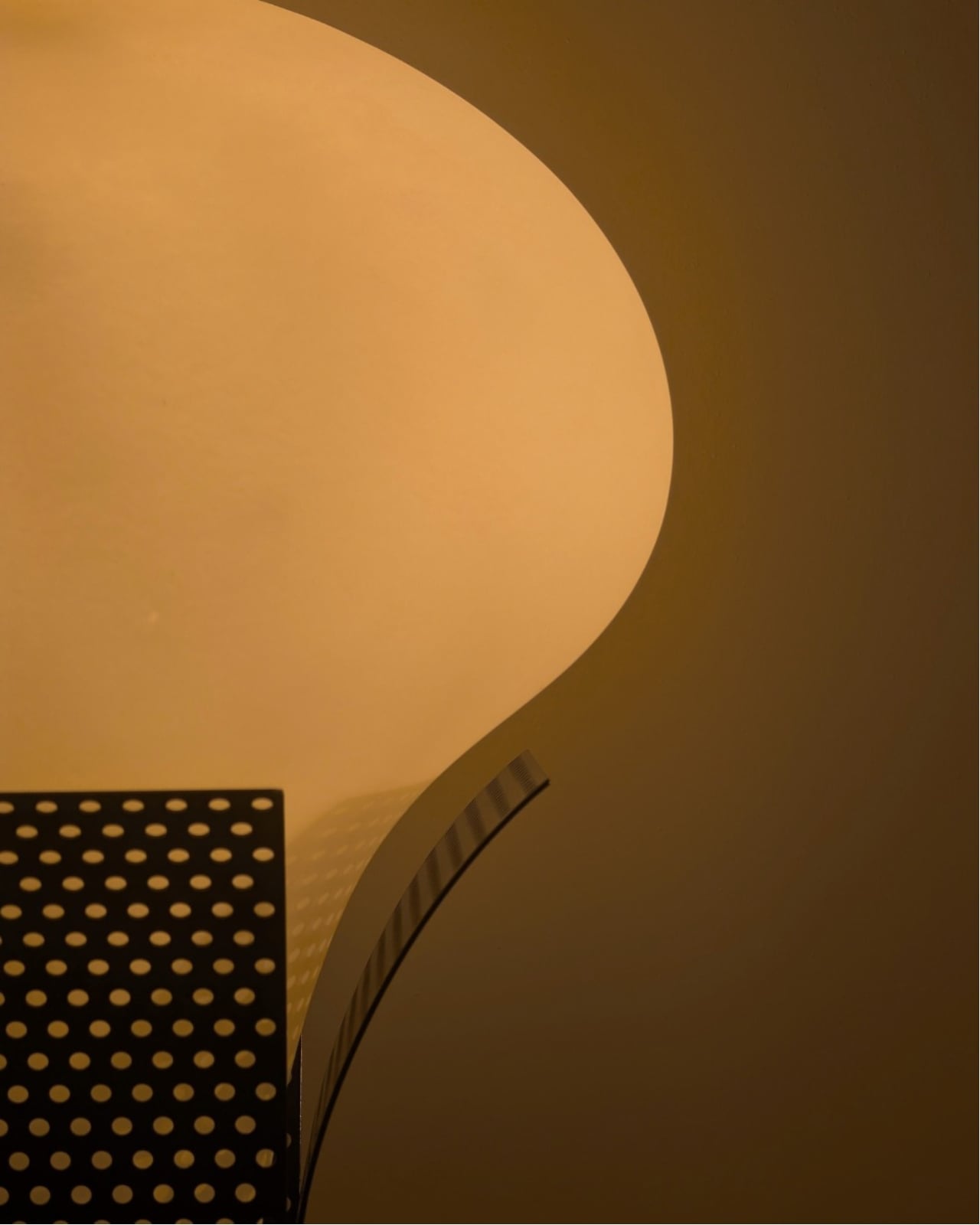
The crystal is also less predictable than the word might suggest. Forget a cut-glass sparkle. Here, the illuminated surface looks cloudy and gently mottled, closer to a glowing stone or an oversized puffball. Perlo describes a thin powder layer that filters the light. The photographs show subtle variations across the dome, which give the broad surface some texture instead of making it look like a uniformly lit plastic shell.
Then there are the holes. Rows of small circular perforations cover the base, allowing glimpses of the illuminated volume below the exposed dome. That detail earns its place. A solid black enclosure would make the lamp look more top-heavy, at least visually. The pinpoints of light break up that darkness and help the upper and lower portions feel connected. The glow appears to continue inside the box.
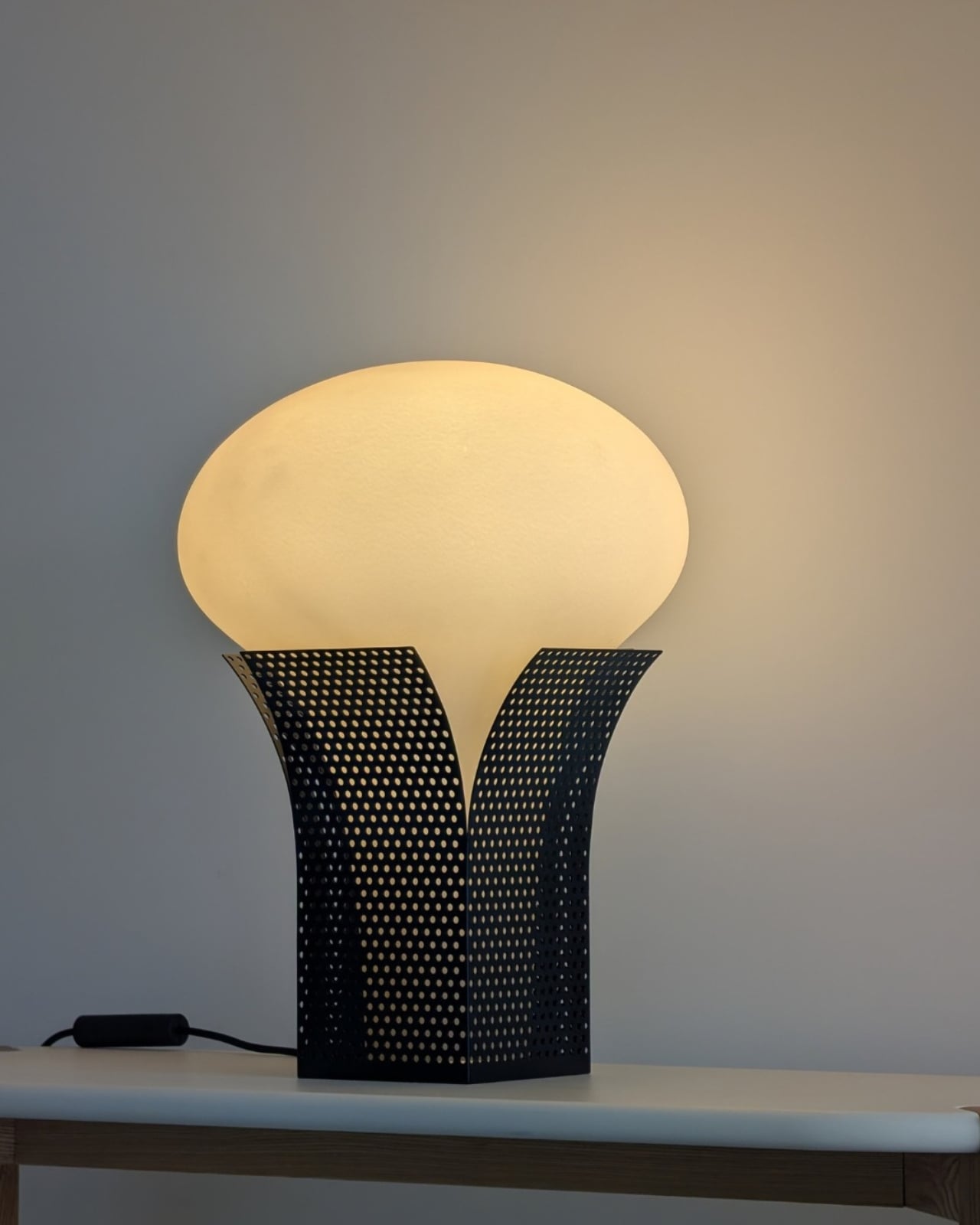
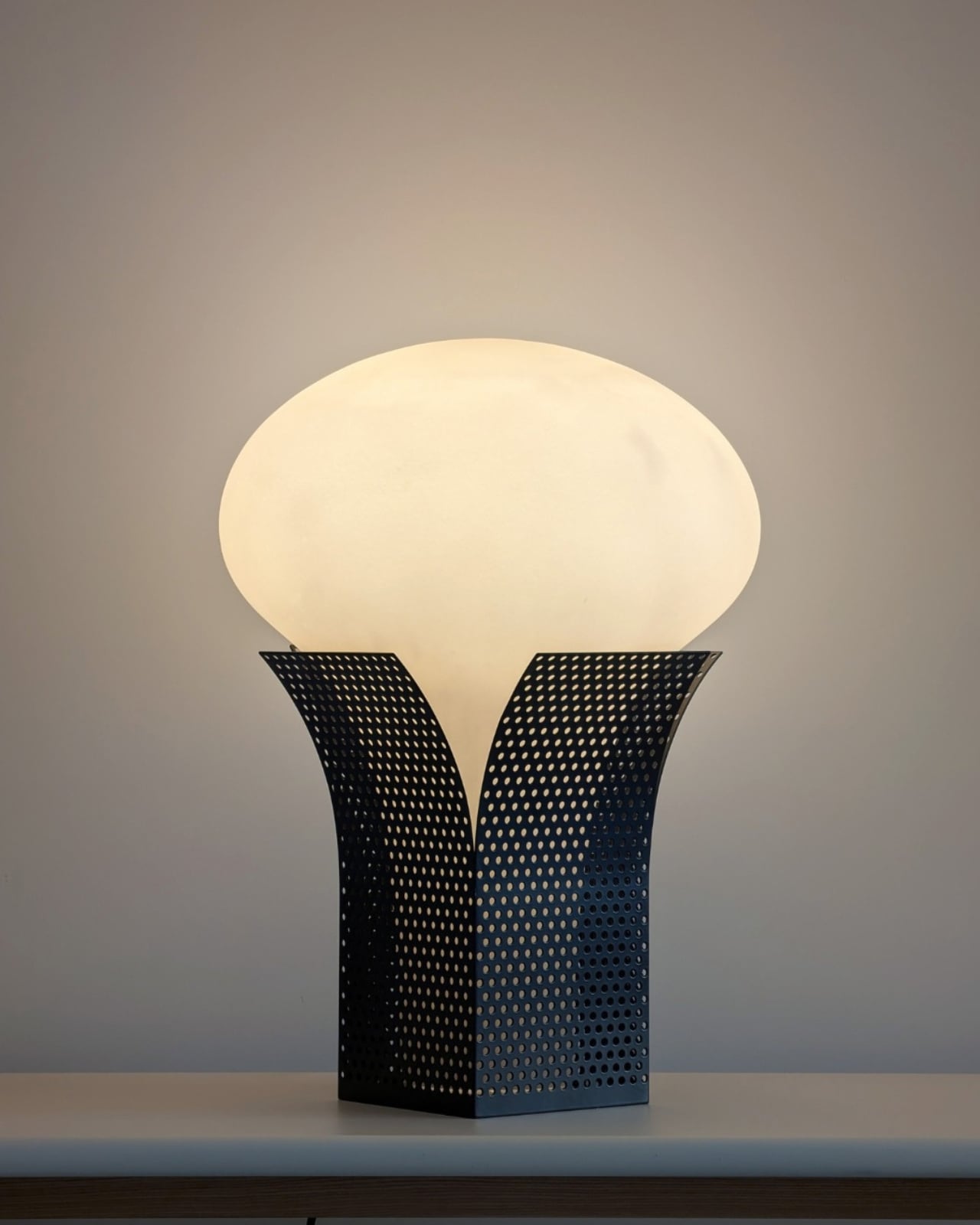
My favorite decision is how little the steel has been disguised. Its regular perforations retain an industrial character, even beside that rounded, luminous form. The combination reminds me slightly of a science-fiction prop that has wandered onto a sideboard, though it’s restrained enough to live beside coffee cups and paperbacks. I’d give it a fairly plain backdrop. The outline already supplies plenty to look at.
There are reassuringly ordinary details behind the unusual shape, too. Perlo lists a cord-mounted switch and dimmer, along with an included warm-white bulb that can be replaced. A dimmer makes sense for an object intended to draw attention through its glow. The replaceable bulb is the more consequential detail for me: an expressive lamp should remain useful after its original light source stops working.
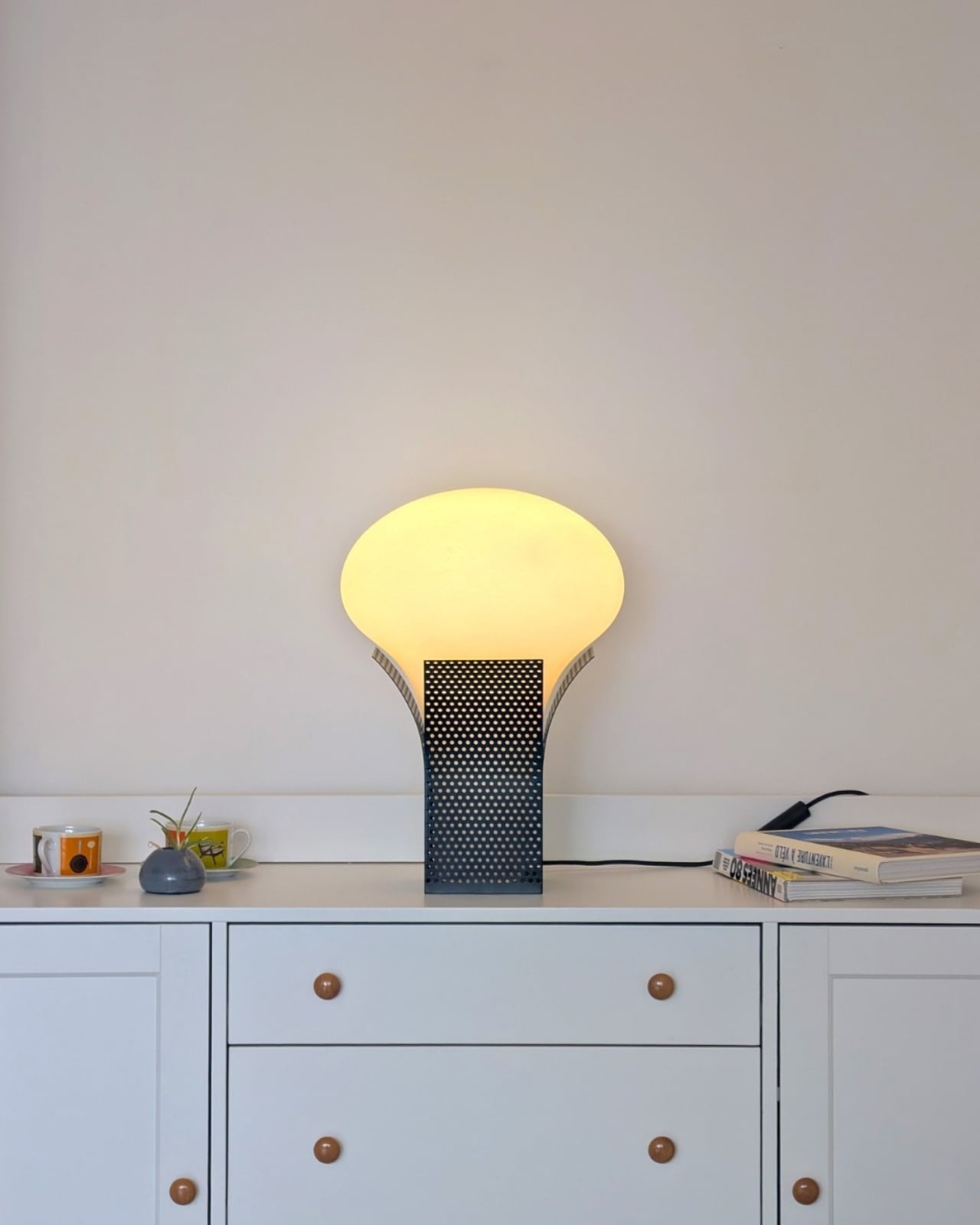
The price places it firmly in considered-purchase territory. Perlo lists Pandora at €1,300 and describes French manufacture, with made-to-order production estimated at six weeks. That makes the choice as much about wanting this particular object as needing another light. The photographs don’t establish reading performance, either. I’d approach it as an atmospheric piece for a console or side table, rather than assume it could replace a dedicated task lamp.
Pandora’s strongest quality is that you can understand its idea without an explanation, then find more to enjoy up close. The flared metal gives the dome an apparent force; the perforations let you peek at what the casing conceals. I’m drawn to that combination of clarity and curiosity. It gives a familiar household object enough character to hold its own on a shelf, without requiring everything around it to become equally theatrical.