Hoarders, I mean collectors, like me have a bag problem. Whenever I see an interestingly designed bag or an event where there are free tote bags, I can’t help but get one for myself, even though I know I have a cabinet full of barely used ones. Sometimes I think about the ecological footprint of all these bags that I own. So I tell myself my next bag purchase will be a bag made from reused materials (and that I should probably give away some of these bags that I’m not using).
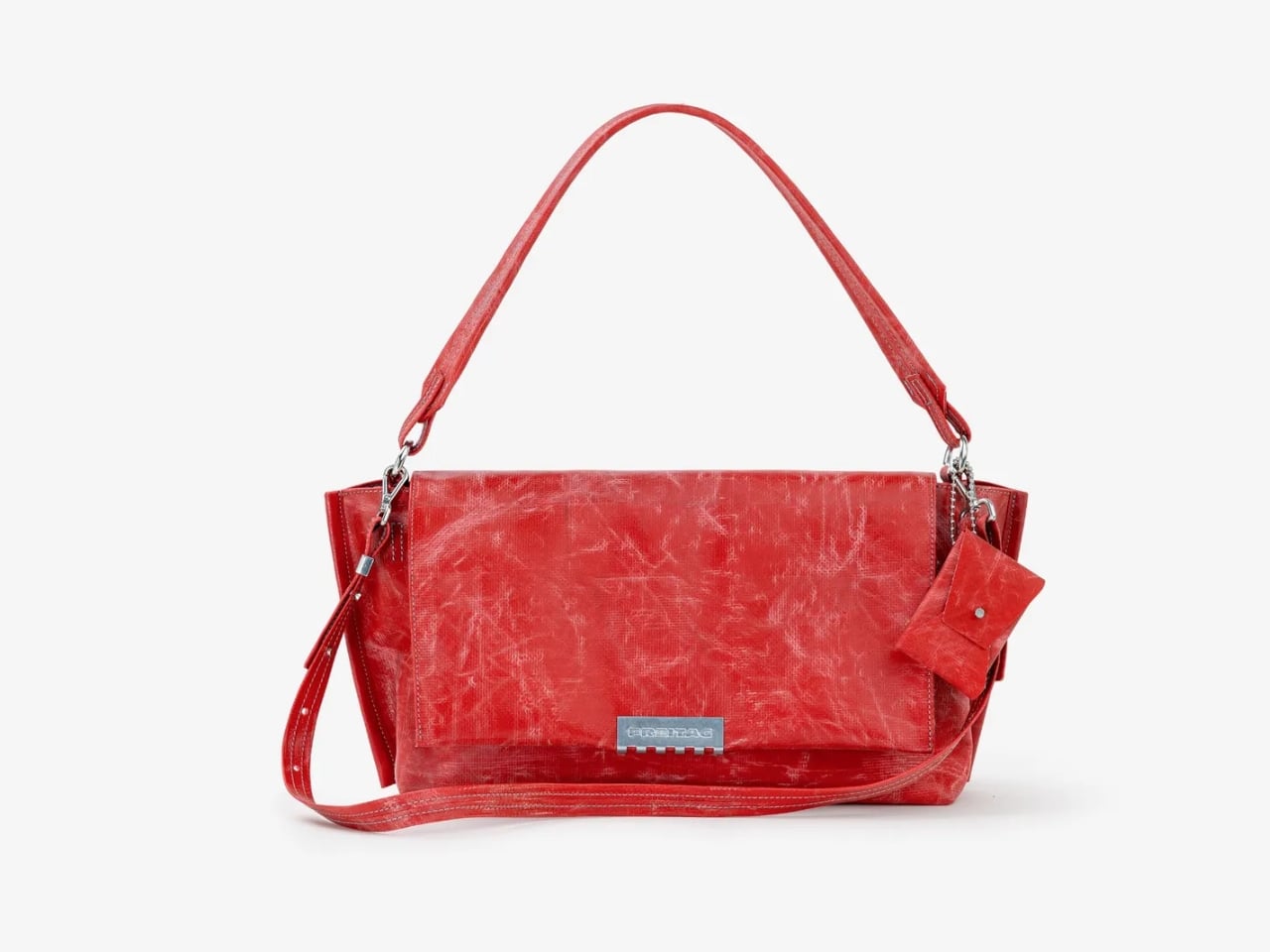
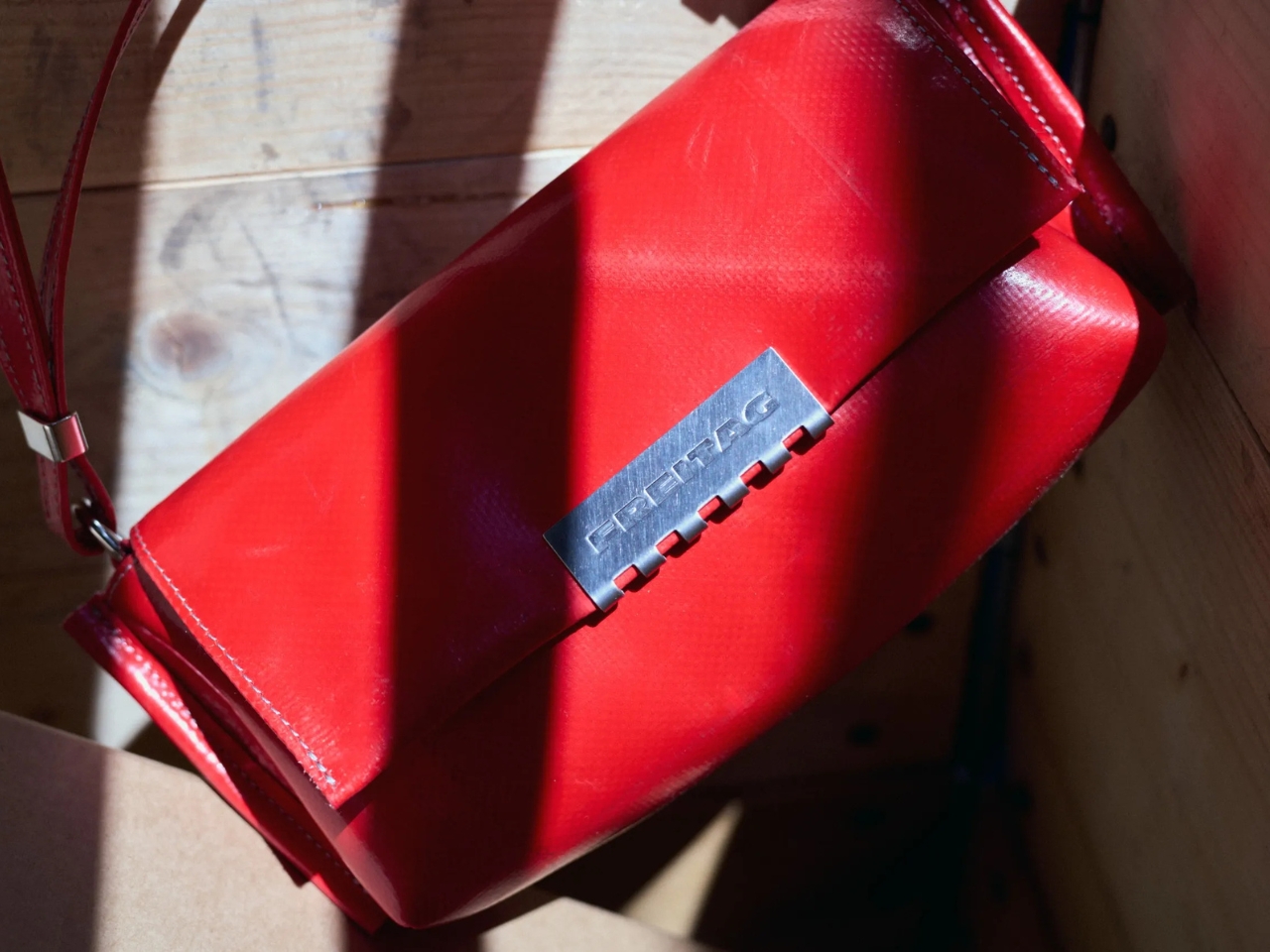
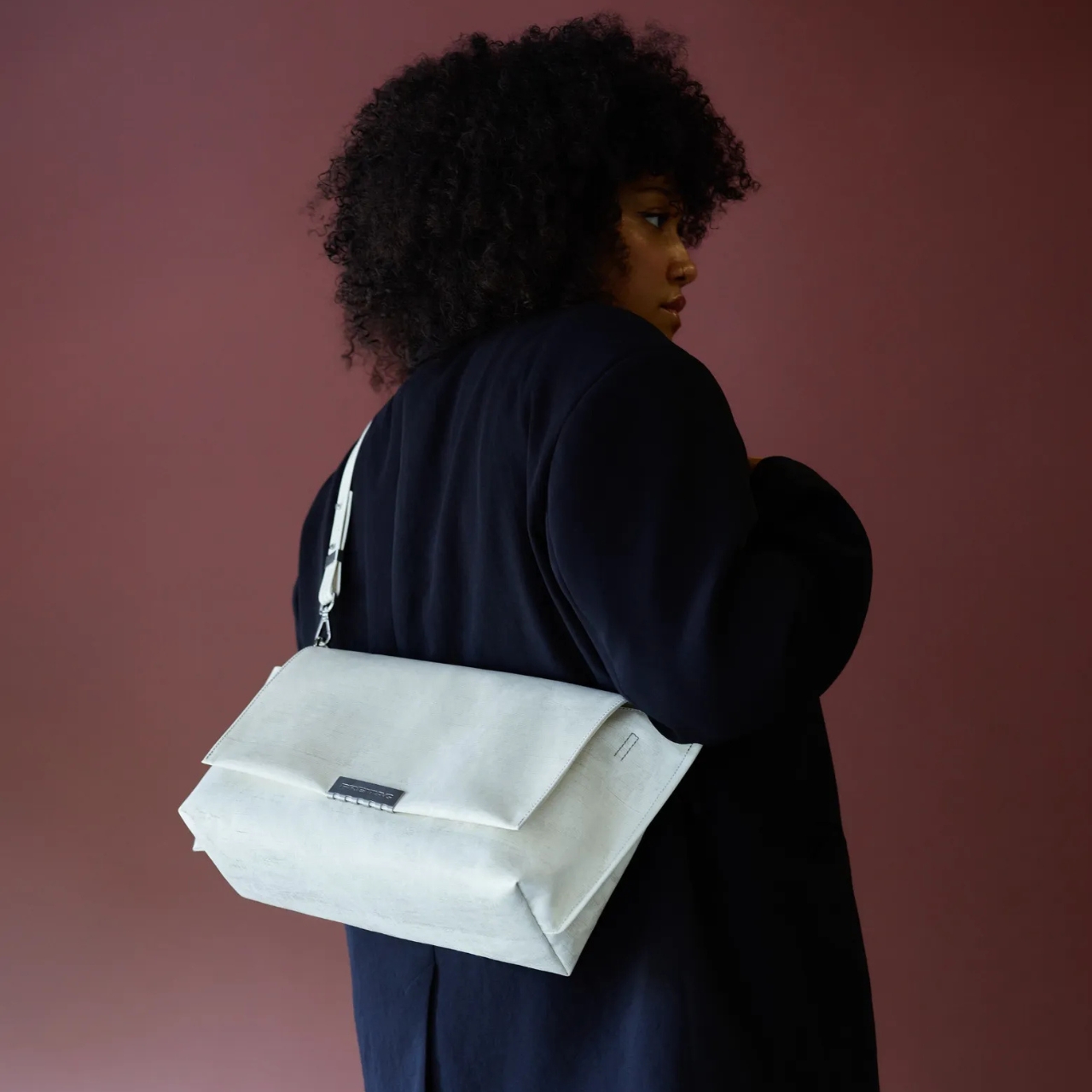
Well, if I had $600 to spare, I might have found my next bag purchase. The updated Reference collection from Swiss bag brand Freitag uses upcycled truck tarpaulins as its main material, with more carefully selected colors and textures. The bags are still minimalist in design, but they have individual marks, textures, and patina, adding to the lived-in look of these items made from repurposed materials.
Designer: Freitag
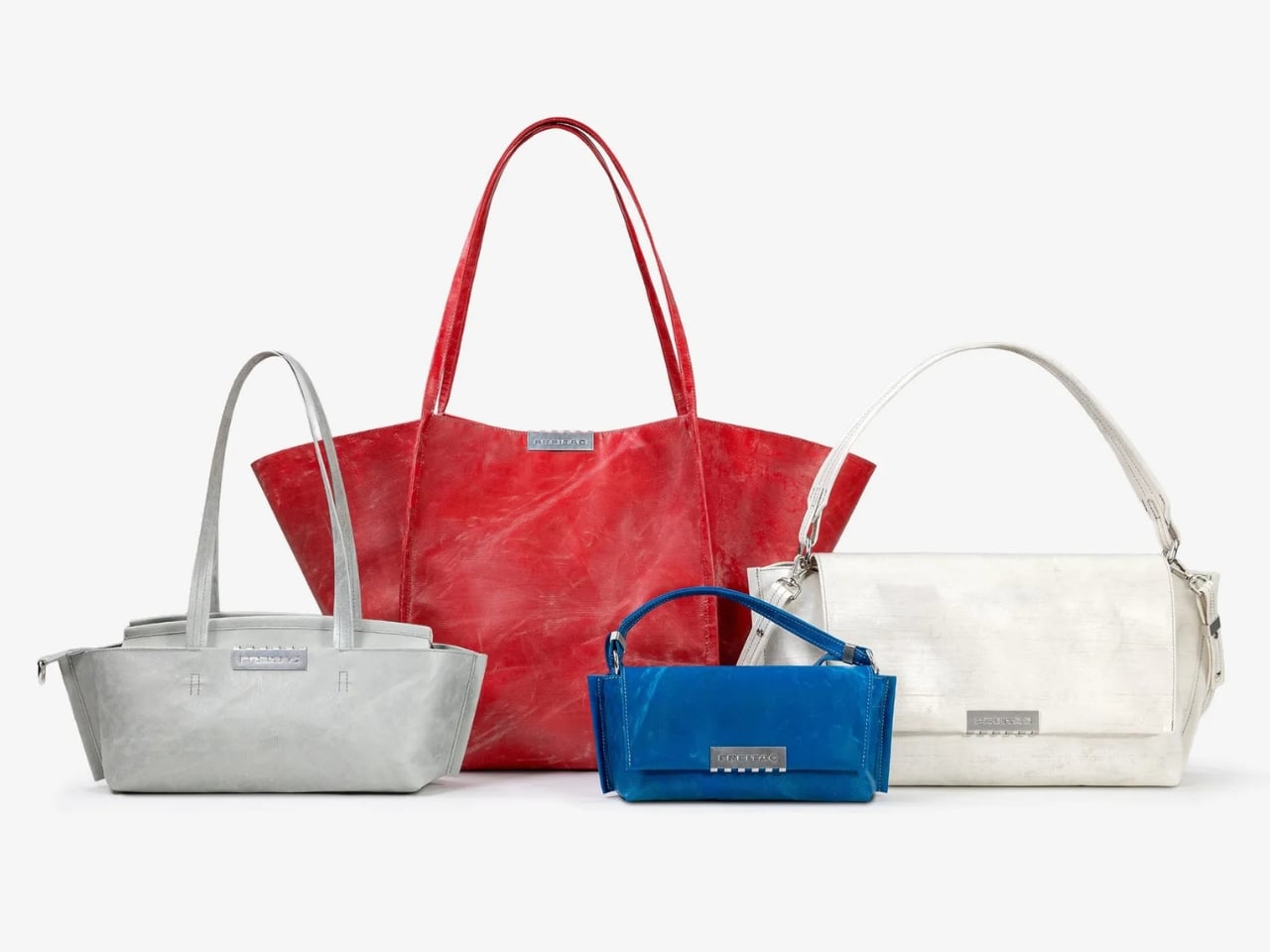
The redesigned collection has four models, each with important, practical details. The tarps are sourced throughout Europe, and the bags are then produced in small batches by European production partners. Aside from the tarpaulins, the interiors also use recycled polyester.
Elly is a compact essentials bag that has a magnetic closure, a zippered inner compartment for your valuables, and an adjustable shoulder strap. It can be carried by hand, on the shoulder, or crossbody. With a 1.5-liter capacity, it’s the smallest option, for days when you only need the basics.
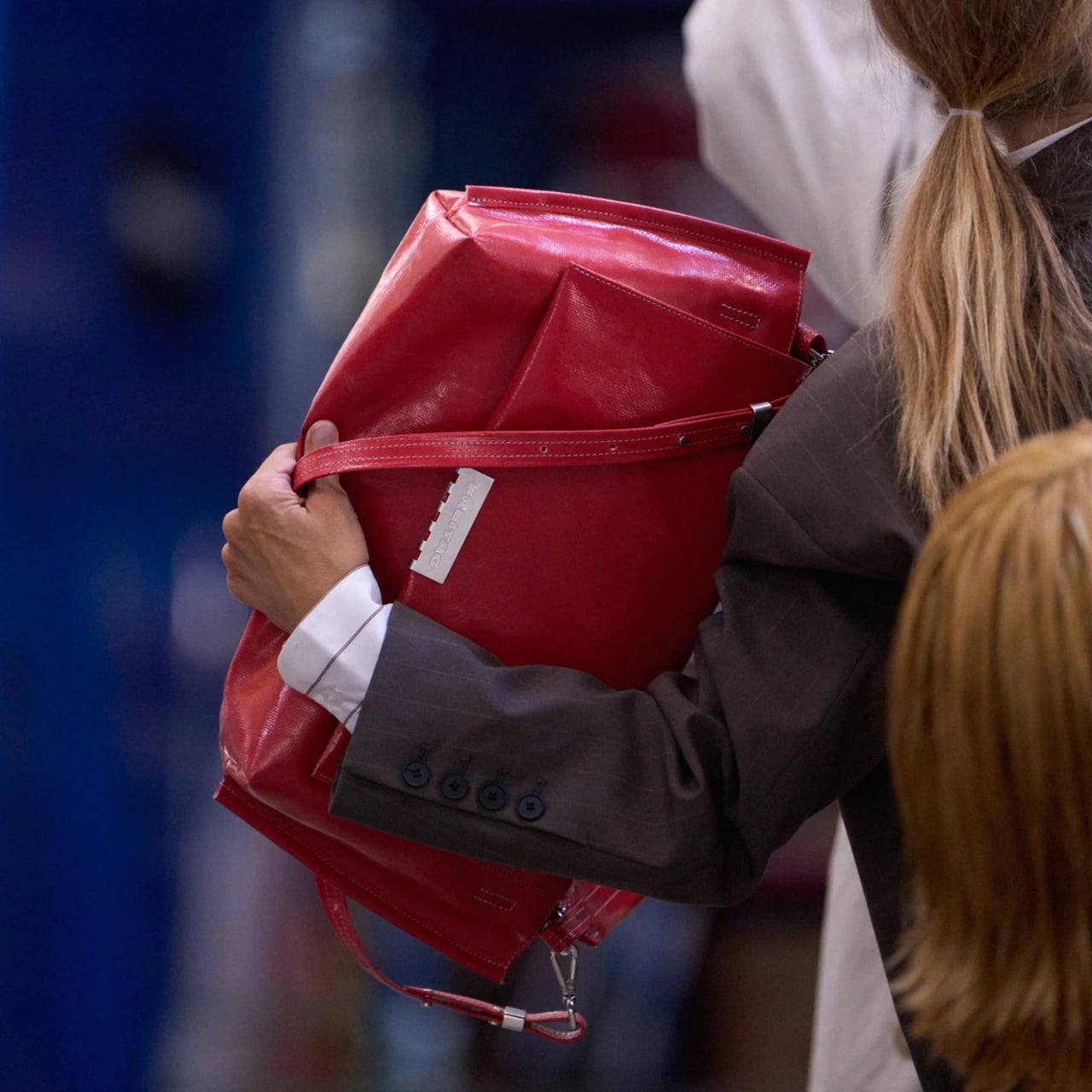
Bates, meanwhile, is a bigger bag that is listed as fitting a 13-inch laptop. It has a zippered main compartment under a tarp flap and a three-position magnetic closure for adjustable volume. A wide shoulder strap and an additional crossbody strap give you carrying options, while inner pockets and a key docking loop help organize smaller items.
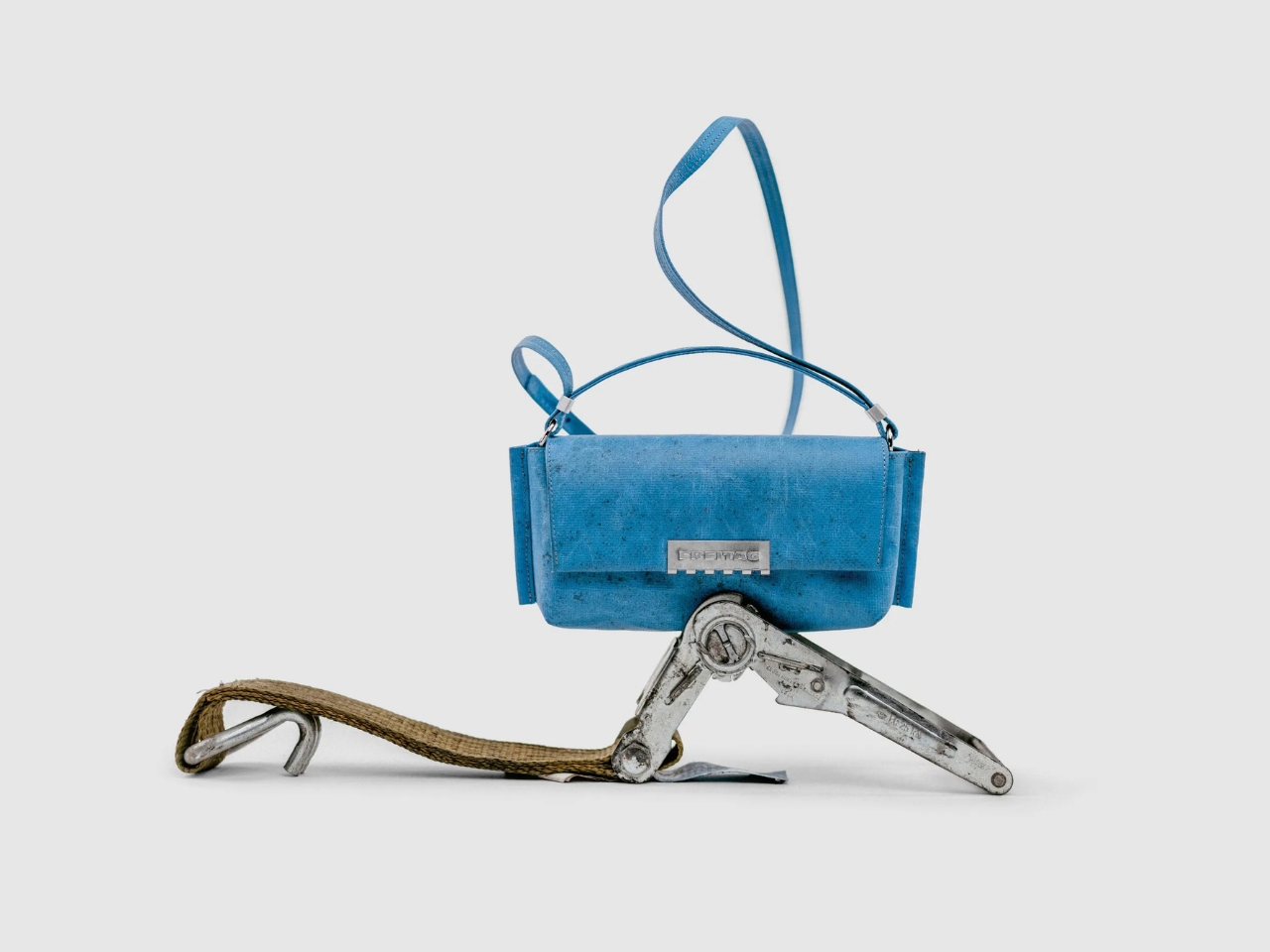
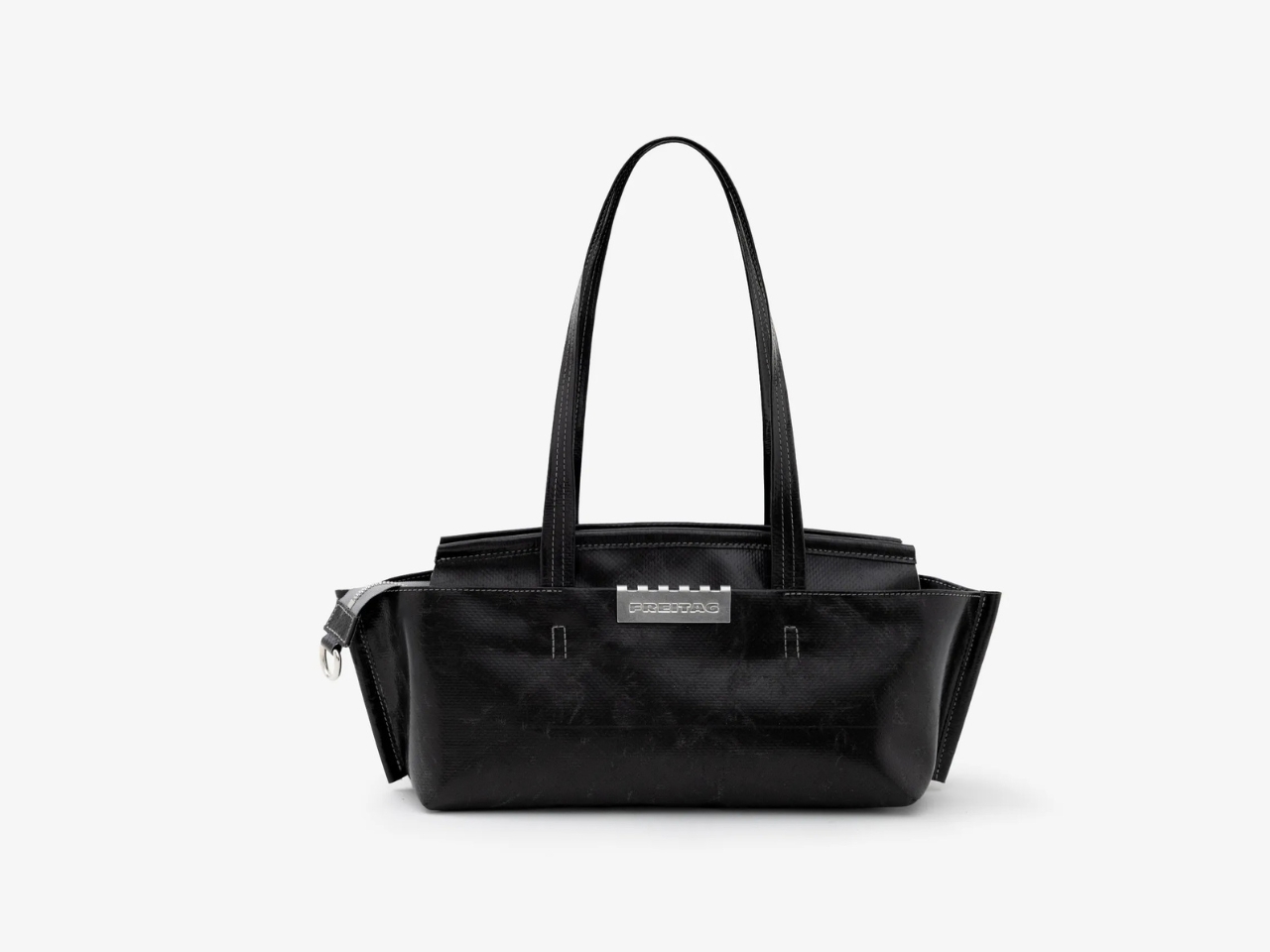
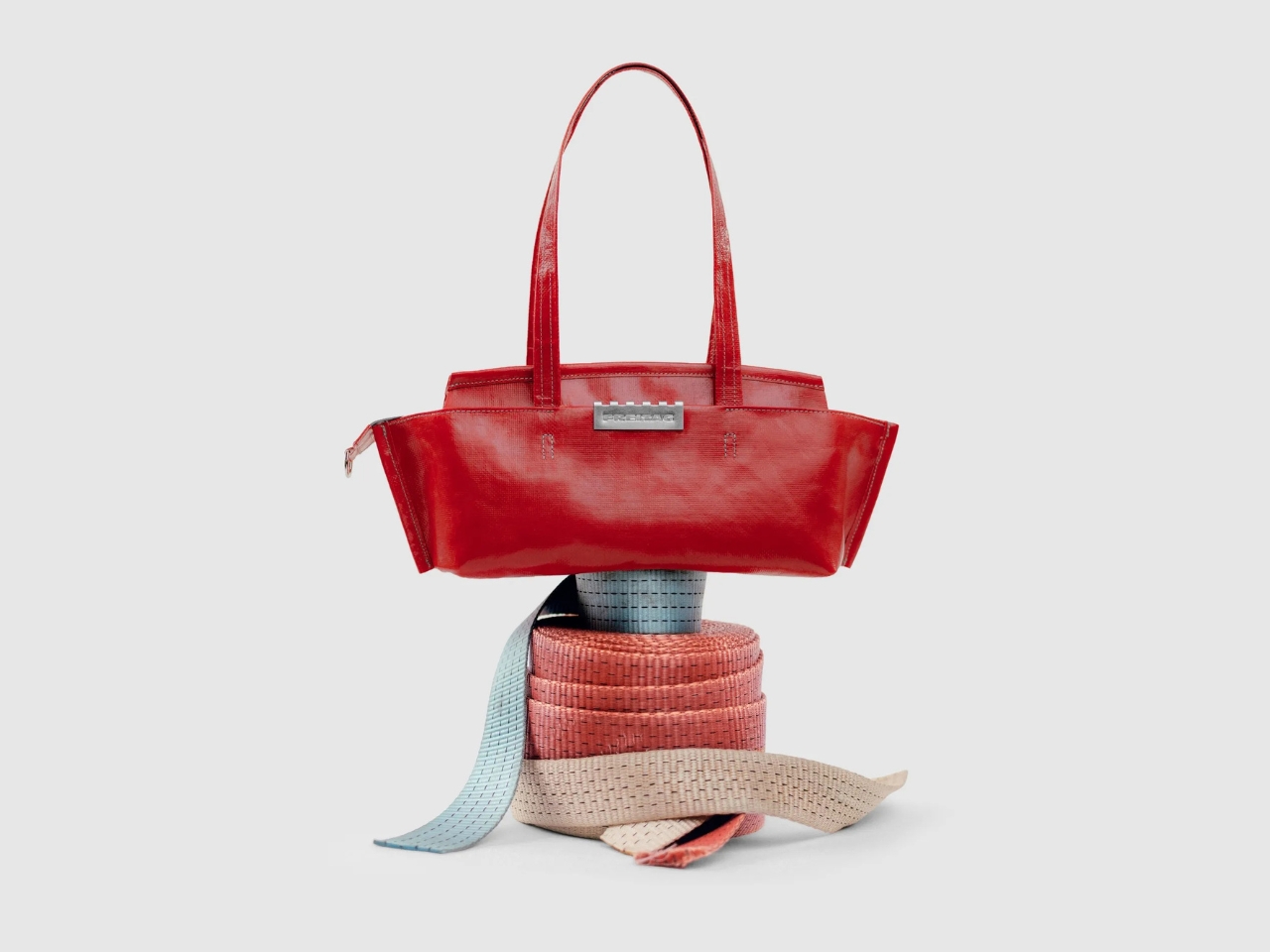
Nan is for those who prefer smaller handbags that can be carried by hand, over the elbow, or on the shoulder. It has a baguette-style design, a rear slip pocket, and a zippered main compartment. Its four-liter capacity offers more space than Elly without going up to Bates’s size.
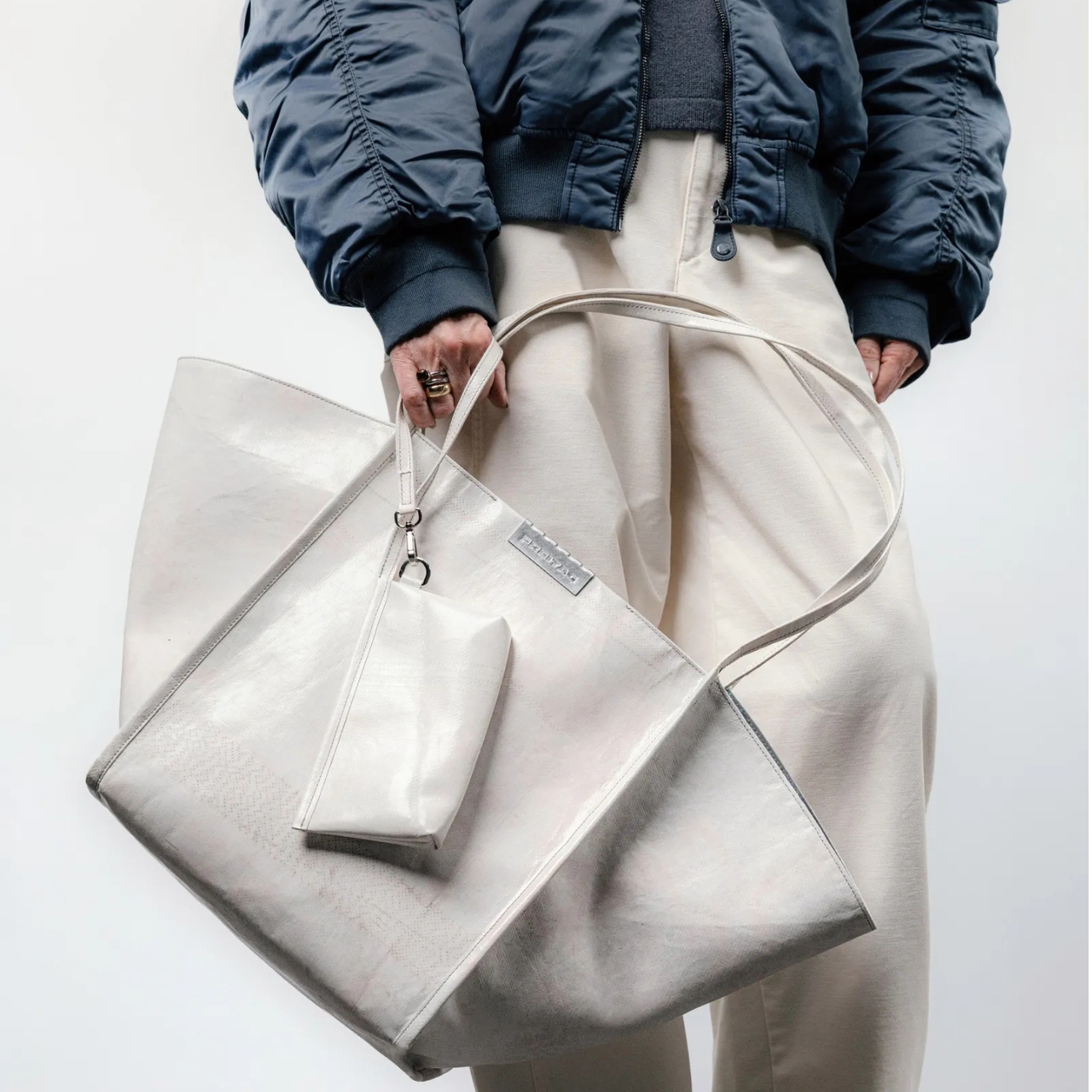
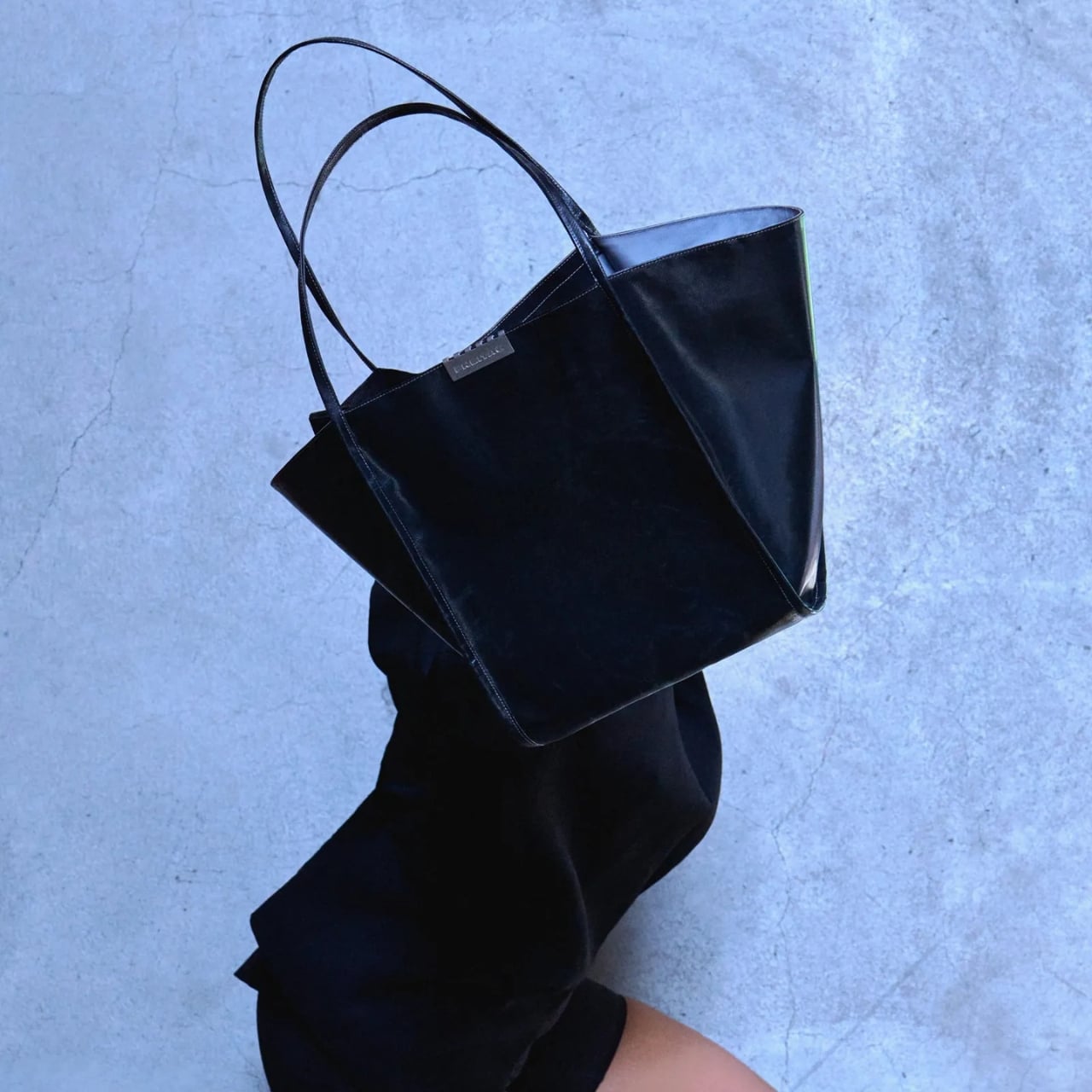

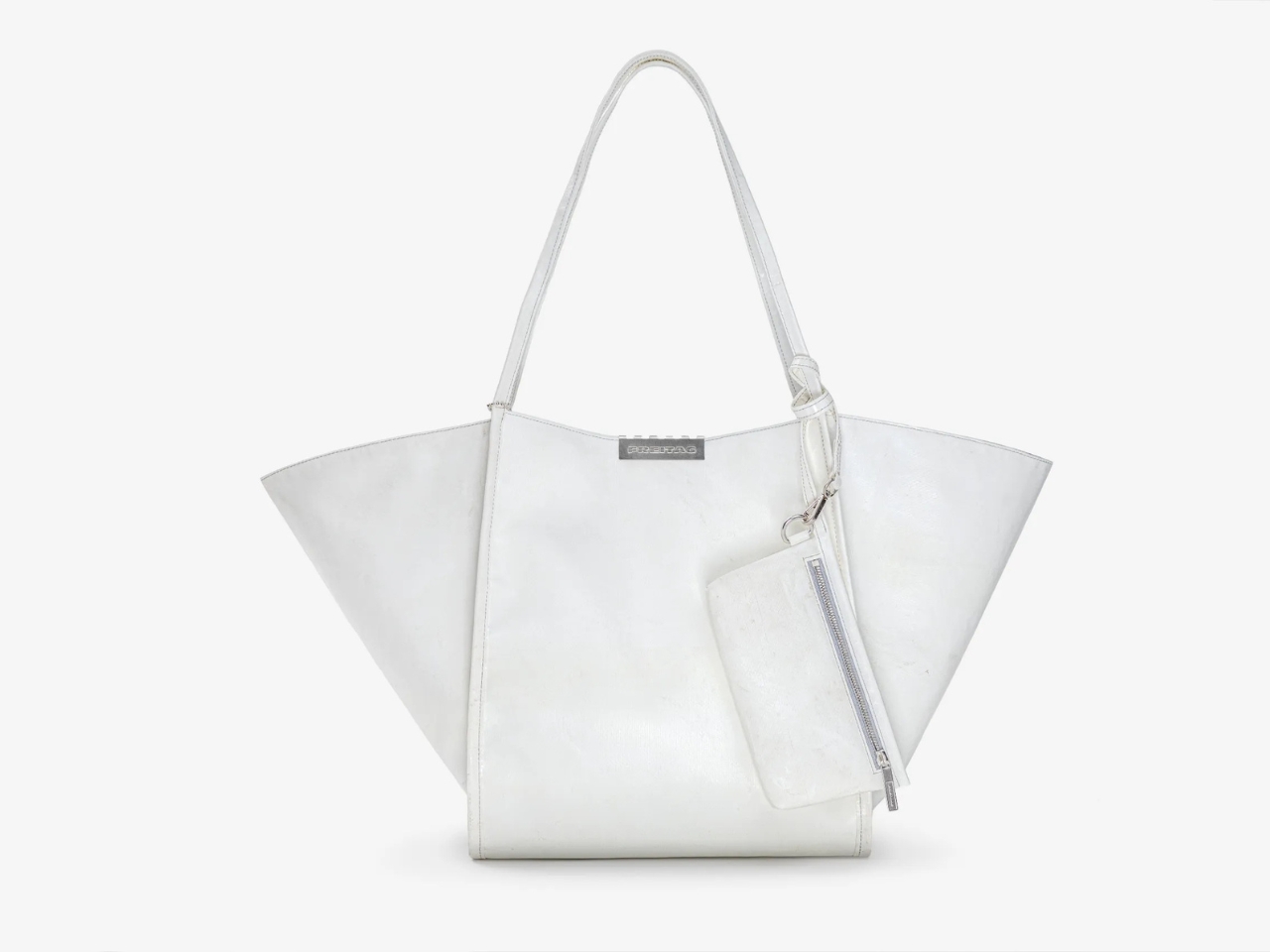
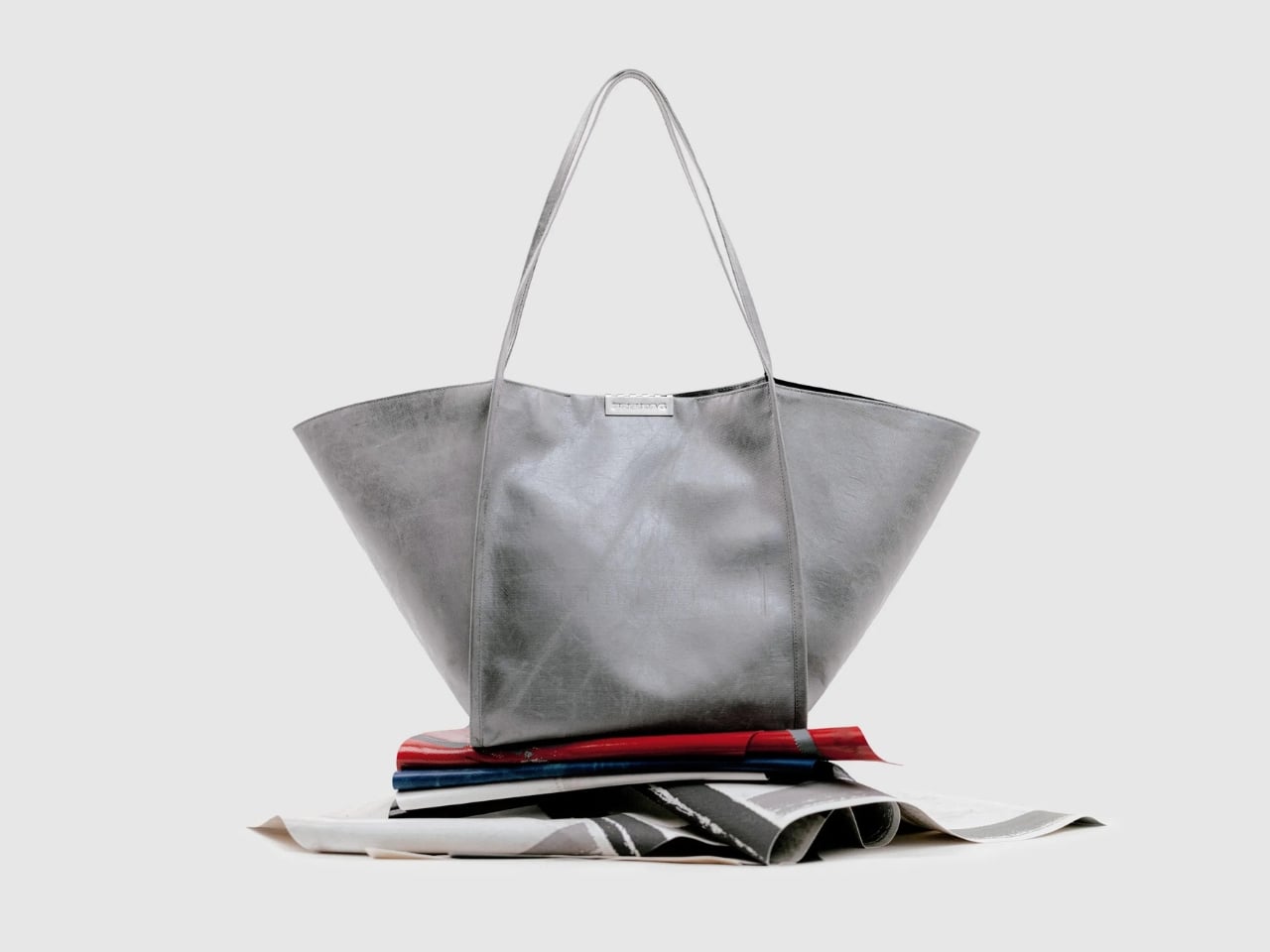
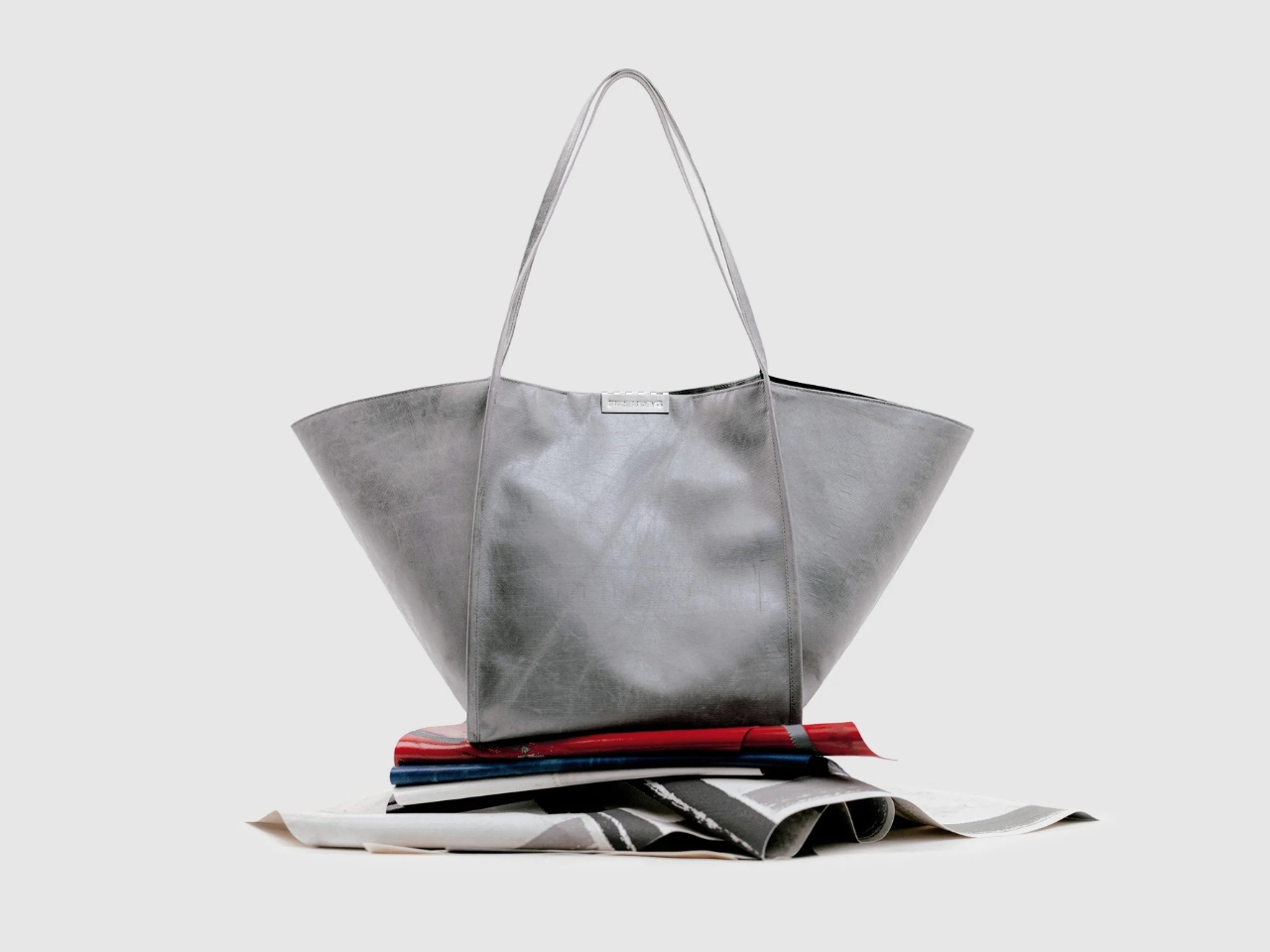
The biggest one in the collection is Mazie, a large tote that can change shape and volume by folding its sides inward. Its capacity ranges from 26 to 40 liters, and it comes with a detachable mini-pouch. That means smaller valuables don’t have to disappear into the bottom.
Since these are made from used tarps, you can expect scratches, wrinkles, scuffs, and variations. These are traces of the material’s previous life, rather than wear added just for appearances. The collection’s design language uses trapezoidal silhouettes and outward-folded side seams, creating a consistent look across all four items. The shapes give them a family resemblance without making every bag look identical.

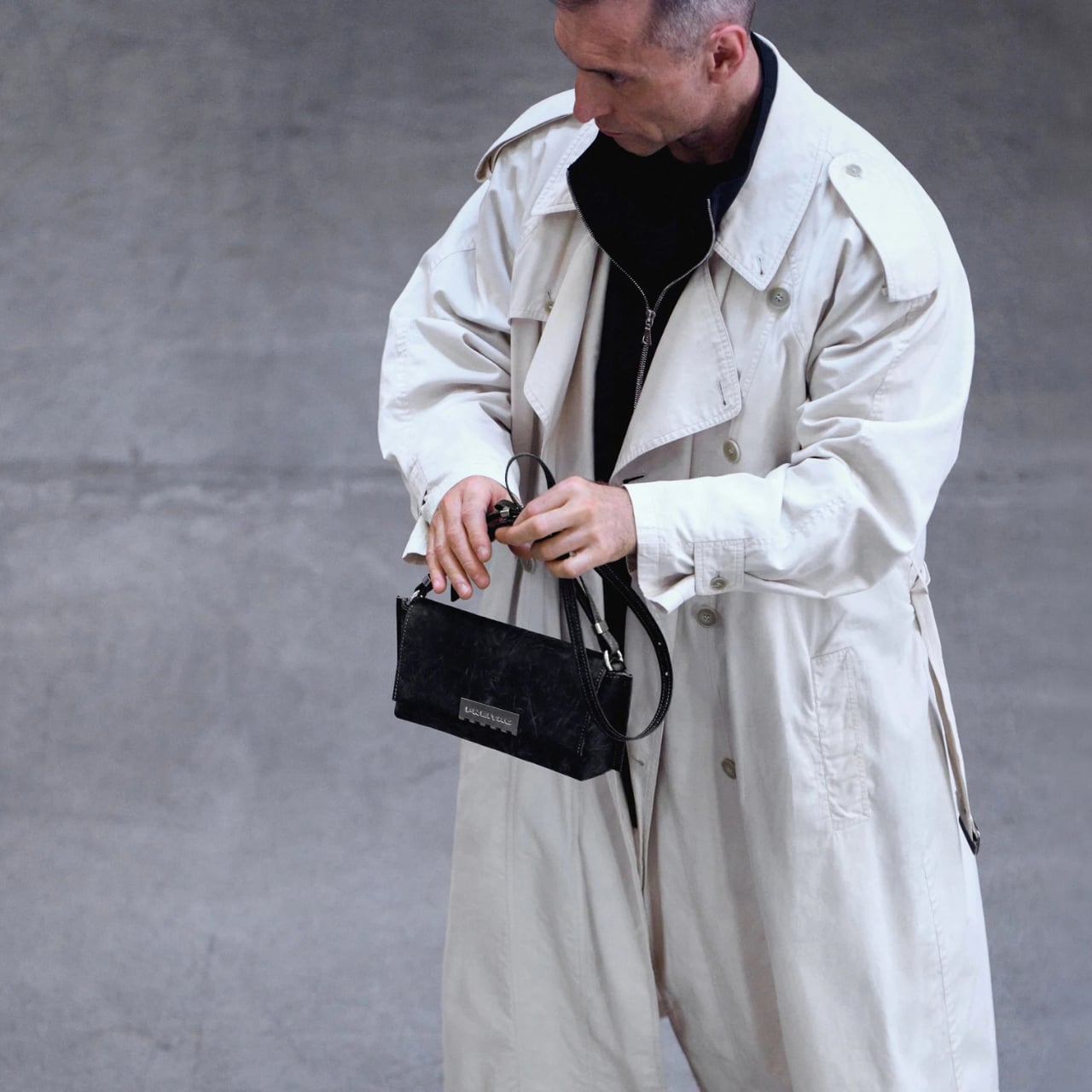

One of the more interesting details is the magnetic clasp with punched Freitag branding. Product designer Anne Bachmann found inspiration in an adjustment hook for heavy-duty shelving at the company’s Zurich-Oerlikon factory. It’s a small connection to the bags’ industrial origins, even as their shapes move away from the look of a traditional messenger bag.
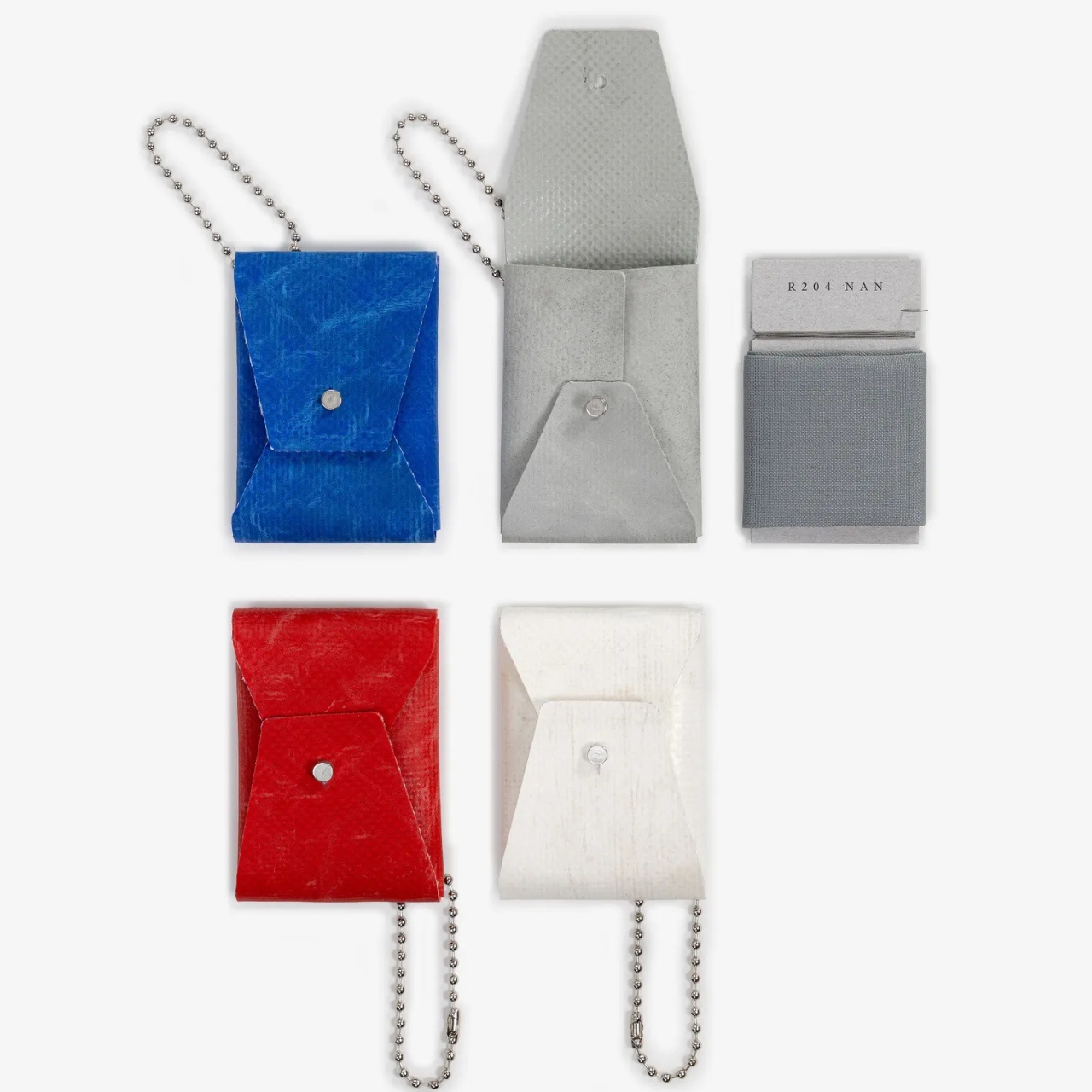
Every bag also comes with a repair kit made from the same individual tarp. The pouch contains a piece of lining and sewing thread and is designed to be taken apart for repairs. Remove the contents, and it can also hold cards or keys. For me, including matching repair materials is a more convincing detail than simply asking buyers to think of a bag as sustainable.

Freitag’s listed US prices are $460 for Elly, $660 for Bates, $530 for Nan, and $620 for Mazie. So my hypothetical $600 budget wouldn’t quite cover every option.
Of course, buying another bag won’t magically solve my bag problem. The real test would be whether I actually use it instead of letting it join the others in that cabinet. Maybe I should clear some space first.