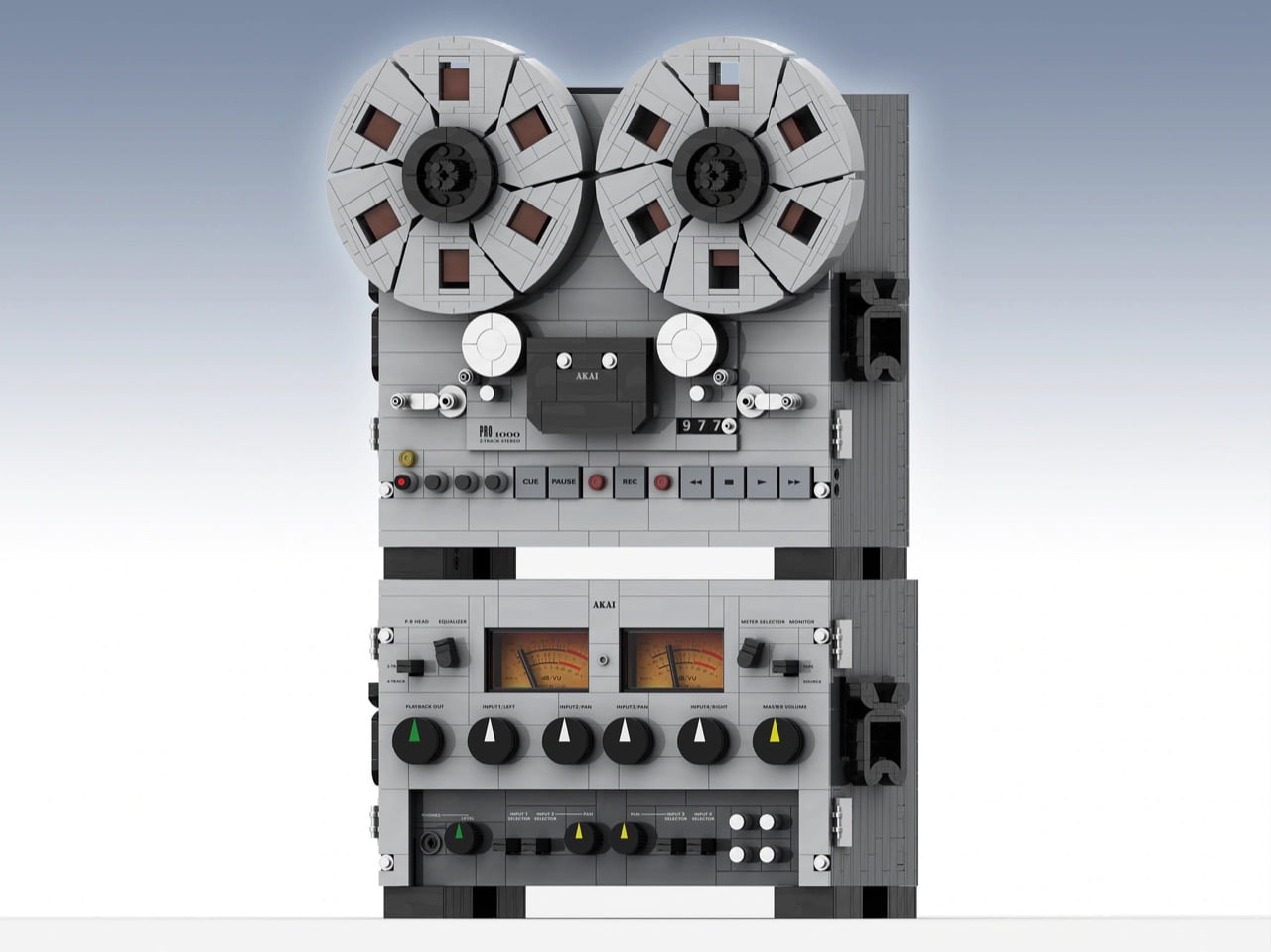
Owning a reel-to-reel deck in the 1970s meant owning a piece of furniture you could not move alone. The Akai PRO-1000 came in two boxes, with published specs putting the drive unit at about 62 pounds and the amplifier at about 22. That is roughly 85 pounds of hi-fi, which explains why one UK dealer listing recommends collecting in person or booking a pallet. People bought these anyway, because a machine with two huge spinning reels announced to every guest that you took music seriously. Nobody ever put a reel-to-reel in a closet. Now there is a version you could carry to the couch without calling a friend, made of 2,680 LEGO parts.
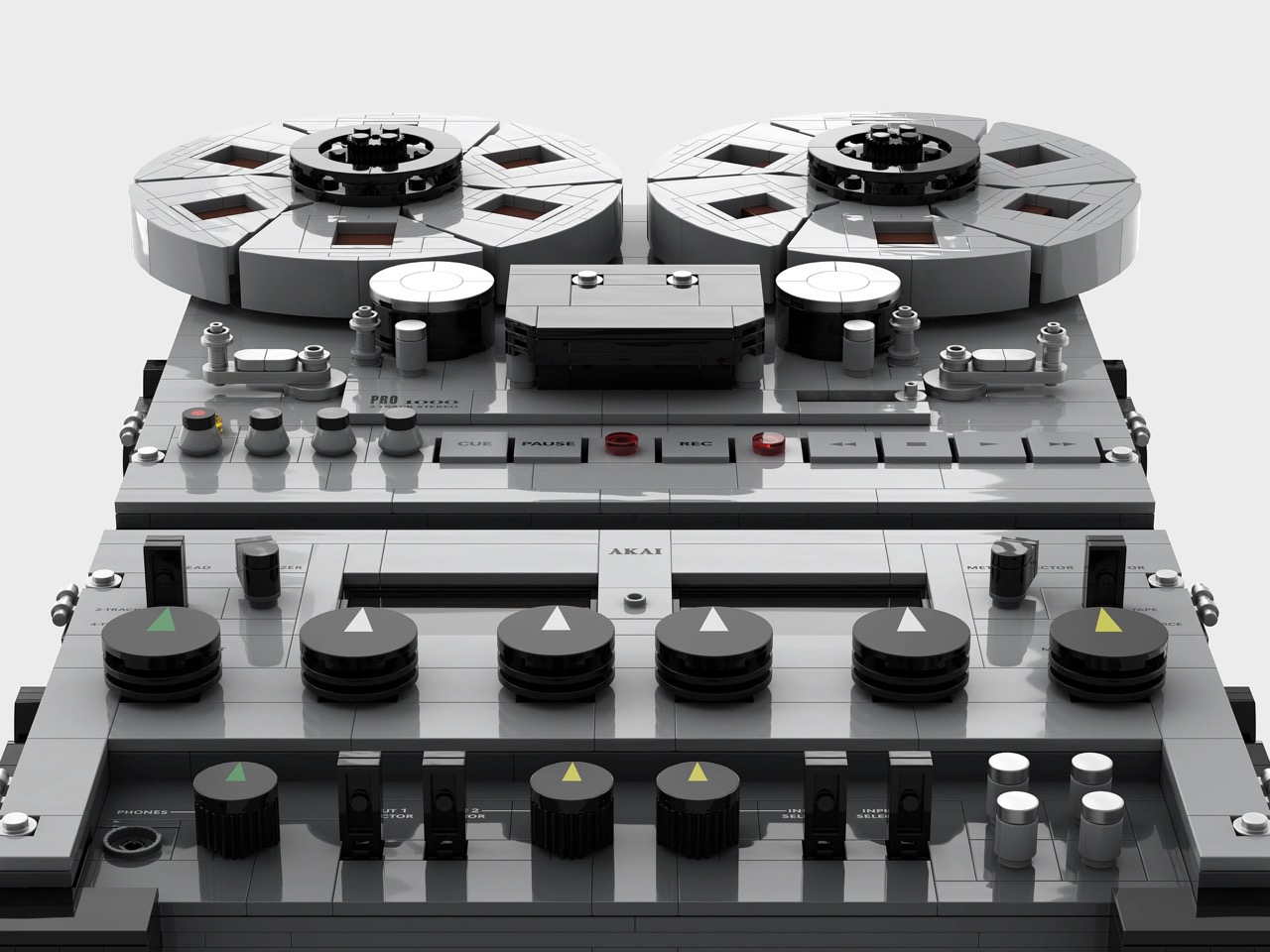
That version is the AKAI PRO 1000 Open Reel-to-Reel Tape Deck, a LEGO Ideas project from Zo Lee that has already picked up a Staff Pick badge. The original was a semi-professional machine from the late 1970s that sold mainly in the US, Canada, and Japan, with a 1977 US price of $1,995. Its two boxes were joined by three cables, so owners could park them side by side or stack them, and the LEGO version takes the stacked route. At about 17 inches tall, 11 wide, and 6.3 deep (43 x 29 x 16 cm), it is a compact take on an original roughly 19 inches across. Finally, a hi-fi flex that does not need a pallet.
Designer: Zo Lee
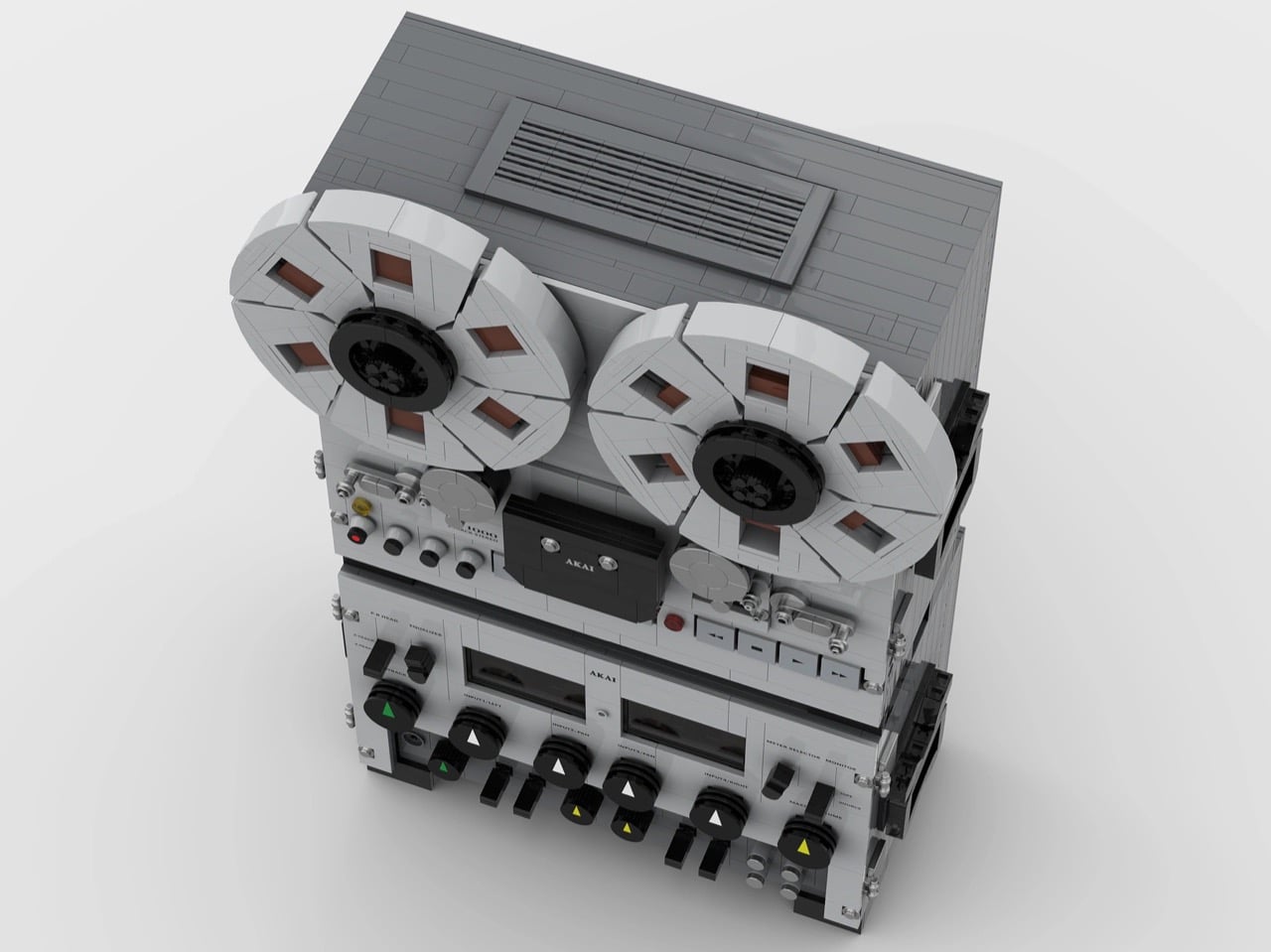
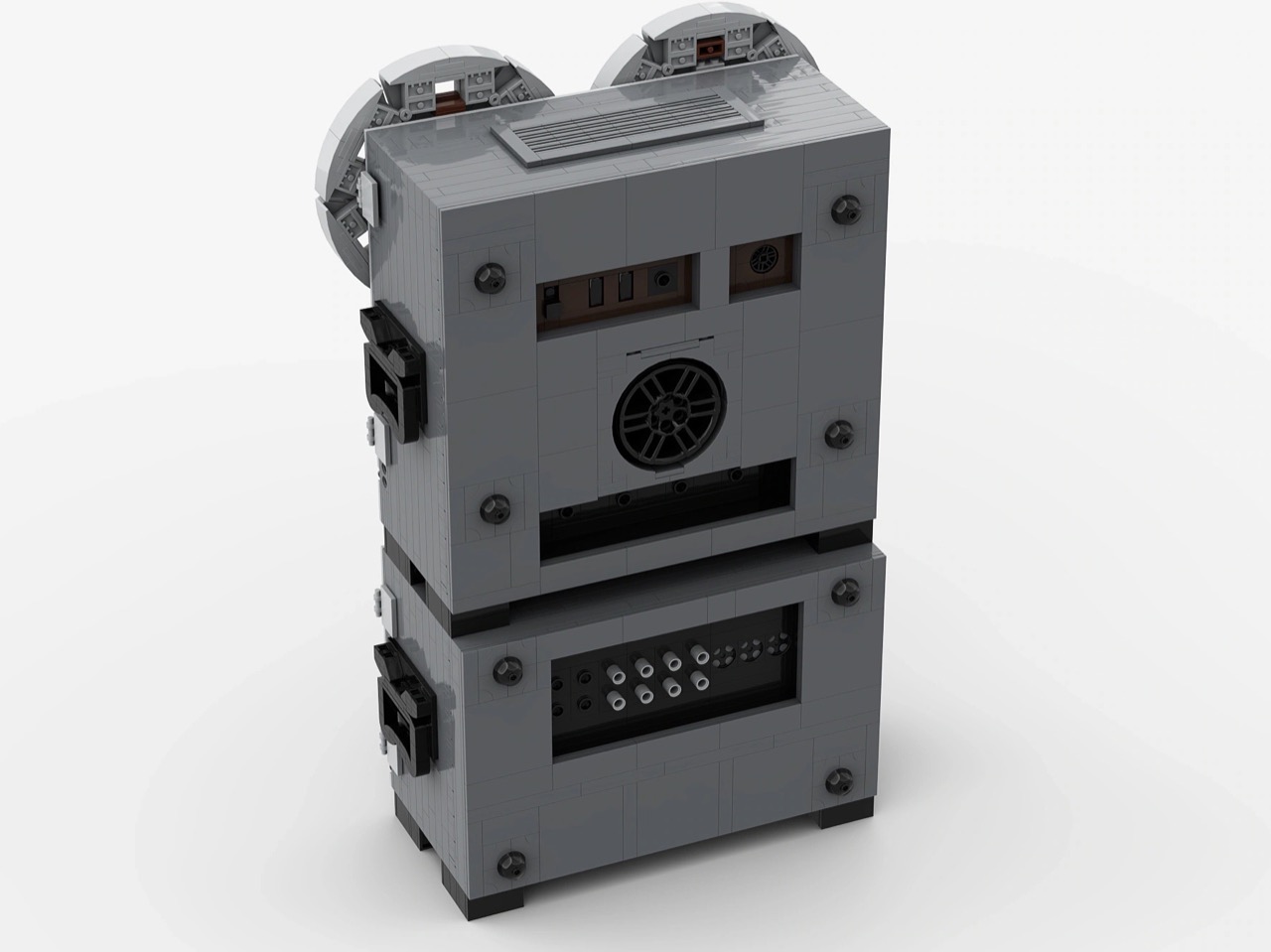
Here is the party trick: the thing moves. A motor turns the reels, the VU meters swing along with them, and the big knobs rotate under your fingers. A removable grid on top lifts off to hold a LEGO battery, so the deck can sit anywhere on the shelf without hunting for a wall outlet. The reels were the first thing every guest stared at on the real machine, so making them the star of the show is exactly right. Powering it up is its own small concert, minus the music.
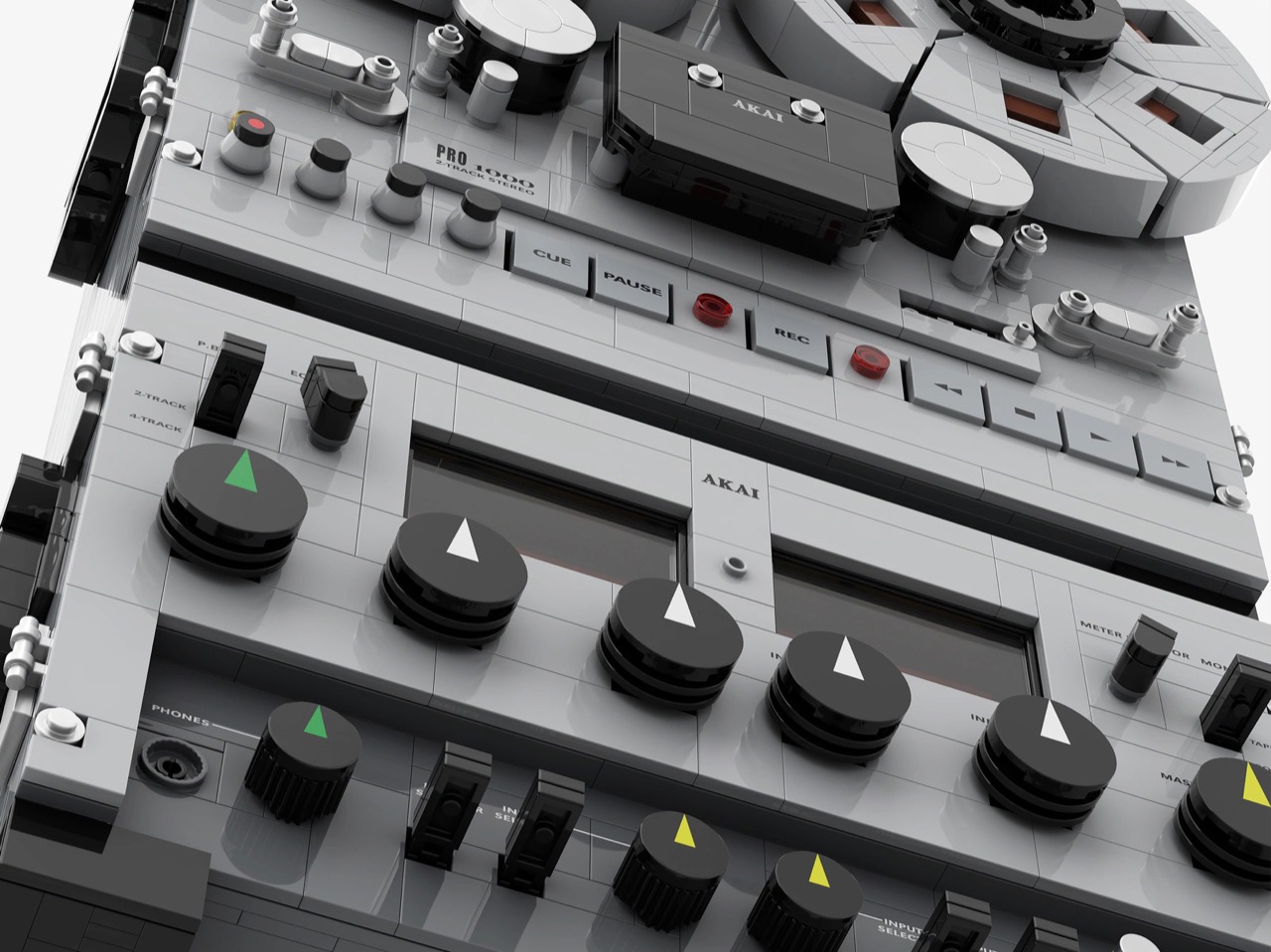
Zo Lee describes the build as extremely difficult, and the list of headaches reads like a boss fight. The odd quarter-distance spacing between tiles, the big reels with all those cutout windows, and an internal frame that has to hold the outer casing each took plenty of brainstorming. Getting that same frame to drive the reels and meters took lots more attempts, per the creator. The payoff shows in the renders: gray reels with dark red cutouts, black knobs with colored pointers, tiny transport labels like CUE, PAUSE, and REC, and a tape counter parked on 977. From a few feet away, the front panel reads like actual hardware, which is the whole point of a shrunken replica.
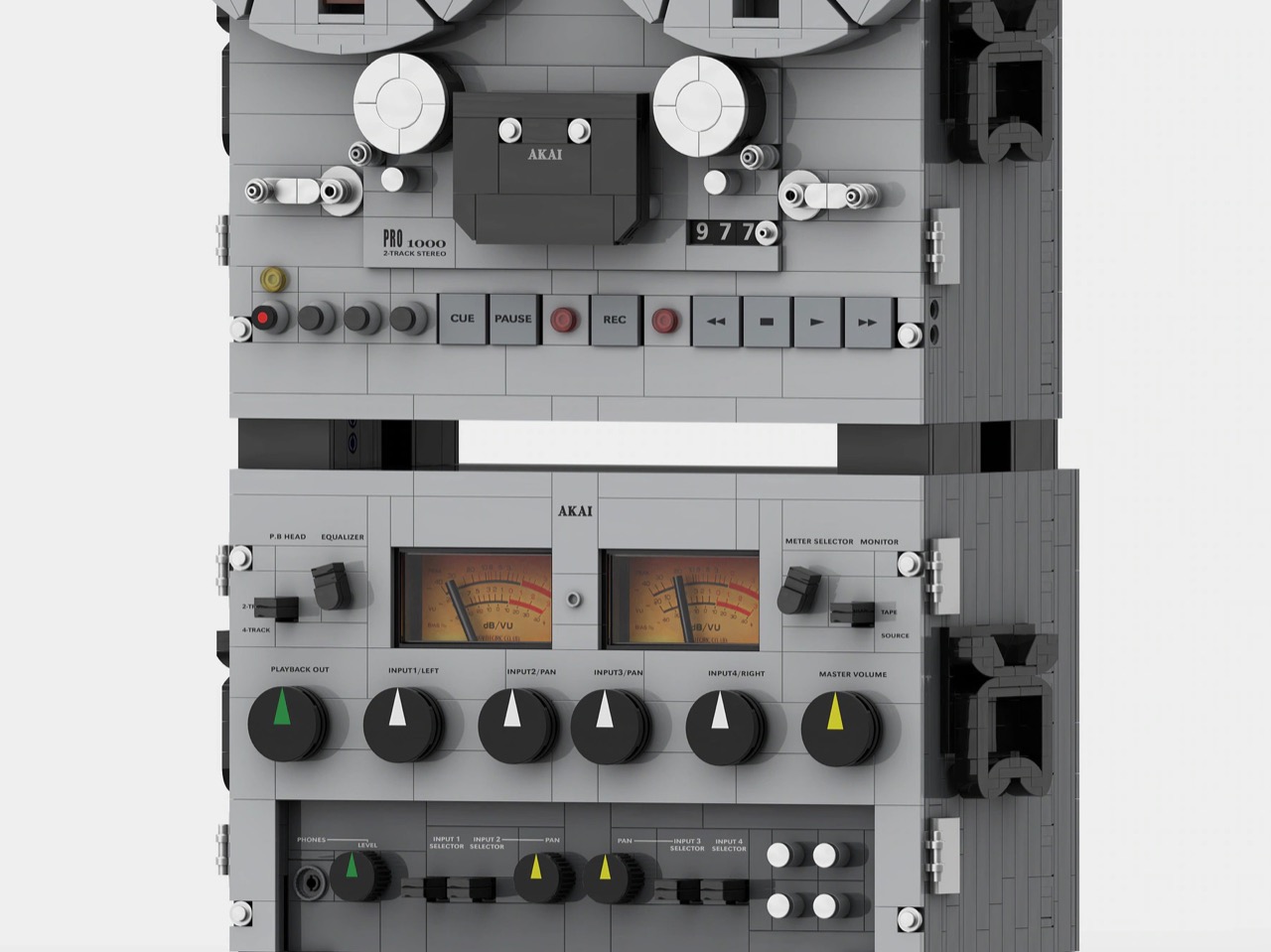
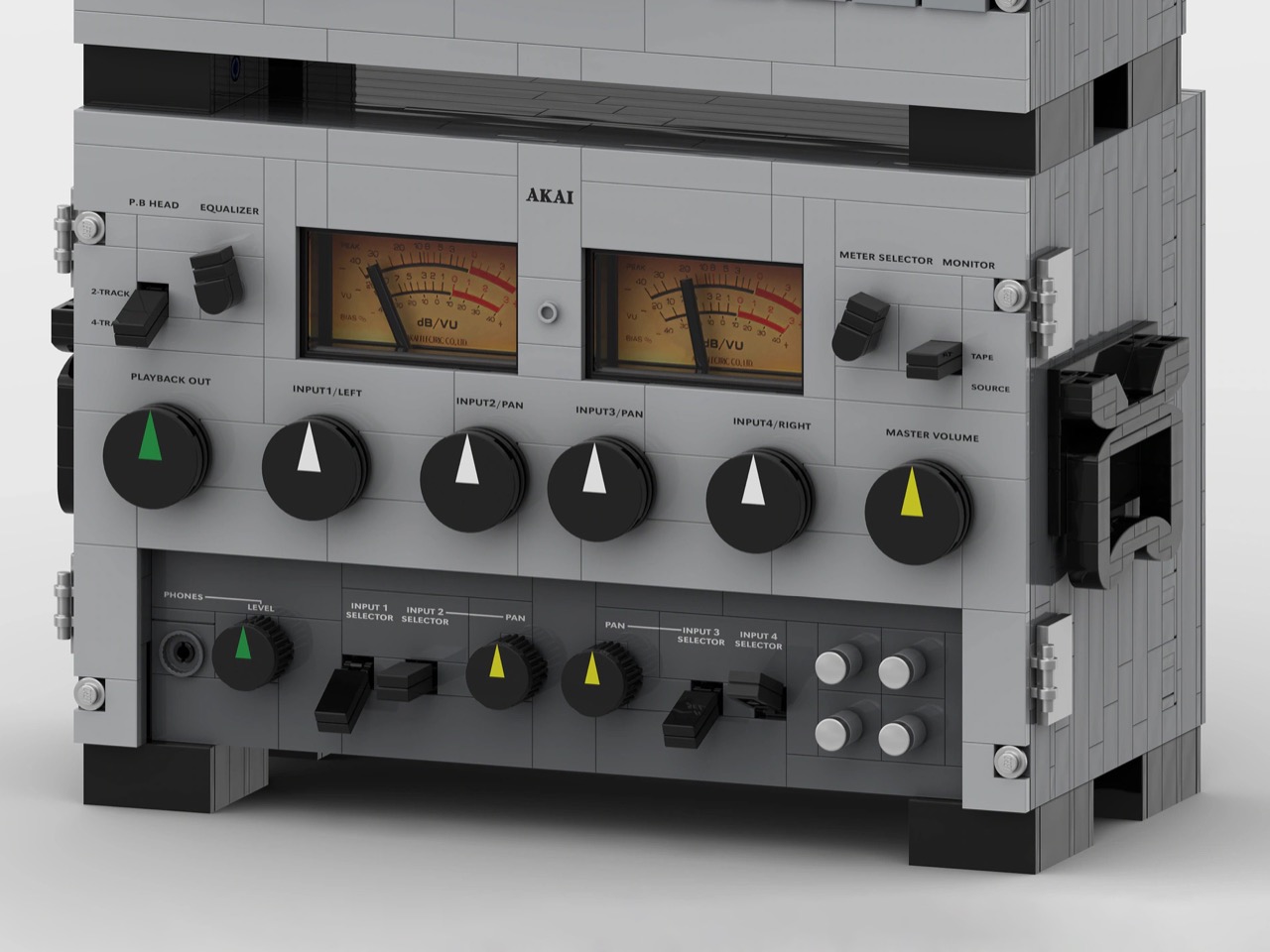
My favorite detail, though, is the pair of VU meters, which Zo Lee says swing in sync with the reels, but asymmetrically. I am guessing the same motor drives both, which would mean the needles twitch like they are reacting to a song instead of marching in lockstep. That one choice fakes live audio, hides a mechanism behind two amber faces, and probably saves the builder a second motor. It also slots the deck into a neat lineage of LEGO Ideas audio gear, next to Tomasso Builds’ Technics SL-1200 MK2 turntable and Headlight Bricks’ Sony Walkman. Reel-to-reel is the format that came before the Walkman’s cassette, and it has the most dramatic moving parts of the lot.
The deck currently sits at 527 supporters on LEGO Ideas, with the next milestone at 1K and 396 days left to get there. Ideas works like this: fans submit builds, supporters pile up, and LEGO reviews the ones that reach the threshold. The Staff Pick badge is a nice head start, but the votes have to come from people like you, so head to the LEGO Ideas page and give it your vote. Every supporter helps push this toward an actual box. Get it there and you can finally own a reel-to-reel deck without recruiting three friends and a hand truck.