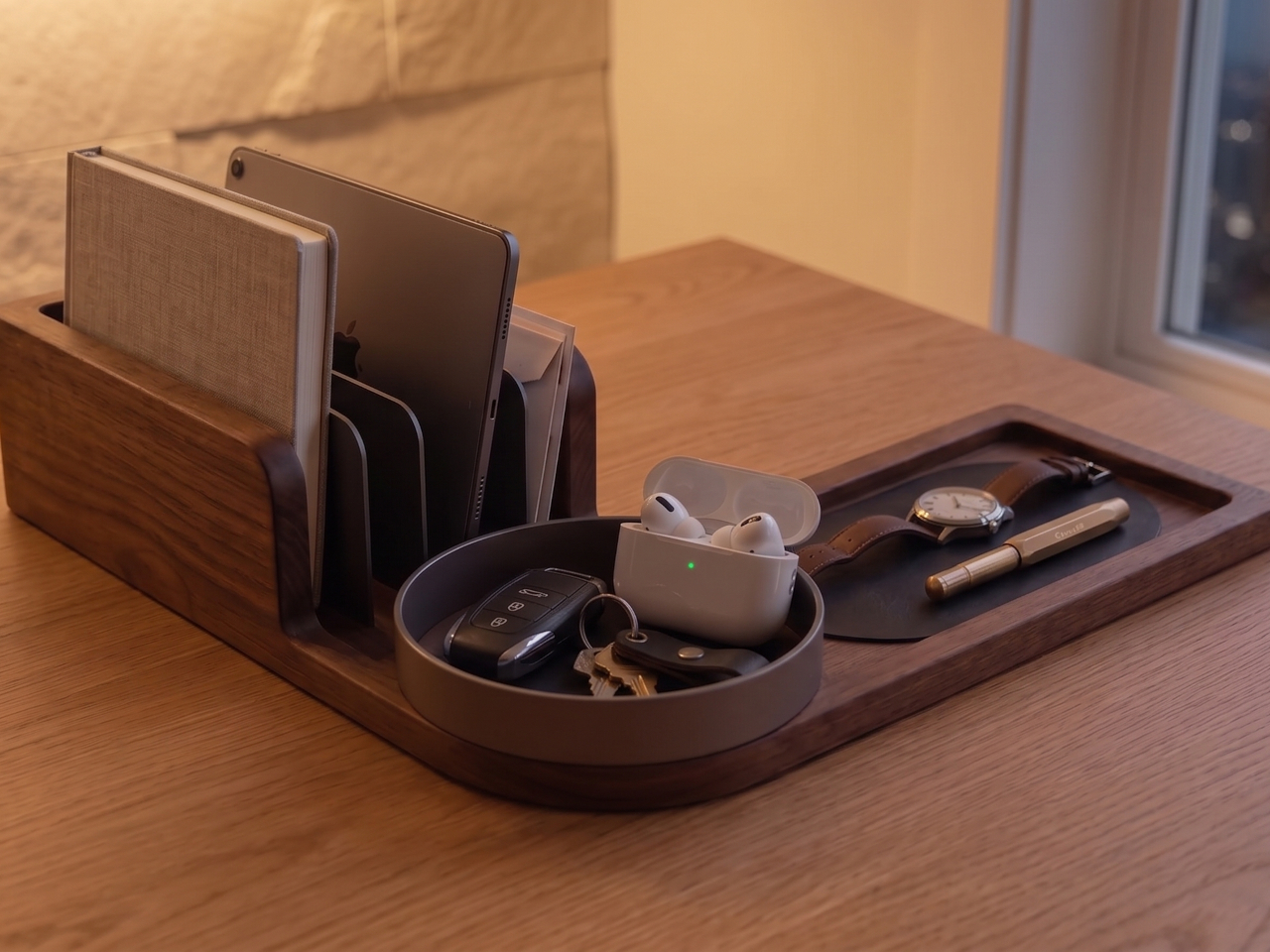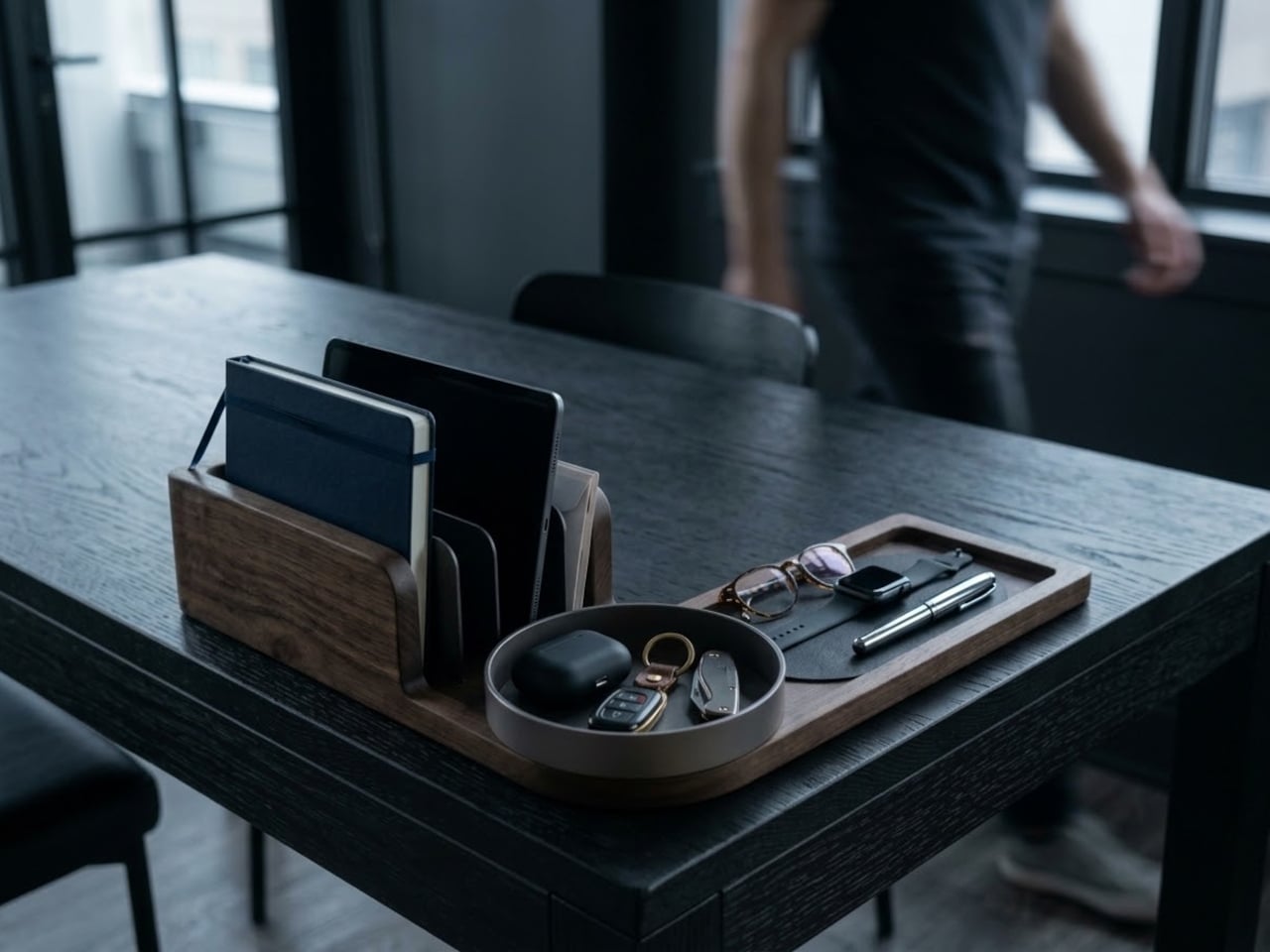
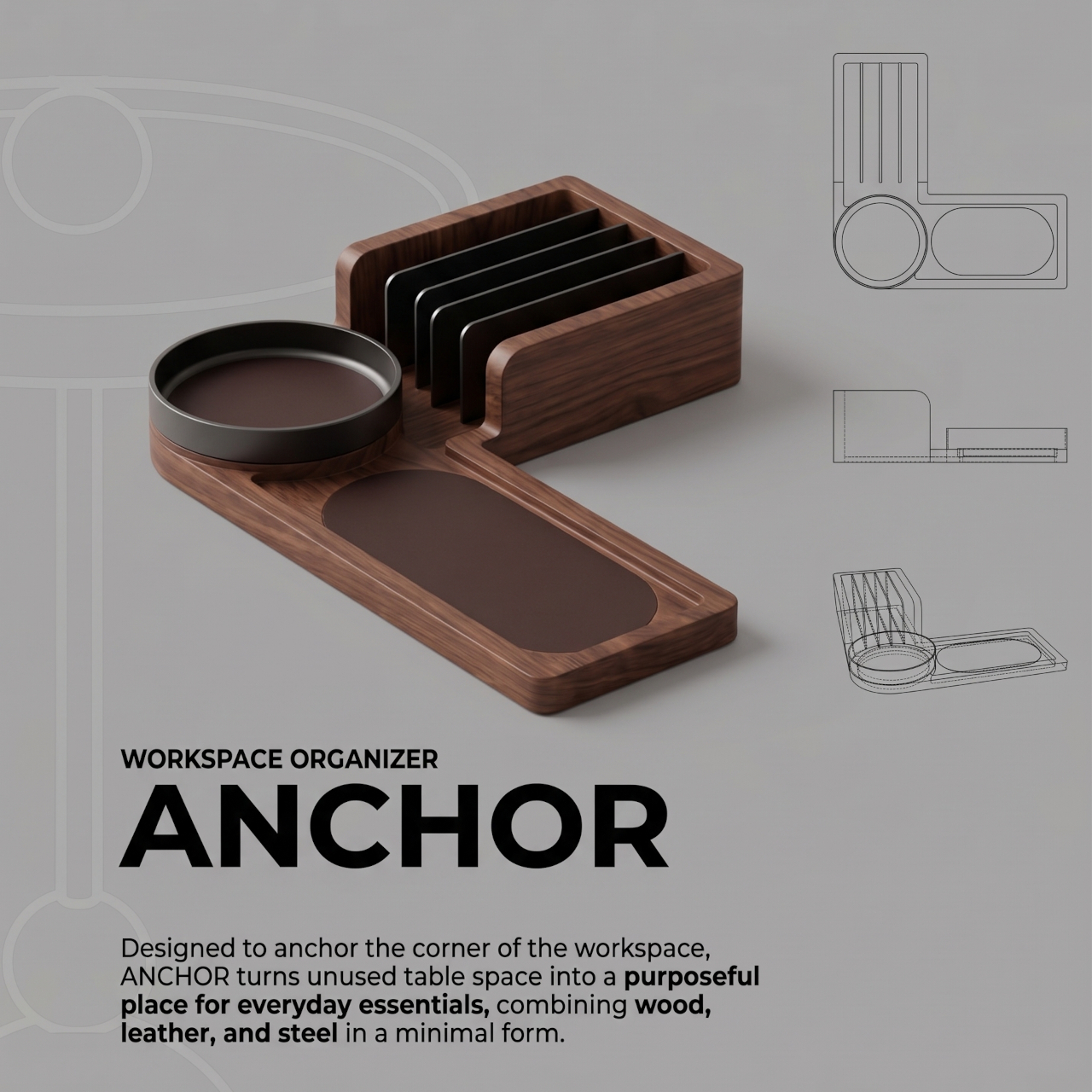
Desk corners tend to become parking spots for things you haven’t found a proper home for. Keys land beside the keyboard, earbuds disappear beneath a notebook, and your phone takes up whatever room remains. The Anchor desk organizer gives that overlooked space a job, using an L-shaped walnut body to keep your daily essentials together without laying another storage box across your workspace.
Most desktop organizers are rectangular, which can make them awkward neighbors for a laptop or drawing pad. The Anchor wraps its storage around a right angle instead. One arm holds upright items; the other gives smaller belongings a place to lie flat. It doesn’t make the corner any bigger, of course, but it could keep the middle of the desk clear for actual work.
Designer: BAYT (baytbyseen)
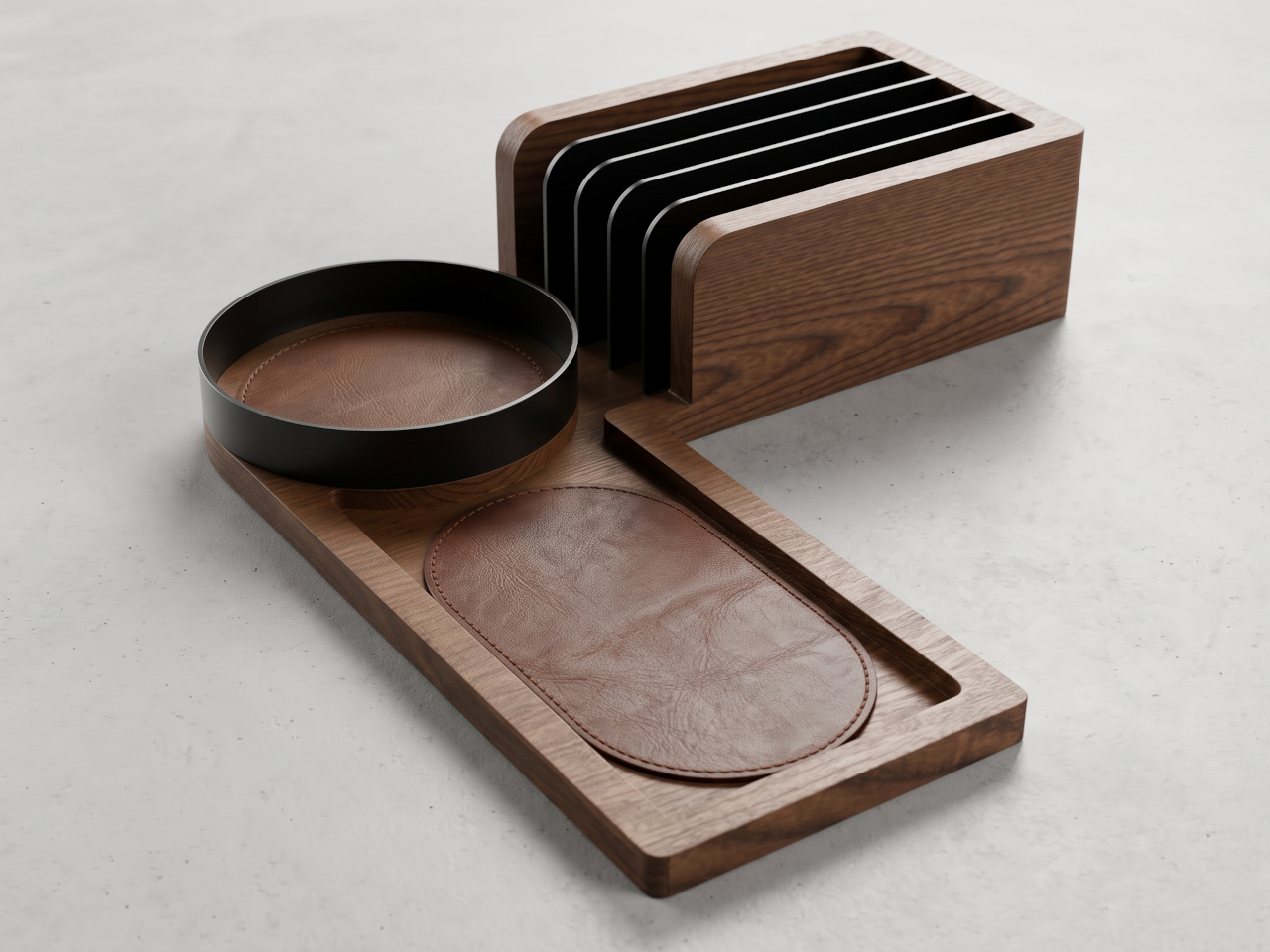
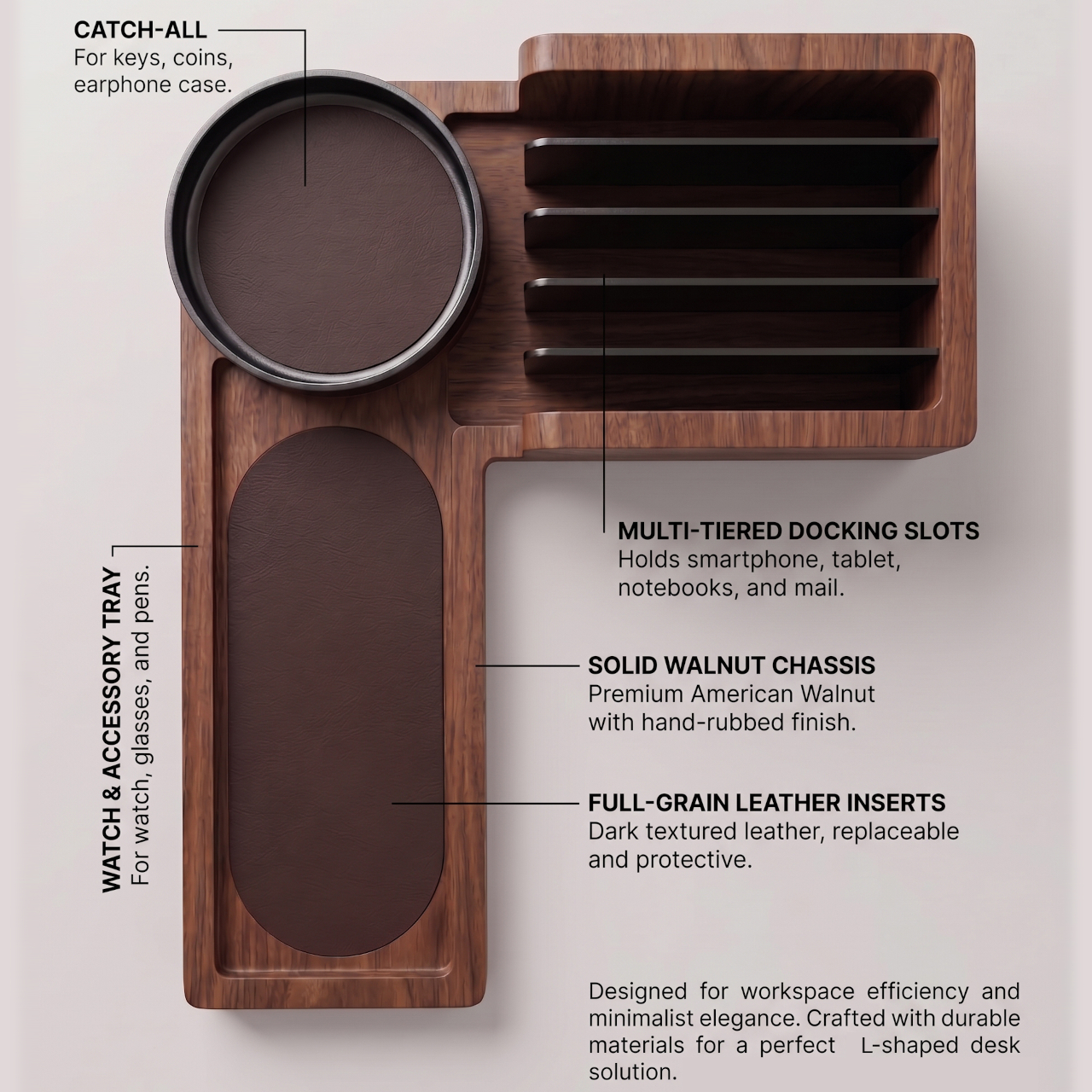
The raised section uses several dark dividers to separate a phone, tablet, notebook, or incoming mail. That’s useful when you’re moving between a screen and a paper sketch, because neither has to vanish under a pile. The slots also keep those items standing, so you can reach for the one you need without digging through a drawer or disturbing everything else.
At the bend sits a round catchall for keys, coins, and an earbud case, the little things that are easiest to misplace. Beside it, a longer recessed tray gives a watch, glasses, or pens somewhere to rest. Keeping the two areas distinct might seem fussy, but it saves you from fishing a pen out of the same bowl as your keys.
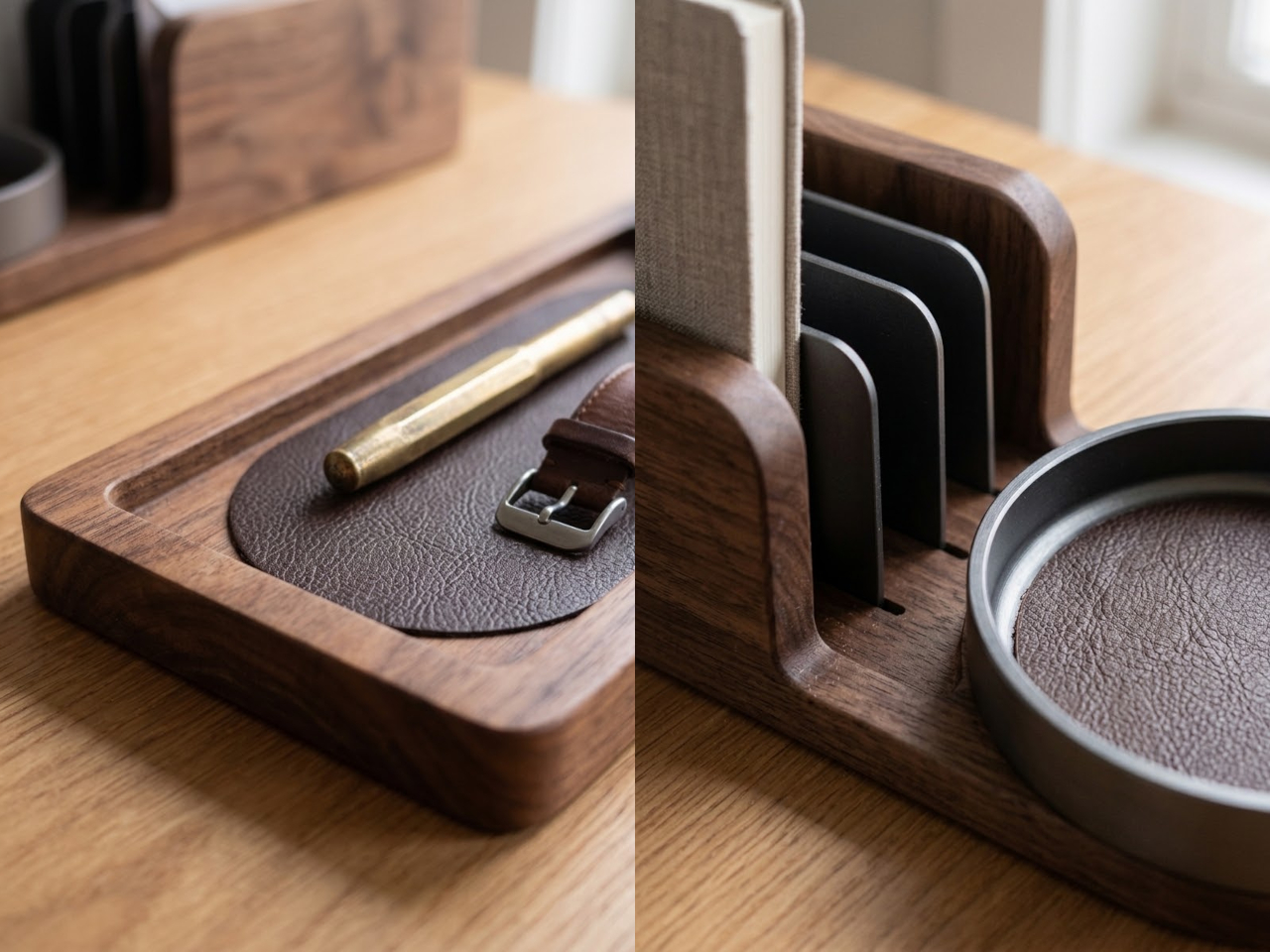
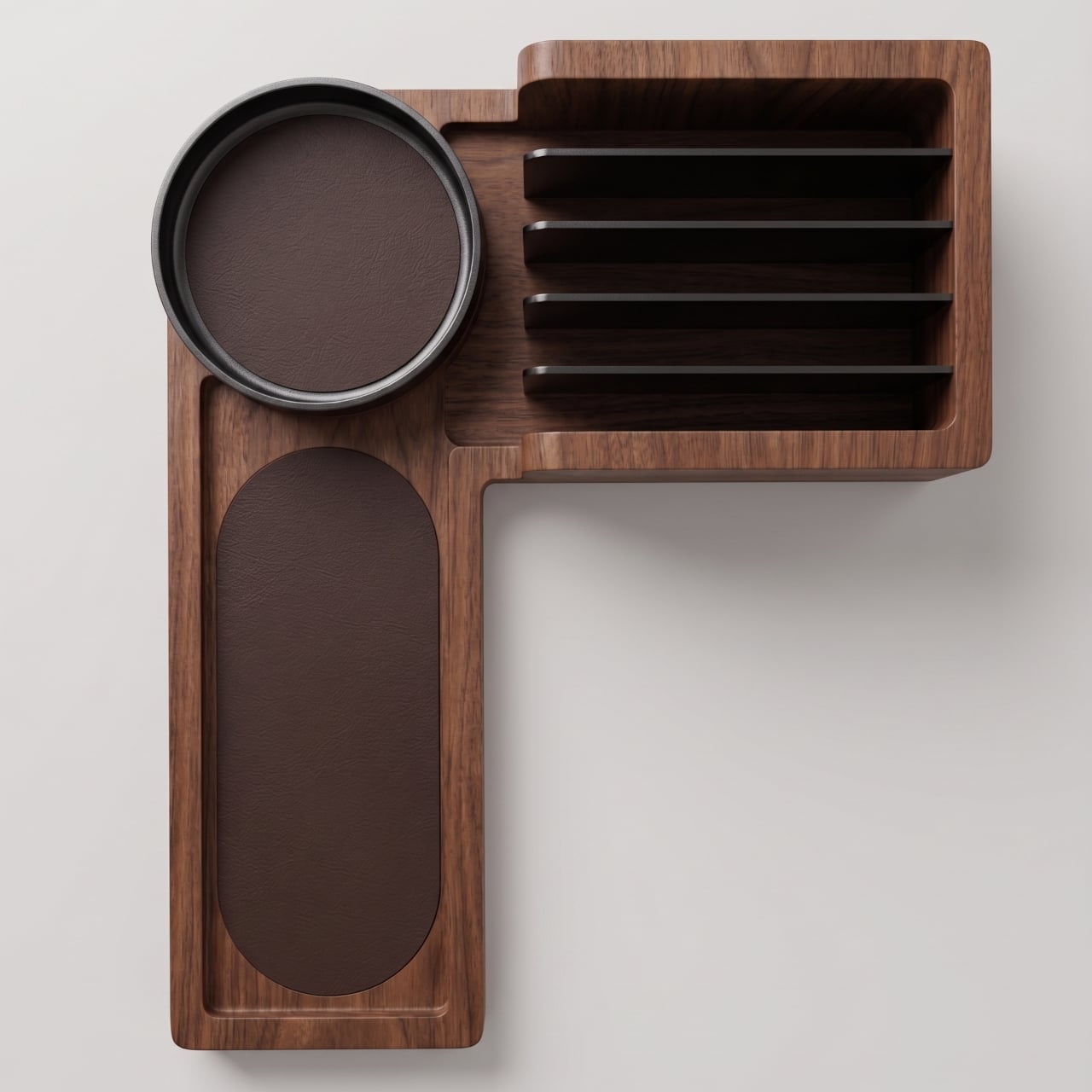
The proposed materials make the organizer feel less like office equipment and more like something you’d willingly leave out after work. Walnut gives the body its warmth, while dark steel detailing keeps the upright section looking crisp. Full-grain leather lines the trays, cushioning items that might otherwise rattle against wood. The concept labels those inserts as replaceable, though it doesn’t show how they’re removed.
That combination also draws a useful line between showing off your belongings and actually putting them away. A phone and notebook remain visible, while the low trays collect objects that usually wander across the desktop. Nothing here locks, folds shut, or hides yesterday’s mess. If you drop everything onto it without thinking, you’ll still have to sort things out eventually.
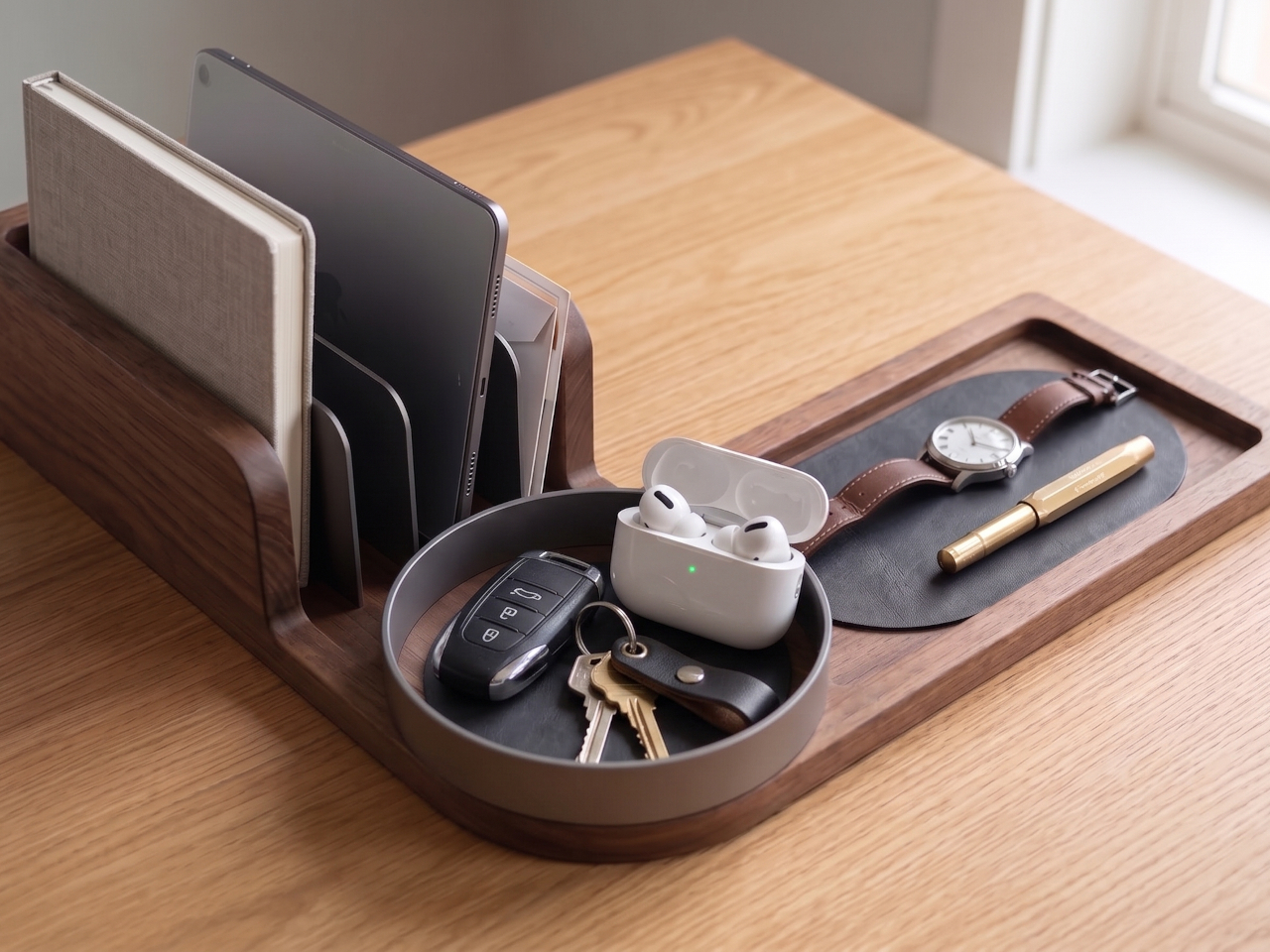
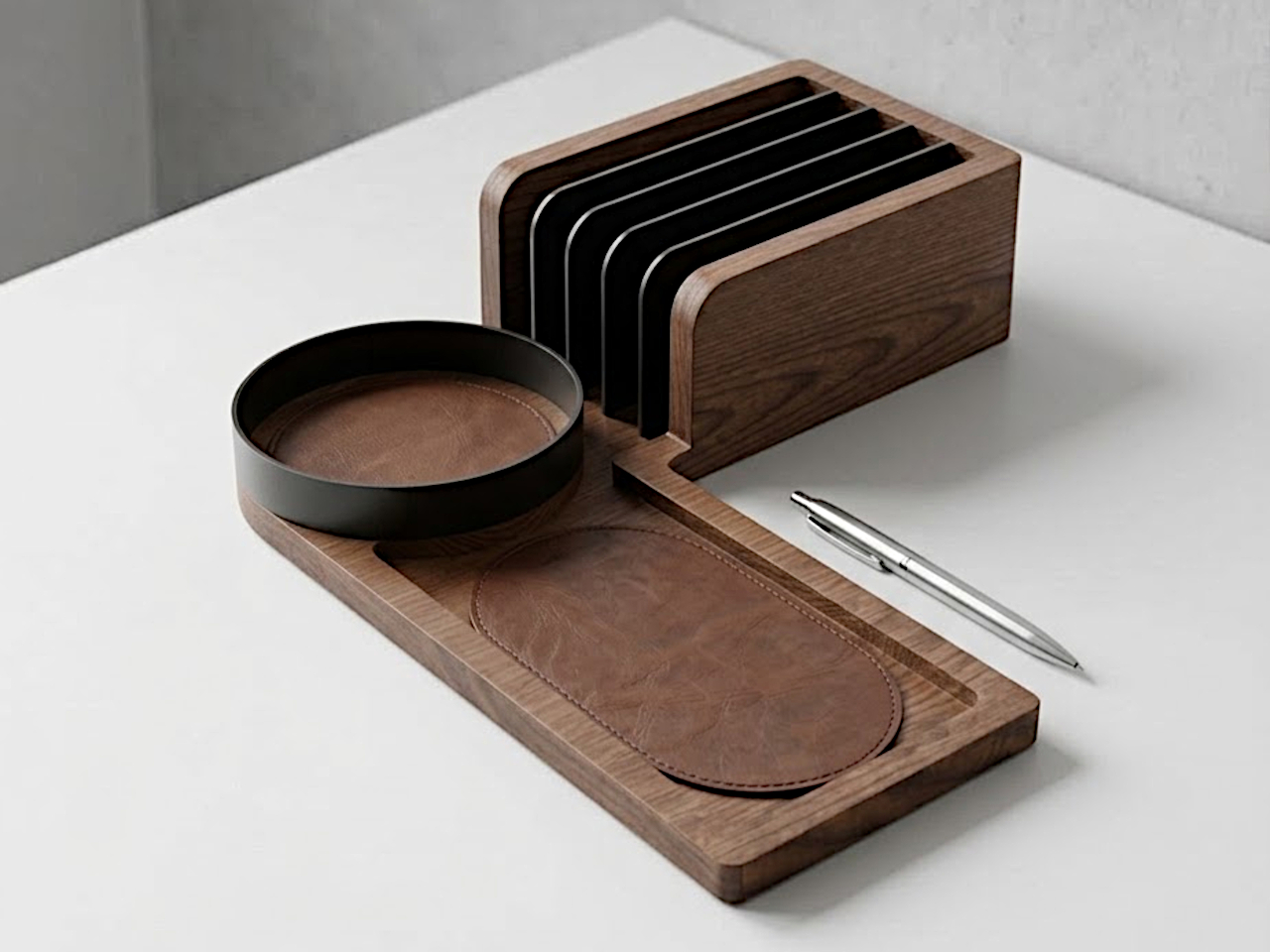
There are a few questions that the tidy arrangement doesn’t answer. The concept calls the upright sections docking slots, but it doesn’t describe built-in charging or cable routing. You’d also need enough room for the organizer and the devices sticking out of it, especially on a small desk. A corner can be unused without being empty, as anyone with a lamp knows.
Still, The Anchor has an appealing understanding of how workspaces actually fill up. Your keys don’t need the same sort of home as a tablet, and your glasses shouldn’t have to share a slot with the mail. Giving each one a modest place at the edge leaves the main surface for whatever you’re working on, while making it easier to find your things afterward.