The best campers don’t try to replace home. They do the opposite, stripping things back just enough that what remains feels intentional. This September’s crop of trailers and pods shows a design world moving in that direction, trading square footage for smarter layouts and heavy builds for lighter ones. Five designs stand out, each making a case for how far thoughtful engineering can take the idea of sleeping somewhere beautiful.
What ties these five together isn’t a shared aesthetic or a shared philosophy. Some are European and expensive. One is American and barely costs more than a used car. One isn’t even a trailer, but a box you slide out of your van on arrival. What they share is the sense that someone thought seriously about the person using it, not just the product they were trying to sell.
1. Lume Ranger
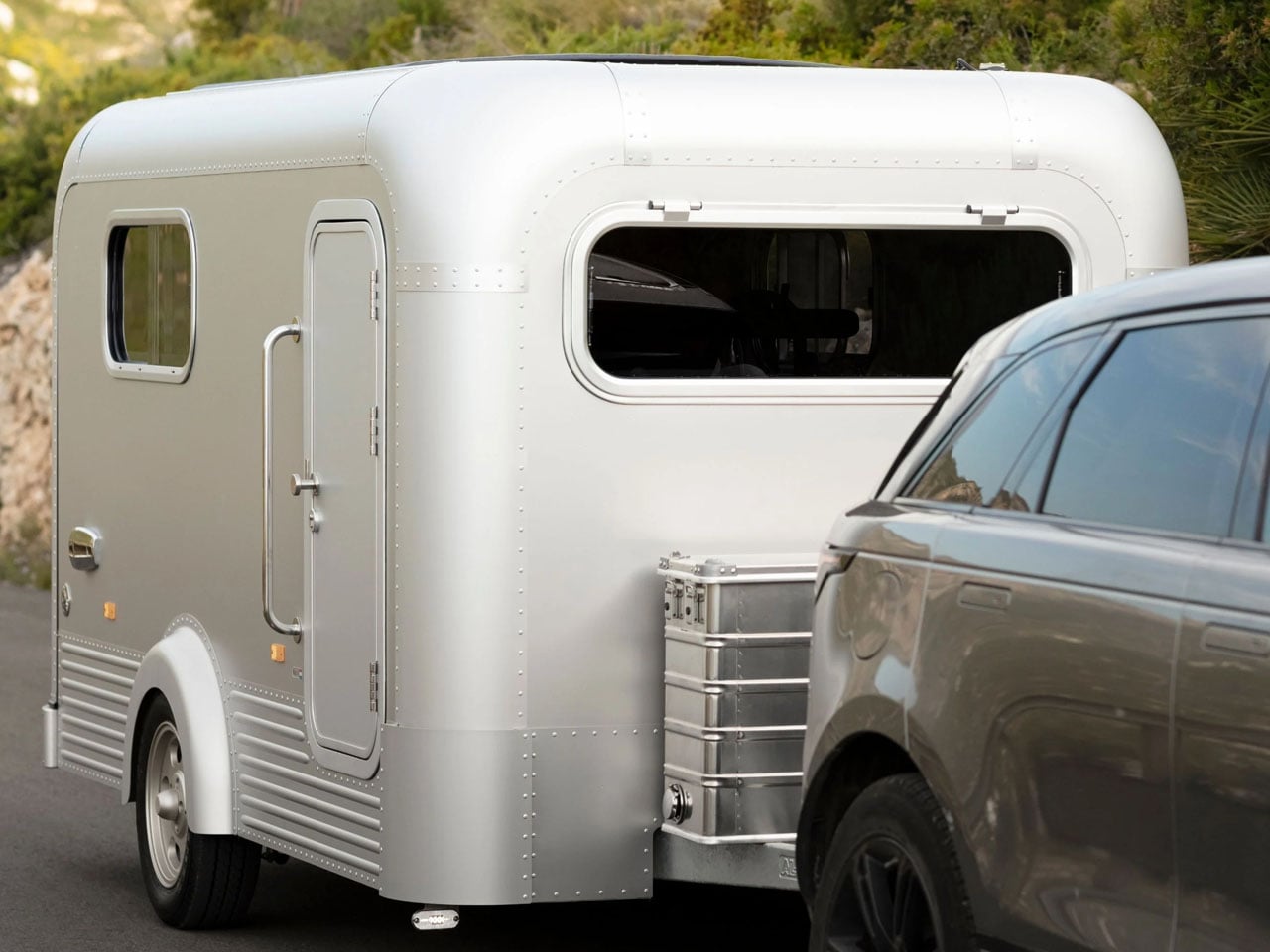
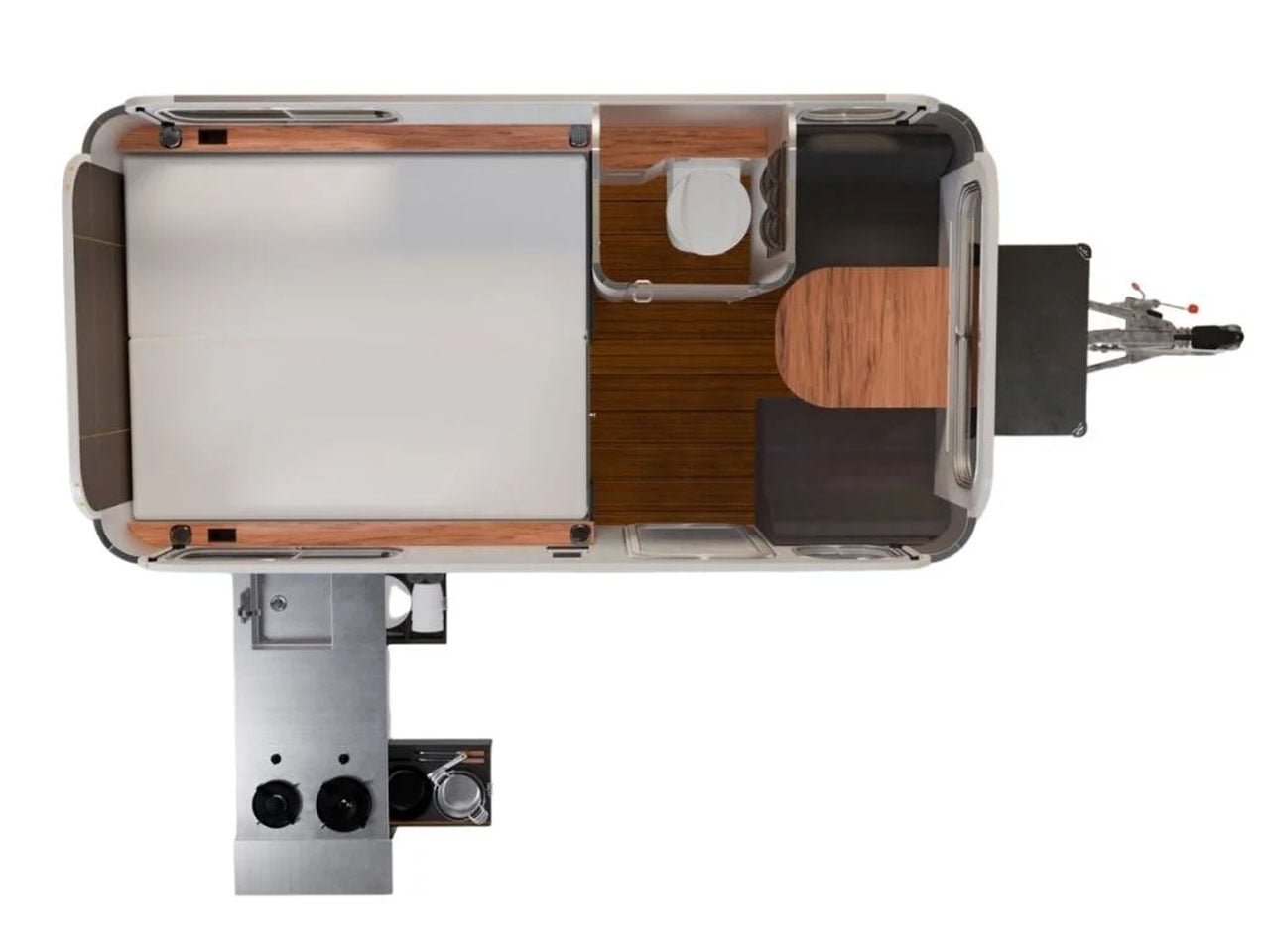
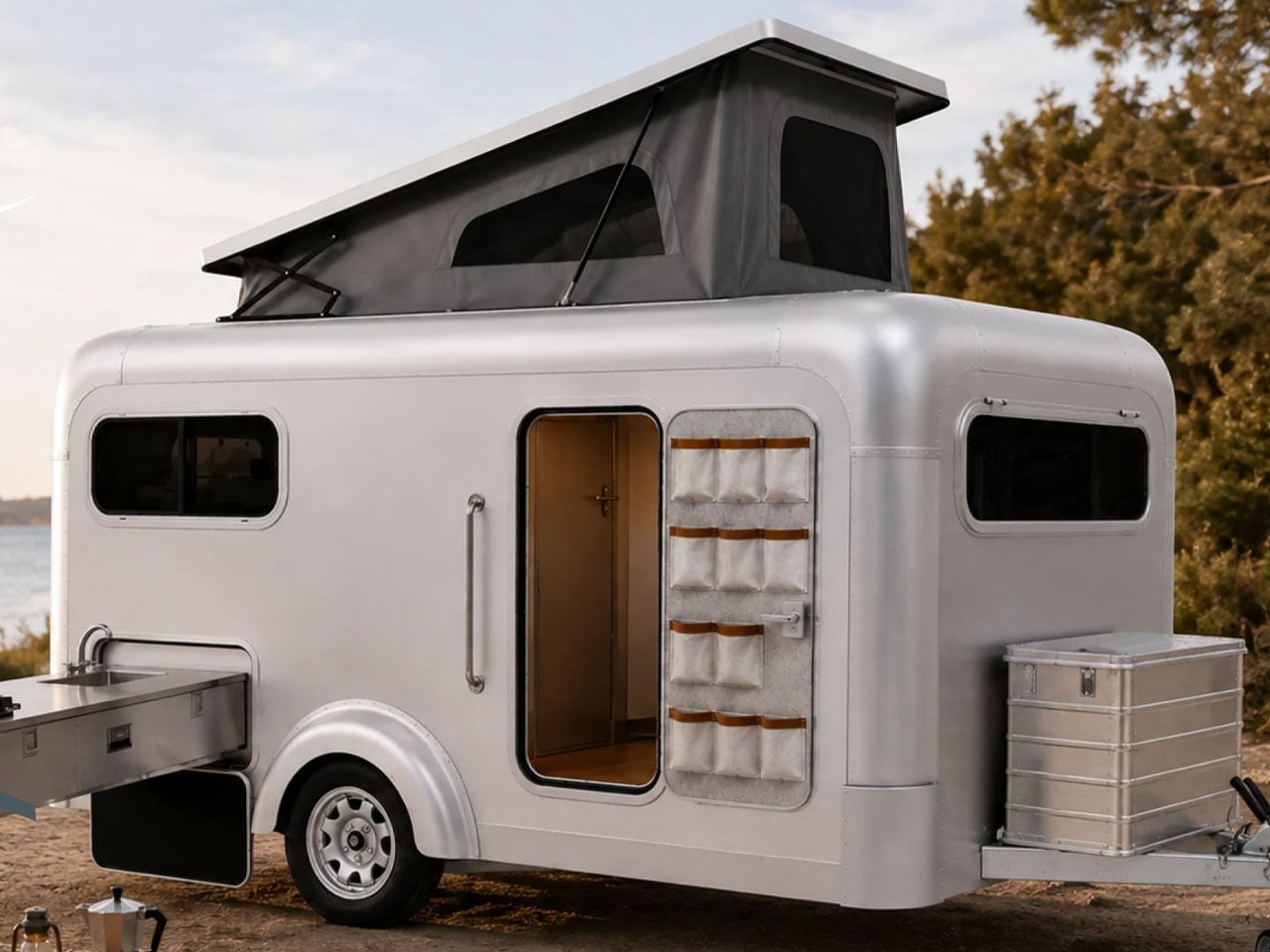
The Lume Ranger arrived at Caravan Salon Düsseldorf wearing something most trailers at this price can’t pull off: genuine restraint. At 2,535 pounds, it’s the lightest trailer Dutch maker Lume Traveler has built, yet it’s finished inside with teak flooring, felt-clad walls, premium leather accents, and linen curtains. A pop-up roof takes the low tow height and lifts it to 8.5 feet of standing room once parked, making the compact footprint feel far more livable than the dimensions suggest.
The slide-out stainless steel kitchen is fitted with a PITT gas burner, a sink, and a fridge drawer, with ample storage tucked throughout. A queen-size bed and a dinette round out a layout that manages to feel thought-through rather than crammed into available space. Priced from around $70,000, the Ranger is custom-built to order exclusively for European customers, and its nomination for the ANWB Caravan of the Year 2027 says a lot about where compact luxury trailers are heading.
What we like
- The teak and felt interior feels genuinely considered, not like a budget approximation of luxury
- At 2,535 pounds, compact SUVs and crossovers can tow it without needing a truck
What we dislike
- The $70,000 starting price puts it well out of reach for most campers
- Currently exclusive to European customers, with no confirmed timeline for wider availability
2. Stockman Rover 2.0
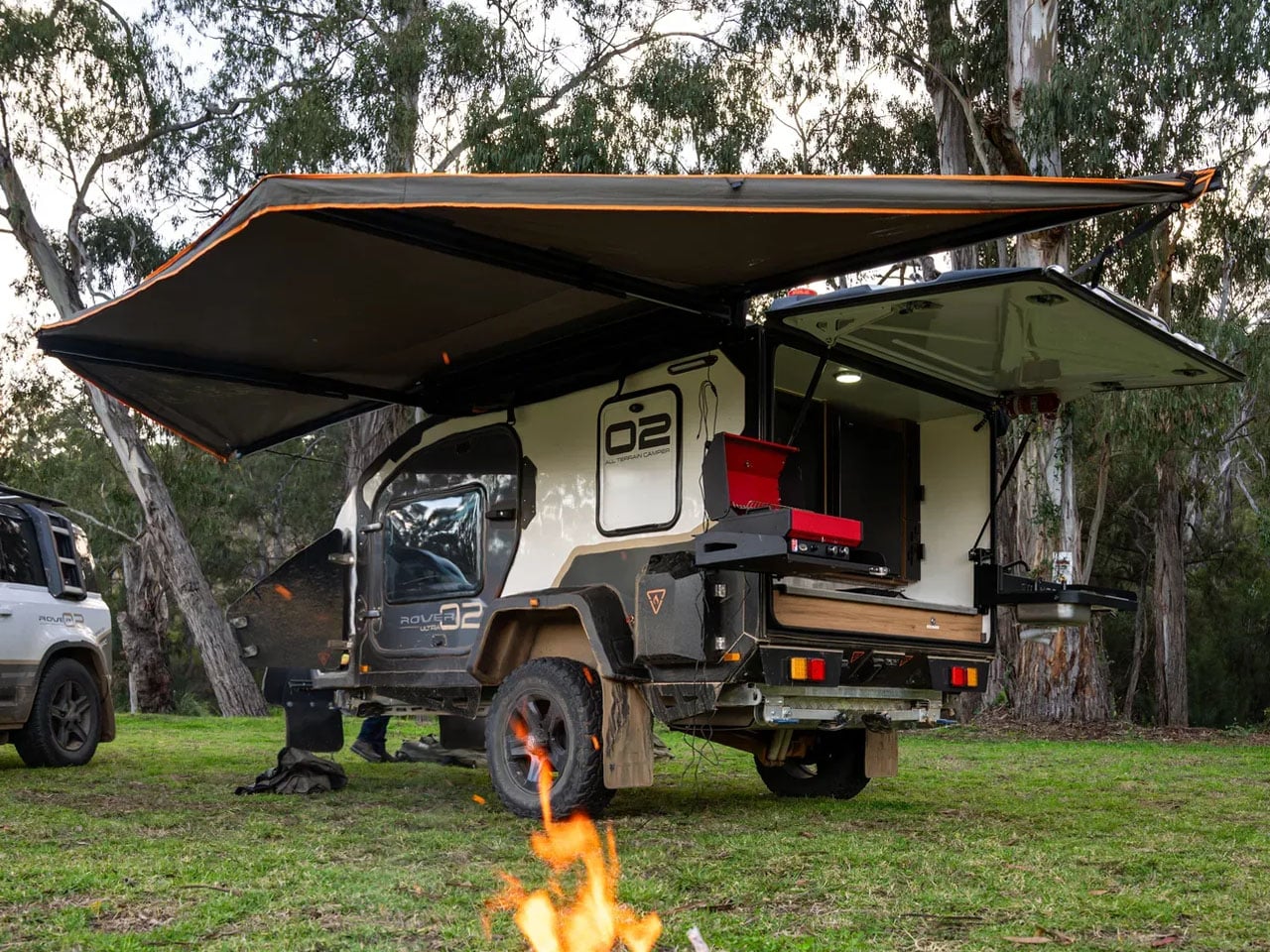
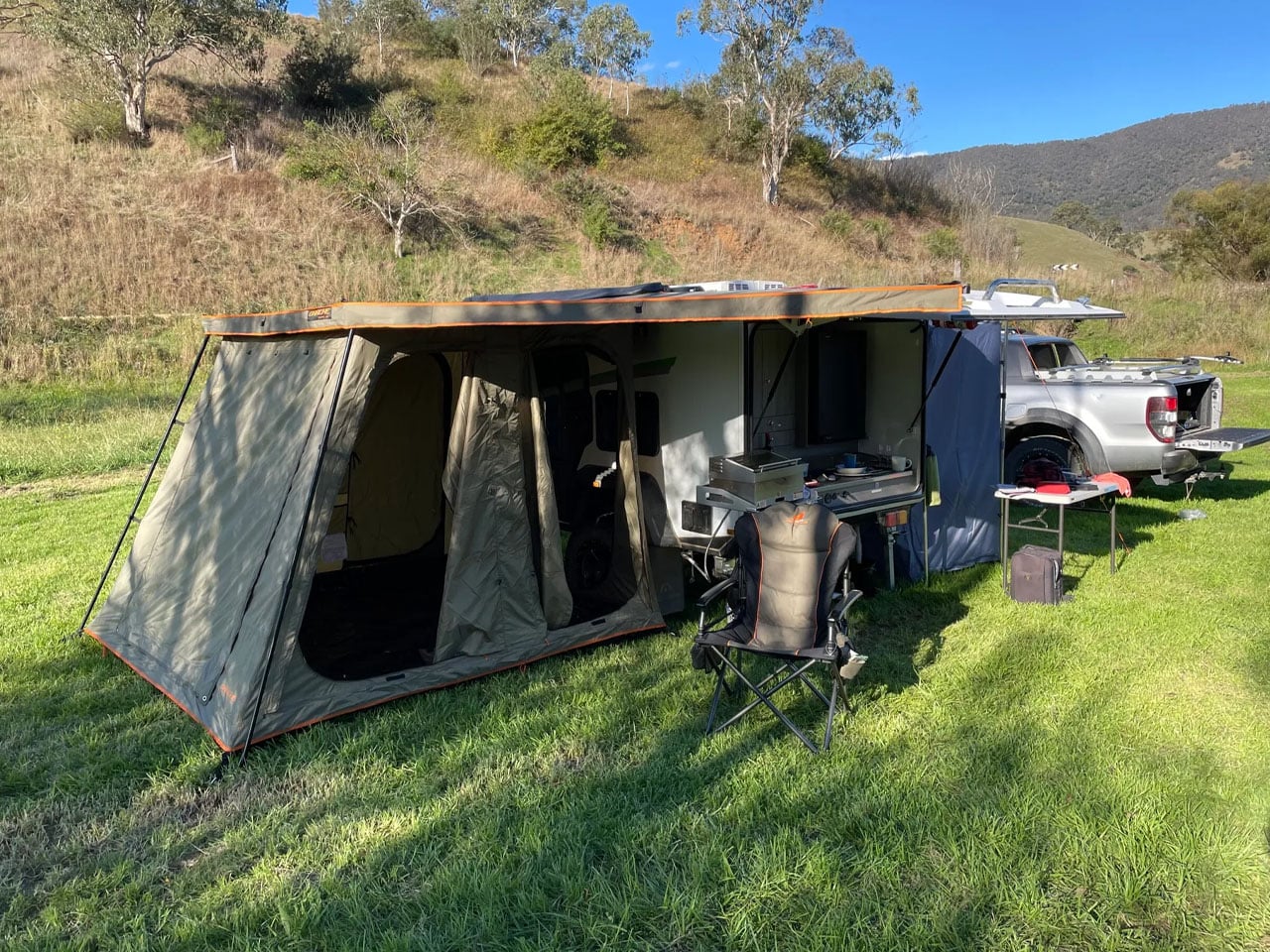
The teardrop format has always been a smart compromise: easy to tow, easy to park, and genuinely comfortable for sleeping. The part it’s never been good at is the day spent outside it. The Stockman Rover 2.0 takes that problem seriously. A pair of wing-like solar awnings fold out from both sides of the trailer, and once deployed, they create a wraparound canopy that turns what would otherwise be an empty campsite into a shaded, functional outdoor lounge.
The teardrop shape keeps everything in the right place: a rear-hatch kitchen and a sleeping cabin up front. The Rover 2.0 pairs that familiar layout with an outdoor kitchen and solar integration that the wing awnings make genuinely useful. It’s still a prototype, but what it proposes is worth paying attention to. The idea that a compact trailer should give you somewhere to actually be outside it is one the rest of the industry should take note of.
What we like
- The wing-like solar awnings solve the biggest daily problem with teardrop camping: having nowhere comfortable to sit once you’ve parked
- The wraparound canopy creates real, usable outdoor living space without much effort
What we dislike
- It’s still a prototype, so production details and pricing remain unconfirmed
- The extended awning system adds visual bulk that breaks the clean simplicity teardrop fans usually appreciate
3. Ebicos Happy Dreamer
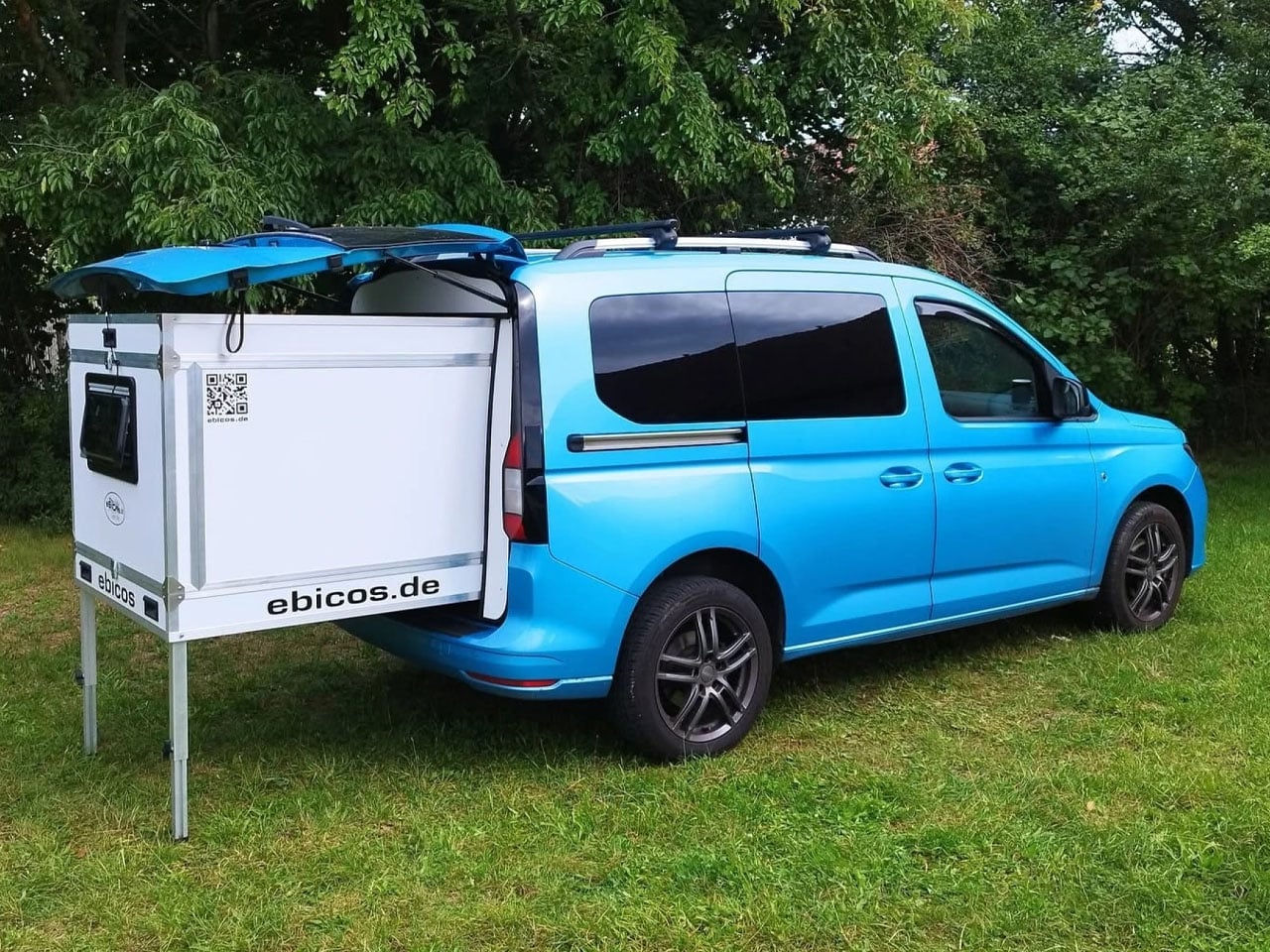
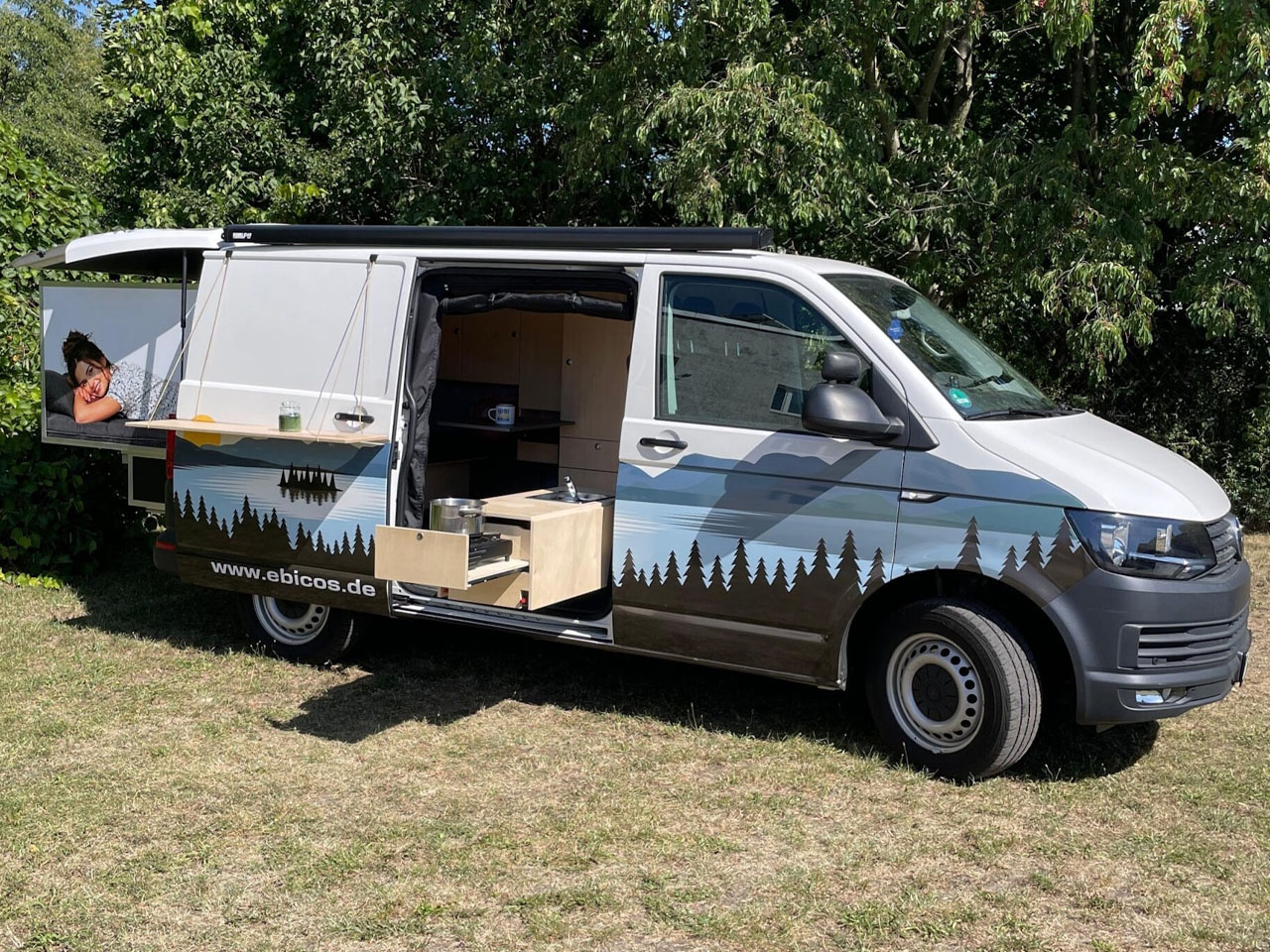
The Happy Dreamer is built on a premise that sounds obvious once someone says it: you don’t have to convert your whole van to go camping. Ebicos’ collapsible pod loads into the back of a small or midsize van, slides out the tailgate at camp, and unfolds into a sleeping cabin without a single tool. The whole process takes around ten minutes, and the pod folds back flat to 47 by 51 inches when the trip is done.
At 132 pounds, a couple of people can carry the Happy Dreamer to and from a van without loading equipment, though Ebicos also showed it on a compact wheeled trolley at Caravan Salon Düsseldorf. Drop-down legs support the outside corners once set up, and a fabric insulator seals the gap between the pod and the van to keep out weather and insects. It’s compatible with the VW Transporter, Ford Transit Custom, and several other vans, starting at €6,250 (around $8,375).
What we like
- No permanent modifications means your van stays a van when you’re not camping
- The $8,375 price is a fraction of the cost of a full van conversion
What we dislike
- The kitchen module is sold separately, adding cost and one more thing to load and unload
- At 132 pounds, solo setup without a trolley is genuinely awkward
4. Motsmann Outranger
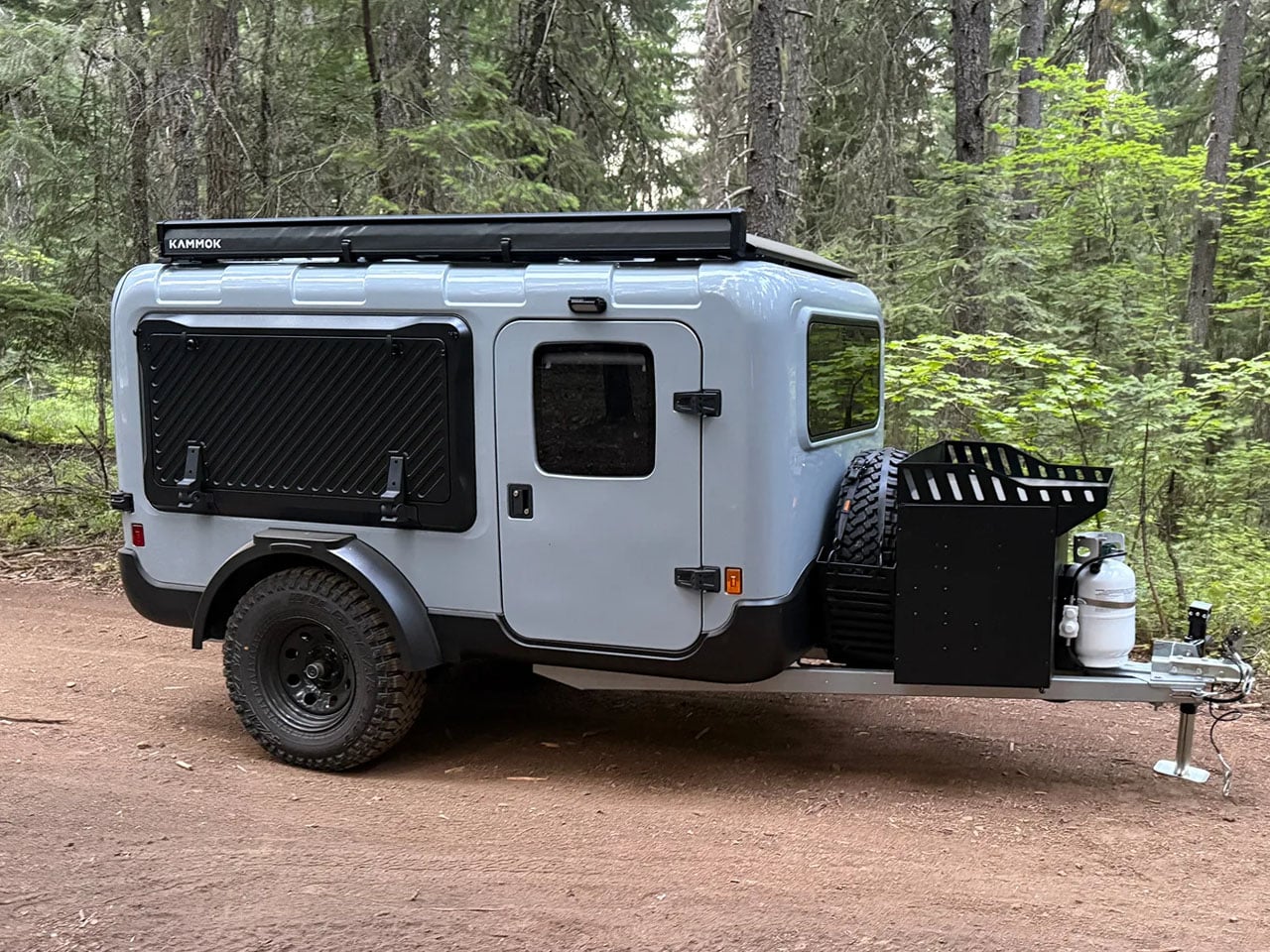
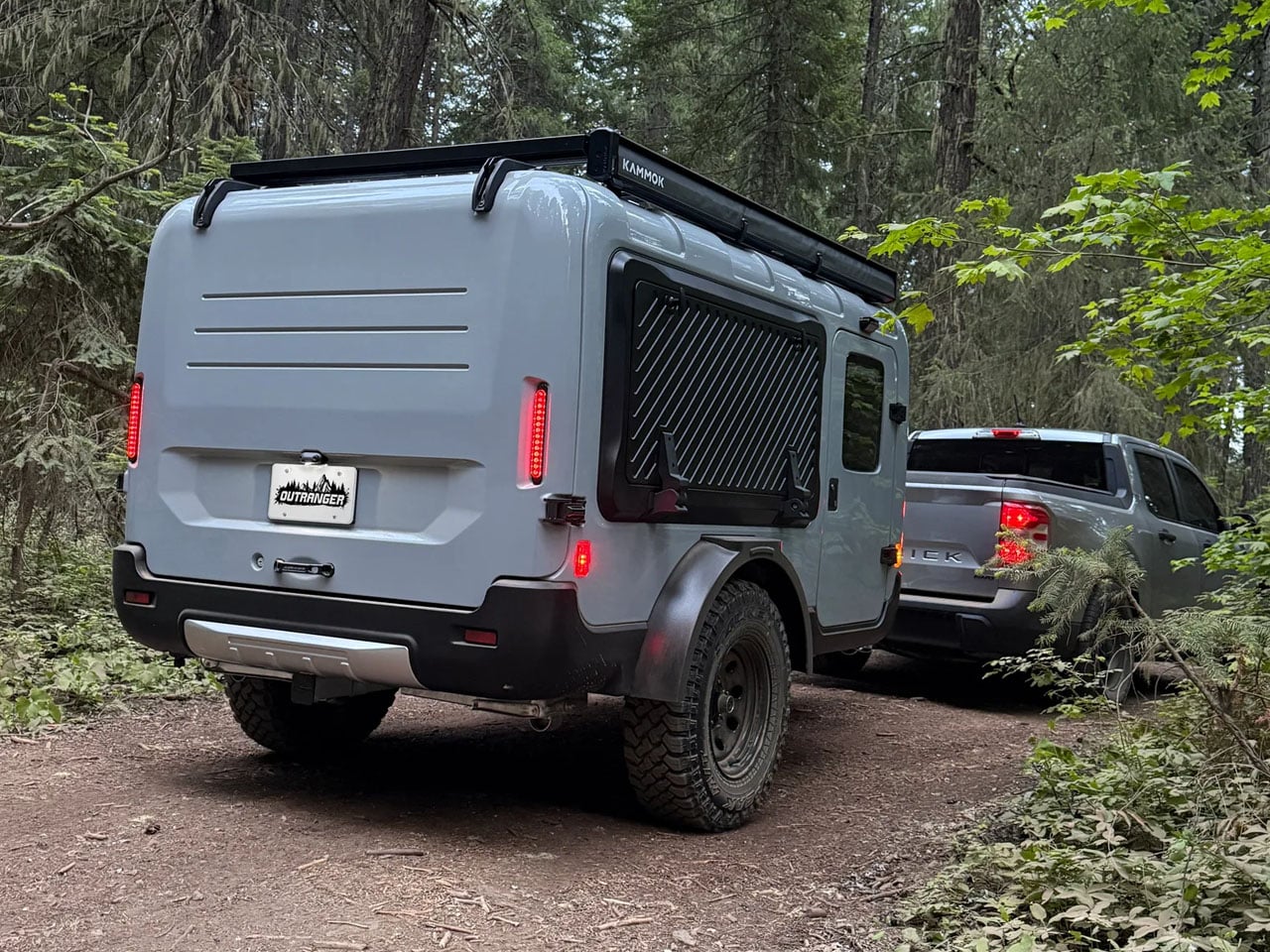
Motsmann Engineering built the Outranger around a premise worth taking seriously: the teardrop format didn’t need to become a relic. Made from molded composites, aluminum, galvanized steel, and durable polymers, it’s a trailer with nothing to rust, rot, or corrode. The chassis uses bolted galvanized steel construction designed to make both maintenance and future upgrades easier than welded alternatives. At 1,450 pounds dry in the base configuration, it hitches to smaller trucks and crossovers without overloading either vehicle.
Power is taken seriously here: a 200Ah LiFePO4 battery comes standard, with the option to expand up to 600Ah, and 200W of solar is available as an add-on. A rear galley handles outdoor cooking, and the roof rack carries up to 150 pounds dynamically or 550 pounds statically for gear. With a starting price of $25,950, the Outranger costs a fraction of what a comparably capable RV would run and takes up considerably less of your driveway doing it.
What we like
- The all-composite, galvanized steel construction means no rust, no wood rot, and low long-term maintenance
- A 200Ah LiFePO4 battery standard means you’re genuinely equipped for off-grid use from day one
What we dislike
- The low teardrop roofline means no standing room inside, which takes some adjustment after a long day outdoors
- The base price is $25,950, and adding expanded battery or solar can push the total noticeably higher
5. Aliner Alite
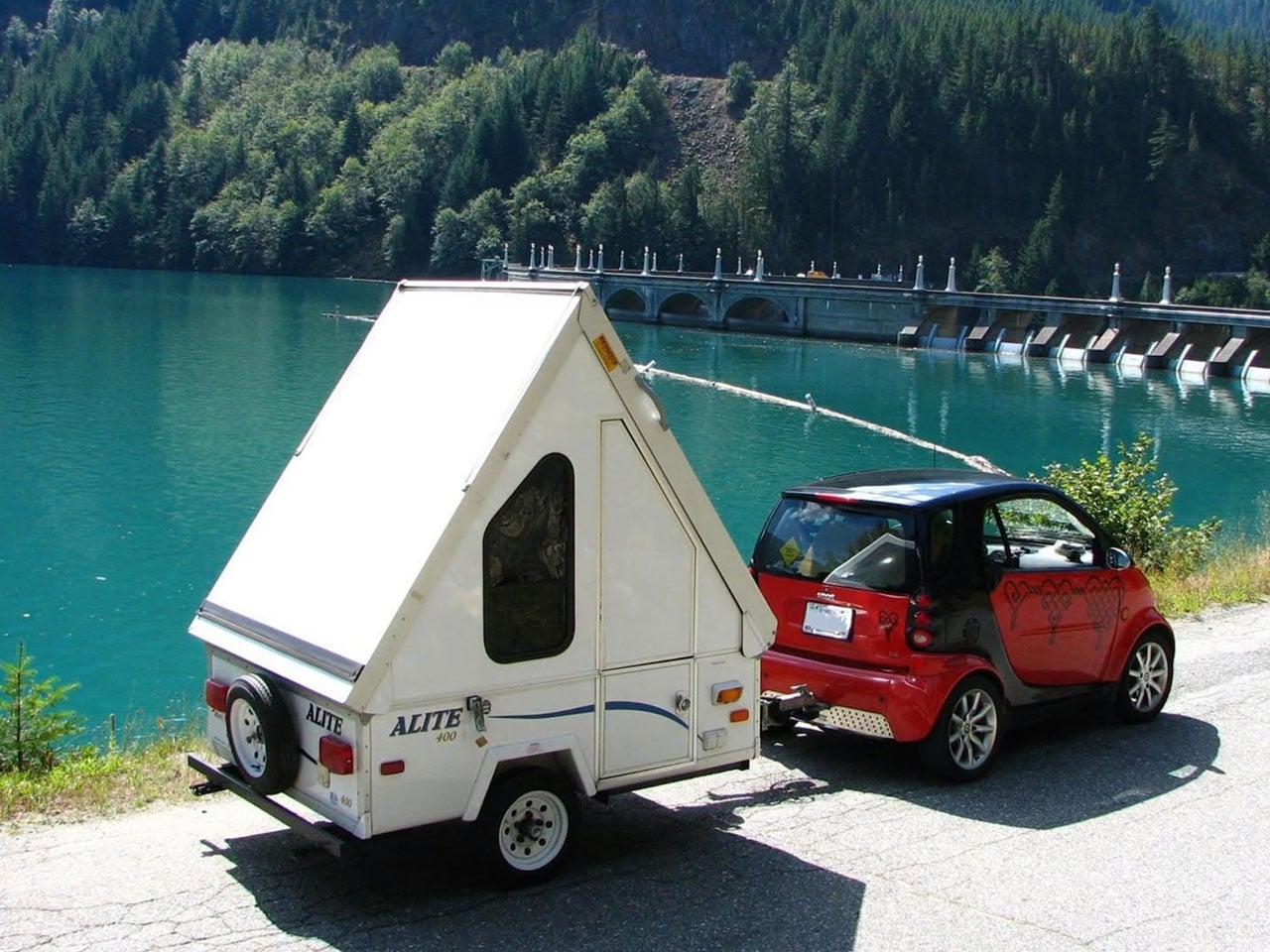
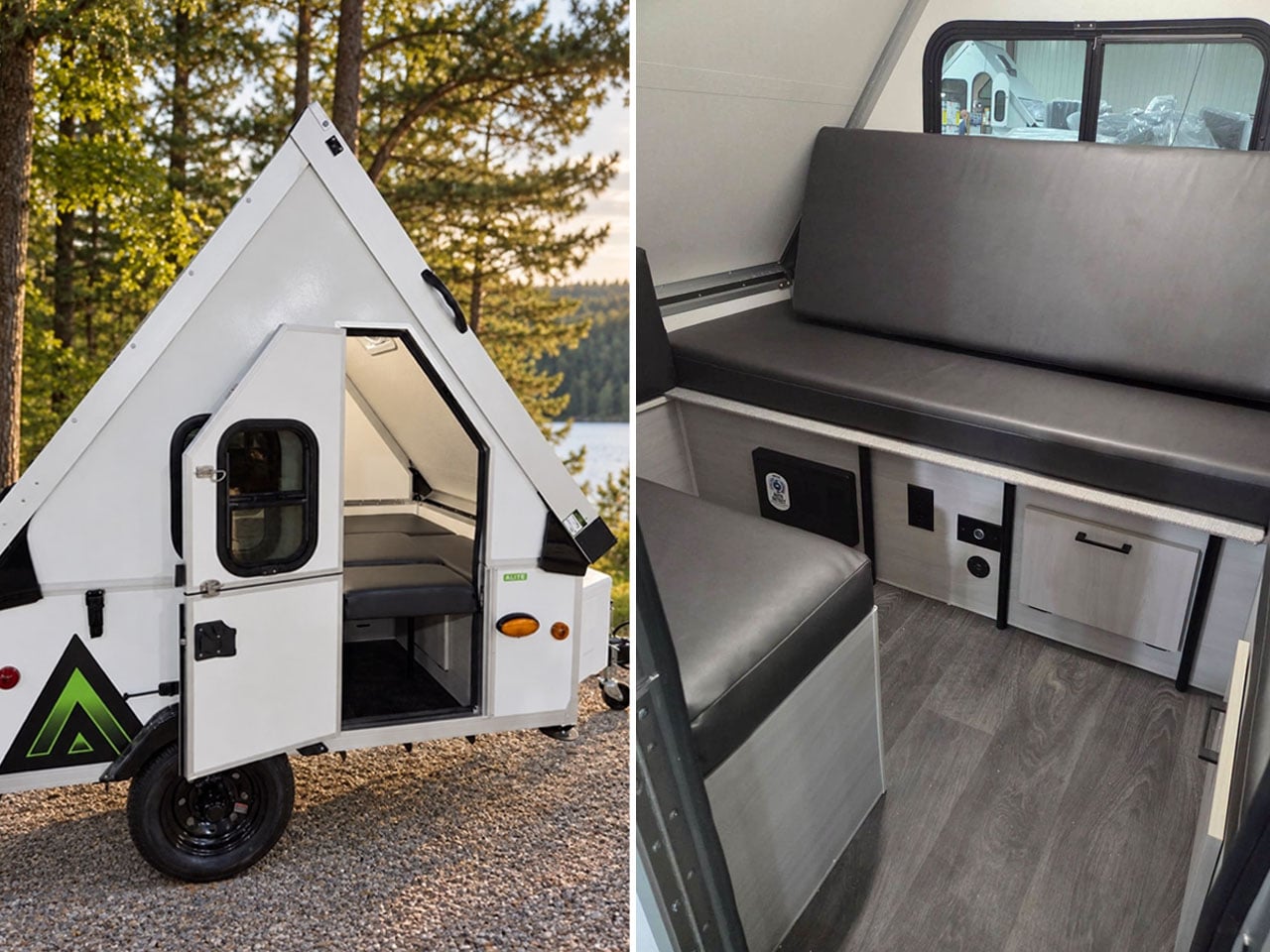
The Aliner Alite disappeared from Aliner’s lineup nearly a decade ago and came back for 2027 as though it had never left. Its A-frame hard-sided roof folds flat for towing and goes up in roughly 30 seconds once you arrive, which manages to be both a party trick and a genuinely useful feature. At 672 pounds dry and 11 feet long, it is the smallest and lightest hard-sided camper Aliner makes, and one of the lightest hard-sided campers anywhere.
Aliner says essentially any vehicle can tow the Alite, though common sense still applies: check your tow rating and account for what you’ll load inside. Any vehicle rated for 2,000 pounds or more should handle it without strain, which opens the Alite to smaller SUVs and crossovers that most campers couldn’t tow. It debuted at America’s Largest RV Show in Hershey, Pennsylvania, and starts at $17,650, making it one of the most accessible hard-sided campers on the market.
What we like
- At 672 pounds dry, almost any vehicle with a tow hitch can pull it, including many EVs and compact crossovers
- The $17,650 starting price makes it genuinely accessible in a market full of $40,000-plus trailers
What we dislike
- The 672-pound dry weight rises quickly once you add gear, water, and supplies, which changes the towing math for very light vehicles
- The 11-foot footprint makes it comfortable for a night or two but less suited to extended trips
The Direction This Is All Heading
This September’s five designs land across a wide price range and make very different assumptions about who is camping and why. The Lume Ranger and Stockman Rover 2.0 treat the campsite as a place worth designing for. The Outranger and the Alite start from durability and accessibility. The Happy Dreamer skips the trailer altogether. Taken together, they suggest a category that’s finally asking more interesting questions than it used to.
What’s most encouraging is how many price points the conversation is happening across. You don’t need $70,000 to find something worth looking at here, and that feels genuinely new. The Alite proves a 672-pound camper can still be a serious piece of kit. The Outranger proves composite construction doesn’t have to come with exotic pricing. Good ideas, it turns out, aren’t reserved for the expensive end of the market.