Berlin does this every September, and it never stops being slightly overwhelming. IFA 2026 runs September 4 to 8 across 27 halls at Messe Berlin, with more than 1,900 brands and something like 220,000 people wandering through them. This year the theme is “The Future Is Now”, which sounds like a slogan until you see the schedule. Humanoid robots are walking a catwalk on September 5. Xiaomi is exhibiting for the first time in the show’s 102-year history. There is a robot football tournament. Somewhere in there, several hundred companies will also try to sell you a better toaster.
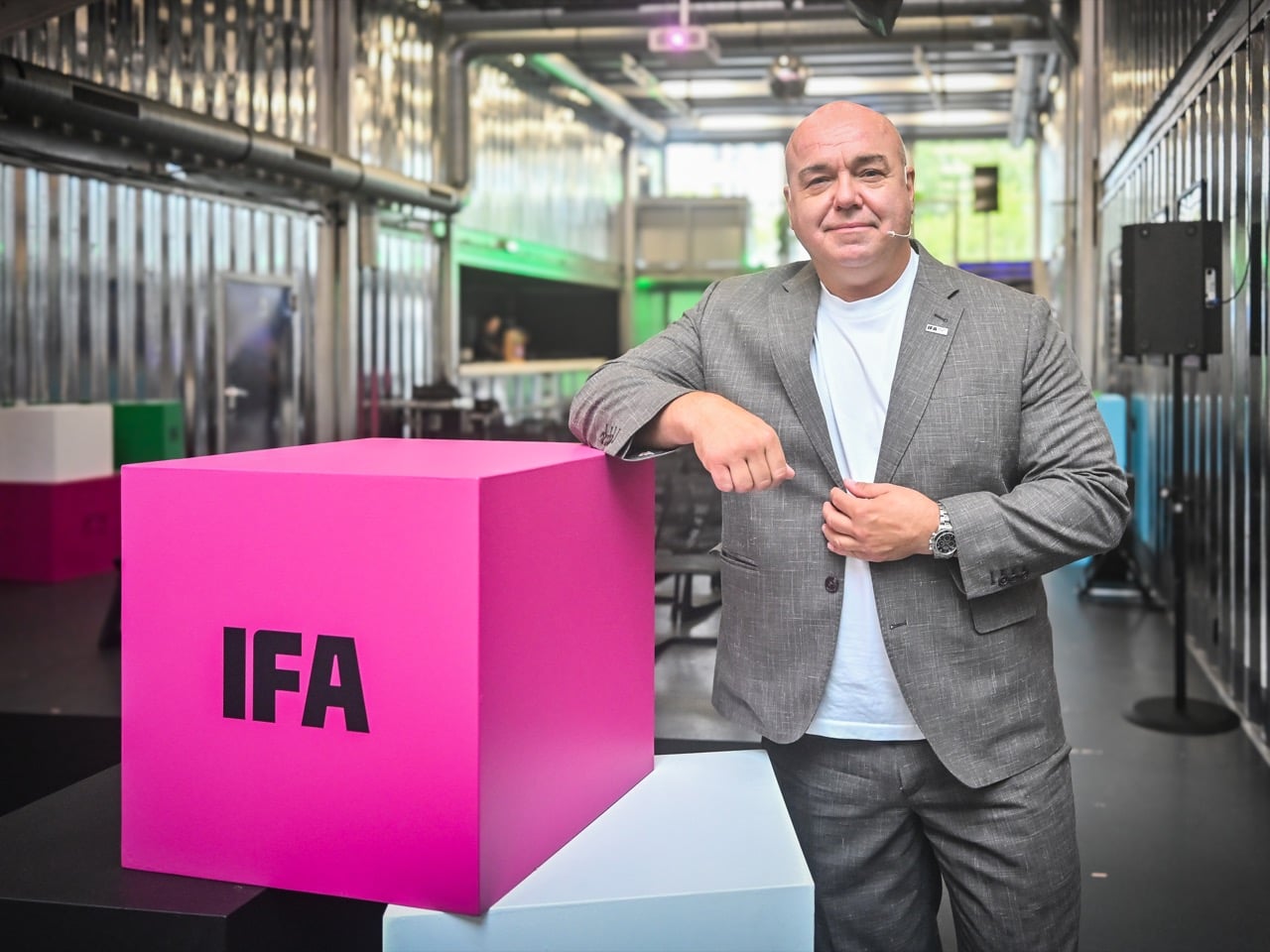
We wanted to know how a show like that gets built, so we sat down with Leif Lindner, CEO of IFA Management, who has been running the thing since 2023. We last spoke to him in 2024, back when AI was still being called a race rather than a bubble. Plenty has changed. Robots got legs, Chinese manufacturers got fast, and AI quietly stopped being a category and became the water everything swims in. Lindner has thoughts about all of it, including a good one about what 70 kilos of biped requires backstage.
AI Stopped Being a Special Feature
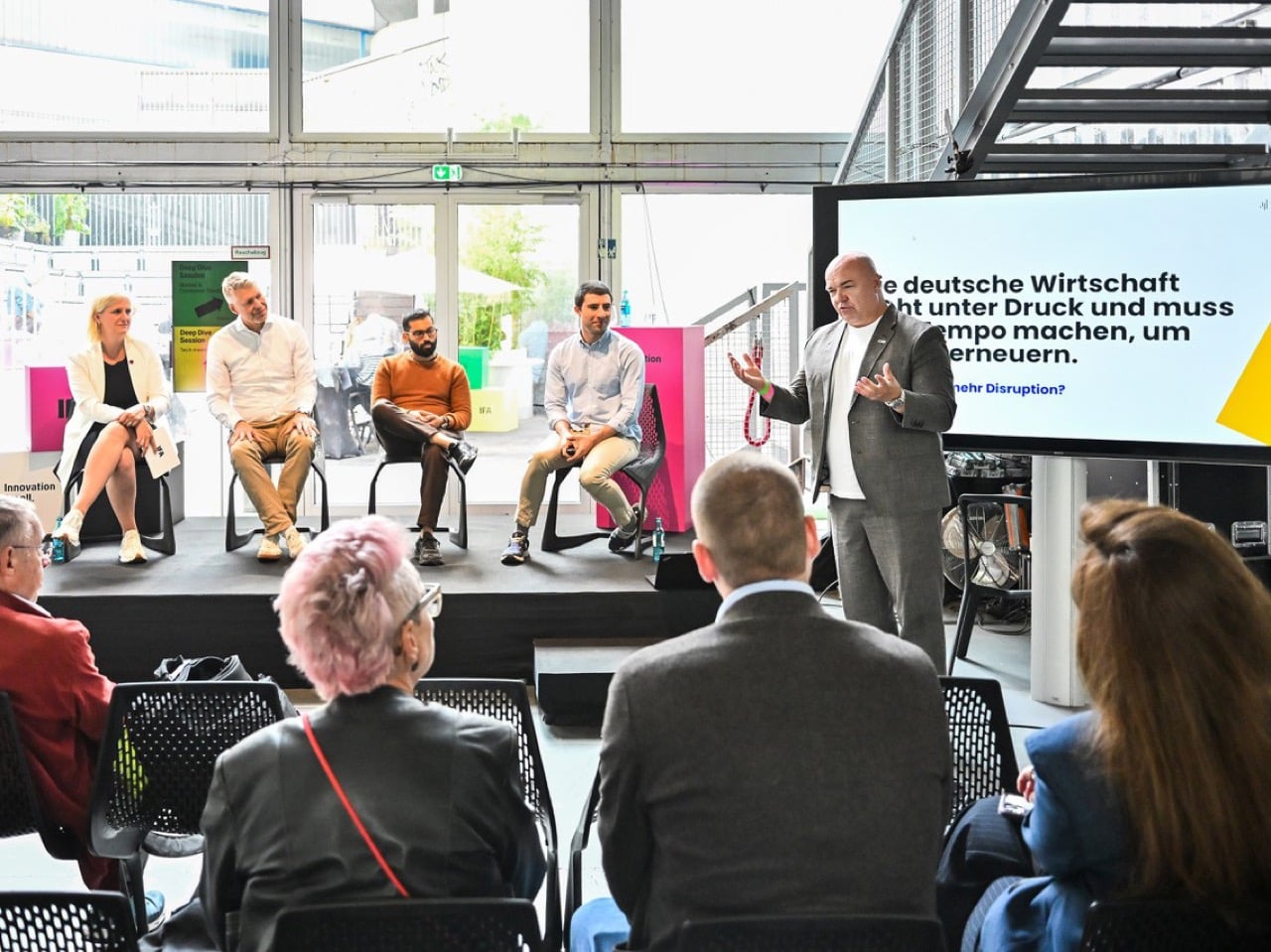
Every IFA has a theme, but this year’s grew out of something Lindner watched happen in real time rather than something the marketing team dreamed up in a room. “For years we talked about AI, robotics and connected living as the future,” he told us. “Somewhere along the way, that changed. AI stopped being a standalone category and became part of almost every category.” Refrigerators, earbuds and treadmills all carry it now, and none of them were sold to you as AI products first.
That shift changes what Lindner looks for on the floor these days. “A few years ago, the conversation was simply, does this product use AI,” he said. “Today, the better question is, what does AI actually enable. Does it simplify a task. Does it save time. Does it help you make a better decision.” The companies worth your attention this year, in his view, are the ones who stopped mentioning AI out loud and just let it work.
China Built the Runway, Europe is Preparing to Walk On It
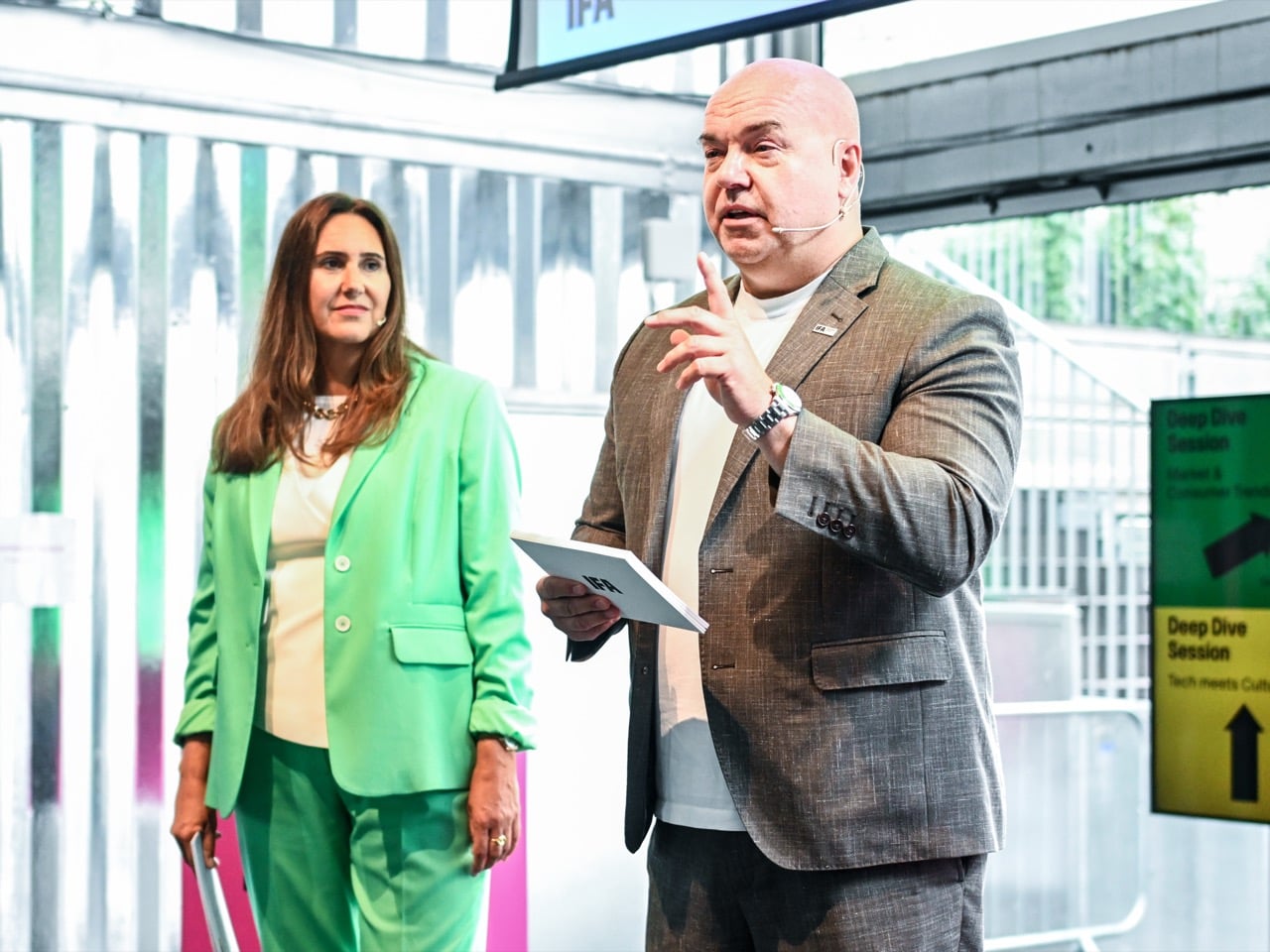
The single loudest theme at IFA 2026 is humanoid robots, and the roster reads like a map of China’s supply chain. Unitree, Agibot, DEEP Robotics and a dozen others are walking a literal catwalk on September 5 called Robots on the Runway, and Lindner does not dodge why they got there first. “Manufacturing scale, deep investment and an incredibly integrated supply chain mean companies can iterate very quickly,” he said. “When design, engineering, production and testing are all happening within the same ecosystem, ideas naturally move from prototype to product much faster.”
He is quick to add that Europe is not simply behind. “Europe has extraordinary strengths of its own, in engineering, industrial manufacturing, AI and responsible technology development,” he told us, pointing to NEURA Robotics as the proof. The German firm closed a funding round of up to 1.4 billion dollars just before the show and delivers a keynote titled “From Europe, for the World: Building the Ecosystem for Physical AI” barely 90 minutes after the robots finish their runway walk. “The conversation isn’t about catching up category by category,” Lindner said. “It’s about building an ecosystem that allows European innovation to compete on a global stage.”
The One Robot Actually Cleared to Sell in the EU
Buried in that same conversation is a detail that separates the showpieces from the products. AiMOGA’s Mornine, built by a unit of Chinese carmaker Chery, holds full EU CE certification covering machinery safety, radio equipment and cybersecurity, signed off by German testing house TÜV Rheinland. That makes it the first humanoid certified on both hardware and software under EU rules, and it already works shifts in car dealerships across more than 30 countries.
Lindner treats that milestone as the real dividing line on his own show floor. “That’s certainly a meaningful milestone because it reflects the transition from a technology demonstration to a product that’s ready for commercial deployment in Europe,” he said. “Many of the robots visitors will see at IFA are there to demonstrate what’s possible. Others are much closer to real-world deployment. You can see the entire innovation journey in one place.”
What It Takes to Put a Robot on Stage
None of this happens by accident, and Lindner is refreshingly candid about how much invisible work sits behind five minutes of a robot walking in a straight line. “Any live demonstration involving emerging technology requires careful planning, and robotics is no exception,” he said. “Safety comes first, and our exhibitors work closely with our teams to make sure demonstrations are planned and delivered responsibly.”
His closing line on the subject is the best quote in the whole conversation. “When you put a 70-kilo humanoid robot in front of a live audience, you want the excitement to be on the stage, not behind it.” Worth remembering the next time a robot sticks a landing and the crowd gasps. Somebody spent months making sure that gasp was the only surprise in the room.