I’ve lost count of how many times a delivery robot has shown up in a video, rolled confidently across a parking lot, and then just stopped at the base of a staircase like it hit an invisible wall. That has always been the real bottleneck in last-mile delivery, not the miles of open road but the last twenty feet of stairs, curbs, and uneven walkways leading to an actual front door. Robot.com’s new concept, R-dog, is the first design I’ve seen that treats that problem as the whole point rather than an afterthought.
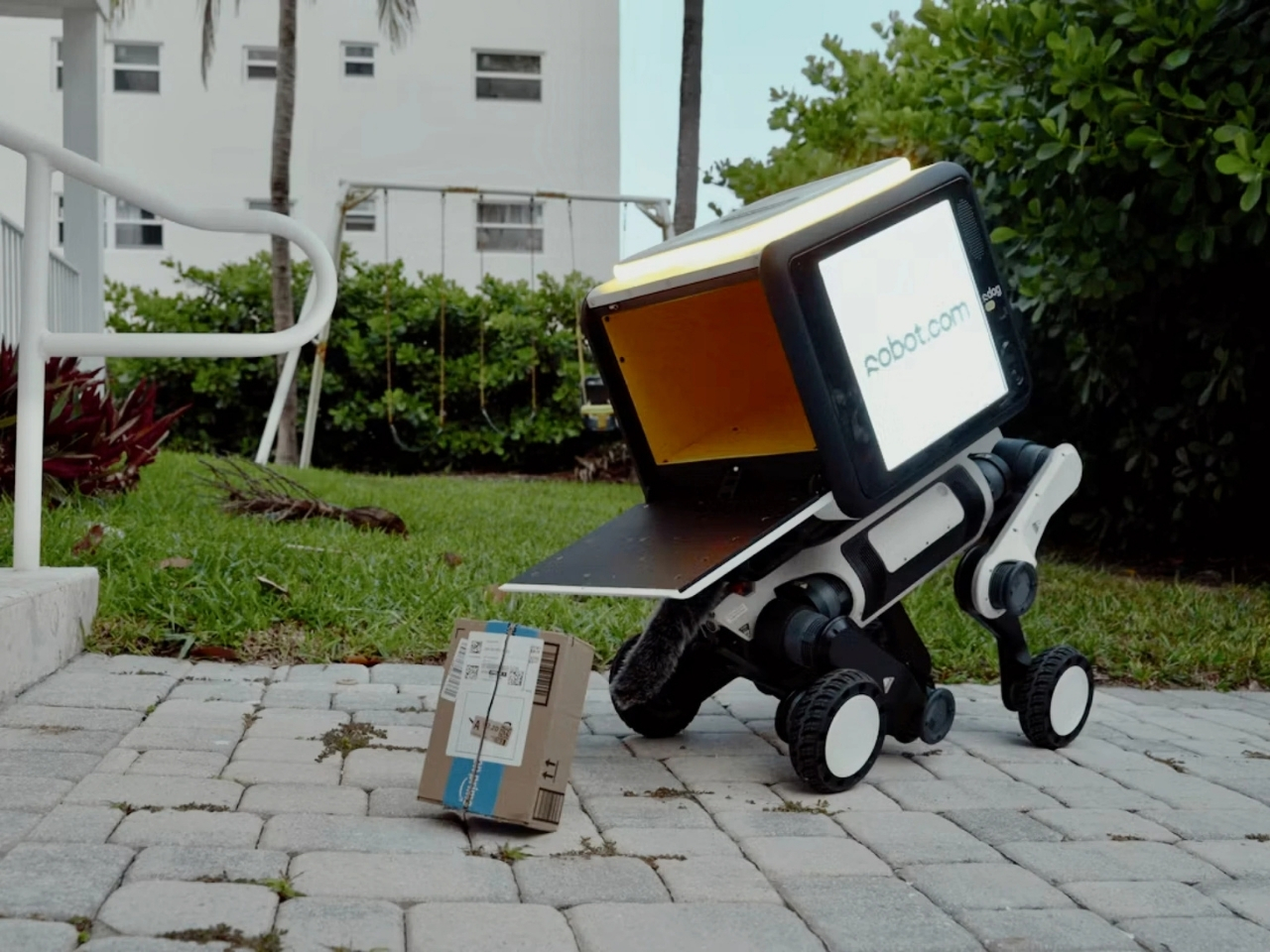
R-dog is a four-legged robot with wheels built into its feet, plus a furry tail and a face designed to look approachable rather than robotic. Its four flexible legs bend at the knee, letting it climb stairs, step over thresholds, and cross the mixed, unpredictable terrain that trips up wheel-only robots, while the wheels themselves handle flat ground efficiently. It’s a hybrid design that finally matches the actual geography of a residential delivery, and it’s the kind of practical engineering that makes you wonder why every delivery robot before this one settled for wheels alone.
Designer: Robot.com
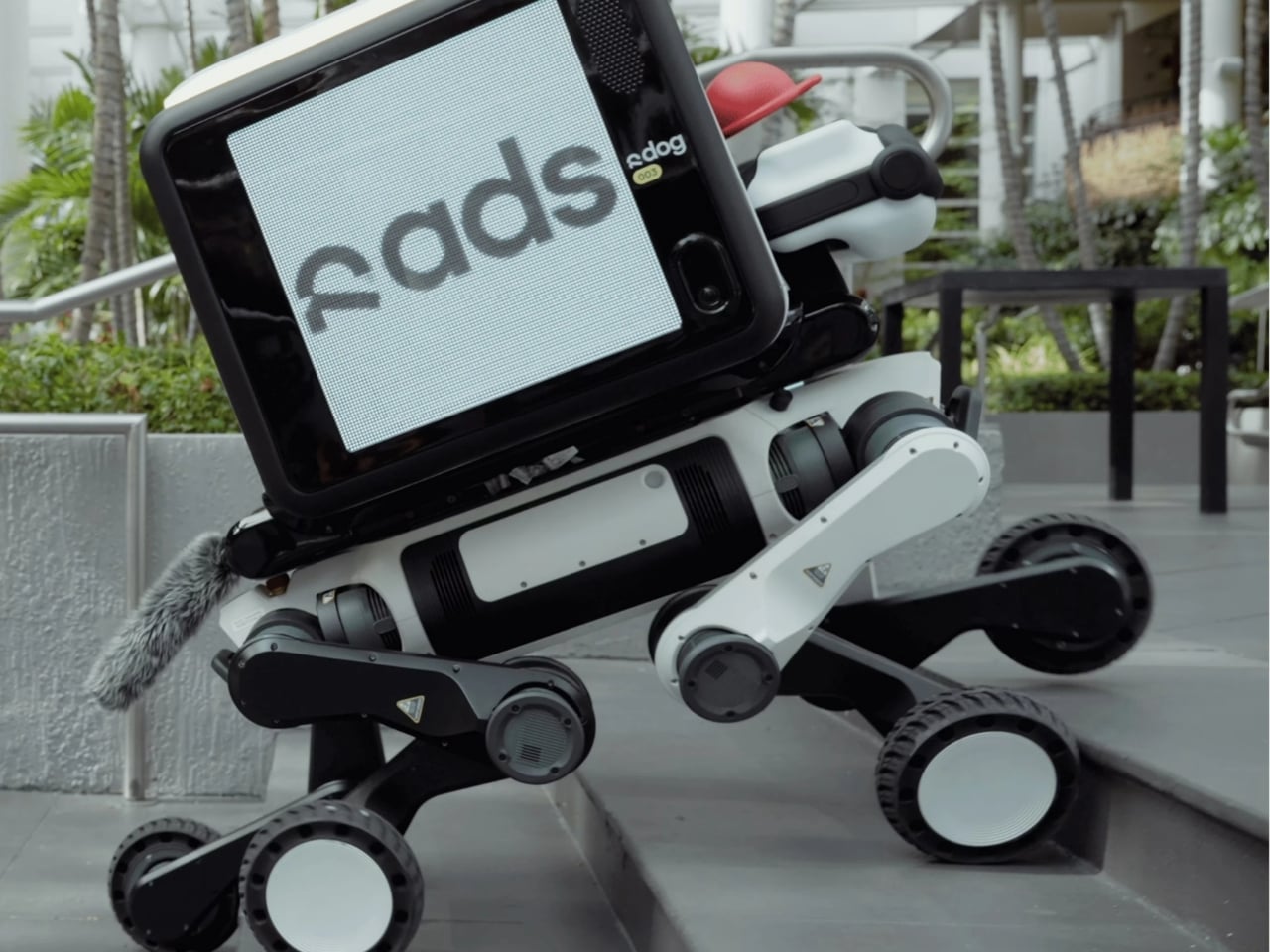
The cargo compartment doubles as the robot’s body, and it’s large enough to carry multiple packages at once, whether that’s stacked food orders sitting alongside standard parcels. Once R-dog reaches your door, an unattended auto drop-off feature completes the handoff without anyone needing to be home, then it moves on to its next stop. For dense urban blocks and residential neighborhoods with walk-ups, that’s a genuinely useful piece of infrastructure, not just a cute demo built for a press release.
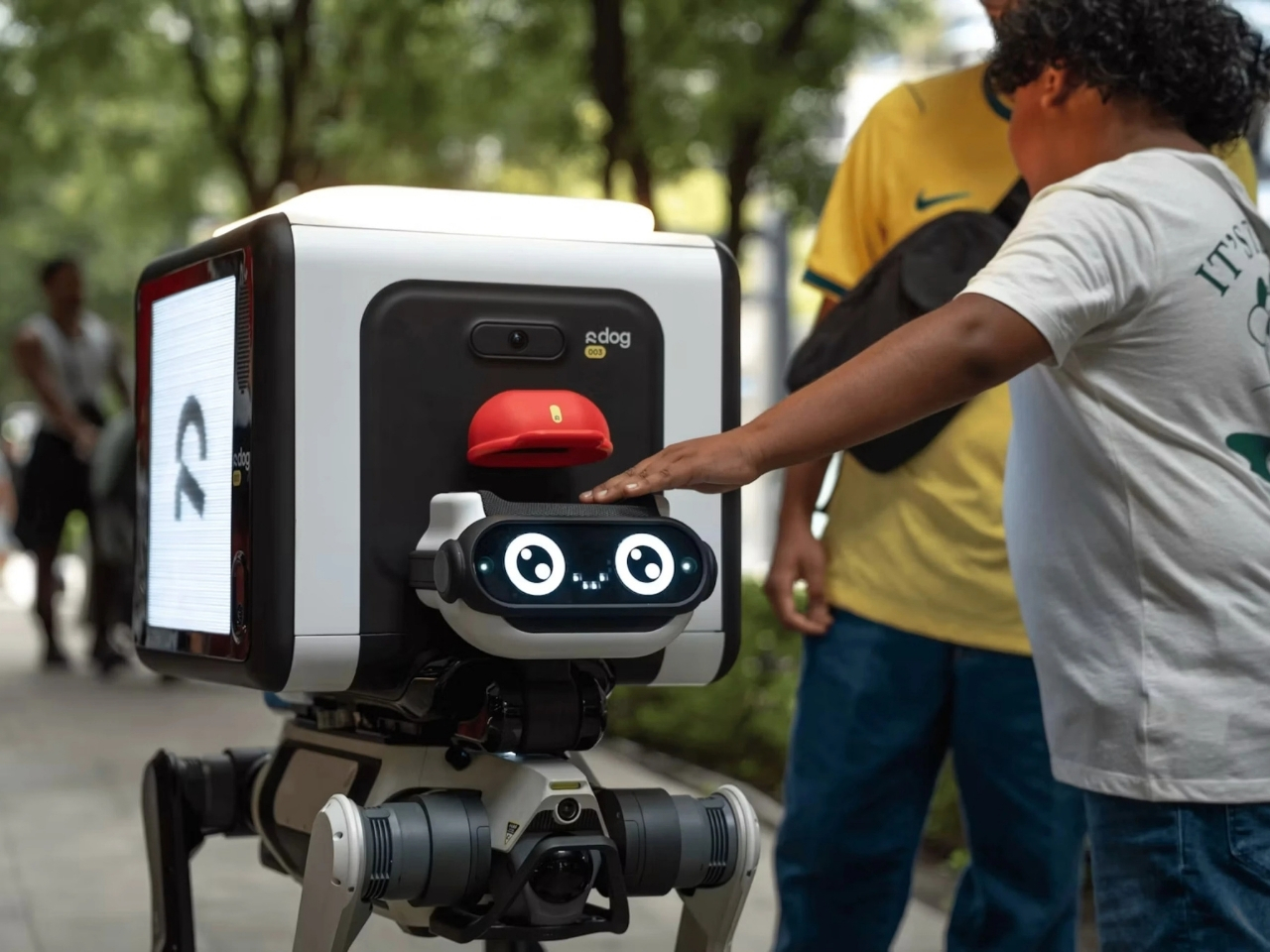
Here’s where the story gets a little more complicated, and I think it’s worth sitting with rather than glossing over. R-dog isn’t only a delivery robot. It also runs on Robot.com’s R-ads platform, meaning it can carry branded advertising campaigns as it moves through neighborhoods and hold natural voice conversations with anyone who stops to interact with it. The design leans into this on purpose. R-dog’s look is built specifically to attract attention and encourage people to walk up and engage with it, and that furry tail is doing exactly the job it was designed to do.
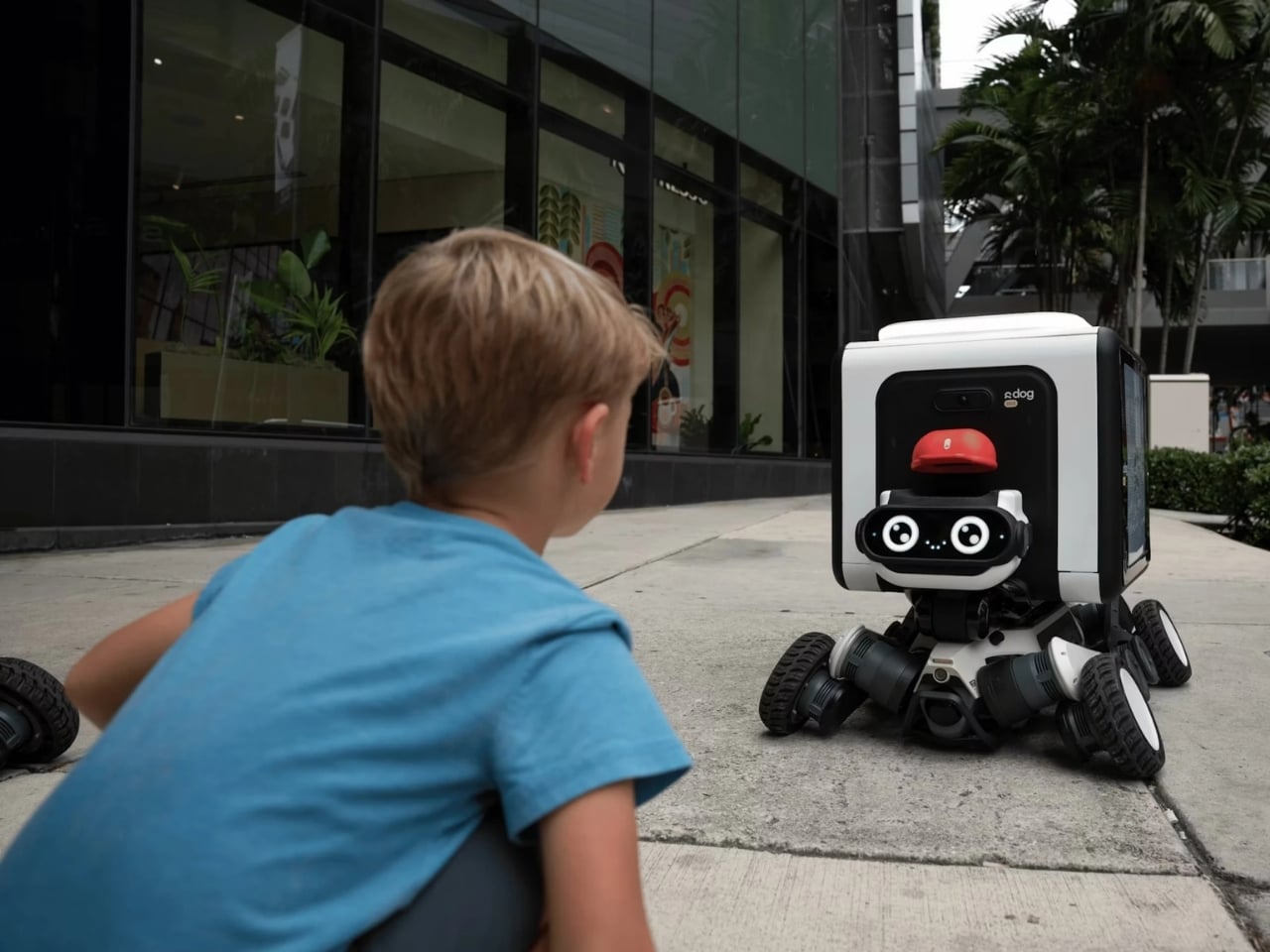
I don’t think that’s a dealbreaker, but it does raise a fair question. Is this a delivery robot that happens to carry ads, or an advertising platform that happens to carry packages? One outlet covering the reveal asked almost the same thing, noting that R-dog “definitely could be both,” and admitting the answer isn’t settled yet. I appreciate that kind of honesty from the coverage, because pretending this is purely a delivery innovation would undersell what the company is actually building here.
On the technical side, R-dog runs on REMI, Robot.com’s fleet management platform, and its navigation comes from FieldAI’s Field Foundation Models, which let it operate in unpredictable real-world environments without needing the area pre-mapped first. That matters enormously for a robot meant to handle whatever staircase, curb, or oddly angled walkway it encounters next. Robot.com has been building robots since 2017 and currently has more than 500 deployed across the US, Canada, Dubai, and the MENA region, having completed over 2.5 million tasks. R-dog joins an existing lineup that includes the R-kiwi for campus deliveries, the R-cargo for industrial logistics, and the humanoid R-noid.
Commercial deployment is planned for 2027, and pricing hasn’t been announced. What I keep landing on is that R-dog solves the one problem that has quietly limited every delivery robot before it. Whether it ends up remembered as the design that finally cracked the last twenty feet, or as a very charming way to get people to look at ads, will depend entirely on how it’s actually deployed once it leaves the concept stage. For now, it’s the most convincing answer I’ve seen to a problem that’s been sitting in plain sight for years.