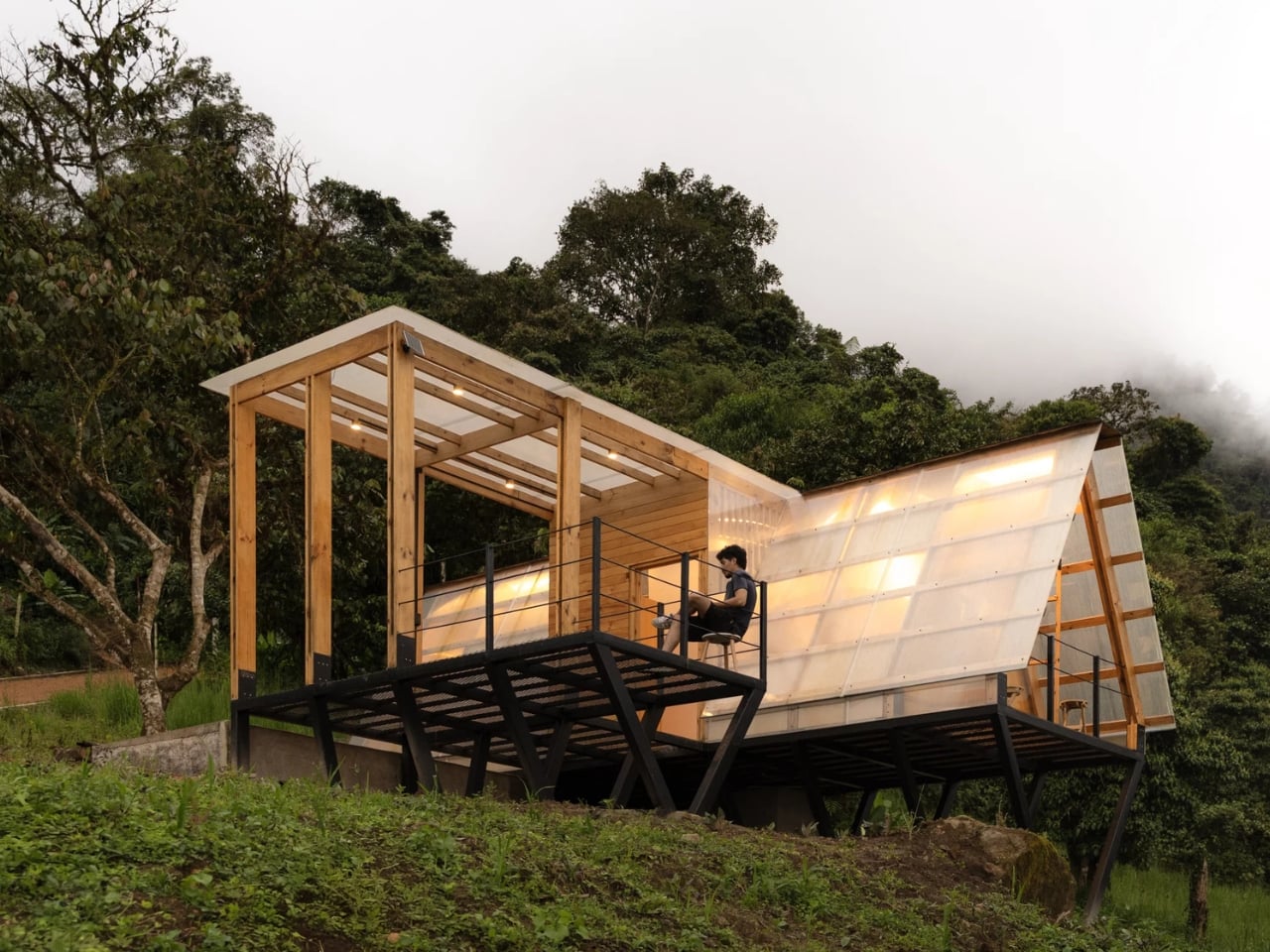
Somewhere between a manifesto and a shelter, Casa 6-3 landed on the slopes above Mindo, Ecuador, and quietly started asking all the right questions about how we build, where we live, and what we’re actually willing to give up.
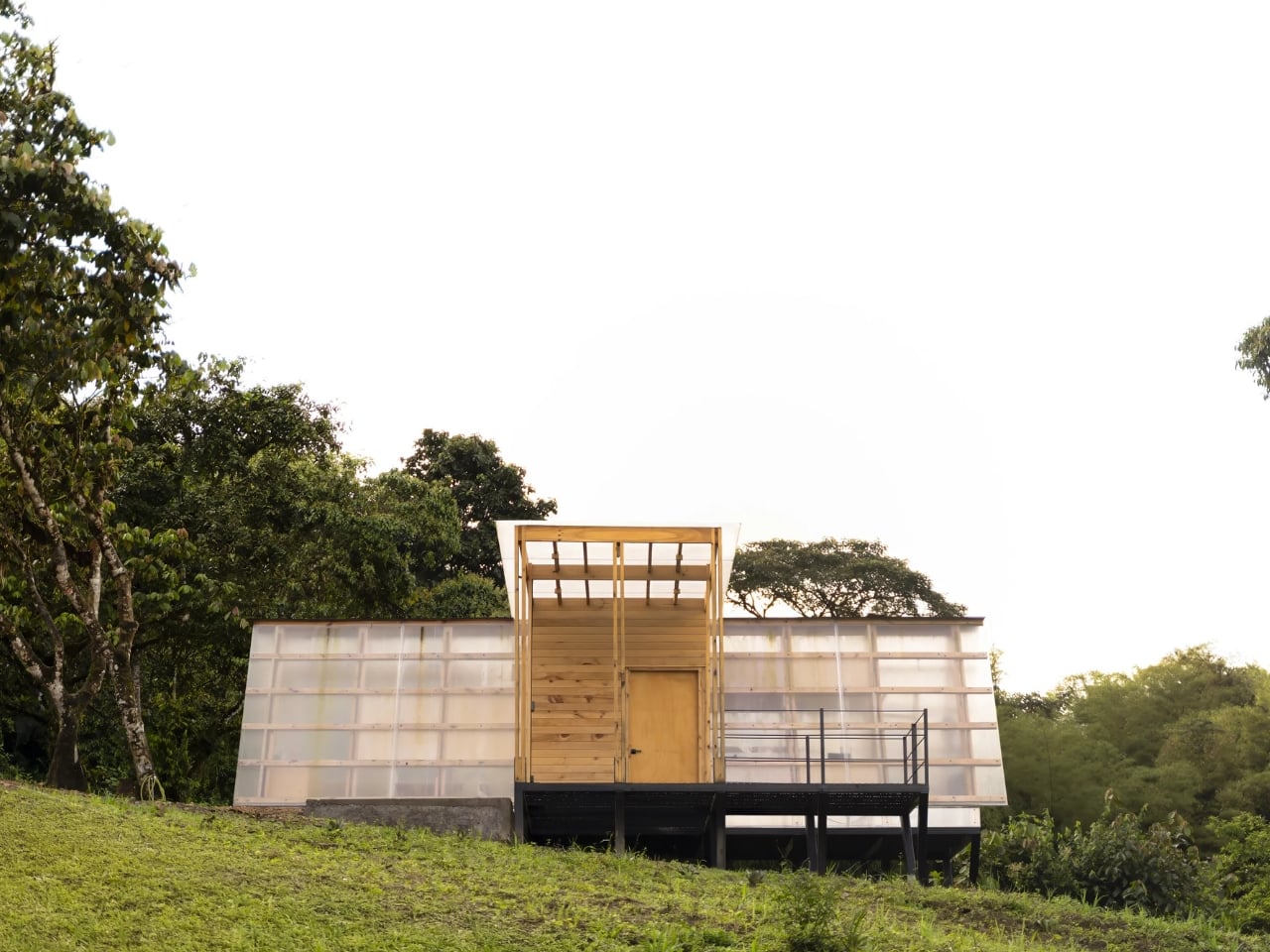
Built by Baquio Arquitectura, the cabin sits elevated on a triangular timber support system above the slopes of Ecuador’s Chocó cloud forest, one of the most biodiverse ecosystems on the planet. At just 7.2 meters long, it sleeps up to six people. That ratio alone is worth sitting with for a second.
Designer: Baquio Arquitectura
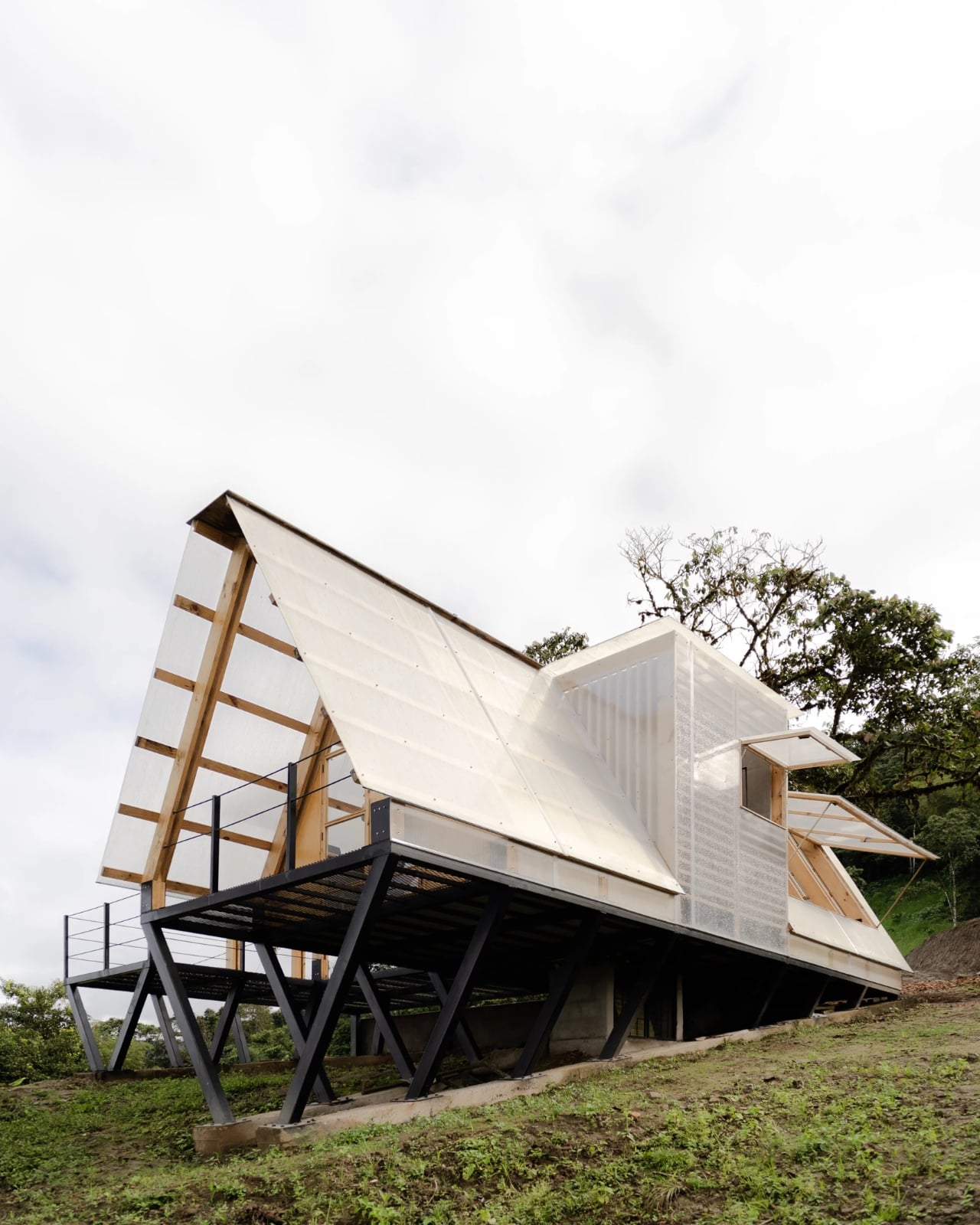
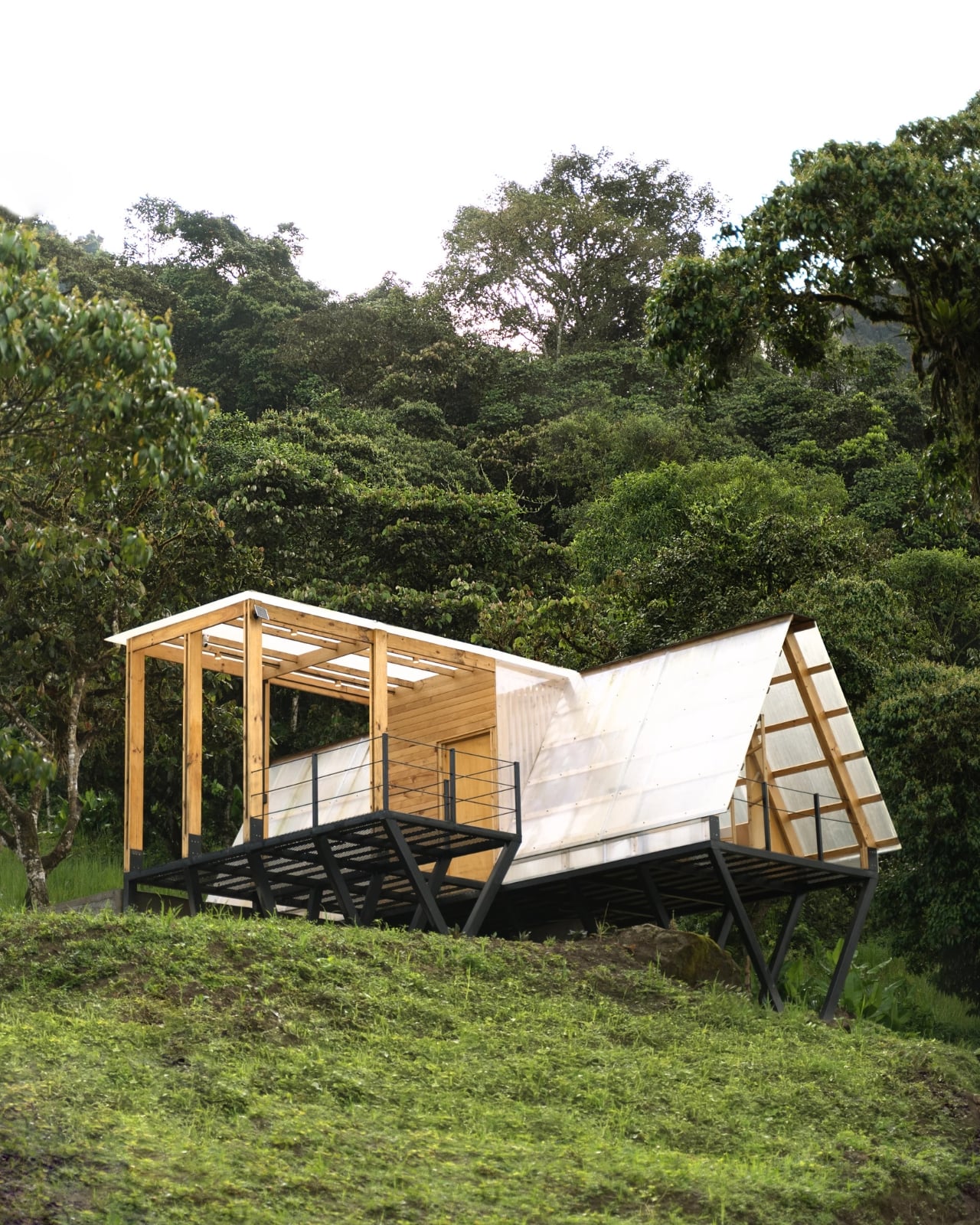
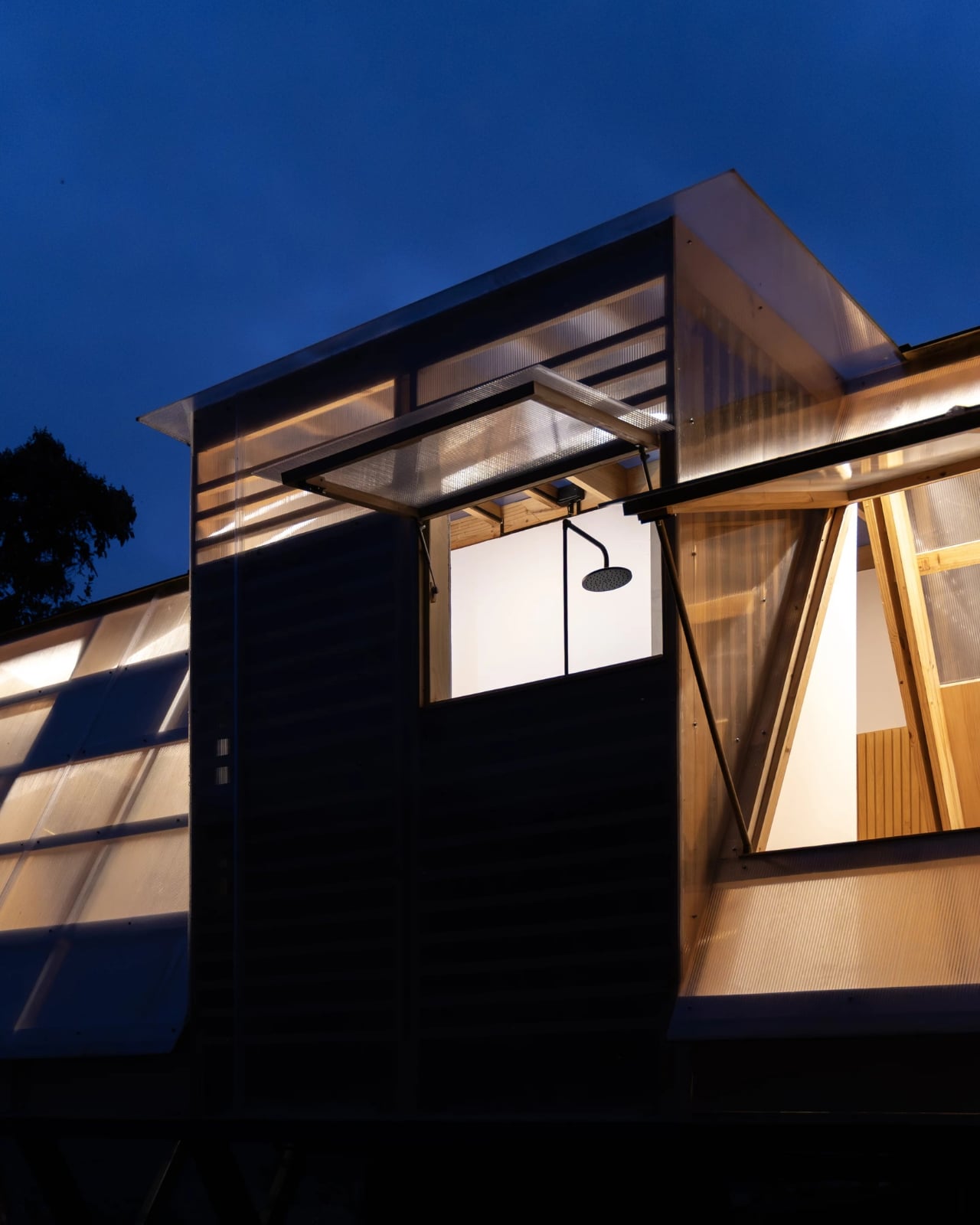
The structure is clad almost entirely in polycarbonate, that semi-transparent industrial material more commonly associated with greenhouse roofing than weekend retreats. Here, it does double duty: keeping the budget lean while transforming the cabin into something closer to a glowing lantern at dusk. Rain patterns, leaf shadows, and the shifting greens of the surrounding vegetation filter through the walls throughout the day, turning the interior into a kind of living light installation that you don’t have to curate because nature does it for you.
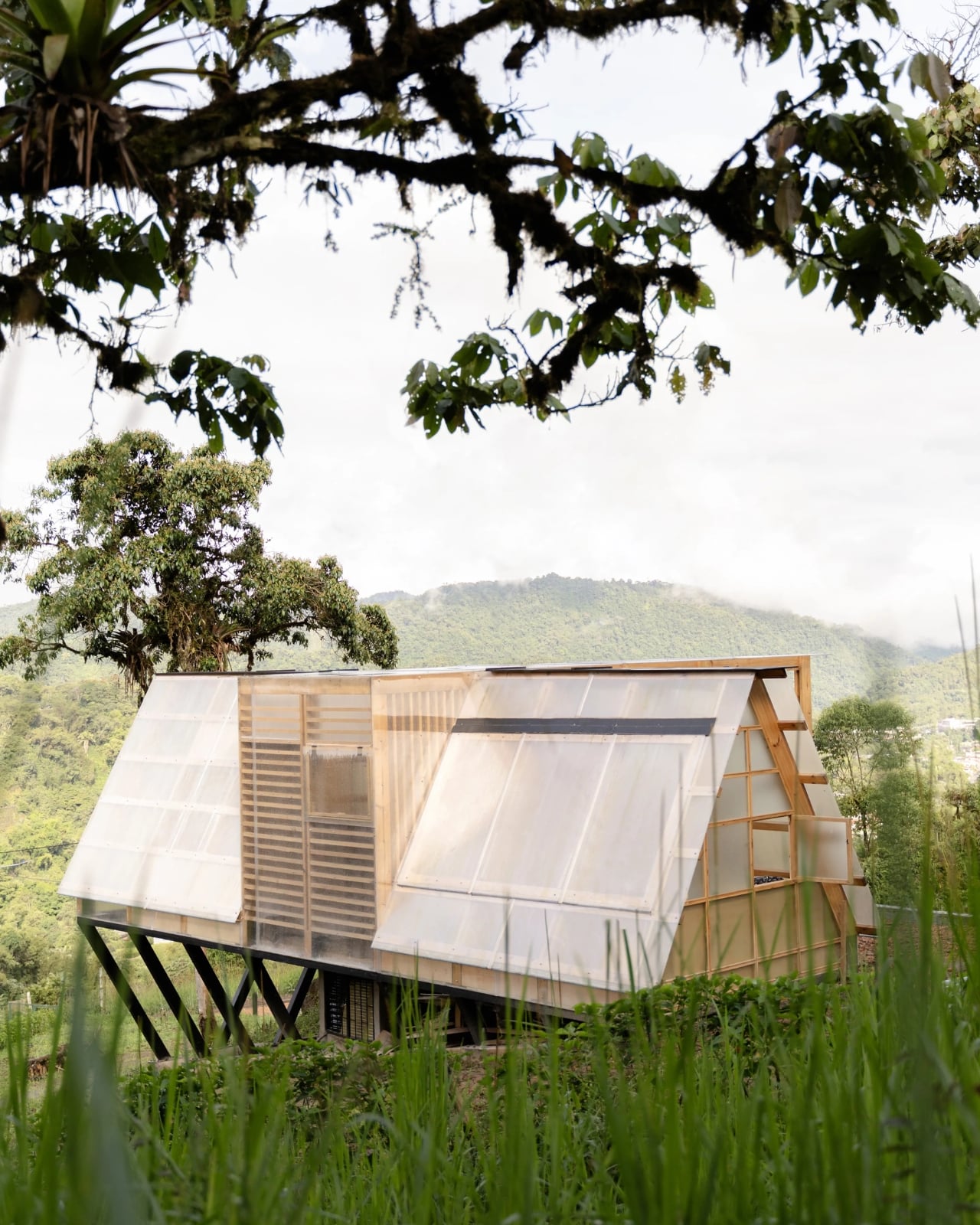
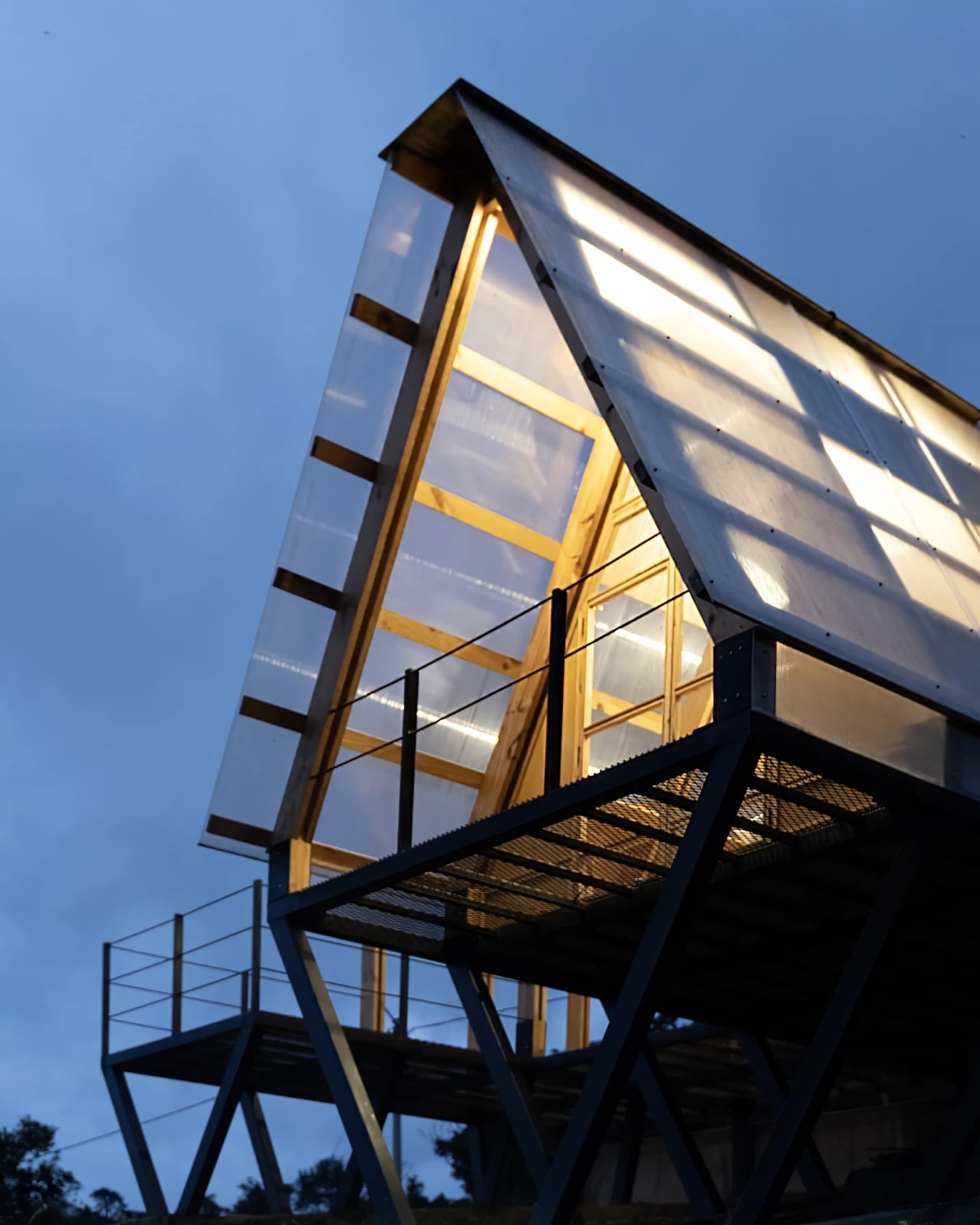
Raising the cabin off the ground was both a practical and philosophical decision. The timber stilts let the site breathe underneath, preserving the original topography without excavation or disruption. It’s a small gesture, but it matters enormously in a region where the ecosystem is as fragile as it is spectacular. The architects didn’t treat the forest as a backdrop. They treated it as a collaborator.
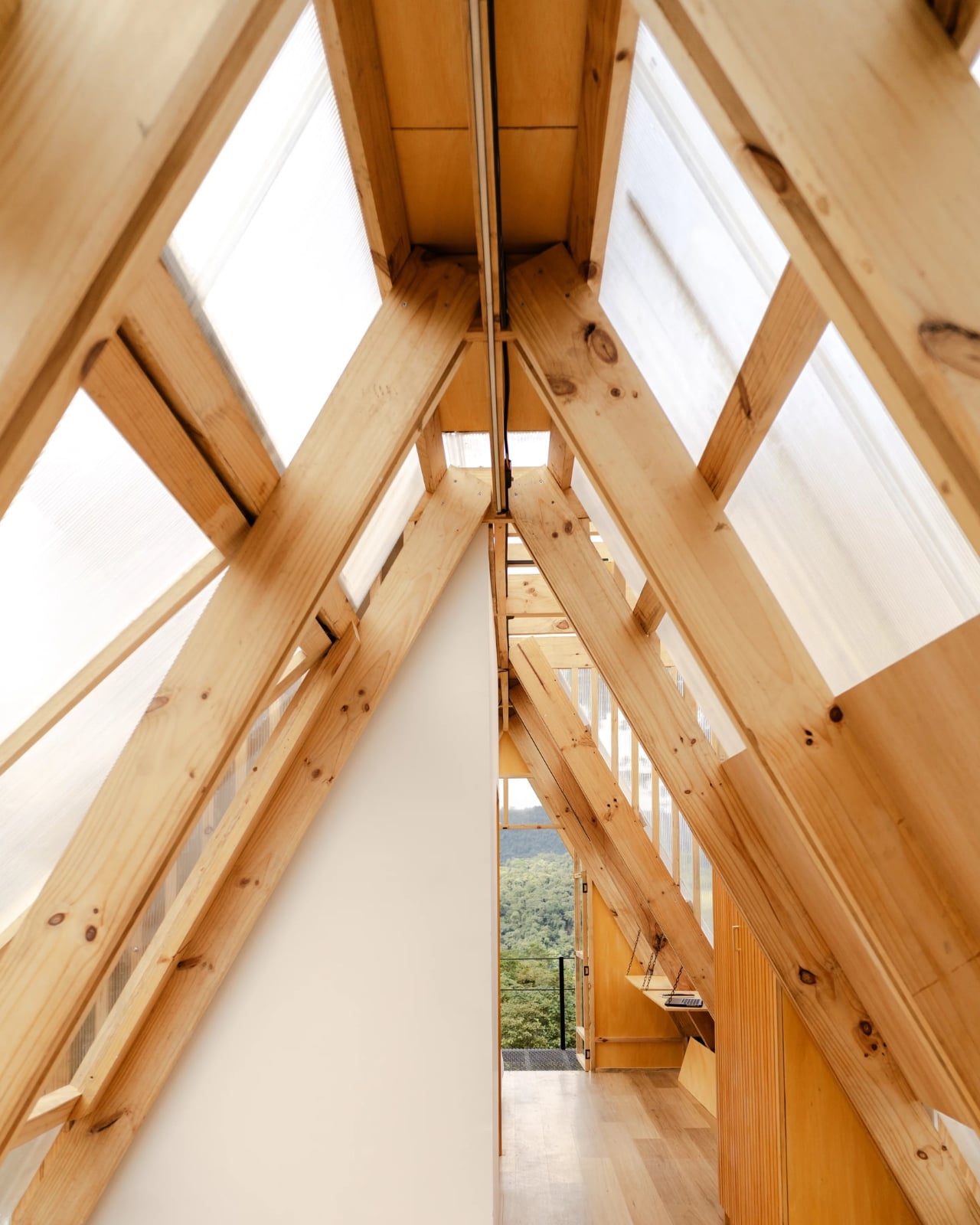
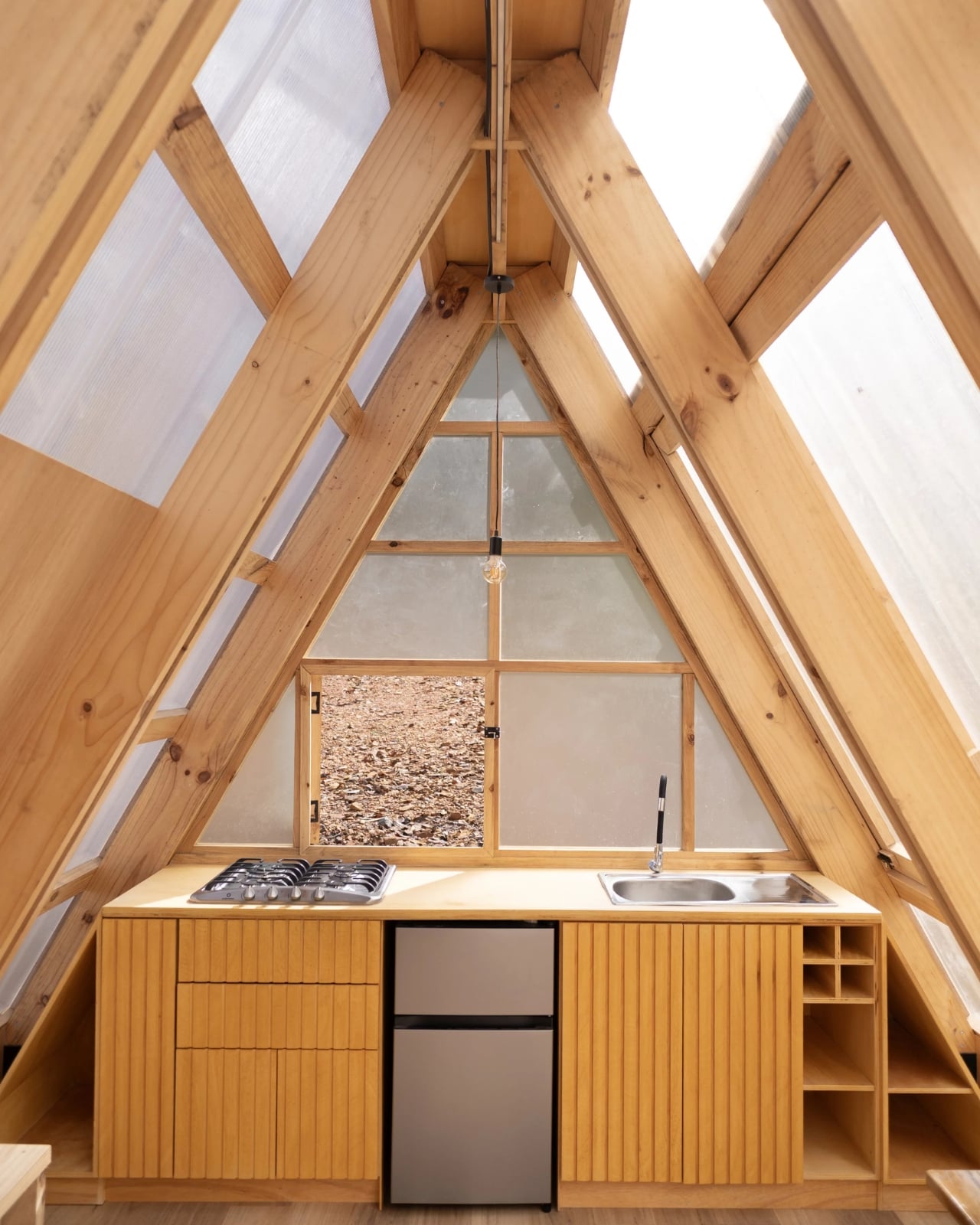
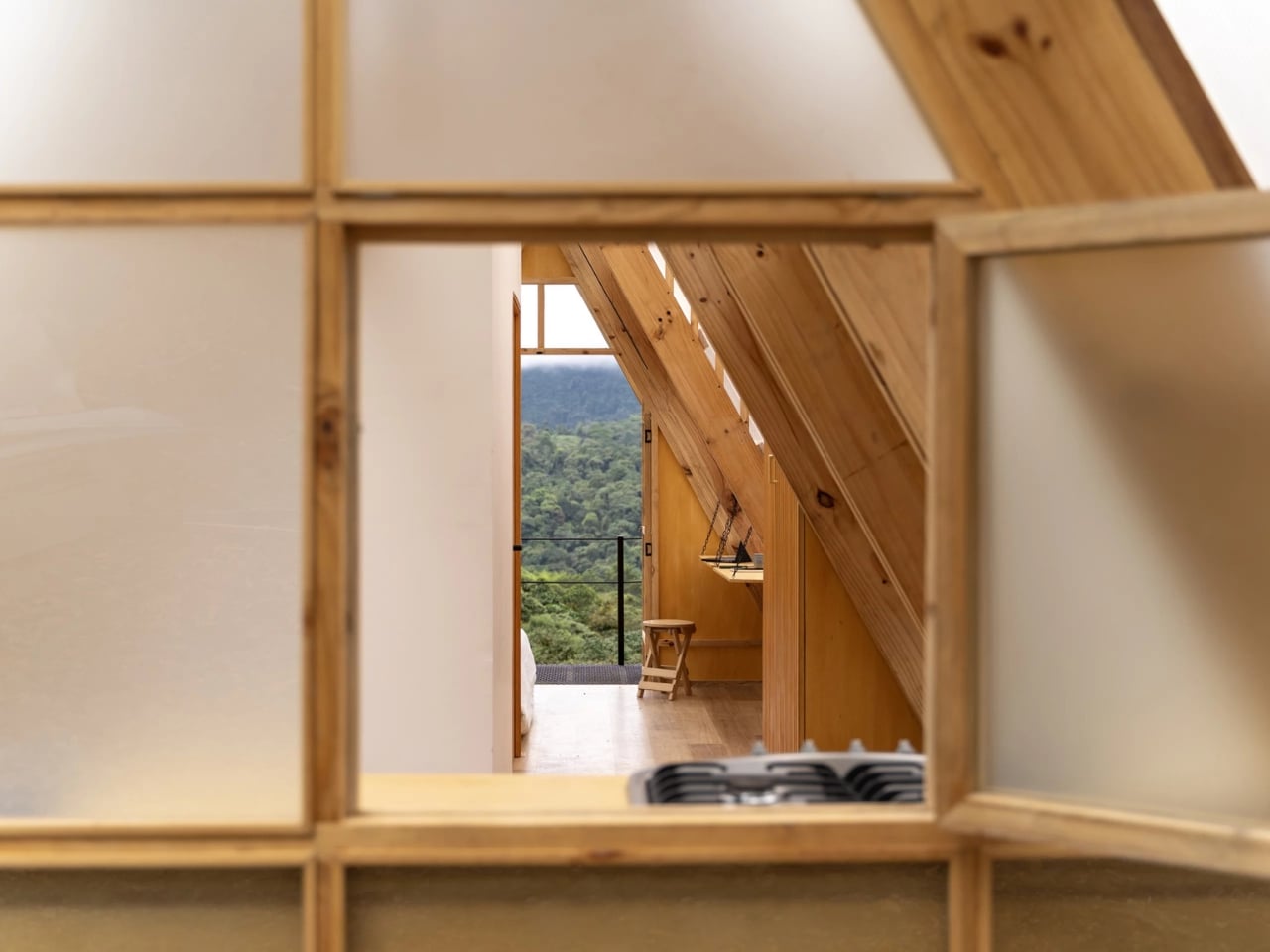
Polycarbonate as a material gets a bad reputation in architectural circles, often dismissed as temporary or industrial. Casa 6-3 challenges that bias directly. The cladding was chosen for its economy and ease of assembly at a remote location, but the effect it produces is genuinely atmospheric. It allows a visual and acoustic connection to the landscape rather than sealing occupants off from it. You hear the rain. You see the mist move. You feel the forest without being exposed to it, which is honestly a more sophisticated relationship with nature than most luxury eco-lodges manage with all their cantilevered decks and infinity pools.
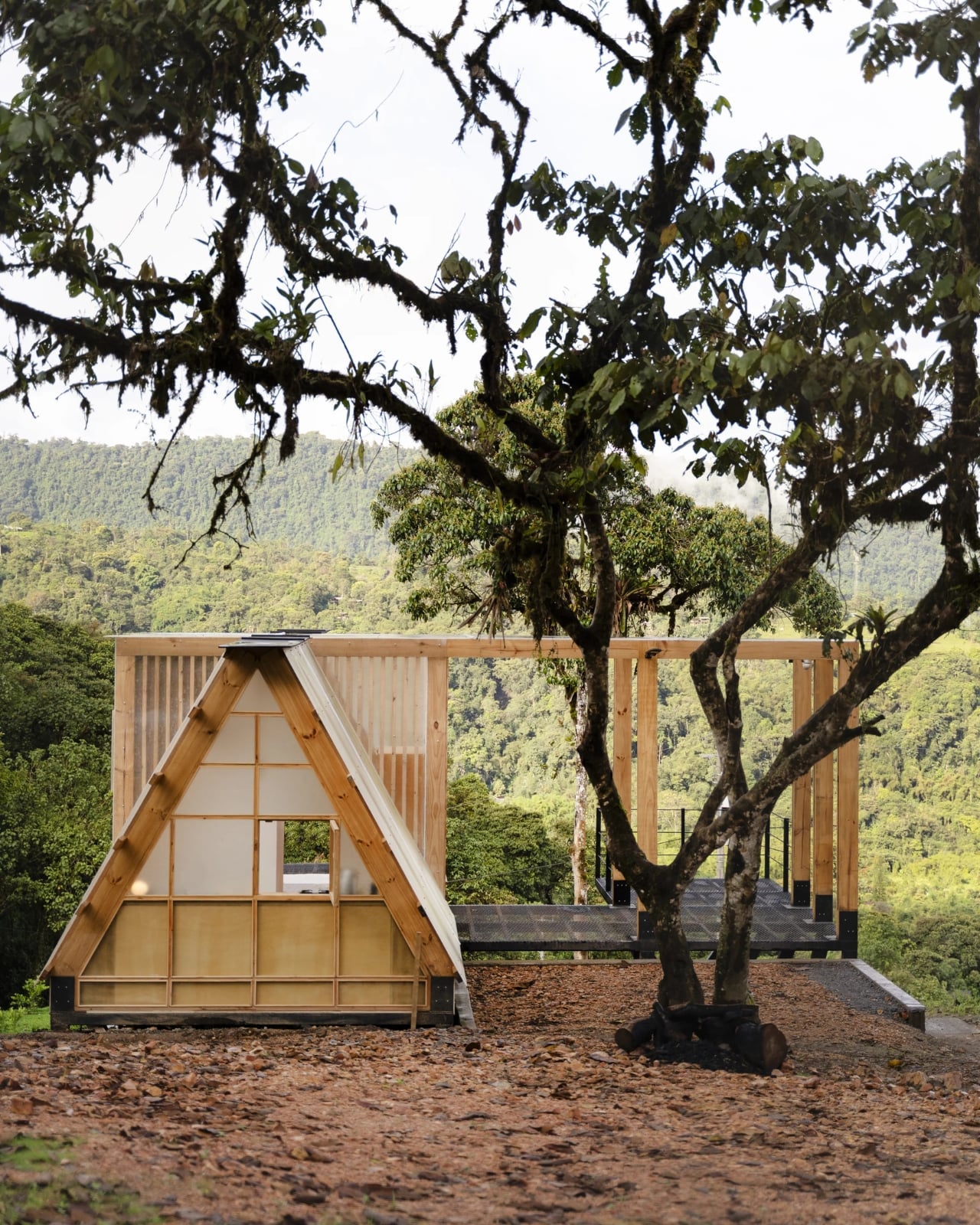
A folding staircase, a compact timber kitchen, and a floor plan that fits six people into less than 24 feet of length are all decisions that required real discipline. It’s easy to build big. It takes considerably more skill, and perhaps more honesty, to strip a design down to its actual essentials and still make it feel livable. Casa 6-3 lands on the right side of that line.
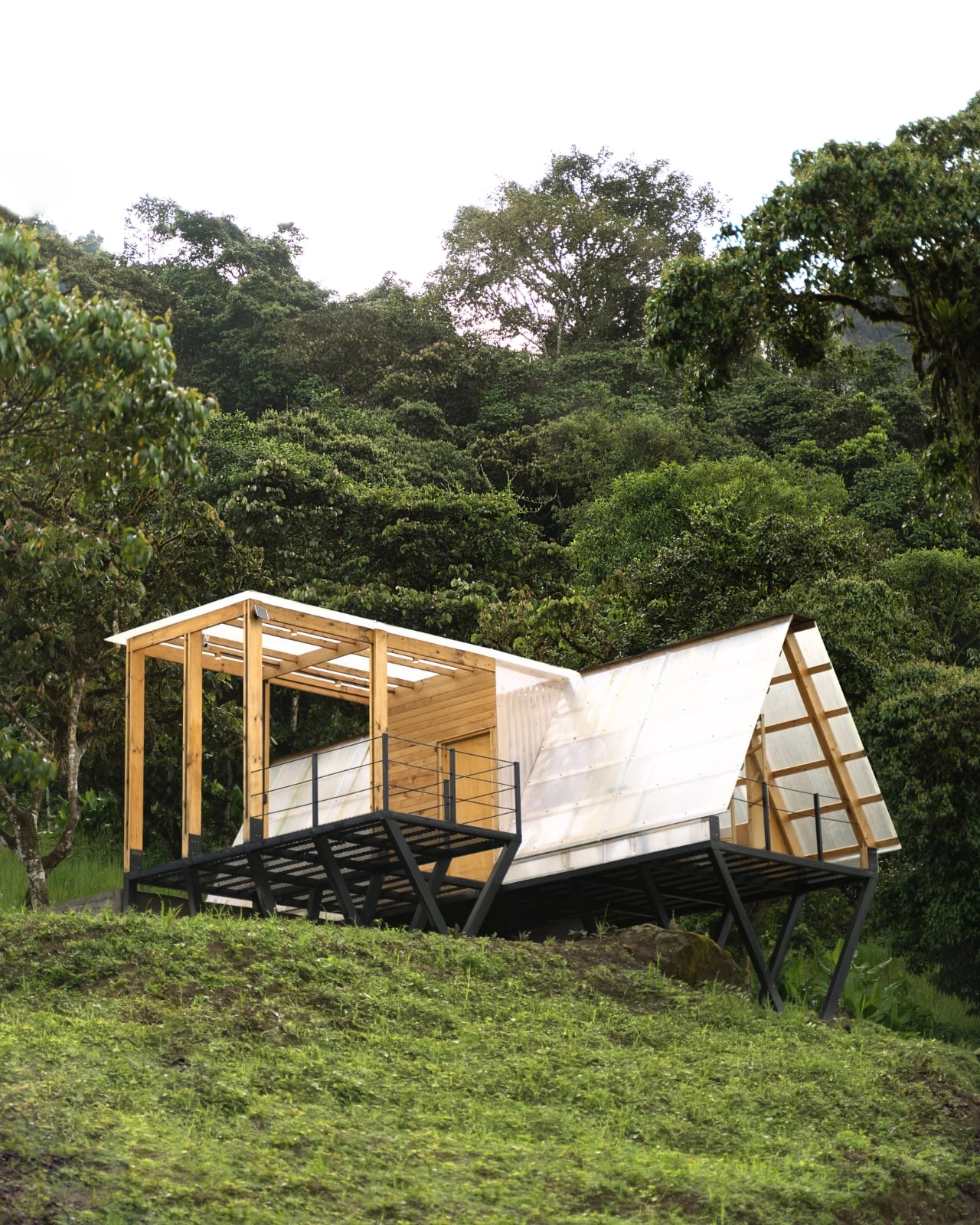
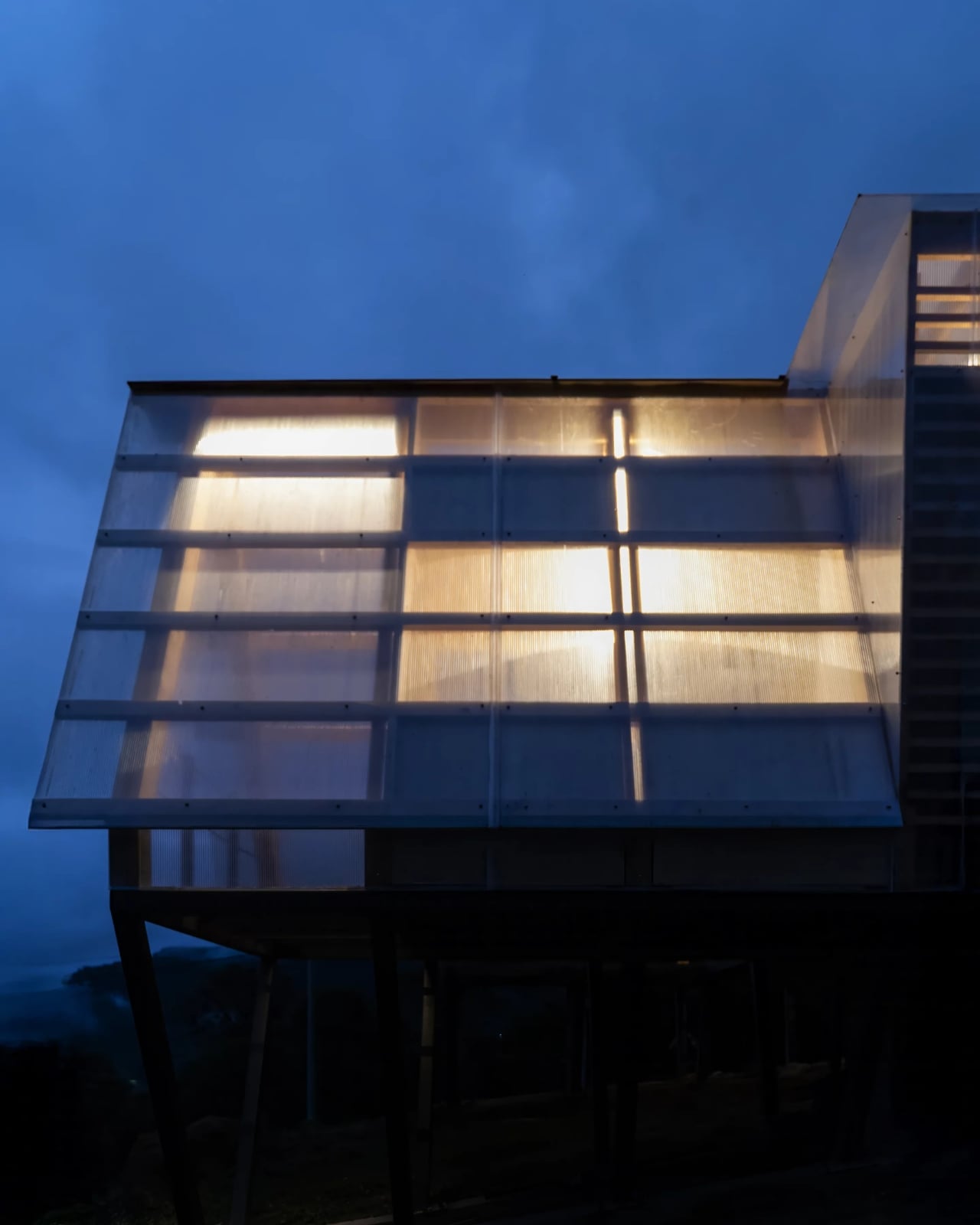
Beyond its immediate appeal, the project was designed with change in mind. Right now, it functions as a temporary hospitality retreat, but the timber framework was built to last and to eventually support a more permanent transformation. The polycarbonate skin can be swapped out over time while the structure itself remains. It’s a building that expects to evolve, which is a design philosophy I wish more projects would adopt instead of treating “forever” as the only acceptable timeline.
The broader conversation in architecture right now is about how to build without taking so much. Low-impact construction, adaptive materials, lightweight systems, biophilic design. Casa 6-3 stands as a minimalist prototype for low-impact mountain living without making a speech about it. It doesn’t announce its sustainability credentials. It just hovers quietly above the forest floor, doing exactly what it was designed to do.
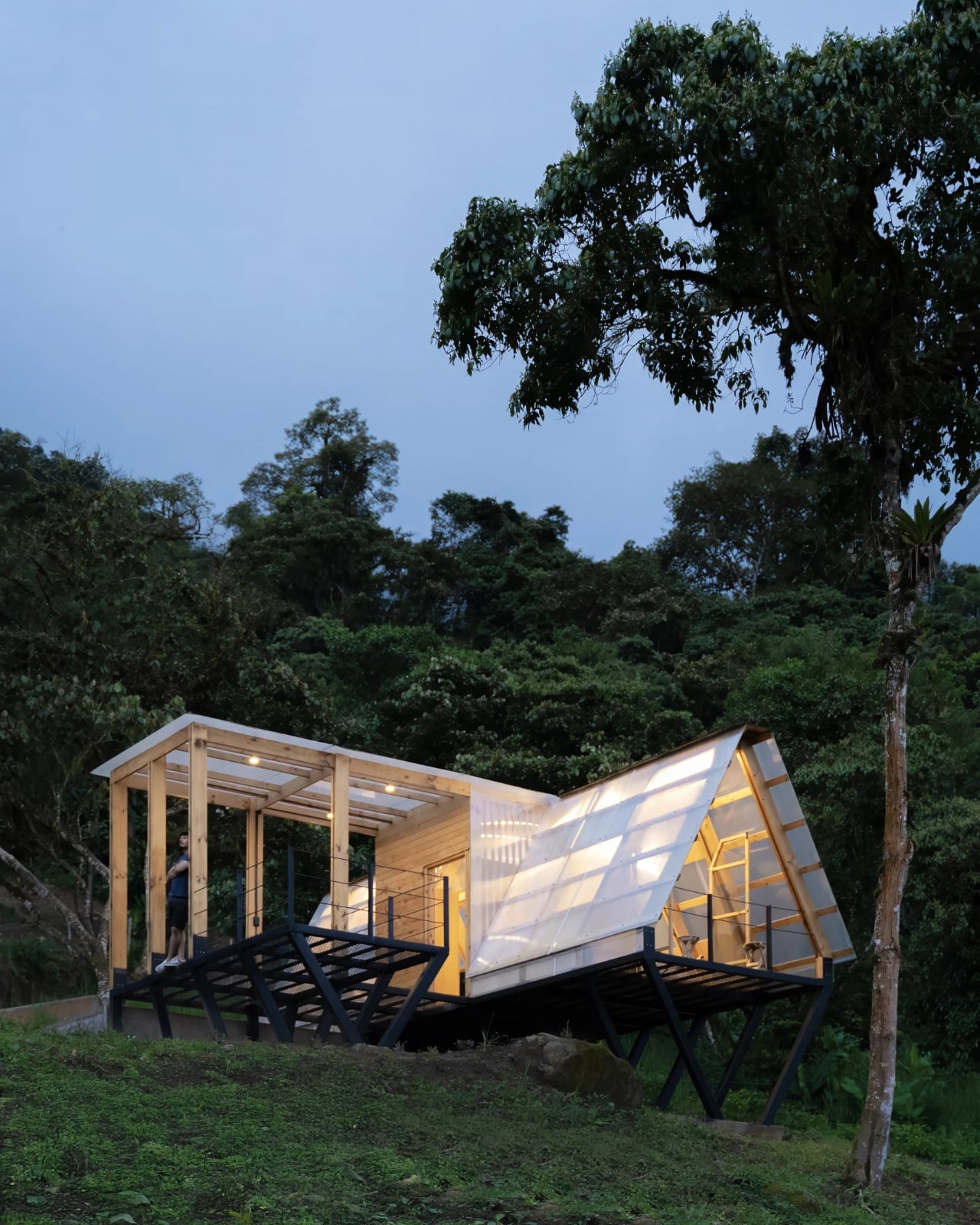
Mindo, for what it’s worth, is considered one of the best birdwatching destinations in the world, tucked into Ecuador’s western Andes with a biodiversity that borders on absurd. Placing a structure there that actively tries to minimize its footprint reads less like a design trend and more like a genuine act of respect for the land.
At 7.2 meters long and lifted off the ground on timber stilts, Casa 6-3 is the kind of project that makes you want to rethink your square footage assumptions, your material prejudices, and maybe your entire floor plan. Not every building needs to make a statement. Some just need to know when to get out of the way.